Makarska From Split
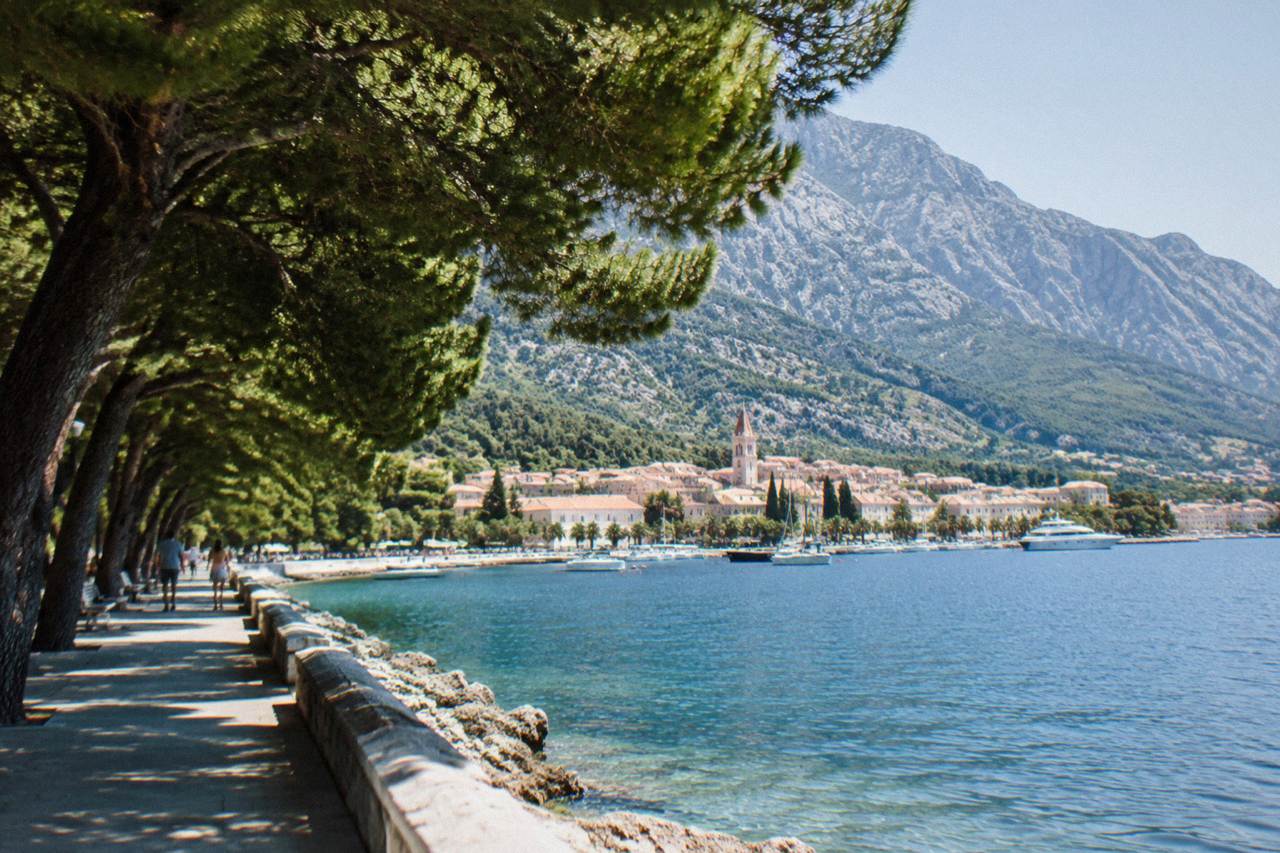
Makarska sits 86.1 km and about 75 driving minutes south of Diocletian's Palace, which makes it one of the longer half-day options on the Split day-trip list and one of the easiest to combine with a stop in Omiš on the way.
Short answer
Makarska is 86.1 km from Diocletian's Palace in Split, about 75 minutes of free-flow driving south along the coast, with Omiš roughly halfway at 38 minutes. It works as a full-day trip from Split, and the same road continues towards Mostar and Dubrovnik.
Makarska is the seaside town at the far end of the Split day-trip list that runs down the Adriatic coast: Omiš at 38 driving minutes, then Makarska itself at 75, with the road continuing inland towards Mostar at 2 hours 13 and on to Dubrovnik at 3 hours 21. The driving figures are free-flow routing from Diocletian's Palace, so a summer weekend adds time.
Before the drive south, one planning note that applies to every day trip on this coast: Split's own old town rewards an early hour. The Peristyle, the Riva, the Golden Gate and the Grgur Ninski statue are all free to walk through, and the Roman guard change on the Peristyle ran at noon daily from 28 May to 27 September 2026. Leaving Split after an early-morning walk through Diocletian's Palace means you see the city at its quietest and still reach the coast road before the day heats up, and the Split Croatia Travel Guide day-trip pages cover every alternative direction if the forecast turns.
How Far Is Makarska From Split And How Long Does The Drive Take?
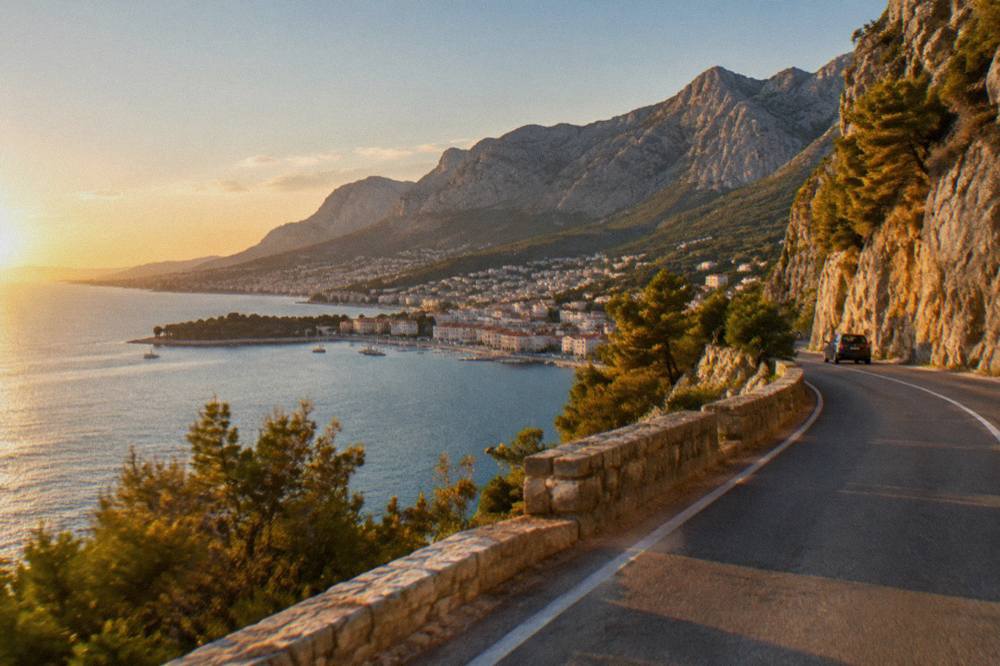
Makarska lies 86.1 km from Diocletian's Palace by road, which is about 75 minutes of free-flow driving south along the coast. The route passes Omiš at 25.5 km and 38 minutes, so a single day can pair both towns. For comparison from the same starting point, Šibenik is 71 minutes, Mostar 2 hours 13 and Dubrovnik 3 hours 21, which places Makarska firmly in the middle band of Split day trips, longer than Trogir at 36 minutes but far shorter than the cross-border options.
Those figures are computed free-flow routings, not schedules, and the coast road is the variable. In July and August the stretch between Split and Omiš carries beach traffic, coach transfers and ferry-bound vehicles, and the DHMZ Split Marjan station table gives the context for why: July averages 26.2 C and 353.3 hours of sunshine, with 18 days at 30 C or more, so the coast is at its fullest exactly when the driving is slowest. Plan the departure before 9:00 or accept a longer run.
| Destination from Diocletian's Palace | Distance | Free-flow driving time |
|---|---|---|
| Omiš | 25.5 km | 38 min |
| Šibenik | 84.8 km | 71 min |
| Makarska | 86.1 km | 75 min |
| Krka National Park, Skradinski buk | 90.2 km | 74 min |
| Mostar | 173.2 km | 2 h 13 |
| Dubrovnik | 234.8 km | 3 h 21 |
Two useful patterns fall out of that table. First, Makarska and Krka sit at almost exactly the same driving distance from Split, so the choice between them is a choice between a beach-and-promenade day and a waterfalls-and-walking day, not a question of travel time. Second, Makarska is the natural halfway stop on any Split to Dubrovnik or Split to Mostar itinerary, and the Mostar day trip and Dubrovnik day trip pages cover those longer runs in detail.
Do You Need A Car To Reach Makarska From Split?
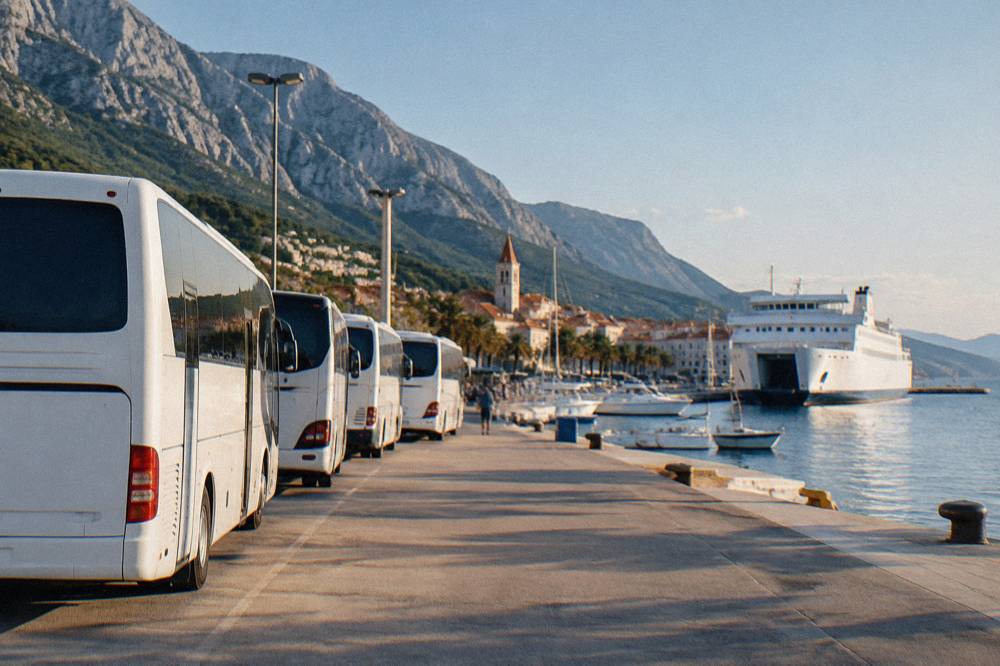
No, a car is not required, but the public-transport options are thinner for Makarska than for the island day trips. Ferry lines do not serve Makarska from Split, so the realistic choices are driving yourself, taking a coach along the coast road or joining an organised trip, and the return timing matters more than the outbound.
The bus and rail hub on Obala kneza Domagoja is the single most useful fact for car-free planning in Split: the ferry port, the main bus station and the railway station sit together there, a 500 to 600 m flat walk from the palace walls. Every coach heading down the coast, and the train towards Zagreb, which takes about 7 h 15 to 8 h 10, starts from that one spot. The getting around Split overview explains the hub layout in full, and the Split bus station guide on the Krka page covers how coach-based day trips board there.
To compare coach times and fares, book an intercity bus ticket here.
For visitors who prefer a guided day rather than self-drive, the island and inland tours leave from the same waterfront zone. Two options fit a Makarska-adjacent plan, one pairing the drive south with Bosnia's headline sights and one covering Split's own history before departure:
Note what those listings actually cover: the Mostar-and-Kravice trip runs the inland route that Makarska's road connects to, and the two walking tours cover Split itself rather than the coast south of it. No verified Makarska-specific guided product appears on this site, so a self-planned day by car or coach, with a Split walking tour on the morning or evening either side, is the honest structure for this trip. Where a tour listing shows a price, the listing prints it; this page never types one.
What Does A Day Trip To Makarska Look Like Hour By Hour?
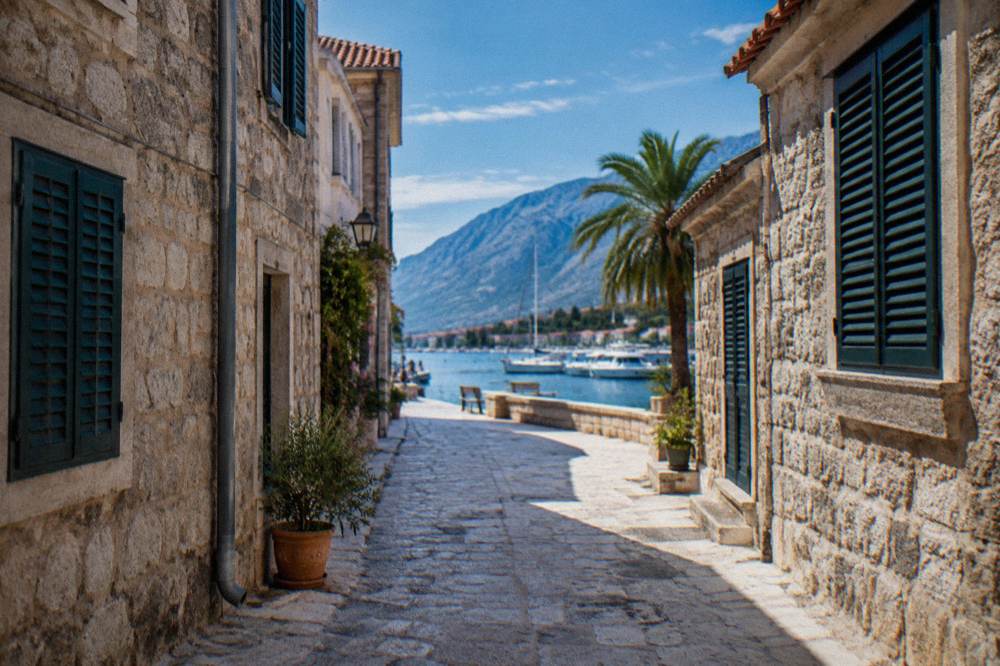
A realistic shape is an 8:00 departure from Split, arrival in Makarska shortly after 9:15 allowing for slower summer traffic, a late-morning walk of the waterfront and the old-town lanes, a long swim and lunch stop through the middle of the day, and a return drive after 17:00 that puts you back at Diocletian's Palace around dinner time. The free-flow drive is 75 minutes each way, so the day budgets about 3 hours of driving and 6 or more hours on site.
The single biggest quality-of-life decision is the Omiš stop. Omiš sits at the 38-minute mark, where the Cetina river meets the sea, and the Omiš and Cetina river guide covers the rafting and zip-line products that operate there. Breaking the journey there on the way down turns a long drive into two short ones and gives the day a second, quite different texture: river canyon in the morning, open coastline after. The same logic works on the return, though summer evening traffic back into Split argues for leaving Makarska by 17:00.
On timings, the DHMZ Split Marjan station table, which covers the 1948 to 2024 period for the Split side of this coast, is the best planning baseline: July means 26.2 C and August 25.9 C, with 7 days at 30 C or more already in June. The practical reading is that midday in July and August is for water and shade, not for walking, and a day built around a late-afternoon stroll and an early-evening drive home uses the heat curve rather than fighting it. The shoulder months flip the logic: May averages 19.2 C and September 21.6 C on the same station table, which suits walking days far better than swim days.
For anyone who wants history with the coast, the honest sequencing is a Split walking tour either the evening before or the evening after the Makarska day, and the site's featured history walk is a good fit:
Readers who prefer a smaller group size can compare it directly with the magister-led walk:
Is Makarska A Better Day Trip Than Krka, Omiš Or Trogir?
For driving effort, Makarska and Krka cost the same from Split, about 75 minutes versus 74, while Trogir at 36 minutes and Omiš at 38 are less than half the commitment. The real differentiator is what the day consists of: Krka is a ticketed national park at 40 EUR for adults in June to September and 20 EUR in April, May and October, Trogir is a UNESCO-listed old town, and Makarska is a beach-and-promenade resort day with no comparable headline ticketed sight.
That last clause matters for planning.
| Day trip from Split | Free-flow drive | Headline ticketed sight | Adult price |
|---|---|---|---|
| Trogir | 36 min | Old town, UNESCO 1997 | Trogir cathedral price not confirmed, check on site |
| Omiš | 38 min | Mirabela fortress | 4 EUR, 6 EUR from 1 Jun to 30 Sep |
| Krka National Park | 74 min | Skradinski buk and park sites | 7 / 20 / 40 EUR by season |
| Makarska | 75 min | None | Confirm locally |
| Mostar | 2 h 13 | Old Bridge Area, UNESCO 2005 | Bridge area free to walk |
| Dubrovnik | 3 h 21 | City walls | About 40 EUR, includes Lovrijenac, secondary source |
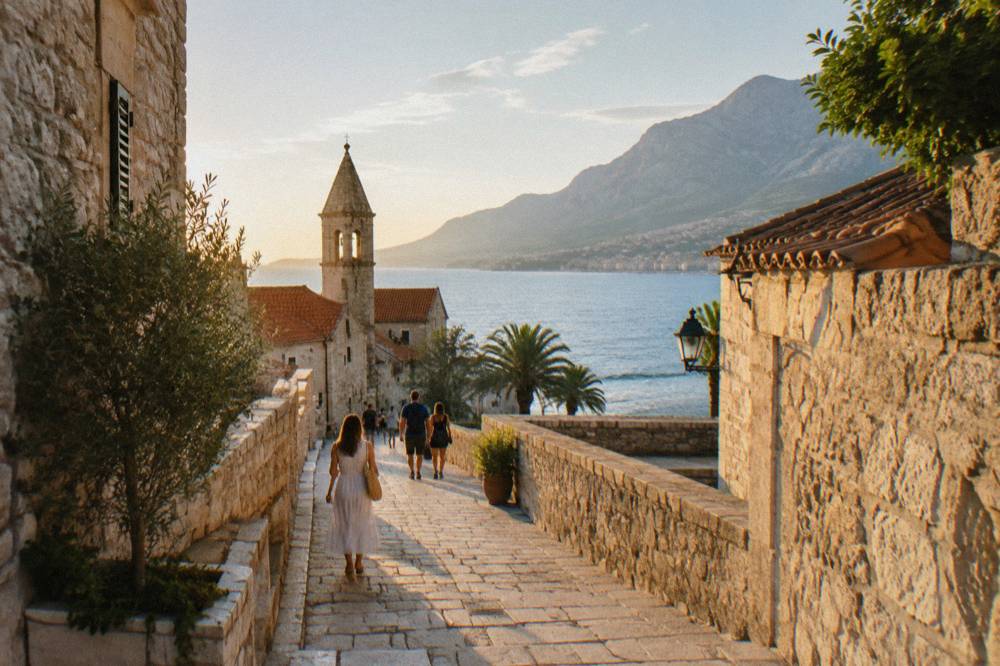
One swimming rule from the Krka price-and-rules documents deserves its own warning here because day-trippers transfer it wrongly between destinations: at Krka, swimming is allowed only in clearly marked areas, with reported designated spots at Roški slap, Stinice and Pisak between 1 June and 30 September, and never at Skradinski buk. That restriction is a Krka rule. On the coast at Makarska and Omiš, sea swimming is the normal activity, and the Split-side reference points are the city's own free beaches, Bačvice among them, where picigin, the ball game protected as intangible heritage of Croatia, has been played since 1908 per the local account.
What Does A Makarska Day Trip Cost Compared With Other Split Day Trips?
The costs you can state from published sources are the Split-side ones: Krka at 7, 20 or 40 EUR by season, Plitvice at 10, 23 or 40 EUR, Klis Fortress at 10 EUR, the Archaeological Museum and Salona combined ticket at 10 EUR, and Split's own headline sights, of which the Peristyle, the Riva, Marjan and the city beaches are free.
Makarska has no ticketed sight, so the budget line for the town itself is fuel or coach fare plus lunch, confirmed on the day.
The fuller Split-side price list is worth having beside any day-trip plan, because the drive south starts and ends inside a UNESCO property where several of the best sights cost nothing. The table below is drawn from the museum and park price lists cited on this site:
| Sight | Adult price | Source basis |
|---|---|---|
| Peristyle, Riva, Golden Gate, Marjan, city beaches | Free | No ticket on any official source |
| Split City Museum, Papalić Palace | 10.00 EUR, closed Mondays | Museum price list |
| Diocletian's Palace cellars | Open 8:30 to 20:00 daily, central part under restoration to end of 2026, passage open | City Museum listing |
| Cathedral of St Domnius complex | From about 5 EUR, combined tickets up to about 15 EUR, secondary source | No official price page |
| Archaeological Museum plus Salona, within 7 days | 10 EUR combined, 8 EUR museum alone | Museum price list |
| Meštrović Gallery | 12.00 EUR, includes Crikvine-Kaštilac | Gallery price list |
Two seasonal footnotes change the arithmetic for autumn travellers. First, the park price lists drop from 1 October: Krka falls to 20 EUR in October and 7 EUR from November, and Plitvice to 23 EUR in October and 10 EUR from November, which makes late autumn the cheapest window in the year for the waterfall days. Second, the tourist tax, about 2.65 EUR per person per night in high season, collected by the accommodation and confirmed at booking, applies wherever you sleep, not where you day-trip, so it does not affect a Makarska day out from a Split base.
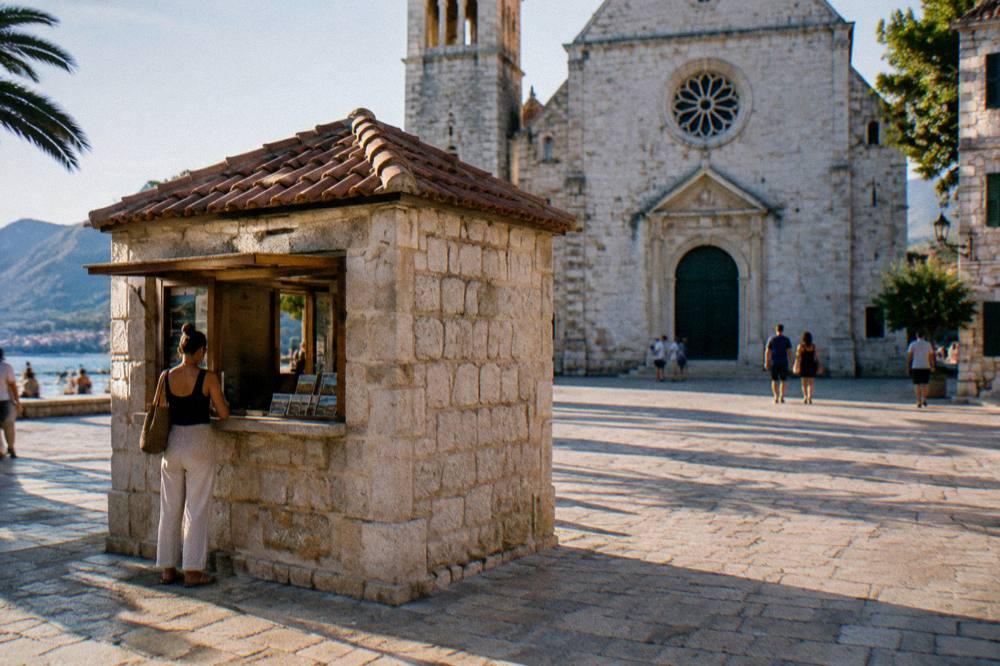
For travellers who want the inland contrast rather than the coastal one, the tour below runs the Mostar and Kravice route that the same southern corridor serves, and its listing carries the live price and availability:
When Is The Best Month To Do The Makarska Trip From Split?
On the DHMZ Split Marjan station table for 1948 to 2024, the warmest months are July at 26.2 C and August at 25.9 C, with 18 and 17 days respectively at 30 C or more, while May at 19.2 C, June at 23.4 C and September at 21.6 C trade a few degrees of heat for thinner roads and 57.5, 49 and 70.9 mm of rain respectively.
November is the wettest month at 115.5 mm and July the driest at 26.6 mm.
The honest reading of that table for a Makarska day is that the peak months are swim months and nothing else: the midday hours in July and August are for the water, and any walking should sit before 11:00 or after 17:00. June is the compromise month, 23.4 C mean with only 7 days at 30 C or more and 49 mm of rain. September keeps a 21.6 C mean with the sea still warm from summer, though its 70.9 mm of rain is the first sign of the autumn turn that peaks in November.
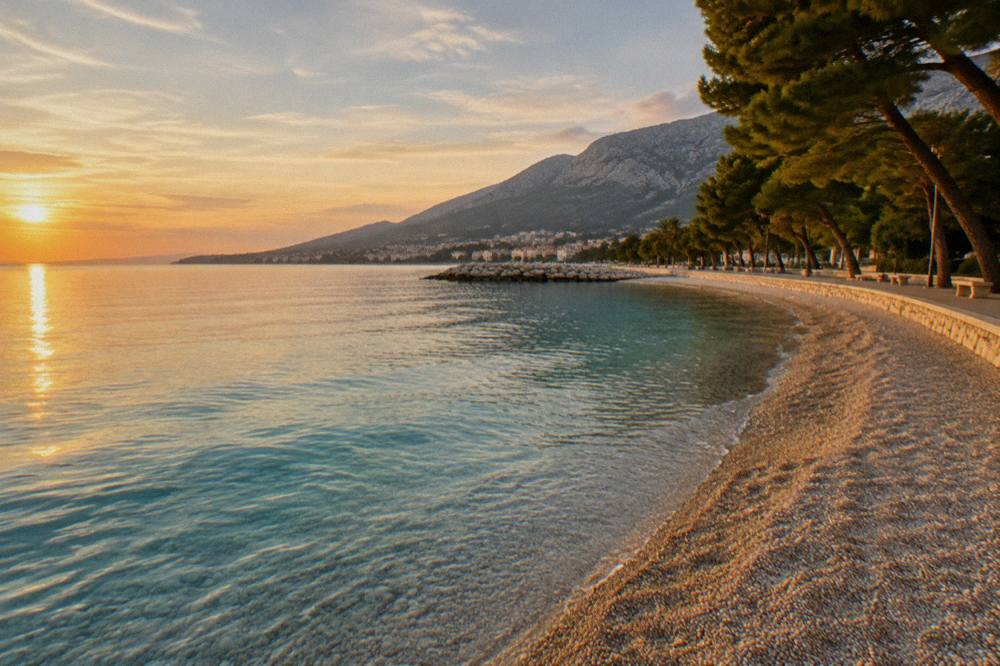
The full station table, which is the only climate series this site prints for the Split coast, is set out below:
| Month | Mean temperature (C) | Precipitation (mm) | Notes from the same table |
|---|---|---|---|
| May | 19.2 | 57.5 | Shoulder season |
| June | 23.4 | 49.0 | 7 days at 30 C or more |
| July | 26.2 | 26.6 | Driest month, 18 days at 30 C or more, 353.3 h sunshine |
| August | 25.9 | 41.3 | 17 days at 30 C or more |
| September | 21.6 | 70.9 | Sea still warm, first autumn rain |
| October | 17.2 | 77.0 | Park prices drop from 1 Oct |
| November | 12.7 | 115.5 | Wettest month |
Two Split-side events anchor the calendar either end of the season: Ultra Europe runs 9 to 11 July 2027 at Park Mladeži, which fills Split's accommodation in that window, and Advent in Split runs 27 November 2026 to 7 January 2027 with the ice rink at Đardin, which makes the city itself the destination when the beach towns go quiet. Anyone planning around the best time to visit Split should also note that partial closures on the Riva are expected through 2027 as the central section is renovated from November 2026, which affects Split's waterfront, not the coast road south.
What Should You Know Before Driving Back Into Split?
Evening arrivals in July and August meet the busiest stretch of the whole route between the palace and Omiš, so a departure from Makarska by 17:00 keeps the return inside about 90 minutes even in season, and a later start means planning for slower traffic into Split.
Once back in the city, the free sights do the evening work: the Riva promenade, the Peristyle, the Prokurative and the Golden Gate all cost nothing, and the city beaches stay in use late in the summer months. If the day has left energy for one ticketed sight, the palace cellars run 8:30 to 20:00 every day, with the central part under restoration to the end of 2026 while the passage stays open. The evening guard-change tradition on the Peristyle ran at noon daily, 28 May to 27 September 2026, so check the current visitsplit calendar for the next season's dates before counting on it.
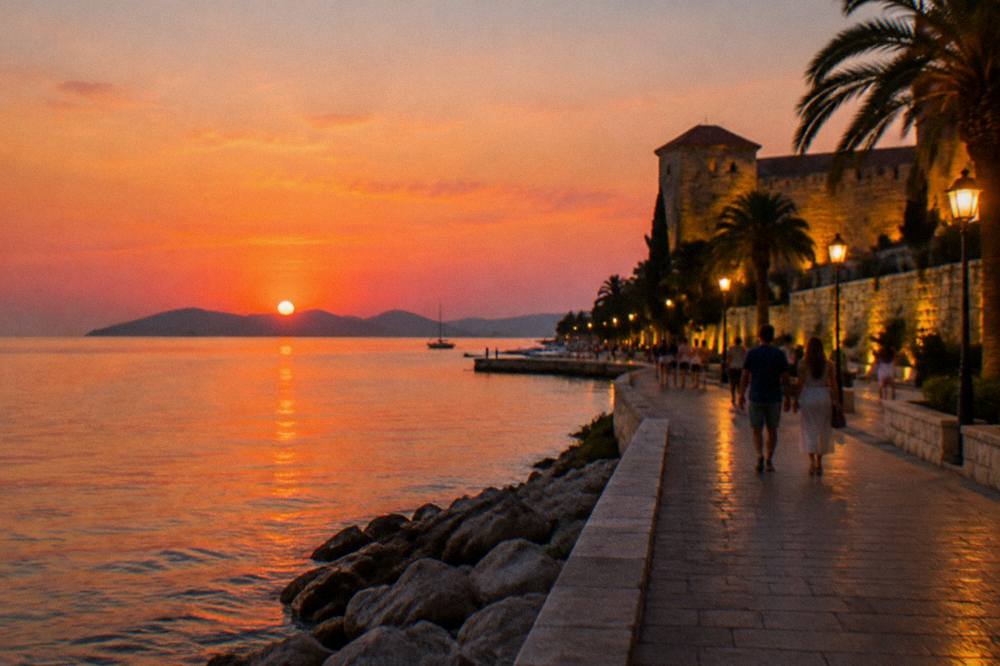
Pack a shirt before the last walk home.
For a final structure, the two walks below bracket the Makarska day well, one before departure and one on the return evening, and both listings print their own live prices:
Common Questions About Makarska From Split
How far is Makarska from Split?
Makarska is 86.1 km from Diocletian's Palace by road, about 75 minutes of free-flow driving, with Omiš roughly halfway at 25.5 km and 38 minutes.
Can you do Makarska as a day trip from Split?
Yes. At about 75 minutes each way free-flow, the day budgets roughly 3 hours of driving and leaves 6 or more hours on site, and Omiš works as a halfway stop in both directions.
Is Makarska or Omiš the better day trip from Split?
Omiš is less than half the driving commitment at 38 minutes and pairs the sea with the Cetina river canyon, with Mirabela fortress at 4 EUR, 6 EUR from 1 June to 30 September. Makarska is the longer coastal resort day.
What is the warmest month for the Makarska trip?
On the DHMZ Split Marjan station table for 1948 to 2024, July is the warmest month at a 26.2 C mean, followed by August at 25.9 C, with 18 and 17 days respectively at 30 C or more.
Do you need to book anything in advance for Makarska?
There is no ticketed Makarska sight, so there is nothing to pre-book for the town itself. Confirm coach times and fares at the Split bus station, and book any Split walking tour ahead in July and August.
Can you combine Makarska with Mostar or Dubrovnik?
Makarska sits on the southern corridor towards both: Mostar is 173.2 km and 2 hours 13 from Diocletian's Palace, Dubrovnik 234.8 km and 3 hours 21, so Makarska works as a stopover on a longer two-day run rather than an add-on to a single day.
A Makarska day from Split is, in the end, the simplest kind of day trip to plan: one road, one direction, a halfway stop in Omiš if the mood suits, and a return to a UNESCO-listed old town where the evening costs nothing at all. Confirm fares at the bus station or fuel stops on the day, check the weather against the station table rather than a guess, and the coast south of Split takes care of the rest.
