Where To Stay In Split
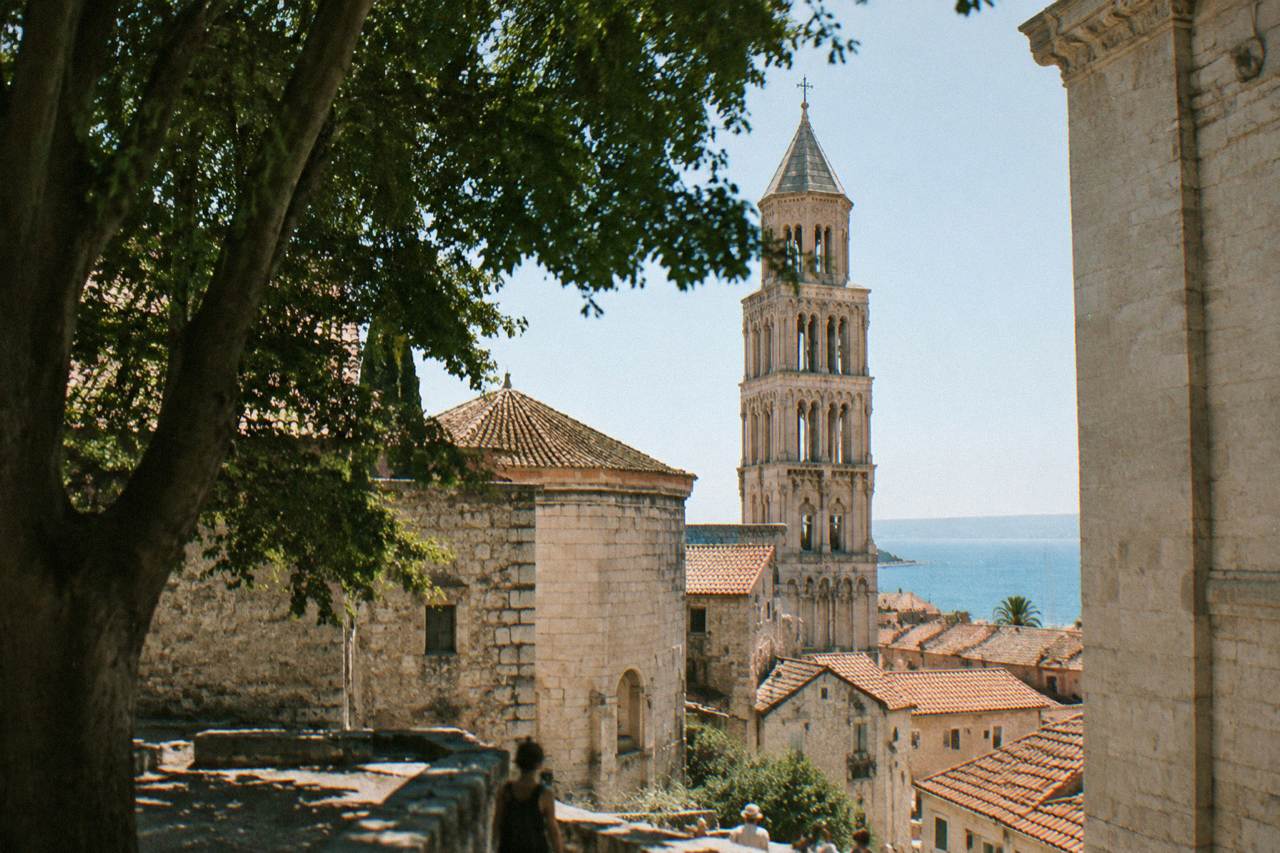
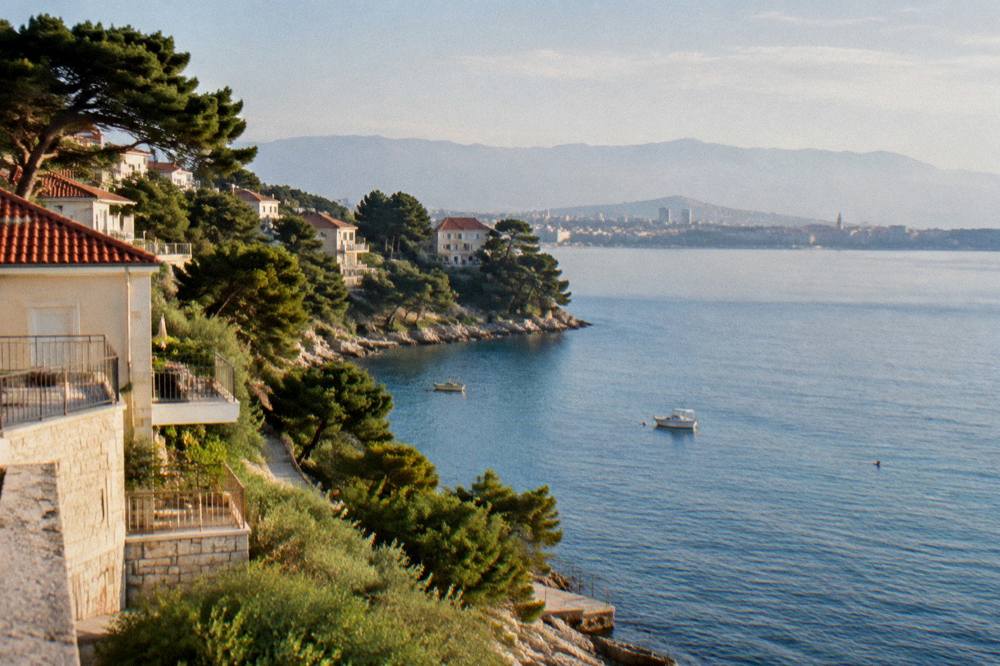
Split runs on a simple geography: a Roman palace at the centre, a harbour in front of it, a forested peninsula to the west and beaches curving east. Choosing where to stay in Split means choosing which of those you want at your door.
Short answer
Stay inside or beside Diocletian's Palace for a short first visit, around Bačvice or the ferry hub for transport and beaches, on the Marjan side for quiet, and east around Žnjan for space and apartment value. Every area sits within a compact city whose ferry port, bus station and railway station share one location 500 to 600 m from the palace.
Split runs on a simple geography: a Roman palace at the centre, a harbour in front of it, the Marjan peninsula park forest to the west and beaches curving east along the coast. The city counted 160,577 residents at the 2021 census, and it is Croatia's busiest passenger port, with 6.05 million port passengers in 2025 recorded by the Port of Split's own statistics. Choosing where to stay in Split therefore starts with one honest question: does the trip revolve around the old streets, the sea, or the day trips to the islands and parks? This guide, from the Split Croatia Travel Guide editorial desk, works through each area with the figures the sources actually publish, and flags where a price is set locally and confirmed at booking.
What Are The Best Areas To Stay In Split?
The best area to stay in Split depends on the trip: the palace quarter and its immediate streets for history and walkability, Veli Varoš and the Marjan side for quiet stone lanes and green slopes, Bačvice and Firule for sandy swimming, Meje for villas near Kasjuni beach, and Žnjan and Stobreč east of the centre for apartment stays with sea views. All of them sit in one compact city: the ferry port, the main bus station and the railway station share a single hub on Obala kneza Domagoja, 500 to 600 m from the palace, so no district is far from transport. A deeper discussion of each district also sits in the site's guide to the best area to stay in Split.
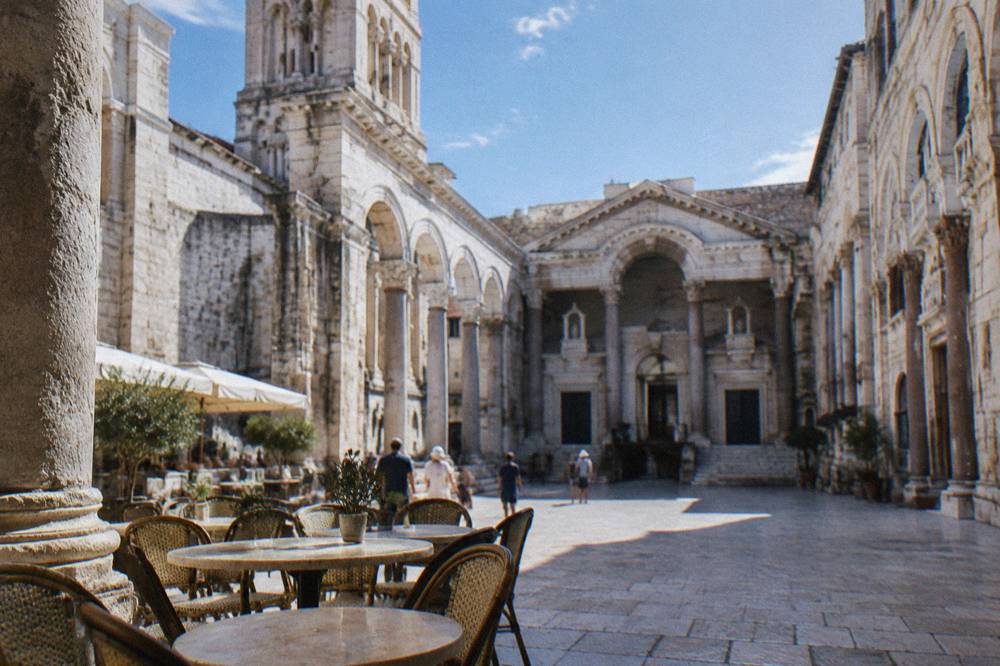
The palace quarter is the default answer for a first stay of one to three nights. Diocletian's Palace, built around 295 to 305 AD for the emperor who retired here, is not a monument behind a fence: it is the living centre, with the Peristyle, the Golden Gate, the Riva promenade and the green market all free to walk. The Historical Complex of Split with the Palace of Diocletian has been on the UNESCO list since 1979, covering 20.8 ha, and lodging inside that footprint puts you inside it.
Want to explore the palace with a guide who knows its history? Book a Diocletian's Palace guided walk here.
Outside the walls, Veli Varoš climbs the slope toward Marjan, a peninsula park 3.5 km long and 1.5 km wide whose highest point, Telegrin, stands 178 m up, with 819 steps from Trumbićeva obala to the top. Meje runs along the southern shore below Marjan toward Kašjuni beach. East of the hub, Bačvice is the city's sandy beach and the birthplace of picigin, the ball game protected as intangible heritage, while Firule, Žnjan and Stobreč string the coast further out.
| Area | Character | Best for | Walk to palace hub |
|---|---|---|---|
| Palace quarter | Roman streets, stone, ticketed sights | First visit, short stays | Inside it |
| Veli Varoš | Old fishing lanes below Marjan | Quiet, local feel | 5 to 10 min on foot |
| Meje | Villas, greenery, Kasjuni beach | Quiet beach days | 15 to 20 min on foot |
| Bačvice and Firule | Sand, family swimming, picigin | Beach-first trips | 10 to 15 min on foot |
| Žnjan | Modern seafront apartments | Space, longer stays | Short bus or taxi ride |
| Stobreč | Small coastal town within the city | Family apartments | Bus ride east |
One planning note matters for the palace quarter specifically: the historic core has a moratorium on new short-term rental registrations extended through 2026, with existing registrations grandfathered, so the supply inside the walls is fixed while demand is not. Book early for July and August.
Is It Better To Stay Inside Diocletian's Palace Or Just Outside It?
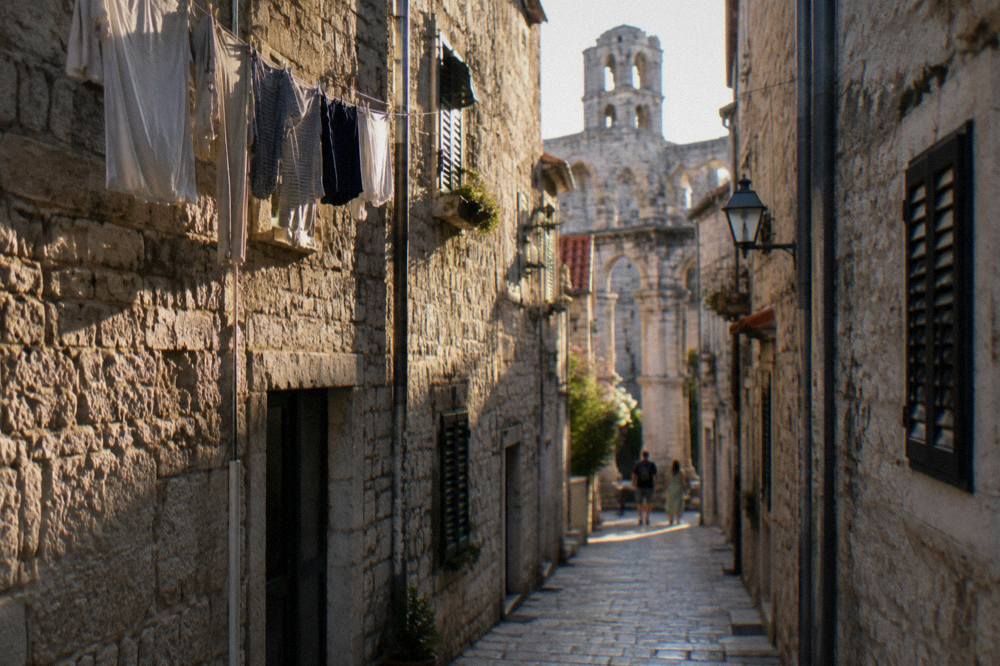
Staying inside Diocletian's Palace suits visitors who want the old town at night and can accept noise, stairs and luggage drag over cobbles, while staying just outside, in Veli Varoš, around the Prokurative or east of the hub, gives quieter sleep and easier airport and ferry transfers within a short walk of the same sights. The palace's public spaces cost nothing: the Peristyle, the Riva, the Prokurative, the Golden Gate and the Grgur Ninski statue are all free, so nothing is lost by sleeping a few streets away. What the palace quarter buys is atmosphere after day crowds thin.
Inside the walls, the sights cluster tightly. The Cathedral of St Domnius complex sells single-site and combined tickets at a kiosk on the Peristyle; the secondary guide reporting them gives from about 5 EUR for the cathedral up to about 15 EUR for a five-site combination, with shoulders and knees covered. The bell tower, 57 m high, is part of that scheme. The Temple of Jupiter is now the Baptistery of St John, ticketed inside the same complex.
The palace cellars, run by the Split City Museum, are open Monday to Sunday 8:30 to 20:00, with the museum's price list showing 10.00 EUR adult, 8.00 reduced and family 18.00 at the Papalić Palace site, which is closed Mondays. Note one live detail: the central part of the cellars is under restoration to the end of 2026, and the passage stays open during the works.
Noise is the honest trade-off of an interior room. The city tightened public-order enforcement in 2026, with fines of 300 EUR for public drinking in the historic centre and for climbing on monuments, but a quiet room choice still matters more than any fine. Ask the accommodation which side the bedroom faces, and whether the building sits over a bar street or a market lane.
Outside the walls, the Prokurative squares and Veli Varoš keep you within minutes of the Golden Gate while dropping the late-night foot traffic. From the ferry-and-bus hub, both are a short walk, and that hub is the 500 to 600 m marker everything else measures from.
Where To Stay In Split For Beaches And Swimming?
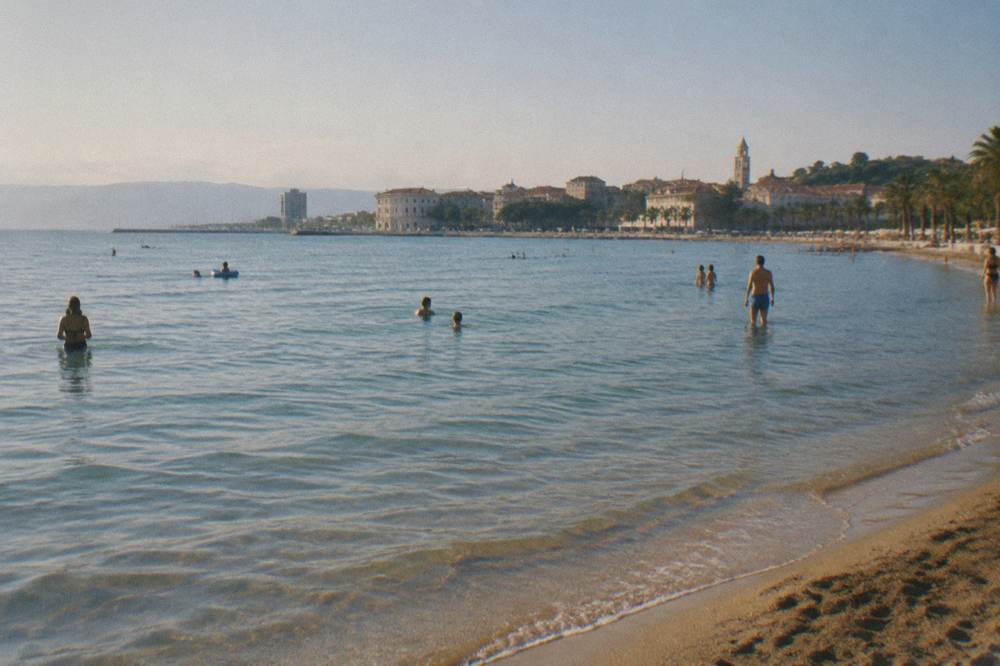
For a beach-first Split stay, Bačvice and Firule put sandy swimming and shallow water closest to the centre, Meje sits between Marjan and Kasjuni beach on the quieter southern shore, and Žnjan and Stobreč add modern concrete-and-gravel seafronts east of the port. Sea swimming in Split is a summer question: the DHMZ Split-Marjan station table shows July means of 26.2 C and August means of 25.9 C, with 18 days at 30 C or more in July and 17 in August, so June to August is the swimming window. No official monthly sea-temperature normal is published; check the live DHMZ reading on the day.
Bačvice is the city's sandy beach and the home of picigin, the shallow-water ball game recorded locally since 1908 and protected as Croatian intangible heritage. Firule continues the coast east with more sand and a calmer family feel. Both are a 10 to 15 minute walk from the palace hub, which is why they anchor the beach answer.
On the other side, Meje runs under Marjan toward Kašjuni, a quieter beach reached through residential lanes. It trades sand for space and greenery. The Marjan park forest itself is free, with marked paths and the 819 steps to Telegrin for anyone who wants a morning climb before swimming.
Swimming also follows you onto the trips. The site's featured cruise, the Blue Lagoon and three island cruise with food and drinks, runs from the Split seafront with lunch and swim stops built in, a natural companion to a Bačvice or Meje base. Check availability
Beach practicalities: city beaches are free, with no entry ticket on any of them. Confirm locally whether a given stretch holds a Blue Flag for the season you visit, since the list changes each season. Sunbeds and cafés, where present, post their own prices.
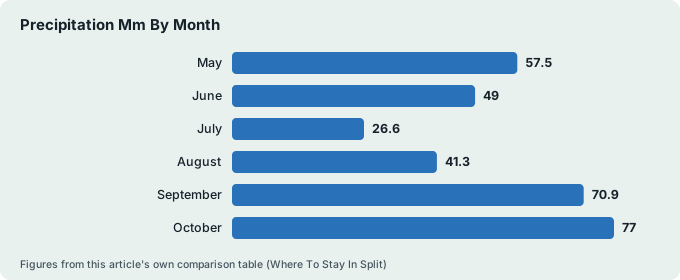
| Month | Mean air temperature, DHMZ Split-Marjan 1948-2024 | Precipitation mm | Days at 30 C or more |
|---|---|---|---|
| May | 19.2 C | 57.5 | 0 recorded at station scale |
| June | 23.4 C | 49.0 | 7 |
| July | 26.2 C | 26.6 | 18 |
| August | 25.9 C | 41.3 | 17 |
| September | 21.6 C | 70.9 | 2 |
| October | 17.2 C | 77.0 | 0 recorded at station scale |
Where To Stay In Split With A Family?
Families do well in Bačvice, Firule and Stobreč, where apartments sit beside sandy or gently shelving swimming and playground-adjacent seafront, or in Veli Varoš for a calmer base with the palace a short walk away; the ferry port, bus station and railway station sharing one hub 500 to 600 m from the palace keeps transfers with children short. The seafront east of the port is flat and stroller-friendly, and the old town, while atmospheric, is cobbled and stepped, which is the one argument against a palace-interior stay with small children.
Family ticketing softens the sightseeing budget. The Split City Museum price list shows a family ticket at 18.00 EUR, the Ethnographic Museum at 15.00 for a family with a 7.00 EUR adult ticket, and the Meštrović Gallery at family 20.00 on its 12.00 EUR adult ticket, which includes the Crikvine-Kaštilac site. The Archaeological Museum charges children, students and retirees 4.00 EUR, with a combined Museum plus Salona ticket at 10 EUR valid within 7 days.
The Meštrović Gallery is worth the trip up toward Marjan with older children: it reopened in April 2026 after a 15-month energy renovation, with a new exhibition on the house itself running to 9 October 2026. For rainy-day planning, the site's guide to a rainy day in Split style resources and the museum pages collect indoor options.
Two events help time a family stay. Advent in Split runs 27 November 2026 to 7 January 2027 with the ice rink at Đardin, and the Split for Children festival filled mid-October in the 2026 calendar. Outside those windows, summer carries the Roman guard change on the Peristyle at noon, which ran 28 May to 27 September 2026.
Where To Stay In Split On A Budget?
Budget stays cluster in Veli Varoš and the streets east of the bus station around the ferry hub, where private rooms and apartments sit a short walk from the centre, and further out at Žnjan and Stobreč, where apartment prices drop with distance; a tourist tax of about 2.65 EUR per person per night in high season, 1 April to 30 September, is added by the accommodation and confirmed at booking. Under 12s pay no tourist tax and 12 to 18s pay half, as reported for Split-Dalmatia County. No nightly rate is printed here: room prices are set by each listing and change with season.
The free layer of Split is unusually thick, which is what makes a budget base work. The Peristyle, the Riva, the Prokurative, the Golden Gate, the Grgur Ninski statue, the green market, Marjan and the city beaches all cost nothing. A day can be built around walking Marjan's 3.5 km peninsula, the market stalls and an evening on the Riva without a ticket anywhere.
Ticketed sights are cheap where it counts. The Ethnographic Museum is 7.00 EUR, the Archaeological Museum 8 EUR, and Salona combines with it for 10 EUR within 7 days.
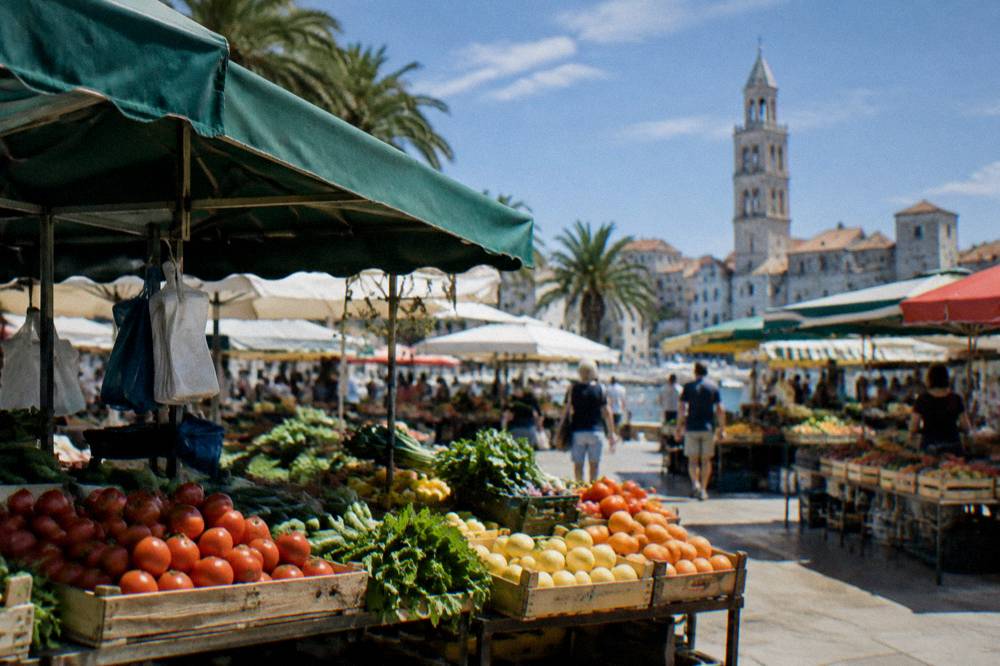
Eating like a resident stretches a budget further than any lodging trick, and the site's where locals eat in Split companion pieces and the food guides cover that ground. At markets and eateries, check posted prices and an itemised bill; that is a check a reader can always make.
One structural point on supply: with new short-term rental registrations paused inside the historic core through 2026 and existing ones grandfathered, the cheapest rooms increasingly sit outside the walls. That is a planning fact, not a drawback, since the hub-to-palace distance is 500 to 600 m.
Where To Stay In Split For Nightlife And Festivals?
For nightlife and festivals, stay in or just outside the palace quarter for the bars of the old town and the Riva, or around Bačvice for the beach clubs, while Ultra Europe on 9 to 11 July 2027 at Park Mladeži makes the western side near the stadium a rational base for that one weekend. The old town concentrates the evening scene inside walls that have stood since around 295 to 305 AD, and the Riva promenade in front of it is the city's default night walk. A nightlife-first stay accepts noise as the price of proximity.
The festival calendar shapes the year. The 72nd Split Summer Festival ran 14 July to 14 August 2026 across venues including the Peristyle; 2027 dates had not been announced. The Croatian National Theatre season runs 25 September 2026 to 14 June 2027. Sudamja, the city day for St Domnius, falls on 7 May each year.
For Ultra Europe weekend specifically, Park Mladeži sits west of the centre below Marjan, so Meje and Veli Varoš put you walking distance from the gates while keeping ferry access for island recovery days. The site's Ultra Europe guide covers the festival in detail.
Note the 2026 rules that touch nightlife: shops in the city may not sell alcohol at night during the summer ban window, with bars and restaurants unaffected, and public drinking in the historic centre carries a 300 EUR fine. Licensed terraces are the exception. More behaviour rules are collected in the site's what to avoid in Split resources.
How Close Is Each Area To The Airport, Ferries And Day Trips?
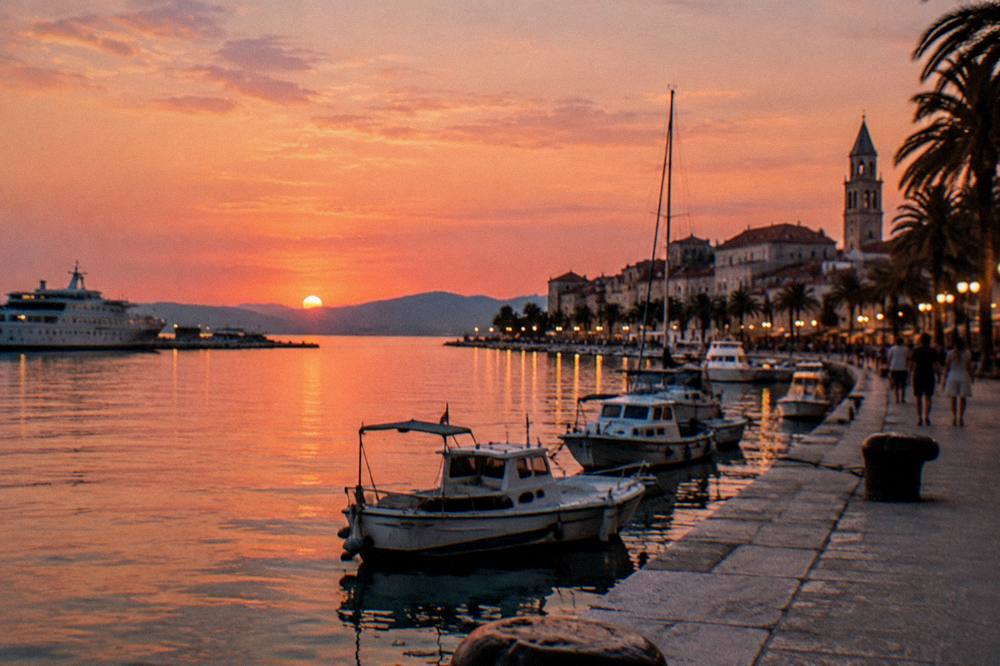
Split Airport sits 20 km from the city and 6 km from Trogir in Kaštel Štafilić, the Platanus shuttle runs 10 EUR one way and 15 EUR return to the main bus station beside the ferry port, and from that single hub the islands and parks fan out: Stari Grad about 120 minutes by ferry, Supetar about 50, Rogač about 60 and Vis about 140. Every area decision therefore doubles as a transport decision, because the hub is the fixed point 500 to 600 m from the palace.
The airport, which handled 3,881,186 passengers in 2025 by its own statistics, also fields Promet Split city bus lines 37 and 38; their fare is a few euros and is confirmed on board. Driving from the palace to the airport is 24.9 km, about 31 minutes free-flow. The site's airport transfer guide walks through each option.
Ferry fares from the hub are published: the line 635 car ferry to Stari Grad on Hvar takes about 120 minutes with foot passengers at 5.90 EUR off-season and 8.40 EUR in season, line 631 to Supetar on Brač about 50 minutes, line 636 to Rogač on Šolta about 60 minutes, and Vis about 140 minutes. Catamarans reach Hvar town and Jelsa at 6.40 EUR low and 10.00 EUR high season, and Vis at 7.20 and 10.00 EUR. Do not confuse them: Hvar town is the catamaran call, Stari Grad the car ferry port.
| Destination from Split hub | Mode | Journey time | Foot fare where published |
|---|---|---|---|
| Stari Grad, Hvar | Line 635 ferry | About 120 min | 5.90 EUR off-season, 8.40 EUR in season |
| Supetar, Brač | Line 631 ferry | About 50 min | On the operator's price list |
| Rogač, Šolta | Line 636 ferry | About 60 min | On the operator's price list |
| Vis | Ferry | About 140 min | On the operator's price list |
| Hvar town or Jelsa | Catamaran | On the sailing schedule | 6.40 EUR low, 10.00 EUR high |
| Zagreb | Coach | About 5 h 30 | Confirm at booking |
| Dubrovnik | Coach | About 4 h | Confirm at booking |
For land day trips, driving times from the palace are computed free-flow: Trogir 36 minutes, Salona 14, Klis 22, Omiš 38, Šibenik 71, Krka's Skradinski buk 74, Makarska 75, Zadar two hours, Mostar 2 h 13, Plitvice 3 h 15 and Dubrovnik 3 h 21. A hub-side or Žnjan base simplifies early departures; a Marjan-side base suits the boat trips, which leave from the Riva and nearby piers.
Where To Stay In Split For Day Trips To Krka And Plitvice?
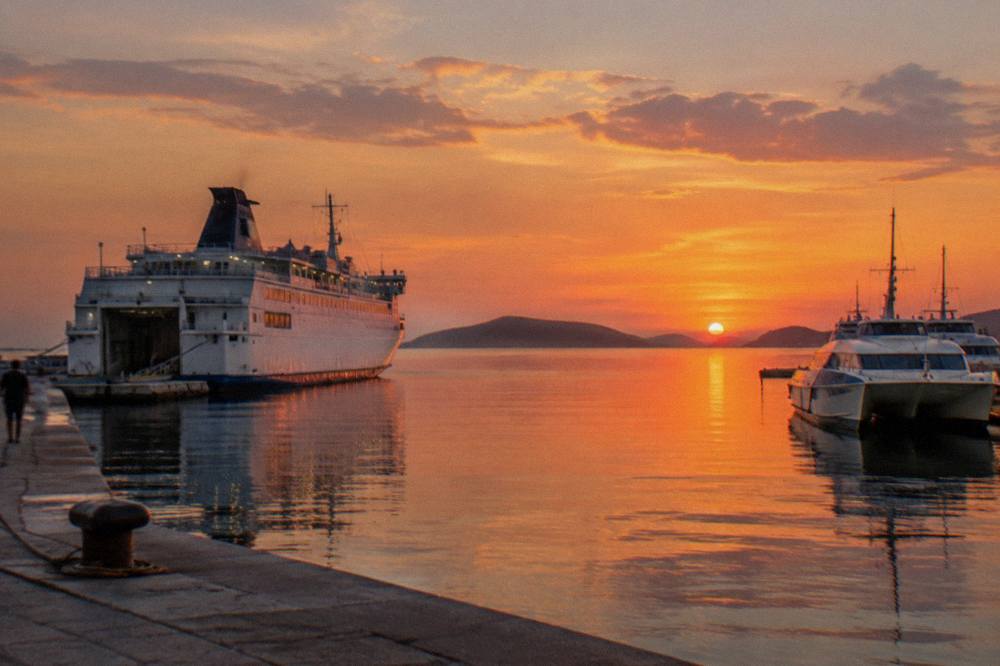
Stay within a short walk of the Obala kneza Domagoja hub, in the palace quarter, Veli Varoš or the streets behind the bus station, and you are 500 to 600 m from every coach and boat departure to Krka, Plitvice, Trogir, Salona, Omiš, Hvar and the Blue Cave, with Krka 74 minutes and Plitvice 3 h 15 from the palace by free-flow driving. Day-trip coaches and boat tours depart from this one district, so a base anywhere east or south of it adds transfer friction to every excursion.
The parks price seasonally, and the official price lists matter when you weigh a guided trip against going alone. Krka charges 7 EUR in January to March and November to December, 20 EUR in April, May and October, and 40 EUR from June to September, with the ticket including the Skradin boat and Lozovac transfers from 1 April to 31 October. Plitvice charges 10, 23 and 40 EUR across the same bands, with a 25 EUR afternoon slot at peak, timed online entry and the visitor's name required on the ticket.
| Park | Jan-Mar | Apr, May, Oct | Jun-Sep | Notes from the official price list |
|---|---|---|---|---|
| Krka | 7 EUR | 20 EUR | 40 EUR | Includes Skradin boat and Lozovac bus, 1 Apr to 31 Oct |
| Plitvice Lakes | 10 EUR | 23 EUR | 40 EUR | 25 EUR afternoon slot at peak; timed entry, name on ticket |
Guided trips from Split bundle the drive and, on some departures, the entry ticket. Two of the strongest fit the hub-side base: the Plitvice Lakes national park guided tour, and the Plitvice guided tour with entry tickets. Check availability
Swimming at Krka needs one correction that circulates widely: the park's own rules allow swimming only in clearly marked areas, with the reported designated spots at Roški slap, Stinice and Pisak from 1 June to 30 September. Skradinski buk itself is not a swimming spot under those rules.
Island trips complete the picture. The Blue Cave on Biševo charges 24 EUR in its 20 June to 10 September window and 18 EUR in the shoulder season, paid in cash on site per the sources reporting it. Those boat tours also leave from the Split seafront, again arguing for a central or hub-side base.
What Should You Know About Tourist Tax, Bookings And The Euro?
Croatia has used the euro since 1 January 2023 and has been in the Schengen area since 1 January 2023, the tourist tax runs at about 2.65 EUR per person per night in high season from 1 April to 30 September with under 12s free and 12 to 18s half, and the amount is collected by the accommodation and confirmed at booking. Always write "about": the exact figure sits in a county decision attachment, and a 2027 amendment exists. No low-season figure, night cap or City Card price appears in the sources this desk reports.
Booking timing follows the calendar. July and August are the squeeze: July means 26.2 C on the DHMZ Split-Marjan 1948-2024 table, 353.3 sunshine hours and 18 days at 30 C or more, and August nearly the same at 25.9 C. November is the wettest month at 115.5 mm and December the dimmest at 120.8 sunshine hours, which is exactly why winter rates soften and Advent, 27 November 2026 to 7 January 2027, fills the gap with the Đardin ice rink.
Two construction timelines touch lodging plans for 2027. The Riva's central section is due for renovation from November 2026 lasting a little over a year, so partial closures on the Riva are expected through 2027, a reason to weigh a Bačvice or Žnjan base over a seafront-one if promenade works would bother you. The 5-star, 285-unit Hotel Marjan is planned to open for the 2027 season, adding a western option below the park forest.
Entry rules close the checklist. The EES border system has been fully operational since 10 April 2026 for non-EU short-stay visitors, recording biometrics at the external Schengen borders. ETIAS is not yet live and has no fixed start date, so no travel authorisation fee applies yet for visa-exempt visitors; confirm the current status before travel. The emergency number in Croatia is 112.
Common Questions About Where To Stay In Split
Is it better to stay in the Old Town or near the beach in Split?
The Old Town, inside and around Diocletian's Palace, suits short stays built around the palace sights, the Riva and nightlife, while Bačvice, Firule and Meje suit beach-first trips, all within 10 to 20 minutes on foot of the centre. The ferry, bus and rail hub sits 500 to 600 m from the palace, so neither choice isolates you from transport.
How many days should you stay in Split?
Most itineraries work with two to three nights in the city plus day trips: the palace quarter fills a full day, Marjan and the beaches a second, and Krka, Plitvice, Hvar or the Blue Cave each take a full day from the hub. The site's one-day and three-day itineraries break this down.
Is Split expensive to stay in?
Room rates are set by each listing and are not printed here. The fixed extra is the tourist tax, about 2.65 EUR per person per night in high season from 1 April to 30 September, under 12s free and 12 to 18s half, collected by the accommodation and confirmed at booking. Croatia has used the euro since 1 January 2023.
Do you need a car when staying in Split?
Not for the city itself, and not for the island trips, which leave on foot-passenger ferries and catamarans from the hub. A car helps for chains of inland or long day trips: Klis is 22 minutes from the palace, Krka 74, Plitvice 3 h 15 and Dubrovnik 3 h 21 free-flow.
Which month is warmest in Split?
By the DHMZ Split-Marjan station table for 1948-2024, July is the warmest month at a 26.2 C mean, with 18 days at 30 C or more, followed by August at 25.9 C. July is also the driest month at 26.6 mm, while November is the wettest at 115.5 mm.
Where should you stay in Split the night before a ferry?
The streets around the main bus station and ferry port on Obala kneza Domagoja, 500 to 600 m from the palace, put you a few minutes' walk from the line 635 ferry to Stari Grad, the line 631 to Supetar and the catamarans to Hvar town, Jelsa and Vis, which is the safest margin for early sailings.
The short version: match the district to the trip, book the palace quarter early for summer, keep the hub in mind for every ferry and coach departure, and let the tourist tax of about 2.65 EUR per person per night in high season, confirmed at booking, be the only surprise on your bill.