Split Airport To City Centre
Split Airport sits 20 km from the city, and the Platanus shuttle covers the distance to the main bus station for 10 EUR one way. Here is every option, with prices and times.
Short answer
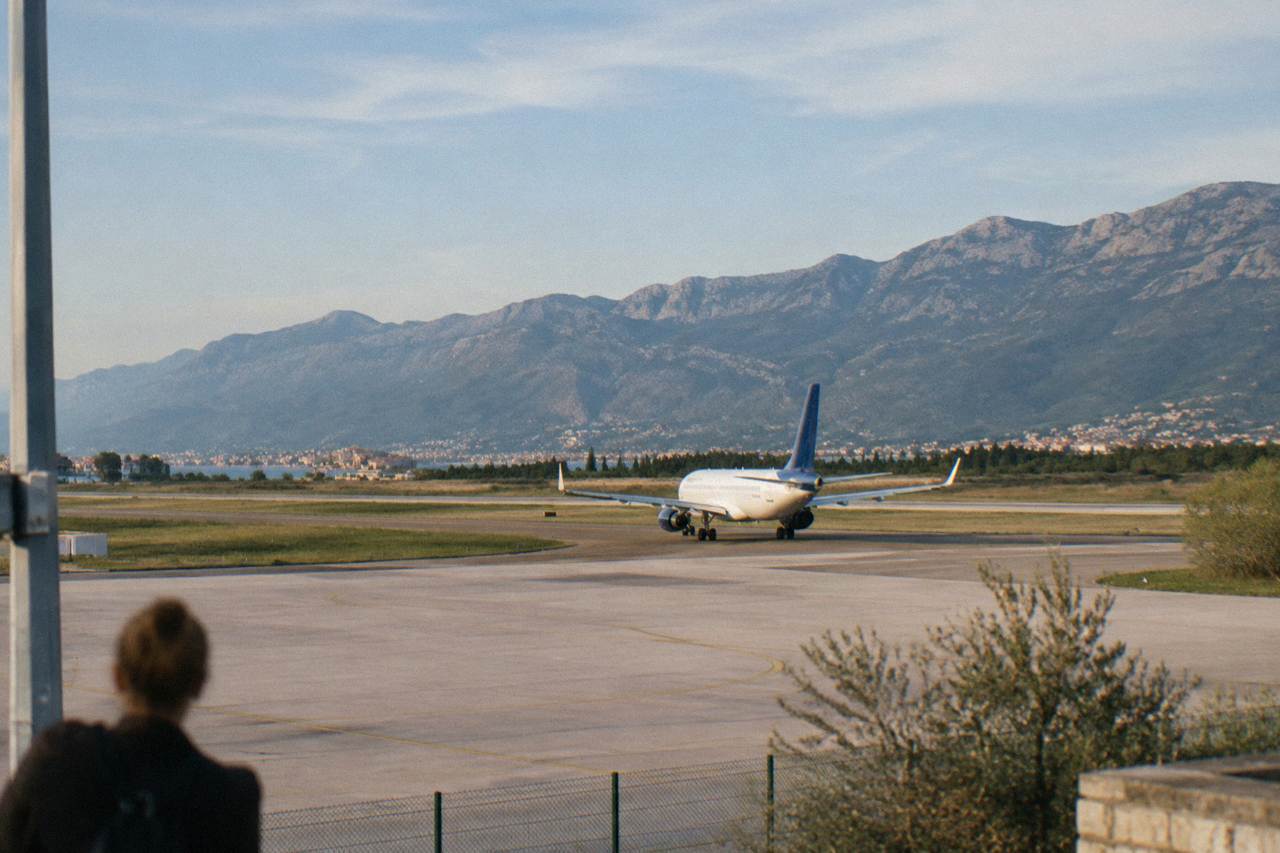
Split Airport is 20 km west of the city in Kaštel Štafilić. The Platanus shuttle costs 10 EUR one way and 15 EUR return to the main bus station by the ferry port; Promet lines 37 and 38 also stop at the airport. Driving takes about 31 minutes free-flow.
Split Airport handled 3,881,186 passengers in 2025, and every one of them faced the same first question: how do you get from the terminal to the city? The airport's own pages place it in Kaštel Štafilić, in the Kaštela belt west of the city, 20 km from Split and 6 km from Trogir. That distance shapes everything on this page: the shuttle, the local bus lines, the drive, and the timing of a first evening inside Diocletian's Palace. This guide lays out each option with the figures the operators themselves publish, then follows the arrival all the way into the Old Town, where a Split Croatia Travel Guide can take over the planning.
How Far Is Split Airport From The Split City Centre?
Split Airport stands 20 km west of the city in Kaštel Štafilić, in the Kaštela belt, and 6 km from Trogir in the other direction. Driving from the terminal to Diocletian's Palace measures 24.9 km and takes about 31 minutes in free-flow traffic, according to route calculations. The airport's own information pages give the 20 km and 6 km figures, so any claim of a ten-minute hop into town can be dismissed.
The number that matters for planning is not the straight-line distance but the route. The road from the airport follows the Kaštela coastline and then cuts inland toward the city, which is why the driving distance from the palace, 24.9 km, runs longer than the airport's stated 20 km. Traffic in the summer months can stretch the drive well past the free-flow estimate, because the same coastal road carries traffic to Trogir, Šibenik and the airport itself.
A useful anchor for orientation: the ferry port, the main bus station and the railway station sit together on Obala kneza Domagoja, 500 to 600 m from the palace. Whichever transport you choose from the airport, that transport hub is where you arrive, and the Old Town is a short flat walk from there. For the broader picture of the terminal itself, see the Split Airport guide, and for the flights that serve it, the flights to Split guide.
What Does The Split Airport Shuttle Bus Cost And Where Does It Go?
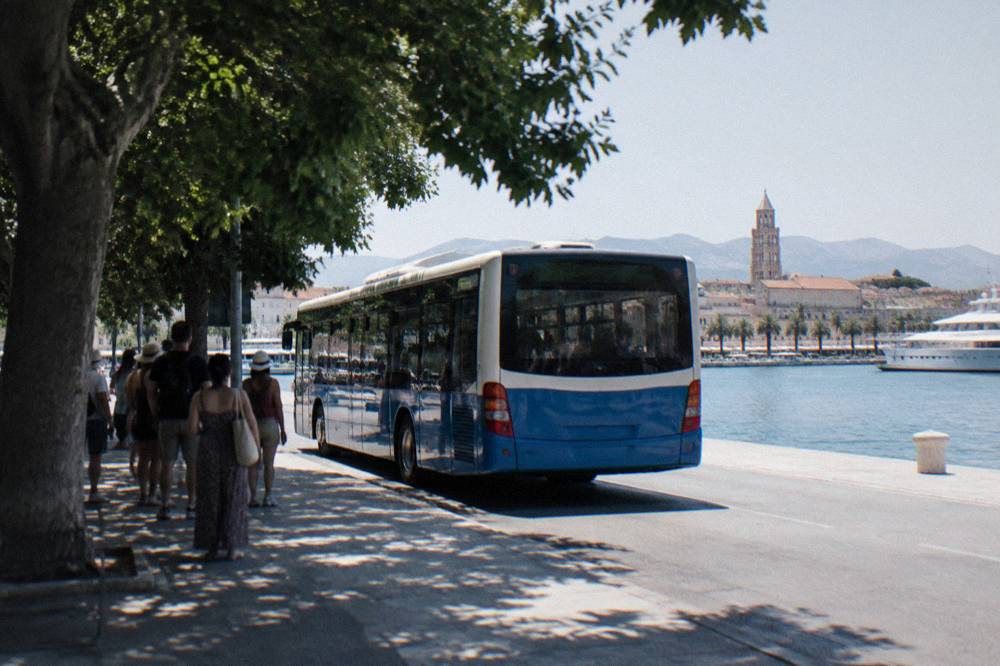
The Platanus shuttle runs from the airport's north parking area to Split's main bus station, next to the ferry port on Obala kneza Domagoja, and charges 10 EUR one way or 15 EUR return, on the operator's published price list. The main bus station sits 500 to 600 m from Diocletian's Palace, so the shuttle delivers you within a short walk of the Old Town and the Riva.
The shuttle is the simplest option for anyone staying inside the city. You buy the ticket for a fixed, published price, you ride to a single known destination, and you step off beside the ferries, the buses and the railway, with the palace a few hundred metres away. The operator's page gives the stops and the two fares, 10 EUR one way and 15 EUR return, and those are the only airport transfer prices published on an official page for this route.
One planning note: because the drop-off is the transport hub rather than your hotel door, anyone staying further out, up on Marjan or east around Žnjan, may prefer a transfer or a hire car. The car rental in Split guide covers the driving side, and the where to stay in Split guide helps match the neighbourhood to the arrival.
Do Local Buses Run From Split Airport To The City?
Promet Split city bus lines 37 and 38 stop at the airport and run into the city's bus network, which makes them the local, stop-and-start alternative to the express shuttle. The fare is not published on a page this site can quote, so treat it as a few euros and confirm on board or at the driver before you ride. Lines 37 and 38 are the only Promet routes the operator lists with an airport stop.
The city bus suits travellers with light bags, time to spare, or a stay somewhere along the Kaštela route, because the bus serves local stops rather than running express. The trade-off is simple: the shuttle publishes its fare and its single destination, while the city bus asks you to confirm the fare at the point of boarding. Both finish in the same part of town, near or at the main station by the ferry port.
Once you are off the bus, the city itself is compact. The getting around overview in the things to do in Split guide covers the walkable core, and the transport hub position means ferry connections to Hvar, Brač, Šolta and Vis are all within the same few hundred metres, a point the ferries from Split guide develops in full.
Should You Take A Taxi, A Private Transfer Or A Hire Car From Split Airport?
Taxis and private transfers operate from the terminal, but no official page publishes a fare for the run into Split, so this site prints no number and you should agree the price or check the booking before you ride. A hire car turns the airport into a touring base: the drive to the palace is 24.9 km, and Klis Fortress, Salona and Trogir all sit within 40 minutes of the terminal.
The honest position on taxis is that the fare is simply not verifiable from an official source, and guessing a number would mislead. What can be said is operational: transfers serve the terminal, and a pre-booked one drops at your accommodation rather than at the bus station, which matters for late arrivals or stays outside the centre.
A hire car makes sense for a different kind of trip.
| Destination from Split | Distance by road | Free-flow driving time |
|---|---|---|
| Klis Fortress | 13.9 km | 22 min |
| Salona | 9.1 km | 14 min |
| Trogir | 29.3 km | 36 min |
| Omiš | 25.5 km | 38 min |
| Šibenik | 84.8 km | 71 min |
| Krka National Park, Skradinski buk | 90.2 km | 74 min |
| Makarska | 86.1 km | 75 min |
| Zadar | 159.5 km | 2 h |
| Mostar | 173.2 km | 2 h 13 |
| Plitvice Lakes | 258.1 km | 3 h 15 |
Trogir deserves a special note for arrivals: at 6 km from the airport, it is closer to your landing than Split itself, and some travellers split a stay between the two. The Trogir day trip guide covers the old town, inscribed by UNESCO in 1997, and the Split day trips guide maps the full range of options from the city.
Which Split Airport Transfer Option Suits Which Trip?
The shuttle at 10 EUR one way suits anyone staying in or near the Old Town, because it stops 500 to 600 m from the palace. The city bus on lines 37 or 38 suits light-pack travellers on a budget. A transfer suits late flights and out-of-centre stays, and a hire car suits a touring itinerary built around Krka, Klis, Trogir or the ferry to the islands, where a car opens the coast.
The choice usually comes down to two questions: where are you sleeping, and what is the first thing you want to do? If the answer is the Old Town and a walk, the shuttle wins on price and simplicity, and the fixed published fare means no negotiation at the kerb. If the answer is an early start up the coast, a car waiting at the terminal saves a return trip.
| Option | Published cost | Where it takes you | Best for |
|---|---|---|---|
| Platanus shuttle | 10 EUR one way, 15 EUR return | Main bus station by the ferry port | Old Town stays, ferry connections |
| Promet lines 37 and 38 | A few euros, confirm on board | City bus network via local stops | Budget travellers, Kaštela stops |
| Taxi or transfer | No official fare published | Your stated address | Late arrivals, out-of-centre stays |
| Hire car | Rates vary, confirm at booking | Anywhere in Dalmatia | Touring itineraries, island ferries |
Note the last row carefully: car ferries carry vehicles to the islands, and the Split to Hvar ferry guide explains the split between Stari Grad, the car-ferry port, and Hvar town, the catamaran stop, a distinction that catches out arrivals every season.
What Should You Expect When You Arrive In The Split Old Town?
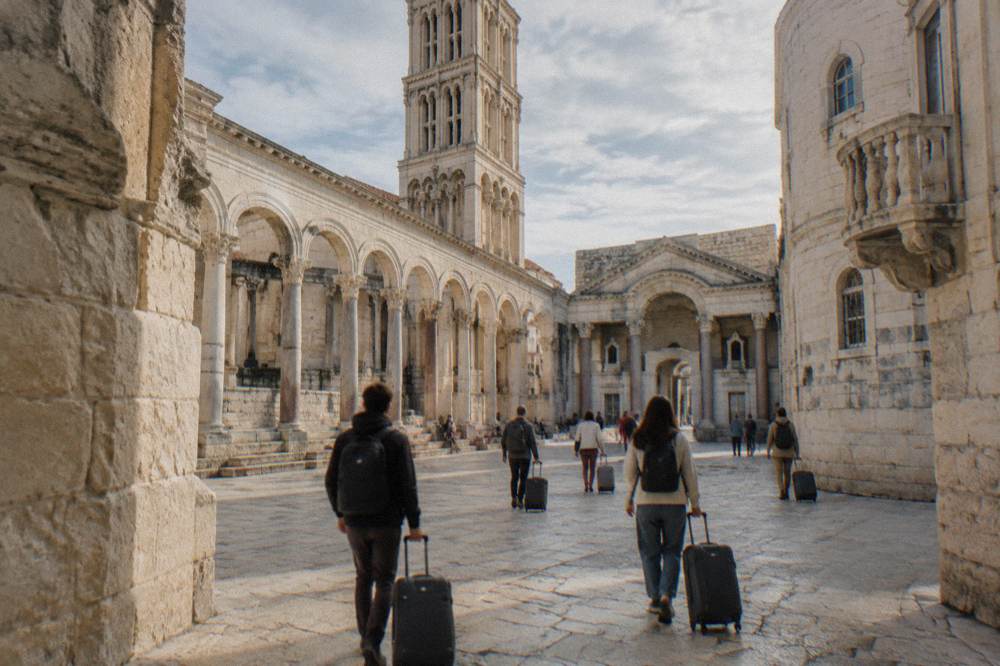
Arriving in the Old Town means stepping into a living Roman palace built around 295 to 305 AD for Emperor Diocletian, inscribed by UNESCO in 1979 as the Historical Complex of Split with the Palace of Diocletian across a 20.8 ha property. The Peristyle, the Riva, the Golden Gate and the Grgur Ninski statue cost nothing to see, and the palace cellars are open 8:30 to 20:00 daily under the Split City Museum.
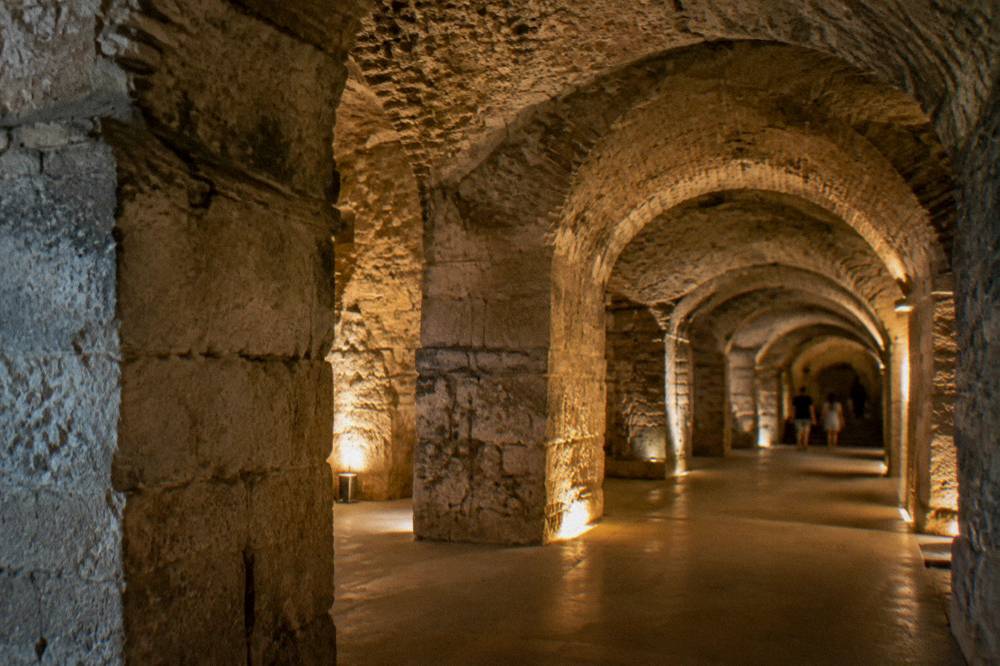
The walk from the bus station delivers you into this within minutes. The cellars, the vaulted lower levels of the palace run by the Split City Museum, are open Monday to Sunday from 8:30 to 20:00, though the central part is under restoration to the end of 2026 and the passage stays open. The Split City Museum itself, in Papalić Palace, charges 10.00 EUR for adults, 8.00 EUR reduced, with a family ticket at 18.00, and closes on Mondays.
For a deeper route through the palace, the Diocletian's Palace guide and the cathedral of St Domnius guide cover the ticketed interior sites. The cathedral's prices are secondary-sourced, so write them as from about 5 EUR, with combined tickets up to about 15 EUR, and confirm at the Peristyle kiosk; shoulders and knees must be covered. Other museum prices near the centre, all verified from the institutions' own lists:
| Museum or site | Adult ticket | Notes |
|---|---|---|
| Split City Museum, Papalić Palace | 10.00 EUR | Reduced 8.00, family 18.00, closed Mondays |
| Diocletian's Palace cellars | Open 8:30 to 20:00 daily | Run by the Split City Museum |
| Archaeological Museum | 8.00 EUR | Combined with Salona 10.00 EUR within 7 days |
| Meštrović Gallery | 12.00 EUR | Includes Crikvine-Kaštilac; reopened April 2026 |
| Ethnographic Museum | 7.00 EUR | Reduced 4.00, family 15.00 |
A guided half-day that strings together Trogir, Salona, an olive museum and Klis Fortress is one way to see four inland sights without a hire car, and the listing shows the current price and departure details.
Can You Continue Straight From Split Airport To The Islands?
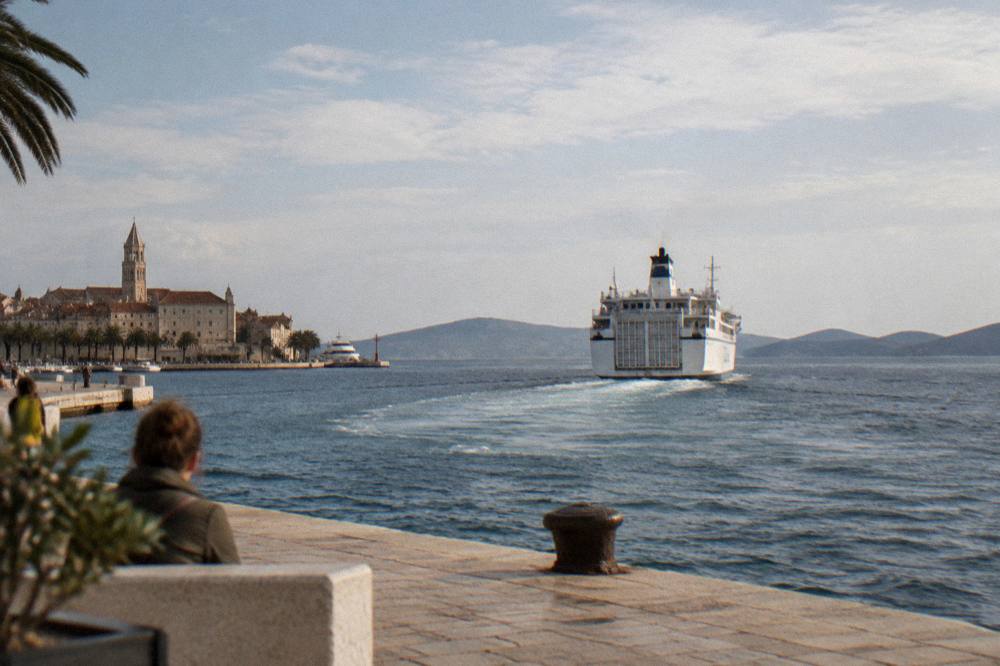
Yes, because the shuttle's drop-off at the main bus station sits beside the ferry port on Obala kneza Domagoja, and the catamaran operator Krilo reports a revised Split to Supetar sailing schedule from 1 October 2026. The line 635 car ferry to Stari Grad on Hvar takes about 120 minutes, with foot passengers paying 5.90 EUR off-season and 8.40 EUR in season on Jadrolinija's published fare list.
This is the arrival plan many visitors miss: the airport transfer and the island ferry connect through one hub, on foot, in a few hundred metres. From 2026, Jadrolinija's Split to Supetar line runs high-season and low-season timetables only, with no off-season schedule, the fifth Croatian line to reach that year-round intensity. The island connections from the port:
| Route from Split | Type and line | Crossing | Foot passenger fare |
|---|---|---|---|
| Stari Grad, Hvar | Car ferry, line 635 | about 120 min | 5.90 EUR off-season, 8.40 EUR in season |
| Supetar, Brač | Car ferry, line 631 | about 50 min | Fare on the operator's list |
| Rogač, Šolta | Car ferry, line 636 | about 60 min | Fare on the operator's list |
| Vis | Car ferry | about 140 min | Fare on the operator's list |
| Hvar town or Jelsa | Catamaran, line 9603 | on the timetable | 6.40 EUR low, 10.00 EUR high |
| Vis | Catamaran, line 9602 | on the timetable | 7.20 EUR low, 10.00 EUR high |
Two distinctions matter. Hvar town is a catamaran stop; Stari Grad is the car-ferry port, and confusing them means arriving on the wrong side of the island. And the Port of Split moved 6.05 million passengers in 2025, its own pages calling it Croatia's busiest passenger port, so summer sailings deserve early booking through the operator's own channels.
How Does Your Arrival Month Change The Journey From Split Airport?
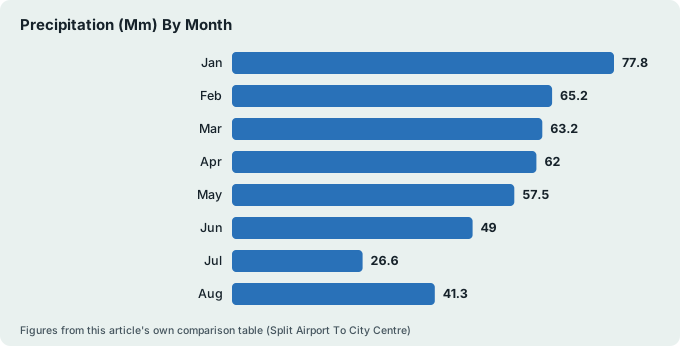
The month you land changes traffic, prices and daylight, not the route. The DHMZ Split-Marjan station table, covering 1948 to 2024, gives a July mean of 26.2 C against a January mean of 8.0 C, with July the driest month at 26.6 mm of rain and November the wettest at 115.5 mm, so summer arrivals face the busiest roads and the calmest skies.
Summer is the season of the full shuttle and the slow coastal road. The airport's 2025 total of 3,881,186 passengers concentrates into the June to September window, and the same months bring 18 days at 30 C or more in July and 17 in August, on the DHMZ Split-Marjan counts. Autumn and spring arrivals trade the heat for lighter roads, and the November and December figures, 115.5 mm and 103.7 mm of rain, are the months to pack for showers. The full monthly picture:
| Month | Mean temperature (C) | Precipitation (mm) |
|---|---|---|
| Jan | 8.0 | 77.8 |
| Feb | 8.5 | 65.2 |
| Mar | 10.8 | 63.2 |
| Apr | 14.4 | 62.0 |
| May | 19.2 | 57.5 |
| Jun | 23.4 | 49.0 |
| Jul | 26.2 | 26.6 |
| Aug | 25.9 | 41.3 |
| Sep | 21.6 | 70.9 |
| Oct | 17.2 | 77.0 |
| Nov | 12.7 | 115.5 |
| Dec | 9.4 | 103.7 |
These are weather-station means for the period 1948 to 2024 from the DHMZ Split-Marjan station, not a forecast, and the Split weather guide and the best time to visit Split guide turn them into month-by-month advice. Winter arrivals land into a different city: Advent in Split runs 27 November 2026 to 7 January 2027 with the ice rink at Đardin.
For warm-month arrivals with energy to burn, canyoning on the Cetina river above Omiš, about 38 minutes from the city by road, is a first-day option the booking page prices and schedules.
Where Should You Head First After Reaching The Split City Centre?
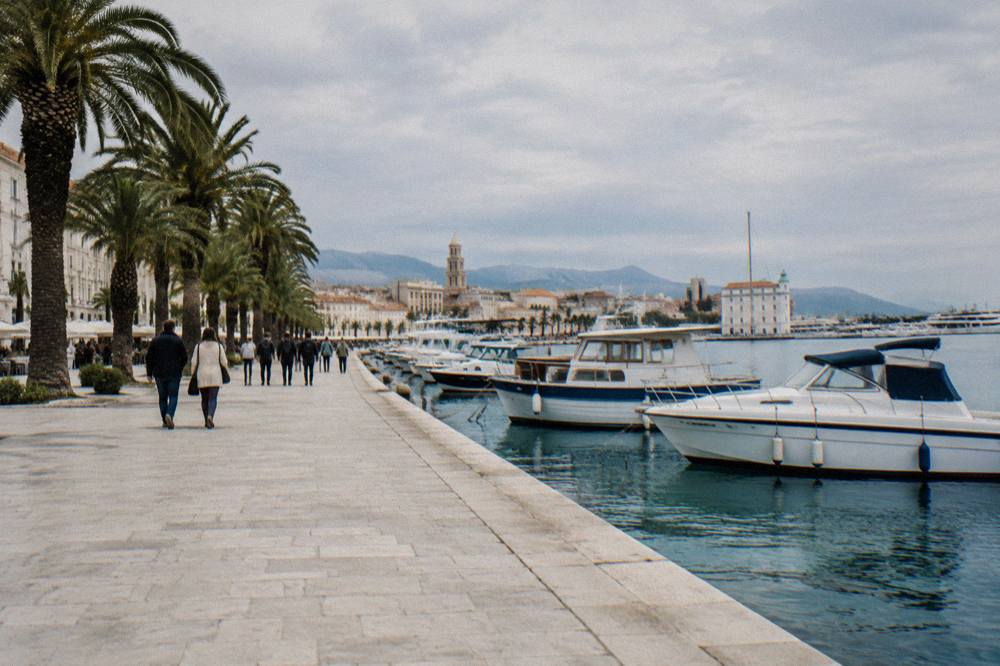
Head for the Riva and the Peristyle first, both free and both within 600 m of where the shuttle stops, then decide between the palace cellars, a museum, or a table in the stone lanes. The Roman guard change ran on the Peristyle at noon from 28 May to 27 September 2026, and the markets, the Grgur Ninski statue and the city beaches of Bačvice all cost nothing to visit.
A first afternoon falls naturally into a walk: from the bus station along the Riva, into the palace at the Bronze Gate, up through the cellars' exit into the Peristyle, and out past the Golden Gate and the Grgur Ninski statue. From there Bačvice beach, the home of picigin, the ball game born on its sand in 1908 and now protected intangible heritage of Croatia, is a short stroll east. The Bačvice beach guide and the free things to do in Split guide build out the no-cost itinerary.
Food is the other natural first move, and the Split food guide with the Split restaurants guide map the tables from the green market outward. A walking food tour turns that first evening into a guided route through the Old Town's dishes and stalls.
What Are The Rules To Know When You Arrive In Split?
Croatia uses the euro since 1 January 2023 and is a Schengen member, the emergency number is 112, and Split's historic centre carries named public-order fines: 300 EUR for drinking alcohol in the centre, 300 EUR for urinating or climbing monuments, and 150 EUR for sleeping in public spaces, on the city's published rules. Walking in swimwear or shirtless in the centre is also fined, with the amount set locally.
The alcohol rule deserves the clearest statement: public drinking in the historic centre, or within 100 m of schools, draws a 300 EUR fine, with licensed terraces exempt. The same city decision covers climbing on monuments, bathing in fountains and taxi touting, also at 300 EUR. For arrivals heading into private accommodation, the tourist tax is collected by the accommodation, at about 2.65 EUR per person per night in high season, with under-12s free and 12 to 18s at half rate, confirmed at booking.
Border formalities have changed recently too. The EES system, recording biometric entry and exit for non-EU short-stay visitors, has been fully operational at external Schengen borders since 10 April 2026, while ETIAS is not yet live and has no fixed start date. Nothing in that affects the airport-to-centre journey itself, but it explains the fingerprint stops at passport control on arrival.
Common Questions About Split Airport To City Centre Transfers
How Far Is Split Airport From The Split City Centre?
Split Airport is 20 km from Split and 6 km from Trogir, in Kaštel Štafilić. Driving from the terminal to Diocletian's Palace measures 24.9 km and takes about 31 minutes in free-flow traffic.
What Does The Split Airport Shuttle Bus Cost And Where Does It Go?
The Platanus shuttle costs 10 EUR one way and 15 EUR return, running from the airport's north parking area to Split's main bus station beside the ferry port, 500 to 600 m from Diocletian's Palace.
Do Local Buses Run From Split Airport To The City?
Yes. Promet Split city bus lines 37 and 38 stop at the airport. The fare is not published on a quotable official page, so treat it as a few euros and confirm on board.
Can You Continue Straight From Split Airport To The Islands?
Yes. The shuttle drops at the main bus station beside the ferry port, where the line 635 car ferry to Stari Grad on Hvar takes about 120 minutes, with foot passengers paying 5.90 EUR off-season and 8.40 EUR in season.
Can You Drink Alcohol In Public In Split?
No. Drinking alcohol in the historic centre, or within 100 m of schools, carries a 300 EUR fine under the city's published rules, with licensed terraces exempt. Night-time retail alcohol sales in shops are also banned in the summer season.
Which Month Is Warmest For Arriving In Split?
July, with a mean of 26.2 C on the DHMZ Split-Marjan station table for 1948 to 2024, ahead of August at 25.9 C. July is also the driest month at 26.6 mm of rain.
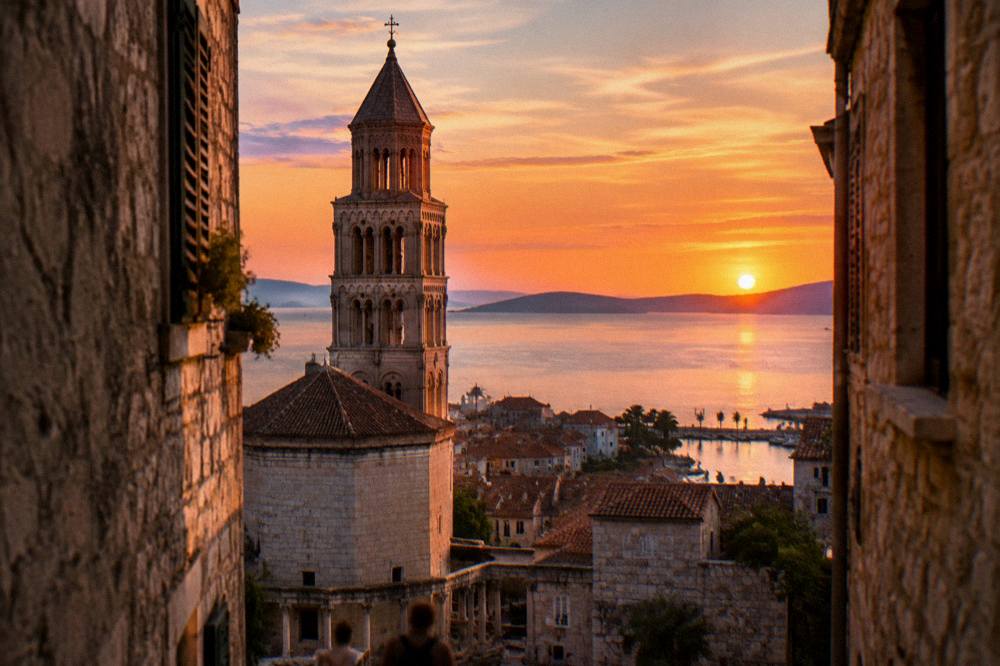
The journey from Split Airport to the city centre is a solved problem: a published shuttle fare of 10 EUR one way, a 31-minute drive, or a local bus you confirm on board, all ending 500 to 600 m from a Roman palace. What you do after stepping off is where the real planning starts, and the linked guides above carry each part of it, from the cellars beneath the Peristyle to the ferry deck bound for Hvar.