Split On A Budget
Split rewards a careful budget better than nearly any Adriatic city: the palace streets, the Riva, Marjan and the beaches cost nothing, and the paid sights have small, published ticket prices.
Short answer
Split can be done cheaply because its core sights, the Peristyle, the Riva, Marjan hill and the city beaches, are free, museum tickets run 7 to 12 EUR, ferries to the islands cost under 9 EUR on foot in season, and the shoulder months cut park prices to 20 EUR or less.
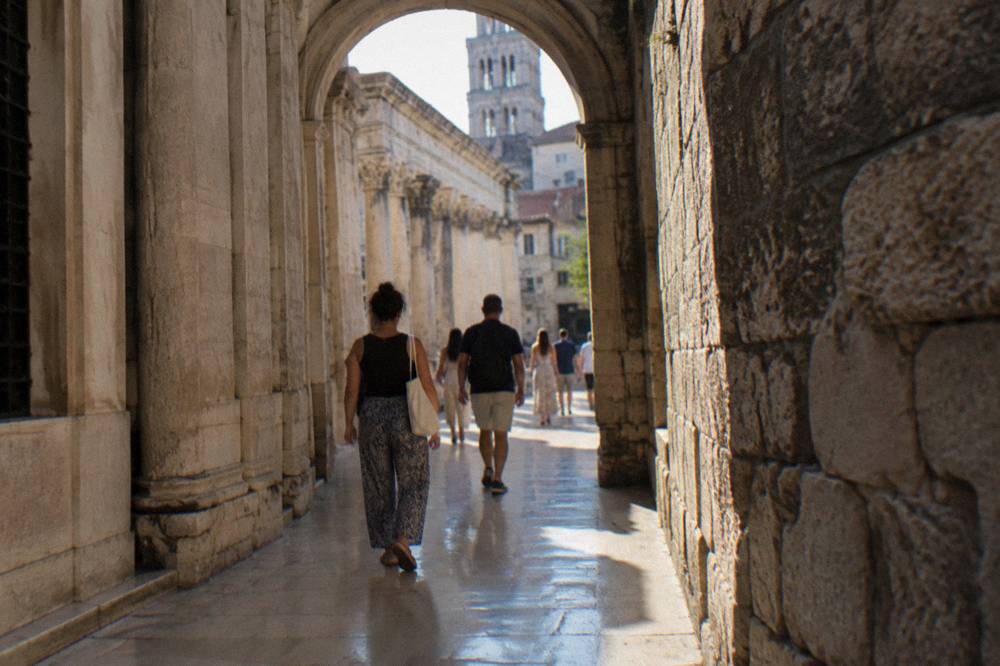
Split keeps its costs low in a way few Adriatic cities manage. The Old Town sits inside Diocletian's Palace, a Roman retirement residence built between about 295 and 305 AD and now a UNESCO World Heritage site of 20.8 hectares, and the streets of that palace cost nothing to walk. The seafront Riva, the Marjan park forest on the western peninsula and the city beaches are equally free, so the expensive part of a visit, the setting itself, is the part nobody charges for. What remains is a short list of small museum tickets, cheap island ferries and a handful of choices, timing among them, that decide whether a Split trip runs cheap or not. This page sets out the numbers that are published, what they buy, and where a budget actually bends.
Is Split Expensive To Visit?
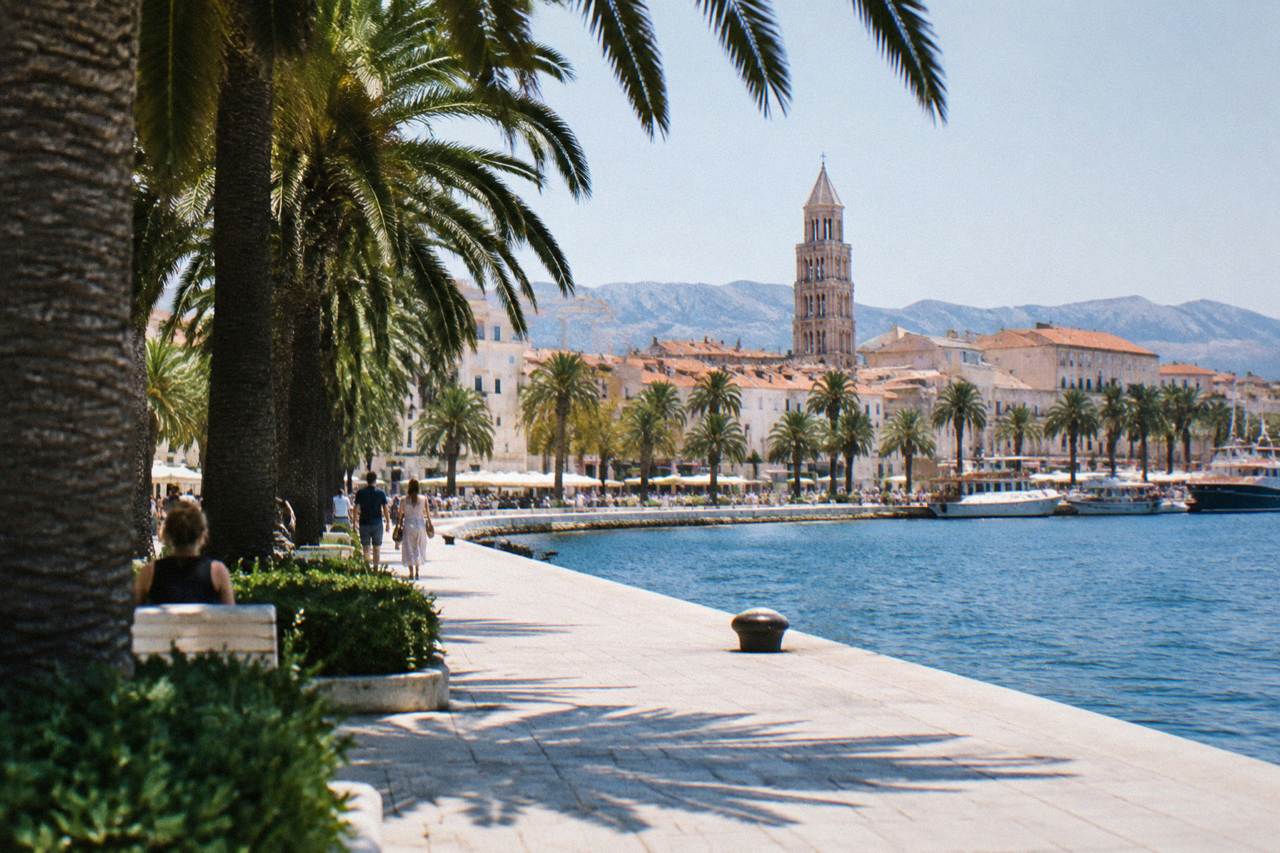
Split is not an expensive city by Adriatic standards, because its headline sights charge no entry at all: the Peristyle, the Riva, the Prokurative square, the Golden Gate, the Grgur Ninski statue, the green markets, Marjan hill and every city beach are free. Paid sights are few and modest, with Split City Museum at 10.00 EUR, the Ethnographic Museum at 7.00 EUR and the Meštrović Gallery at 12.00 EUR. Croatia uses the euro since 1 January 2023, which makes price comparisons simple.
The structural reason Split stays affordable is that the city's identity and its free zone are the same thing. A visitor can spend a full day inside the palace walls, on the Riva and up Marjan hill without buying a single ticket, and still see the elements the city is known for. The paid layer, the cellars, the cathedral complex, the museums, is optional and priced like a city museum network rather than a resort attraction.
The only cost that surprises some travellers is the tourist tax, which is collected by the accommodation rather than paid at a booth. It runs at about 2.65 EUR per person per night in high season, 1 April to 30 September, with under 12s free and 12 to 18s paying half; the exact amount is confirmed at booking. Spread over a stay it is small, but it belongs in a nightly budget.
Beyond that, the price levers are timing and transport. Park and cave tickets swing with the calendar, island ferries cost a fraction of any speedboat tour, and the months either side of summer drop both prices and crowds. The sections below take each lever in turn.
Which Sights In Split Are Free?
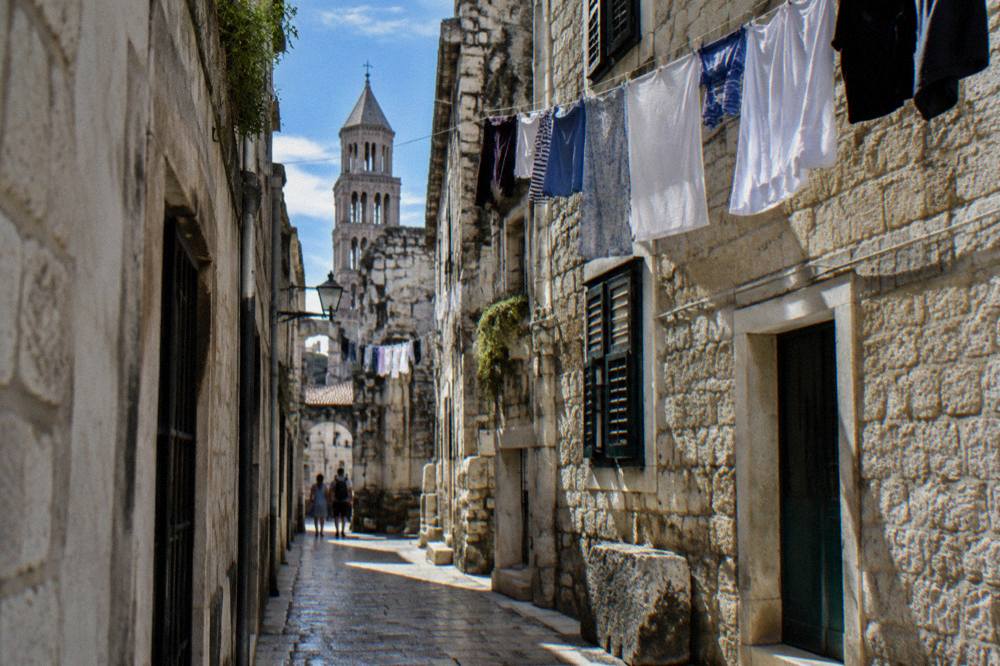
Everything that defines Split's street-level character is free: the Peristyle, the colonnaded heart of Diocletian's Palace; the Riva promenade; the Prokurative square; the Golden Gate with the Grgur Ninski statue whose toe passers-by rub; the green and fish markets; the whole Marjan park forest, whose highest point Telegrin sits 178 m above the sea; and all the city beaches including Bačvice and Kašjuni. No ticket booth exists at any of them.
The free list is not a consolation prize, it is the main event. The palace is a lived-in quarter with apartments, cafes and shops inside Roman walls, so walking it is the point rather than a preview. The Peristyle, the open colonnaded square at the palace's centre, hosted a daily change of Diocletian's Roman Guard at noon from 28 May to 27 September 2026, a free performance on one of the most atmospheric stages in Croatia.
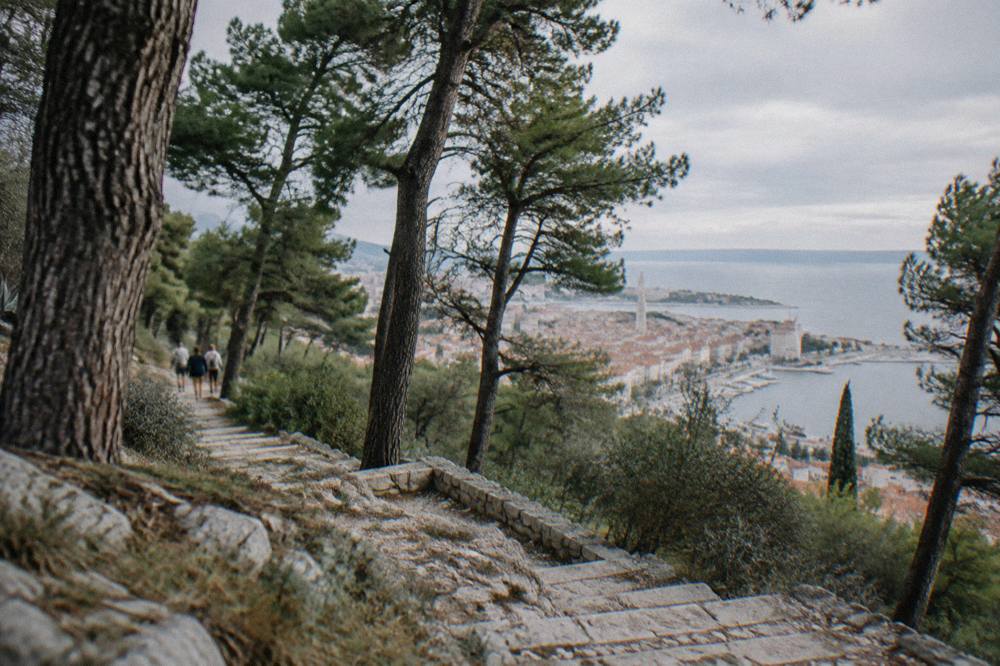
Marjan hill deserves a full morning in any budget plan. The Društvo Marjan park association gives the peninsula as 3.5 km long and 1.5 km wide, with 819 steps leading from Trumbićeva obala up to Telegrin, the 178 m summit. The climb costs nothing and returns views over the city, the islands and the open Adriatic. The free things to do in Split guide expands this list in detail.
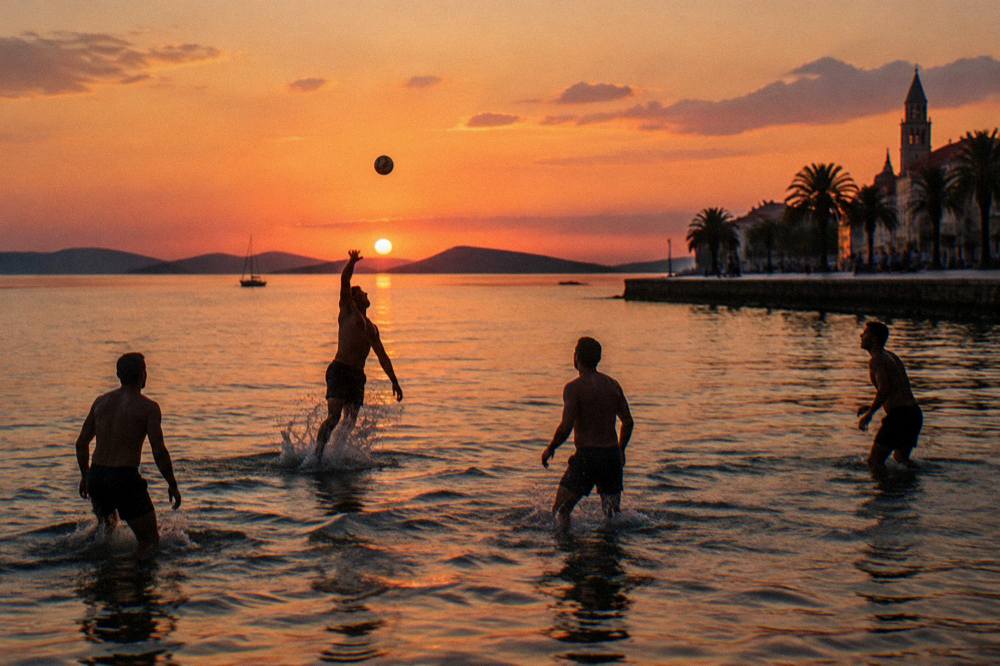
Add the beaches. Bačvice, the shallow sandy bay closest to the centre and the home of picigin, the ball game born there in 1908 and now protected intangible heritage of Croatia, charges nothing. So do Kašjuni beneath Marjan and Žnjan to the east. A towel and the city buses are the whole equipment list.
What Do The Paid Sights In Split Cost?
Adult tickets in Split run from 7.00 EUR at the Ethnographic Museum to 12.00 EUR at the Meštrović Gallery, with Split City Museum at 10.00 EUR, the Archaeological Museum at 8 EUR and its combined museum-plus-Salona ticket at 10 EUR valid for 7 days. The Cathedral of St Domnius complex costs from about 5 EUR for the cathedral alone, with combined tickets up to about 15 EUR for all five parts. The palace cellars are open 8:30 to 20:00 daily.
The Meštrović Gallery is the top of the price range and includes the Crikvine-Kaštilac site in the same 12.00 EUR ticket; the gallery reopened in April 2026 after a fifteen-month energy renovation, so the building itself is part of what the ticket buys. The price list on the gallery's own site confirms the figure and the inclusion.
| Sight | Adult ticket | Source detail |
|---|---|---|
| Ethnographic Museum | 7.00 EUR | 4.00 EUR reduced, Vestibule 2.00 EUR |
| Archaeological Museum | 8 EUR | 4 EUR children, students, retirees |
| Archaeological Museum plus Salona | 10 EUR | Combined, valid 7 days |
| Split City Museum, Papalić Palace | 10.00 EUR | 8.00 EUR reduced, family 18.00, closed Mondays |
| Meštrović Gallery | 12.00 EUR | Includes Crikvine-Kaštilac, 8.00 EUR reduced |
| Cathedral of St Domnius complex | From about 5 EUR | Combined tickets up to about 15 EUR |
Two notes stretch these tickets further. The Archaeological Museum's combined 10 EUR ticket covers both the Split museum and the Roman ruins at Salona if used within seven days, which turns two sights into one price. And the cathedral complex sells colour-coded combinations at the Peristyle kiosk, so a visitor can take the cathedral alone or the full five-part ticket depending on budget; shoulders and knees must be covered inside.
The cellars, the underground halls of Diocletian's Palace run by Split City Museum, are open Monday to Sunday 8:30 to 20:00, with the central part under restoration to the end of 2026 while the passage stays open. The Diocletian's Palace cellars page covers what is accessible during the works.
A walking tour is the one paid sight-entry add-on worth weighing on a tight budget, because it converts the free palace streets into an explained experience. Tip-based walks also run locally; confirm arrangements and expectations with the guide directly. For a structured alternative with a historian leading, the Split walking tours guide compares the options.
How Much Does Eating In Split Cost On A Budget?
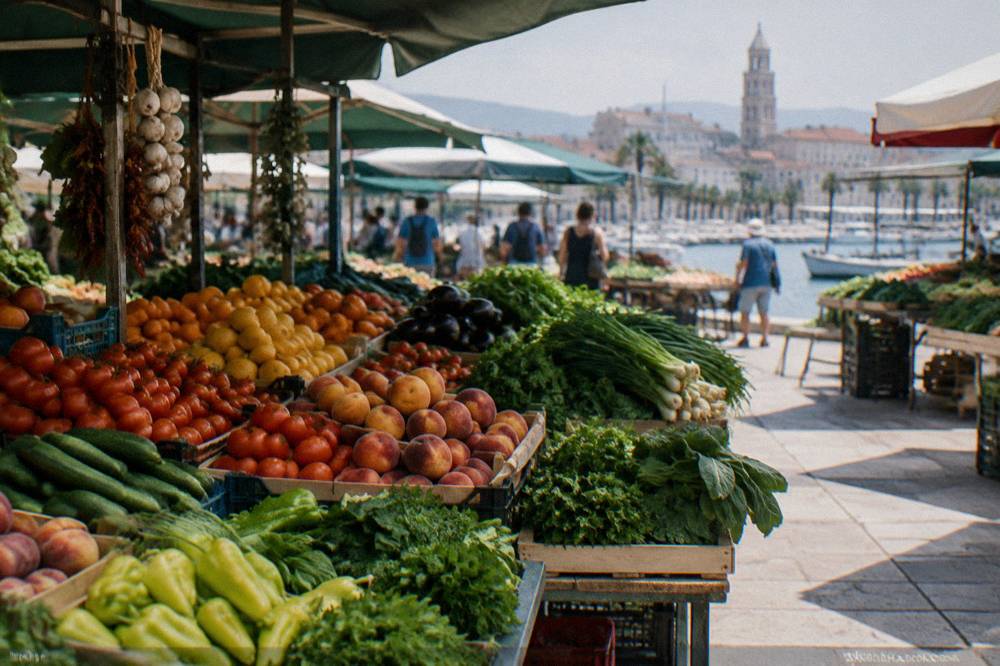
Split's cheapest eating clusters around its markets and bakeries rather than restaurants: the green market inside the palace walls sells produce direct from growers, the fish market lands the day's catch, and the city's cafe-and-bakery layer keeps a morning coffee and pastry at ordinary Croatian prices. Restaurant prices follow the menu posted at the door, and a cover charge, where one applies, must appear on the menu itself.
The budget logic of eating in Split is simple: the markets are the cheapest food in the city centre and they sit inside the free zone. The green market has run on the same spot by the palace for generations, and the Split green market guide explains its rhythm and stalls. Cooking even one meal a day from market produce changes a budget noticeably over a week.
Where a restaurant is wanted, the checks are ones any visitor can make: read the posted menu before sitting, confirm that the bill is itemised, and look for the cover charge on the printed menu rather than assuming one. Those checks, not folklore about particular streets, are what protect a budget. The Split food and Split restaurants pages map the affordable end of the scene, including where locals eat.
Drinking has one rule that matters and it is legal rather than culinary. Drinking alcohol in public in the historic centre is fined at 300 EUR under the city's public-order decision, and shops in the historic core face a night-time retail alcohol sales ban in summer. A budget plan keeps its wine on a licensed terrace, where prices are posted, and out of the street, where the fine dwarfs any saving.
When Is Split Cheapest To Visit?
The cheapest months with full sight access are late April, May, early June, late September and October, when Krka's ticket drops to 20 EUR in April, May and October, Plitvice to 23 EUR in the same months, and both parks fall to 7 and 10 EUR respectively from November. Accommodation prices are set by the market, but the tourist tax is levied at the high-season rate only from 1 April to 30 September, so October stays outside it.
The park price lists make the calendar effect exact. Krka charges 7 EUR from January to March and in November and December, 20 EUR in April, May and October, and 40 EUR from June to September. Plitvice charges 10 EUR in the 1 January to 31 March and November to December windows, 23 EUR in April, May and October, and 40 EUR from 1 June to 30 September, with a 25 EUR afternoon slot in the peak window. The same visit costs four or five times more in August than in February.
| Month | Mean temp, DHMZ Split Marjan 1948-2024 | Precipitation mm |
|---|---|---|
| April | 14.4 C | 62.0 |
| May | 19.2 C | 57.5 |
| June | 23.4 C | 49.0 |
| September | 21.6 C | 70.9 |
| October | 17.2 C | 77.0 |
The weather supports the shoulder-season choice. The DHMZ Split Marjan station table, covering 1948 to 2024, gives May a mean of 19.2 C and October 17.2 C, both comfortable walking temperatures, with rainfall of 57.5 and 77.0 mm. Even September holds a 21.6 C mean. Only November, the wettest month at 115.5 mm, argues against the deep off-season. The Split weather and best time to visit Split guides carry the full monthly table.
Sunshine is not scarce in the shoulder months either. The station record gives July 353.3 hours of sunshine and December 120.8, with the annual total around 2,600 hours, so May and September sit comfortably between those poles.
A shared guided day trip is the budget form of the region's headline excursions, because one price moves a group to four separate sights. The guided tour of Trogir, Salona, the olive museum and Klis Fortress is the article's featured example: Trogir is a UNESCO-listed town from 1997, Salona's ruins pair with the Archaeological Museum's combined ticket logic, and Klis Fortress was a Meereen location in Game of Thrones. Check availability and read the full tour page before deciding.
How Cheap Are The Island Ferries From Split?
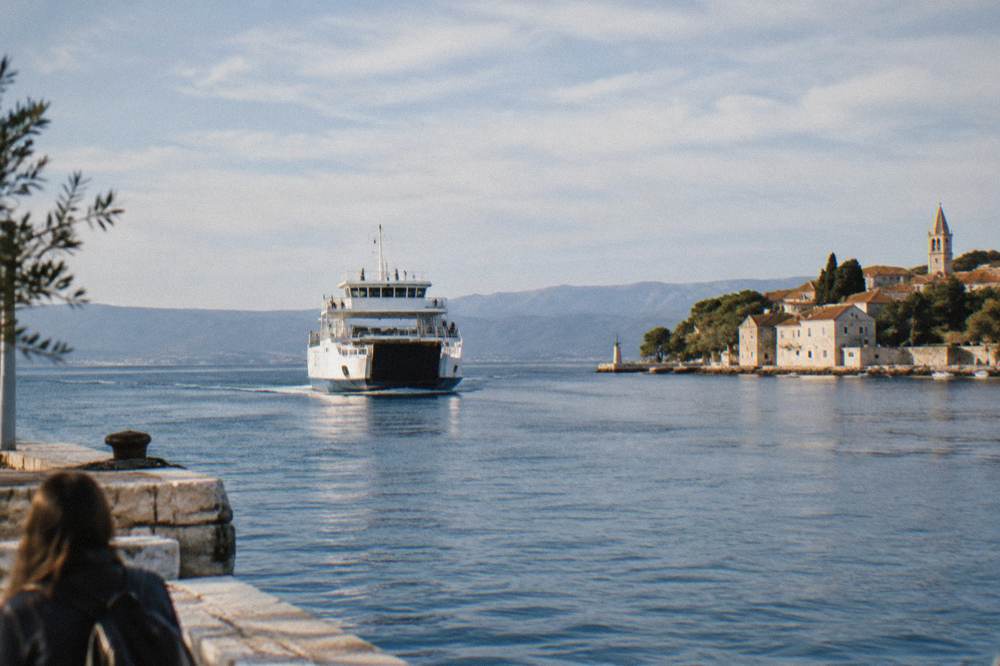
On foot, the state ferries are the cheapest island transport on the Adriatic: line 635 to Stari Grad on Hvar costs 5.90 EUR off-season and 8.40 EUR in season per foot passenger, line 631 to Supetar on Brač takes about 50 minutes, and line 636 to Rogač on Šolta about 60 minutes. Catamarans cost a little more, 6.40 to 10.00 EUR to Hvar or Jelsa and 7.20 to 10.00 EUR to Vis, and reach Hvar town directly.
The fares come from Jadrolinija's own price lists and route pages. The critical distinction for a budget planner is that the car ferry to Hvar lands at Stari Grad, on the far side of the island from Hvar town, with a connecting road journey, while the catamaran docks at Hvar town itself. Neither is wrong, but they are different products at different prices, and confusing them is the most common planning error. The Split to Hvar ferry and ferries from Split guides lay out the routes.
| Route | Type | Foot passenger fare | Crossing |
|---|---|---|---|
| Split to Stari Grad, Hvar, line 635 | Car ferry | 5.90 EUR off-season, 8.40 EUR in season | About 120 minutes |
| Split to Supetar, Brač, line 631 | Car ferry | Published per Jadrolinija price list | About 50 minutes |
| Split to Rogač, Šolta, line 636 | Car ferry | Published per Jadrolinija price list | About 60 minutes |
| Split to Vis | Ferry | About 140 minutes crossing | Operator timetable |
| Split to Hvar or Jelsa | Catamaran | 6.40 EUR low, 10.00 EUR high | Line 9603 |
| Split to Vis | Catamaran | 7.20 EUR low, 10.00 EUR high | Line 9602 |
For a budget island day, Šolta is the quietest arithmetic: about 60 minutes each way on line 636, with the island's small port of Rogač a short walk from swimming spots. From 2026 the Supetar line runs with no off-season timetable at all, only high-season and low-season schedules, which the operator's 2026 timetable announcement credits to year-round demand. That makes Brač a reliable winter island escape too, not just a summer one.
Which Day Trips From Split Cost The Least?
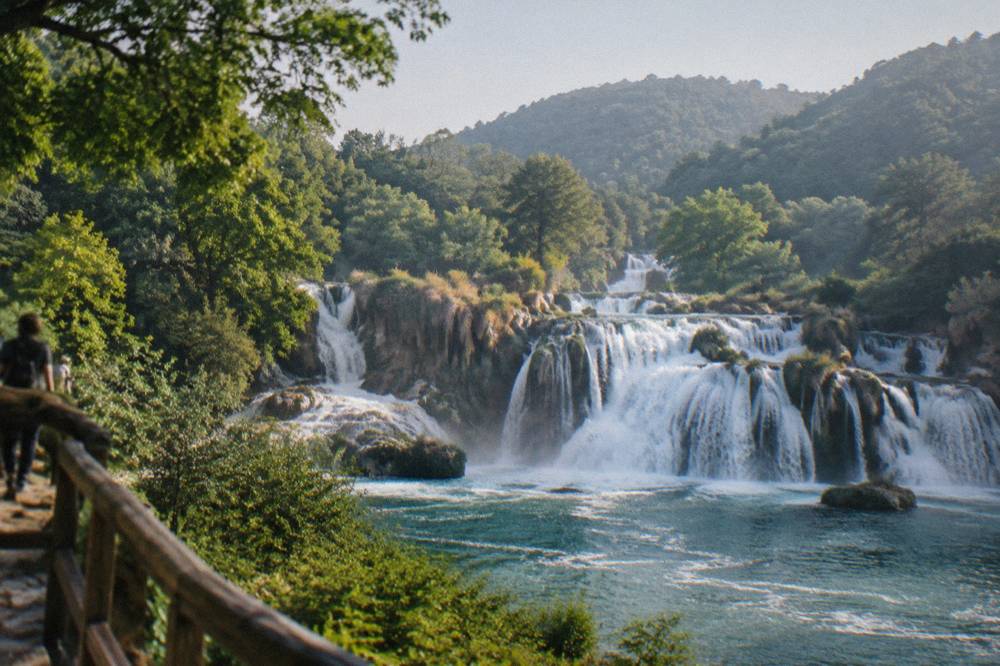
The cheapest day trips from Split are Salona, 9.1 km away with a combined 10 EUR ticket shared with the Archaeological Museum, and Klis Fortress at 22 minutes' drive with a 10 EUR adult ticket, while Krka National Park costs 7, 20 or 40 EUR depending on month and Plitvice Lakes 10, 23 or 40 EUR. Trogir, a UNESCO town since 1997, costs nothing to wander, and Omiš with its Mirabela fortress at 4 EUR is 38 minutes away.
Distance keeps day-trip costs down before any ticket is bought. The driving times from the palace, computed on free-flow routing, give Salona at 14 minutes, Klis at 22, Trogir at 36, Omiš at 38, Šibenik at 71, Krka's Skradinski buk at 74, Makarska at 75, Zadar at two hours, Mostar at 2 hours 13, Dubrovnik at 3 hours 21 and Plitvice at 3 hours 15. The short-radius trips, Salona, Klis, Trogir and Omiš, are the ones a budget traveller can reach by local bus or a shared tour rather than a private transfer.
| Day trip | Drive from the palace | Entry cost |
|---|---|---|
| Salona | 14 min | Combined 10 EUR with the museum |
| Klis Fortress | 22 min | 10 EUR adult, 3 EUR children |
| Trogir | 36 min | Free to wander the old town |
| Omiš, Mirabela | 38 min | 4 EUR, 6 EUR from 1 June to 30 September |
| Krka National Park | 74 min | 7 / 20 / 40 EUR by season |
| Šibenik | 71 min | Cathedral exterior free to view |
| Plitvice Lakes | 3 h 15 | 10 / 23 / 40 EUR by season |
Two warnings protect the budget on the park trips. Krka does not allow swimming outside clearly marked areas; the designated spots reported are at Roški slap, Stinice and Pisak, and only from 1 June to 30 September, so no Krka trip should be sold to a swimmer as a swim trip. And Plitvice sells timed online entry with the visitor's name on the ticket, so it is the one day trip that genuinely needs booking ahead. The Split day trips guide compares all of them.
How Do You Get From Split Airport Cheaply?
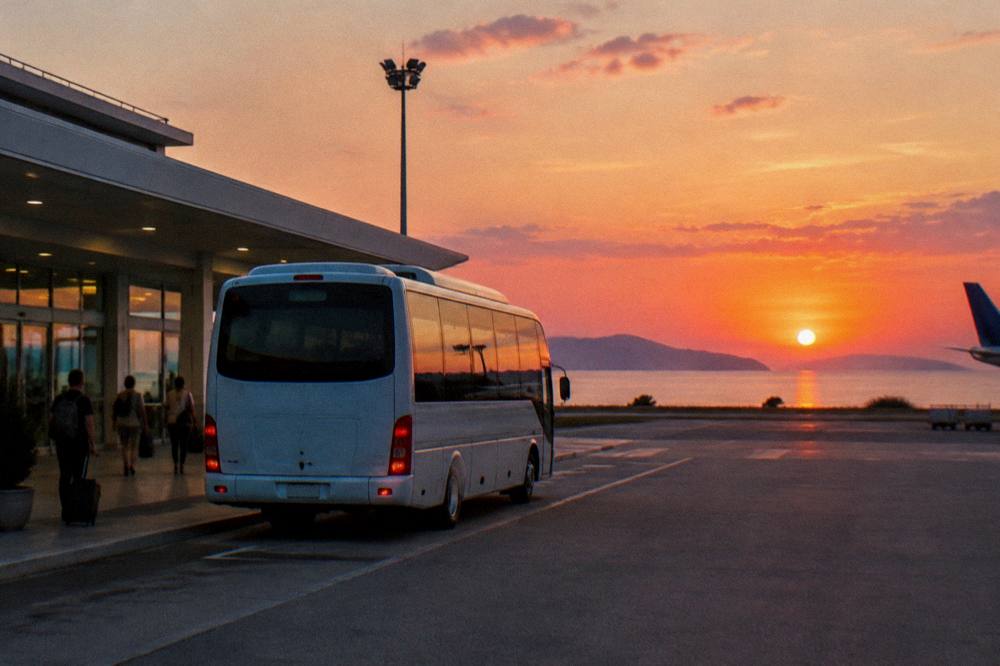
The Platanus shuttle runs from Split Airport to the main bus station by the ferry port for 10 EUR one way or 15 EUR return, according to the operator's own page, and the airport sits 20 km from Split and 6 km from Trogir in Kaštel Štafilić. Promet Split city bus lines 37 and 38 also stop at the airport; the fare is a few euros and is confirmed on board.
The airport's own pages give the 20 km distance, which corrects the persistent "10 minutes from the city" claim found across travel forums. The driving distance from the palace is 24.9 km, about 31 minutes free-flow. The shuttle's destination matters for budget planners: the main bus station sits on Obala kneza Domagoja beside the ferry port and the railway station, 500 to 600 m from the palace, so a shuttle ticket delivers a walkable finish with no onward cost. The Split airport and airport to city centre guides carry the detail.
For arrivals from further afield, 2026 added the airport's first transatlantic link, a United Airlines seasonal Newark to Split service from 30 April 2026, which the airport's statistics pages already count: 3,881,186 passengers passed through in 2025 and 3,376,272 in January to September 2026. More routes generally mean more fare competition on the flights to Split side of the ledger.
Where Should You Stay In Split On A Budget?
Budget lodging in Split concentrates in hostels and private apartments rather than hotels, and the tourist tax of about 2.65 EUR per person per night in high season is added by the accommodation and confirmed at booking, with under 12s free and 12 to 18s paying half.
If a hostel dorm or budget private room suits your trip, book a hostel bed here.
Location is the budget decision that pays twice. Staying inside or beside the palace walls puts every free sight, the markets and the ferry port within a walk, cutting transport to zero, and the hub on Obala kneza Domagoja is 500 to 600 m from the palace. A cheaper bed further out that needs buses or taxis every day can cost more across a week than a central one. The where to stay in Split guide maps the neighbourhoods against that arithmetic.
One structural fact affects the apartment market: the historic core has a moratorium on new short-term rental registrations extended through 2026, with existing registrations grandfathered, which keeps the supply inside the palace walls fixed while demand grows. That is why central budget beds, especially hostel dorms, are worth booking early in the summer window.
Can You Do Split Cheaply Without Skipping The Water?
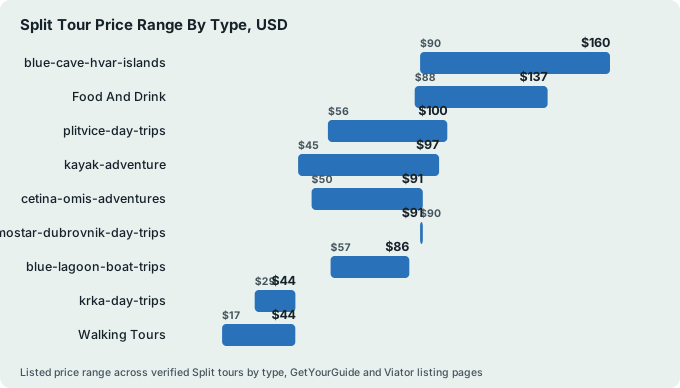
Yes, because the sea around Split is reachable on foot and by ordinary ferry rather than only by tour: the city beaches are free, sea kayaking runs as a half-day guided trip at the affordable end of the water-sports range, and the evening kayaking tours paddle the illuminated coastline without an island ferry or boat charter. Swimming is possible from the centre's own bays, and picigin on Bačvice needs nothing but a ball.
The cheapest water day in Split is a towel on Bačvice or a walk to Kašjuni beneath Marjan, both free. The next step up, a guided kayak trip, keeps the price of a single activity rather than a full-day boat charter, and the half-day sea kayak adventure is the value pick in that tier. It departs from the city shoreline, so no transfer cost sits in front of it.
For travellers who want the islands on the water rather than under their own paddle, the ferry table above is the budget route, and the Split boat tours guide covers the paid spectrum from lagoon cruises to speedboat circuits. The Blue Cave on Biševo carries its own entry fee, 24 EUR in the 20 June to 10 September window and 18 EUR in the shoulder months, paid in cash on site, which belongs in any budget for that particular trip.
What Would A Cheap Day In Split Actually Look Like?
A realistic low-spend day: morning at the green market and a walk through the palace to the Peristyle, both free; midday up Marjan's 819 steps to Telegrin at 178 m, free; an afternoon on Bačvice or Kašjuni, free; and one paid anchor, a 7 to 12 EUR museum ticket, the cellars at their published price, or a tip-based walk arranged with a local guide. Add a foot-passenger ferry on another day and the week's paid layer stays small.
The shape of the day is the point. Split's geography stacks the free layer, palace, hill, beach, along one walkable axis from the Peristyle to Marjan to Bačvice, so a cheap day involves no transport at all and no ticket unless chosen. The one day in Split itinerary shows the full version; a budget version simply swaps the paid anchors down the price column in the table above.
Evening costs behave well too. The Riva is free to stroll, and the HNK Split theatre season, running 25 September 2026 to 14 June 2027, publishes its own ticket prices for anyone wanting a cultured night at Croatian rather than resort prices. Advent in Split, 27 November 2026 to 7 January 2027 with the Đardin ice rink, is the cheapest festival format of all: entry to the programme area is free and spending is optional. The Split events guide lists the calendar.
Common Questions About Split On A Budget
Is Split expensive to visit?
No, by Adriatic standards. The Peristyle, the Riva, Marjan hill and all city beaches are free, museum tickets run 7.00 to 12.00 EUR, and the state ferries carry foot passengers to the islands for under 9 EUR in season. Croatia has used the euro since 1 January 2023.
What is free in Split?
The Peristyle, the Riva promenade, the Prokurative, the Golden Gate and the Grgur Ninski statue, the green and fish markets, Marjan park forest including the 819 steps to Telegrin, and the city beaches including Bačvice and Kašjuni. No ticket is sold at any of them.
How much is the tourist tax in Split?
About 2.65 EUR per person per night in high season, 1 April to 30 September, with under 12s free and 12 to 18s paying half. It is collected by the accommodation and the exact amount is confirmed at booking.
What is the cheapest month to visit Split?
For sightseeing value, the cheapest windows are January to March and November to December, when Krka costs 7 EUR and Plitvice 10 EUR. For warm weather at reduced prices, April, May and October combine 20 and 23 EUR park tickets with DHMZ Split Marjan means of 14.4 to 19.2 C.
Can you visit Hvar from Split on a budget?
Yes. The line 635 car ferry to Stari Grad costs 5.90 EUR off-season and 8.40 EUR in season for a foot passenger, and the catamaran to Hvar town costs 6.40 to 10.00 EUR. Hvar town itself is reached by catamaran and Stari Grad by car ferry.
Are the walking tours in Split free?
Tip-based walks run locally in Split; no price applies and the arrangement, including the tip, is confirmed directly with the guide. Paid small-group palace walks also run, and their prices appear on the operator's live listing.
The arithmetic of a cheap Split trip is unusually favourable because the expensive-looking city is mostly an open one. Set the paid layer deliberately, a museum or two, a ferry day, one guided trip such as the Trogir, Salona and Klis day tour featured on Split Croatia Travel Guide, and let the palace, the hill and the beaches carry the rest of the week for nothing.