Museums In Split
Split, the coastal city in Dalmatia built inside Diocletian's Palace, keeps its museum collection in a handful of small institutions a short walk from one another. This guide lists what each one holds, what a ticket costs, and how to fit them into a day.
Short answer
Split has four main museums: the Split City Museum at 10.00 EUR, the Archaeological Museum at 8 EUR, the Meštrović Gallery at 12.00 EUR, and the Ethnographic Museum at 7.00 EUR, all within or beside the palace core except the Archaeological Museum and the Meštrović Gallery, which sit a little further out.
Split, the coastal city in central Dalmatia on the Adriatic, is usually described as a city you walk through rather than a city of galleries, and that is true up to a point: the palace itself, the Riva, Marjan, and the beaches cost nothing. But the city also runs a compact set of museums, and their ticket prices, hours, and quirks are worth knowing before you arrive. The Split City Museum's price list, the Archaeological Museum's tariff, and the Meštrović Gallery's own site publish the figures below, and this guide brings them together in one place, with notes on the Cathedral of St Domnius scheme and how to combine everything with the things to do in Split that surround them.
Which Museums In Split Are Worth Your Time?
Split has four principal museums: the Split City Museum at 10.00 EUR adult, the Archaeological Museum at 8 EUR, the Meštrović Gallery at 12.00 EUR, and the Ethnographic Museum at 7.00 EUR, plus the ticketed Cathedral of St Domnius complex and the Froggyland collection. The first three reward different interests: city history, Roman archaeology, and modern sculpture, so the right choice depends on the day and the weather.
The Split City Museum sits in the Papalić Palace in the Old Town and covers the city's medieval and later history. The Archaeological Museum, founded in 1820, holds the Roman material, and its ticket combines with the Salona ruins outside the city. The Meštrović Gallery stands on the southern slope of Marjan and reopened in April 2026 after a fifteen-month energy renovation, with a ticket that also covers the Crikvine-Kaštilac chapel site. The Ethnographic Museum, inside the palace walls, covers Dalmatian traditional life, and its ticket also buys the Vestibule upper level at 2.00 EUR.
Here is the overview.
| Museum | Focus | Adult ticket | Location |
|---|---|---|---|
| Split City Museum | City history, medieval Split | 10.00 EUR | Papalić Palace, Old Town |
| Archaeological Museum | Roman and prehistoric finds | 8 EUR | Near the botanical garden, north of the Old Town |
| Meštrović Gallery | Modern sculpture | 12.00 EUR | Southern slope of Marjan |
| Ethnographic Museum | Dalmatian traditional life | 7.00 EUR | Inside Diocletian's Palace |
| Cathedral of St Domnius complex | Cathedral, crypt, treasury, bell tower | from about 5 EUR, combined up to about 15 EUR | Peristyle |
| Froggyland | Taxidermy frogs in staged scenes | on the booking page | Central Split |
If the weather is good, the museums are a morning; if the rain sets in, they fill a full day, and the Split weather guide shows which months deliver which. When the sun returns, the island trips take over, and the small-group speedboat day to the Blue Cave and Hvar is the one to check first: Check availability.
How Much Do Split Museums Cost?
The four main museums cost 7.00 to 12.00 EUR at full adult rate: the Ethnographic Museum at 7.00 EUR, the Archaeological Museum at 8 EUR, the Split City Museum at 10.00 EUR, and the Meštrović Gallery at 12.00 EUR, with reduced and family tickets on every price list. The Archaeological Museum's 10 EUR combined ticket also covers the Salona ruins within seven days, which is the single best value in the set.
Reduced rates exist across the board. The Split City Museum charges 8.00 EUR reduced and 18.00 EUR for a family ticket. The Archaeological Museum charges 4 EUR for children, students, and retirees. The Meštrović Gallery lists 8.00 EUR reduced and 20.00 EUR family. The Ethnographic Museum's reduced rate is 4.00 EUR. Children under a certain age enter several sites free, and each museum's own price list states the cutoff, so confirm at the desk if you are travelling with young children.
| Museum | Adult | Reduced | Family | Notes |
|---|---|---|---|---|
| Split City Museum | 10.00 EUR | 8.00 EUR | 18.00 EUR | Closed Mondays and public holidays |
| Archaeological Museum | 8 EUR | 4 EUR | none listed | Combined with Salona 10 EUR within 7 days |
| Meštrović Gallery | 12.00 EUR | 8.00 EUR | 20.00 EUR | Includes Crikvine-Kaštilac |
| Ethnographic Museum | 7.00 EUR | 4.00 EUR | none listed | Vestibule level 2.00 EUR |
Two money notes. First, the palace cellars, run by the Split City Museum, are priced on the museum's own scheme and a separate ticket from the Papalić Palace displays, so a full cellar-and-museum visit means two purchases. Second, the Cathedral of St Domnius complex sells single-site tickets and colour-coded combinations from a kiosk on the Peristyle, from about 5 EUR for the cathedral up to about 15 EUR for everything including the 57 m bell tower; shoulders and knees must be covered.
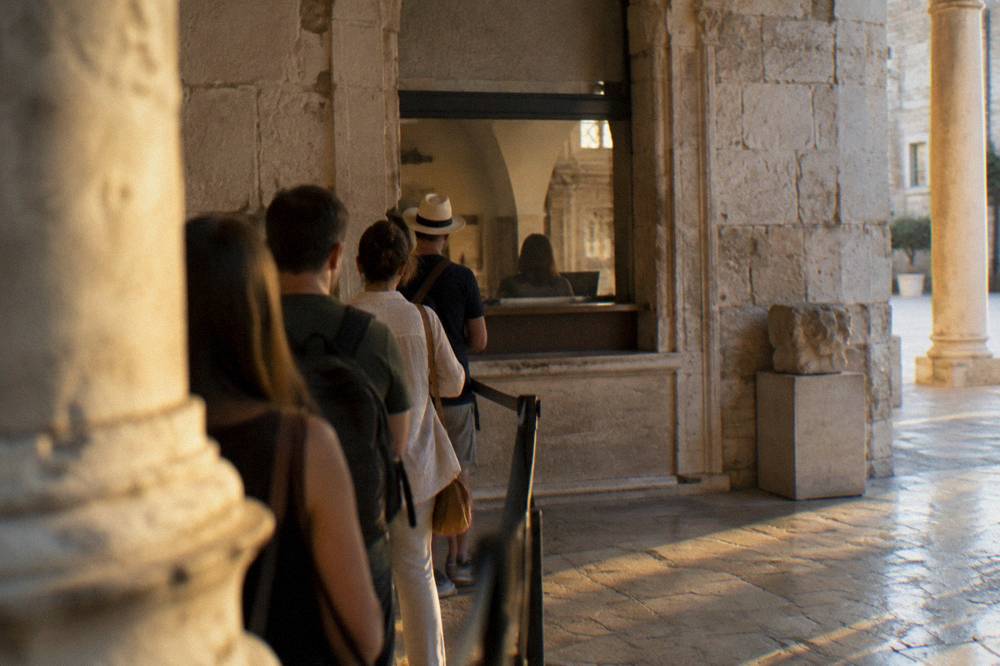
What Can You See At The Split City Museum And The Palace Cellars?
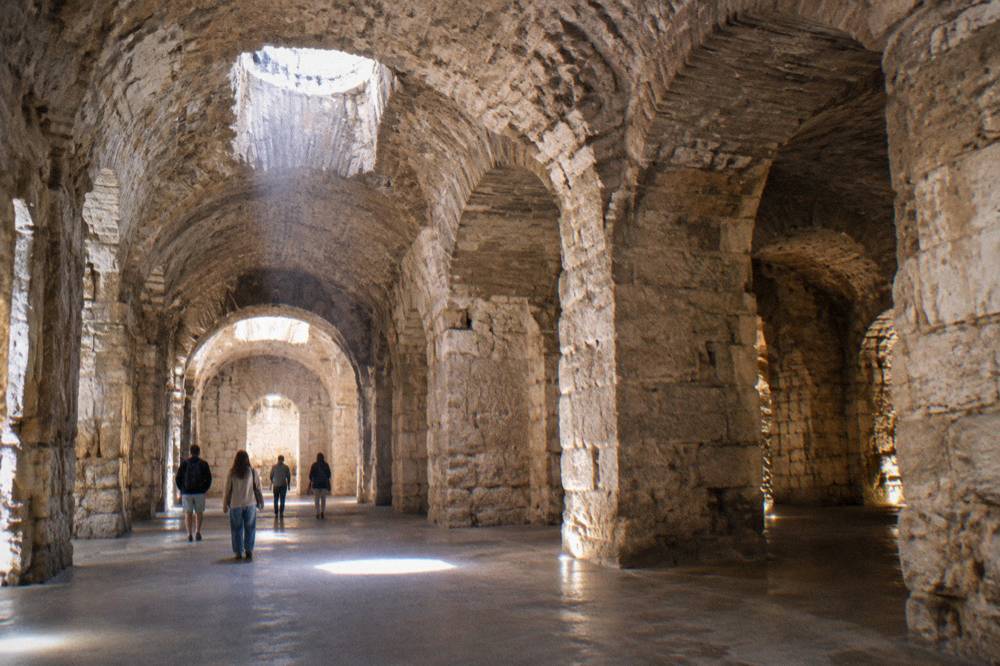
The Split City Museum, at 10.00 EUR adult, presents the city's history from the medieval period onward in the Papalić Palace, open Tuesday to Sunday 9:00 to 20:00 and closed Mondays and public holidays, while the Diocletian's Palace cellars, under the same institution, open Monday to Sunday 8:30 to 20:00, with the central part under restoration to the end of 2026 but passage staying open.
The cellars are the one Split museum space that is also an attraction in their own right: the vaulted substructure beneath the palace's southern half, entered from the Riva side, is the reason so much of the palace's original floor plan survives above ground. The museum's hours page gives the daily 8:30 to 20:00 opening, with one closed day in the spring on the calendar. The restoration works in the central section, reported to run until the end of 2026, do not block public passage through the main route, though some side chambers may be off limits on any given day.
The Papalić Palace building itself, where the city-history displays sit, is a short walk into the Old Town. With a closed day each Monday plus public holidays, it is the one Split museum where the calendar genuinely matters: a Monday arrival means planning the cellars, the cathedral complex, or the Ethnographic Museum instead. The wider history of Split page carries the timeline these displays illustrate.
What Does The Archaeological Museum Cover, And Is Salona Included?
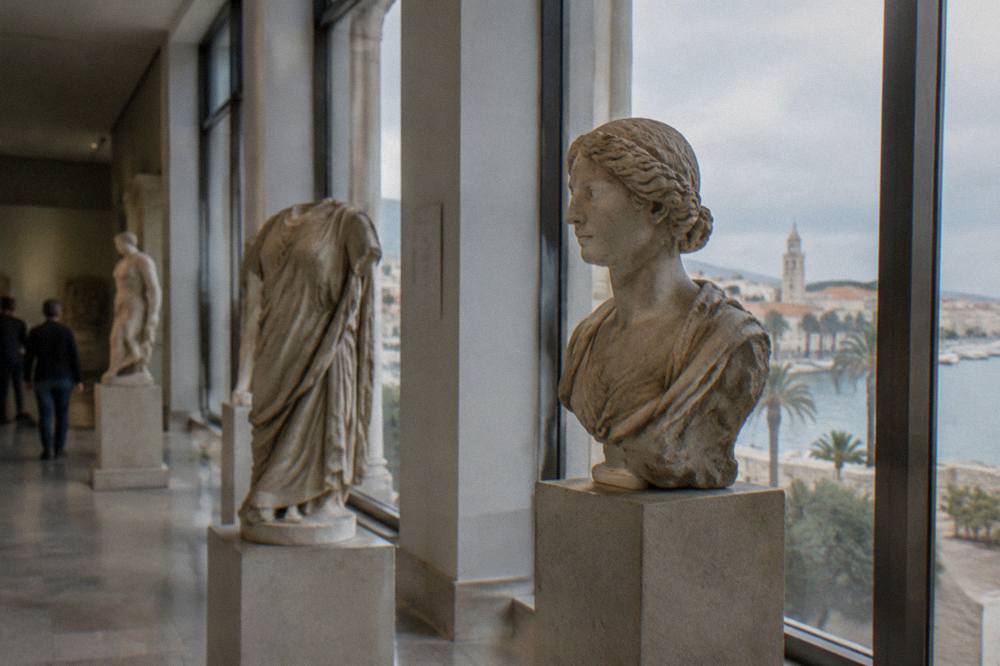
The Archaeological Museum, founded in 1820 and the oldest museum institution of its kind in Croatia's region by that date, charges 8 EUR adult and 4 EUR reduced, and its 10 EUR combined ticket covers both the museum in Split and the Salona archaeological site within seven days, making it the only Split museum ticket that reaches outside the city.
The museum building stands a little north of the Old Town, beyond the palace quarter, and its collection spans the prehistoric, Greek, Roman, and early Christian material dug from Salona and the surrounding area. Salona itself, the Roman city whose ruins spread across Solin, is about 14 minutes by car from the palace, and its summer opening at the site runs daily 9:00 to 20:00 from 1 June to 30 September. The combined ticket's seven-day window means you do not have to do both on the same day: the museum on a rainy afternoon, Salona on a clear morning, one ticket.
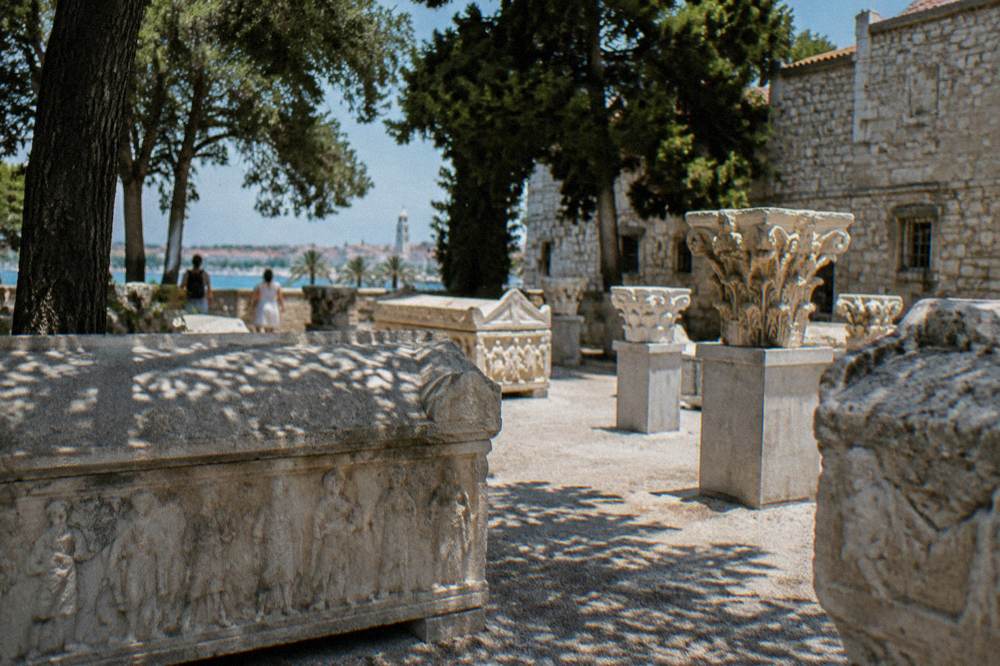
For visitors weighting the trip toward antiquity, the practical pairing is the Salona page with the Klis Fortress one: both sit on the same inland side of the city, Klis is about 22 minutes from the palace by car, and its 10 EUR adult admission is reported on the city's own visitor material. A morning at Salona, an hour at Klis, and the museum's lapidarium the same afternoon is a coherent Roman day built on the combined ticket and the fortress admission.
What Makes The Meštrović Gallery Different?
The Meštrović Gallery charges 12.00 EUR adult, includes the Crikvine-Kaštilac site on the same ticket, and reopened in April 2026 after a fifteen-month energy renovation that renewed windows, roof, heating, cooling, and solar, so it is currently the newest museum environment in Split, holding the sculptor's works in the house and garden he built on the Marjan slope.
The gallery stands on the southern edge of the Marjan park forest, roughly between the Old Town and Kašjuni beach, which makes it the one Split museum that belongs on a walking route rather than a museum crawl. A typical approach walks the Riva west, climbs toward Marjan, visits the gallery, and drops down to Kašjuni or Bačvice for a swim. The combined ticket with Crikvine-Kaštilac, a short walk further along the coast, adds a chapel interior with carved stone work in a walled garden setting. The full index of guides sits on Split Croatia Travel Guide.
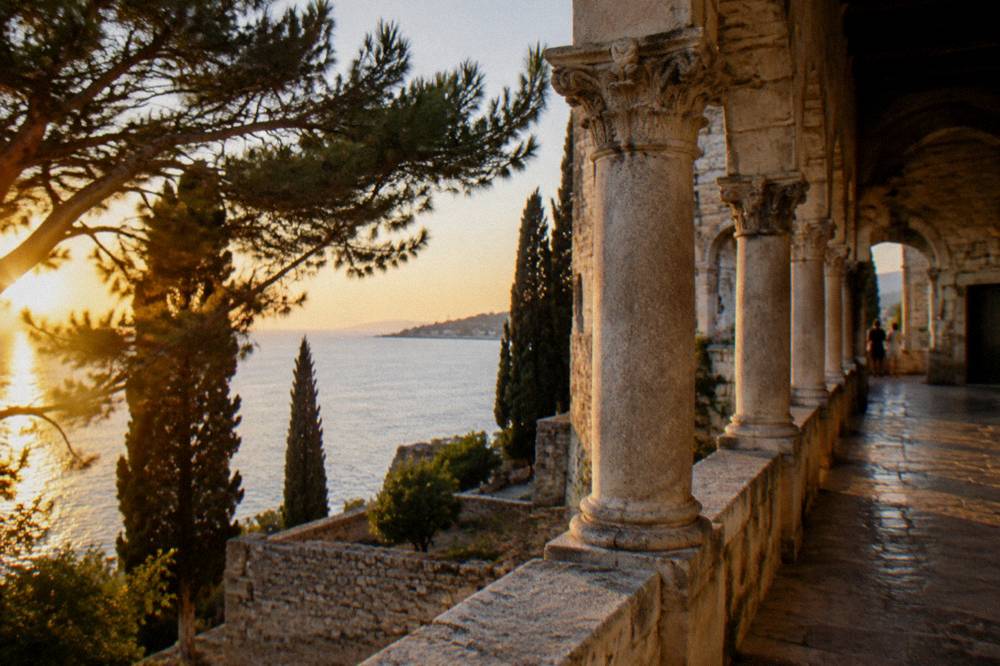
Because the gallery reopened only in April 2026, its current exhibition, on the house as a space of life and art, is the first in the renewed building; the reduced rate is 8.00 EUR and the family ticket 20.00 EUR. Practical detail: the walk up from the Riva involves stepped paths and a steady climb, so comfortable shoes matter more here than at the palace museums, and the Marjan hill page describes the wider park, whose highest point Telegrin stands 178 m above the sea.
Is The Ethnographic Museum Worth Visiting?
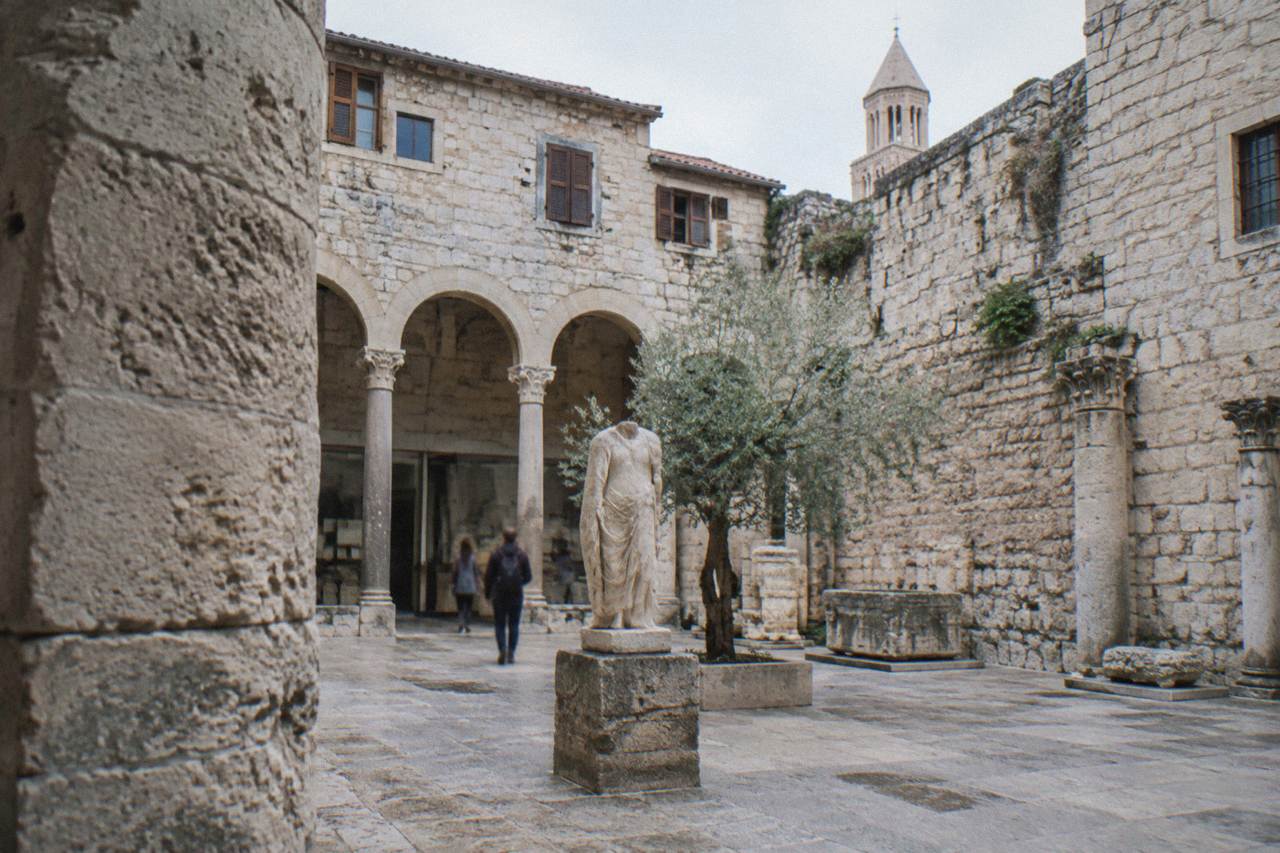
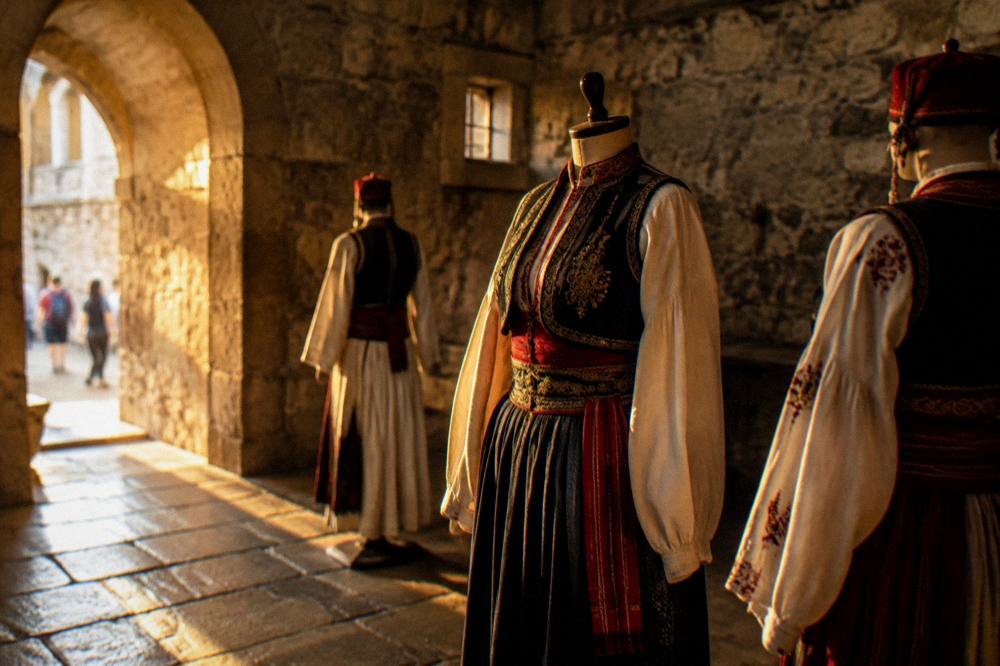
The Ethnographic Museum charges 7.00 EUR adult and 4.00 EUR reduced inside Diocletian's Palace, covers traditional Dalmatian life including costume, tools, and craft from the hinterland and the islands, and sells the only 2.00 EUR ticket in the city for its Vestibule upper level, which gives a view over the palace roofs that the street below does not.
The museum occupies a corner of the palace near the Vestibule, and its collection is the one place in Split that explains the Dalmatian interior and island economies that sit behind the coastal façade: folk costume from the hinterland, jewellery, household objects, and tools. It is small, and a visit runs shorter than the Archaeological Museum or the gallery, which makes it a good filler between the Peristyle and lunch rather than a destination in itself.
The Vestibule level deserves the mention on its own. The domed Vestibule at the end of the palace's southern axis is free to enter from below, and the museum's 2.00 EUR ticket opens the gallery above it, from which the view runs across the roofscape toward the bell tower. The [Ethnographic] offering pairs naturally with the free palace circuit described in the old town guide.
How Do Split Museums Compare With The Sights Around Them?
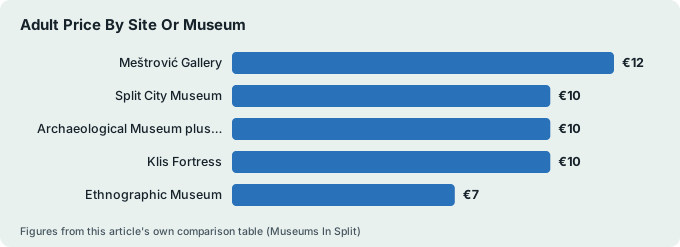
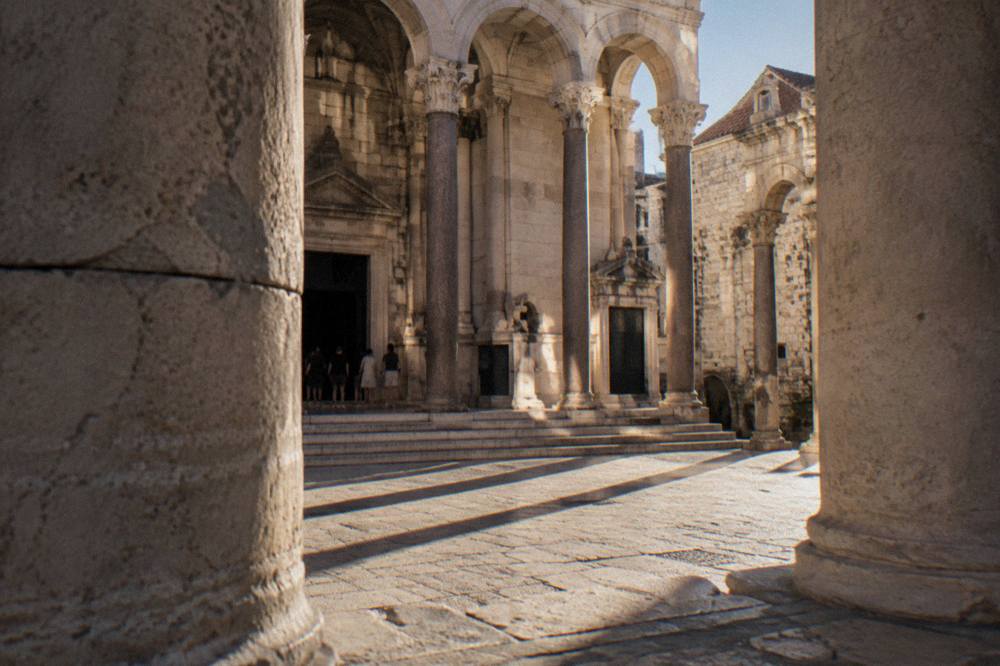
The palace's free circuit, meaning the Peristyle, the Golden Gate, the Grgur Ninski statue, the Prokurative, the Riva, and Marjan, costs nothing, while the four museums each charge between 7.00 and 12.00 EUR at full adult rate and the cathedral complex adds about 15 EUR at the top combined tier, so a full museum-and-monument itinerary in Split can be assembled piece by piece or trimmed to the free core without losing the palace itself.
To see the free circuit with a local guide, book a free walking tour here.
The comparison matters because Split's paid culture is unusually concentrated. Here is how the main paid entries line up against each other and against the free core.
| Site or museum | Adult price | Free alternative nearby |
|---|---|---|
| Meštrović Gallery | 12.00 EUR | Marjan park, free |
| Split City Museum | 10.00 EUR | Peristyle and Golden Gate, free |
| Archaeological Museum plus Salona | 10 EUR combined | Palace substructure exteriors, free |
| Klis Fortress | 10 EUR | Marjan viewpoints, free |
| Cathedral complex, all five sites | about 15 EUR | Cathedral exterior and Peristyle, free |
| Ethnographic Museum | 7.00 EUR | Green market, free |
| Froggyland | on the booking page | Riva walk, free |
A budget-conscious plan is on the Split on a budget page, and the free core is listed on the free things to do in Split one. The museums earn their tickets in bad weather, in the warmest afternoon hours of July and August when the DHMZ Split-Marjan station table shows a monthly mean of 26.2 C for July and 18 days at 30 C or more, and for anyone whose interest runs past the beach. The best time to visit Split guide puts those numbers in seasonal context.
Can You Combine The Museums With A Boat Trip Or A Day Trip?
Yes, because every Split museum sits within a short walk of the ferry port and the main bus station on Obala kneza Domagoja, 500 to 600 m from the palace, so a morning in the museums can be followed by an afternoon boat trip, and the five-island or Blue Lagoon tours return in the evening, while Krka, Trogir, and Salona day trips occupy the days between museum visits.
The geography is the point. Split's museums are small enough that two fit in a morning: the City Museum and the Ethnographic Museum sit inside the palace core, and the cellars open at 8:30, earlier than anything else. The half-day Blue Lagoon speedboat trips depart from the Riva side and return by mid-afternoon, leaving a late slot for the Meštrović Gallery on the way back along the coast. Full-day island trips, such as the Blue Cave and Hvar circuit, take the whole day, so they occupy a day of their own.
| Day plan | Morning | Afternoon | Tickets involved |
|---|---|---|---|
| Museums and the palace | City Museum, cellars | Cathedral complex, Ethnographic Museum | 10.00, 7.00 EUR, cathedral combo |
| Roman day | Salona | Archaeological Museum, Klis Fortress | 10 EUR combined plus Klis 10 EUR |
| Art and Marjan | Meštrović Gallery | Crikvine-Kaštilac, Marjan walk, Kašjuni | 12.00 EUR |
| Museums and the sea | Cellars at 8:30 | Half-day Blue Lagoon or kayak trip | cellar ticket plus tour |
| Rainy day | City Museum | Archaeological Museum, Froggyland | 10.00 and 8 EUR, Froggyland on the booking page |
The Split day trips page lists the inland options, and the boat tours from Split one the sea options. The two most bookable products for the sea half of that plan, alongside the palace walking tour that pairs with the museum morning, are below.
When Are Split Museums Open, And Which Days Are They Closed?
The palace cellars open Monday to Sunday 8:30 to 20:00, the Split City Museum opens Tuesday to Sunday 9:00 to 20:00 and closes Mondays and public holidays, Salona opens daily 9:00 to 20:00 in summer from 1 June to 30 September, and the Ethnographic Museum, Archaeological Museum, and Meštrović Gallery publish their hours on their own pages, so Monday is the one day that needs planning around.
Monday is the structural gap. With the City Museum closed, the Monday plan should lead with the cellars, which open every day, the cathedral complex, and the Ethnographic Museum, then move out to the Meštrović Gallery on Marjan. Public holidays also close the Papalić Palace displays, and the calendar of Croatian holidays is worth a check against your travel dates before you build an itinerary.
| Site | Days open | Hours | Closed |
|---|---|---|---|
| Palace cellars | Monday to Sunday | 8:30 to 20:00 | one spring date on the calendar |
| Split City Museum | Tuesday to Sunday | 9:00 to 20:00 | Mondays, public holidays |
| Salona | daily in summer | 9:00 to 20:00, 1 June to 30 September | outside summer, check locally |
| Klis Fortress | daily | 9:00 to 17:00 | none listed |
| Other museums | on their own pages | check before visiting | varies |
One seasonal note for late 2026 and 2027: the Riva's central section enters renovation from November 2026 for a little over a year, so partial closures on the seafront are expected through 2027, though the cellars' Riva-side entrance and the museums inside the palace remain reachable through the Old Town streets. If your visit falls over the winter, the Split in winter guide covers what stays open, and Advent in Split runs 27 November 2026 to 7 January 2027 with the ice rink at Đardin, a two-minute walk from the Papalić Palace.
Common Questions About Museums In Split
How many museums are there in Split?
Four principal ones: the Split City Museum, the Archaeological Museum, the Meštrović Gallery, and the Ethnographic Museum, plus the ticketed Cathedral of St Domnius complex and smaller private collections such as Froggyland. Each is covered above with its verified adult price.
What is the cheapest museum in Split?
The Ethnographic Museum at 7.00 EUR adult, and its 2.00 EUR Vestibule level ticket is the smallest paid entry in the city. The best value overall is the Archaeological Museum's 10 EUR combined ticket covering the museum and Salona within seven days.
Are Split museums open on Mondays?
Not all of them. The Split City Museum closes Mondays and public holidays. The Diocletian's Palace cellars open Monday to Sunday 8:30 to 20:00, so a Monday visit should lead with the cellars, the cathedral complex, and the Ethnographic Museum.
Is the Meštrović Gallery open after its renovation?
Yes. The gallery reopened in April 2026 after a fifteen-month energy renovation, with a new exhibition on the house as a space of life and art. The 12.00 EUR adult ticket also includes the Crikvine-Kaštilac site.
Do I need to book Split museums in advance?
None of the four main museums requires advance booking on its published terms, and queues are rare outside peak summer mornings. Confirm at the desk or on each museum's own page for group visits and guided slots.
Can I buy one ticket for all Split museums?
No city-wide pass exists on any published price list. The only multi-site tickets are the Archaeological Museum's 10 EUR combined ticket with Salona and the cathedral complex's own colour-coded combinations, from about 5 EUR up to about 15 EUR for all five sites.
The museums in Split will never be the reason you come, the palace and the sea hold that role, but they are the reason a rainy morning or a closed Monday does not lose the day. Pick two, buy the Salona combination if Rome is your interest, and save the rest of the week for the water.