Znjan Split
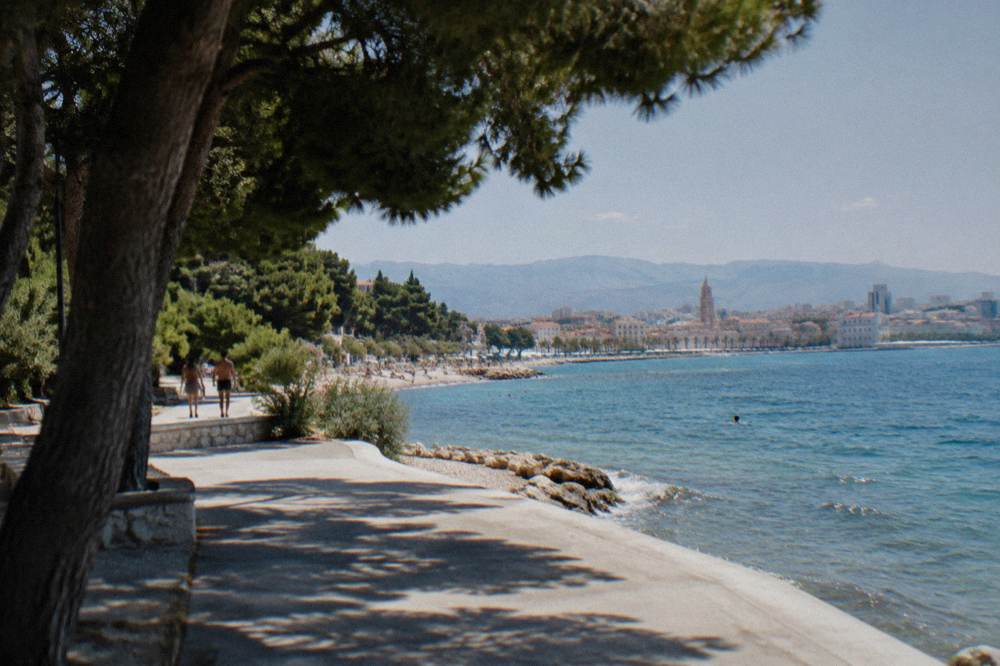
Žnjan is the beach plateau on Split's eastern seafront, a flat stretch of sunbathing terraces and café rows about twenty minutes on foot from Bačvice. This guide covers what the area actually offers, how it connects to the Old Town, and where it fits in a Split stay.
Short answer
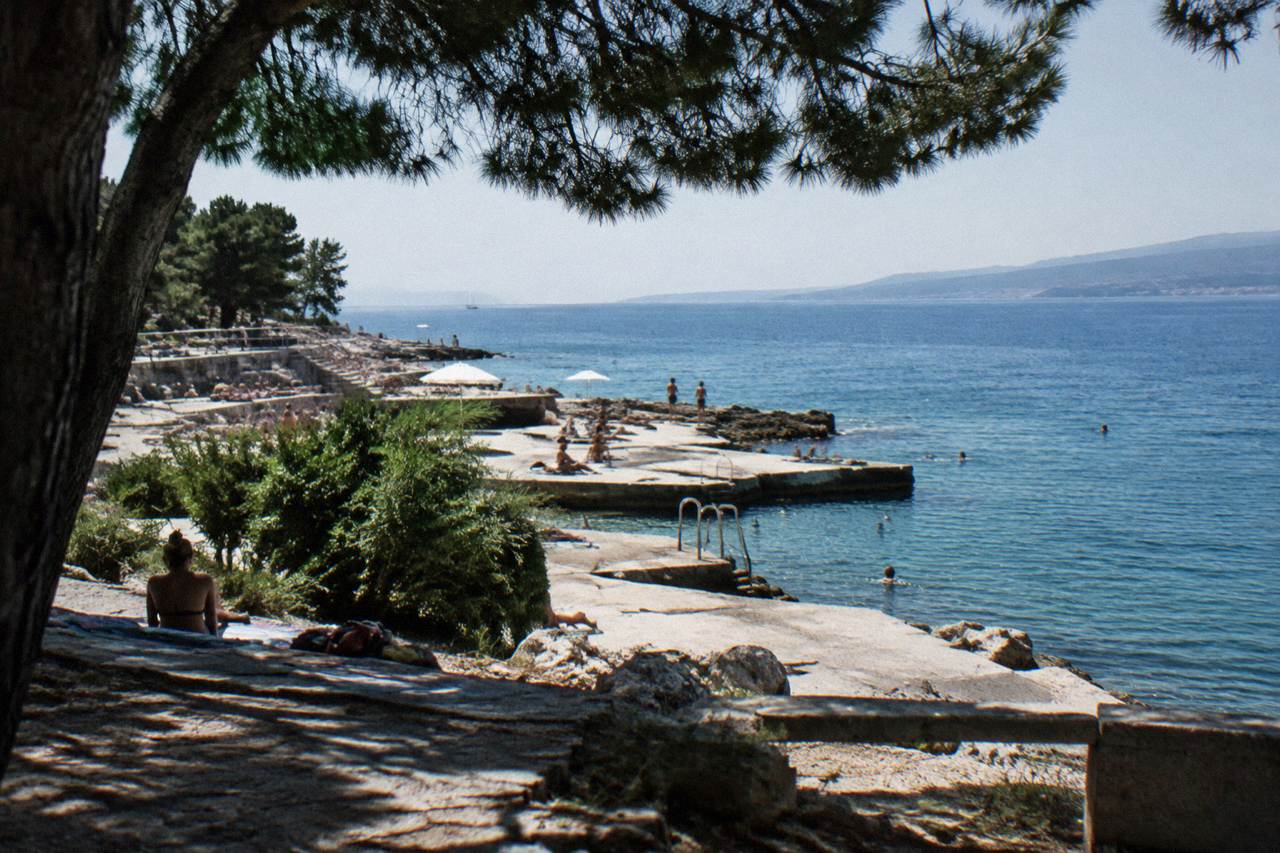
Žnjan is a free city-beach area on Split's eastern waterfront, built on wide concrete plateaus and swimming terraces rather than sand. It is the quietest of Split's city beaches, reachable on foot or by city bus from the ferry port, with cafés along the top of the plateau and deep water straight off the ledges.
Žnjan is the beach quarter on Split's eastern waterfront in Dalmatia, Croatia, a broad plateau of sunbathing terraces and concrete swimming ledges that runs along the Adriatic between Bačvice and the Stobreč side of the city. Where the Old Town sits inside Diocletian's Palace and Bačvice holds its shallow sandy bay, Žnjan works on a different geometry: flat, open, built for long mornings of sun and straight-off-the-edge swimming in deeper water. The area is free to use, lined with cafés along the top of the plateau, and close enough to the centre that it fits easily into a one- or two-day visit. This guide sets out what Žnjan offers, how it compares with the other city beaches, and how it works as a base for exploring Split.
What And Where Is Žnjan In Split?
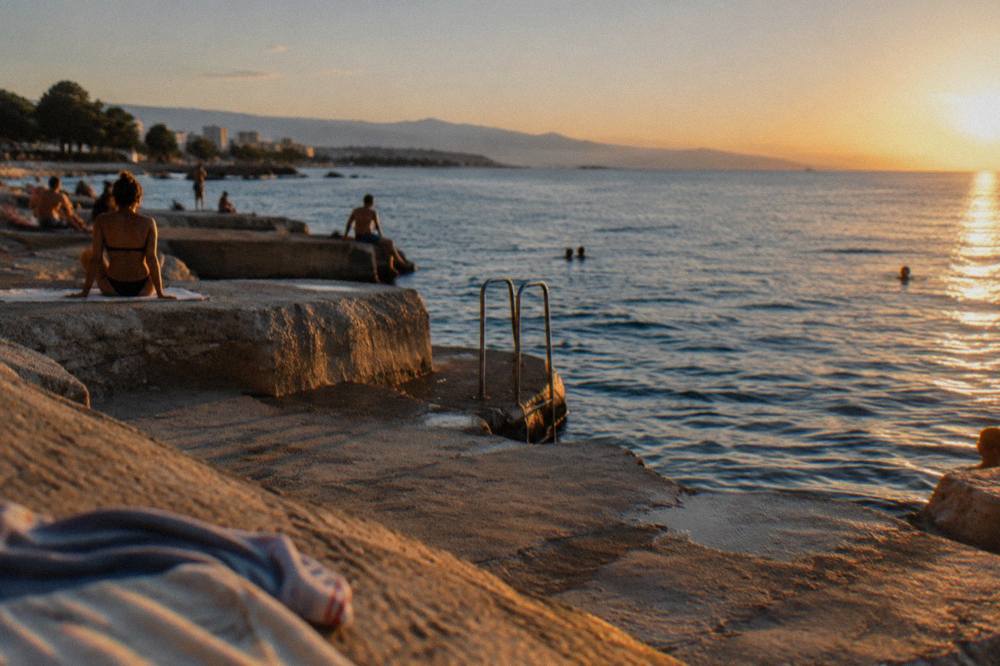
Žnjan is a free city-beach area on Split's eastern seafront, a plateau of concrete sunbathing terraces and swimming ledges between the Bačvice bay and the Stobreč edge of the city. It is one of Split's named city beaches alongside Bačvice, Firule and Kašjuni, all free to enter, and it sits close enough to the Old Town to be reached on foot or by city bus from the ferry-port hub on Obala kneza Domagoja.
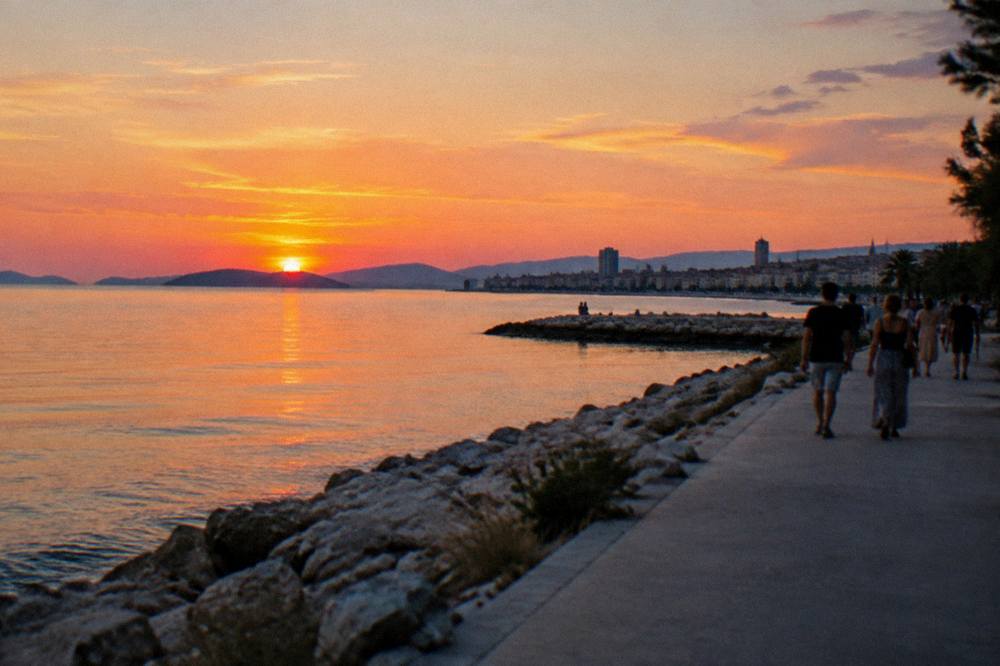
The area is defined by its horizontal shape. Instead of a sandy cove, Žnjan offers wide flat terraces cut by steps into the sea, which makes it a straightforward place to spread a towel, set up for a long afternoon and swim in water that deepens quickly off the edge. The café and bar strip along the top of the plateau gives the quarter its seasonal rhythm: busy through summer, calm in the shoulder months, and quiet but still walkable in winter, when the DHMZ Split Marjan station table shows January means of 8.0 C.
Its position matters for planning. Žnjan sits east of the centre, on the same coastal chain as Bačvice and Firule, and west of Stobreč, the mainland village that now marks the city's southeastern edge. Walk west and you reach Bačvice in about twenty minutes; keep going and you arrive at the Riva and the palace. The whole waterfront chain is free, continuous and flat, which is why the area suits both swimmers and walkers. For the broader city picture, start with the Split Croatia Travel Guide homepage and the things to do in Split overview.
How Does Žnjan Compare With Split's Other City Beaches?
Žnjan is the deep-water, concrete-terrace option among Split's free city beaches: Bačvice is the shallow sandy bay where picigin is played, Firule continues the same sheltered shoreline, and Kašjuni on the Marjan side sits under the hill in a pebble cove. All four are free, all are city beaches, and the choice between them comes down to sand versus terrace, shallow versus deep, and which side of the centre you are staying on.
The comparison matters because visitors often assume Split has one beach. It has a chain of them. Bačvice, the sandy bay closest to the centre, is the home of picigin, the ball game born on that beach in 1908 and now protected intangible heritage of Croatia. Firule, covered in the Bačvice and Firule area guide, extends the same shallow, sandy shoreline eastward. Žnjan comes after that, where the coastline straightens and the bathing turns to terraces. Kašjuni lies on the far side, below Marjan, the 3.5 km park peninsula whose highest point, Telegrin, stands 178 m above the sea.
| Beach | Character | Entry | Notes from the area |
|---|---|---|---|
| Bačvice | Sandy bay, shallow water | Free | Home of picigin, born 1908, protected heritage of Croatia |
| Firule | Sandy continuation past Bačvice | Free | Quieter end of the same bay chain |
| Žnjan | Concrete plateaus and swimming terraces | Free | Deep water off the ledges, café strip along the top |
| Kašjuni | Pebble cove below Marjan | Free | Sits on the Marjan side of the city, under the 178 m park hill |
No water-quality verdict, facility list or award claim can be printed for any of these beaches, so confirm current conditions and amenities locally. What the sources do say is simple: these are free, public, city beaches on the Adriatic. For the western pair, the Marjan hill guide and the Bačvice beach page carry the detail.
If a full day out of the city appeals more than another beach morning, the trio below pairs the waterfront with the two heavy-hitting park day trips from Split.
When Is The Best Time Of Day And Season For Žnjan?
The warmest, most beach-reliable months in Split are July at a 26.2 C mean and August at 25.9 C, with June at 23.4 C and September at 21.6 C close behind, according to the DHMZ Split Marjan station table for 1948 to 2024. July is also the driest month at 26.6 mm of rain and November the wettest at 115.5 mm, so the Žnjan terraces are at their fullest from June through September and at their calmest from late autumn to spring.
The station table gives the honest picture rather than the postcard one. July averages 18 days at 30 C or more and August 17, which means midsummer afternoons on an unshaded concrete plateau are seriously hot: the flat terraces hold heat, and the café awnings along the top fill early. June, with a 23.4 C mean and only 7 days at 30 C or more, and September at 21.6 C are the gentler swimming months. Sunshine runs 353.3 hours in July against 120.8 hours in December, so the plateau changes character completely across the year.
| Month | Mean temperature | Precipitation | Notes from the DHMZ Split Marjan table |
|---|---|---|---|
| June | 23.4 C | 49.0 mm | 7 days at 30 C or more |
| July | 26.2 C | 26.6 mm | Driest month, 18 days at 30 C or more |
| August | 25.9 C | 41.3 mm | 17 days at 30 C or more |
| September | 21.6 C | 70.9 mm | Warm sea and thinner crowds |
| October | 17.2 C | 77.0 mm | Walking season on the waterfront |
| November | 12.7 C | 115.5 mm | Wettest month |
Timing within the day matters as much as the month. The plateau faces the open Adriatic, so mornings suit swimmers who want calm water and flat light, while late afternoon brings the shade line across the terraces and a slower, local rhythm. No monthly sea-temperature normal exists for Split, so treat any sea figure as a live reading rather than a promise; the live DHMZ Split reading on 12 October 2026 was 20.4 C, which tells you the water holds its warmth well into autumn but says nothing guaranteed about next summer.
How Do You Get From Žnjan To Split's Old Town?
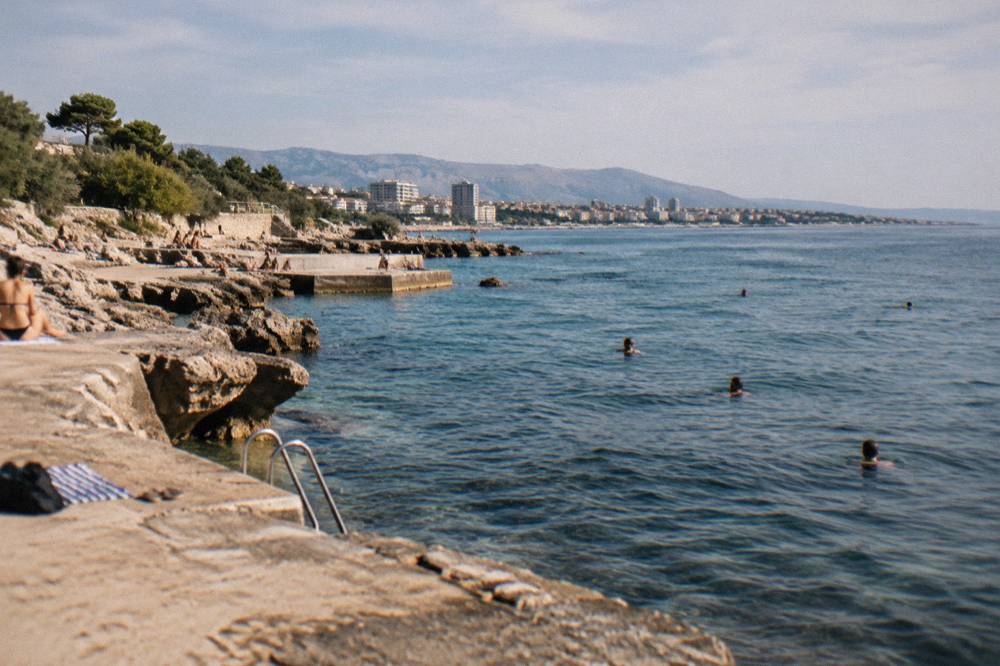
Žnjan connects to the centre along the flat seaside promenade that runs west past Bačvice to the Riva and Diocletian's Palace, a continuous free waterfront walk, and by city bus along the same coastal road, with the ferry port, main bus station and railway station all gathered together on Obala kneza Domagoja, 500 to 600 m from the palace. No ticket is needed for the walk itself, and the whole route is level from end to end.
The geography makes this easy. Split's transport hub, where the ferries, intercity coaches and the Zagreb train all arrive, sits on the northern waterfront a short walk from the palace, and the beach chain runs out from there along the south-facing shore. From Žnjan the logical walking line is west along the sea: past the plateau edges, along Bačvice and its picigin shallows, then up to the Riva, the waterfront promenade at the foot of the palace. Note that the Riva's central section is set for renovation works from November 2026, with partial closures expected through 2027, so the last stretch of any waterfront walk may be rerouted during that period.
Bus fare, taxi fares and scooter-hire prices are not published in the sources for this site, so confirm current fares on board or at booking. What can be said is structural: Promet Split runs the city network, the coastal road past Žnjan carries the eastern bus lines, and the distance is short enough that walking is the default for anyone staying in the area. For the full centre-side picture, the Old Town area guide and the getting-around overview in the itineraries cover the hub, the palace and the walking distances in one place.
Where Does Žnjan Fit In One, Two Or Three Days In Split?
Žnjan is a half-day ingredient, not a full-day destination: in a one-day Split visit it competes with the palace, the Peristyle and Marjan for attention, while on a two- or three-day stay it becomes the morning-swim or late-afternoon base that bookends the sightseeing days. The palace cellars run by Split City Museum are open 8:30 to 20:00, the Peristyle is free at any hour, and the beach terraces slot naturally into the hours between them.
A realistic first day puts the palace first. The substructures, the cellars of Diocletian's Palace, are open Monday to Sunday 8:30 to 20:00, though their central part is under restoration to the end of 2026 with the passage staying open. The Split City Museum at Papalić Palace charges 10.00 EUR adult, 8.00 EUR reduced and 18.00 EUR family, closed Mondays. The cathedral complex runs from about 5 EUR for a single site up to about 15 EUR for combined tickets, with shoulders and knees covered. After the sightseeing block, a late-afternoon walk east to Žnjan closes the day with a swim.
| Split sight or museum | Adult price | Hours or note |
|---|---|---|
| Palace cellars (Split City Museum) | 10 EUR | Mon to Sun 8:30 to 20:00; central part in restoration to end of 2026, passage open |
| Split City Museum, Papalić Palace | 10.00 EUR (8.00 reduced, 18.00 family) | Tue to Sun, closed Mondays |
| Cathedral of St Domnius complex | From about 5 EUR, combos up to about 15 EUR | No hours printed; shoulders and knees covered |
| Meštrović Gallery | 12.00 EUR, includes Crikvine-Kaštilac | Reopened April 2026 after renovation |
| Peristyle, Riva, Marjan, city beaches | Free | Open public spaces |
On a second day, swap the balance: morning at Žnjan, then Marjan, whose 819 steps run from Trumbićeva obala up to Telegrin at 178 m, or the Mestrovic Gallery on that same western side. A third day opens the day-trip door, and that is where the related tour for this page earns its place: the Krka waterfalls trip with a Trogir walking tour combines the national park with the UNESCO-listed town 36 driving minutes from the palace, a natural pairing with a beach-base stay. It is described on the Krka National Park day-trip guide, and you can Check availability alongside that page.
Is Žnjan A Good Area To Stay In?
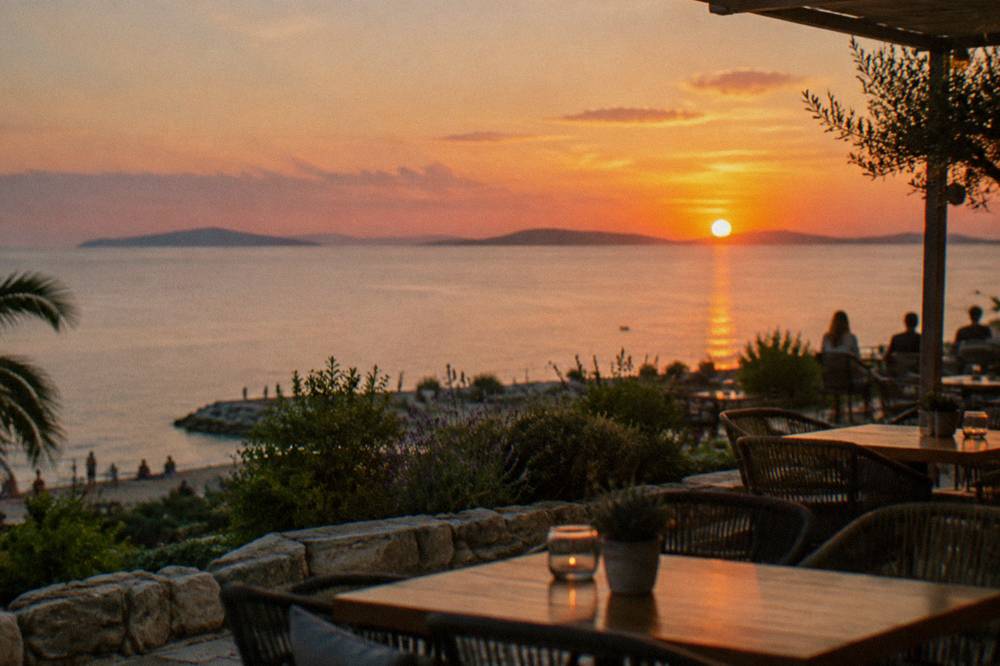
Žnjan works best as a quiet beach-base area for visitors who want swimming on the doorstep and the Old Town within a flat waterside walk, rather than for travellers who want to sleep inside the palace walls or beside the ferry port.
If swimming on the doorstep sounds like your kind of stay, book a hotel in Split here.
It sits between the family-shoreline feel of Bačvice and Firule and the more residential Stobreč edge of the city, and no hotel rate, apartment price or tourist-tax figure beyond the county's about 2.65 EUR per person per night in high season can be quoted for it.
The honest positioning is comparative. The Old Town area, covered in the Old Town guide, puts you inside Diocletian's Palace with everything walkable and the trade-off of a busier, denser night. Veli Varos, the old fishermen's quarter under Marjan, sits between the two worlds. Meje, on the Marjan side, pairs with Kašjuni beach the way Žnjan pairs with its own terraces. Žnjan's own profile is beach-first: café mornings, plateau afternoons, and a twenty-minute walk or a short bus ride to the palace.
One planning note carries real weight for 2026 and 2027. A moratorium on new short-term rental registrations in the historic core has been extended through 2026, with existing registrations grandfathered, which keeps supply tighter inside the palace zone and pushes more accommodation options toward the outer areas, including the beach chain where Žnjan sits. The tourist tax, about 2.65 EUR per person per night in high season, under 12 free and 12 to 18 half, is collected by the accommodation and confirmed at booking. Beyond that, print no nightly price and promise no view: the listings decide.
What Day Trips Work From A Žnjan Base?
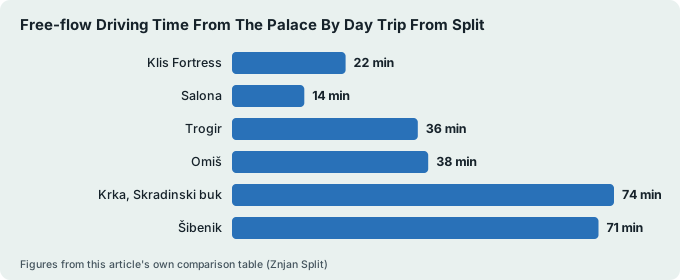
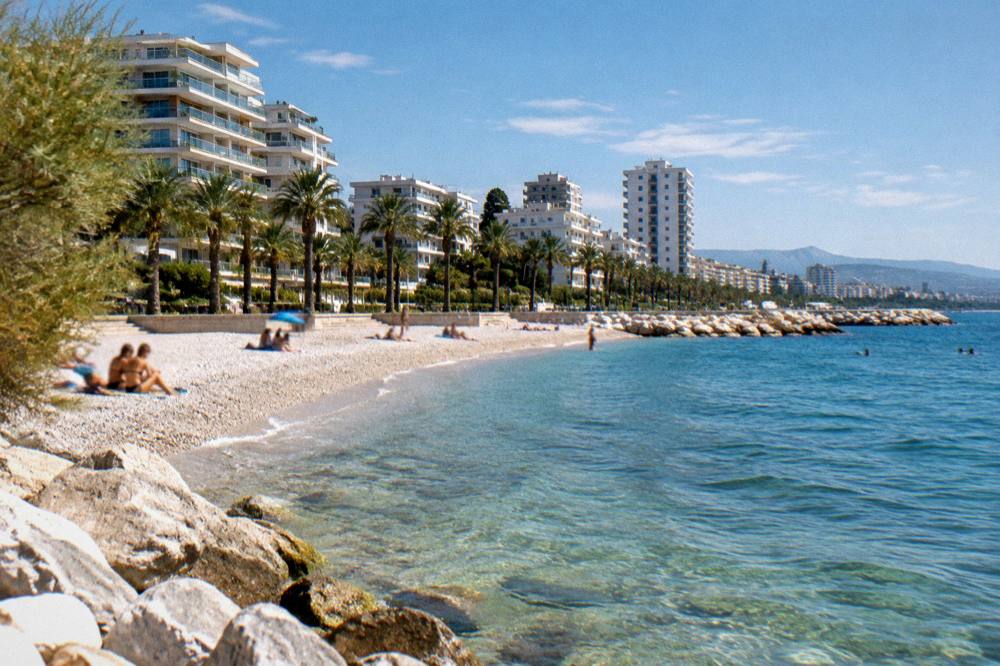
Žnjan sits on the same eastern exit road that carries the Split day trips, so every major option works from here: Krka's Skradinski buk is 74 driving minutes from the palace, Trogir 36, Omiš 38, Plitvice 3 h 15, Mostar 2 h 13 and Dubrovnik 3 h 21 in free-flow conditions, while the island ferries and catamarans sail from the port hub on Obala kneza Domagoja on the other side of the centre.
The driving figures are free-flow estimates, and summer traffic on the coastal road can stretch them, but the pattern holds: Žnjan's eastern position actually helps for the Krka, Trogir and Plitvice directions, which all leave the city past this side of town. Omiš and the Cetina river adventures, including the rafting and zipline options among the day trips, run down the same coastal ribbon. The islands flip the geography: Hvar is reached by catamaran and Stari Grad by car ferry from the port, with the Split to Stari Grad ferry taking about 120 minutes and the Split to Supetar ferry about 50 minutes, so an island day from Žnjan starts with the walk or ride across town.
| Day trip from Split | Free-flow driving time from the palace | Entry note |
|---|---|---|
| Klis Fortress | 22 min | 10 EUR; Game of Thrones Meereen location |
| Salona | 14 min | 10 EUR combined with the Archaeological Museum within 7 days |
| Trogir | 36 min | UNESCO-listed since 1997 |
| Omiš | 38 min | Mirabela fortress 4 EUR, 6 EUR from 1 June to 30 September |
| Krka, Skradinski buk | 74 min | 40 EUR Jun to Sep, 20 EUR Apr, May and Oct, 7 EUR Jan to Mar and Nov to Dec |
| Šibenik | 71 min | Cathedral of St James, UNESCO 2000 |
| Plitvice Lakes | 3 h 15 | 40 EUR Jun to Sep, timed online entry, name on the ticket |
| Mostar | 2 h 13 | Old Bridge Area, UNESCO 2005 |
| Dubrovnik | 3 h 21 | City walls 40 EUR in 2026 |
Two park rules matter when choosing. Krka allows swimming only in clearly marked areas, never at Skradinski buk itself. Plitvice requires the visitor's name on the ticket and uses timed online entry in peak season. Both parks drop to their winter prices from November: Krka to 7 EUR and Plitvice to 10 EUR. The self-guided Plitvice option below suits travellers who want the park without a guide, while the Cetina rafting trip uses the Omiš corridor this page has already mapped.
What Are The Local Rules At Split's Beaches And Waterfront?
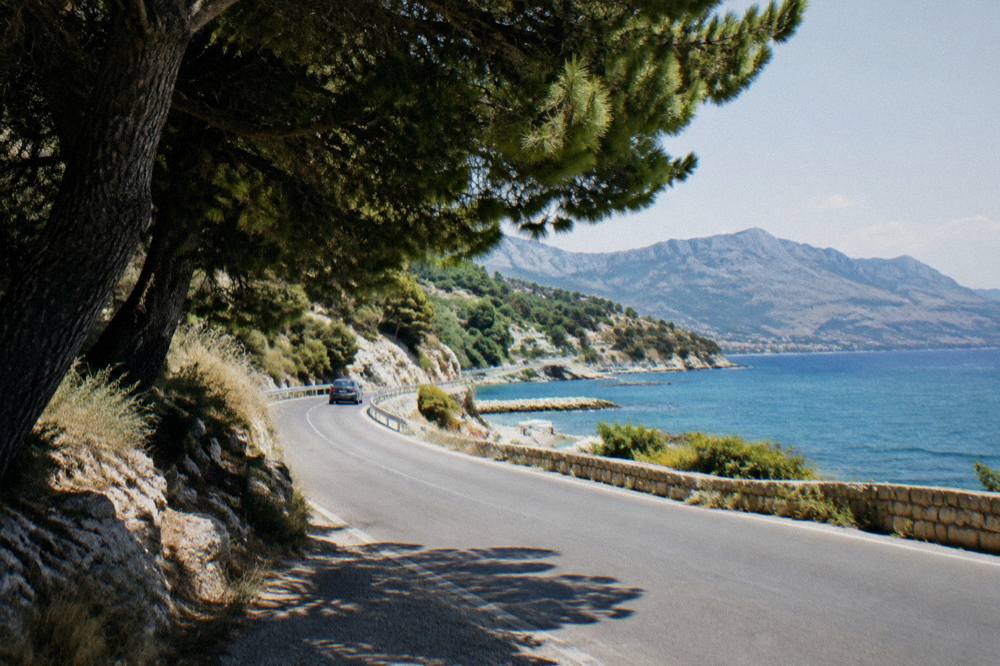
Split's 2026 public-order rules fine alcohol consumption in the historic centre at 300 EUR, urinating, vomiting, climbing on monuments and bathing in fountains at 300 EUR each, sleeping in public spaces at 150 EUR and taxi touting at 300 EUR, while walking in swimwear or shirtless in the historic centre is also fined, with the amount set locally and not published. None of this restricts normal swimwear on the beaches and terraces themselves, including Žnjan.
The distinction is geographic, and it matters for anyone walking from Žnjan to the centre in a swimsuit. The rules target the historic core, Zone A, where public drinking outside licensed terraces is banned and dress enforcement is formalised. On the beach plateaus and the seaside promenade, swimwear is the uniform. A night-time retail alcohol sales ban, applying to shops rather than bars and restaurants, ran 1 June to 15 September 2026 and repeats seasonally from 1 June 2027 unless changed, which affects late-evening supermarket runs rather than café terraces.
Two further 2026 rules touch a Žnjan stay. Drones are restricted over the Split old town and the airport zones and banned in national parks, so leave the drone at home for both the plateau and any Krka or Plitvice day trip. E-scooter rules limit machines to 25 km/h with helmets mandatory for all ages and under-14s prohibited, with registration and insurance proposals under discussion, so confirm the current position with any rental operator before riding the coastal promenade. Full detail on the centre's rules sits in the Old Town guide.
What Else Should You Know Before Choosing Žnjan?
Žnjan is free, flat, family-simple and about twenty minutes on foot from the palace, with deep water straight off the terraces, a café strip along the top and the city's eastern day-trip exits on its doorstep. Its trade-offs are concrete rather than sand, limited shade at midday and a position on the far side of the centre from the ferry port, so it rewards travellers who want a beach base more than a palace bedroom.
Practicalities close the picture. Croatia uses the euro since 1 January 2023 and is a Schengen member, with the EES entry-exit system fully operational at external borders since 10 April 2026 and ETIAS not yet live, so non-EU visitors should carry the documents the current rules require and confirm at booking. The emergency number is 112. The Adriatic climate table that governs any Žnjan plan belongs to the DHMZ Split Marjan station, 1948 to 2024, and it says the swimming season here is long: 23.4 C means in June, 21.6 C in September and 17.2 C even in October.
For active travellers, the Cetina river corridor east of the city adds rafting, canyoning and zipline options to a beach stay, all reached down the same coastal road that begins at Žnjan's edge. The rafting trip below pairs a deep-water beach morning with an adrenaline afternoon.
A final word on expectations. Žnjan will not give you sand, shade trees or an old-stone setting; those belong to Bačvice and Kašjuni, and to the palace quarters behind them. What it gives is space, free access, easy water and a base that faces the open sea on one side and the whole Split transport and day-trip network on the other. For a two-day plan that folds the beach chain into the palace and Marjan, read two days in Split; for the deeper itinerary, three days in Split adds the island and park days that a Žnjan base makes logistically simple.
Common Questions About Žnjan In Split
Is Žnjan Beach free to enter?
Yes. Žnjan is one of Split's free city beaches, alongside Bačvice, Firule and Kašjuni, with open public access to the terraces and the sea.
Is Žnjan sandy or concrete?
Žnjan is a concrete plateau beach, with wide sunbathing terraces and steps into deeper water. Sand is found at Bačvice and Firule, west along the same waterfront chain.
How far is Žnjan from the Old Town of Split?
The area sits on the eastern seafront, connected to the centre by a flat coastal walk past Bačvice to the Riva and Diocletian's Palace, roughly twenty minutes on foot from the Bačvice end of the chain, with city buses running the same corridor.
Can you swim at Žnjan in October?
October has a mean of 17.2 C at the DHMZ Split Marjan station, and the live sea reading on 12 October 2026 was 20.4 C, so swimming is realistic early in the month. No official monthly sea-temperature normal exists, so treat conditions as live and check on arrival.
Is Žnjan a good place to stay in Split?
It suits travellers who want a free beach on the doorstep and a flat walk or bus ride to the Old Town, and it sits on the same eastern exit road used by the Krka, Trogir and Plitvice day trips. Visitors who want to sleep inside the palace walls should look at the Old Town instead. No hotel or apartment rate can be quoted here; check listings and confirm the tourist tax, about 2.65 EUR per person per night in high season, at booking.
Are there rules about swimwear at Žnjan?
Swimwear is normal and unrestricted on the beaches and terraces. The 2026 public-order rules about swimwear and shirtless walking apply to the historic centre, where the offence is fined with the amount set locally. Drinking alcohol in public in the historic centre carries a 300 EUR fine.
