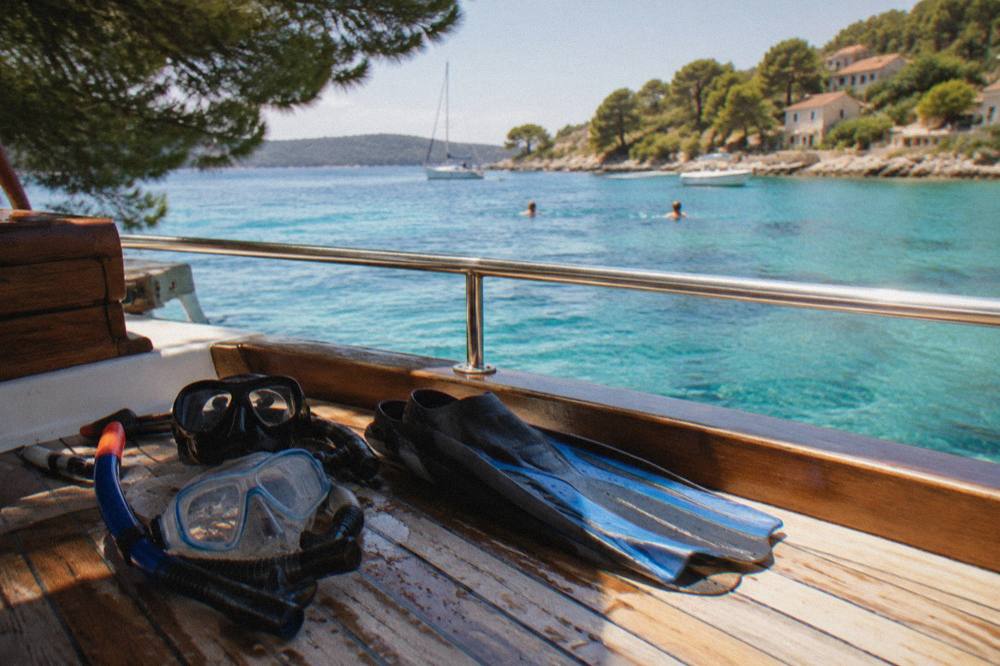
Firule Split
Firule is the quiet beach quarter immediately east of Split's Old Town, joined to the sandy bay of Bačvice where the picigin ball game was born in 1908. This guide covers both: the beaches, the walk from the palace, where to eat, and what a day here looks like.
Short answer
**Firule is a residential beach district about ten minutes on foot east of Diocletian's Palace in Split, Dalmatia, Croatia, running along a rocky and concrete coast from the sandy bay of Bačvice past Firule beach to Zenta bay. Bačvice is the city's sandy beach and the birthplace of picigin, a protected ball game played in shallow water since 1908. Both beaches are free, both swim from spring to autumn, and the area holds tennis courts, beach cafes and some of the closest accommodation to the Old Town.**
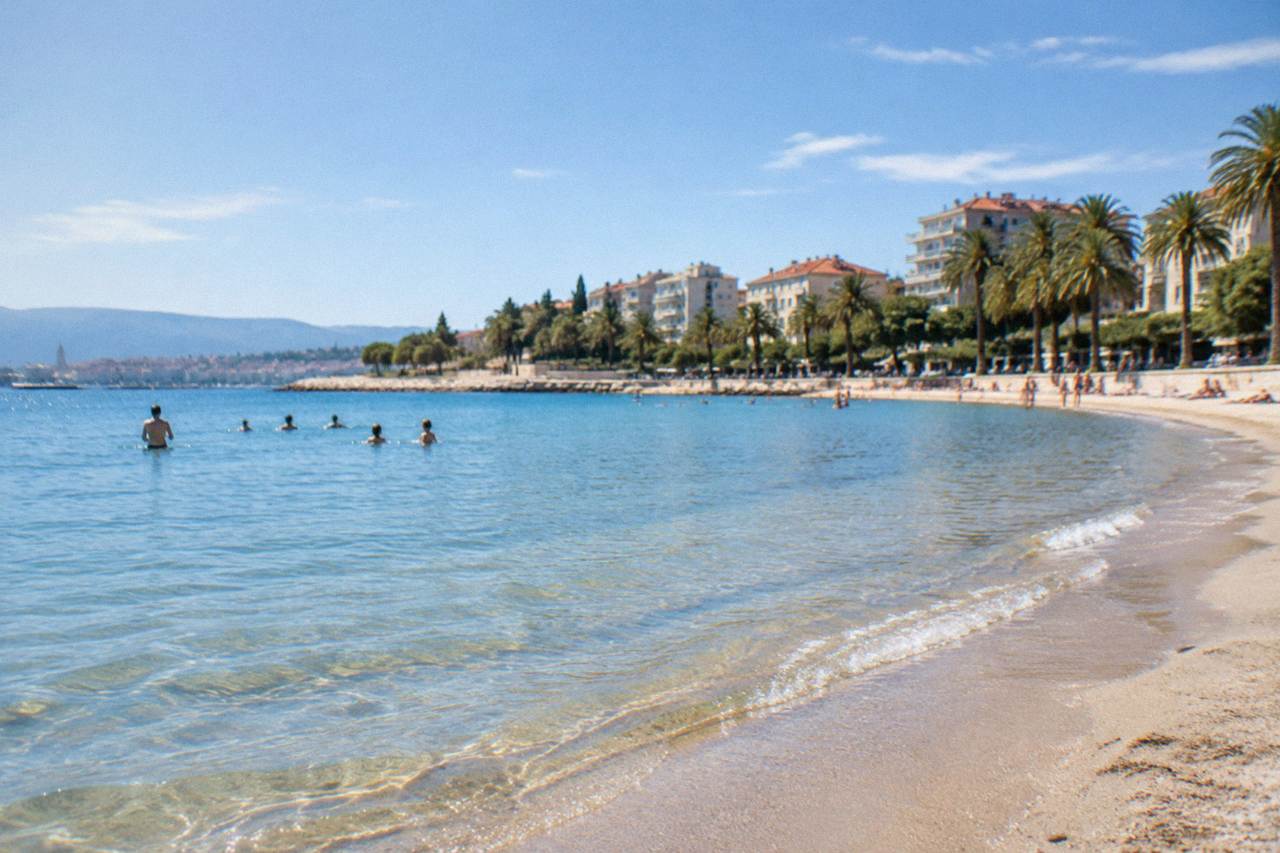
Firule is Split's beach quarter on the Adriatic, the stretch of coast immediately east of the Old Town in this Dalmatian city in Croatia, running from the sandy horseshoe of Bačvice bay along a rocky shore of concrete swimming platforms and small pine-shaded coves to Zenta bay and on toward Žnjan. It is the closest beach area to Diocletian's Palace, walkable in minutes, and it is where the city swims, plays picigin in the shallows, and eats long summer lunches. The two names are often used together because they form one continuous seaside neighbourhood: Bačvice for the sand, Firule for the quieter rocky platforms, the tennis club and the small marina at Zenta.
This page covers the whole area as one walkable district: what each beach is like, how to get there from the palace, where picigin fits into Croatian heritage, where to eat and sleep, and how Firule works as a base for day trips. For the wider beach picture across the city, see Split's beaches area by area and the neighbouring districts of Meje and Žnjan.
Where Exactly Is Firule In Split?
Firule is the coastal district east of Split's Old Town, starting at the eastern edge of Bačvice bay and continuing past Firule beach and Zenta bay toward Žnjan, all within roughly fifteen minutes on foot of Diocletian's Palace. It sits on a south-facing shore, so the beaches take sun through the middle of the day, and the whole strip is flat, paved and pushchair-friendly. The name usually refers to the streets behind the tennis club, but locals and listings use it for the beaches too.
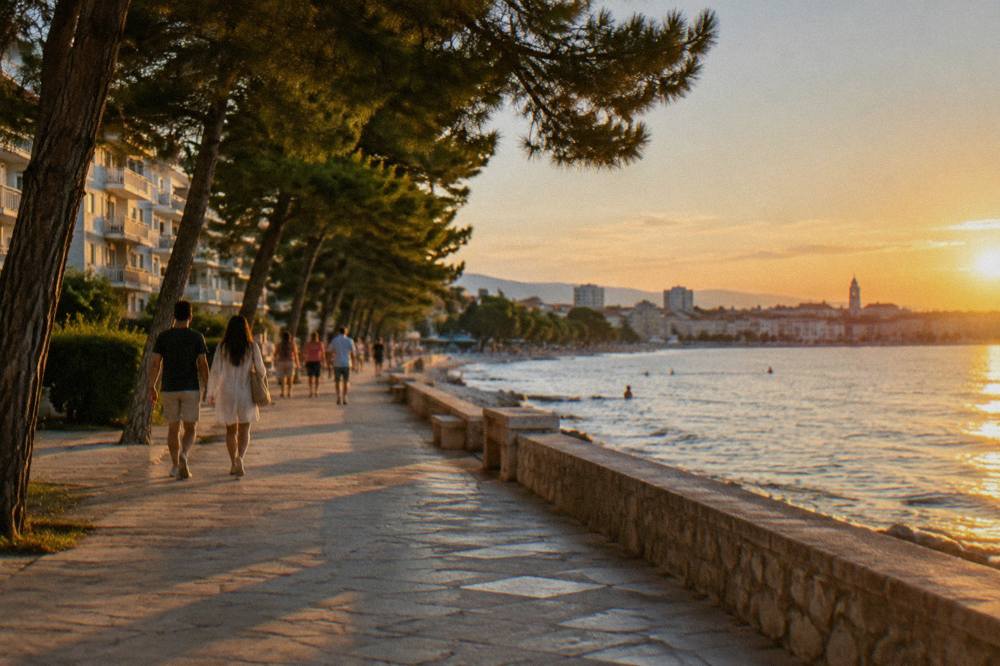
The walk out of the Old Town is simple. From the Riva promenade, the seafront road curls east around the headland, past the palace's southern wall, and Bačvice opens up on the right within a few minutes. The full length of the area, from the western lip of Bačvice bay to Zenta, is a flat seaside stroll with the water in view almost the whole way. There is no road to cross at any point if you keep to the shoreline path, which is why families with small children settle here.
Behind the coast rises a grid of residential streets built for locals rather than tourists, with apartment blocks, a school, bakeries, pharmacies and the Firule tennis club that gave the neighbourhood its sporting identity. That residential character is the area's main selling point as a place to stay: you live beside actual Split residents, ten minutes from the palace but away from the late-night noise of the Old Town bars.
What Is The Difference Between Bačvice And Firule Beaches?
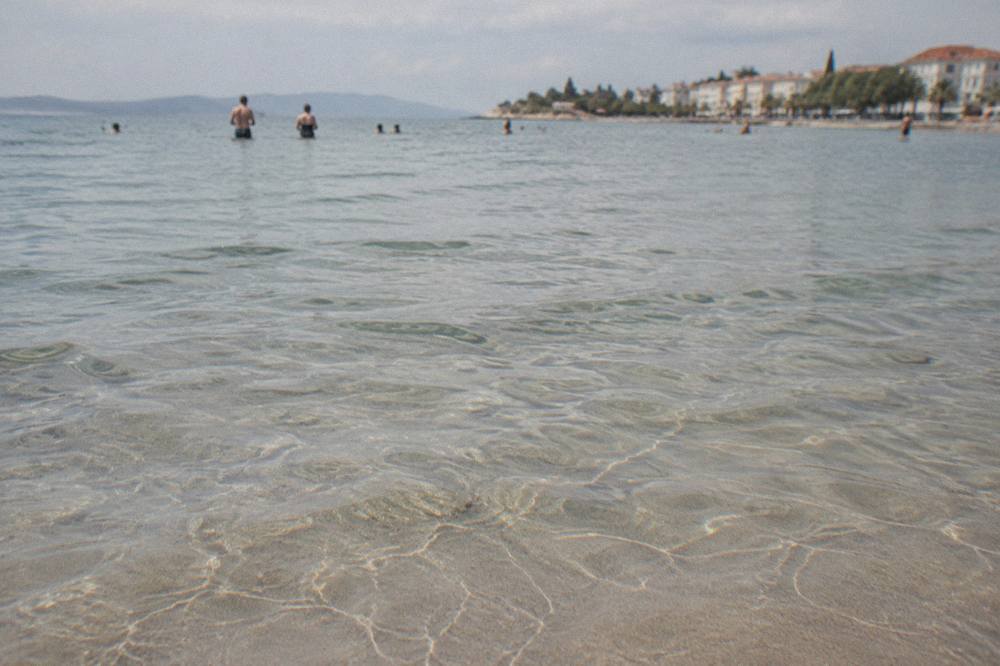
Bačvice is Split's one genuinely sandy beach, a shallow horseshoe bay with sea-floor sand that stays waist-deep for a long way out, which is exactly why picigin is played there. Firule, a few minutes further east, is rock and concrete: paved swimming platforms, metal ladders into deeper, clearer water, and small coves with pines for shade. Bačvice is lively and central, Firule is quieter and better for swimming lengths. Families with toddlers tend to Bačvice; confident swimmers and locals tend to Firule.
Both are city beaches and both are free. Neither charges entry, and neither needs a car, a bus or a ferry to reach. What separates them is the shoreline itself, and it separates them hard: sand versus rock, shallow versus deep, playground energy versus reading-a-book energy.
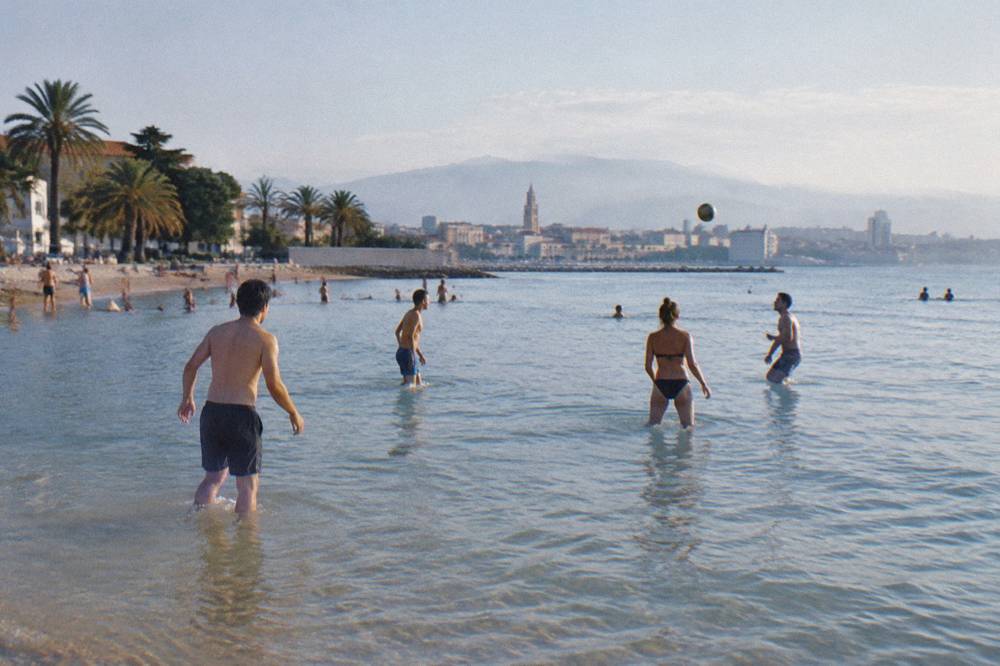
Picigin belongs to Bačvice alone. The ball game was born on the beach in 1908, per the account the city's tourism site repeats, and it is now protected intangible heritage of Croatia. Players stand in waist-deep water and keep a small ball airborne with palm strikes, and the shallow sand floor of Bačvice is what makes the game possible. On summer evenings the bay fills with circles of players, and the world championship, when it is held, is played there. The DHMZ Split-Marjan station table gives July a mean of 26.2 C and August 25.9 C, with 18 days at 30 C or more in July, so evening play after the heat breaks is the local rhythm.
| Beach | Shore type | Water character | Best for | Entry |
|---|---|---|---|---|
| Bačvice | Sand and shallow sand floor | Waist-deep for a long stretch, warms fast | Toddlers, picigin, first-time swimmers | Free |
| Firule | Rock and concrete platforms | Deeper, clearer, ladder entry | Lap swimming, quieter sunbathing | Free |
| Zenta | Concrete by the small marina | Deep, calm inside the bay | Locals, jumping and swimming | Free |
What Is There To Do Around Bačvice And Firule?
The core activities are swimming, picigin watching, walking the full coastal path to Žnjan, playing or watching tennis at the Firule club, and eating at the beachfront cafes that line Bačvice bay. The area also works as a morning-swim base before a day of sightseeing, since the palace is minutes away on foot. Beyond the shore, the district's draw is simply how liveable it is: bakeries, a green grocer, playgrounds and the sea, all in one flat grid.
A typical pattern for visitors staying here is a morning swim at Firule while the platforms are empty, breakfast at a cafe on Bačvice, then the walk west into the Old Town for the palace, the Peristyle and the cathedral of St Domnius. Late afternoon brings the picigin players out on Bačvice, and evenings run long at the cafes that ring the bay, which stay open late into summer.
The tennis club at Firule is a genuine local institution with outdoor courts a short walk from the beach, and courts can be booked by visitors; confirm times and rates at the club. Children have playgrounds on the Bačvice green and the shallow bay itself, which functions as a giant paddling pool. For a fuller city plan that slots a Bačvice swim into a sightseeing day, see one day in Split and two days in Split.
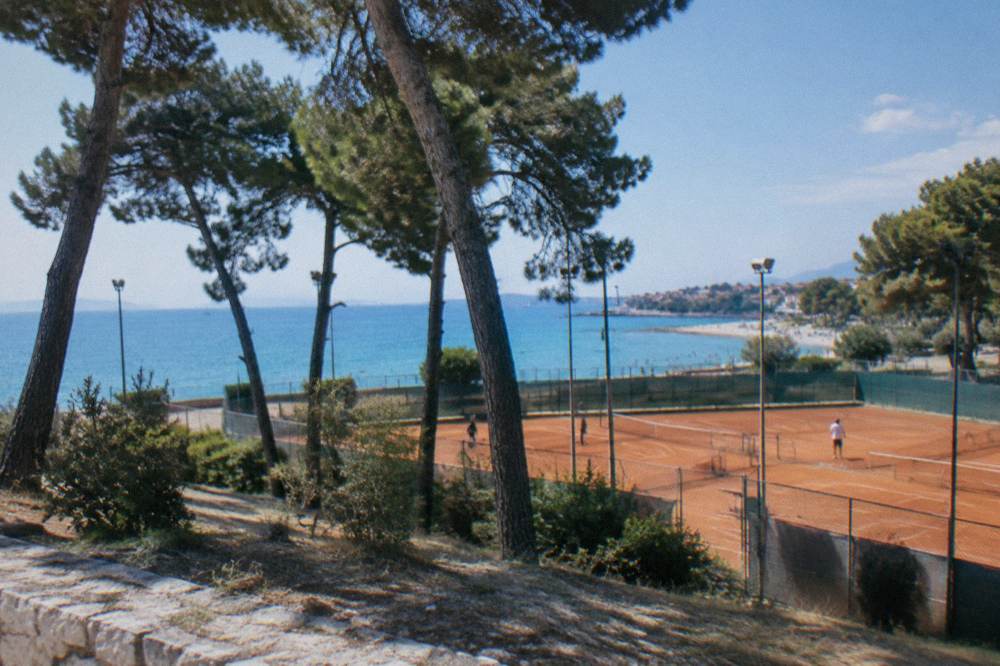
The coastal path continues east past Zenta to Žnjan, a longer concrete-and-pebble stretch with its own cafe row, and the whole walk from the Riva to the far end of Žnjan makes an easy evening loop. Going the other way, the path west from the palace runs to the foot of Marjan hill, so Bačvice and Firule sit at the eastern end of a shoreline that can be walked in both directions.
Boat Trips That Leave From The Seafront Nearby
The Riva and the nearby port hold the departures for the island trips that dominate Split's day-trip scene, and Bačvice is close to all of them. The small-group speedboat run to the Blue Lagoon and three islands is the natural fit for a beach-based stay: it leaves from the central seafront, reaches quiet swimming stops the city beaches cannot match, and returns with the evening still ahead. The operator's live listing carries current prices and departure details.
The picks above cover the three directions a Firule stay points you in: out to the islands, into the palace, and along the coast after dark. The evening kayak trip in particular launches from the city shoreline and paddles past the same headland you walk every day here, lit up.
To see the same shoreline from the water, book a sea kayaking trip here.
When Is The Best Time Of Year For The Firule Beaches?
The swimming season at Bačvice and Firule runs roughly from late May into early October, built around the DHMZ Split-Marjan station means: July is the warmest month at 26.2 C, August 25.9 C, and June 23.4 C, with 7 days at 30 C or more in June, 18 in July and 17 in August. May averages 19.2 C and October 17.2 C, so those months suit walking and cafe-sitting more than long swims.
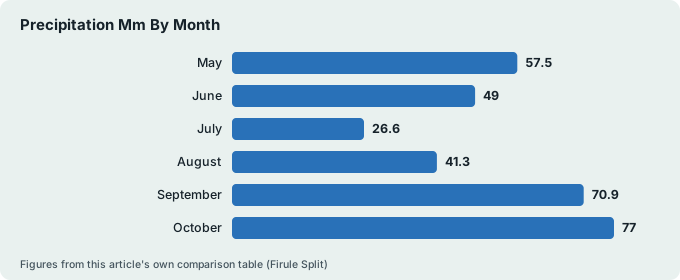
November is the wettest month at 115.5 mm and July the driest at 26.6 mm.
What that means in practice: July and August deliver the full beach scene, picigin every evening, packed cafes and warm nights, but also the busiest sand and the highest accommodation prices. June and September are the compromise months, warm enough for daily swimming on the DHMZ means, noticeably quieter, and better for the walking side of the area. October can still give swim days, but the picture changes fast and the cafe season winds down.
Winter beach walks are their own pleasure. The station period is 1948 to 2024, and January's mean of 8.0 C with December sunshine of just 120.8 hours against July's 353.3 hours describes the contrast plainly. The coastal path stays open year-round and the district stays residential, so a winter visit finds quiet cafes rather than closed shutters.
| Month | Mean temperature (DHMZ Split Marjan, 1948 to 2024) | Precipitation mm | Beach verdict |
|---|---|---|---|
| May | 19.2 C | 57.5 | Warm days, cool swims |
| June | 23.4 C | 49.0 | Full season begins |
| July | 26.2 C | 26.6 | Peak heat and picigin |
| August | 25.9 C | 41.3 | Peak, slightly wetter |
| September | 21.6 C | 70.9 | Quieter, still swimmable |
| October | 17.2 C | 77.0 | Walks and brave swims |
Where Should You Eat Around Bačvice And Firule?
The eating scene runs along the Bačvice bay front, a ring of cafes, pizzerias and fish restaurants that serve from morning coffee to late-night drinks, with more local-priced spots on the residential streets one block back from the sea. Zenta adds a smaller cafe row by the marina. Nothing here needs a car: the whole spread sits inside a ten minute walk.
The bay-front places trade on position, with tables facing the sand and the picigin games, and prices to match the view. A block inland, around the Firule streets, bakeries, konoba-style kitchens and neighborhood pizzerias serve the residents who live there year-round, and the bill is usually kinder. As anywhere in Split, check the posted menu before sitting: prices should be displayed, the bill should be itemised, and any cover charge belongs on the menu. For the city-wide picture, including the green-market ingredients behind the kitchens, see where locals eat in Split and the guide to Split restaurants.
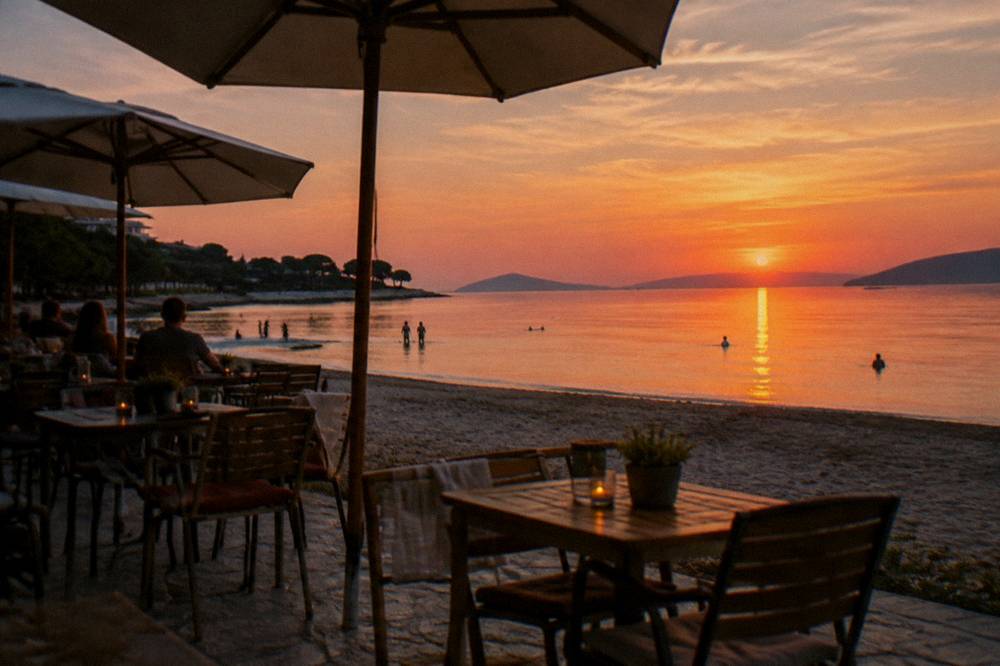
Breakfast here is a bakery-and-coffee affair rather than a hotel buffet unless your apartment offers one, and the Bačvice cafes do pastries and juices from early morning. Lunch tends toward grilled fish and pizza. Dinner in high season starts late and runs long, which suits the beach rhythm of an evening swim followed by a slow meal. Everything else covered here is indexed on Split Croatia Travel Guide.
Is Bačvice Or Firule A Good Place To Stay In Split?
Yes, for one specific reason: it is the closest beach-side accommodation to the Old Town, a flat walk of minutes to Diocletian's Palace, so you get a swim before breakfast and the sights before the crowds. The trade-offs are real, though. High season brings noise from the Bačvice cafes late into the night, the district is short on hotels and long on apartments, and summer demand pushes prices up.
The accommodation is overwhelmingly private apartments, studios and rooms in residential blocks, with a scattering of small hotels around the edges of the district. That suits families and longer stays better than a one-night city stop, and it means booking early for July and August matters, since the supply of well-placed apartments is finite. A tourist tax of about 2.65 EUR per person per night applies in high season, 1 April to 30 September, collected by the accommodation and confirmed at booking; children under 12 are free and 12 to 18 pay half.
Neighbourhood comparisons are worth making before booking. The Old Town puts you inside the palace walls with the noise that implies, Veli Varos and Meje sit under Marjan on the western side near Kašjuni, and Žnjan is the newer, quieter concrete stretch further east. Firule and Bačvice sit in the middle: beach plus palace, apartment living plus a ten minute walk home from dinner.
| Area | Distance to palace | Beach type | Character | Best for |
|---|---|---|---|---|
| Bačvice and Firule | Minutes on foot, flat | Sand then rock | Residential, sporty, lively | Beach-first stays, families |
| Old Town | Inside it | None | Historic, noisy at night | One to two night stops |
| Meje and Veli Varos | 10 to 20 minutes, uphill | Rock, Kašjuni | Quieter, leafy | Calm, walkers |
| Žnjan | 25 to 30 minutes | Concrete and pebble | Newer, spread out | Drivers, quiet nights |
What Rules Apply On Split's Beaches And Streets?
The beaches themselves are free and open, but Split's historic core has a published set of public-order fines, listed on the city's tourism site: 300 EUR for drinking alcohol in the historic centre or within 100 m of schools, 300 EUR for urinating, vomiting, climbing monuments or bathing in fountains, 150 EUR for sleeping in public spaces, and 300 EUR for taxi touting.
Walking in swimwear or shirtless in the historic centre is also fined, though the amount is set locally, so cover up for the walk from the beach to the palace.
The alcohol point catches visitors out because the beach sits so close to the old streets: a drink carried from a Bačvice cafe toward the palace crosses into the zone where public drinking is fined at 300 EUR. The rule targets open alcohol on public surfaces, not licensed terraces. Separately, a night-time retail alcohol ban applies to shops and supermarkets, not bars or restaurants, from 1 June to 15 September. The emergency number in Croatia is 112.
Drones are another summer trap for visitors who film their beach days: flying over Split's old town is restricted, as are the airport zones, and national parks ban drones outright. Leave the drone at home and the camera does the work. Croatia uses the euro since 1 January 2023 and is a Schengen member, so for most European visitors there is no border formalities to plan around at all.
How Do You Get To Bačvice And Firule From The Rest Of Split?
On foot from the Old Town: the whole area is a flat walk of roughly ten minutes from Diocletian's Palace along the seafront path, with no crossing needed. From the ferry port and the main bus station on Obala kneza Domagoja, walk east along the Riva and continue around the headland, fifteen minutes at a stroll. From the airport, the Platanus shuttle runs to the main bus station by the ferry port, 10 EUR one way and 15 EUR return, and the beach is then a short walk east.
The airport sits in Kaštel Štafilić, 20 km from Split and 6 km from Trogir by the airport's own pages, so the shuttle or a taxi plus a walk covers the last leg easily. City buses also serve the coast road above Bačvice, and the Promet Split lines 37 and 38 connect toward the airport; confirm the fare on board. Once you are in the district, nothing needs transport: the palace, the beaches, the cafes and the tennis club are all inside one flat grid.
Arriving by ferry from the islands works the same way: the catamaran and ferry berths sit on the same waterfront as the bus station, so a morning arrival from Hvar or Brač can end with a swim at Bačvice twenty minutes after docking. For the island routes themselves, including the car ferry to Stari Grad and the catamarans to Hvar town, see the day trips to Hvar and the wider Krka planning page for the mainland options.
What Does A Perfect Day In Bačvice And Firule Look Like?
It starts with an early swim at Firule while the platforms are quiet, moves to coffee and a pastry on Bačvice, continues with a morning inside Diocletian's Palace and the Peristyle while the day is still cool, returns for a long fish lunch on the bay, pauses for a siesta or a tennis court, then ends with evening picigin, a swim as the heat breaks and dinner at a bay-front table. The district's whole point is that none of it needs a vehicle.
The order matters in high summer. The DHMZ Split-Marjan table shows July with 18 days at 30 C or more and 353.3 hours of sunshine, so the palace sightseeing belongs to the morning and the beach to the afternoon and evening. The palace cellars, run by the Split City Museum, open 8:30 to 20:00 Monday to Sunday, with the City Museum's price list showing a 10.00 EUR adult ticket for its own Papalić Palace site, so an early cellars visit slots neatly before the beach.
For a second day, swap the palace for the sea: the speedboat trips to the Blue Lagoon and the islands leave from the central seafront a short walk west, and the evening kayak tour paddles the same coastline you have been walking all day. Alternatively, take the flat walk east through Zenta to Žnjan for a change of scene, or climb into the hills behind Omiš for the Cetina river adventures, which start from Split as organised trips.
A guided palace walk in the middle of the stay changes how the Old Town reads, and the small-group format keeps it conversational. The listing shows the current price and availability, and free cancellation is standard on this operator's bookings.
What Should Families Know About Bačvice?
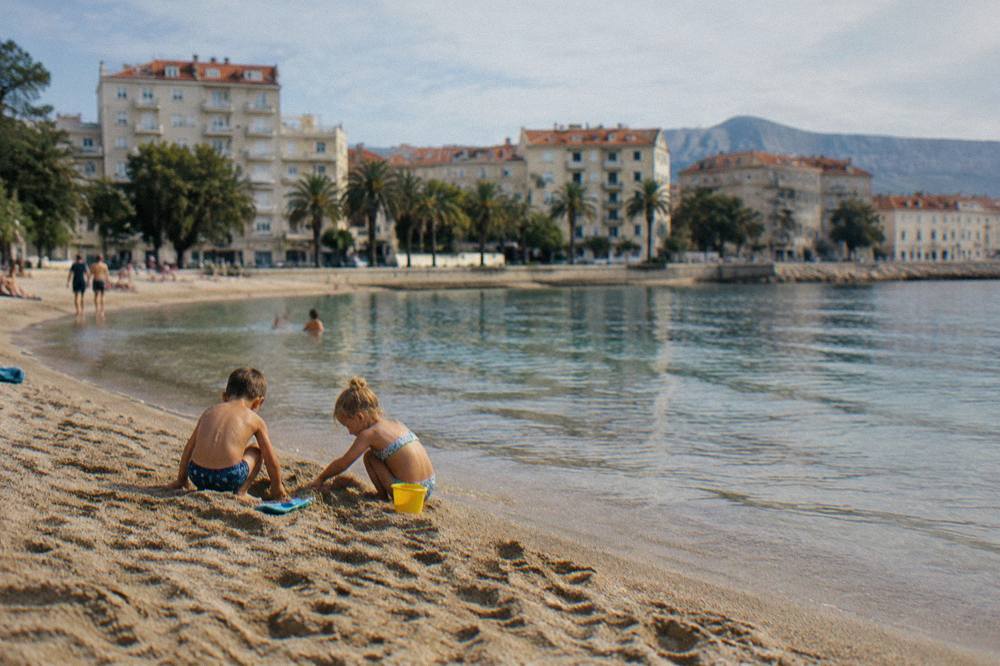
Bačvice is Split's most family-friendly beach precisely because of its shallow sand: the water stays waist-deep far out, toddlers can wade safely, and the sand builds castles rather than bruises knees. The district adds playgrounds on the green behind the bay, a pharmacy and bakeries within a block, and the flat, crossing-free walk to the Old Town. The trade-off is that high-season evenings bring cafe noise late into the night, so apartments one or two streets back from the bay sleep better.
Picigin is part of the family appeal too. Children watch the evening games from the sand and often get pulled into the shallower circles, and the game needs no equipment beyond a ball. The Firule side, with its deep ladder entry, suits confident older children more than toddlers, so families usually base themselves on Bačvice and walk east when the swimmers want depth.
Common Questions About Bačvice And Firule In Split
Is Bačvice beach free?
Yes. Bačvice, Firule and Zenta are city beaches with free entry, like all of Split's city beaches including Kašjuni and Žnjan. Sunbeds and cafes, where offered, are charged separately.
Can you swim at Bačvice and Firule?
Yes, from roughly late May into early October. Bačvice is shallow and sandy, warming quickly, while Firule's rock and concrete platforms drop into deeper, clearer water with metal ladders for entry. Can you swim in the sea in Split is answered fully in its own guide, but this coast is the swimming heart of the city.
How far is Bačvice from Diocletian's Palace?
About ten minutes on foot along the flat seafront path east from the Riva, with no road crossing needed on the shoreline route. Firule beach adds a few more minutes beyond the bay.
What is picigin?
A ball game born on Bačvice beach in 1908, per the account repeated by the city's tourism site, and now protected intangible heritage of Croatia. Players stand waist-deep and keep a small ball in the air with palm strikes. It is played in summer, and the shallow sand of Bačvice is what makes it possible.
Which is better, Bačvice or Firule?
For sand, shallow water and small children, Bačvice. For deeper, clearer swimming and a quieter platform, Firule. They are minutes apart on the same path, so there is no need to choose for a whole day.
Are there restaurants on Bačvice beach?
Yes, a full ring of cafes, pizzerias and fish restaurants fronts the bay, open from morning to late evening in season, with more local-priced kitchens on the residential streets behind. Check posted prices and an itemised bill as anywhere in the city.
Bačvice and Firule give Split what few palace cities have: a swimmable, sandy, walkable beach district minutes from a UNESCO-listed Roman core, with picigin in the shallows every summer evening since 1908. Stay here if the sea is the point of the trip, walk west for the history, and let the flat coastal path connect the two halves of the day.