Korcula From Split
Korcula is the wooded Dalmatian island that sits south of Hvar on the way toward Dubrovnik, reachable from Split as a long day trip by catamaran or by road and ferry. This guide sets out how the departure works, what to expect on the island, and how the day compares with the other big trips out of Split.
Short answer
Korcula is a full-day trip from Split by fast catamaran from the Split ferry port, or a longer road journey via the Peljesac peninsula, with Korcula Town's walls, towers and lanes as the highlight. Allow a full day, book the boat seat ahead in season, and check the operator's live timetable before committing to a date.
Split is the coastal city in central Dalmatia, Croatia, whose ferry port on Obala kneza Domagoja sends boats south every day toward the islands, and Korcula is the long, wooded island that sits beyond Hvar on the route toward Dubrovnik. A day trip there from Split is a real commitment of a day: it means an early start on the waterfront, several hours on the water or on the coastal road, and a walled town of towers and narrow lanes as the reward. This guide lays out how the trip works, what the practical questions are, and how it stacks up against the other headline day trips out of Split, using what operators and official bodies publish rather than secondhand claims.
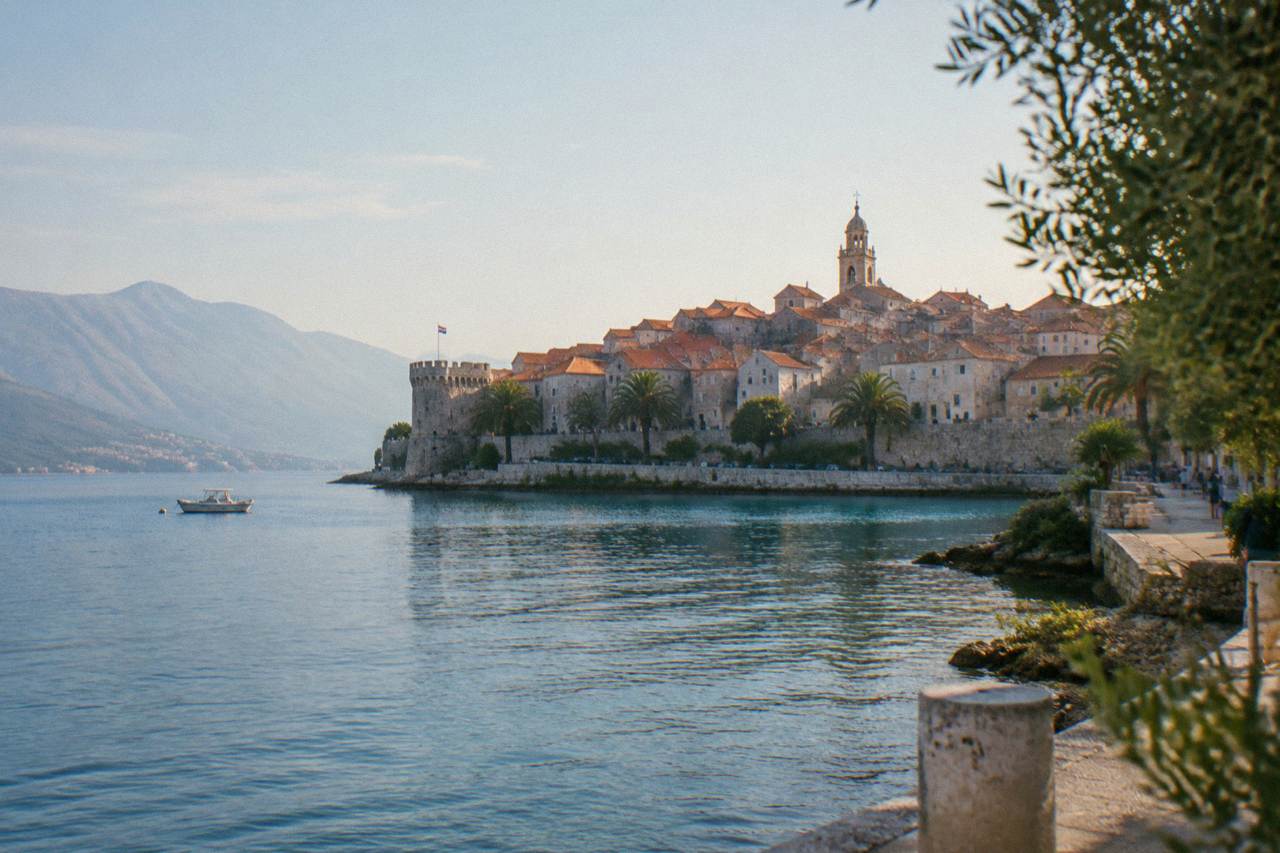
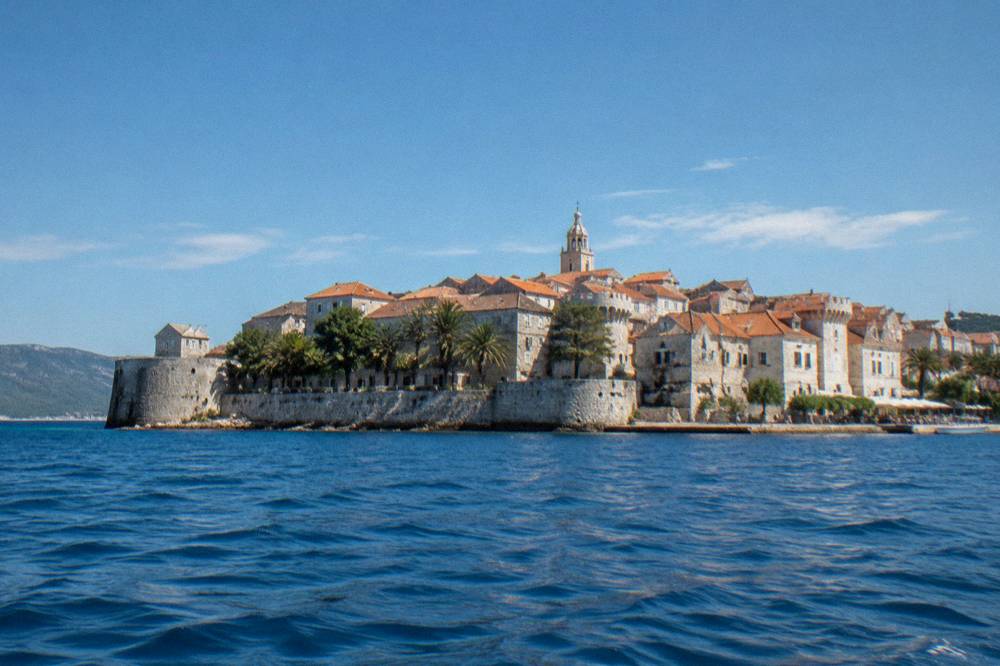
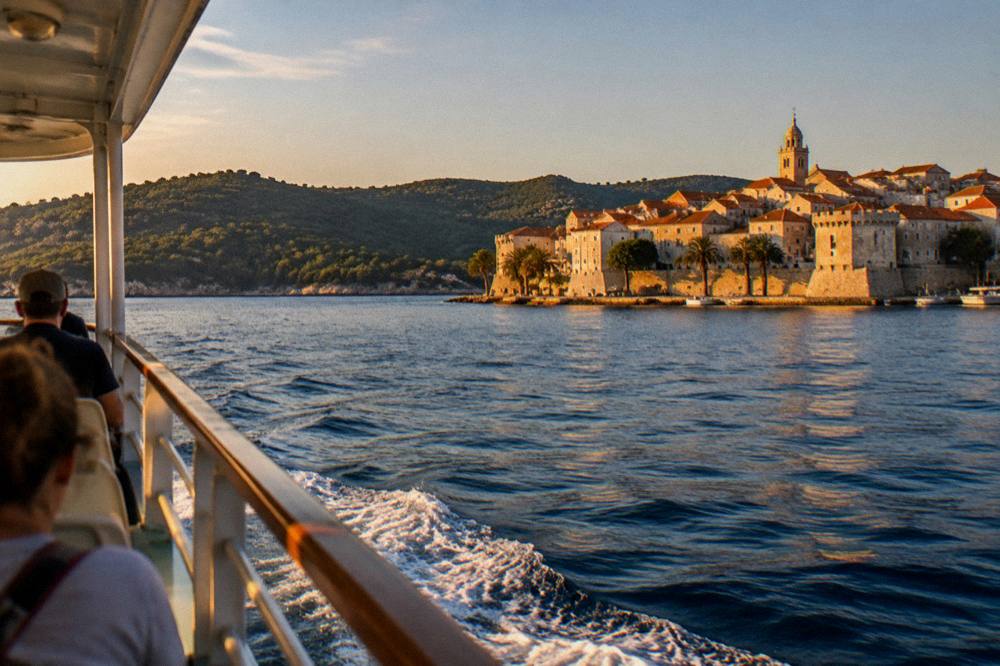
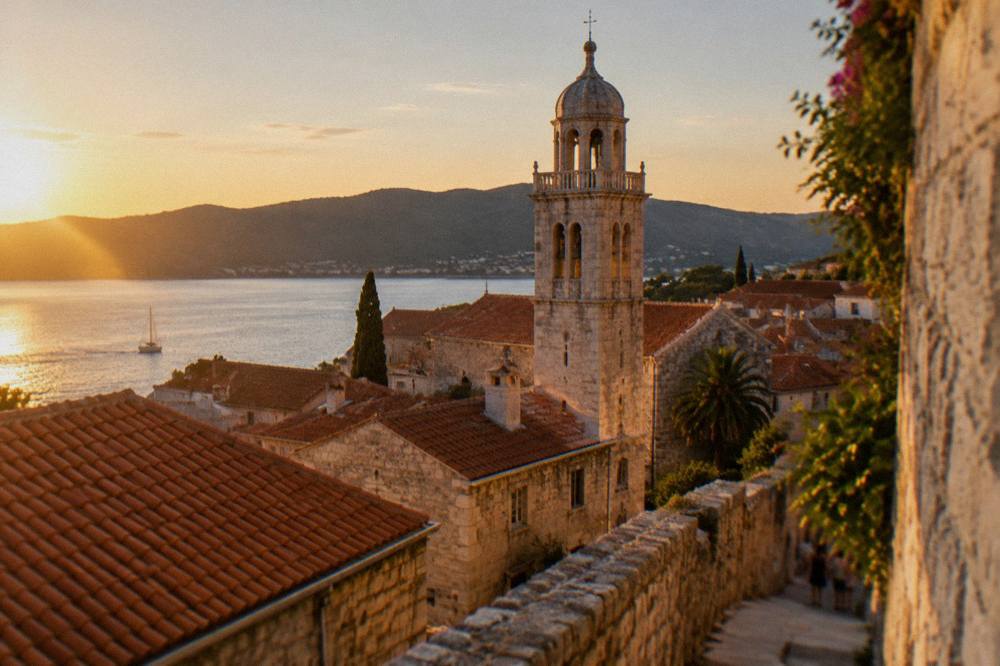
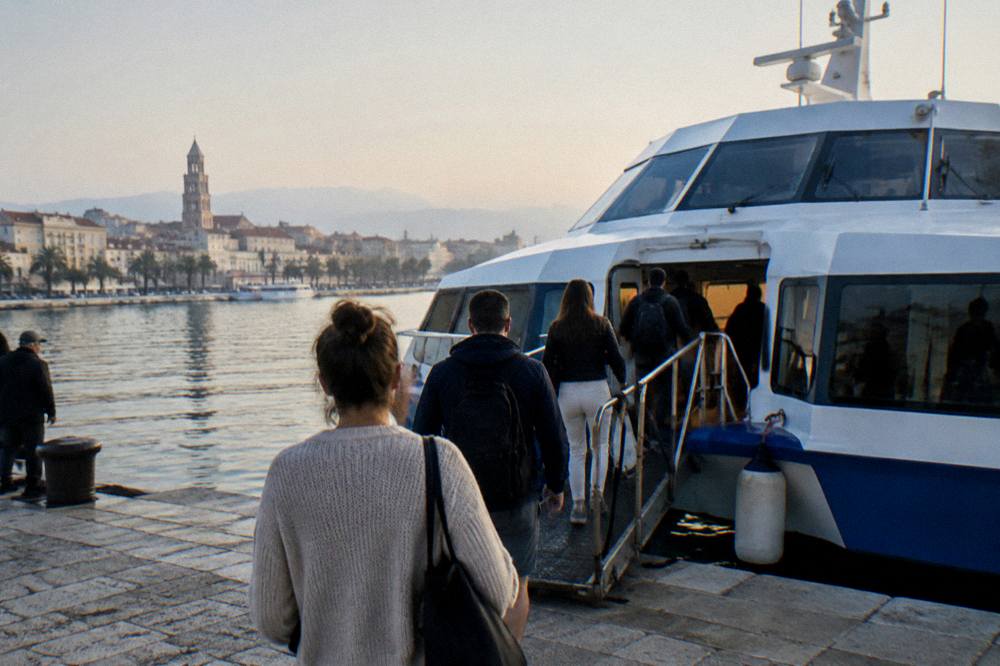
Korcula Town is the island's centrepiece: a compact fortified settlement on a small peninsula, with a cathedral at its head, defensive towers along its flanks, and lanes laid out in a pattern that shade-conscious medieval builders would recognise. The island also carries vineyards, quiet coves and smaller villages, but on a single day out of Split the town itself is what the timetable realistically allows. Everything on this page starts from the practical base the sources give: the ferry port, the main bus station and the railway station sit together on Obala kneza Domagoja, 500 to 600 m from Diocletian's Palace, so the departure point for a Korcula day is a short walk from the Old Town.
How Do You Get From Split To Korcula?
The realistic options are a fast catamaran direct from the Split ferry port to Korcula Town, or a much longer road journey by bus or car around the coast and across from the Peljesac peninsula by short ferry, and the catamaran is the only version that fits comfortably into one day. The Port of Split is Croatia's busiest passenger port, with 6.05 million passengers in 2025, and several operators, including Kapetan Luka (Krilo) and TP Line, run catamarans from its berths.
Sailing times and days vary through the year, so the live operator timetable decides the plan, not a rule of thumb.
To check sailing times for your dates, book a ferry ticket here.
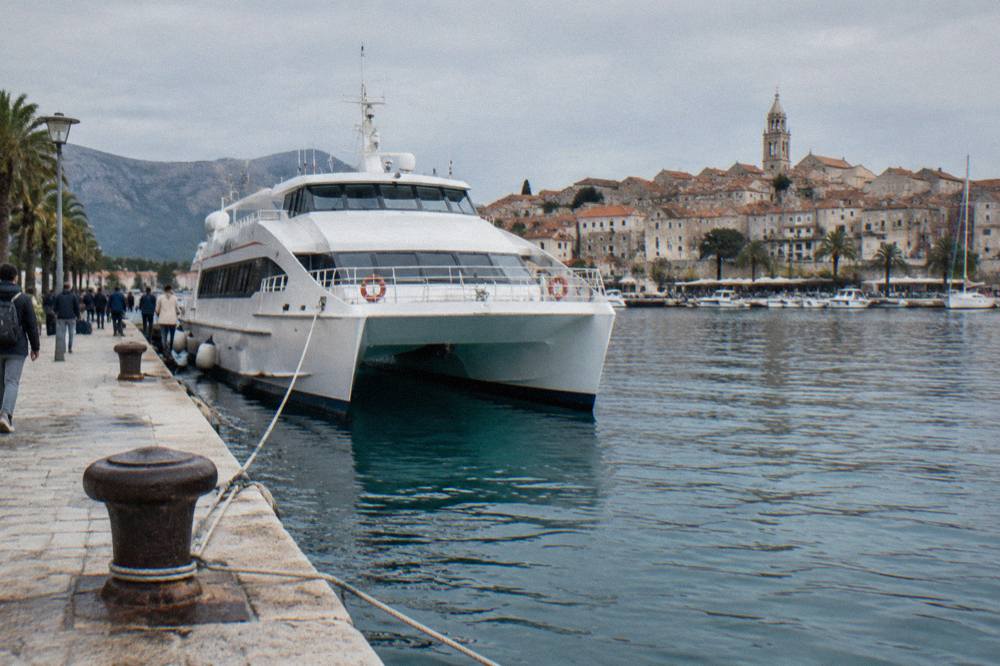
The catamaran option is the one the geography favours. Split's port sits at the top of the island chain, and the fast boats that serve Hvar and Vis also serve points further south, with Korcula one of the destinations that appears on the port's live departures feed alongside the lines to Hvar town, Jelsa, Vis, Bol and Milna.
The road option exists but eats the day. Split to Dubrovnik is 234.8 km and about 3 h 21 of free-flow driving from the palace per the OSRM figures, and Korcula's ferry slip at Pomena-side Domince is reached by branching off that same coastal road onto the Peljesac peninsula and crossing by a short ferry. A bus or self-drive day therefore means several hours each way plus a ferry crossing, which is why the catamaran, slow as the day still is, is the version people actually book. The alternative that the timetable occasionally allows is to pair Korcula with a night in Dubrovnik or on the Peljesac, turning a rushed outing into a two-day loop.
First, everything departs from the same strip: catamaran berths, ferry ramps, the main bus station and the railway station share Obala kneza Domagoja, so an early arrival from the Old Town is a flat ten-minute walk at most from the palace walls. Second, in high season the fast boats fill, and a same-morning walk-up seat is a gamble rather than a plan; the operator's live listing is the place to check. Third, if the sea is rough, catamaran services can be adjusted, and the port's live departures feed is the fastest place to see the state of play on the morning itself.
Is Korcula Worth The Long Day From Split?
Korcula is worth the day if the appeal is a walled island town that package-free calm and evening light sit well with, and if several hours of travel each way sounds like part of the adventure rather than a tax on it; it is not worth it for a traveller who wants swimming stops, a short hop or a guaranteed warm afternoon, because the day is consumed by transit and the town visit. As a rule of thumb, one long day there beats two rushed hours squeezed between boats.
The honest framing is that Korcula is the connoisseur's choice among Split's day trips. The headline trips out of this city split into three families: the island boats, the national parks, and the coastal-historic towns. Within that spread, Korcula is the far end of the island family, further and quieter than Hvar, wilder in feel than Brač and Zlatni rat, and far less tied to Split's daily rhythm than the Blue Lagoon and Šolta cruises, which run as short loops close to home. A traveller with only one or two days in Split will usually serve themselves better with a nearer island or a park; a traveller with four or more days, or one who has already done the classics, will find Korcula a genuinely different register.
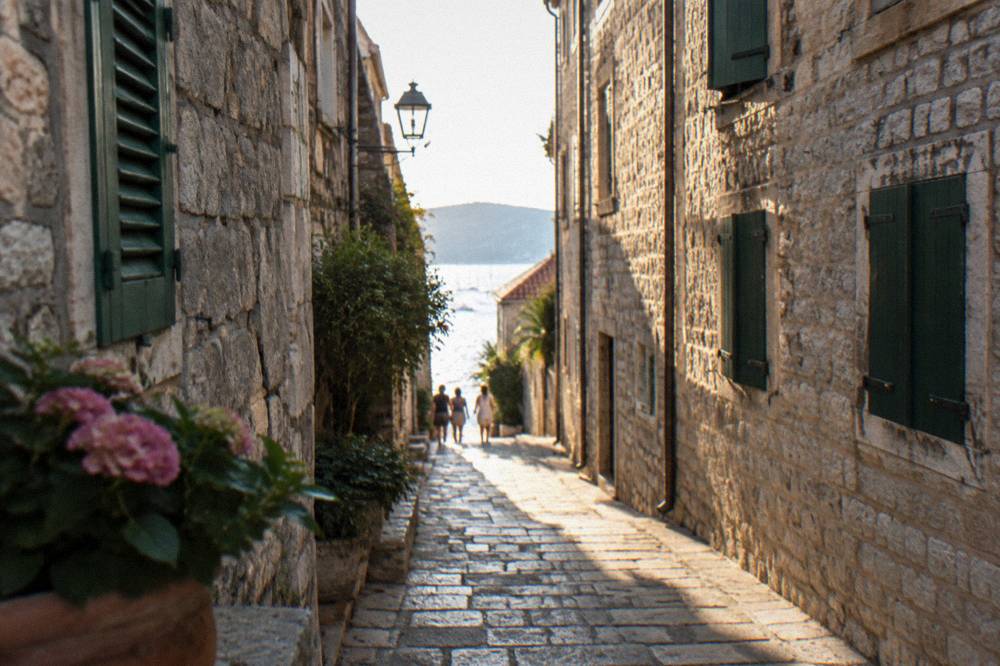
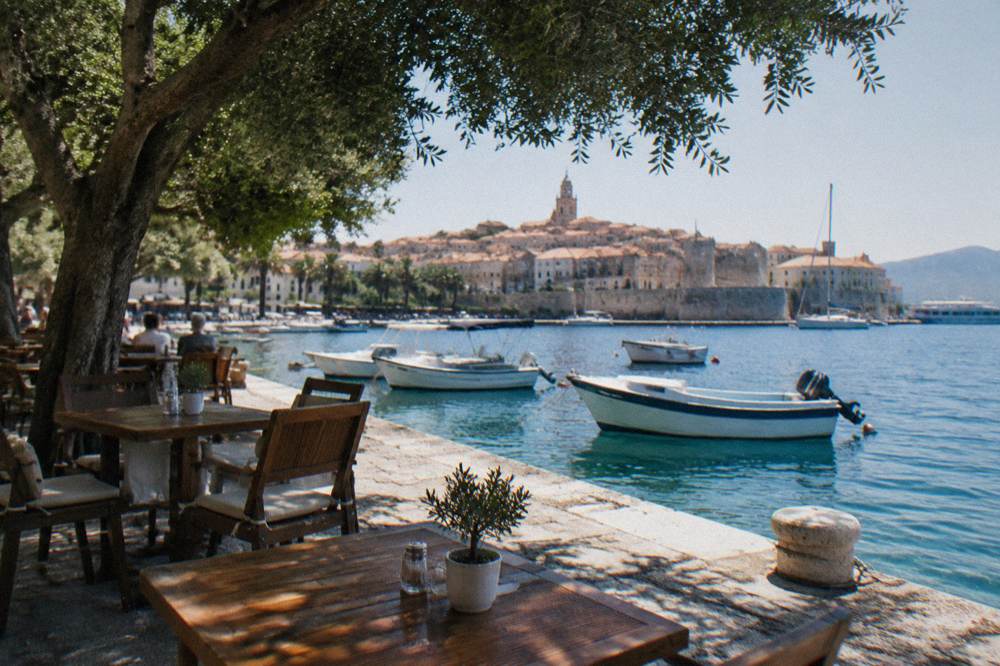
What the town offers is density. Walls, towers, a cathedral at the peninsula's tip, lanes that funnel the summer heat into shade, and a waterfront where the boats come and go within arm's reach of the cafes. Unlike the palace-heavy core of Split's own Old Town, Korcula Town is small enough to walk end to end slowly in a couple of hours, which is roughly what a day-trip timetable allows between arrival and the return sailing. The island's vineyards and coves need more time than a day trip gives, and this site will not pretend otherwise: a day visit is a town visit.
The comparison that matters most is with Dubrovnik. Both are walled, both are far, and both sit along the same southern route. Korcula by catamaran trades road time for sea time and trades Dubrovnik's scale for a smaller, quieter stage. A traveller choosing between the two on a single spare day should pick walls-and-crowds in Dubrovnik or water-and-calm in Korcula, and no honest page can make that choice for them.
If the long boat south does not fit the itinerary, the guided alternatives out of Split cover the same southern horizon by road. The Mostar and Kravice trip crosses into Bosnia and Herzegovina for the rebuilt Old Bridge and a waterfall stop, and the Dubrovnik day tour from Split or Trogir covers the walls city with a guide and transport arranged. Both suit a day when sea time feels like wasted time.
For something shorter and closer to home, the sunset tour on Klis Fortress is the one this site features alongside its Korcula coverage: Klis is 13.9 km and about 22 minutes of driving from the palace per the OSRM figures, the fortress was a Meereen filming location, and the sunset version pairs the walls with the view down over Split. The listing carries the times and the inclusions, and the Check availability link shows the operator's live dates. The fortress itself charges 10 EUR adult entry, payable on site.
What Does A Korcula Day Trip Cost From Split?
The two reliable cost lines are the boat seat and the food: the catamaran fares, 6.40 EUR low and 10.00 EUR high season to Hvar or Jelsa and 7.20 to 10.00 EUR to Vis, show the scale for fast-boat travel from Split, with the exact Korcula fare to be confirmed on the operator's page; island meals and any town entry add the rest, and no honest page can print a total without booking a specific date.
Budget the day the way a ferry-plus-lunch day is budgeted anywhere on the coast, with a margin for a second coffee by the water.
Cost on this route is mostly a function of the boat. Confirm the fare at booking, and treat any number seen elsewhere with the same caution.
On the island itself, the spending is ordinary Dalmatian spending. Coffee by the quay, a fish lunch, maybe a museum or tower entry priced at the door. Croatia has used the euro since 1 January 2023, so there is no currency arithmetic to do, and cards are accepted almost everywhere a day visitor will stop. The tourist tax, about 2.65 EUR per person per night in high season, applies to overnight stays, not day trips, so it does not enter this calculation unless the day trip becomes an overnight.
One planning table helps more than a fake total.
| Item | Figure | Where It Comes From |
|---|---|---|
| Catamaran Split to Hvar or Jelsa | 6.40 EUR low, 10.00 EUR high season | Operator price lists |
| Catamaran Split to Vis | 7.20 EUR low, 10.00 EUR high season | Operator price lists |
| Car ferry Split to Stari Grad, foot passenger | 5.90 EUR off-season, 8.40 EUR in season | Jadrolinija price PDF |
| Catamaran Split to Korcula | Confirm on the operator's page | No fixed figure |
| Tourist tax, overnight stays | About 2.65 EUR per person per night, high season | County decision |
| Currency | Euro, since 1 January 2023 | ECB |
The pattern is simple: the nearer islands give a sense of the fast-boat price band, and Korcula's exact seat price is a quick check on the operator's booking page once dates are real. What can be said with confidence is that the boat seat is a small part of the day's cost, and that the day's real price is measured in hours on the water, not in euros at the kiosk.
When Is The Best Time Of Year For A Korcula Day Trip?
The best window is late June to early September, when the catamaran schedules run at full strength and the DHMZ Split Marjan station table shows July means of 26.2 C and August 25.9 C, though that is also when seats sell out and the towns are fullest; May, June and September trade a few degrees for thinner crowds and easier bookings, and winter timetables make the day trip impractical.
The climate record that matters here is Split's own, because the day starts and ends there. The DHMZ Split Marjan station, over the 1948 to 2024 period, gives the monthly picture below, and it is the honest basis for any month-picking on this coast. July and August are the warm and dry months, with 18 days at 30 C or more in July and 17 in August; November is the wettest month at 115.5 mm; and the shoulder months sit in a comfortable middle.
| Month | Mean Temperature (C) | Precipitation (mm) |
|---|---|---|
| Jan | 8.0 | 77.8 |
| Feb | 8.5 | 65.2 |
| Mar | 10.8 | 63.2 |
| Apr | 14.4 | 62.0 |
| May | 19.2 | 57.5 |
| Jun | 23.4 | 49.0 |
| Jul | 26.2 | 26.6 |
| Aug | 25.9 | 41.3 |
| Sep | 21.6 | 70.9 |
| Oct | 17.2 | 77.0 |
| Nov | 12.7 | 115.5 |
| Dec | 9.4 | 103.7 |
Weather on a Korcula day matters twice over. It decides whether the town walk is a pleasure or a dash between awnings, and it decides whether the catamaran runs as scheduled, because fast boats are the first services adjusted when the sea turns. A July or August day maximises the first and carries a small risk on the second; a September day balances both. The sea itself is a separate question, and this site prints no monthly sea-temperature normal, because no official one exists for Split; the live DHMZ reading is the only sea figure with a source, and it changes daily.
Timing within the week and within the day is its own lever. Midweek sailings are easier to book than weekend ones in high season, and the earliest departure is the one that yields a full day on the island rather than an afternoon fragment.
How Does A Korcula Day Trip Compare With Split's Other Day Trips?
Korcula is the longest and quietest of Split's island day trips, best for a traveller who has already done a near-island cruise or a park; Krka is 74 minutes of driving from the palace with 7 to 40 EUR seasonal entry, Plitvice is 3 h 15 away with 10 to 40 EUR seasonal entry, Hvar is the near island party-and-town option, and Dubrovnik is the walled-city rival to the south, so the choice comes down to sea versus waterfalls versus walls.
The OSRM free-flow figures are measured from Diocletian's Palace, and the park prices are the 2026 price-list figures with their months attached, because both parks price by season and a single-number quote would be false outside its months.
| Day Trip | Travel Basis | Verified Entry Or Fare |
|---|---|---|
| Krka National Park | 90.2 km, about 74 min driving | 7 EUR Jan to Mar and Nov to Dec, 20 EUR Apr, May, Oct, 40 EUR Jun to Sep |
| Plitvice Lakes | 258.1 km, about 3 h 15 driving | 10 EUR winter, 23 EUR Apr, May, Oct, 40 EUR Jun to Sep, 25 EUR peak afternoon slot |
| Hvar | Catamaran, 6.40 to 10.00 EUR | Fortica fortress 12 EUR |
| Dubrovnik | 234.8 km, about 3 h 21 driving, coach about 4 h | City walls 40 EUR (secondary source) |
| Mostar | 173.2 km, about 2 h 13 driving | Old Bridge area, no figure in pack |
| Trogir | 29.3 km, about 36 min driving | Confirm cathedral price locally |
| Korcula | Catamaran from Split port | Fare confirm on operator's page |
The airport is not a few minutes from the city: the airport's own pages put it in Kaštel Štafilić, 20 km from Split and 6 km from Trogir, with the Platanus shuttle at 10 EUR one way and 15 EUR return to the main bus station by the ferry port. And swimming at Krka is not a free-for-all: the park's own rules allow swimming only in clearly marked areas, with the designated spots reported at Roški slap, Stinice and Pisak between 1 June and 30 September. Neither point is about Korcula directly, but both shape the plans of travellers who stack several Split day trips into one week.
For the inland version of the far day trip, the Mostar and Kravice waterfalls tour is the road counterpart to Korcula's sea day: a guided crossing to the rebuilt Old Bridge and a waterfall stop, with the operator's listing carrying times and inclusions. It suits the same traveller profile as Korcula, someone with a spare long day and a taste for somewhere that is not another beach, and it removes the timetable risk that a catamaran day always carries.
If the week allows only one far trip, the tiebreaker questions are simple. Do you want walls and city scale, or water and quiet? Walls point to Dubrovnik. Water and quiet point to Korcula. Waterfalls point to Krka, which is also the shortest drive of the three and the one with the cheapest winter ticket. And if the honest answer is none of the above, because the legs are tired and the days are short, then the closer picks, Trogir at 36 minutes of driving or Omiš and the Cetina river at 38, deliver a lot of the same satisfaction for a fraction of the transit.
What Should You Know Before Booking The Korcula Trip?
Book the catamaran seat before the accommodation is even finalised in July and August, carry the booking on the phone, arrive at Obala kneza Domagoja early because berths, buses and trains share one strip 500 to 600 m from the palace, keep euros for small island spends, and accept that the return sailing, not personal preference, sets the day's final hour.
Croatia is in the Schengen Area and uses the euro, the emergency number is 112, and any sea-state change on the day is decided by the operator, not the traveller.
The checklist is short because the trip is simple. Seats, timings, weather, and a plan for the hours on the island that does not require racing. The table below gathers the planning basics with their sources, and the gaps are marked as gaps, because a planning table that invents its missing cells is worse than no table.
| Planning Item | What The Sources Give |
|---|---|
| Departure point | Obala kneza Domagoja, 500 to 600 m from the palace |
| Operators from Split | Kapetan Luka (Krilo), TP Line, Bura Line appear in the port's live feed |
| Verified near-island catamaran fares | Hvar or Jelsa 6.40 to 10.00 EUR, Vis 7.20 to 10.00 EUR |
| Korcula fare and crossing time | Confirm on the operator's page |
| Currency | Euro, since 1 January 2023 |
| Border | Schengen member; EES fully operational since 10 April 2026 |
| Emergency number | 112 |
Two final practical notes. Schengen membership means no border control on the way to Korcula, but the EES system, fully operational at external Schengen borders since 10 April 2026, applies to non-EU visitors arriving into the zone in the first place, and ETIAS is not yet live so no pre-travel authorisation is needed beyond what a traveller already holds. And for anyone building the wider Split week, the Split Croatia Travel Guide homepage gathers the city's attractions, itineraries and day trips in one place, including the classic Krka and Plitvice Lakes park trips and the full island set.
Common Questions About Korcula From Split
Can You Do Korcula As A Day Trip From Split?
Yes, by fast catamaran from the Split ferry port, and the catamaran is the only version that fits one day comfortably. The road alternative via the Peljesac peninsula takes several hours each way plus a short ferry, which makes a same-day return impractical for most plans. Check the operator's live timetable before fixing a date, as sailings and days change through the year.
How Long Does The Catamaran From Split To Korcula Take?
The catamaran picture from the same operators covers the nearer islands, with Hvar and Jelsa served by lines 9603 and 9602 alongside Vis. The operator's booking page states the Korcula sailing time for each departure, and that is the figure to plan around.
Is Korcula Or Hvar Better For A Day Trip From Split?
Hvar is nearer and easier, served by direct catamarans at verified fares of 6.40 EUR low and 10.00 EUR high season, with the Fortica fortress at 12 EUR in Hvar town. Korcula is further, quieter and best suited to a traveller with spare days who has already done a near-island trip. If the day is the only island day of the week, Hvar usually wins on arithmetic alone.
Can You Swim On A Korcula Day Trip From Split?
Swimming on the island is possible in principle, with coves around Korcula Town and along the coast, but a scheduled catamaran day leaves little margin for it, and this site prints no beach certification claims for any Split-area beach. If a swimming day is the priority, the Blue Lagoon and Šolta cruises from Split are built around swim stops and run far closer to home.
What Is There To Do In Korcula Town?
Korcula Town is a small fortified peninsula with walls, towers, a cathedral at its head and narrow shaded lanes, walkable end to end at a slow pace in a couple of hours. The waterfront carries cafes and boat traffic side by side. Museum and tower entries are priced at the door, and this site prints no figures it has not read, so confirm prices on arrival.
Do You Need A Passport To Visit Korcula From Split?
No. Korcula is Croatian territory and Croatia is a Schengen member, so there is no border control on a domestic catamaran or ferry from Split. Non-EU visitors should note that the EES entry system is fully operational at external Schengen borders since 10 April 2026, applying on arrival into the zone rather than on the way to the island. ETIAS is not yet live.
The Korcula day from Split is a long, rewarding commitment: an early walk down to Obala kneza Domagoja, a fast boat south past Hvar, a few unhurried hours inside a walled island town, and a sunset return toward the palace walls. Book the seat, respect the timetable, and the day tends to look after itself.
