Split Croatia History
Split grew inside a Roman emperor's palace on the Adriatic coast of Dalmatia, and the city's history is still readable in its stones, from the Peristyle to the Marjan hill steps.
Short answer
Split's history centres on Diocletian's Palace, built around 295 to 305 AD for the retiring Roman emperor and inscribed by UNESCO in 1979. The city of 160,577 people (2021 census) grew in and around that palace, and its key sites, from the cathedral bell tower to the Archaeological Museum founded in 1820, can be visited today.
Split, a coastal city in central Dalmatia on the Adriatic Sea, is one of the few places in Europe where daily life still runs inside a Roman imperial residence. Diocletian's Palace, raised around 295 to 305 AD for a retired emperor, forms the shell of the Old Town: shops occupy the substructures, apartments sit above Roman walls, and the cathedral grew out of the emperor's mausoleum. This page from the Split Croatia Travel Guide lays out the city's history using dated, checkable facts: what UNESCO listed and when, which museums hold which ruins, what the tickets cost, and which historic day trips sit within reach of the ferry port.
What Is The History Of Split Croatia?
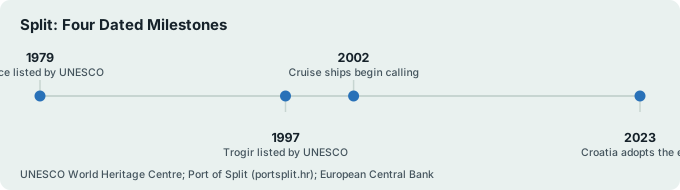
Split's recorded history begins with Diocletian's Palace, built around 295 to 305 AD as a retirement residence for the Roman emperor Diocletian, on a bay near the town of Salona. The palace became the core around which the city grew, and UNESCO inscribed the "Historical Complex of Split with the Palace of Diocletian" on the World Heritage List in 1979, recognising a property of 20.8 hectares under criteria (ii), (iii) and (iv).
The UNESCO inscription covers the whole historical complex, not just the Roman shell: the palace, the medieval additions inside and around it, and the later city that spread west toward Marjan and east along the bay. The 2021 census counted 160,577 residents in the City of Split, making it the largest city on the Croatian coast. The port next to the Old Town handled 6.05 million passengers in 2025, which the Port of Split's own page describes as Croatia's busiest passenger port, and cruise ships began calling here in 2002.
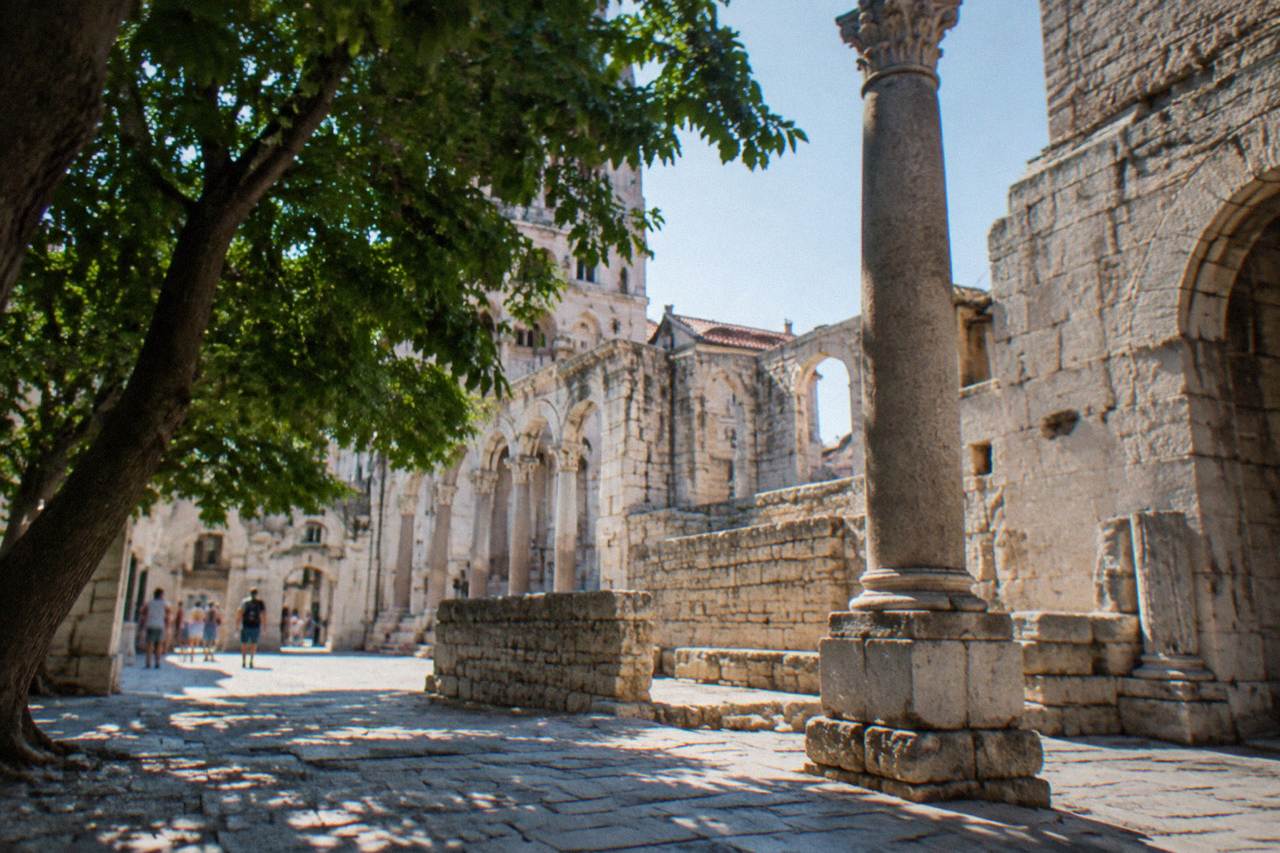
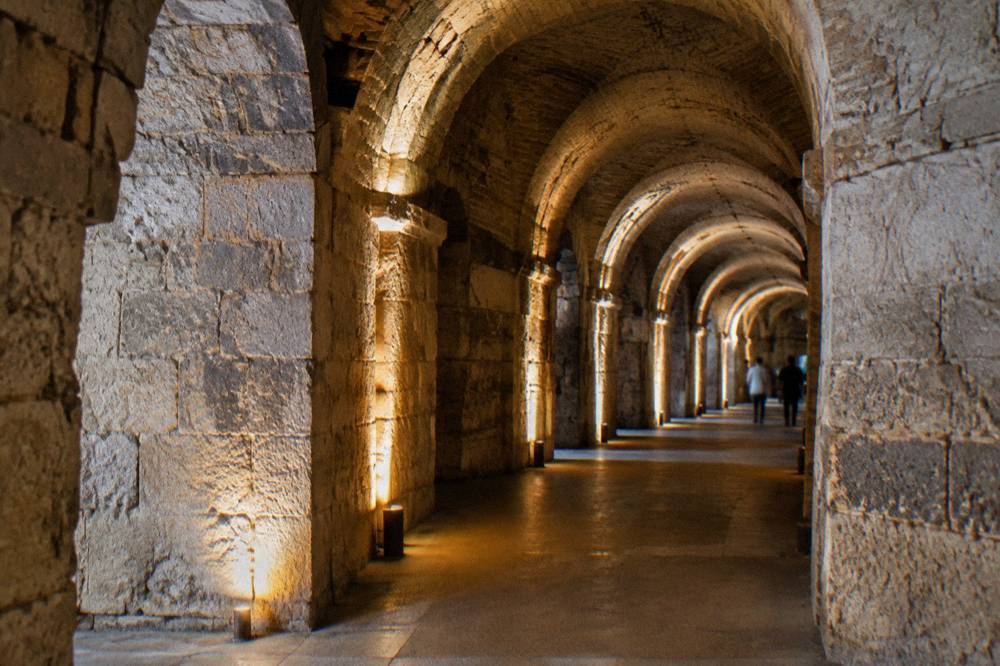
What makes the site unusual is continuity. The palace substructures, once the storage level beneath the imperial apartments, are open daily under the management of the Split City Museum, Monday to Sunday from 8:30 to 20:00, with the central part under restoration to the end of 2026 while the public passage stays open. Above ground, the Peristyle, the Riva promenade, the Prokurative square, the Golden Gate and the Grgur Ninski statue all stand free to walk through, with no ticket on any of them. History here is not behind glass; it is the street plan.
When Was Diocletian's Palace Built And What Can You Still See?
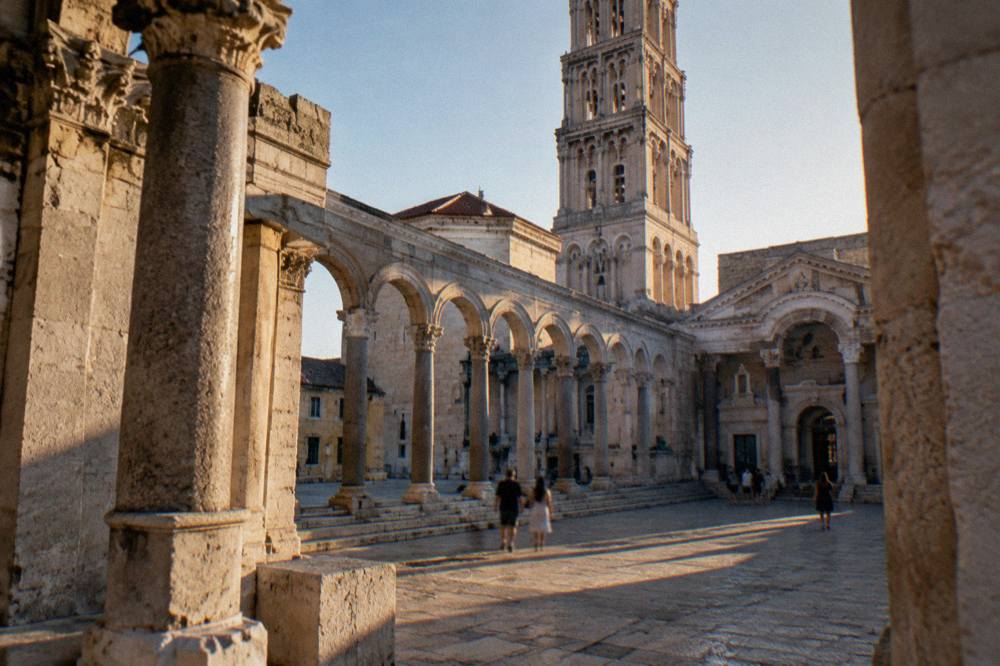
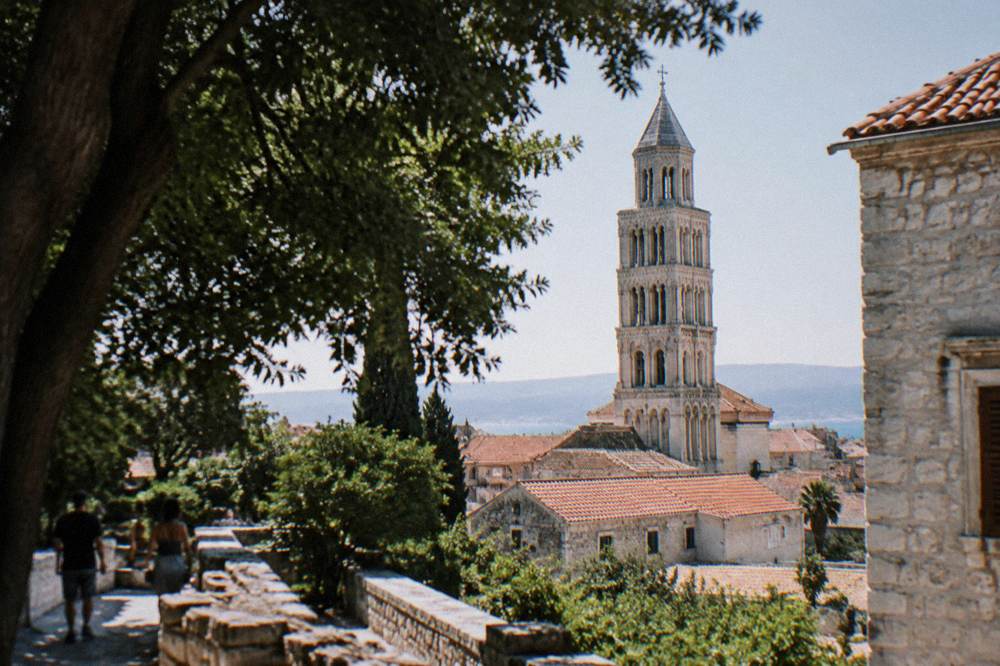
The palace was built roughly between 295 and 305 AD for Emperor Diocletian, who chose a peninsula on the Dalmatian coast a short distance from Salona, then the regional capital. Today you can see the substructures, the Peristyle, the Golden Gate, the mausoleum that became the Cathedral of St Domnius, and the Temple of Jupiter, now the Baptistery of St John, all within the inscribed 20.8 hectare UNESCO property.
To have a historian untangle those centuries for you, book a history walking tour here.
The emperor's mausoleum became the Cathedral of St Domnius, and its bell tower, 57 m high. The cathedral complex is ticketed through a kiosk on the Peristyle, and the price structure reported by secondary guides runs from about 5 EUR for the cathedral up to about 15 EUR for a combined ticket covering the crypt, the baptistery, the treasury and the tower; shoulders and knees must be covered inside. The Temple of Jupiter, converted to the Baptistery of St John, sits inside the same ticket scheme. More on planning that visit is in the Diocletian's Palace visitor guide coverage of the palace area.
The substructures are the palace's most complete surviving level, because they were buried and later cleared rather than rebuilt. The Split City Museum, which runs them, charges 10.00 EUR for an adult ticket to its own Papalić Palace site, 8.00 EUR reduced, with a family ticket at 18.00; the museum itself is closed Mondays. A daily change of the Roman guard played on the Peristyle at noon through the 2026 season, from 28 May to 27 September. For travellers who want the history explained rather than decoded alone, small-group walking tours of the palace and the wider old town run year round.
What Happened To Split After The Roman Era?
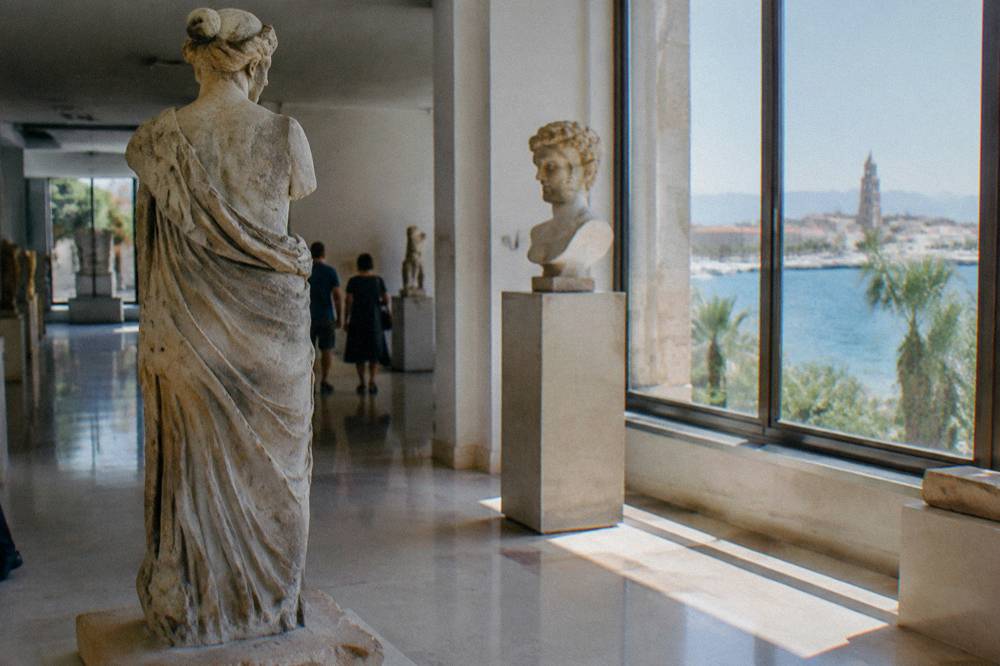
After the Roman era, the palace's ruins were resettled, and the visible record picks up with the cathedral bell tower the Archaeological Museum founded in 1820, and the city's absorption of surrounding settlements. The documented milestones are fewer than the legends suggest: UNESCO's 1979 inscription is the first dated global recognition, and the 2021 census of 160,577 residents is the latest official population figure.
Medieval and early modern Split left its mark in stone rather than in a continuous written record on this page's sources, so the honest approach is to list what can be dated and seen. The 13th century bell tower belongs to that layer. So does the street pattern of the Old Town, where Roman colonnades carry later facades. The Archaeological Museum, founded in 1820, is Croatia's oldest museum institution of its kind and holds the Salona collection described below. Picigin, the shallow-water ball game played on Bačvice beach, dates from 1908 and is protected intangible heritage of Croatia, a rare piece of living local history with a fixed date.
The modern era is easier to pin down. The port's cruise era began in 2002, the UNESCO Venetian Works listing of 2017 reached nearby Šibenik's St Nicholas Fortress, and Croatia adopted the euro and joined the Schengen Area on 1 January 2023. The Riva, the seaside promenade finished in its present form after earlier renewals, is itself about to change again: the central section's renovation is planned from November 2026 and is set to run a little over a year, so partial closures on the Riva should be expected through 2027.
A Dated Timeline Of Split's History
| Period or date | What happened | Where to see it |
|---|---|---|
| c. 295 to 305 AD | Diocletian's Palace built for the retiring emperor | Old Town core, substructures |
| 13th century | Cathedral bell tower begun, 57 m | Cathedral of St Domnius |
| 1820 | Archaeological Museum founded | Archaeological Museum, Split |
| 1908 | Picigin ball game born on Bačvice beach | Bačvice beach |
| 1979 | UNESCO inscribes the Historical Complex of Split | Whole Old Town, 20.8 ha |
| 2002 | First cruise ship calls at the port | Port of Split |
| 1 January 2023 | Croatia adopts the euro and joins Schengen | City-wide |
| 2021 census | 160,577 residents counted in the City of Split | City-wide |
Which Museums In Split Hold The City's History?
The main historical museums are the Split City Museum at 10.00 EUR, the Archaeological Museum at 8.00 EUR with a 10.00 EUR combined ticket for its Salona site, the Meštrović Gallery at 12.00 EUR, and the Ethnographic Museum at 7.00 EUR, all 2026 adult prices from the institutions' own price lists. The Meštrović Gallery reopened in April 2026 after a 15-month energy renovation, and its ticket also covers the Crikvine-Kaštilac site.
The Split City Museum's ticket, 8.00 EUR reduced and 18.00 EUR for a family, covers the Papalić Palace in the heart of the Old Town, open Tuesday to Sunday and closed Mondays. The Archaeological Museum's combined ticket is the best value for Roman history: it covers both the Split museum and the Salona archaeological park, valid within 7 days, and Salona itself keeps summer hours, daily from 9:00 to 20:00 between 1 June and 30 September. The Ethnographic Museum rounds out the picture at 7.00 EUR, with a 2.00 EUR ticket for its Vestibule display, and the Meštrović Gallery's 12.00 EUR adult price includes the Crikvine-Kaštilac chapel site across the hill.
A practical note on timing: Klis Fortress, 13.9 km and about a 22-minute drive from the palace, charges 10 EUR and served as a Game of Thrones Meereen location, a modern layer of fame on a medieval site described in the Split history day trips guide. For anyone building an itinerary around these museums, the practical planning pages on getting from Split Airport to the city centre cover the first leg of the journey.
Split's Historical Museums And Sites: Tickets At A Glance
| Site | Adult ticket | Notes |
|---|---|---|
| Split City Museum (Papalić Palace) | 10.00 EUR | Closed Mondays |
| Palace substructures | Open 8:30 to 20:00 daily | Split City Museum run |
| Archaeological Museum | 8.00 EUR | Founded 1820 |
| Museum plus Salona combined | 10.00 EUR | Valid 7 days |
| Meštrović Gallery | 12.00 EUR | Includes Crikvine-Kaštilac |
| Ethnographic Museum | 7.00 EUR | Vestibule 2.00 EUR |
| Cathedral complex | From about 5 EUR | Combos up to about 15 EUR |
| Klis Fortress | 10 EUR | About 22 min by road |
Which Day Trips From Split Carry The Most History?
The most historic day trips from Split are Salona at 14 minutes by road, Klis Fortress at 22 minutes, Trogir at 36 minutes, the Krka park area at 74 minutes, Mostar at 2 hours 13 minutes and Dubrovnik at 3 hours 21 minutes, all free-flow driving times from the palace. Trogir was inscribed by UNESCO in 1997, the Old Bridge Area of Mostar in 2005, and Dubrovnik's walls charge 40 EUR in 2026.
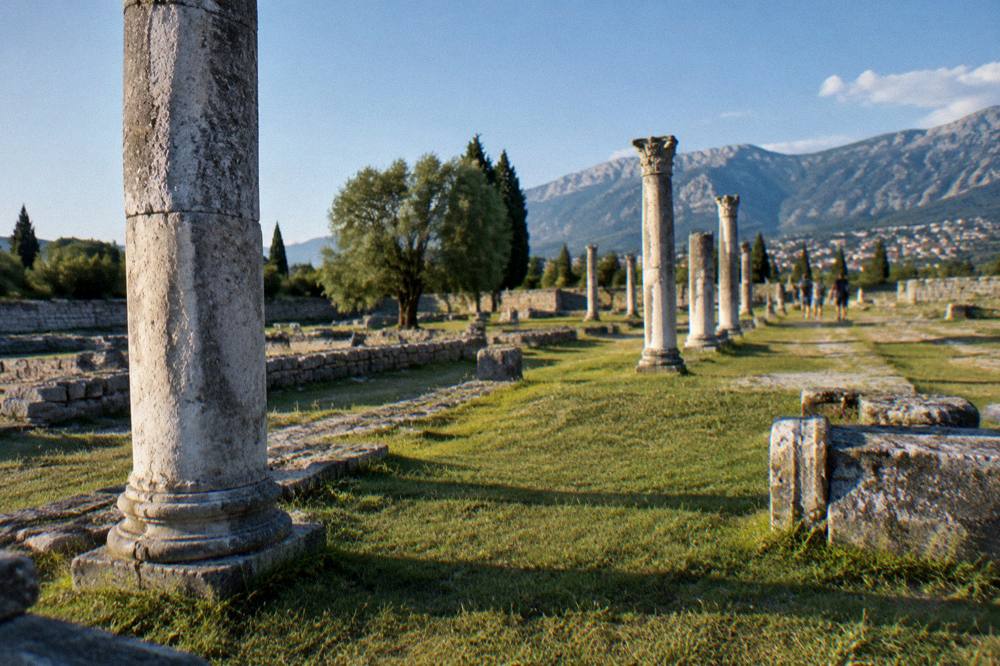
Salona, the Roman capital whose refugees filled the palace, is 9.1 km from Diocletian's Palace and reachable on the 10.00 EUR combined ticket with the Archaeological Museum. Klis Fortress guards the pass above the city and carries its 10 EUR entry on a site open daily from 9:00 to 17:00. Trogir, a whole town of stone on an islet, took UNESCO recognition in 1997; the Šibenik cathedral of St James followed in 2000 and the Venetian defensive works, including Šibenik's St Nicholas Fortress, in 2017. Furthest out, Mostar's Old Bridge Area was inscribed in 2005 on a bridge rebuilt in 2004, and Dubrovnik's city walls, a 3 h 21 min drive or about 4 hours by coach, list at 40 EUR for 2026.
Guided tours cover these routes for travellers who would rather not drive them. The Dubrovnik day tour from Split or Trogir is the site's featured pick for this history, and you can Check availability on the operator's live listing; its practical planning is covered alongside the Split to Dubrovnik route guide. The comparison page on Split versus Dubrovnik helps with the harder question of which city deserves the extra nights.
Historic Day Trips From Split: Distances And Driving Times
| Destination | Distance by road | Free-flow drive | Historic claim |
|---|---|---|---|
| Salona | 9.1 km | 14 min | Roman provincial capital |
| Klis Fortress | 13.9 km | 22 min | Medieval fortress, Meereen location |
| Trogir | 29.3 km | 36 min | UNESCO 1997 |
| Šibenik | 84.8 km | 71 min | St James cathedral, UNESCO 2000 |
| Krka (Skradinski buk) | 90.2 km | 74 min | National park, 7 to 40 EUR seasonal |
| Makarska | 86.1 km | 75 min | Coastal town under Biokovo |
| Zadar | 159.5 km | 2 h | Roman forum city |
| Mostar | 173.2 km | 2 h 13 | Old Bridge, UNESCO 2005 |
| Dubrovnik | 234.8 km | 3 h 21 | Walled city, walls 40 EUR |
| Plitvice Lakes | 258.1 km | 3 h 15 | UNESCO-listed lakes |
How Did The Islands Shape Split's History?
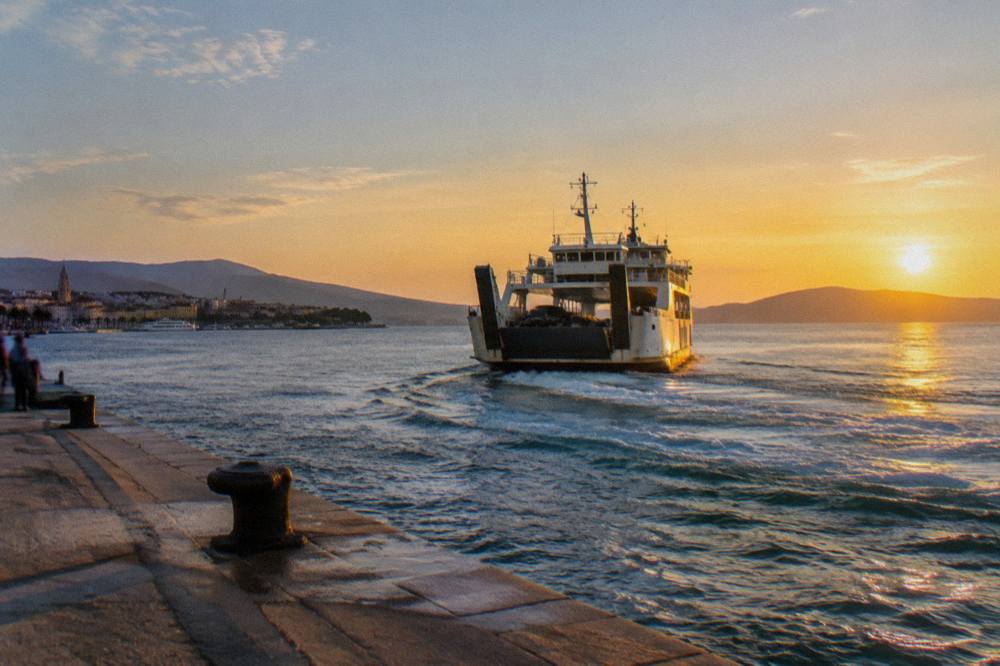
Split's history is inseparable from its sea lanes: the car ferry to Stari Grad on Hvar runs about 120 minutes, the Supetar ferry on Brač about 50 minutes, the Rogač ferry on Šolta about 60 minutes and the Vis ferry about 140 minutes, with catamarans serving Hvar town and Vis directly. Foot passengers pay 5.90 EUR off-season and 8.40 EUR in season on the Stari Grad line, per the Jadrolinija price list.
The distinction matters historically as well as practically. Stari Grad, on Hvar, was the island's main settlement under the ferry age, while Hvar town itself grew around its harbour and fortress and is reached by catamaran, not car ferry; confusing the two lands you at the wrong end of the island. The Fortica fortress above Hvar town charges 12 EUR, a reminder that these islands were fortified frontier towns long before they became beach destinations. From 2026, the Split to Supetar line dropped its off-season timetable altogether and runs only high and low season schedules, the fifth Croatian line to do so, which Jadrolinija links to rising island travel demand.
Brač's Zlatni Rat beach and Šolta's quiet coves belong to the modern tourist era, but the catamaran network that reaches them follows medieval trade routes. For planning rather than history, the ferries from Split guide and the page on the Split to Hvar ferry carry the current schedules and fares.
What Rules Protect Split's Historic Core Today?
Split protects its UNESCO-listed core with a set of public-order rules enforced from 2026: drinking alcohol in the historic centre carries a 300 EUR fine, as do urinating, vomiting, climbing on monuments and bathing in fountains, while sleeping in public spaces carries 150 EUR and touting taxi rides 300 EUR. Walking in swimwear or shirtless in the historic centre is also a fined offence, with the amount set locally, and short-term rental registrations inside the palace area stay under a moratorium through 2026.
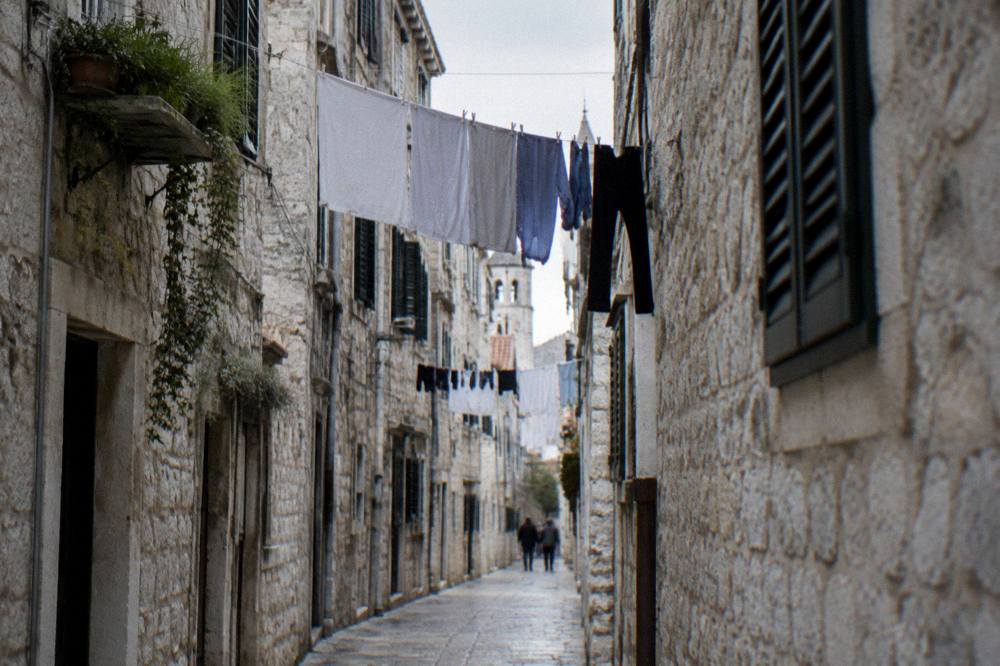
The rules exist because the Old Town is a living neighbourhood inside a monument, not a museum behind a gate. The night-time retail alcohol ban, which stops shops but not bars from selling alcohol between 21:00 and 06:00 in the summer season, ran from 1 June to 15 September 2026 and is set to repeat from 1 June 2027 unless changed. Drones are barred over the old town and the airport zones, and flying over Split's UNESCO area without clearance is not permitted. The honest framing is simple: the same stones that carry centuries of history also carry bins, laundry lines and school runs, and the fines exist to keep that balance working.
Visitors who want to dig into the practical side of the city rather than its past can start with the best time to visit Split, while budget planning sits in the Split on a budget guide.
How Does Split's Climate Shape Its Historic Calendar?
Split's climate, measured at the DHMZ Split-Marjan station over 1948 to 2024, averages 8.0 C in January and 26.2 C in July, with July the driest month at 26.6 mm of rain and November the wettest at 115.5 mm, and sunshine of about 2,600 hours a year. July sees 18 days at 30 C or more and August 17, which pushes the historic-city experience toward early mornings and evenings in high summer.
The station table below is the one to plan against, since it carries the full monthly record rather than a highlight. The cultural calendar follows the warmth: the Split Summer Festival ran its 72nd edition from 14 July to 14 August 2026, the Croatian National Theatre's season runs from 25 September 2026 to 14 June 2027, Sudamja, the city day of St Domnius, falls on 7 May each year, and Advent in Split runs from 27 November 2026 to 7 January 2027 with the ice rink at Đardin. Ultra Europe, a newer tradition by any historical standard, is set for 9 to 11 July 2027 at Park Mladeži, with more in the Ultra Europe guide.
Split Climate: DHMZ Split-Marjan Station Means, 1948 To 2024
| Month | Mean temperature (C) | Precipitation (mm) |
|---|---|---|
| Jan | 8.0 | 77.8 |
| Feb | 8.5 | 65.2 |
| Mar | 10.8 | 63.2 |
| Apr | 14.4 | 62.0 |
| May | 19.2 | 57.5 |
| Jun | 23.4 | 49.0 |
| Jul | 26.2 | 26.6 |
| Aug | 25.9 | 41.3 |
| Sep | 21.6 | 70.9 |
| Oct | 17.2 | 77.0 |
| Nov | 12.7 | 115.5 |
| Dec | 9.4 | 103.7 |
Common Questions About Split History
How Old Is Split Croatia?
The palace at its core was built around 295 to 305 AD, so the settlement that grew inside it reaches back to the late 3rd and early 4th century. UNESCO inscribed the Historical Complex of Split with the Palace of Diocletian in 1979, covering a 20.8 hectare property. The cathedral bell tower rises beside the Peristyle, and the Archaeological Museum was founded in 1820.
Was Split Built By The Romans?
Yes, in the sense that its core is a Roman imperial palace built for Emperor Diocletian around 295 to 305 AD. The city then grew in and around that structure over the following centuries, with residents settling the shell after the nearby Roman capital of Salona declined. Salona's ruins are 9.1 km away and share a 10.00 EUR combined ticket with the Archaeological Museum.
What Is Inside Diocletian's Palace Today?
Homes, shops, bars, the cathedral complex, the substructures open daily from 8:30 to 20:00, and the Peristyle, all in daily use. The substructures are run by the Split City Museum, and its Papalić Palace site charges 10.00 EUR, closed Mondays. The Peristyle, the Riva, the Golden Gate and the Grgur Ninski statue are free to walk through.
Which Split Historical Sites Are Free?
The Peristyle, the Riva promenade, the Prokurative, the Golden Gate, the Grgur Ninski statue, the green markets, the whole of Marjan park-forest and the city beaches charge nothing. The paid historical sites are the substructures, the Split City Museum, the cathedral complex, the Archaeological Museum, the Meštrović Gallery, the Ethnographic Museum and Klis Fortress.
What Is The Best Historical Day Trip From Split?
Salona is the closest at 14 minutes by road, on the 10.00 EUR combined museum ticket. Trogir, a full UNESCO-listed town since 1997, is 36 minutes away. Klis Fortress, 22 minutes up the pass, charges 10 EUR and doubles as a Game of Thrones Meereen location. Dubrovnik, 3 h 21 by road, is the longest but pairs the walls, listed at 40 EUR in 2026, with a full day out.
Does Anyone Perform Roman History In Split?
Yes. The change of Diocletian's Roman Guard played on the Peristyle at noon every day from 28 May to 27 September 2026, and the Stories of Diocletian event ran from 27 to 30 August 2026. Dates for the 2027 season have not been announced, so check the city's event calendar before planning around them.
Split's history does not sit in a glass case. It is a working city of 160,577 people arranged around a palace that a Roman emperor built for his retirement in the late 3rd and early 4th century, ticketed a few euros at a time and free in its squares, and every date on this page can be checked against the palace stones themselves.
