Best Time To Visit Split
Split sits on the Adriatic coast of Dalmatia, and the right month to visit depends on what you want: heat and full boat schedules, or quiet streets and lower park tickets. Here is what the weather station, the price lists and the event calendar actually say.
Short answer
Late May, June, September and early October give Split the best balance of warm weather, open ferry routes and thinner crowds, while July and August bring the heat, the season prices and the festivals.
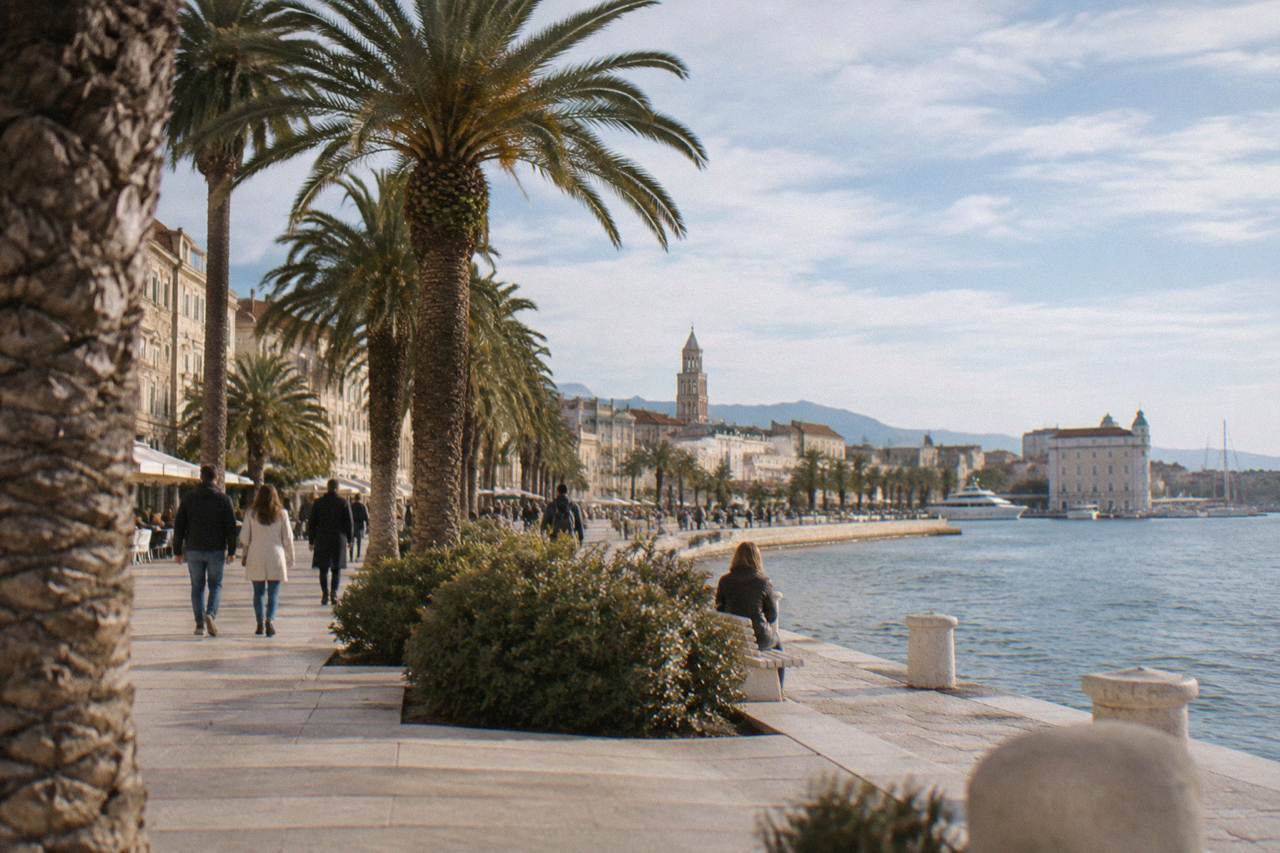
Split is a coastal city in central Dalmatia, on the Adriatic Sea, built in and around Diocletian's Palace, and the month you choose changes almost everything about the trip: the temperature on the Riva, the price of a Krka ticket, the number of ferry departures to Hvar and Brač, and whether the Advent ice rink is standing in Đardin. This guide lays out each period, from the DHMZ Split Marjan station's weather record to the national park price lists and the city event calendar, so the timing decision rests on figures rather than folklore. For the wider picture of what the city offers in every season, start with the things to do in Split overview and come back here for the month-by-month detail.
When Is The Best Time To Visit Split?
The best time to visit Split is late May to mid June or September to early October, when daytime means sit between roughly 19 and 23 C, the July and August crowds have thinned, and national park tickets drop to their shoulder-season rates. July and August suit travellers who want the sea at its warmest, every boat line running and the festival calendar at full tilt, while November to February suits visitors who want museums and the Advent season at the lowest prices.
The reasoning comes straight from the numbers. The DHMZ Split Marjan station, in its 1948 to 2024 record, puts the July mean at 26.2 C and counts 18 days at 30 C or more in July and 17 in August, so midsummer is genuinely hot, not just warm. September's mean of 21.6 C and October's 17.2 C still support beach days at Bačvice, and by 1 October the Krka price list falls from 40 to 20 EUR and the Plitvice list from 40 to 23 EUR. Rain is the trade-off: the same station record shows November as the wettest month at 115.5 mm and July the driest at 26.6 mm, so the drier you want it, the more crowded and expensive it gets. There is no perfect month, only the month that matches what you came for.
What Is The Weather Like In Split Month By Month?
By the DHMZ Split Marjan station record for 1948 to 2024, Split's mean temperature runs from 8.0 C in January to 26.2 C in July, with 8.5 C in February, 10.8 C in March, 14.4 C in April, 19.2 C in May, 23.4 C in June, 25.9 C in August, 21.6 C in September, 17.2 C in October and 12.7 C in November.
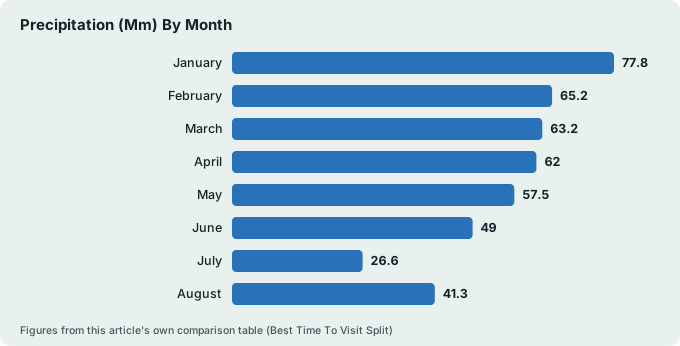
Rainfall ranges from 26.6 mm in July, the driest month, to 115.5 mm in November, the wettest.
The table below carries the full monthly series. Two readings matter more than the rest for planning. First, the jump between April at 14.4 C and May at 19.2 C is the single biggest month-to-month warming of the year, which is why May so often feels like the moment the season switches on. Second, the rainfall column climbs steeply after summer: September sits at 70.9 mm, October at 77.0 mm, and then November jumps to 115.5 mm. A late-autumn trip is not cold by northern European standards, but it is the period when a waterproof earns its place in the bag.
| Month | Mean temperature (C) | Precipitation (mm) |
|---|---|---|
| January | 8.0 | 77.8 |
| February | 8.5 | 65.2 |
| March | 10.8 | 63.2 |
| April | 14.4 | 62.0 |
| May | 19.2 | 57.5 |
| June | 23.4 | 49.0 |
| July | 26.2 | 26.6 |
| August | 25.9 | 41.3 |
| September | 21.6 | 70.9 |
| October | 17.2 | 77.0 |
| November | 12.7 | 115.5 |
| December | 9.4 | 103.7 |
Sunshine follows the same curve: the station counts 353.3 hours of sunshine in July against 120.8 in December, and about 2,600 hours across the year. On heat, the days at 30 C or more tell the story better than the means: 7 such days in June, 18 in July and 17 in August, with none worth recording in the shoulder months. More detail on fronts, winds and what the figures mean for packing sits in the Split weather guide.
Three kinds of day trip anchor the timing question for many visitors, and their character shifts with the calendar:
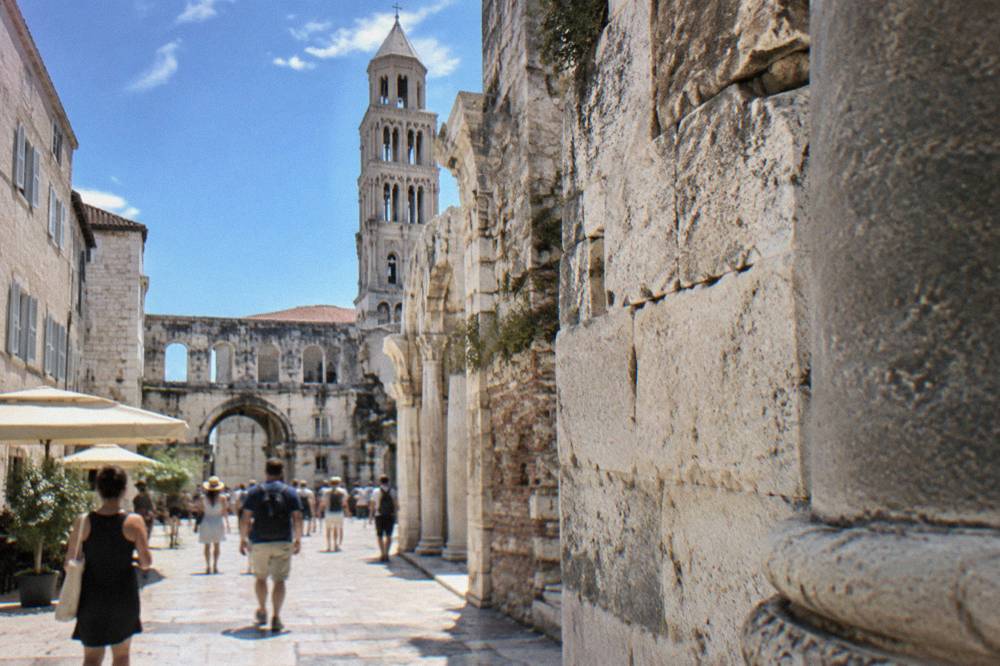
A boat-and-swim trip rewards warm sea, a palace walk works in any month including a rainy one, and a waterfalls trip interacts directly with the park's seasonal ticket ladder. Whichever way the calendar leans, the day trips from Split guide maps the full menu.
How Busy Is Split In Each Season?
Split's high season runs July and August, when every ferry and catamaran line operates at full frequency, the Roman guard change performs daily on the Peristyle and the port handles its peak traffic. May, June and September form the shoulder, busy but not packed, while November to mid December and late January to March are the quiet months, with reduced island connections and the museums to yourself.
The port's own figures frame the scale: the Port of Split page reports 6.05 million passengers in 2025 and 487,377 cruise passengers, and calls Split Croatia's busiest passenger port. Cruise calls began in 2002, so the summer flow is a two-decade-old pattern, not a new one. The practical effect concentrates in a small area: the palace streets, the Riva and the Peristyle absorb the arriving groups, while Marjan hill and the beaches east of the centre stay comparatively calm even in August.
| Period | Character | What to expect |
|---|---|---|
| July to August | Peak season | 18 and 17 days at 30 C or more, full ferry schedules, festivals, peak park and Blue Cave prices |
| May, June, September | Shoulder season | Means of 19.2 to 23.4 C (May, June, September), thinner crowds, seasonal boat trips running |
| October | Late shoulder | 17.2 C mean, Krka at 20 EUR and Plitvice at 23 EUR from 1 October, quieter old town |
| November to March | Low season | 8.0 to 12.7 C means, lowest prices, Advent from 27 November, fewest island connections |
One planning note for late 2026 and 2027: the Riva's central section is scheduled for renovation works beginning in November 2026 and lasting a little over a year, so partial closures along the waterfront should be expected through 2027. The promenade will not disappear, but the flattest, easiest stretch may be roped off at times. Budget travellers will find the seasonal price logic mapped out in the Split on a budget guide.
When Can You Swim In Split?
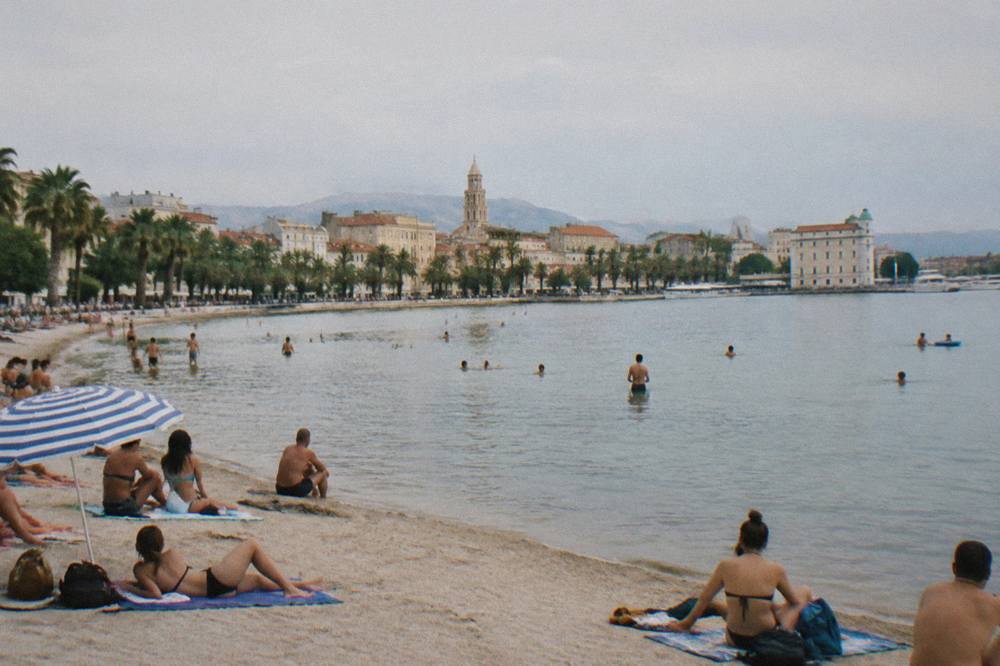
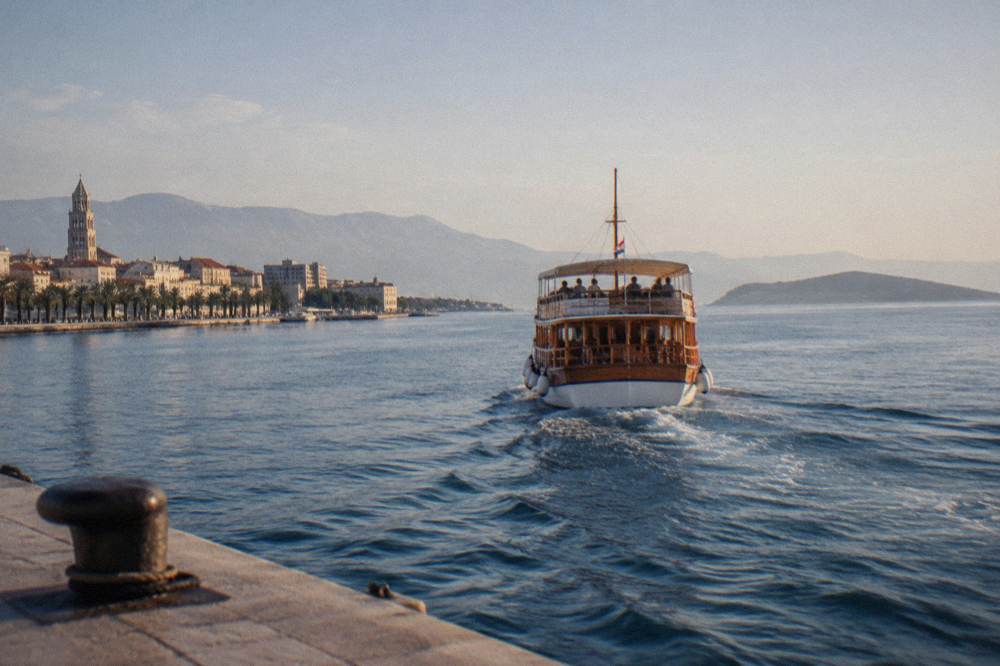
The swimming season in Split runs roughly from June into early October, based on air temperature: the DHMZ Split Marjan record shows means of 23.4 C in June, 26.2 C in July, 25.9 C in August and 21.6 C in September, with 7 days at 30 C or more in June rising to 18 in July. No official monthly sea-temperature normal exists, so the only trustworthy sea figure is the DHMZ live reading published on the day.
That last point deserves emphasis because it is where planning guides go wrong. Sea temperature in Split has no published monthly normal, and any specific monthly sea figure you meet elsewhere is a model estimate rather than an official reading. The DHMZ does publish a live sea temperature for Split, and that reading is the number to check in the days before a swim-focused trip. What the air record does license: June through September is when swimming at Bačvice, Žnjan or the coves below Marjan is comfortable, and October swims happen but depend on the year. The beaches themselves cost nothing, and the Split beaches guide covers which one suits which kind of day.
What Should You Do In Split In Each Season?
Each season in Split has its own anchor: spring for Marjan hill and the palace before the heat, summer for boat trips, the Blue Lagoon and the Split Summer Festival window, autumn for lower park prices and the October light, and winter for Advent in Split, which runs 27 November 2026 to 7 January 2027 with the ice rink at Đardin, plus museums at low-season prices.
The event calendar gives the year its fixed points. Ultra Europe 2027 is set for 9 to 11 July at Park Mladeži, and that weekend changes the whole city's rhythm, as the Ultra Europe guide explains. Sudamja, the city day honouring St Domnius, falls on 7 May every year. The 72nd Split Summer Festival ran 14 July to 14 August 2026, and the 2027 edition had not been announced so check the official calendar before building a trip around it. The Croatian National Theatre's season runs 25 September 2026 to 14 June 2027 for anyone planning an indoor evening.
| Event | Dates | Season |
|---|---|---|
| Advent in Split, ice rink at Đardin | 27 November 2026 to 7 January 2027 | Winter |
| Sudamja, Split city day | 7 May (annual) | Spring |
| Roman guard change on the Peristyle, noon | 28 May to 27 September 2026 season | Summer |
| Split Summer Festival (72nd edition) | 14 July to 14 August 2026 | Summer |
| Ultra Europe 2027 | 9 to 11 July 2027 | Summer |
| HNK Split theatre season | 25 September 2026 to 14 June 2027 | Autumn to spring |
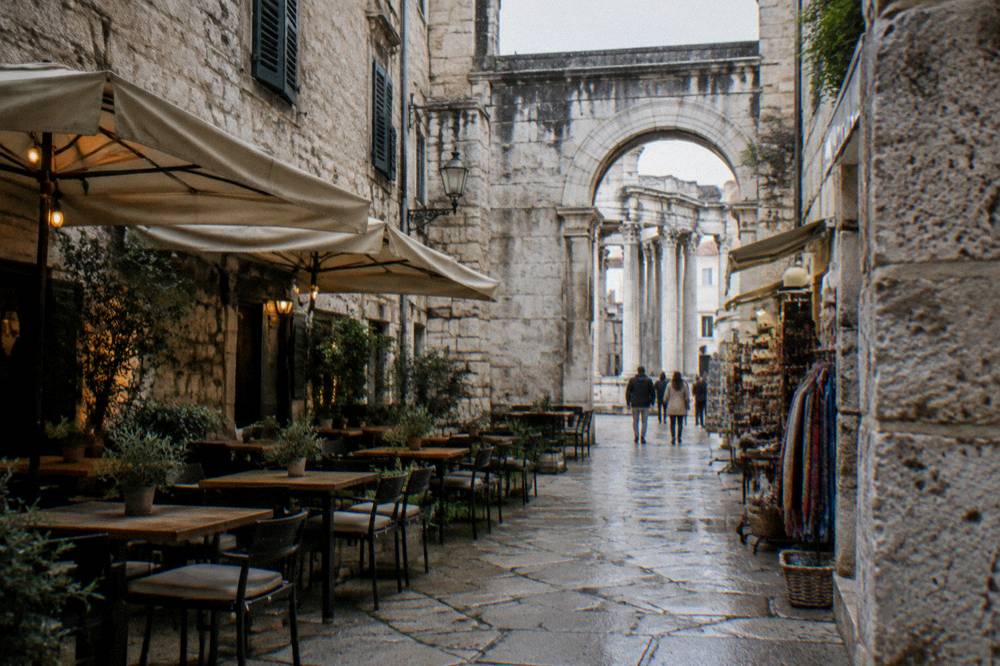
Beyond the headline events, spring and autumn reward the things summer makes sweaty: the 819 steps from Trumbićeva obala up Marjan to Telegrin at 178 m, the walk out to Klis Fortress, and long lunches. Game of Thrones locations around the palace and Klis also sit in the Game of Thrones in Split guide, which works in any weather.
How Much Do Day Trip Tickets Cost In Each Season?
The big day trip destinations price themselves by calendar. Krka charges 7 EUR from January to March and November to December, 20 EUR in April, May and October, and 40 EUR from June to September. Plitvice Lakes charges 10 EUR in January to March and November to December, 23 EUR in April, May and October and 40 EUR from June to September, with a 25 EUR afternoon slot at peak.
The Blue Cave entrance is 24 EUR in high season and 18 EUR in the shoulder, paid in cash on site.
That ladder is the strongest financial argument for the shoulder months. A Krka visit in October costs half its July price, and Plitvice falls by 17 EUR per adult the same week. Two further details from the price lists: Plitvice operates timed online entry and prints the visitor's name on the ticket, and Krka's ticket includes the Skradin boat and Lozovac bus transfers from 1 April to 31 October. Swimming inside Krka is allowed only in clearly marked areas, at designated spots, between 1 June and 30 September, so the classic image of swimming under Skradinski buk belongs to the marked zones or nowhere.
| Attraction | Low season (EUR) | Shoulder (EUR) | Peak 1 Jun to 30 Sep (EUR) |
|---|---|---|---|
| Krka, all land sites | 7 | 20 (Apr, May, Oct) | 40 |
| Plitvice Lakes | 10 | 23 (Apr, May, Oct) | 40, or 25 afternoon slot |
| Blue Cave, Biševo | 18 (April to mid June, mid Sept to Oct) | 18 | 24 (20 Jun to 10 Sep) |
| Klis Fortress | 10 | 10 | 10 |
| Meštrović Gallery | 12 | 12 | 12 |
A guided Plitvice day makes the long drive easier, and the operator's live listing carries the current price:
The driving times set the rhythm of these days: Krka's Skradinski buk sits 74 minutes from the palace, Plitvice 3 hours 15, Trogir 36 minutes and Omiš 38, all free-flow estimates. The full route list lives in the day trips from Split guide.
Is Split In July And August Worth The Crowds?
July and August in Split mean means of 26.2 C and 25.9 C, the driest months of the year at 26.6 mm and 41.3 mm of rain, every island ferry and catamaran at full frequency, the guard change on the Peristyle and the summer festival, against peak park prices, the year's densest crowds and nights that stay warm. For a first visit built around boats and islands, the trade is defensible; for anyone sensitive to heat or crowds, it is the hardest time.
Midsummer is when the ferry network is at its most usable. The Split to Stari Grad car ferry runs about 120 minutes, the Supetar line about 50, Rogač on Šolta about 60 and Vis about 140, with catamarans reaching Hvar town, Jelsa and Vis directly; the detail sits in the ferries from Split guide and the Split to Hvar ferry guide. Foot passengers pay 5.90 EUR off-season and 8.40 EUR in season on the Stari Grad line, so even the crossing itself costs more in summer. On land, the rules tighten too: public drinking in the historic centre carries a 300 EUR fine, and shops in the centre may not sell alcohol at night during the summer ban window, so the terrace bar is the lawful evening option. The Split boat tours guide covers what the season's trips actually include.
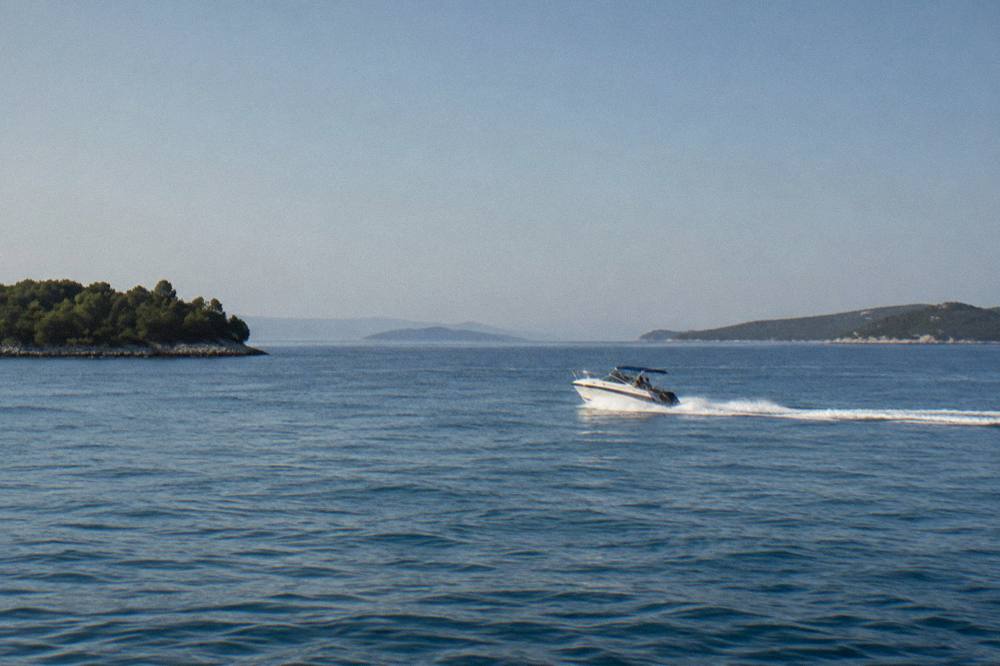
An evening paddle is one of the few activities that improves with the midsummer heat:
Why Is September The Sweet Spot For Many Trips?
September combines a 21.6 C mean with sea warmed by the whole summer, dropping park prices only from 1 October but thinner crowds from the first week of the month, the HNK theatre season opening on 25 September, and the guard change still running daily on the Peristyle through 27 September. Rain rises to 70.9 mm across the month, so it is not dry like July, but the trade-off buys space on the streets and the boats.
For a trip built around the water, September is when the Blue Lagoon and island trips still run at full schedule while the boarding queues shorten. The site's featured boat day, the Blue Lagoon and 3 Islands cruise, pairs lunch and wine with swim stops, and September's sea is at its friendliest after three months of sun. The same logic applies to Hvar and Brač day trips, and to the Split to Dubrovnik route, which is more pleasant outside the peak coach crush. Where to base yourself in each case is covered in the where to stay in Split guide.
What Is Split Like In Winter?
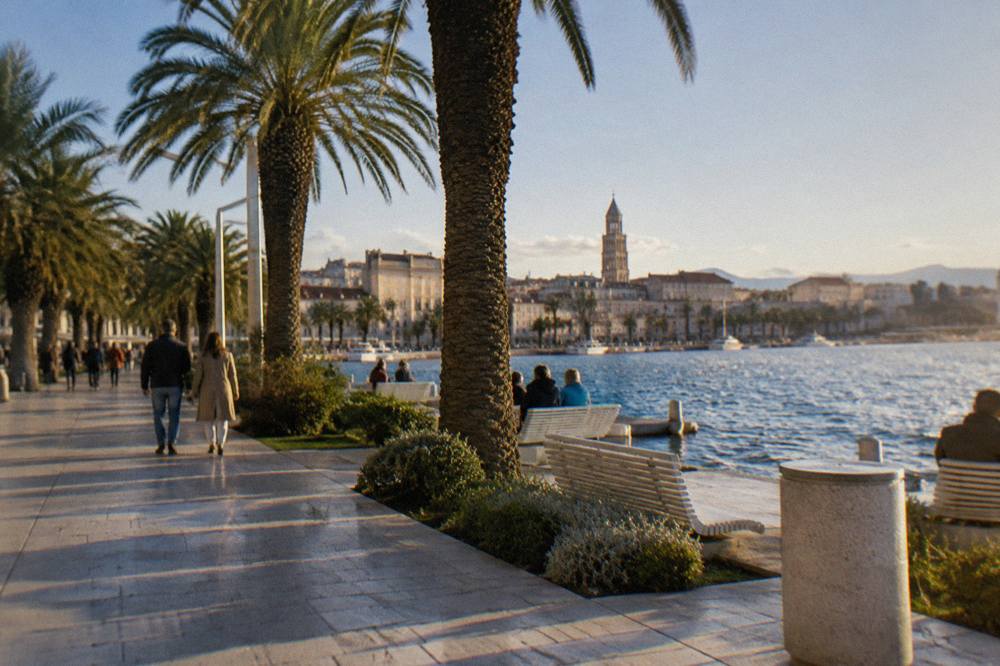
Split in winter runs on means of 8.0 C in January and 9.4 C in December, with 120.8 sunshine hours in December against 353.3 in July, and its payoff is Advent in Split from 27 November 2026 to 7 January 2027 with the ice rink at Đardin, museums at flat prices and an old town you can hear yourself think in. November is the wettest month at 115.5 mm, so pack for rain as much as cold.
Winter museum-going is genuinely cheap relative to the season. The Split City Museum charges 10.00 EUR at the Papalić Palace, the Archaeological Museum 8 EUR with a 10 EUR combined ticket covering Salona within 7 days, the Ethnographic Museum 7.00 EUR and the Meštrović Gallery 12.00 EUR including Crikvine-Kaštilac, with the gallery freshly reopened in April 2026 after a 15-month renovation. The palace cellars run by the City Museum open 8:30 to 20:00, though their central part is under restoration to the end of 2026 with the passage open. Island connections thin out, and the Supetar line notably lost its off-season timetable from 2026, operating only high-season and low-season schedules, so check sailings rather than assuming them. The Split in winter guide goes deeper on the cold-season city.
| Winter site | Adult price (EUR) | Note |
|---|---|---|
| Split City Museum, Papalić Palace | 10.00 | Closed Mondays |
| Archaeological Museum | 8.00 | Combined with Salona 10.00 within 7 days |
| Ethnographic Museum | 7.00 | Vestibule 2.00 |
| Meštrović Gallery | 12.00 | Includes Crikvine-Kaštilac |
| Peristyle, Riva, Golden Gate, Marjan | Free | Open year-round |
How Do Prices And Rules Change With The Season?
Beyond park tickets, the seasonal price levers in Split are the tourist tax, charged by accommodation at about 2.65 EUR per person per night in high season from 1 April to 30 September with under-12s free and 12 to 18 at half rate, and the summer-only night retail alcohol ban in shops, while public-order fines of 300 EUR for street drinking and 300 EUR for climbing monuments apply year-round. Confirm the tax amount at booking, since it is collected by the accommodation.
The rules are worth knowing whatever the month. None of this dims a normal trip; it just means the beach stays at the beach. Getting there is covered in the flights to Split guide and the Split airport to city centre guide, and the airport is 20 km from the city with the Platanus shuttle at 10 EUR one way and 15 EUR return.
| Item | Figure | Period or note |
|---|---|---|
| Tourist tax | About 2.65 EUR per person per night | High season, 1 Apr to 30 Sep; under 12 free, 12 to 18 half |
| Stari Grad ferry, foot passenger | 5.90 EUR off-season, 8.40 EUR in season | Line 635 |
| Catamaran to Hvar or Jelsa | 6.40 EUR low, 10.00 EUR high | Operator schedules vary by season |
| Public drinking fine | 300 EUR | Historic centre and near schools |
| Platanus airport shuttle | 10 EUR one way, 15 EUR return | Airport to main bus station |
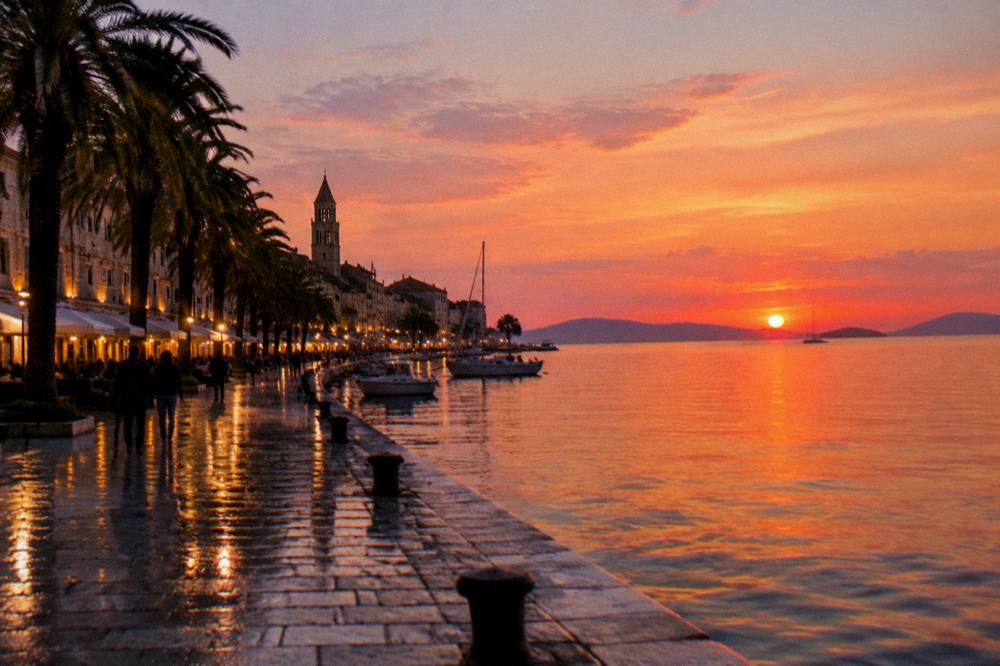
Common Questions About The Best Time To Visit Split
Which Month Is Warmest In Split?
By the DHMZ Split Marjan station record for 1948 to 2024, July is the warmest month with a mean of 26.2 C, followed by August at 25.9 C. July also has 18 days at 30 C or more.
What Is The Rainiest Month In Split?
November is the wettest month at 115.5 mm in the DHMZ Split Marjan record, followed by December at 103.7 mm. July is the driest at 26.6 mm.
Is Split Too Hot In August?
August has a mean of 25.9 C with 17 days at 30 C or more in the station record. It is genuinely hot, but slightly less extreme than July on both measures, and the sea is at its warmest after the full summer.
When Are Krka And Plitvice Cheapest?
Both parks charge their lowest prices from November: Krka at 7 EUR and Plitvice at 10 EUR for adults, rising to 20 and 23 EUR in April, May and October, and 40 EUR each from June to September. Plitvice also offers a 25 EUR afternoon slot in peak season.
Can You Swim In Split In October?
October swims are possible but not guaranteed: the mean air temperature is 17.2 C and no official monthly sea-temperature normal exists. Check the live DHMZ sea reading in the days before your trip.
Is Split Worth Visiting In Winter?
Yes, for a different trip: Advent in Split runs 27 November 2026 to 7 January 2027 with the ice rink at Đardin, the museums charge flat year-round prices, and the palace streets are quiet. Expect rain in November, the wettest month at 115.5 mm.
The short version: pick late May or June for warmth without peak prices, September for warm sea and thinning crowds, July if the festival and boat schedule matters more than heat, and winter for Advent and the museums. Whatever month you land on, this Split Croatia Travel Guide keeps the ferry tables, ticket prices and event dates in one place.
