Split Ferry
Split is the busiest passenger port in Croatia, and the ferry terminal sits 500 to 600 m from Diocletian's Palace. Here is what the operators' own route pages and price lists say about every line, sailing time and foot passenger fare.
Short answer
Car ferries from Split run to Stari Grad on Hvar (line 635, about 120 minutes), Supetar on Brač (line 631, about 50 minutes), Rogač on Šolta (line 636, about 60 minutes) and Vis (about 140 minutes). A foot passenger on line 635 pays 5.90 EUR off-season and 8.40 EUR in season. Catamarans reach Hvar town, Jelsa, Bol, Milna and Vis, at 6.40 to 10.00 EUR per the operators' price lists.
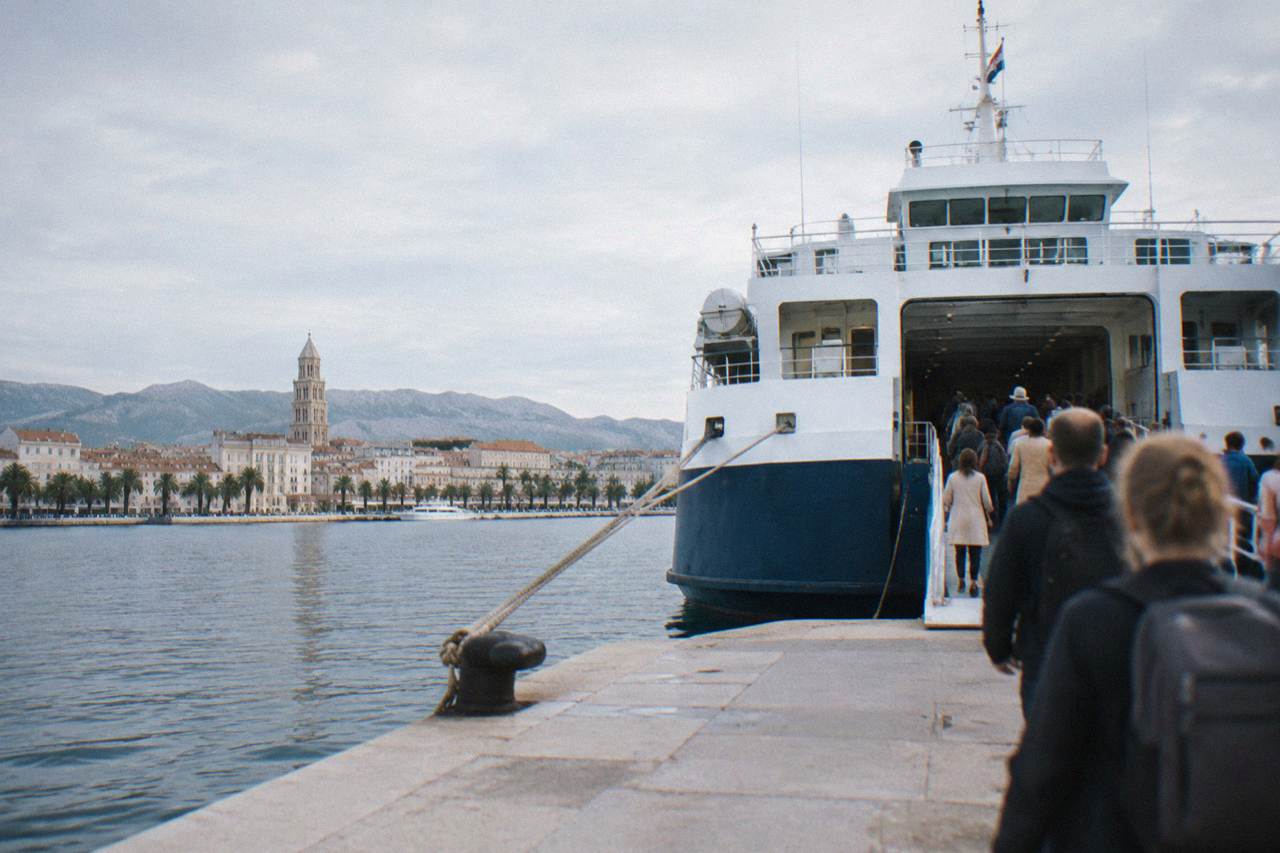
Split, the coastal city in central Dalmatia, runs the busiest passenger port in Croatia: the Port of Split's own figures show 6.05 million passengers in 2025, and the ships leave from a terminal that is only 500 to 600 m from Diocletian's Palace. Four car ferry lines and a web of catamaran lines connect the city to Hvar, Brač, Šolta and Vis, and an international sailing to Bari was added for summer 2026. This guide sets out what the operators' route pages and price lists actually say: which line goes where, how long each crossing takes, what a foot passenger pays, and where in the city you board.
For planning the wider trip, the Split Croatia Travel Guide covers the island day trips these ships make possible alongside the city itself.
What Ferry Lines Run From Split?
Jadrolinija's route pages list four car ferry lines out of Split: line 635 to Stari Grad on Hvar, line 631 to Supetar on Brač, line 636 to Rogač on Šolta, and a ferry to Vis. Catamarans run under separate line numbers, 9603 calling at Bol, Stari Grad and Jelsa, and 9602 calling at Milna, Hvar town and Vis, and the operators Kapetan Luka, TP Line and Bura Line also run Split catamarans.
The distinction that matters when you plan is between the car ferries and the fast boats. The car ferries carry vehicles and foot passengers, they are big, they sail in nearly all weather, and they land at the island's main vehicle port. Stari Grad on Hvar and Supetar on Brač are car-ferry ports, not the prettiest towns on their islands. The catamarans carry foot passengers only, no vehicles, and they call at the heart of the places: Hvar town, Jelsa, Bol, Milna and Vis town itself. Travellers who confuse the two turn up at Stari Grad expecting Hvar town's quay, which is roughly a catamaran ride away on the other side of the island.
The 2026 timetable brought one structural change worth knowing. Jadrolinija's news page states that the Split to Supetar route dropped its off-season timetable entirely from 2026 and now runs only high-season and low-season schedules, the fifth Croatian line to do so, with departures aligned to bus arrivals. In practical terms the winter service on the Brač line is thicker than it used to be, and the island no longer has a dead off-season on paper.
Reading the route list is easier once you see the geography behind it. Brač and Šolta sit closest to the city, Hvar lies south across the channel with its vehicle port on the northern shore, and Vis is the farthest out, which the sailing times reflect. The lines are numbered by the operator, not by distance, so a lower line number does not mean a shorter crossing. Keep a browser tab open on the operator's route page when you plan: line numbers, season brackets and departure times are all maintained there, and the printed version in a guide can lag a season behind.
How Long Does The Split Ferry To Each Island Take?
The Jadrolinija route pages give the Split to Stari Grad crossing as about 120 minutes, Split to Supetar as about 50 minutes, Split to Rogač as about 60 minutes, and the ferry to Vis as about 140 minutes. Catamarans are the faster option where they run: the operators sell them as fast boats, and they serve foot passengers only, never vehicles.
The sailing times below come from the operator's own route pages. Treat them as the scheduled crossing, not door to door: boarding for a car usually closes before departure, and in July the vehicle queue on the Split side can add waiting time the timetable does not show.
| Line | Route | Type | Sailing time | Source status |
|---|---|---|---|---|
| 635 | Split to Stari Grad (Hvar) | Car ferry | about 120 min | Jadrolinija route page |
| 631 | Split to Supetar (Brač) | Car ferry | about 50 min | Operator route page |
| 636 | Split to Rogač (Šolta) | Car ferry | about 60 min | Operator route page |
| 636 | Split to Vis town | Car ferry | about 140 min | Operator route page |
| 9603 | Split, Bol, Stari Grad, Jelsa | Catamaran | per stop, on the timetable | Jadrolinija line listing |
| 9602 | Split, Milna, Hvar town, Vis | Catamaran | per stop, on the timetable | Jadrolinija line listing |
A half-hour crossing changes what a day trip can look like. Supetar at about 50 minutes means Brač is a genuine morning-out, back-by-evening proposition. Vis at about 140 minutes each way means the island eats most of a day before you have walked anywhere, which is why the Blue Cave and Vis boat trips run as organised speedboat days rather than ferry-and-wander itineraries.
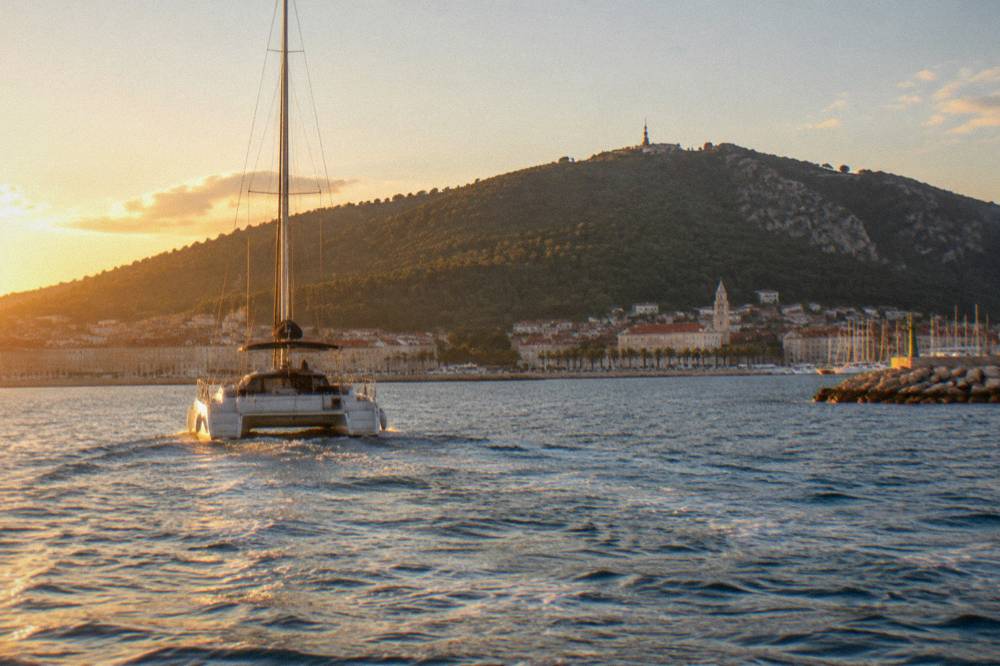
On the Hvar side the choice of port matters more than the choice of ship. The dedicated Split to Hvar ferry guide works through the Stari Grad versus Hvar town decision in detail, and the plain answer to where the ferry from Split to Hvar arrives is Stari Grad for the car ferry and Hvar town quay for the catamaran.
To let a boat handle the island day, book a Hvar and Pakleni islands cruise here.
Catamaran line 9603 calls at Bol before Stari Grad and Jelsa, which makes it the useful line for Zlatni Rat beach on Brač's south shore without taking the Supetar ferry and driving across. Line 9602 threads Milna, Hvar town and Vis into one run, so a ticket on that line can combine two islands in a single day if the stops line up with your plans. Both lines publish their per-stop arrival times on the sailing schedule, and the connections between lines at Split itself are simply the departures that share the terminal.
If your time in the city is short, a morning on the water pairs well with an afternoon in the Old Town. These three bookable days cover the ground between sailings:
What Does A Split Ferry Ticket Cost?
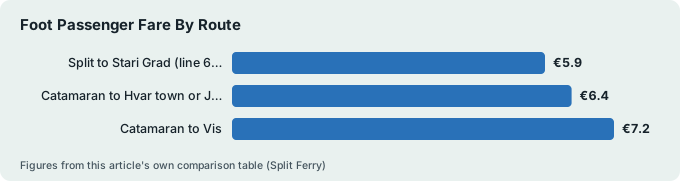
A foot passenger on line 635, Split to Stari Grad, pays 5.90 EUR off-season and 8.40 EUR in season, per Jadrolinija's price list. Catamaran fares run 6.40 EUR low season and 10.00 EUR high season to Hvar town or Jelsa, and 7.20 EUR low and 10.00 EUR high to Vis. Vehicle fares and cabin-type upgrades are sold separately by the operator.
Those are the only foot passenger figures the operators publish that this site can quote with confidence. The seasonal boundary on line 635 sits around early May to late September per the price list; check the current PDF on the operator's site before you travel, because the bracket moves with the timetable year. Children's reductions exist on all lines and are listed on the same price pages.
| Route | Foot passenger fare | Season split | Source |
|---|---|---|---|
| Split to Stari Grad (line 635) | 5.90 EUR / 8.40 EUR | off-season / in season | Jadrolinija price PDF |
| Catamaran to Hvar town or Jelsa | 6.40 EUR / 10.00 EUR | low / high | Operator price PDFs |
| Catamaran to Vis | 7.20 EUR / 10.00 EUR | low / high | Operator price PDFs |
Two practical notes from the price lists. First, catamaran tickets are for a specific departure and the fast boats fill in July, so a same-day return on a summer Saturday can sell out while the car ferry ticket office still has foot passenger space. Second, the ferry is a genuine budget instrument in a city that is otherwise at full summer prices: two crossings to Šolta cost less than a pizza for two on the Riva, and the budget guide to Split treats it exactly that way.
Payment on the foot passenger side is straightforward: the terminal takes cards at the counters and the operator's site sells the same tickets online. Keep the booking reference on your phone for the catamaran, since boarding checks are against the manifest rather than a paper stack. On the car ferries a walk-up ticket is stamped for the next sailing with space, and the crew waves foot passengers aboard right up to the mooring lines being cast off, though nobody should plan on that margin in August.
While the ferry costs little and leaves from the city centre, the hours before departure are worth spending in the streets behind the quay. A guided tasting walk through the market and the Old Town covers the same ground with someone who knows what is on the stalls:
Can You Take A Car On The Split Ferry?
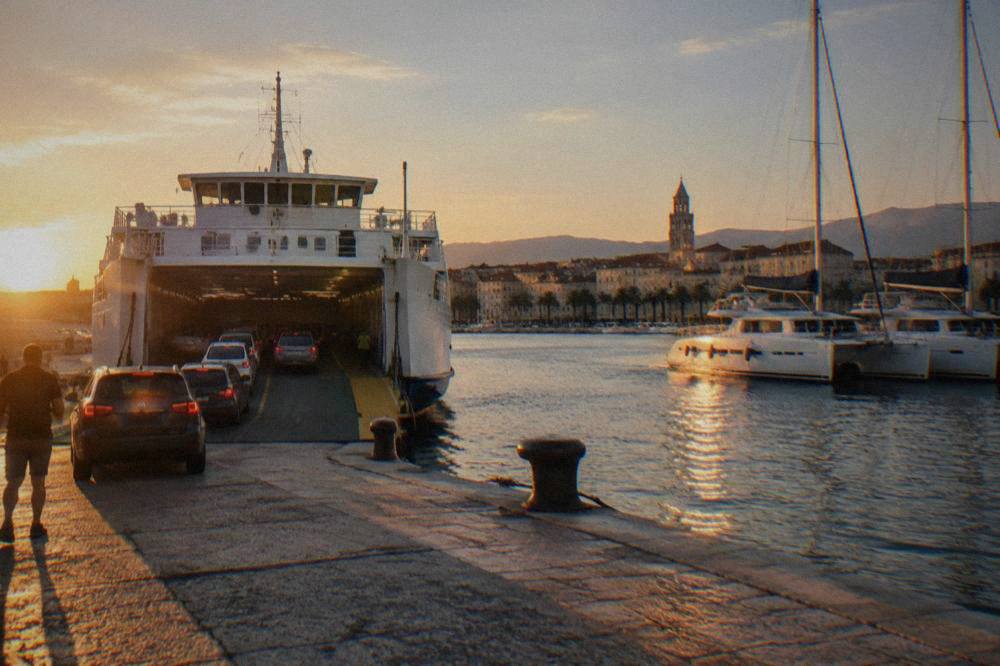
Yes on the car ferries and no on the catamarans: lines 635, 631 and 636 and the Vis ferry carry vehicles, while every catamaran out of Split is foot-passenger only. Vehicle space is booked per sailing on the operator's site, and the vehicle fare is separate from and additional to each passenger fare, per the same price lists.
The decision that follows is whether a car on the islands earns its keep. Brač, Hvar and Vis all have island roads and Šolta is small enough to cross quickly, so a car does open beaches the buses skip. Against that: July vehicle decks on the Hvar line fill well ahead, island parking near the popular beaches is scarce in high summer, and dropping the car in Split and walking onto the ferry is the cheaper and simpler version of every one of these crossings. The Split car rental guide works through that trade-off properly.
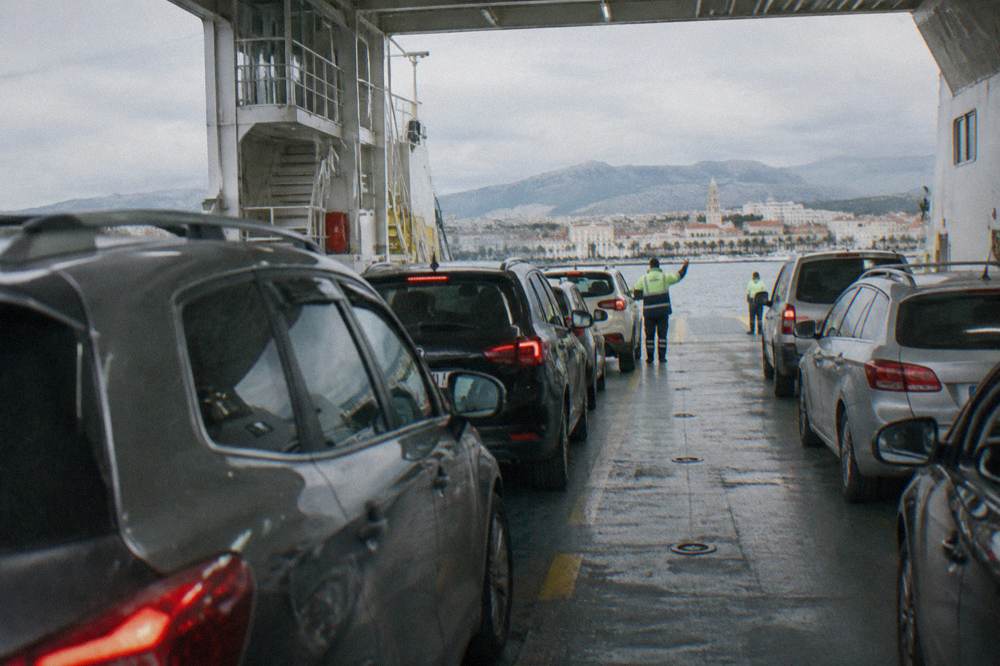
One detail from the operator's booking flow is worth flagging: the vehicle ticket names the sailing, and arriving for a later departure with a vehicle booking for an earlier one does not guarantee space. Foot passengers can usually flex to the next ship; a car cannot. If the itinerary depends on a specific vehicle crossing, book that crossing first and build the day around it.
Where Do The Ferries Depart From In Split?
All the regular ferries and catamarans leave from the harbor front on Obala kneza Domagoja, where the ferry port, the main bus station and the railway station sit together 500 to 600 m from Diocletian's Palace, a walk of a few minutes along the Riva. The international terminal serving the Bari line operates from the same port area.
That single fact does a lot of work for trip planning. The airport shuttle, the Platanus bus at 10 EUR one way and 15 EUR return, terminates at the main bus station beside the ferry berths, so a flight-to-ferry connection is one transfer and a short walk; the airport to city centre guide covers the options. Inter-city coaches arrive at the same station. Even the train from Zagreb, slow as the timetable is at about 7 h 15 to 8 h 10 for the full route, delivers you within sight of the ships.
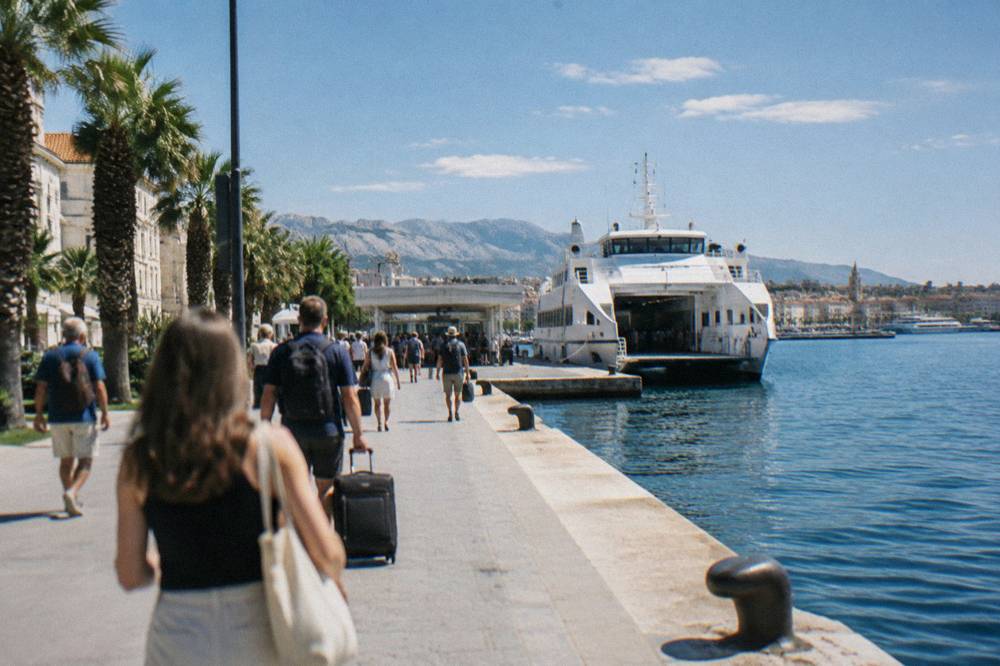
Berth numbers change by line and by day, and the port displays them on boards at the terminal; the live departures feed the Port of Split publishes lists each sailing with its berth. Arriving twenty minutes early on foot is normally enough to find the right gate and buy or collect a ticket. With a vehicle, aim for the queue the operator's booking confirmation states.
The walk from the palace to the berths is flat the whole way, along the seafront rather than through the stone lanes, so luggage trolleys and wheelie cases manage it without effort. Anyone staying above the harbor in the Varoš lanes or out towards Marjan should add a few minutes of climb on the return leg. Cyclists and anyone with a booked vehicle should note that the vehicle entrance to the port sits at the eastern end of the terminal, away from the foot passenger gates, and the two streams of traffic do not cross.
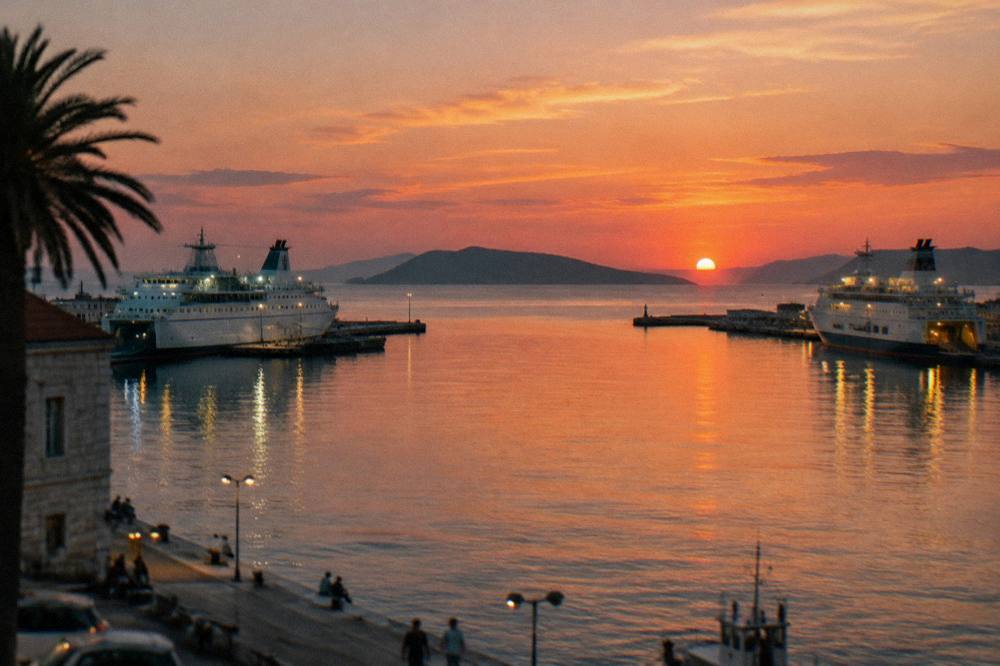
Do You Need To Book A Split Ferry In Advance?
Foot passengers on the car ferry lines rarely need to book ahead outside peak weekends, since tickets are sold at the terminal for each sailing, but July and August Saturdays can fill even the big ships. Catamarans are different: every seat is a reserved seat, the fast boats are small, and in high season the popular departures, especially to Hvar town and Vis, sell out days ahead on the operator's booking pages.
The safe pattern for a summer trip: book the catamaran online as soon as dates are fixed, treat the car ferry as walk-up for foot passengers, and book any vehicle crossing in advance in every season. Off-season, midweek, the whole question mostly disappears; you buy a ticket at the window and walk on.
| Situation | Book ahead? | Why |
|---|---|---|
| Catamaran to Hvar town or Vis, July to August | Yes | Reserved seats, small vessels, high demand |
| Foot passenger on car ferry, shoulder season | Usually not | Tickets sold at the terminal per sailing |
| Vehicle on any car ferry | Yes | Vehicle deck has fixed capacity per sailing |
| Catamaran, November to April | Rarely | Demand is low on the winter timetables |
| Split to Bari international ferry | Yes | Limited sailings, cabin accommodation |
Weather is the other variable the booking pages do not solve. Winter gales on the Vis crossing and the long Hvar run can stop sailings for a day, and the operator rebooks foot passengers onto the next departure. Building one slack day into an island itinerary between November and March is cheap insurance.
Cruise passengers sometimes ask whether a ferry fits a port day, and the arithmetic usually says no: ships berth in the same harbor, but the round trip to any island plus waiting time takes a bigger bite out of a day in port than the old town deserves. The cruise port day guide and the one day in Split itinerary are built for exactly that constraint.
What About The Split Ferry To Italy And Other Long Routes?
An international Split to Bari ferry line ran for summer 2026, connecting the city across the Adriatic to southern Italy, and it operates from the same port area as the island lines. Seasonal timetables and cabin fares for the international sailing are published by the operator, and the practical details, sailing days and crossing length, change between seasons, so the operator's current page is the authority.
For the Italy route the booking calculus is different from the island hops: it is an overnight-style crossing with cabins and deck seats rather than a commuter sailing, and fares vary by cabin type and date rather than sitting in a published seasonal table. The Split to Italy ferry guide handles that route on its own.
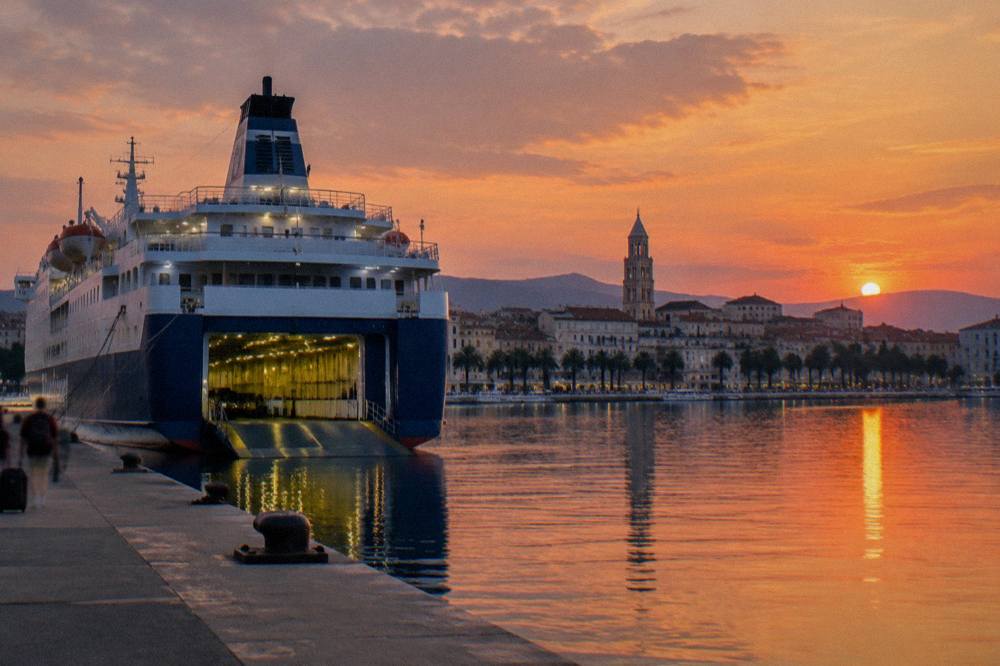
The other long water route travellers ask about is Dubrovnik. There is no regular Split to Dubrovnik ferry line in the operator's route list; the coastal connection south is by coach, about 4 hours, or by road at about 3 h 21 driving time from the palace. The Split to Dubrovnik guide sets out the options, and the comparison of the two cities helps with the harder question of how to split days between them.
Zadar to the north is the same story: a road trip of about 2 hours by car rather than a sailing, with the coastal road running the whole way. For anyone stringing the Dalmatian coast together, the honest summary is that Split's ferries serve the islands, and everything else on the mainland moves on wheels.
How Do The Ferries Fit Into A Split Day Trip Plan?
The ferry network makes Šolta, Brač and Hvar realistic independent day trips on foot, with Supetar about 50 minutes and Rogač about 60 minutes from the terminal, while Krka, Plitvice, Trogir and Klis are road trips that start from the same bus station beside the berths. Vis is the one island where the about 140 minute crossing argues for an overnight or an organised speedboat day instead.
Mixing water and land days gives a week in Split its shape. Two islands by ferry, one park by road, one fortress town by coach, and the Old Town in between covers the main things to do in Split without repeating a single transport mode. Trogir in particular is the natural land-side pairing with a ferry morning, since it sits 36 minutes away by road and its old core is small.
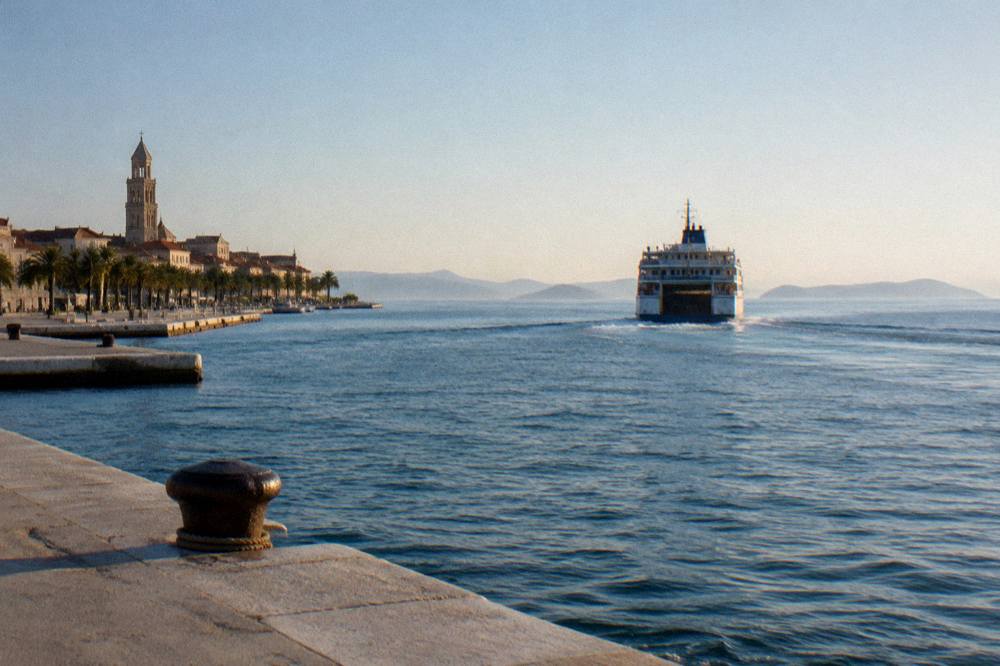
Timing also depends on the season beyond the timetable. The first and last sailings of the day shift between the high and low season schedules, and a connection that works in July may not exist in October, so read the seasonal column headers rather than the departure times alone. In shoulder months the sea is quieter, the decks are emptier, and the light on the channel between Split and Brač in late afternoon is reason enough for the deck rather than the saloon.
For the land days, a guided circuit of the medieval towns and Roman sites around the city covers what the ships cannot reach, from Trogir's walled core to Klis Fortress above the pass:
And for a day with no timetable at all, the Cetina canyon inland from Omiš runs a canyoning route that has nothing to do with ferries and everything to do with why people come to Dalmatia:
Whichever combination you settle on, the pairing rule is simple: book what has a seat map, walk up to what does not, and check the operator's live timetable page the night before every crossing.
Common Questions About Split Ferries
How long is the Split ferry to Hvar?
The car ferry, line 635, runs from Split to Stari Grad on Hvar in about 120 minutes per the Jadrolinija route page. Catamarans reach Hvar town itself, on the other side of the island, and their per-stop times are on the sailing schedule. A foot passenger on line 635 pays 5.90 EUR off-season or 8.40 EUR in season.
Where does the ferry from Split to Hvar arrive?
The car ferry arrives at Stari Grad, the vehicle port on the north side of Hvar. Catamarans arrive at Hvar town quay. The two ports are not interchangeable, so match your ticket to the part of the island you actually want.
Can you take a car on the Split ferry?
Yes, on the car ferry lines: 635 to Stari Grad, 631 to Supetar, 636 to Rogač, and the Vis ferry. Catamarans carry foot passengers only. Vehicle space is booked per sailing and the vehicle fare is additional to each passenger fare.
How much is the catamaran from Split to Vis?
The catamaran fare from Split to Vis is 7.20 EUR in low season and 10.00 EUR in high season, per the operators' price lists. The car ferry to Vis takes about 140 minutes and carries vehicles as well as foot passengers.
Do you need to book Split ferries in advance?
Catamarans in July and August, yes: every seat is reserved and popular departures sell out days ahead. Foot passengers on the car ferries can usually buy at the terminal, but any vehicle crossing should be booked in advance in every season.
Is there a ferry from Split to Italy?
Yes. A Split to Bari international line ran for summer 2026 from the same port area. It is a cabin-accommodation crossing rather than a commuter sailing, and sailing days and fares change between seasons, so confirm on the operator's current page.