Split Currency
Split, on the Adriatic coast of Dalmatia, has used the euro since 1 January 2023, and cards are accepted almost everywhere. This guide covers what the money rules mean in practice: where cash still matters, which fares and tickets are fixed, what the tourist tax is, and how the 2026 public-order fines touch a night out.
Short answer
Split uses the euro (EUR), Croatia's currency since 1 January 2023. Cards are accepted nearly everywhere, cash helps at markets, on Biševo for the Blue Cave fee, and in smaller island spots, and the tourist tax of about 2.65 EUR per person per night in high season is collected by your accommodation.
Split, the coastal city in Dalmatia where the Adriatic meets Diocletian's Palace, has been a euro city since 1 January 2023. That single fact removes the old kuna arithmetic from every trip plan, but it does not remove money questions entirely. Cards work almost everywhere, a handful of payments still want cash, and the 2026 season brought new rules on where and when alcohol can be bought, plus a set of public-order fines that can turn a careless evening into an expensive one. This guide from the Split Croatia Travel Guide editorial desk covers the currency, the cards, the ATMs, the tourist tax and the fixed prices you can plan around.
What Currency Does Split Use?
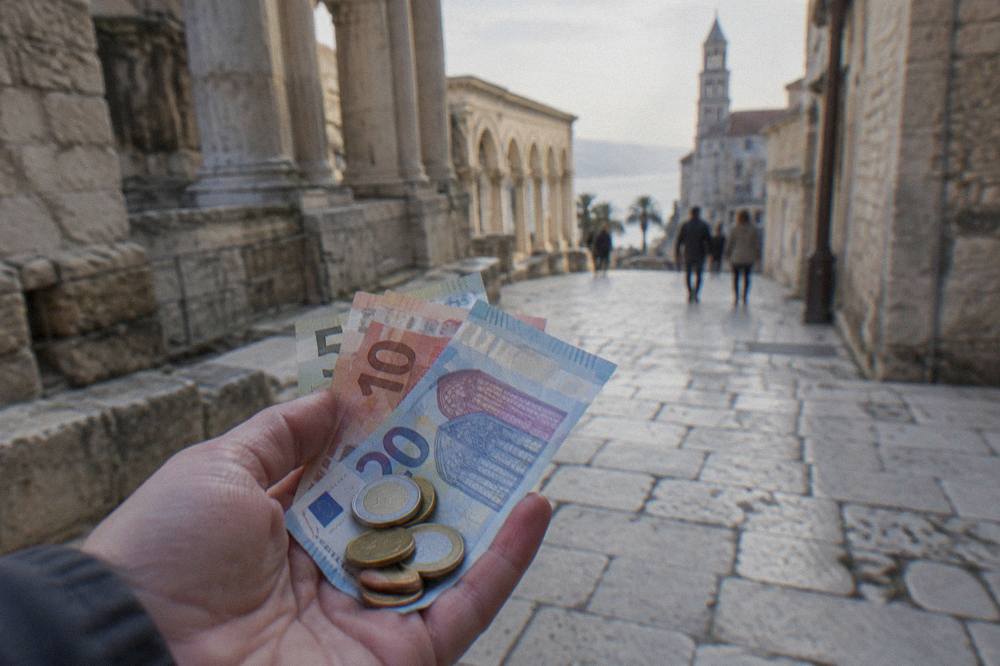
Split uses the euro (EUR), the official currency of Croatia since 1 January 2023, when the country switched from the kuna. Euro banknotes and coins are the only legal tender, prices are posted in EUR, and the kuna is no longer accepted anywhere. Croatia is also a Schengen member, so no currency change is involved when arriving overland from Slovenia, Hungary or Italy.
The euro arrived together with Schengen membership on the same day, 1 January 2023, and the changeover is long finished. Any guide still talking about exchanging kunas, or about "kuna-friendly" prices, is years out of date. The European Central Bank's own changeover page confirms the date, and every price list published by the City of Split, the museums and the ferry operators is now denominated in euros.
What that means day to day is simple. A coffee, a ferry ticket, a museum entry and a market stall purchase are all quoted and paid in euros. Contactless card payment is normal at counters where, a few years ago, cash was expected. The questions that remain are about the edges: the places where a card terminal is absent, the fees your own bank adds, and the payments that are fixed by public decision rather than by the market, such as the tourist tax and the island ferry fares.
Should You Exchange Money In Split, Or Use Cards?
Cards are the default in Split: card terminals are standard in restaurants, cafes, shops, museums and on the Platanus airport shuttle, so currency exchange is only needed for small cash needs. Exchange offices cluster around the Riva and inside Diocletian's Palace, and Croatian law requires the posted rate to be the rate you get, but exchanging a large sum is rarely necessary. A modest cash float covers markets and the islands.
The practical answer is to change little or nothing. Bring a card without foreign transaction fees, check what your own bank charges for euro payments and ATM withdrawals abroad, and withdraw a small amount once in Split rather than changing banknotes at home or at the airport. The commission question is between you and your bank; the euro side of the transaction is the same everywhere in the currency area.
Where cash genuinely helps: the green market and the fish market stalls, small island konobas, and one specific ticket, the Blue Cave entrance on Biševo, which the 2026 fee notice says is paid in cash on site. That fee, 24 EUR per adult in high season from 20 June to 10 September and 18 EUR in the shoulder months, is charged when you arrive by boat, and the boats that carry you there are the Blue Cave and island day trips from Split.
One caution that costs nothing: at any exchange office, read the posted rate and any commission line before handing over money. The rate on the board is the rate you are owed. If a posted rate looks far from the mid-market rate shown on any financial site, walk to the next office; on the Riva there is always a next office within a minute.
How Much Cash Do You Actually Need In Split?
A cash float of roughly 30 to 60 EUR per person covers a typical stay's cash-only moments: market produce, a stall drink, small island purchases, tips left on a table and the Blue Cave fee if that trip is on your list. Everything else in Split, from museum tickets to the airport shuttle and ferry foot-passenger fares, can be paid by card. There is no cash-only attraction in the city itself.
Inside Split, the cash question answers itself within a day: nearly every counter takes cards, including the Split City Museum kiosks, the Platanus shuttle from the airport (10 EUR one way, 15 EUR return, per the operator's own page) and the Jadrolinija foot-passenger tickets at the port. The cash edges are the markets, where stallholders prefer small notes, and the occasional public toilet or beach kiosk.
On the islands the picture narrows a little. Hvar town and Supetar have plenty of card terminals, but a small konoba on Šolta or a stall near a beach on Vis may not. The Blue Cave ticket on Biševo is the one firmly cash payment, and it is worth carrying enough for it plus a margin, because there is no cash machine on a cave pier.
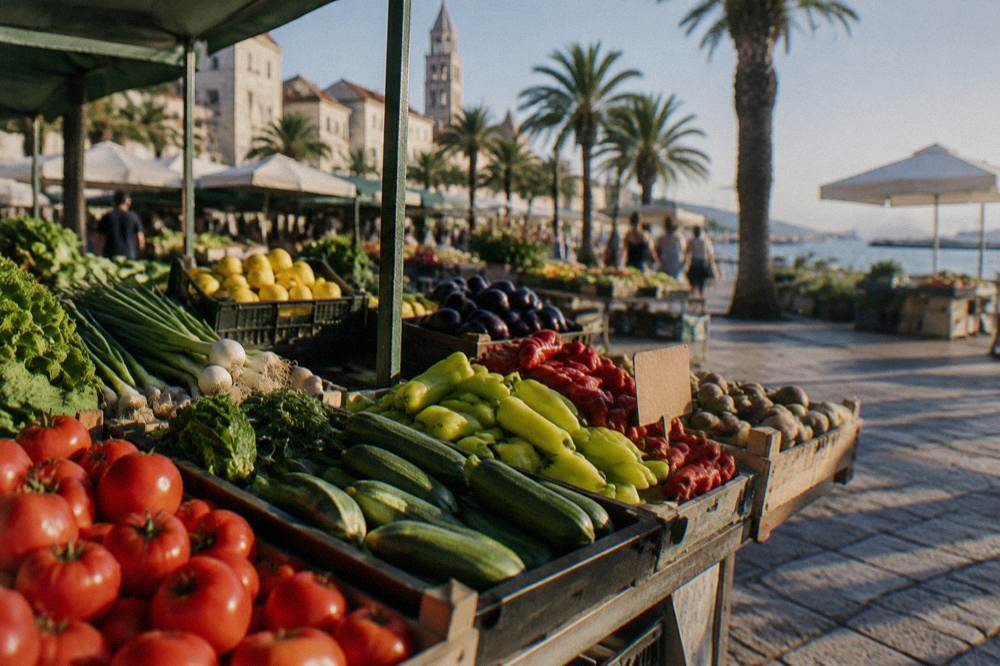
A walking tour is one of the cheapest paid activities in the city and a good test of how little cash you need: the Walking Tour of Split and Diocletian's Palace, Check availability on the operator's live listing, is booked and paid online before you ever reach for your wallet.
For the rest of the budget picture, the budget guide for Split breaks down where the money goes on a short stay.
What Do Things Cost In Split?
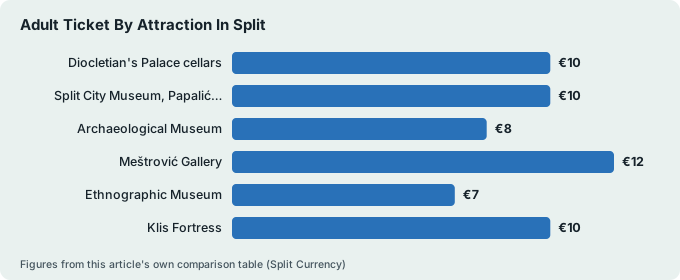
Fixed public prices in Split include the palace cellars at 10 EUR, the City Museum at 10 EUR, the Archaeological Museum at 8 EUR, the Meštrović Gallery at 12 EUR, the Ethnographic Museum at 7 EUR, and ferry foot passages of 5.90 to 8.40 EUR to Stari Grad. Restaurant and hotel prices are set by the market: read the posted menu, and expect a cover charge to be printed on it if one is charged.
The table below collects the ticket prices that are published by the institutions themselves. These are the anchors of a sightseeing budget: everything on this list is a walk-in purchase, no booking needed except where noted.
| Attraction in Split | Adult ticket | Notes |
|---|---|---|
| Diocletian's Palace cellars | 10 EUR | Open 8:30 to 20:00 daily; central part under restoration to end of 2026, passage open |
| Split City Museum, Papalić Palace | 10 EUR | 8 EUR reduced, 18 EUR family; closed Mondays |
| Cathedral of St Domnius complex | from about 5 EUR, combined tickets up to about 15 EUR | Sold at the Peristyle kiosk; shoulders and knees covered |
| Archaeological Museum | 8 EUR | Combined with Salona 10 EUR within 7 days |
| Meštrović Gallery | 12 EUR | Includes Crikvine-Kaštilac; reopened April 2026 |
| Ethnographic Museum | 7 EUR | Vestibule separately 2 EUR |
| Klis Fortress | 10 EUR | 3 EUR children; daily 9:00 to 17:00 |
The two big national parks are priced by season, and the autumn drop on 1 October 2026 brought them back to their shoulder rates. The Krka price list gives 7 EUR in January to March and November to December, 20 EUR in April, May and October, and 40 EUR from June to September. Plitvice runs 10 EUR in the winter months, 23 EUR in April, May and October, and 40 EUR from 1 June to 30 September, with a 25 EUR afternoon slot in the peak season and the visitor's name required on the ticket. The full breakdown is in the Krka guide and the Plitvice guide.
| Park | Jan to Mar | Apr, May, Oct | Jun to Sep |
|---|---|---|---|
| Krka, all land sites | 7 EUR | 20 EUR | 40 EUR |
| Plitvice Lakes | 10 EUR | 23 EUR | 40 EUR, 25 EUR afternoon slot |
Ferries are the other fixed costs, and they are among the few fares that can be printed with confidence, because they come from the operator's own price list. The Jadrolinija price PDF gives 5.90 EUR off-season and 8.40 EUR in season for a foot passenger to Stari Grad on Hvar, and catamaran fares run 6.40 EUR low season and 10.00 EUR high season to Hvar or Jelsa, and 7.20 EUR and 10.00 EUR to Vis.
| Route from Split | Type | Foot passenger fare |
|---|---|---|
| Stari Grad, Hvar (line 635) | Car ferry, about 120 min | 5.90 EUR off-season, 8.40 EUR in season |
| Hvar town or Jelsa | Catamaran | 6.40 EUR low, 10.00 EUR high |
| Vis | Catamaran or ferry, about 140 min | 7.20 EUR low, 10.00 EUR high |
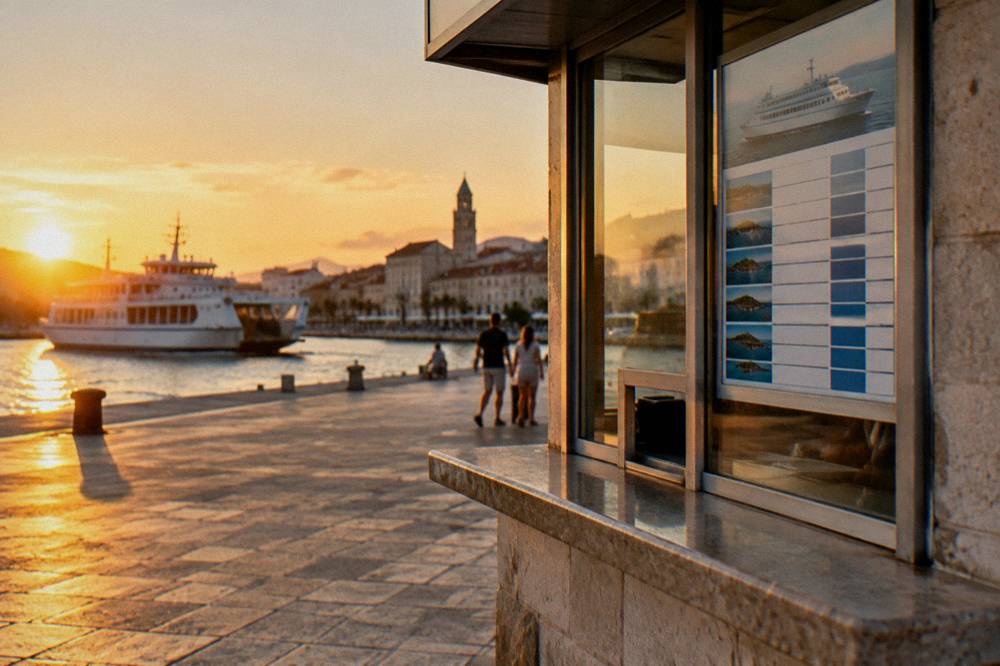
For meals, no figure is fixed and none should be guessed. The check the reader can make is on the menu itself: Croatian menus list prices including VAT, and if a cover charge exists it must appear in print. If the bill arrives with a charge that appears nowhere on the menu, that is a question to settle at the table, not after. The restaurant guide and the food guide cover where to eat and what the local dishes are.
A food tour is one way to let someone else handle the ordering, and the city's tasting walks, like the Split Food Tour, are paid for online in advance, so the only cash you need on the walk is what you choose to leave for the guide.
How Does The Tourist Tax Work In Split?
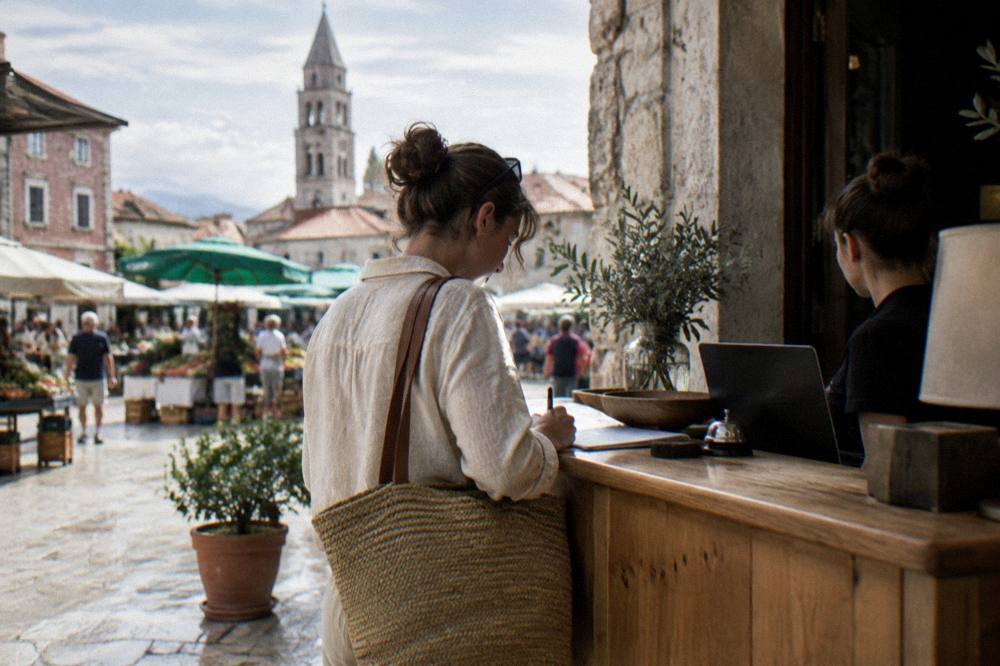
Split-Dalmatia County charges a tourist tax of about 2.65 EUR per person per night in high season, taken by the accommodation provider at checkout or in the room price, not by the city or at any desk. Children under 12 are free and ages 12 to 18 pay half. The exact amount is confirmed at booking, and no low-season figure should be assumed.
The word "about" is doing real work there: the county decision is published, but the figure reported for the 2026 high season, 1 April to 30 September, is an approximation of what a guest actually pays per night, and a 2027 amendment exists at county level. What is certain is the mechanism. You do not queue anywhere for a tourist tax stamp, as older guides describe. You pay it to whoever rented you the room, apartment or hotel bed, and it appears as a line on your bill.
Two practical consequences follow. First, when comparing accommodation prices, ask whether the quoted rate includes the tax, because a per-night difference of a few euros per person adds up for a family over a week. Second, do not budget a separate cash payment unless your host asks for one; a card payment or a deduction from a deposit is normal. Beyond that, print no hotel rate and assume nothing about any city card: no Split Card price is published in a form that can be quoted here.
Are ATMs In Split Safe To Use?
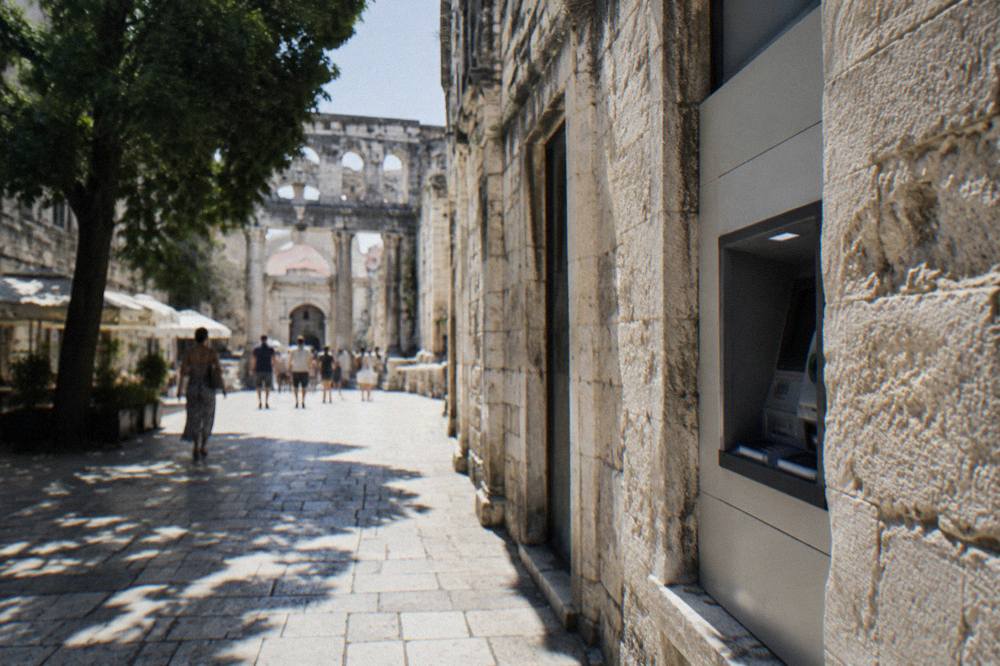
ATMs in Split are safe in the ordinary banking sense, but the machines to prefer are those branded with a recognised bank rather than standalone yellow or grey units on tourist streets, which are known across Croatia for poor rates and high fixed fees. Tell your bank you are travelling, decline the machine's offer to convert the amount (choose to be charged in euros), and take one larger withdrawal instead of many small ones.
The dynamic-currency-conversion trick is the main cost trap: an ATM or a card terminal offers to charge you in your home currency instead of euros, at a rate the machine sets. Declining, and being billed in EUR, keeps the transaction on your own bank's terms. The same rule applies at restaurant terminals, where the waiter may hand you the device with the conversion option already on screen.
On machine choice: Croatian bank branches sit along Marmontova and around the Prokurative, and their machines are the reference point. Independent currency-dispensing units clustered on the Riva and near the Golden Gate exist to earn from the spread. As for physical safety, Split is not a city where street robbery of tourists is part of the picture; the safety guide covers the ordinary precautions, and pickpocketing in the palace lanes at peak hours is the main one.
Can You Drink On The Street In Split, And What Are The Fines?
Drinking alcohol in Split's historic centre outside licensed terraces carries a 300 EUR fine, and the same amount applies to urinating in public, vomiting, climbing on monuments or bathing in fountains, with 150 EUR for sleeping in public spaces and 300 EUR for taxi touting, under the city's Enjoy Respect rules adopted in 2026. Shops in the core also stop selling alcohol at night in summer.
The 2026 city decision formalised the rules for the Zone A historic core. Beyond the alcohol ban, it covers open-flame food preparation, soliciting for tours or accommodation, spreading goods outside shopfronts, and walking in swimwear or shirtless on public surfaces. The swimwear fine amount is set locally and is not published on the official page, so the figure to carry in your head is simply that it is fined, and that a shirt and shoes are the baseline for the palace streets.
The night-time retail rule matters for evening plans: from 1 June to 15 September, shops and supermarkets in the city do not sell alcohol between 21:00 and 06:00, and the restriction is set to repeat from 1 June 2027 unless changed. Bars and restaurants with terraces are not affected. The numbers below are the ones the city publishes.
| Offence in the historic centre | Fine |
|---|---|
| Drinking alcohol in public (outside licensed terraces) | 300 EUR |
| Urinating or vomiting in public | 300 EUR |
| Climbing monuments or bathing in fountains | 300 EUR |
| Sleeping in public spaces | 150 EUR |
| Taxi touting | 300 EUR |
| Swimwear or shirtless on public surfaces | Fined, amount set locally |
None of this makes Split hostile to a night out. The rules target behaviour, not drinking itself, and a glass of wine on a licensed terrace two streets from the Peristyle is exactly what the rules protect. The nightlife guide maps where those terraces and bars are.
Do You Tip In Split?
Tipping in Split is voluntary and modest: rounding up a cafe bill or leaving roughly 10 percent on a restaurant table is the local convention, and nothing is automatically added to the bill beyond a printed cover charge if one exists. Taxi and tour tips are a round-up gesture, not an obligation, and tip-based walking tours are exactly that, paid in cash at the end at whatever the walk was worth to you.
Because service is not automatically included, the cover charge, if a restaurant charges one, is a seated-bread-and-service line, not a gratuity. It must be printed on the menu. Anything beyond it is your choice, left on the table or added when paying by card.
For guides, the convention on paid tours is a small cash tip for a walk you enjoyed, and on tip-based walks the tip is the entire payment, handed to the guide directly, with the amount entirely up to you and details best confirmed with the guide before setting off. For the paid end of the spectrum, a boat day such as the Blue Lagoon cruise with lunch and wine is paid up front online, and any tip for the crew is separate and optional.
What Border And Payment Rules Changed In 2026?
Two changes matter for money and entry: the EU's Entry/Exit System (EES) has been fully operational at Croatia's external borders since 10 April 2026, recording biometrics for non-EU short-stay visitors, while ETIAS, the visa-waiver with its 20 EUR fee, is not yet live and has no fixed start date. Neither affects what currency you spend once inside.
EES means fingerprints and a facial image on first entry, with stamps replaced by digital records. It slows the first border crossing slightly and changes nothing afterwards. ETIAS, when it eventually starts, will add a pre-travel authorisation for visa-exempt nationals, with a transitional grace period announced for its launch. Until an official start date exists, no traveller needs to buy anything, and any site selling an "ETIAS registration" now is selling nothing.
Within the country, nothing about payment changed: the euro, the card terminals and the ATM landscape are the same as in any eurozone country. The differences that remain are local, like the Split fines and the island cash edges, not national.
Should You Pay For Day Trips In Advance?
Booking a day trip online before you travel is the normal pattern in Split: operators price in euros, payment is taken by card at booking, and what you pay covers the transport and guiding as described on the booking page, with entry tickets and lunch included only where the listing says so. Nothing needs cash, and the free-cancellation windows on the operator's live listing mean the money is not locked in until shortly before departure.
The reason advance booking matters here is capacity, not price. The Krka boats and the five-island speedboats that leave from the Riva side of the port fill up in July and August, and the fixed park and cave fees are charged regardless of how you arrive. Paying ahead simply secures a seat.
The Krka day trips from Split and the boat tours guide explain what each kind of trip covers and which tickets are included in a given listing.
For something on the water closer to home, a sunset kayak around Marjan and the city walls, such as the Illuminated Evening Kayak Tour, is likewise booked and paid online, leaving nothing to settle at the meeting point on the beach.
Common Questions About Money And Cards In Split
What Currency Does Split Use?
The euro (EUR), Croatia's official currency since 1 January 2023. The kuna is no longer accepted anywhere.
Can I Pay By Card Everywhere In Split?
Nearly. Restaurants, shops, museums, the airport shuttle and ferry foot tickets all take cards. Cash is useful at markets, at small island vendors and for the Blue Cave fee on Biševo, which is paid in cash on site.
How Much Is The Tourist Tax In Split?
About 2.65 EUR per person per night in high season, 1 April to 30 September, collected by the accommodation. Under 12s are free and ages 12 to 18 pay half. The exact amount is confirmed at booking.
Can I Drink Alcohol On The Street In Split?
No. Drinking in the historic centre outside licensed terraces carries a 300 EUR fine under the 2026 Enjoy Respect rules, and shops in the core stop selling alcohol at night in summer.
Should I Tip In Split?
Tipping is voluntary: round up a cafe bill or leave around 10 percent at a restaurant. On tip-based walking tours the tip is the whole payment, handed to the guide in cash.
Do I Need Euros Before I Arrive?
No. Withdraw from a bank-branded ATM in Split, or pay by card from the airport shuttle onward. Avoid standalone exchange machines and always choose to be charged in euros at terminals.
Money in Split is a solved problem: one currency, near-universal card acceptance, and a short list of fixed public prices you can plan around. Carry a small float for the markets and the islands, read posted rates and menus before paying, keep the night-time alcohol rules in mind, and the financial side of the trip takes care of itself.
