Split Boat Tours
Split sits on a port that moved 6.05 million passengers in 2025, and the islands of Brač, Šolta, Hvar and Vis sit directly offshore, which makes the city the natural base for a day on the water. This guide lays out what each kind of Split boat tour covers, what the ferries cost, and how to read the port.
Short answer
Split boat tours fall into a few clear groups: Blue Lagoon cruises to Šolta and Drvenik, Hvar and Pakleni Islands trips, speedboat runs to the Blue Cave on Biševo, and sailings around Brač. Ferries to the same islands run from the port at Obala kneza Domagoja, with foot passenger fares from 5.90 EUR off-season to 8.40 EUR in season on the Stari Grad line, so a tour is a convenience decision, not the only way out onto the water.
Split is a coastal city in central Dalmatia built around a working port, and the numbers explain why boat trips dominate every conversation about the place: the Port of Split's own statistics page records 6.05 million passengers and 1.054 million vehicles in 2025, making it Croatia's busiest passenger port by its own account. The islands of Brač, Šolta, Hvar and Vis sit directly offshore, the ferry terminal, the main bus station and the railway station share one stretch of Obala kneza Domagoja just 500 to 600 m from Diocletian's Palace, and every boat tour in the city leaves from within a short walk of that hub. This guide from the Split Croatia Travel Guide desk sets out what each kind of Split boat tour actually covers, what the scheduled ferries and catamarans cost on the same routes, and how the weather and the port shape the day.
What Can You Expect From Split Boat Tours?
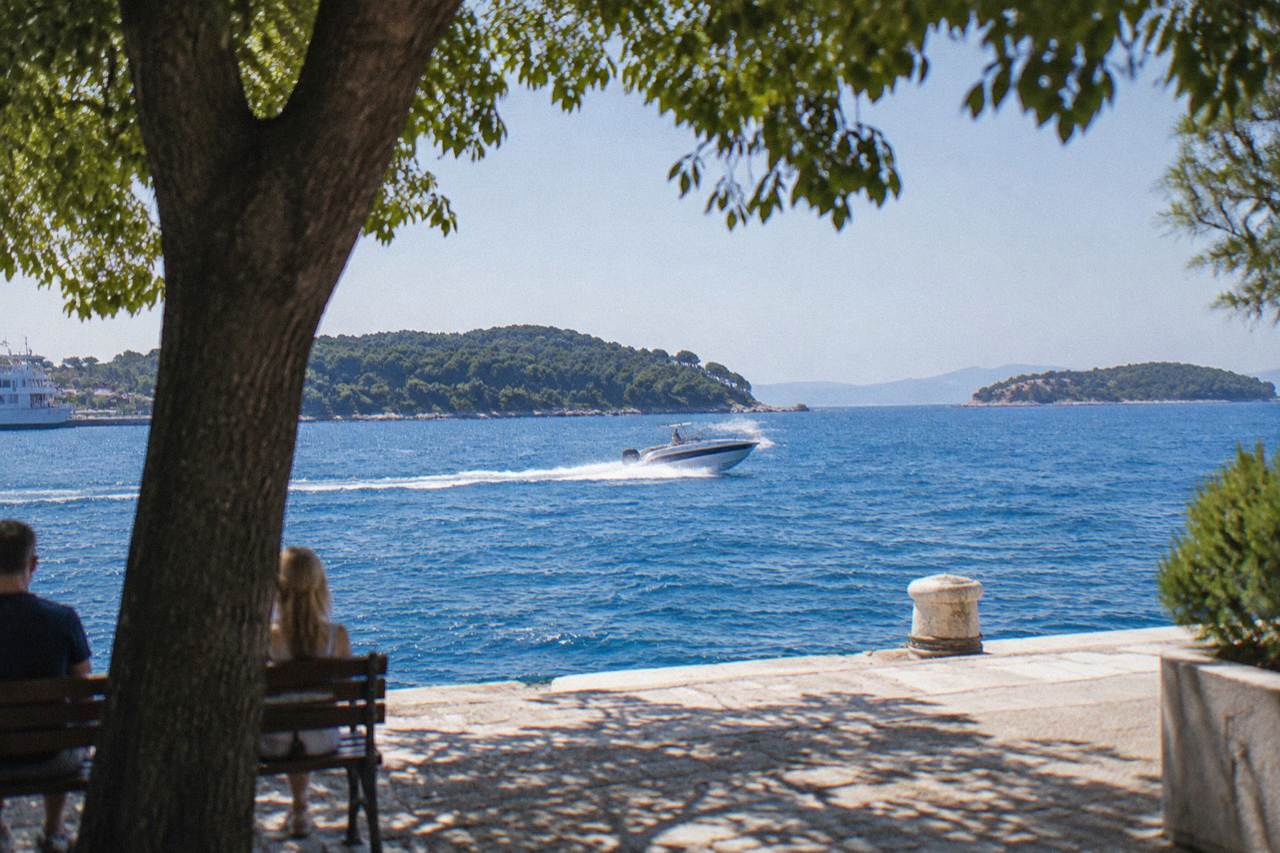
Split boat tours are organised day trips that leave from the city waterfront and reach Šolta, Drvenik, Brač, Hvar, Vis and the Blue Cave on Biševo within a single day, with the bulk of them falling into four groups: Blue Lagoon cruises, Hvar and Pakleni Islands trips, Blue Cave speedboat runs, and relaxed island cruises with lunch and drinks on board. A tour bundles the boat, a skipper or guide, and often food, swimming stops and island time into one ticket, which is the convenience you are paying for. The scheduled Jadrolinija ferries and the Kapetan Luka, TP Line and Bura Line catamarans serve the same waters for foot passengers at published fares. Choosing between them is a matter of how many stops you want and how much planning you are willing to do yourself.
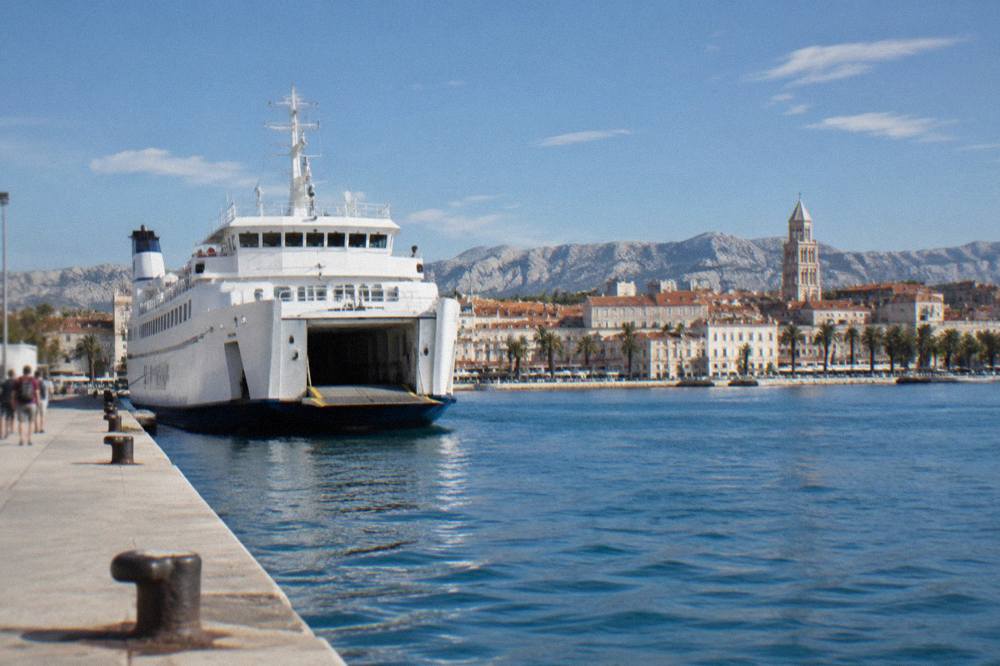
The practical difference is pace and routing. A cruise holds a schedule of swim stops and a lunch service, a speedboat run reaches Biševo and Hvar in one long loop, and the ferry drops you at Stari Grad or Supetar to make your own day. The ferry port sits so close to the Old Town that both options start from the same few hundred metres of waterfront, which is unusual for a city of 160,577 people at the 2021 census.
For the wider picture of what else fills a week here, the Split day trips overview covers the inland options, Krka, Plitvice and Trogir included, and the things to do in Split page holds the full city list.
Which Islands Can A Boat Tour From Split Reach In A Day?
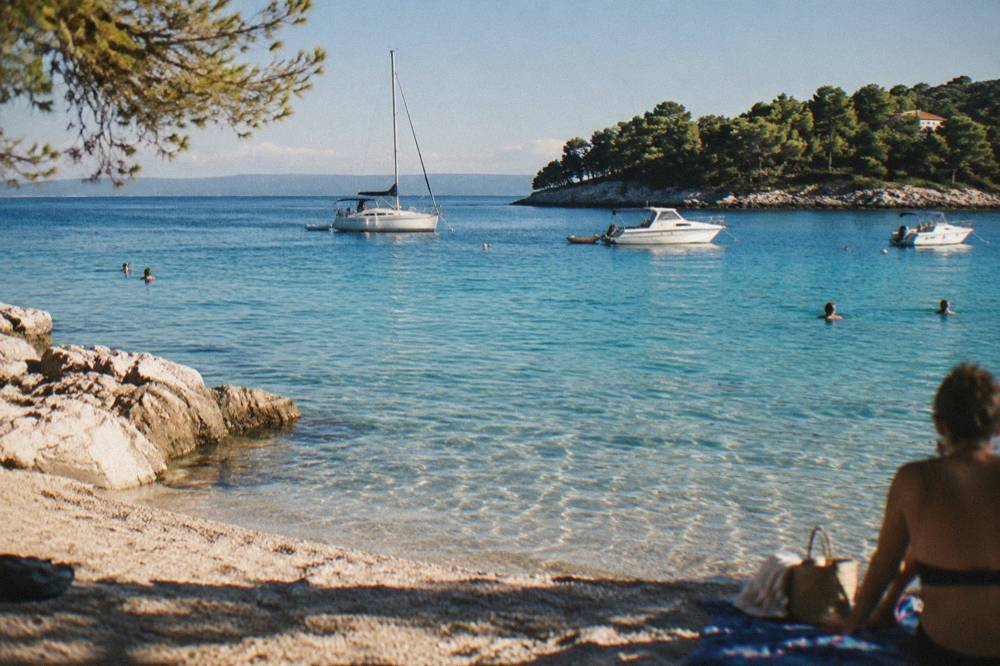
The islands within a single day's sailing of Split are Šolta at about 60 minutes by ferry to Rogač, Brač at about 50 minutes to Supetar, Hvar at about 120 minutes by car ferry to Stari Grad or faster by catamaran, and Vis at about 140 minutes, from which the Blue Cave on Biševo is reached by small local boats. The Pakleni Islands sit just off Hvar town and appear on the itinerary of nearly every Hvar cruise. Drvenik Veli and Drvenik Mali, the islands that hold the Blue Lagoon swimming stops, lie between Split and Šolta and are close enough that half-day speedboat trips reach them comfortably.
These times are the scheduled Jadrolinija and catamaran crossings, and they are worth knowing even on a booked tour, because the same distances govern every private boat too. The table below sets out the four main island routes with what each is known for.
| Island | Crossing From Split | Known For |
|---|---|---|
| Brač | about 50 minutes by ferry to Supetar | Zlatni Rat beach at Bol, reached by catamaran line 9603 |
| Šolta | about 60 minutes by ferry to Rogač | Quiet coves, olive oil, the monastery at Maslinica |
| Hvar | about 120 minutes by ferry to Stari Grad, or catamaran to Hvar town | Hvar town, the Fortica at 12 EUR, the Pakleni Islands |
| Vis | about 140 minutes by ferry | Vis town, Komiža, the onward boat to the Blue Cave |
One routing trap catches people every season: Hvar town has no car ferry terminal. The car ferry from Split lands at Stari Grad at the top of the island, while Hvar town itself is reached by catamaran. The Split to Hvar ferry guide unpicks that split in detail, and the ferries from Split page covers every route including the Italy lines.
How Much Do The Ferries And Catamarans Cost Compared With A Tour?
A foot passenger on the Split to Stari Grad ferry pays 5.90 EUR off-season and 8.40 EUR in season, catamarans to Hvar or Jelsa cost 6.40 EUR low season and 10.00 EUR high season, and the catamaran to Vis costs 7.20 EUR and 10.00 EUR on the same pattern, so the scheduled network reaches the islands for the price of a city lunch while a tour adds the boat routing, the stops and usually food for a single bundled fare. Those ferry and catamaran figures come from the Jadrolinija price list and the catamaran operators' published fares. Tour prices, ratings and durations are not typed on this page: they render from the live listings, because they change.
| Route | Type | Foot Passenger Fare |
|---|---|---|
| Split to Stari Grad, Hvar | Car ferry, line 635 | 5.90 EUR off-season, 8.40 EUR in season |
| Split to Hvar town or Jelsa | Catamaran, line 9602/9603 | 6.40 EUR low, 10.00 EUR high |
| Split to Vis | Catamaran, line 9602 | 7.20 EUR low, 10.00 EUR high |
| Split to Rogač, Šolta | Car ferry, line 636 | fare on the operator's price list |
| Split to Supetar, Brač | Car ferry, line 631 | fare on the operator's price list |
The trade is simple. The ferry gives you one island and full independence for under 10 EUR on the routes above, while a tour compresses three or five islands, swimming stops and a meal into one ticketed day with no timetable to read. Families and swimmers lean toward the cruise pattern, photographers and cave-bound travellers lean toward the speedboats.
The Blue Cave itself carries a separate entrance fee paid on site: 24 EUR per adult in high season from 20 June to 10 September and 18 EUR in the shoulder months, cash, collected at Biševo before entry. That fee sits outside every tour ticket, and the Blue Cave and Vis guide covers the logistics of the crossing.
What Does A Blue Lagoon Cruise From Split Include?
A Blue Lagoon cruise from Split typically runs a loop to the Drvenik islands between Split and Šolta, anchors for a long swimming stop in the shallow lagoon, adds a second stop at a town such as Maslinica on Šolta or a village on Brač, and serves lunch and drinks on board, with the price, the menu and the exact stop list shown on the operator's live listing. The lagoon itself is a swimming stop, not a sight you walk around: the day is built around water, sun and food. What varies between listings is the boat type, the group size and whether wine is poured.
If that rhythm of swims, lunch and island stops appeals, book a Blue Lagoon cruise here.
The listings differ in ways that matter more than the headline price. Some run larger boats with a full lunch service, others run small-group speedboats that trade the meal for faster crossings and extra stops. If a meal on the water is the point, read the listing's inclusions line. If swimming twice is the point, the smaller and faster the boat, the better the day tends to go.
Half-day versions exist for travellers with an afternoon flight, and the speedboat variant of this trip appears alongside full-day cruises in the same category. The internal link to the Blue Lagoon and Šolta guide explains what the lagoon actually looks like at midday in August versus early morning in June.
Which Split Boat Tour Fits A Short Stay?
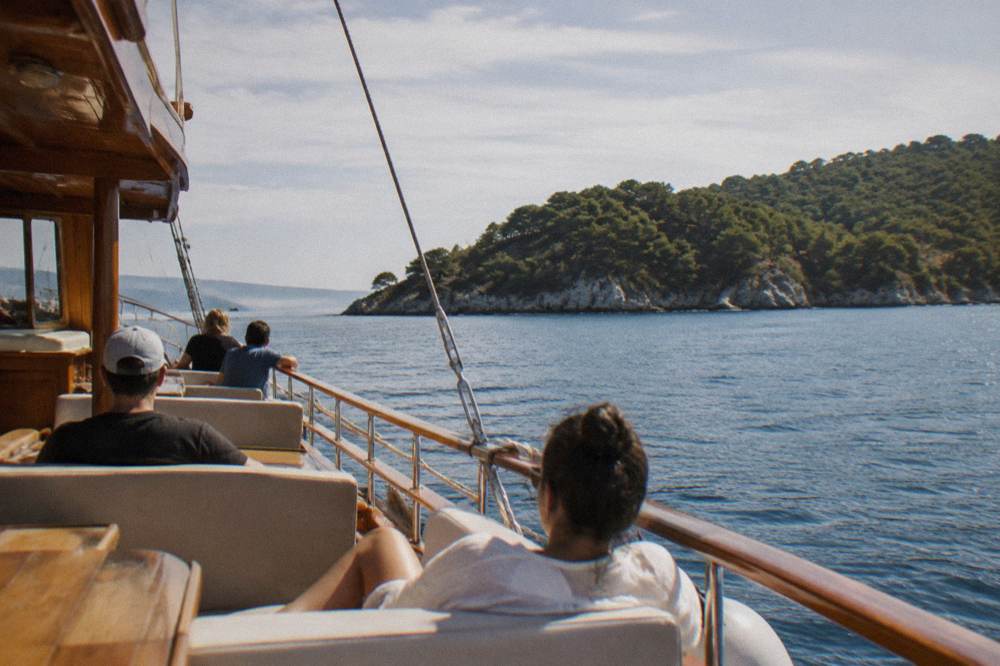
For a two-night stay the half-day Blue Lagoon speedboat trips fit the schedule best, because they return to the port by early afternoon and leave the evening for the Old Town, while a full stay of four nights or more opens the Hvar and Pakleni cruises and the long Blue Cave runs, and a single night points to the one-hour-and-thirty-minute walking tours of the palace rather than any boat at all. The deciding inputs are your departure time and your tolerance for a long day: the cave and Hvar combinations are the longest trips sold from the city, and they leave early.
A sample shape for a short visit, drawn from the crossing times above:
| Nights In Split | Boat Day That Fits | Why It Fits |
|---|---|---|
| 1 | none, or a sunset kayak along Marjan | the port is close but the cave and island loops take a full day |
| 2 | half-day Blue Lagoon speedboat | back by early afternoon, evening free |
| 3 to 4 | Hvar and Pakleni cruise, or Krka by land | one full water day, one land day |
| 5 or more | Blue Cave, Hvar and Vis combination | the long loop needs a spare day in case of wind |
The wind point is real, not a caveat for its own sake: Biševo cave entries pause when the sea is rough, and listings state that a rough-sea alternative or refund applies. Keep one flexible day in any week that includes the cave.
For balance, the land-side alternative on the same booking pages is the Krka waterfalls run, which pairs the park with a food and wine tasting and leaves the swimming to the marked areas inside Krka, where the park's own rules permit swimming only in designated spots from 1 June to 30 September. The Krka National Park guide holds the full price ladder, 7, 20 and 40 EUR by month, which is cheaper than the summer rate and identical in substance from October to March.
When Is The Best Season For Split Boat Tours?
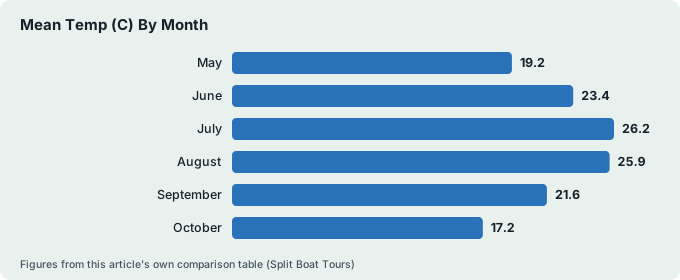
The boat tour season in Split runs with the weather, and the DHMZ Split Marjan station table for 1948 to 2024 shows July at a 26.2 C mean and August at 25.9 C with only 26.6 mm and 41.3 mm of rain respectively, which makes July and August the safest months for a calm-sea cave trip, while May, June and September hold means of 19.2, 23.4 and 21.6 C with lighter crowds and still-usable sea conditions. July logged 18 days at 30 C or more and August 17 on the long station record, so high summer is a sun guarantee with a heat cost. November is the wettest month at 115.5 mm and the tour fleet thins sharply from late October.
| Month | Mean Temp (C) | Rain (mm) | Boat Season Reading |
|---|---|---|---|
| May | 19.2 | 57.5 | shoulder season, sea still cool |
| June | 23.4 | 49.0 | full season starts, 7 days at 30 C or more |
| July | 26.2 | 26.6 | peak: driest month, 18 days at 30 C or more |
| August | 25.9 | 41.3 | peak, 17 days at 30 C or more |
| September | 21.6 | 70.9 | sea at its warmest of the year locally, crowds easing |
| October | 17.2 | 77.0 | reduced sailings, storm odds rise |
September deserves its reputation: the sea holds the summer's heat into the month, the station table shows the mean still at 21.6 C, and the peak-season pricing on the national park side drops from 1 October. The Split weather and best time to visit Split pages carry the full twelve-month table and the month-by-month verdicts.
Where Do Split Boat Tours Depart From?
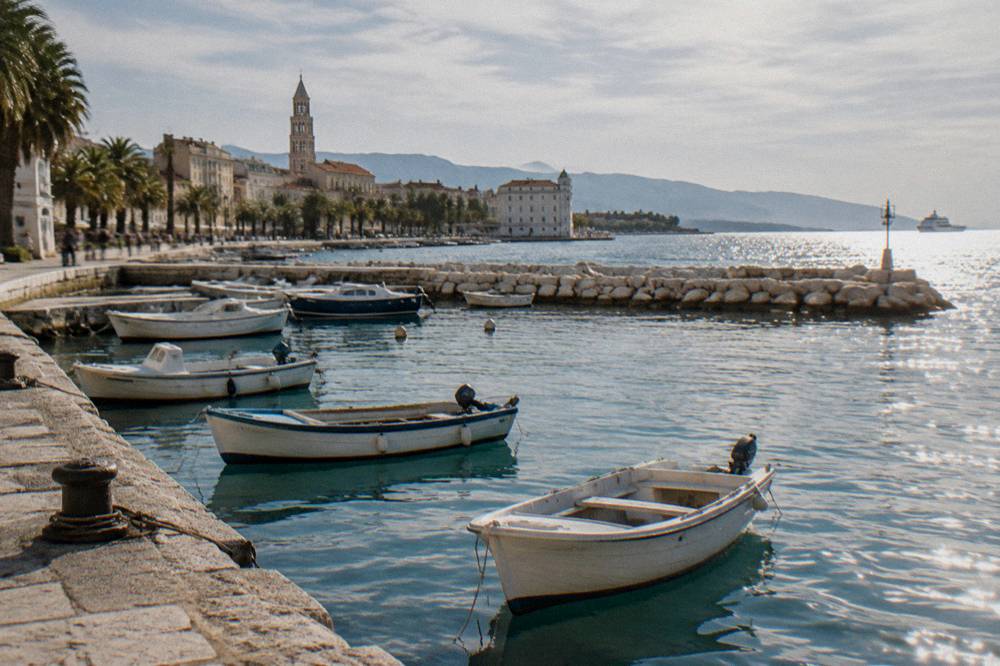
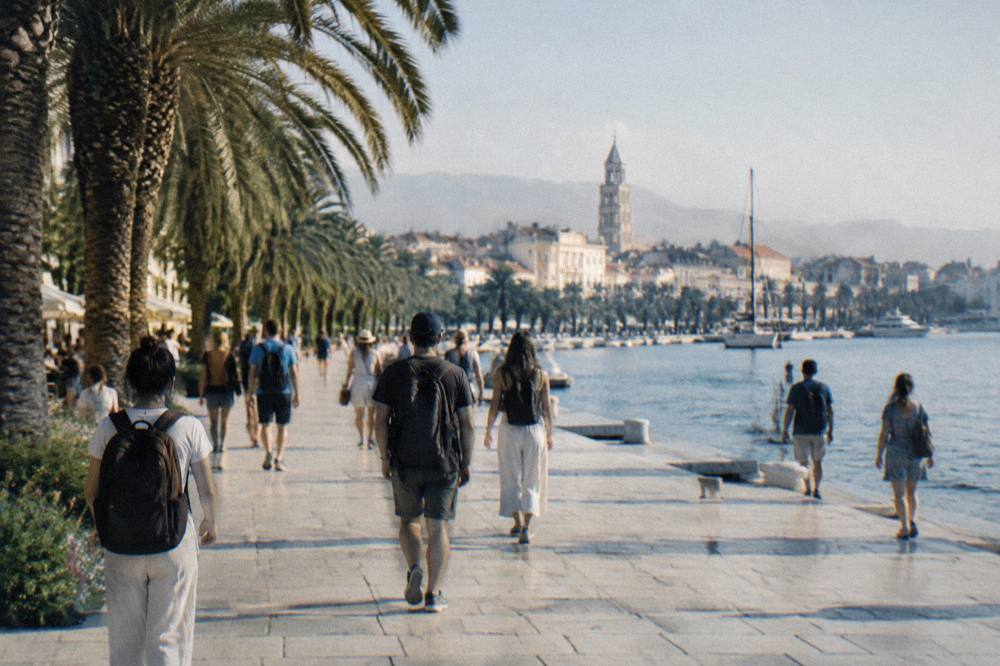
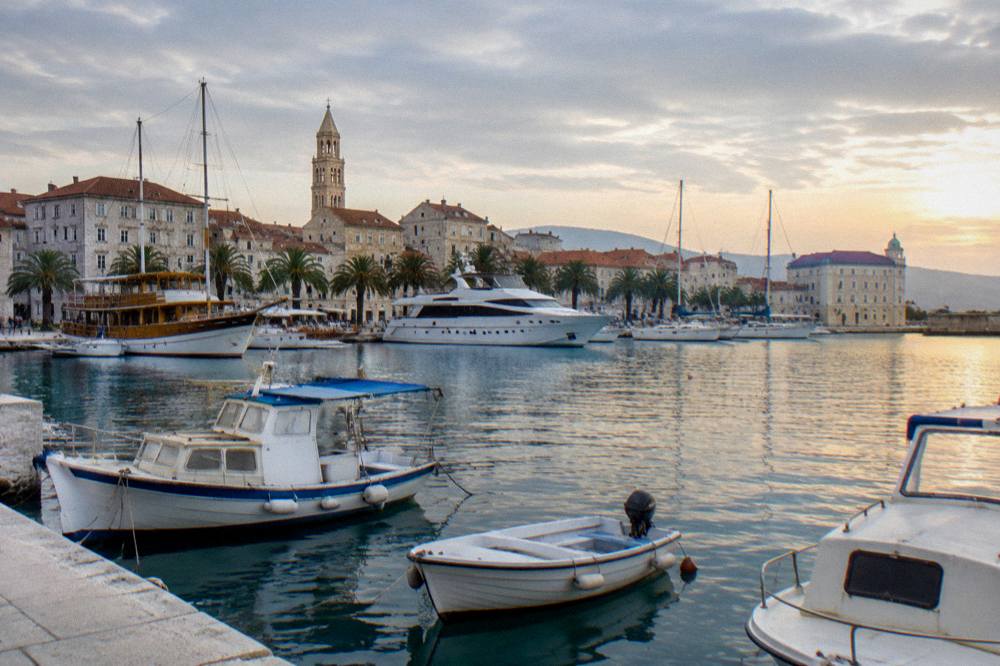
Split boat tours depart from the waterfront between the ferry port at Obala kneza Domagoja and the Riva promenade on the west side of the harbour, with the ferry terminal, the main bus station and the railway station clustered 500 to 600 m from Diocletian's Palace, so the walk from an Old Town apartment to almost any departure point is under ten minutes along the shore. The port authority recorded 487,377 cruise passengers in 2025 alongside the 6.05 million ferry and catamaran passengers, and cruise ships began calling only in 2002, which tells you how recently the harbour doubled as a cruise stop.
Practical points for departure day:
| Item | Detail |
|---|---|
| Nearest landmark | Obala kneza Domagoja, where ferries, buses and trains meet |
| Walk from the palace | 500 to 600 m |
| Arrival buffer | listings state a check-in window, typically before the posted sailing time |
| Tickets | booked listings carry a confirmation; ferry tickets are bought at Jadrolinija desks or machines |
| Luggage | day trips have no hold; the luggage storage options near the station suit late departures |
The Riva works noted above are the one thing to re-check closer to travel: if the central section is fenced from November 2026, the boarding points shift, and every listing states its exact meeting point. Confirmation at booking settles it.
Is A Boat Tour Better Than Renting A Boat In Split?
A boat tour is the better choice when you want the Blue Cave entry, a skipper who knows the moorings and a day with zero logistics, while bare and skippered boat rental wins for families and small groups who want to set their own pace, since rental is priced per boat rather than per person and licence rules, mooring fees and no-go zones all fall on you. The dividing line is paperwork and confidence: the cave runs are skipper territory, the lagoon and Šolta are rental territory. The site's Split boat rental guide covers licence rules, mooring fees and where the no-go zones sit.
The comparison that matters:
| Factor | Booked Tour | Rented Boat |
|---|---|---|
| Blue Cave entry | included as an itinerary stop with the local transfer | only via a licensed transfer boat at Biševo |
| Cost shape | per person, food often included | per boat per day, fuel and moorings extra |
| Weather calls | the operator decides and reruns or refunds | you decide, with the forecast |
| Swimming stops | fixed but proven | your choice, subject to mooring rules |
| Licence needed | never | depends on the boat, per the rental guide |
Group economics flip the answer fast: four people splitting a small boat with a licence-free engine often beat four tour seats, and six people who want lunch, wine and the cave should not attempt it alone. Both are covered, and the party-boat end of the market, with its music and drinks packages, has its own page at Split boat party.
How Do You Pick Between The Blue Cave And The Blue Lagoon?
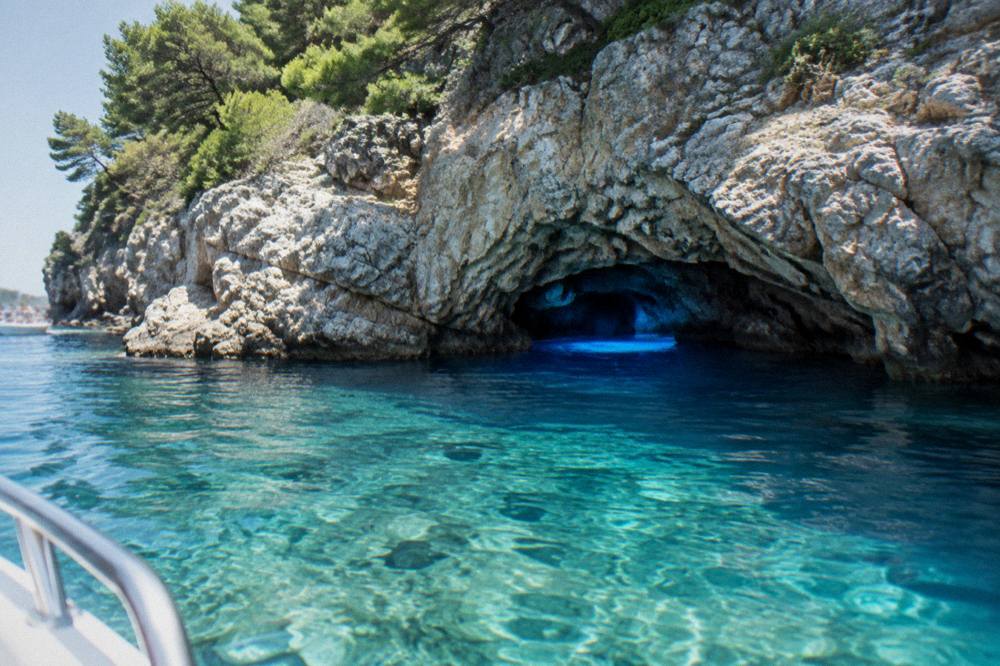
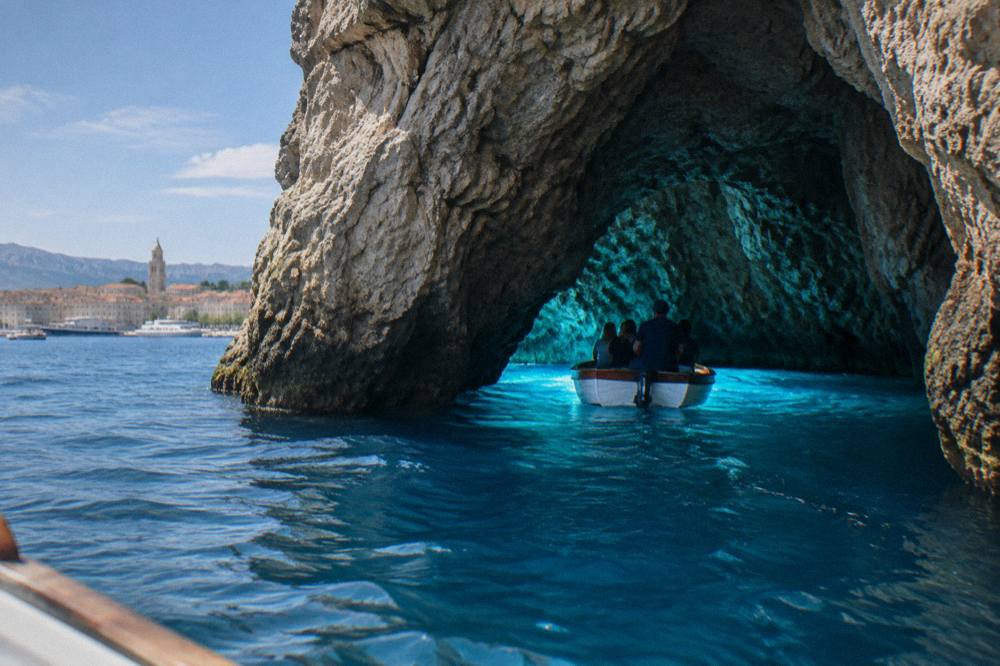
The Blue Cave on Biševo is a sea cave entered by small boat on a timed entry with a cash fee of 24 EUR in high season and 18 EUR in the shoulder months, reached only after the long run south past Vis, while the Blue Lagoon is a shallow anchorage between the Drvenik islands a short sail from Split with no entry fee at all, so the cave is a sight and the lagoon is a swim, and confusing the two produces the wrong booking. They are not variants of one another. They are different products on different islands at different distances.
The choice collapses to three questions. Do you want to swim or to photograph? The lagoon answers swim, the cave answers photograph. How long a day can you give? The cave loops are the longest trips sold from the city, the lagoon trips come in half-day lengths. What does the sea look like on the day? The cave closes on swell, the lagoon tolerates it. Answers to all three, plus the fine print on each listing, decide it.
The Mamma Mia filming angle on the speedboat itineraries refers to the island of Vis, where the film shot its Croatian scenes, and the combination tours string the cave, Vis, Hvar and the Pakleni chain into one loop. Confirm the cave fee in cash and the swell policy on the booking page before you book, because both are stated there.
What Should You Know Before Boarding A Boat Tour In Split?
Before boarding, bring cash for the Blue Cave fee and any island purchases, reef-safe sun protection and more water than feels reasonable for a July day with 18 days at 30 C or more on the station record, a dry bag for phones on any speedboat, and a printed or offline copy of your booking confirmation, since mobile data at sea is patchy between islands. The port itself is cashless-friendly and the ferry desks take cards, but Biševo takes cash and the small island konobas vary. Shoes you can slip off matter on every swim-stop boat, and a light layer matters on the fast runs even in August.
A short pre-boarding checklist:
| Item | Why |
|---|---|
| Cash, small notes | the Blue Cave fee is 24 EUR high season, 18 EUR shoulder, paid on site |
| Sunscreen, hat | July means 353.3 sunshine hours on the station record |
| Water, more than you think | shade on a speedboat is minimal |
| Dry bag or phone pouch | spray on crossing legs is routine |
| Confirmation, offline | signal drops between islands |
| Towel and slip-off shoes | multiple swim stops on lagoon and cave trips alike |
Two rules finish the picture. Alcohol bought in shops cannot be sold between 21:00 and 06:00 in the summer season under the city's 2026 decision, and drinking in the historic centre outside licensed terraces carries a 300 EUR fine, which is a boarding-morning fact as much as a nightlife one, since the bars on the Riva are the licensed option. And if the sea turns, every reputable listing states its bad-weather terms, either a rerouted itinerary or a refund, and that line is the one to read before paying.
Common Questions About Split Boat Tours
Do Split boat tours include the Blue Cave entry fee?
The cave fee on Biševo, 24 EUR in high season from 20 June to 10 September and 18 EUR in the shoulder months, is paid in cash on site and sits outside the tour ticket. The listing for each trip states whether a skipper handles the local transfer boat or whether you queue at the cave jetty.
Can you swim on a boat tour from Split?
Yes, the lagoon and cruise itineraries are built around swimming stops in the Drvenik islands and off Šolta, Brač or the Pakleni chain. Speedboat cave runs include shorter swim windows when the schedule allows. Swimming inside Krka National Park, a common land pairing, is limited to clearly marked areas from 1 June to 30 September.
Is a boat tour from Split worth it if you get seasick?
The lagoon cruises run larger, steadier hulls on short crossings, while the cave speedboats move fast in open water between Vis and Biševo. The DHMZ Split Marjan record shows July and August as the calmest and driest months, 26.6 mm and 41.3 mm respectively, so peak summer is the kindest sea for a nervous stomach.
Where do boat tours in Split leave from?
Departures cluster on the waterfront by the ferry port on Obala kneza Domagoja and along the Riva, 500 to 600 m from Diocletian's Palace, where the ferry terminal, the main bus station and the railway station sit together. Each listing states its exact meeting point, and partial Riva closures are expected through 2027 during the planned renovation.
What is the difference between the Blue Cave and the Blue Lagoon tours?
The Blue Cave is a lit sea cave on Biševo reached after the long run past Vis, entered on a timed ticket paid in cash, while the Blue Lagoon is a shallow swimming anchorage between the Drvenik islands close to Split with no entry fee. The cave is the photograph, the lagoon is the swim.
Do you need to book Split boat tours in advance?
July and August fill the boats first, and the catamaran and ferry network runs alongside at fares from 5.90 EUR off-season to 8.40 EUR in season for a foot passenger to Stari Grad, so the ferry is the walk-up fallback on any sold-out morning. Many tour listings allow free cancellation up to 24 hours before departure, which makes early booking low-risk.
The water is the reason Split works as a base: four islands, a lagoon and a glowing cave all sit inside one day's sailing of a port you can walk to from a palace bedroom, and whether you take a bundled tour or a 5.90 EUR ferry deck, the sea on the far side of the breakwater is the same.