Split Restaurants
Split eats well around Diocletian's Palace, along the Riva and up in Veli Varoš, and this guide covers where to sit, what to order, how the bill works and which local rules shape a dinner out.
Short answer
Eat inside the palace walls for atmosphere, along the Riva for the sea view and in Veli Varoš or Peškarija for lower-key konoba cooking. Order what the coast does best: fish sold by the kilo, peka cooked under a bell, olive oil and local wine. Check the menu for a cover charge, ask the fish price per kilo before ordering and keep street drinking to licensed terraces, where fines reach 300 EUR in the historic centre.
Split is a coastal city in Dalmatia, on the Adriatic, and its restaurant map follows the shape of the city itself: tables packed into the stone lanes of Diocletian's Palace, a promenade of terraces along the Riva, konobas climbing the old fishing quarter of Veli Varoš, and café strips by the beaches of Bačvice and Žnjan. The port, the bus station and the railway station sit together 500 to 600 m from the palace, so a dinner in the centre is a short walk from almost anywhere a visitor arrives. The city's food culture runs on the green market, the morning fish market and the olive oil and wine of the Dalmatian hinterland, and this guide, from the Split Croatia Travel Guide editorial desk, sets out where to eat, what to order and which local rules shape an evening out.
Where Should You Eat In Split?
The four eating zones that matter are the lanes inside Diocletian's Palace, the Riva waterfront, the stone alleys of Veli Varoš west of the centre, and the café strips by the beaches of Bačvice and Žnjan. Each has a different balance of atmosphere, view and price, and all sit within walking distance of each other, so a visitor can compare terraces on foot in a single evening.
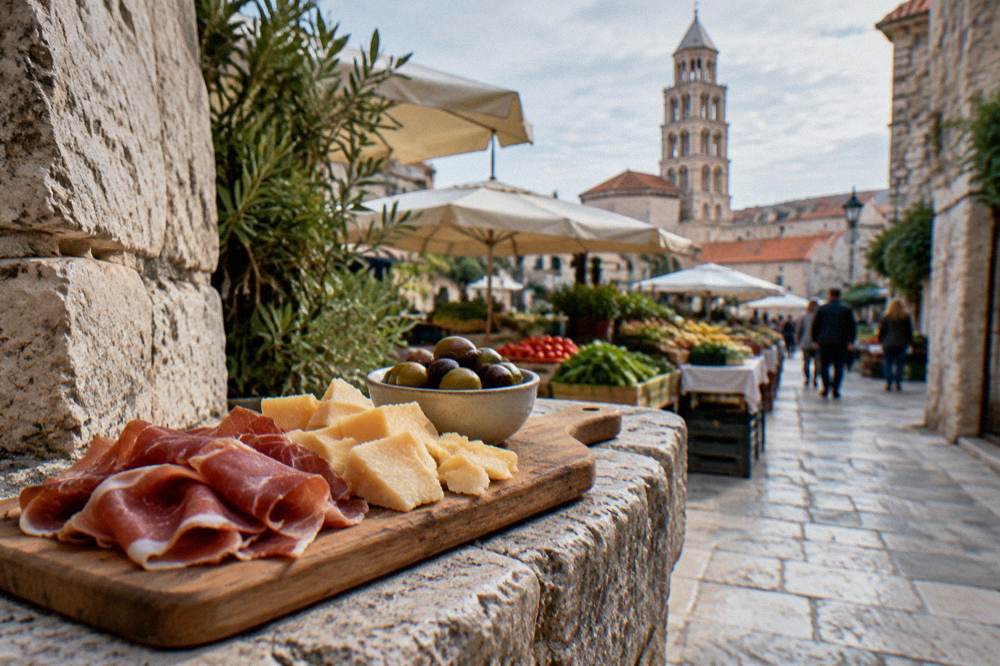
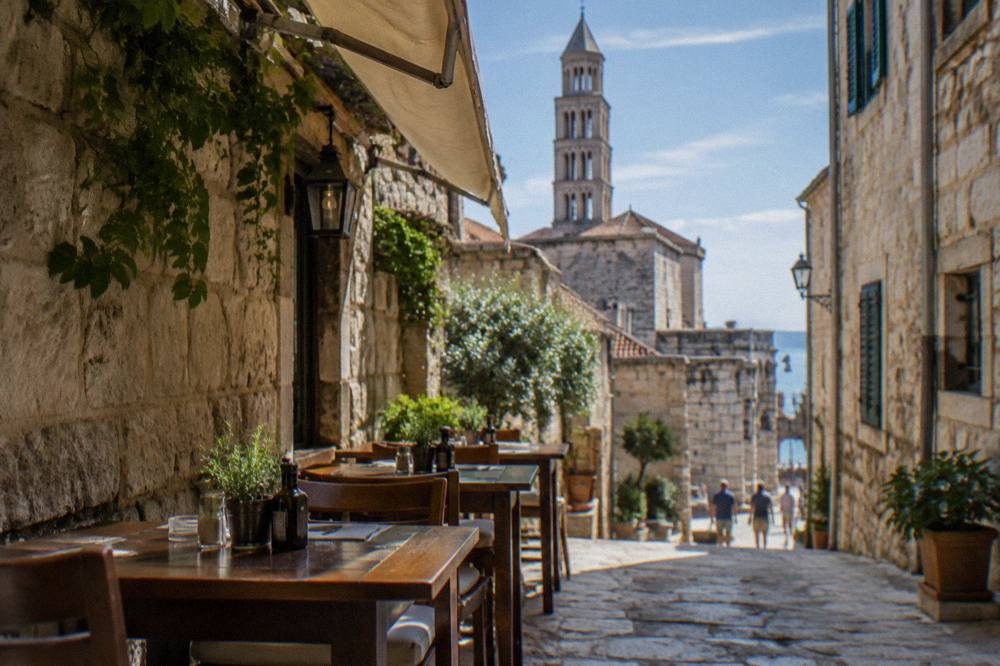
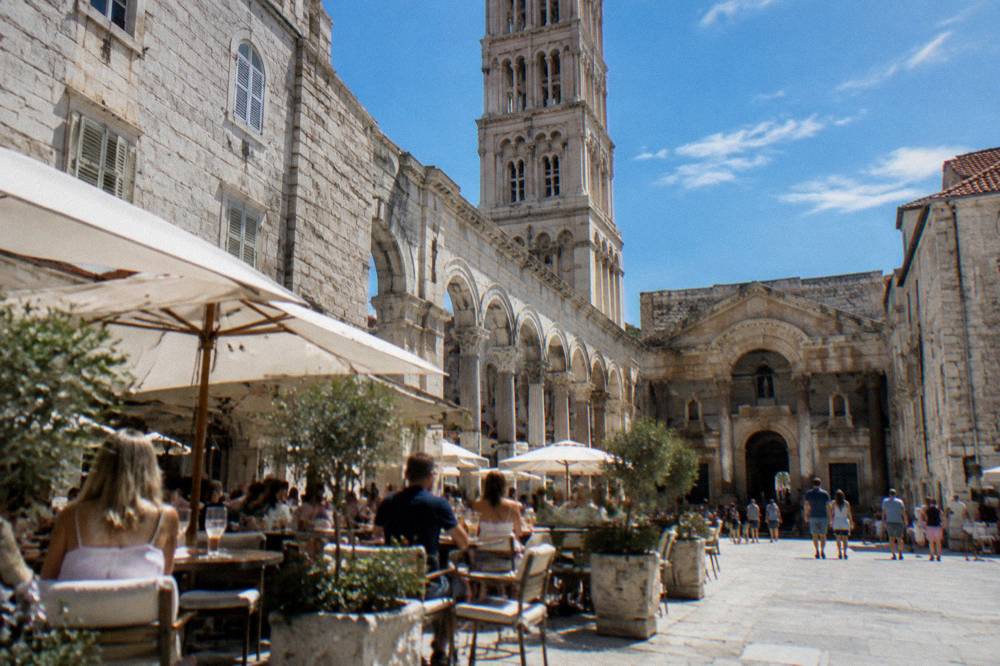
Inside the palace walls, dining happens among Roman walls still standing from a residence built c. 295 to 305 AD. The lanes are narrow, the stone radiates the day's heat after sunset, and the Peristyle square, free to enter at any hour, sits at the centre of it all. The green market and the fish market sit just outside the walls on the east side, which is why the kitchens here run on the morning catch. For a fuller picture of the produce side, read the companion guide to Split food and Dalmatian cooking.
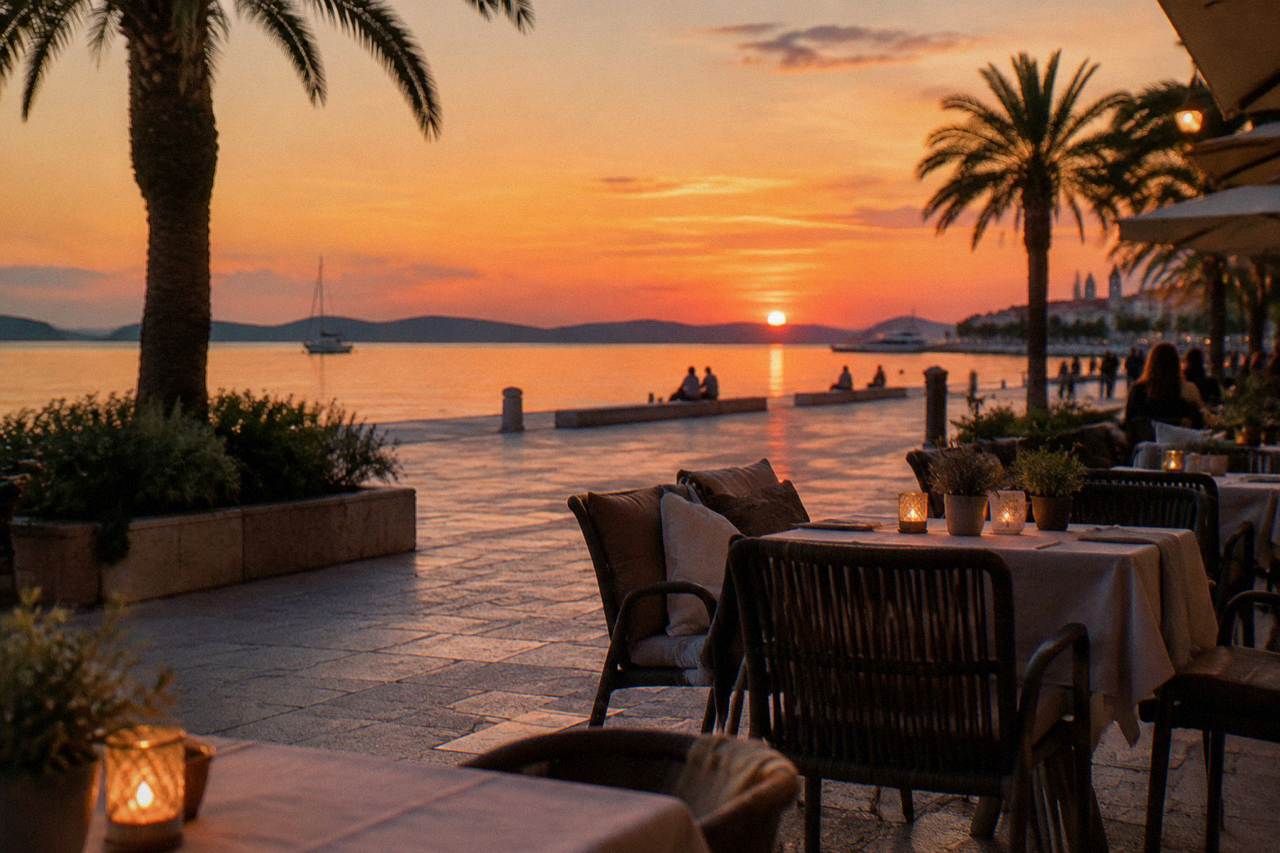
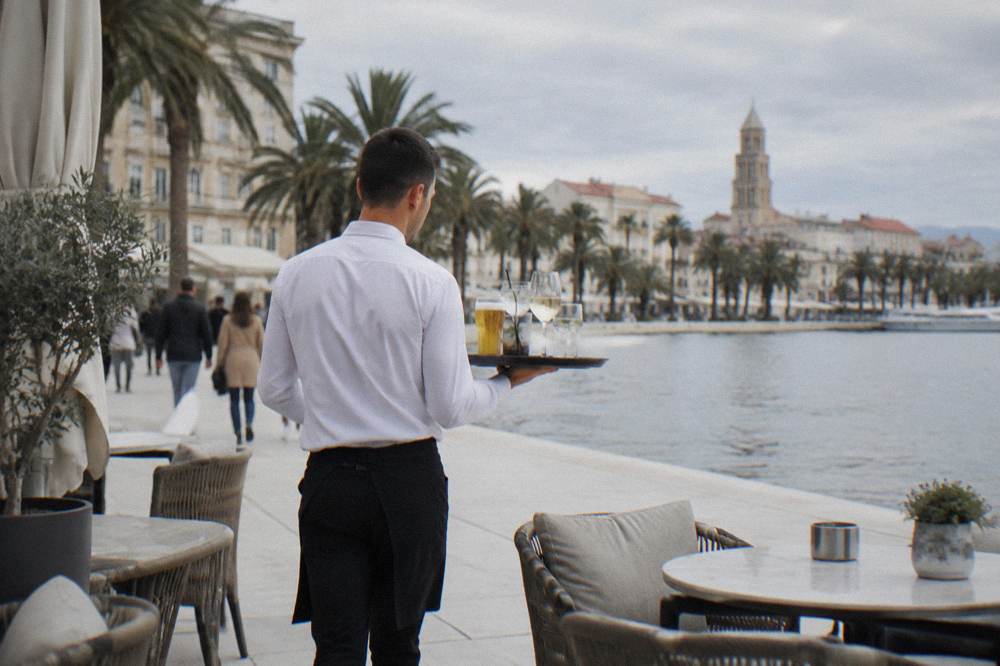
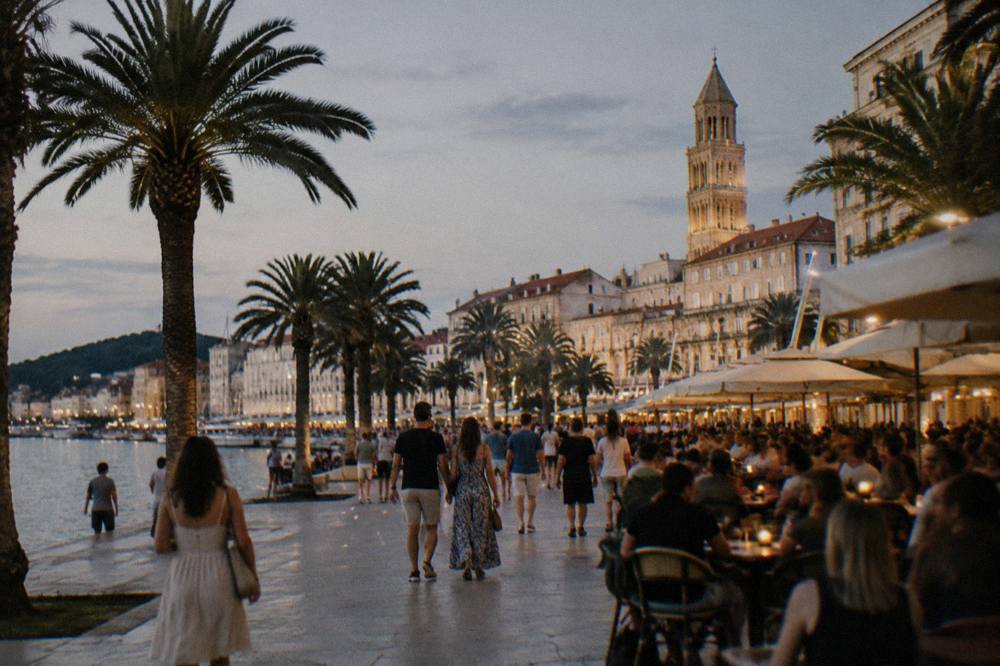
The Riva is the palm-lined promenade between the palace and the sea, and its terraces face the water and the islands. One planning note: the central section of the Riva is scheduled for renovation works from November 2026, expected to last a little over a year, so partial closures along the waterfront are expected through 2027. Veli Varoš, the old fishermen's quarter at the foot of Marjan, holds smaller konobas, the family-run taverns that anchor Dalmatian cooking, in lanes a few minutes' walk from the crowds.
| Eating zone | Character | Distance from the palace |
|---|---|---|
| Palace lanes and Peristyle | Stone-set tables among Roman walls | 0 m, it is the palace |
| Riva waterfront | Sea-facing terraces and cafés | Immediate, along the southern wall |
| Veli Varoš | Old fishing quarter, smaller konobas | A few minutes' walk west |
| Bačvice and Žnjan | Beach café strips, casual | East and south-east along the coast |
What Should You Order At A Konoba In Split?
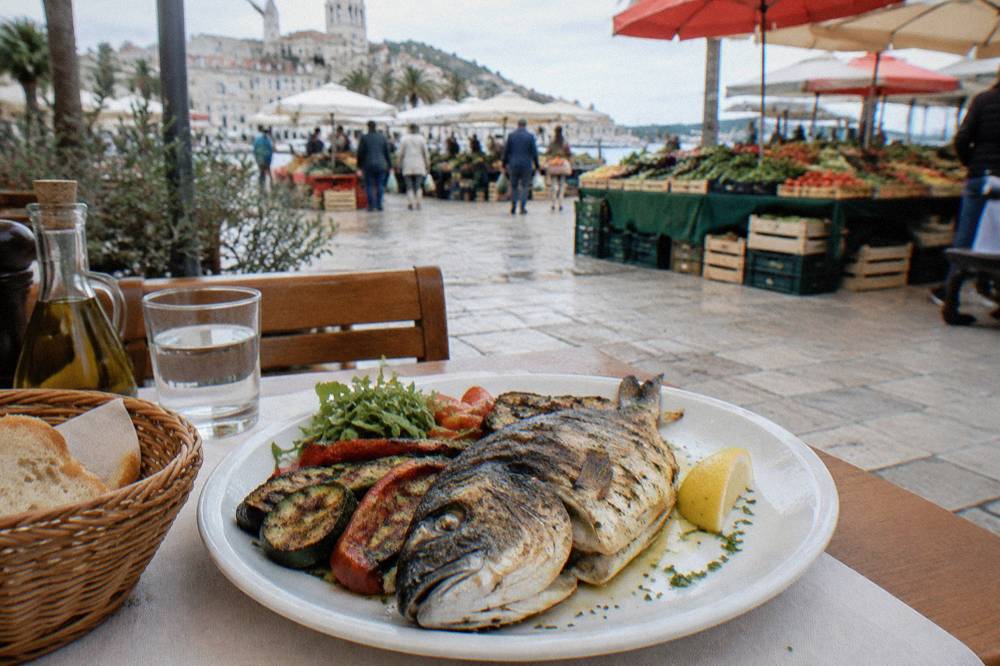
Order what the Dalmatian coast does best: fresh fish and shellfish priced by the kilo, peka, which is meat or octopus slow-cooked under a domed bell in embers, grilled lamb, black cuttlefish risotto, pašticada, a beef dish braised in wine, and simple sides of chard, potatoes and olive oil, with local wine by the litre. Peka usually must be ordered hours ahead or the day before, because of its long cooking time.
The konoba menu is short by design, and that is a good sign rather than a limitation. Fish is displayed and weighed, and the honest way to order it is to ask the price per kilo before choosing, then let the kitchen grill it simply over olive oil, salt and rosemary. The same discipline applies to the bill: an itemised account, with the fish weight written down, is standard practice and the check every visitor can make. A cover charge, if there is one, belongs on the printed menu; if it is not printed, ask before ordering.
Two drinks to know. Local wines lean towards white plavac-style reds and pošip-type whites from the islands and the hinterland, commonly ordered by the litre carafe at family places. Rakija, the fruit brandy, arrives as a welcome or a digestif, and no visitor is obliged to finish one. For the produce that feeds these kitchens, the green market guide walks through what stalls carry through the year.
How Do Restaurant Prices And Bills Work In Split?
Croatia uses the euro, since 1 January 2023, and a Split restaurant bill follows a few fixed rules: fish and shellfish are priced per kilo and weighed, a cover charge appears only if it is printed on the menu, service is included in the listed prices, and the account should arrive itemised. The honest checks are all visible before ordering: read the posted menu outside, ask the fish price per kilo and confirm the cover charge.
Posted menus outside the door are the first document to read, because everything a kitchen charges for should appear on them. When the bill arrives, it should list each dish, the weight of anything sold by the kilo, and the drinks. Card payment is normal across the city; a small cash float is still useful for market stalls and the smallest konobas. Tipping is voluntary, with rounding up the common habit rather than a fixed percentage.
Is It Cheaper To Eat Outside The Old Town Of Split?
Yes, as a general pattern: tables inside Diocletian's Palace and on the front row of the Riva carry the premium for setting, while konobas in Veli Varoš, around the Peškarija market streets and in the wider Dobri and Manuš quarters run on local custom and simpler pricing. The walk out of the core takes minutes, and the same ingredients from the same morning market land on the plate for less.
The trade-off is atmosphere, not quality. A table under Roman walls or facing the open Adriatic is part of what a visitor comes to Split for, and one memorable dinner in the core is worth budgeting for. The rest of the week belongs to the quarters where Split feeds itself: the streets behind the fish market, the lanes below Marjan, and the everyday grill houses a short walk east. Visitors staying longer can balance both, and the where to stay in Split guide maps which neighbourhoods put which tables on the doorstep.
For visitors pairing a food evening with a guided introduction to the city, a walking tour of the palace and the Old Town finishes close to the dinner zones, and the palace walking tour page covers what the walk includes.
Can You Turn Dinner Into A Full Food Day In Split?
Yes, easily, because Split compresses a full food day into a walkable circuit: the green market and fish market in the morning, a konoba lunch in Veli Varoš or by the market streets, an afternoon coffee on the Riva, and a long dinner back inside the palace walls. A guided food tour strings the same circuit together with tastings, and the market-to-table story is the city's own.
A food tour suits the first evening in particular, because it doubles as an orientation to the lanes where every later dinner will happen. The listing for the Split food tour describes the stops and the tastings covered, and Check availability for the dates of your visit.
To taste your way through the lanes with a guide, book a guided food tour here.
What Are The Drinking And Street Rules Around Split Restaurants?
Drinking in the street in Split's historic centre is fined, with the public-order rules setting 300 EUR for consuming alcohol in public in the historic core or within 100 m of schools, and licensed terraces are the legal place to drink. From 1 June to 15 September 2026, shops in the city could not sell alcohol at night, a seasonal rule set to repeat from 1 June 2027 unless changed, so late bottles come from bars, not supermarkets.
The full list of public-order fines worth knowing before a big night out is short and published by the city: 300 EUR for public drinking in the historic centre, 300 EUR for urinating, vomiting, climbing on monuments or bathing in fountains, 150 EUR for sleeping in public spaces and 300 EUR for taxi touting. Walking in swimwear or shirtless in the historic centre is also an offence with a locally set fine; leave the beachwear at the beach and the drinking on the terrace.
| Offence in the public-order rules | Fine |
|---|---|
| Consuming alcohol in public, historic centre or near schools | 300 EUR |
| Urinating in public | 300 EUR |
| Climbing on monuments or bathing in fountains | 300 EUR |
| Vomiting in public | 300 EUR |
| Sleeping in public spaces | 150 EUR |
| Taxi touting | 300 EUR |
When Is Terrace Season In Split?
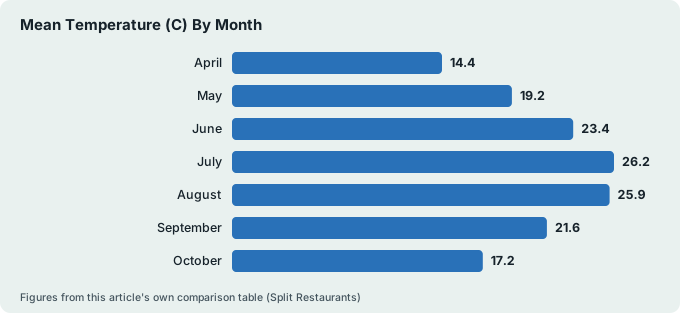
Terrace season runs roughly from April to October, guided by the DHMZ Split Marjan station table for 1948 to 2024: mean temperatures rise from 14.4 C in April to 26.2 C in July, with July the driest month at 26.6 mm of rain and 353.3 hours of sunshine, while November is the wettest month at 115.5 mm. Evening dining outdoors is comfortable from late spring, and 18 days at 30 C or more in July say something about lunch habits in high summer.
The table below carries the station's own monthly figures, the same numbers that decide whether a konoba sets tables in the lane or pulls them inside. September and October are the quiet terrace months locals argue for: the sea is still warm from summer, the cruise and festival crowds thin, and the first rains, 70.9 mm in September and 77 mm in October, arrive mostly outside dinner hours. The full monthly picture sits in the Split weather guide, and the timing trade-offs are covered in the best time to visit Split.
| Month | Mean temperature (C) | Precipitation (mm) | Terrace verdict |
|---|---|---|---|
| April | 14.4 | 62.0 | Lunch outside, dinner with a layer |
| May | 19.2 | 57.5 | Full terrace season begins |
| June | 23.4 | 49.0 | Evening peak, book ahead |
| July | 26.2 | 26.6 | Warmest and driest, 353.3 sunshine hours |
| August | 25.9 | 41.3 | Peak, late dinners |
| September | 21.6 | 70.9 | Locals' favourite |
| October | 17.2 | 77.0 | Midday terraces, heaters appear |
Can You Pair A Split Dinner With An Island Lunch Trip?
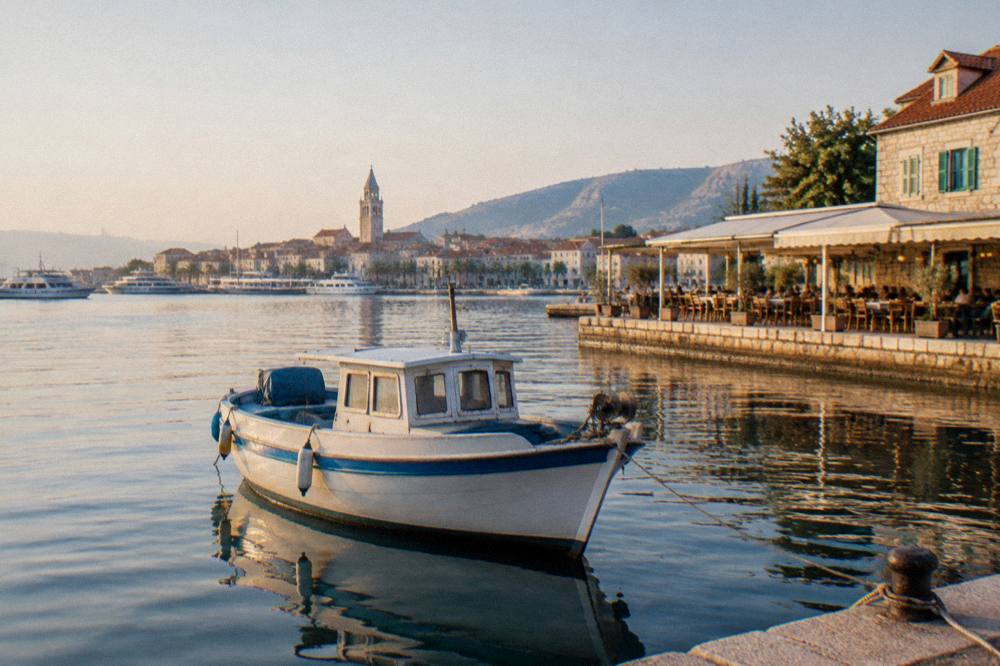
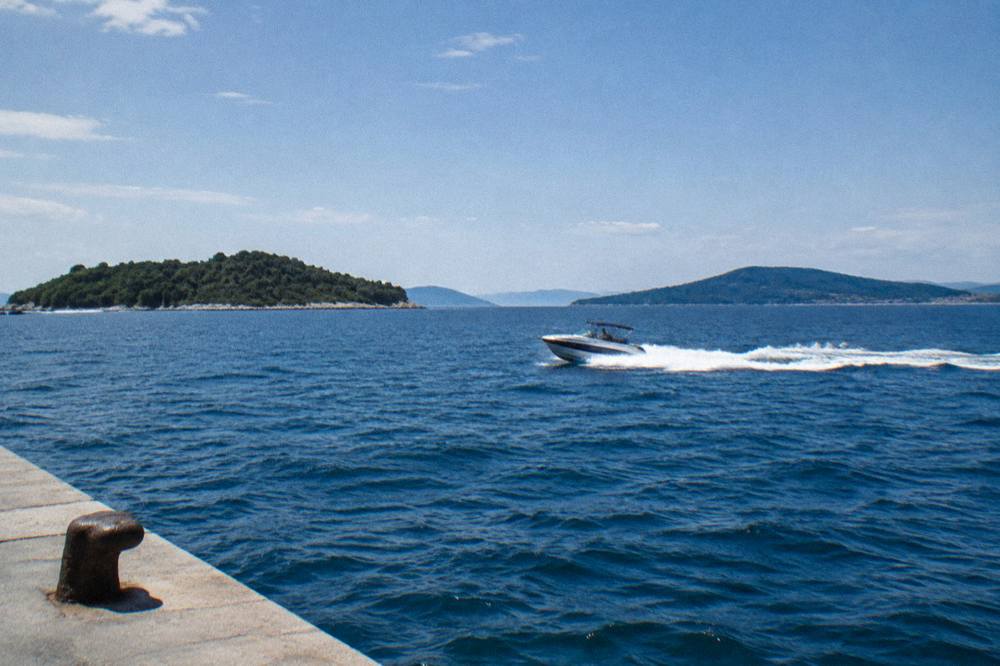
Yes, and it is the classic Split week: a boat trip to the islands with lunch on board or ashore, back to port by early evening, and dinner in the palace lanes a ten minute walk from where the boat docks. The ferry port sits 500 to 600 m from Diocletian's Palace, so every island crossing starts and ends within walking distance of the restaurant zones.
A foot passenger to Stari Grad on Hvar pays 5.90 EUR off-season or 8.40 EUR in season on line 635, catamarans to Hvar town or Jelsa cost 6.40 EUR low season or 10.00 EUR high season, and the Vis catamaran is 7.20 or 10.00 EUR. The crossing times matter for the appetite: Stari Grad is about 120 minutes, Supetar on Brač about 50, Rogač on Šolta about 60 and Vis about 140.
| Island route from Split | Crossing time | Foot passenger fare |
|---|---|---|
| Stari Grad, Hvar (ferry line 635) | about 120 min | 5.90 EUR off season, 8.40 EUR in season |
| Hvar town or Jelsa (catamaran) | fast crossing | 6.40 EUR low, 10.00 EUR high season |
| Supetar, Brač (ferry line 631) | about 50 min | on the operator's price list |
| Rogač, Šolta (ferry line 636) | about 60 min | on the operator's price list |
| Vis (ferry) | about 140 min | 7.20 to 10.00 EUR by season on catamarans; ferry fare on the operator's list |
The organised alternative bundles the lunch. A full-day island cruise covers Hvar, the Pakleni islands, Brač and Šolta with food and drink on board, which turns the day into one long Dalmatian meal on the water and still docks within walking distance of dinner. The all-inclusive Hvar and Brač tour page lists the stops and what is included, and Check availability for your dates.
For the self-planned versions, the ferries from Split guide and the Split to Hvar ferry guide carry the detail on timetables and tickets.
What About Evenings Beyond Dinner In Split?
Split's evening runs long after the plates are cleared: café terraces on the Riva, bars in the stone lanes around the Prokurative square, nightlife around Bačvice, and, on the summer calendar, the Roman guard change on the Peristyle at noon and the Split Summer Festival's programme of opera, ballet and drama at venues including the Peristyle. Dining late and wandering after is the local rhythm, not an exception to it.
Two calendars shape a food-focused visit. The 72nd Split Summer Festival ran 14 July to 14 August 2026, with performances in the open air minutes from the restaurant lanes, and the 2027 edition had not been announced. From late November, Advent in Split, 27 November 2026 to 7 January 2027, brings seasonal stalls and the ice rink at Đardin, which shifts the evening economy to hot food and mulled wine stands. The Split nightlife guide maps where the evenings go after dinner.
What Day Trips Pair Best With A Split Restaurant Week?
The big day trips all leave from the same hub by the port and return in time for dinner: Krka National Park with its boat cruise and swimming, the walled towns of Trogir and Klis Fortress, and the speedboat runs to the Blue Lagoon. Krka is 74 minutes' drive from the palace and Trogir 36, so a long lunch ashore or a picnic in the park slides into an evening back in the city without strain.
The trio below covers the three most-booked versions of that pattern: an island day with everything included, a zip line adventure above the Cetina canyon near Omiš, 38 minutes' drive away, and a half-day three-island speedboat trip that still leaves the evening free. Each docks or returns close enough to the centre that the dinner reservation survives.
The wider menu of options, from Krka's waterfalls to the Blue Cave, is laid out in the Split day trips guide and the Split boat tours guide.
Common Questions About Split Restaurants
Is It Expensive To Eat In Split?
Split spans the full range: palace-square and Riva-front tables carry a setting premium, konobas in Veli Varoš and the market quarters run simpler, and the fish counter decides the biggest variable, since fish is priced per kilo. Read the posted menu, ask the fish price and check the itemised bill; nothing on the plate should ever be a surprise.
Do I Need To Book Restaurants In Split In Summer?
In July and August, yes, for dinner anywhere inside the palace walls or on the Riva front row, and always for peka, which kitchens start hours ahead and often need ordering the day before. Off-season, walk-ins work almost everywhere.
Can You Drink Alcohol In Public In Split?
No. The public-order rules set a 300 EUR fine for consuming alcohol in public in the historic centre or within 100 m of schools. Drinking belongs on licensed terraces, and in summer, shops in the city cannot sell alcohol at night under a seasonal rule that repeats from 1 June 2027.
What Is A Konoba?
A konoba is a Dalmatian tavern, traditionally a stone room with family cooking: grilled fish by the kilo, peka from under the bell, local wine by the carafe. In Split, the densest cluster sits in Veli Varoš at the foot of Marjan.
Is Tap Water Safe In Split Restaurants?
Croatian tap water is potable and served on request in restaurants, so ordering tap water with a meal is normal and accepted. Bottled still and sparkling water is also standard on every table.
Which Split Restaurants Are Near The Cruise Port?
The cruise and ferry berths sit on Obala kneza Domagoja, 500 to 600 m from the palace, so the entire restaurant core, the Riva terraces and the palace lanes are a short flat walk from the gangway. The details are mapped in the guide to walking in from the port at things to do in Split.
A dinner in Split rarely ends at the table: it drifts to a terrace coffee, a walk past the floodlit Peristyle or a last look at the water from the Riva. Pick the quarter that matches the evening, order the fish and the peka with a little foresight, keep the drinking on the terraces, and the city's kitchen does the rest.