Meje Split
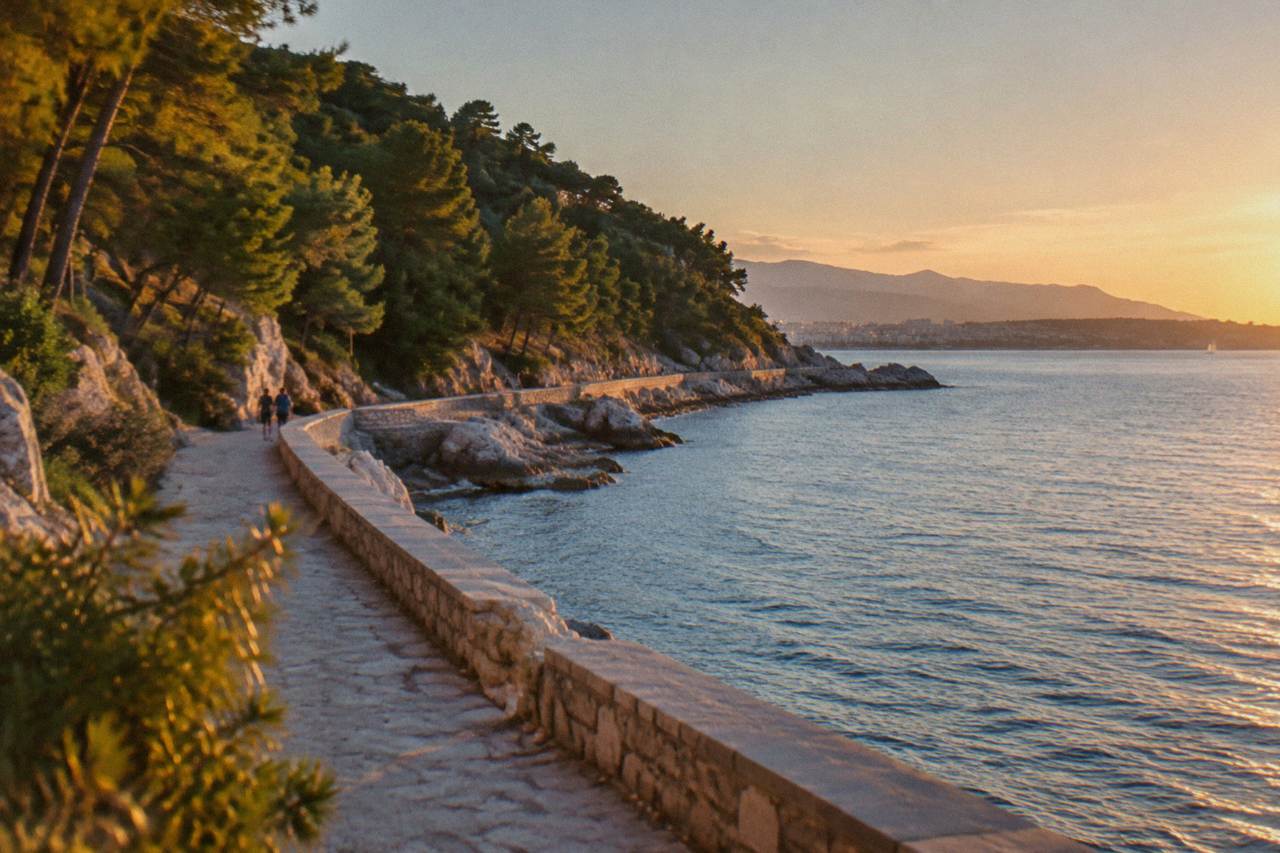
Meje is the coastal district that wraps around the southern foot of the Marjan peninsula in Split, Dalmatia, a strip of villas, pine shade and stone beaches that runs from the western edge of the Old Town to Kašjuni bay.
Short answer
Meje is the quiet residential and museum quarter along the sea below Marjan Hill, five to ten minutes on foot from Diocletian's Palace, holding the Meštrović Gallery, Ježinac and Kašjuni beaches and the start of the Marjan stairways.
Meje is the coastal district at the southern foot of the Marjan peninsula in Split, the second-largest city in Croatia, lying along the Adriatic Sea in central Dalmatia. It begins at the western edge of the Old Town, where the Riva promenade gives way to a quieter stretch of seaside path, and runs west past villas, museums and pine-shaded coves toward Kašjuni bay. Where the palace core is dense and loud, Meje is the address locals give when they mean the calm side of the city, close enough to walk everywhere from and far enough that the evening noise stops at its eastern boundary.

The district earns its place on a Split itinerary for three reasons. First, geography: Meje sits between two of the city's free landmarks, the Riva on one end and Marjan Hill park forest on the other, so it is the natural walking route between them. Second, art: the Meštrović Gallery, the city's signature museum of sculpture, reopened in April 2026 after a fifteen-month energy renovation and stands on the Meje seafront. Third, swimming: the stone beaches of Ježinac, Kašjuni and the small coves along the way hold clearer water than the sandy city bay at Bačvice, and the whole set is free to enter.
Where Is Meje In Split, And What Bounds The District?
Meje is the seafront district on the south side of the Marjan peninsula in Split, running west from the West Gate end of the Old Town and the Prokurative square toward Kašjuni bay at the peninsula's southwestern foot. Its northern boundary is the Marjan park forest, its southern boundary is the Adriatic, and its eastern edge sits about ten minutes on foot from Diocletian's Palace. The name covers both the older villa quarter at the foot of Marjan and the stretch locals sometimes split further into Meje proper and the Kašjuni side.
Marjan itself is the anchor. The park forest peninsula measures 3.5 km long and 1.5 km wide, with its highest point Telegrin at 178 m, and the official Marjan society counts 819 steps from Trumbićeva obala on the Meje side up to the summit. That stairway entrance is one of the district's defining features: a walk that starts on a seaside street and ends at a hilltop viewpoint. The neighboring district to the east is the historic core around Diocletian's Palace, and the fishing-village lanes of Veli Varoš sit just inland, between Meje and the palace.
| Boundary | What Marks It |
|---|---|
| East | West Gate end of the Old Town, Prokurative square, the Riva's western end |
| South | The Adriatic Sea, with the seaside walk from Ježinac to Kašjuni |
| West | Kašjuni bay and the road over to the Marjan lighthouse side |
| North | The slopes of Marjan park forest and the 819-step Telegrin stairway from Trumbićeva obala |
Practically, Meje works as a walking corridor. Anyone going from the palace to the top of Marjan passes through it, and anyone heading to the Meštrović Gallery or Kašjuni beach walks its full length. The whole district is flat along the sea and steep only where it climbs the hill.
What Are The Best Things To Do On The Meje Side Of Split?
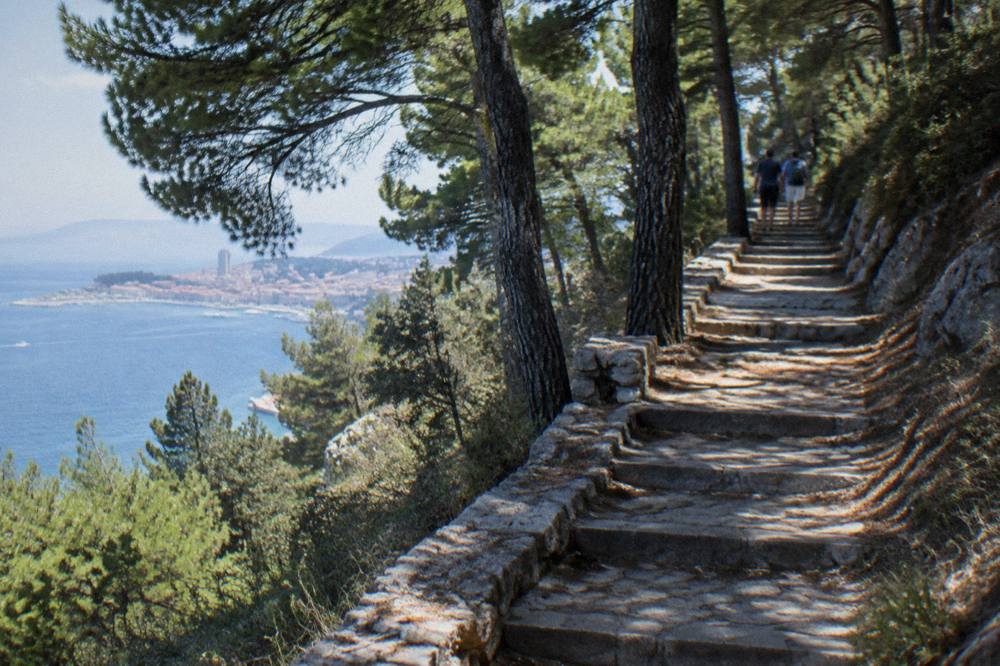
The best things to do in Meje are the Meštrović Gallery at 12.00 EUR for adults, the free stone beaches at Ježinac and Kašjuni, the seaside walk west from the Riva, the climb up the 819 Marjan steps to Telegrin at 178 m, and the small coves tucked under the pines along the way. Everything on that list except the gallery is free, and all of it sits within a walk of roughly fifteen to twenty minutes end to end.
The gallery is the anchor attraction. The Meštrović Gallery occupies the house that the sculptor Ivan Meštrović built for himself on the Meje shore, and its collection of his sculpture fills the rooms and garden. Its own price list gives the 2026 adult ticket at 12.00 EUR, reduced at 8.00 EUR and a family ticket at 20.00 EUR, and the ticket also covers Crikvine-Kaštilac, his second estate a short way along the coast at Kastelet. The gallery reopened on 20 April 2026 after a fifteen-month energy renovation that renewed the roof, windows, heating and cooling, and its exhibition on the house itself, its life and art, ran into October 2026. Anyone planning the visit should check the gallery's own site for current exhibitions and hours.
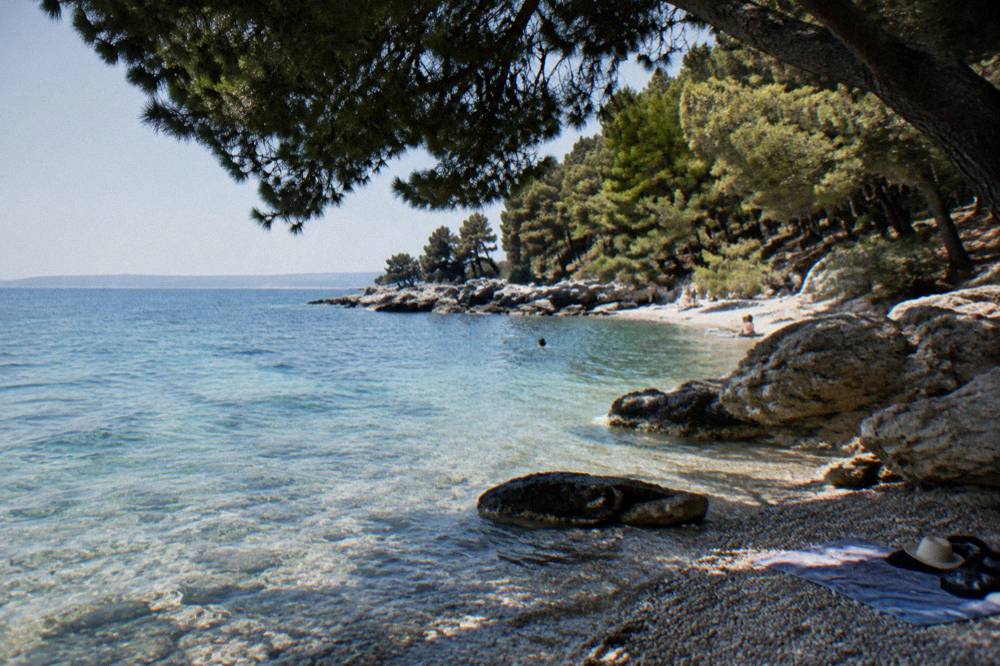
The beaches come next. Ježinac and Kašjuni are stone-and-concrete bathing spots under the pines, with flat rocks for towels and ladder entries into deep, clear water. Neither charges entry, and the whole Meje shoreline faces open sea rather than a city bay, which is why the water here reads clearer than at Bačvice beach on the other side of the centre. There is no Blue Flag claim to make for any Split beach for 2026, so judge the water on the day and swim where others swim.
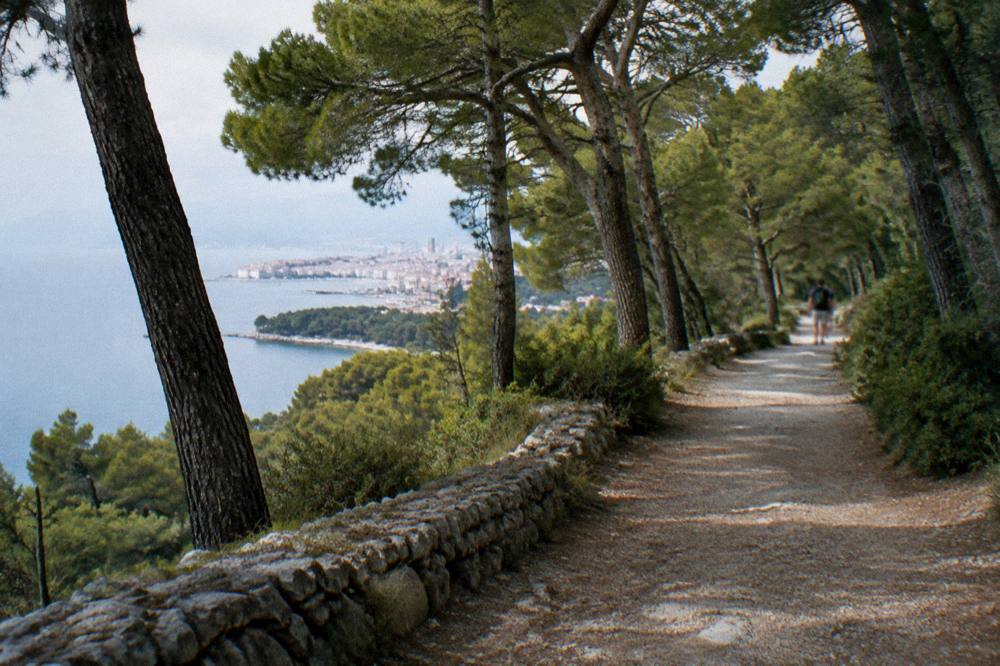
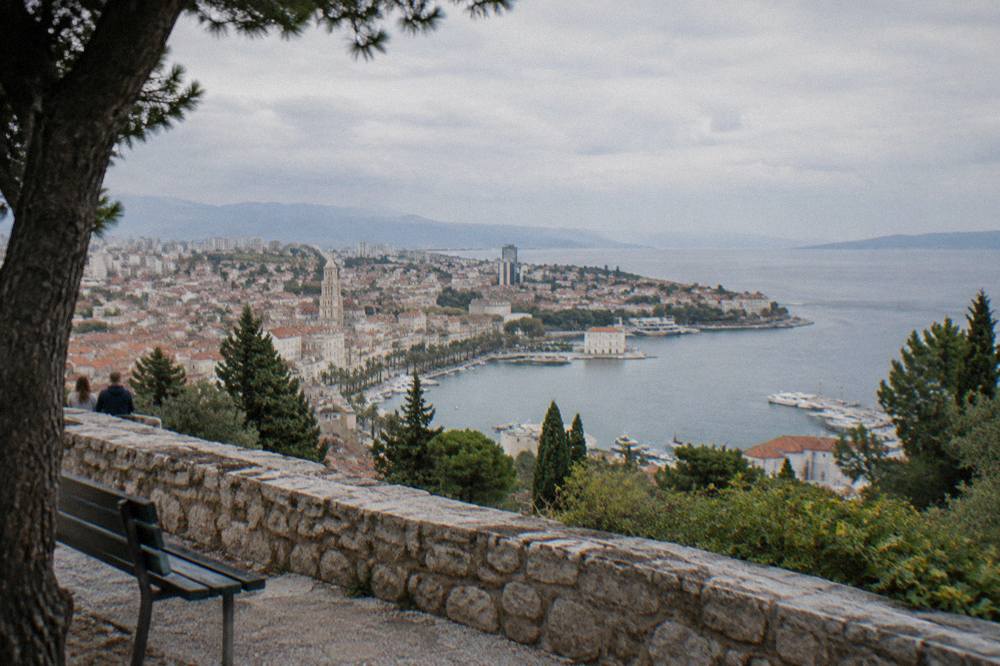
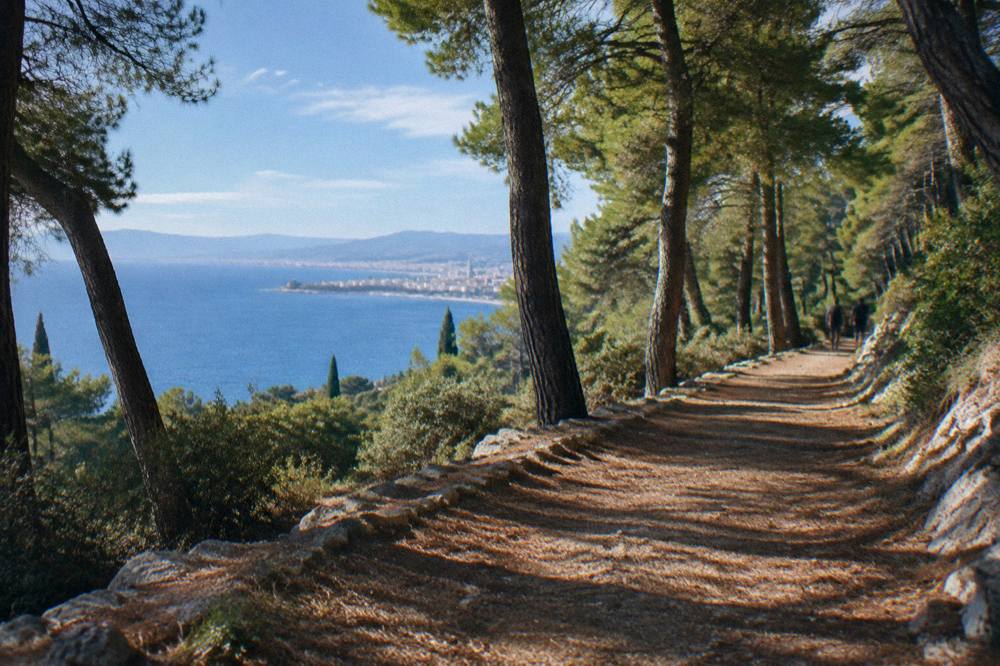
Then there is the hill. The Marjan stairway from Trumbićeva obala is the classic route up, and the payoff at Telegrin is a view over the whole of Split, the islands of Brač, Šolta and Hvar, and the open Adriatic. For a fuller picture of the park forest, the Marjan Hill guide covers the trails, the viewpoints and the churches scattered through the pines.
Is Meje A Good Area To Stay In For A Split Trip?
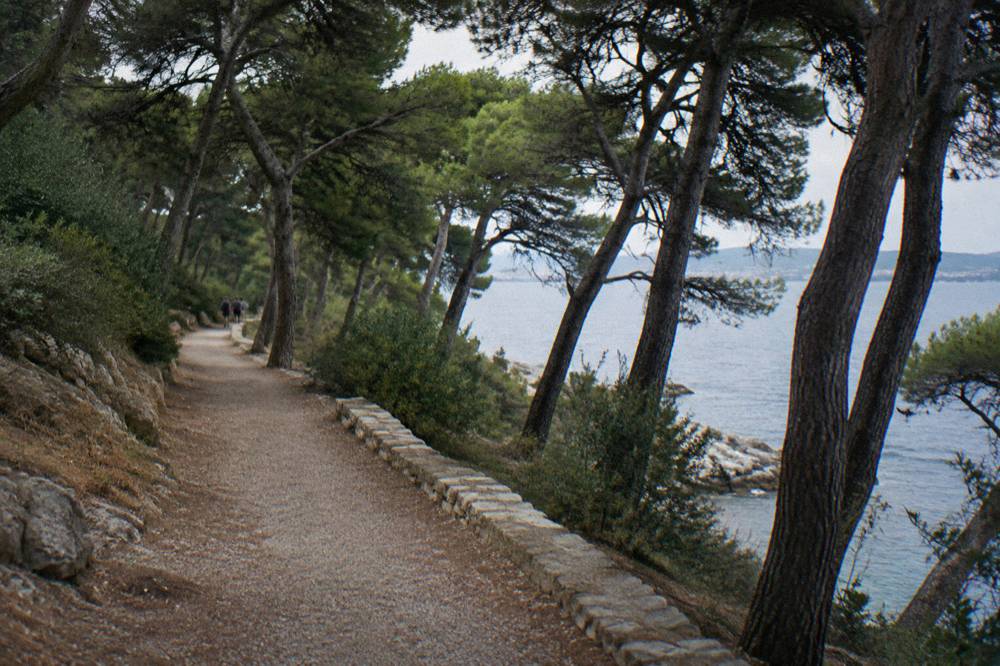
Meje is a good area to stay in for travellers who want walking access to the Old Town with a quieter, more residential base, because its eastern edge sits about ten minutes on foot from Diocletian's Palace while its streets hold villas, apartment buildings and pine cover rather than bars. It suits swimmers, families and anyone whose priority is sleeping well and still reaching the palace, the Riva and the ferry port on foot.
The trade-off is straightforward. Meje has fewer restaurants and essentially no nightlife of its own, so evenings end with a walk back from the centre. Accommodation here is a mix of older villas and apartments, and one constraint matters for the historic core next door rather than for Meje itself: a moratorium on new short-term rental registrations inside the UNESCO palace area has been extended through 2026, which pushes visitor demand for legal apartment stays into exactly the districts like Meje and Veli Varoš that ring the core. Book early for July and August.
For comparison shopping, the where to stay overview on this site breaks down every district, and the itinerary pages show how each base plays out in practice: the one day in Split plan stays inside the centre, while the three days in Split plan leans on a Meje-style base with beach days built in.
| Split Area | Character | Best For |
|---|---|---|
| Meje | Quiet seafront villas, museums, stone beaches | Swimmers, couples, families, quiet sleepers |
| Old Town | Palace core, dense, lively late | First-time visitors, short stays |
| Bačvice and Firule | Sandy city bay east of the centre | Beach-first stays with children |
| Žnjan | Concrete plateaus east of the port | Urban beach clubs, sunrise side |
| Stobreč | Former fishing village at the city edge | Quiet stays away from the centre |
How Do You Walk From The Palace Through Meje To Marjan?
The walk runs from the Peristyle inside Diocletian's Palace west through the Iron Gate, across the Prokurative square, past the West Gate and along the seafront to the Marjan stairway at Trumbićeva obala, a stretch of roughly ten minutes, then up the 819 steps to Telegrin at 178 m. The flat part passes the Mestrović-set seafront; the steep part is the stairway itself, so carry water in summer.
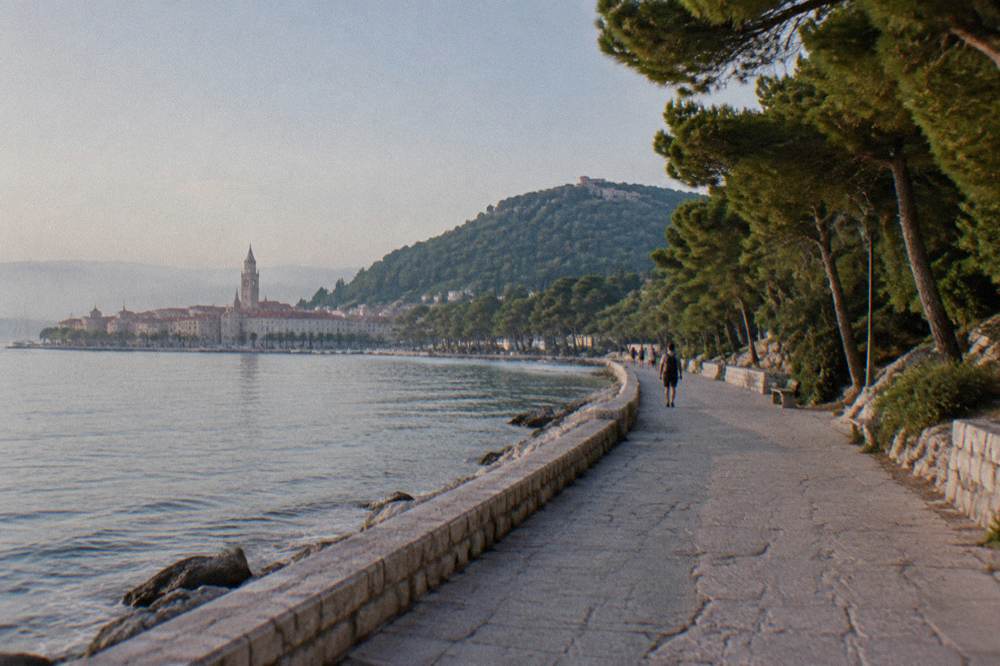
Start at the Peristyle, the palace's central courtyard, and leave through the western gate, where the statue of Grgur Ninski stands outside. The Prokurative, the neoclassical square of arcades facing the sea, comes next, then the Riva promenade's western end and the start of Meje proper. The seaside path continues past Ježinac and the gallery grounds, with the sea on the left and villas on the right, until the marked stairway climbs into the pines.
The stairway is real exercise. The Marjan society's own figures give those 819 steps from Trumbićeva obala to the top, and the route is stepped, shaded and steady rather than scrambling. In July, the DHMZ Split-Marjan station table shows 18 days at 30 C or more, so the sane climbing hours are before 10:00 or after 17:00. At the summit, the view opens across the channel to the islands, and the descent can loop either back into Meje or down the northern side toward the Poljud stadium quarter.
What Does The Meštrović Gallery Cost, And What Does The Ticket Include?
The Meštrović Gallery's 2026 adult ticket is 12.00 EUR, with a reduced ticket at 8.00 EUR and a family ticket at 20.00 EUR, and the ticket includes entry to Crikvine-Kaštilac, the sculptor's second Split estate further along the coast, according to the gallery's own price list. The gallery's house and garden stand directly on the Meje seafront, so the visit pairs naturally with the beach walk.
The collection holds Meštrović's sculpture in stone, bronze and wood, set through the rooms of the house he designed and lived in, with large works standing in the garden facing the sea. The renovation that closed the building for fifteen months renewed its roof, windows and climate systems and added solar, and the reopening exhibition mapped the house as a living space and a work of art in itself. Because exhibition schedules change, the gallery's own site is the place to confirm what is on the walls before a visit. Other pages covering the same trip are gathered on Split Croatia Travel Guide.
Crikvine-Kaštilac, included on the same ticket, holds the chapel and the large wooden crucifixion cycle in a fortified estate a short drive or a longer walk west. Split marks its museum quarter lightly: the Archaeological Museum at 8 EUR and the combined ticket with ancient Salona at 10 EUR within seven days, the Ethnographic Museum at 7.00 EUR and the Split City Museum at 10.00 EUR all sit on the other side of the centre, which makes the Meštrović Gallery the single major museum inside Meje itself. The wider Split museums guide compares them all.
| Museum | 2026 Adult Ticket | Included |
|---|---|---|
| Meštrović Gallery, Meje | 12.00 EUR | Crikvine-Kaštilac on the same ticket |
| Split City Museum, Papalić Palace | 10.00 EUR | Museum collections, closed Mondays |
| Archaeological Museum | 8 EUR | 10 EUR combined with Salona within 7 days |
| Ethnographic Museum | 7.00 EUR | Vestibule entry at 2.00 EUR listed separately |
| Diocletian's Palace cellars | Run by the City Museum, 8:30 to 20:00 daily | Central part under restoration to end of 2026, passage open |
After the gallery, the sea is a two-minute walk away, and a morning of sculpture converts easily into an afternoon on the rocks at Ježinac or Kašjuni before the walk back along the shore.
Fancy seeing that shoreline from the water instead? Book a half-day sea kayaking trip here.
Where Can You Swim In Meje, And How Does The Water Compare?
The swimming spots in Meje are Ježinac, Kašjuni bay and the small rocky coves between them, all free to enter, all with ladder or rock entry into deep, clear water, and all facing the open channel rather than a city bay. Kašjuni, at the southwestern foot of Marjan, is the largest and the best known of the set; Ježinac is closer to the centre and quieter in the mornings.
These are stone beaches, not sand. That means water shoes help on the rocks, the water drops away quickly, and the pine cover gives real shade through the middle of the day. No Split beach can be claimed as Blue Flag for 2026, so treat signage and water quality as things to check on the day. What the Meje shore does offer is geography: it faces south and west across open sea toward the islands, while the sandy city bay at Bačvice sits inside a shallow bowl next to the port, and that difference shows in the water's clarity on any calm day.
The swim season runs long. The DHMZ Split-Marjan station records a July mean of 26.2 C and an August mean of 25.9 C over its 1948 to 2024 period, with 17 days at 30 C or more in August, and September still averages 21.6 C. No official monthly sea-temperature normal exists for Split, so the honest check is the live reading the weather service publishes, or simply the swim test on arrival.
| Meje Swimming Spot | Entry Type | Character |
|---|---|---|
| Ježinac | Rocks and concrete platforms with ladders | Closest to the centre, quiet mornings |
| Kašjuni | Stone beach at the foot of Marjan | Largest of the set, pine shade, car access |
| Coves along the Marjan path | Flat rocks | Free, unofficial, best in calm weather |
What Rules Apply On Meje's Streets And Beaches?
Split's public-order rules apply across the historic core and its surroundings, with fines of 300 EUR for drinking alcohol in public in the historic centre, 300 EUR for urinating, climbing on monuments or bathing in fountains, and 150 EUR for sleeping in public spaces, under the city decision published on the official tourism site. Walking in swimwear or shirtless in the historic centre is also fined; the amount for that offence is set locally and should be confirmed on site.
The practical reading for Meje is simple: swimwear belongs at the beach, and the walk back through the Old Town in a wet costume risks a fine of an amount the city sets itself. A cover-up costs nothing. The same rules govern noise and public behaviour, which is one reason Meje stays quiet after dark while the palace core does not.
Two further rules matter near Meje. Drones may not fly over the Split old town or the airport zone, and drones are banned in national parks, so aerial filming of Marjan from the Meje side is off the table without checking the current national rules. And from June to September, shops inside the historic core, not bars or restaurants, are banned from selling alcohol at night under a seasonal city decision, a rule aimed at street drinking rather than at dinner.
How Does Meje Connect To Day Trips And The Islands?
Meje sits about ten minutes on foot from the ferry port at Obala kneza Domagoja, where the car ferries and catamarans for Hvar, Brač, Šolta and Vis leave, and the main bus station and railway station stand on the same quay, so the district is ideally placed for every island and park day trip from Split. The walk from Kašjuni to the port gate takes longer, roughly half an hour along the seafront, but from the eastern end of Meje the port is close.
The island arithmetic matters when choosing a base. Jadrolinija's route pages give the Stari Grad car ferry on line 635 at about 120 minutes, the Supetar ferry on line 631 at about 50 minutes, Šolta on line 636 at about 60 minutes and Vis at about 140 minutes. Catamarans reach Hvar town and Jelsa in under two hours. From 2026 the Supetar line runs without an off-season timetable, one of five such lines in Croatia, a change Jadrolinija made because island commuting and travel demand kept rising.
For park trips, the driving times from the palace run 74 minutes to Krka's Skradinski buk, 3 hours 15 to Plitvice, 36 minutes to Trogir and 38 minutes to Omiš, all free-flow figures. Meje adds only the initial walk across town. A boat day is the natural Meje pairing: the beach is already at the door, and the boats leave from a quay the same walk east. The Hvar, Brač and Pakleni islands cruise with lunch and drinks is this site's featured pick for the district, and its operator's live listing shows what the current season's price covers.
| Route From Split | Typical Sailing | Operator Page Figure |
|---|---|---|
| Stari Grad, Hvar, line 635 car ferry | About 120 minutes | Foot passenger 5.90 EUR off season, 8.40 EUR in season |
| Supetar, Brač, line 631 car ferry | About 50 minutes | No off-season timetable from 2026 |
| Rogač, Šolta, line 636 car ferry | About 60 minutes | Seasonal timetables apply |
| Vis, car ferry | About 140 minutes | Seasonal timetables apply |
| Catamaran to Hvar town or Jelsa | High-speed service | 6.40 EUR low season, 10.00 EUR high season |
When Is The Best Time Of Year For The Meje Side Of Split?
The best months for Meje are late May, June, September and early October, when the DHMZ Split-Marjan station records means of 19.2 C in May, 23.4 C in June and 21.6 C in September against July's 26.2 C, with far fewer crowds on Kašjuni and the Marjan stairway than in peak summer. July and August bring the season's full heat, 18 and 17 days at 30 C or more respectively, plus the festival and cruise crowds.
Shoulder-season water still holds swim temperature into October, and the district's walkability does not depend on season. November is the wettest month on the station table at 115.5 mm and July the driest at 26.6 mm, so a late-autumn visit trades beach days for empty galleries and low-season apartment availability. Winter has its own draw: Advent in Split runs from 27 November 2026 to 7 January 2027 with the ice rink at Đardin, a flat fifteen-minute walk from Meje's eastern edge, and the Split in winter guide covers the full cold-season picture.
For a first Split trip that mixes palace, hill and islands, the Split cruise port day plan and the two days in Split plan both route naturally through Meje on the palace-to-Marjan walk, which is the district's role in almost every itinerary: the beautiful corridor between the city's two free landmarks.
Common Questions About Meje Split
Is Meje Within Walking Distance Of Diocletian's Palace?
Yes. The eastern edge of Meje sits about ten minutes on foot from the palace walls, and the full walk from the Peristyle through Meje to the Marjan stairway at Trumbićeva obala takes roughly ten to fifteen minutes before the climb begins.
Which Beaches Are In Meje, Split?
Ježinac, Kašjuni bay and several small rocky coves along the Marjan path, all free to enter, with stone and rock entry into clear open-sea water rather than sand.
Is Kašjuni Beach Free?
Yes, entry to Kašjuni and the other Meje swimming spots costs nothing. The Meštrović Gallery nearby charges 12.00 EUR for adults, but the beaches themselves are free.
How Long Does It Take To Climb Marjan From Meje?
The official Marjan society figures give 819 steps from Trumbićeva obala on the Meje side to the summit at Telegrin, 178 m above the sea. Allow 30 to 45 minutes at an unhurried pace, with water in summer.
Are There Restaurants And Bars In Meje?
A few, mainly along the seafront and near the beaches, but the district is residential and quiet. The dense choice of restaurants sits in the Old Town and around the Split restaurants quarter east of Meje, a ten-minute walk away.
Can You Swim In Meje In October?
Many people do. The DHMZ Split-Marjan station gives an October mean of 17.2 C, and no official monthly sea-temperature normal exists for Split, so the reliable check is the live reading the weather service publishes on the day.
Meje rewards the traveller who wants Split's two free edges, the palace and the hill, joined by one quiet shoreline of pines, sculpture and clear water, and it asks for nothing more than a pair of walking shoes and a cover-up for the walk home.