Split Boat Party
Split has no single boat party venue: the party floats. Cruise boats, speedboats and catamarans leave from the Riva and the ferry port for swimming stops, drinks and music, and this guide lays out what exists, what it costs to get on the water, and what the city rules say about drinking while you are there.
Short answer
Boat parties in Split run as organised cruises and speedboat trips departing from the waterfront, typically from May to September, with swimming stops at the Blue Lagoon and islands such as Šolta, Brač and Hvar. There is no floating nightclub in the city itself, the public drinking rules in the historic centre carry a 300 EUR fine, and the port handled 6.05 million passengers in 2025, so booking ahead for a seat on a party cruise in peak summer matters.
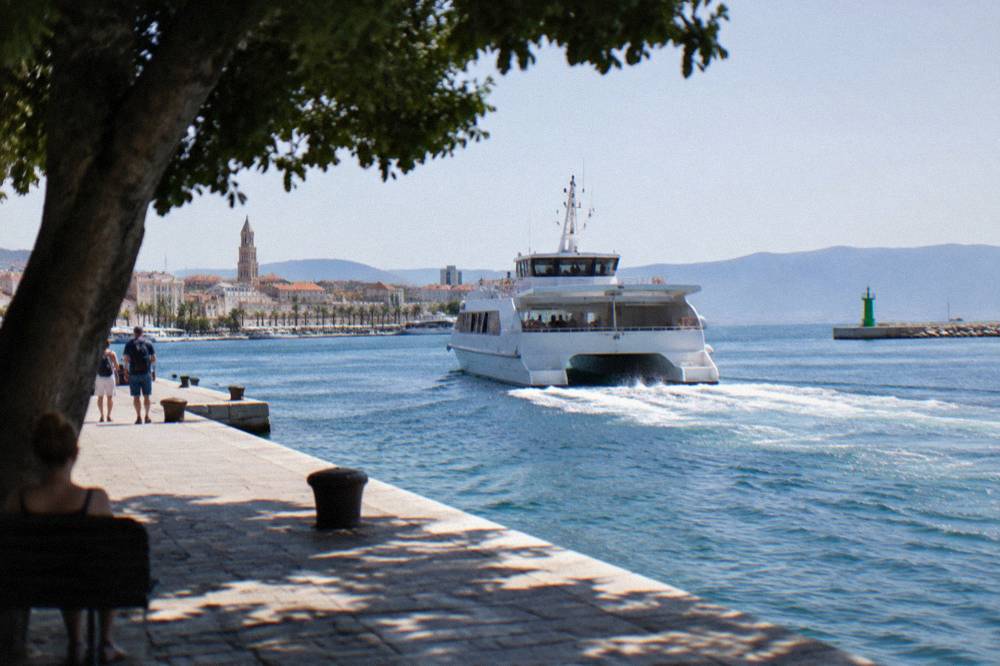
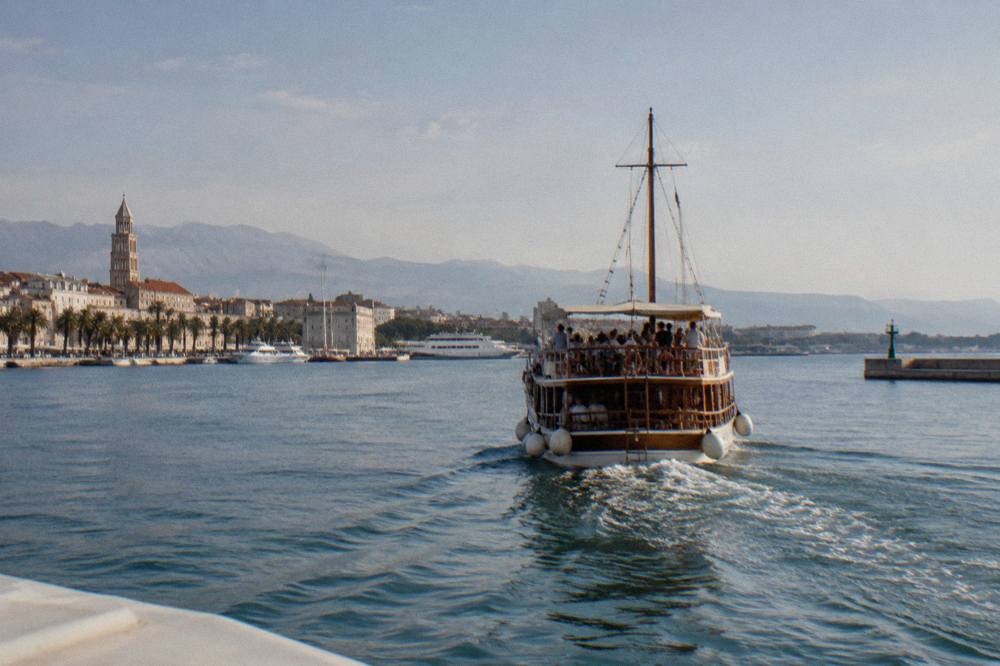
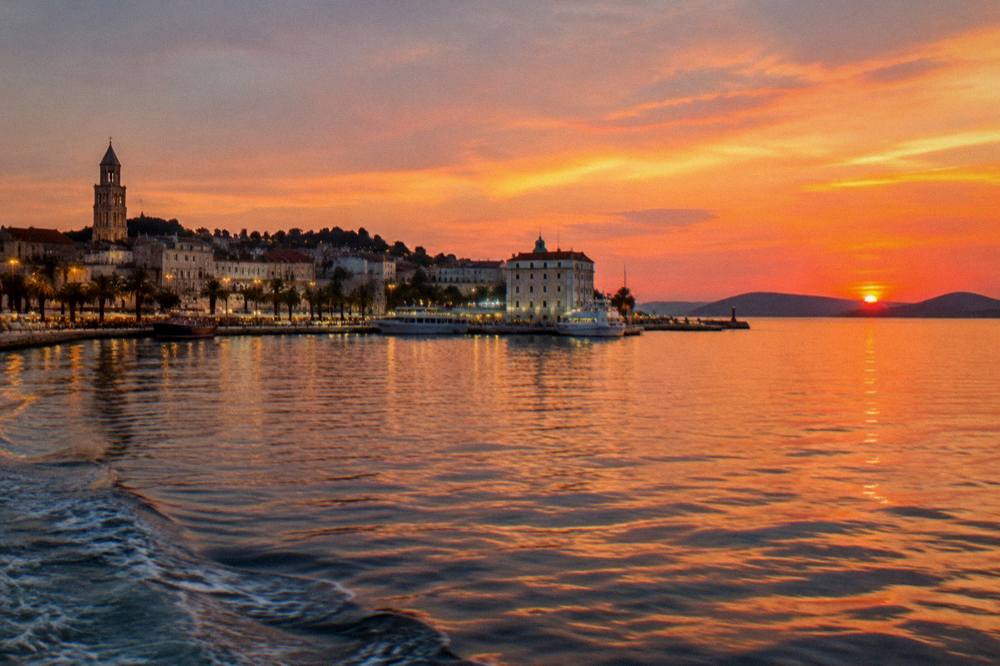
Split faces the Adriatic with its back to Diocletian's Palace, and everything about its waterfront points outward: the Riva promenade, the ferry port on Obala kneza Domagoja 500 to 600 m from the palace, and the islands of Šolta, Brač, Hvar and Vis stacked on the horizon. A Split boat party is therefore not one venue but a category: full-day cruise boats with lunch, drinks and swimming stops, small-group speedboats, catamaran day trips to Hvar and the Pakleni islands, and private charters. This guide reports what the operators' listings, the port authority and the city's own published rules actually say, without pretending anyone on this desk has danced on a deck in Split. For the broader picture of boats from this city, see the guide to Split boat tours, and for renting your own hull, Split boat rental.
What Is A Split Boat Party, And Where Does It Actually Happen?
A Split boat party is a booked cruise or speedboat trip with music, drinks and swimming stops, departing from the Split waterfront or the ferry port, not a floating nightclub moored in the city. The party happens on board and at the stops: the Blue Lagoon off Šolta, beaches on Brač, and Hvar town with its Pakleni islands. The listing for each trip states what is included, from lunch to drinks, and every price and duration lives on the operator's live listing rather than in this paragraph.
The boats leave from the stretch of shore where the Riva meets the passenger port, the same cluster of berths that made Split Croatia's busiest passenger port with 6.05 million passengers in 2025, a figure the Port of Split publishes on its own site. Cruise passengers are a separate stream again: the port counted 487,377 cruise passengers in 2025, and cruise calls began only in 2002, so the party-boat economy here is genuinely built on the scheduled ferry and catamaran network, not on ships arriving from Miami.
What that means practically is a layered market. At the top of the scale sit full-day cruises with lunch, wine and swim stops, and all-inclusive island tours covering Hvar, the Pakleni islands, Brač and Šolta. Below them are small-group speedboats, which trade cabin space for speed and flexibility. Below those are the scheduled catamarans, which are transport rather than party, and private charters, which are whatever the group makes of them. If your question is really whether Split is a party destination at all, the is Split a party island answer takes that on directly, and the Hvar comparison sits in is Hvar no longer a party island.
The three trips above are the desk's standing picks for this article, and one of them is deliberately a walking tour: a professor of history walking you through the palace you sail past is the counterweight to a day of bass and swimming stops, and the Walking Tour with Professor of History page carries the details. The Mostar and Kravice day trip is there for anyone whose group splits between boat people and waterfall people.
When Does The Split Boat Party Season Run, And What Does The Weather Allow?
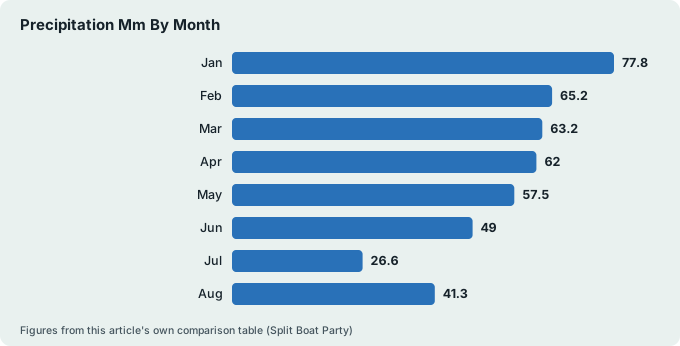
The boat trip season in Split runs roughly May to September, with the warmest and brightest window in July and August: the DHMZ Split-Marjan station, over the period 1948 to 2024, records a July mean of 26.2 C and 353.3 hours of July sunshine, against 8.0 C and 77.8 mm of rain in January. Operators list their sailing dates on each trip page, and swimming stops depend on conditions on the day.
The climate table is the honest basis for planning. The DHMZ Split-Marjan station table gives monthly means for 1948 to 2024, and it shows why summer boat parties dominate: July records 18 days at 30 C or more and August 17, with June already at 7. Rain in the core season is low, 26.6 mm in July and 41.3 mm in August, while November is the wettest month at 115.5 mm.
| Month | Mean Temperature C | Precipitation mm |
|---|---|---|
| Jan | 8.0 | 77.8 |
| Feb | 8.5 | 65.2 |
| Mar | 10.8 | 63.2 |
| Apr | 14.4 | 62.0 |
| May | 19.2 | 57.5 |
| Jun | 23.4 | 49.0 |
| Jul | 26.2 | 26.6 |
| Aug | 25.9 | 41.3 |
| Sep | 21.6 | 70.9 |
| Oct | 17.2 | 77.0 |
| Nov | 12.7 | 115.5 |
| Dec | 9.4 | 103.7 |
Sunshine across the year runs at about 2,600 hours, and the December figure of 120.8 hours against July's 353.3 hours explains why nobody runs swim-stop party boats in midwinter. The city still does winter well, but on land. For month-by-month planning, the Split weather guide and the best time to visit Split carry the detail, and the shoulder months of June and September sit in the sweet spot: warm sea days, thinner crowds, and boat trips still listed.
One planning note that a first page of search results will not tell you: the Riva itself, where the boats depart, enters a planned renovation of its central section from November 2026, expected to last a little over a year. Partial closures on the Riva are expected through 2027, which affects where you stand and queue, not whether the boats sail.
How Much Does Getting On The Water From Split Cost, Without A Party Boat?
Scheduled ferries price by route and season, not by party: Jadrolinija's price list shows a foot passenger at 5.90 EUR off-season and 8.40 EUR in season on the Split to Stari Grad line, catamarans run at 6.40 EUR low and 10.00 EUR high season to Hvar or Jelsa and 7.20 to 10.00 EUR to Vis, while the party cruise and speedboat products print their from-prices on the operator's live listing only.
The ferry network is the backbone, and it is cheap. What follows is what the operators' own price pages and route pages state, and it is the floor beneath every boat party: if the organised trip is full or beyond budget, the scheduled network still puts you on the water.
| Route | Type | Crossing | Foot Passenger Fare |
|---|---|---|---|
| Split to Stari Grad, Hvar (line 635) | Car ferry | about 120 minutes | 5.90 EUR off-season, 8.40 EUR in season |
| Split to Supetar, Brač (line 631) | Car ferry | about 50 minutes | confirm on the Jadrolinija price list |
| Split to Rogač, Šolta (line 636) | Car ferry | about 60 minutes | confirm on the Jadrolinija price list |
| Split to Vis | Ferry | about 140 minutes | confirm on the Jadrolinija price list |
| Split to Hvar or Jelsa | Catamaran (line 9603) | scheduled | 6.40 EUR low, 10.00 EUR high season |
| Split to Vis | Catamaran (line 9602) | scheduled | 7.20 EUR low, 10.00 EUR high season |
Two changes from 2026 matter. Jadrolinija removed the off-season timetable from the Split to Supetar line entirely, so from 2026 it runs on high-season and low-season schedules only, the fifth Croatian line to do so. And from 2026 there is a seasonal Split to Bari international ferry line. The ferries from Split guide tracks all of this, and the Split to Hvar ferry guide untangles the single most common confusion of the coast: the car ferry lands at Stari Grad, while Hvar town itself is reached by catamaran.
Can You Drink On A Boat Party In Split, Given The City Rules?
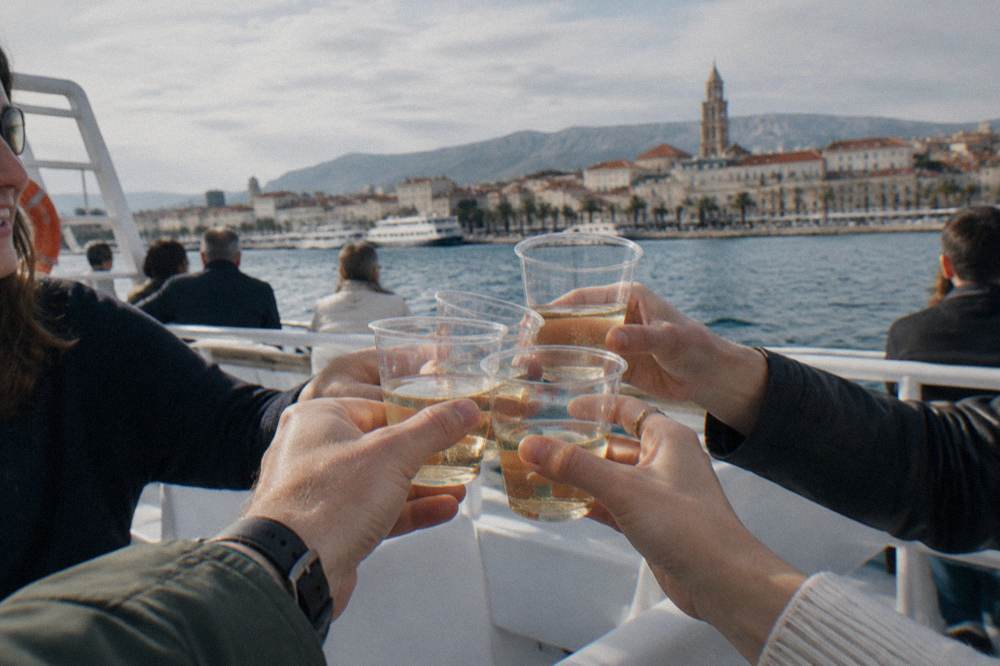
On board a licensed boat, yes: the trip includes whatever the listing says it includes. On the street, no: Split's published rules fine public alcohol consumption in the historic centre 300 EUR, and the same 300 EUR applies to urinating, vomiting and climbing on monuments, with 150 EUR for sleeping in public spaces. Shops in the historic core were also banned from selling alcohol at night, from 21:00 to 06:00, during the summer of 2026.
The distinction is simple and the city states it plainly on its own tourism site: licensed terraces and, by extension, licensed vessels are one thing, public streets another. The boat party is on the right side of that line, the pre-drink on the Riva is not, and the amount of the swimwear fine is set locally, so the desk does not print a figure for it. A fuller treatment sits in the what to avoid in Split article, but the core fines are worth a table here because they change behaviour around every departure point in the old town.
| Offence In The Historic Centre | Fine |
|---|---|
| Drinking alcohol in public | 300 EUR |
| Urinating in public | 300 EUR |
| Climbing on monuments or bathing in fountains | 300 EUR |
| Vomiting in public | 300 EUR |
| Sleeping in public spaces | 150 EUR |
| Taxi touting | 300 EUR |
The night-time retail alcohol ban applied to shops and supermarkets, not bars and restaurants, ran 1 June to 15 September 2026, and is set to repeat from 1 June 2027 unless changed. None of this touches what happens on the boat: the all-inclusive cruises pour drinks quite legally the moment the mooring line drops.
Where Do Split Boat Parties Actually Stop For Swimming?
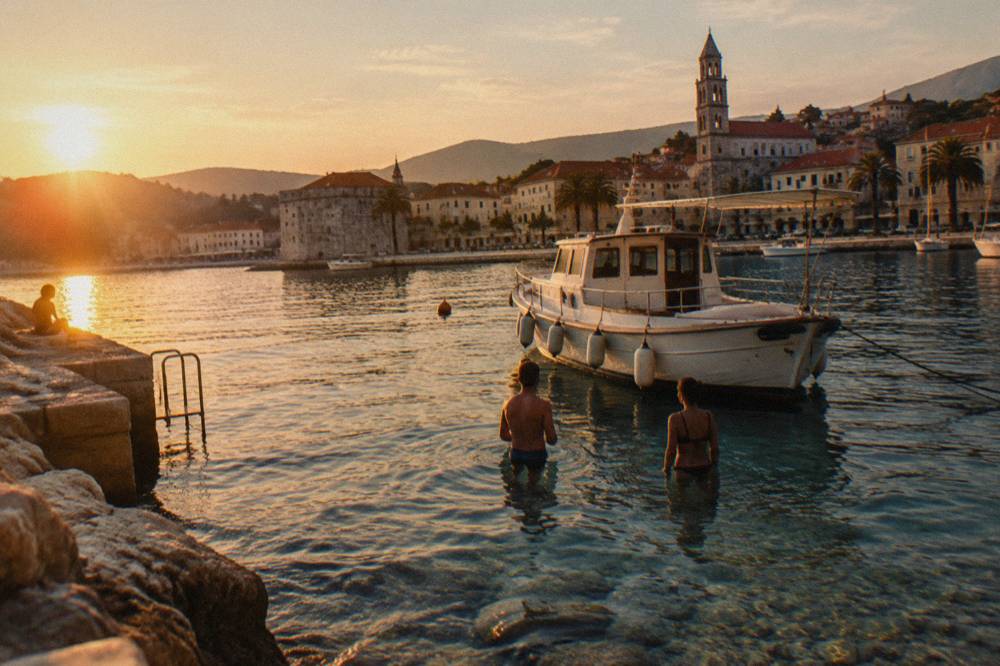
The standard swim stops are the Blue Lagoon between the Split area and Šolta, coves on Brač, and bays around Hvar and the Pakleni islands, with the Blue Cave on Biševo as the headline add-on: the Blue Cave entrance fee is 24 EUR in high season, 20 June to 10 September, and 18 EUR in shoulder season, paid in cash on site according to the tour operators' own published figures.
The Blue Lagoon trips are the volume product of the coast: a cruise boat, lunch, wine, and a long stop in shallow turquoise water. The listing for each trip states whether lunch and drinks are included, so check it rather than assuming. One confusion worth killing early: the Blue Lagoon and the Blue Cave are different places, a swimming cove near Split versus a sea cave on Biševo reached after a long speedboat run, and the desk has seen the two conflated in more than one search result. The speedboat products that chain the Blue Cave, a Mamma Mia filming location and Hvar into one day exist precisely because Biševo is far. The full index of guides sits on Split Croatia Travel Guide.
| Swim Or Stop | Where | What The Sources Say |
|---|---|---|
| Blue Lagoon | Off Šolta area | Regular stop on cruise and speedboat trips, listed per trip |
| Brač stops | Zlatni Rat area, Supetar side | Zlatni Rat appears on multi-island itineraries |
| Hvar and Pakleni | Hvar town | Fortica fortress entry 12 EUR, 9:00 to 20:00, per Visithvar |
| Blue Cave | Biševo | 24 EUR high season, 18 EUR shoulder, cash on site |
| Šolta coves | Rogač side | Line 636 ferry, about 60 minutes |
Note what the table does not promise: swimming inside Krka National Park. Krka allows swimming only in clearly marked areas, with designated spots reported at Roški slap, Stinice and Pisak between 1 June and 30 September, and the Skradinski buk waterfalls themselves are off limits to swimmers under the park's own rules. The Krka-with-swimming day trips from Split swim in the marked zones or in the Cetina, not under the falls. For the full picture, the Blue Cave and Vis guide and the Hvar guide are the deep dives.
What Are The Best Split Boat Party Trips By Style Of Day?
By style: the all-inclusive Hvar, Pakleni, Brač and Šolta tour is the full party cruise, the Blue Lagoon cruises with lunch and wine are the relaxed swim day, the 5-islands speedboats are the fast option with the Blue Cave and Mamma Mia stops, and the full-day catamaran to Hvar and Pakleni with food and free drinks sits between them. Prices, ratings and durations render on each operator's live listing, and the desk does not type them.
The choice comes down to three honest questions. Do you want to swim more than you want to sail? Take a Blue Lagoon trip, short run, long stop. Do you want the headline sights, Blue Cave and Hvar, in one day? Take a speedboat and accept the early start. Is the day really about the group and the bar? The all-inclusive cruise is the product built for that. The selections below cover those styles, rendered with live data rather than stale figures.
For the speedboat end of the market, the 4-islands run to Zlatni Rat, Hvar and the Pakleni islands with wine tasting, and the small-group Blue Cave and Mamma Mia boats, all sit in the Split boat tours guide. One thing worth knowing that casual guides skip: Hvar town has its own entry costs once you land, the Fortica fortress at 12 EUR among them, so a "free time in Hvar" stop is only as free as you make it.
How Do You Get To The Split Boat Party Departure Points?
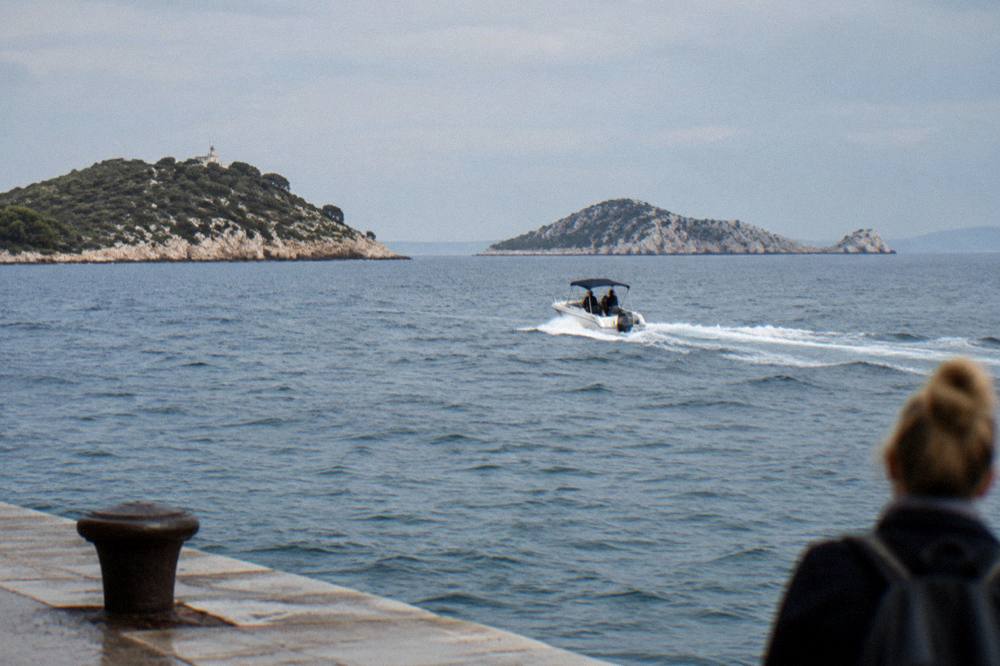
Everything departs from walking distance of the palace: the ferry port, the main bus station and the railway station sit together on Obala kneza Domagoja, 500 to 600 m from Diocletian's Palace, and the airport is 20 km from Split at Kaštel Štafilić, from which the Platanus shuttle runs to the main bus station for 10 EUR one way or 15 EUR return.
The geography is the good news. Unlike cities where the port is an industrial satellite, Split's passenger port is a flat walk from the Old Town, so a 9:00 sailing never means a 6:30 alarm. Getting there from further out breaks down like this.
| Arrival | Route | What The Sources Say |
|---|---|---|
| From the airport | Platanus shuttle to main bus station | 10 EUR one way, 15 EUR return |
| From the airport | Promet Split city bus lines 37 and 38 | a few euros, confirm on board |
| From the Old Town | On foot to Obala kneza Domagoja | 500 to 600 m from the palace |
| From Brač | Line 631 ferry to Split | about 50 minutes |
| From Hvar | Catamaran to Split | scheduled daily crossings |
The Split airport guide and the airport to city centre guide carry the full arrival picture, including the fact that the airport's own pages give 20 km from Split and 6 km from Trogir, correcting the 6 km figure that circulates in older guides. If the boat party is one leg of a longer Dalmatian route, the Split day trips guide and Split to Dubrovnik cover the land legs.
Is A Split Boat Party Worth It Versus Going Alone?
A booked boat party is worth it when you want the day handled: swim stops chosen, lunch and drinks aboard, and a group to share it with, while going alone on the scheduled ferries costs 5.90 to 10.00 EUR per crossing and buys transport only, with no swim stop, no guide and no bar. The party products print their from-prices on the booking page; the ferry fares are the Jadrolinija price list.
The honest trade-off is control. Alone, on the 8:00 catamaran to Hvar, you choose your lunch, your pace and your fortress, and you pay scheduled fares all day. On a booked cruise, someone else handles the tide tables, the anchorages and the cooler, and the day has a shape. Groups, hen and stag weekends and anyone whose sea legs need a crowd tend toward the booked boat. Solo travellers and couples who like their own timetable tend toward the catamaran and a beach.
Two things tilt the calculus. First, capacity: July and August put 18 and 17 days respectively at 30 C or more on the DHMZ Split-Marjan table, and the high-season sailings fill, so the booking question answers itself in peak weeks. Second, the rules above: an unlicensed DIY version of a boat party, a supermarket cooler on the Riva, is exactly what the 300 EUR fine covers, while the same drinks on a licensed deck are the whole point of the product.
A final pairing the desk keeps recommending: one day on the water, one day in the palace. The small-group palace walking tour and the Magister-led walk above cover the city side, and the Mostar, Počitelj and Kravice trip covers the inland waterfall alternative for the day the maestral wind keeps boats in port. Booking is flexible: Check availability on the history professor's walk alongside your boat day, since the operator's listing shows current dates and free cancellation terms.
Common Questions About Split Boat Parties
Is There A Boat Party In Split?
Yes, in the form of organised cruise and speedboat trips with drinks, music and swimming stops departing from the Split waterfront and ferry port, roughly May to September. There is no permanent floating nightclub moored in the city, and each trip's inclusions are stated on the operator's live listing.
Can You Drink Alcohol On A Boat Party In Split?
On a licensed trip, yes, whatever the listing includes is served legally on board. Drinking in the street in the historic centre is a different matter: the city's published rules set a 300 EUR fine for public alcohol consumption there.
How Much Is A Boat Party In Split?
Scheduled ferries cost from 5.90 EUR off-season as a foot passenger to Stari Grad, and catamarans 6.40 to 10.00 EUR to Hvar, Jelsa or Vis, but those are transport only. Party cruise and speedboat prices render from each operator's live listing, and the desk does not quote them second-hand.
Where Do Split Boat Trips Stop For Swimming?
The Blue Lagoon near Šolta, coves around Brač, and bays off Hvar and the Pakleni islands are the standard stops, with the Blue Cave on Biševo as the long-range option at 24 EUR entry in high season, paid in cash on site.
What Is The Best Month For A Split Boat Party?
July has the warmest mean temperature on the DHMZ Split-Marjan record at 26.2 C and the most sunshine at 353.3 hours, but June and September still carry means of 23.4 C and 21.6 C with far fewer crowds, which is why the desk points groups at the shoulders.
Do You Need To Book A Split Boat Trip In Advance?
In July and August, yes, seats on the popular cruises and small-group speedboats fill, and the DHMZ table's 18 days at 30 C or more in July mark exactly that window. In May, June and September, same-week booking is usually realistic, and the operator's listing shows live availability.
The short version: the party in Split floats out of the harbour every summer morning, the scheduled ferries will carry you the same water for the price of a coffee and a half, and the city's rules are strict exactly where the boats are not. Pick the day, check the listing, and keep the drinking on the deck.