Stobrec
Stobrec sits on Split's south-eastern edge, a former fishing settlement wrapped around a small peninsula, with quieter beaches than the city centre and the Cetina river canyon and the islands within easy reach.
Short answer
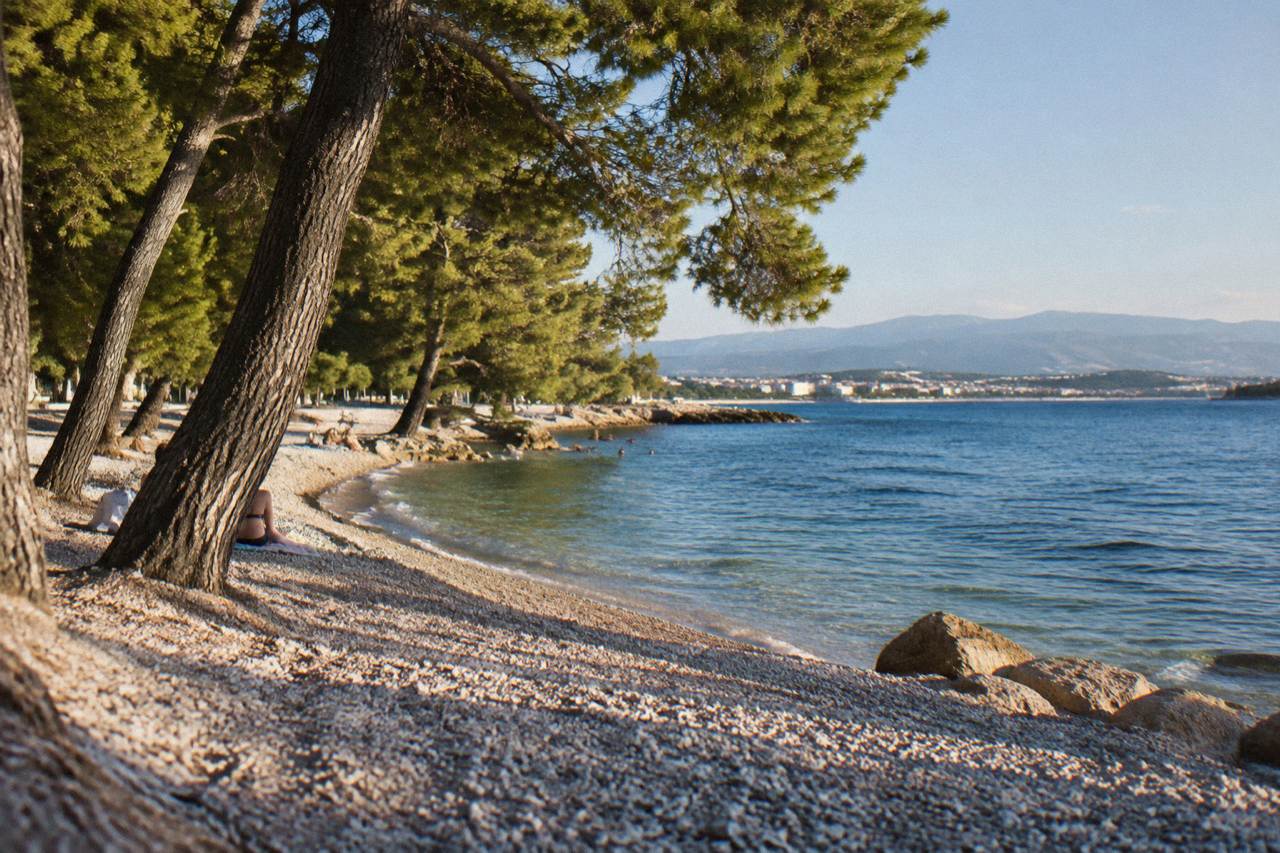
Stobrec is a coastal district of Split in Dalmatia, Croatia, about a short local bus ride south-east of the Old Town, known for pine-backed beaches, a sheltered bay and a slow, residential pace compared with Bačvice or the Riva.
Split, the coastal city in central Dalmatia on the Adriatic, keeps its famous sights inside and around Diocletian's Palace, but the city stretches well beyond the Old Town. Stobrec is one of its outlying coastal districts, out to the south-east, where the city thins into pine trees, pebble beaches and a small peninsula that carries the old core of what was once a fishing settlement. It is the quiet end of Split, and it works best for travellers who want a beach base with the palace, the port and the islands still within reach.
Where Is Stobrec And What Kind Of Place Is It?
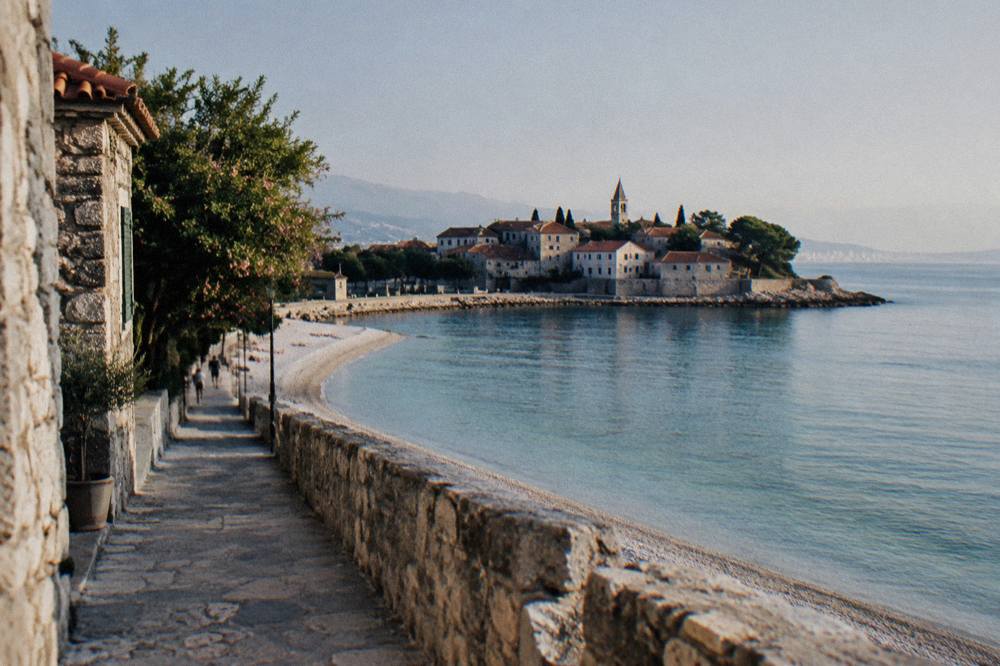
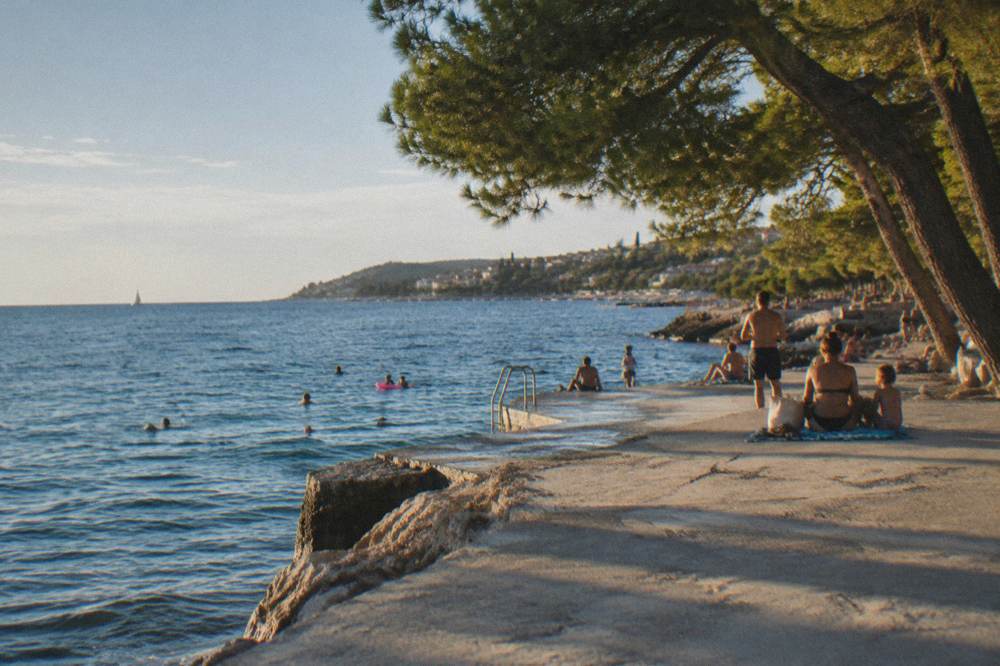
Stobrec is a coastal district on the south-eastern edge of Split, in central Dalmatia on the Adriatic, built around a small peninsula and a sheltered bay, with pine-backed beaches and a residential, low-rise character that contrasts sharply with the palace core. The old settlement occupies its own little headland, with the sea on three sides, and the newer streets, holiday apartments and campsites spread back from the shore. It belongs to the City of Split, whose population the 2021 census put at 160,577, and it sits on the coastal side of the city towards Omiš and the Cetina river mouth.
The district's identity is older than its commuter-belt present. It began as a fishing place on a defended spit, and the outline of that origin survives in the tight lanes of the peninsula, where houses stand shoulder to shoulder above the water. The shore around it is a string of pebble and concrete swimming spots under Aleppo pines, and the whole stretch faces south across the channel towards the islands. What Stobrec does not have is a palace, a cathedral or a museum quarter. Its sights are its water, its shade and its pace, which is exactly why people choose it over the Old Town.
Practically, Stobrec functions as a beach-and-base area. Accommodation here is apartment-scale, the restaurants along the shore are seafood-and-pizza local rather than destination dining, and the evening routine revolves around the waterfront walk and the swimming spots rather than bars. For a first visit to Split the centre still makes sense, and the one day in Split itinerary covers the palace, the Peristyle and the Riva. Stobrec suits a second stay, a family week, or anyone who wants to end every day in the sea without the crowds of the city beaches.
What Can You Do In Stobrec On A Normal Day?
A normal day in Stobrec divides between the beach and the water in the morning, the shaded peninsula lanes and a long seafood lunch at midday, and a flat waterfront walk or an evening kayak and swim before dark, with no ticketed attractions in the district itself. Stobrec's core activities are free in the way Marjan and the city beaches are free: the shore, the pines and the bay cost nothing, and the daily rhythm is set by sun and water rather than opening hours. There is no museum here, no fortress, no cathedral complex to queue for.
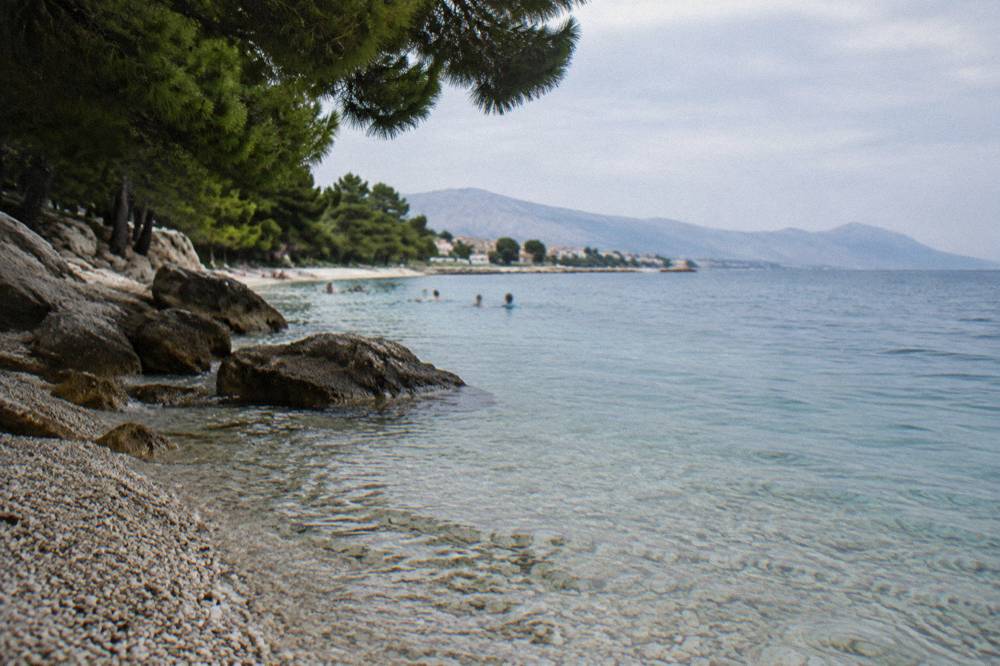
The beach line is the main draw. Pebble coves and concrete swimming platforms run along the shore under pines, and the shallow, sheltered water inside the bay is forgiving for children and weak swimmers. Locals play picigin, the ball game born on Bačvice beach in 1908 and now protected intangible heritage of Croatia, wherever a sandy shallow allows it; the game's home beach is covered in the Bačvice and Firule area guide, but the same spirit shows up on Stobrec's sand patches in summer. Snorkelling along the rocky edges of the peninsula is the other default activity, and the pine cover means the midday break happens in shade a few steps from the water.
The peninsula itself takes twenty unhurried minutes to circle on foot. Its lanes hold a small church, old stone houses and balconies hung with laundry, and the views open east towards Omiš and the mountains that wall the Cetina mouth. In the other direction the channel widens towards Brač, which is reached by ferry from Split to Supetar in about 50 minutes on Jadrolinija's line 631. From 2026 that line runs with no off-season timetable, only high-season and low-season schedules, the fifth such line in Croatia, a sign of how busy the Brač crossing has become.
For a fuller plan, the things to do in Split page collects the palace, Marjan and the islands in one place, and the tours below pair well with a Stobrec base since they depart from central Split.
How Does Stobrec Compare With Split's Other Beach Areas?
Stobrec is quieter, more residential and more family-oriented than Bačvice and Firule, less built-up than Žnjan, and much flatter and easier to reach by bus than the beach coves below Marjan, trading city-centre proximity for space, shade and calm water. Split's beach areas each have a distinct register, and the choice between them is really a choice between walking distance to the palace and a slower, greener shore. Stobrec sits firmly at the relaxed end of that spectrum.
| Split beach area | Character | Water and shore | Best for |
|---|---|---|---|
| Bačvice and Firule | City beach, closest to the centre, picigin's home | Sandy shallows in a city bay | Short swims, no transport needed |
| Žnjan | Modern concrete-and-pebble promenade east of the centre | Flat sea platforms and beach bars | Easy access, cafe scene |
| Meje | Residential slope below Marjan on the west side | Rocky coves and quieter corners | Snorkelling, fewer people |
| Stobrec | Former fishing district on the south-eastern edge | Pebble coves and platforms under pines, sheltered bay | Families, long lazy beach days |
Two practical differences matter. First, shade: the pines at Stobrec give natural midday cover, which the concrete expanses of Žnjan do not, and which Bačvice offers only around the edges. Second, water depth: the bay inside the Stobrec peninsula stays shallow well out, where the Marjan coves in Meje and below Marjan hill drop off quickly over rock. Neither is better; they answer different questions.
The trade is distance. From Stobrec the Old Town is a bus or car journey, not a walk, so a stay here means planning palace time deliberately: the substructures of Diocletian's Palace, run by the Split City Museum, are open Monday to Sunday 8:30 to 20:00 with the central part under restoration to the end of 2026 and the passage staying open. If mixing beach mornings with one big sight per day sounds right, Stobrec earns its place.
Is Stobrec Good For Swimming And Families?
Stobrec works well for families and confident swimming mostly comes second to safe paddling: the bay inside the peninsula is sheltered and shallow, the shore is a mix of pebble coves and flat concrete platforms, and the pines give shade a few steps from the water across the whole beach line. Children get gradual depth and still water inside the bay, adults get clean swimming off the platforms and along the rocky flanks of the peninsula, and no part of the district's swimming is ticketed or gated.
A few cautions from the city's own rules apply anywhere in Split, including here. In 2026 the city formalised public-order fines for the historic core and its surroundings: drinking alcohol in public carries a 300 EUR fine, as do urinating, vomiting, climbing on monuments and bathing in fountains, while sleeping in public spaces carries 150 EUR. None of that touches ordinary beach behaviour in Stobrec, but alcohol bought in a shop is for the apartment or a licensed terrace, not the promenade, and in the summer season shops in Split stop selling alcohol at night, with bars and restaurants unaffected. The amount of the fine for walking in swimwear away from the beach is set locally and is best simply avoided by covering up on the walk home.
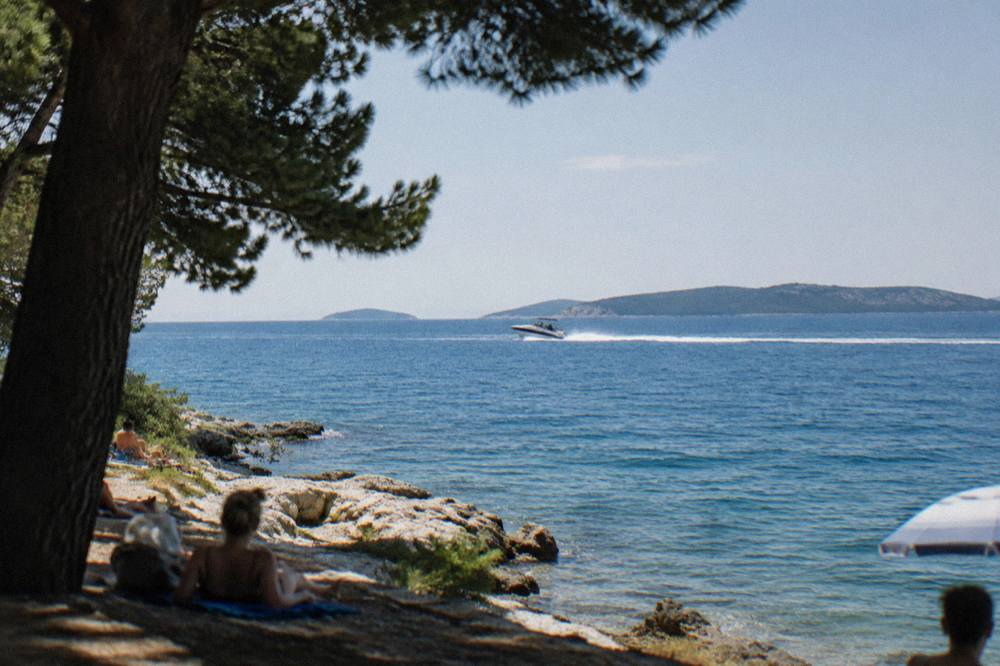
For variety, families based in Stobrec can alternate the local beach with boat time. The half-day three-island speedboat trip from Split and Trogir is the natural upgrade day, and it runs as a small-group outing:
Between the two, the week fills itself: beach days in Stobrec, one palace morning, one boat day, and an evening walk back along the shore for ice cream.
What Is The Weather Like In Stobrec?
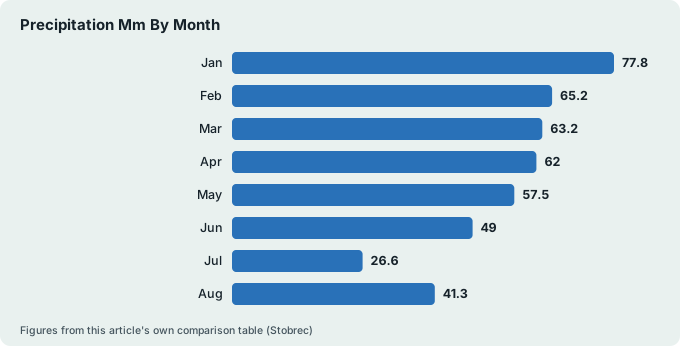
Stobrec shares Split's coastal Mediterranean climate as measured at the DHMZ Split-Marjan station for the period 1948 to 2024: July is the warmest month with a mean of 26.2 C, January the coolest at 8.0 C, November is the wettest month at 115.5 mm and July the driest at 26.6 mm. The district sits close enough to the city centre that the station record describes it directly, and the practical reading is simple: hot, dry, beach-reliable summers and mild, occasionally wet winters. No official monthly sea-temperature normal exists, so the sea is judged by the live DHMZ reading on the day, which stood at 20.4 C on the morning of 12 October 2026.
| Month | Mean temperature C | Precipitation mm |
|---|---|---|
| Jan | 8.0 | 77.8 |
| Feb | 8.5 | 65.2 |
| Mar | 10.8 | 63.2 |
| Apr | 14.4 | 62.0 |
| May | 19.2 | 57.5 |
| Jun | 23.4 | 49.0 |
| Jul | 26.2 | 26.6 |
| Aug | 25.9 | 41.3 |
| Sep | 21.6 | 70.9 |
| Oct | 17.2 | 77.0 |
| Nov | 12.7 | 115.5 |
| Dec | 9.4 | 103.7 |
The beach season is longer than the peak-summer window the raw means suggest. June averages 23.4 C and September 21.6 C, both with sea warm from the months before them, and the station counts 7 days at 30 C or more in June, 18 in July and 17 in August, which frames July and August as the hot core of the year. July also delivers 353.3 hours of sunshine against 120.8 in December, and the annual sunshine total runs to about 2,600 hours. October, at a 17.2 C mean, still supports swimming on mild days, and sunbathing in October is a fair bet on the sheltered Stobrec platforms when the wind is quiet.
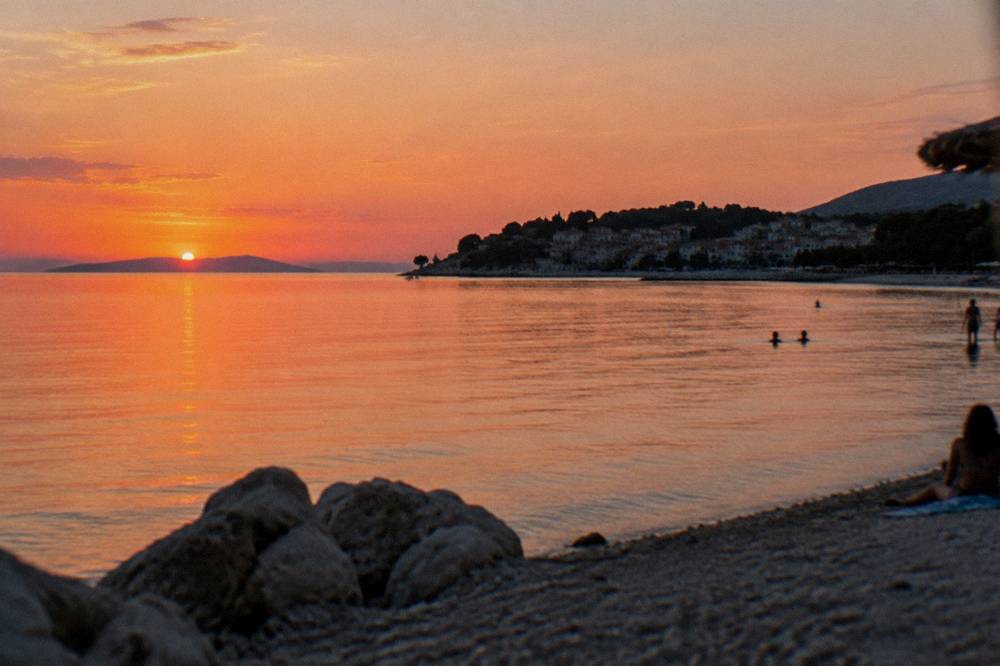
Autumn is when the rain arrives. November is the wettest month of the record at 115.5 mm; the next wettest is December at 103.7 mm, and the autumn quarter as a whole out-wets the winter one. A late-season stay in Stobrec should plan for wet days, and the rainy day in Split options cover the museum line-up: the Archaeological Museum at 8 EUR, combined with Salona for 10 EUR within 7 days; the Ethnographic Museum at 7 EUR; and the Meštrović Gallery at 12 EUR, reopened in April 2026 after a 15-month energy renovation.
How Do You Get To Stobrec From Split?
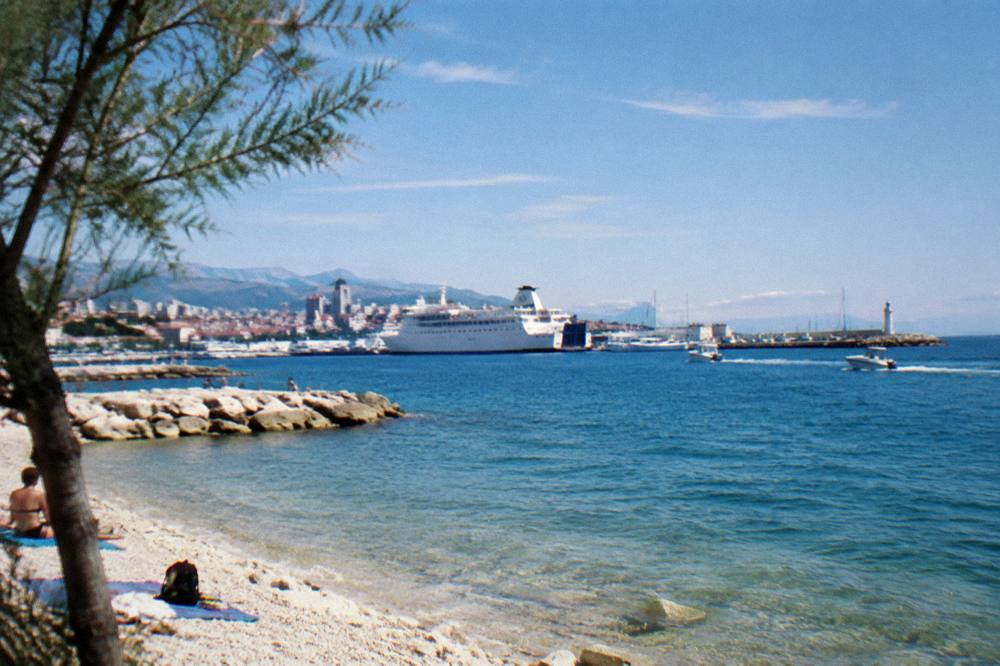
Stobrec is reached from central Split by local city bus along the coastal road east, or by car along the same shore route, with the district sitting on the city's south-eastern edge on the way towards Omiš; the fare and timetable are confirmed with Promet Split, the city bus operator, before travelling. The city's transport hub, where the ferry port, the main bus station and the railway station sit together on Obala kneza Domagoja, 500 to 600 m from the palace, is the natural starting point for any journey out to Stobrec.
Buses in Split are paid on board or by ticket bought in advance, and the practical rule is to confirm the current fare and the exact stopping pattern with Promet Split before riding, since the operator's own price list is the authority on both. Cars give the most flexibility for a Stobrec base, since the district also positions you for the coast road to Omiš and the Cetina canyon, and for airport runs: the airport, SPU, sits in Kaštel Štafilić, 20 km from Split and 6 km from Trogir by its own pages, and the Platanus shuttle links it to the main bus station for 10 EUR one way and 15 EUR return. Parking tariffs vary by zone and are checked on arrival rather than assumed.
Orienting Stobrec against the day-trip map helps, and the free-flow driving times below are computed from Diocletian's Palace.
| Destination from Diocletian's Palace | Driving time, free flow |
|---|---|
| Salona | 14 min |
| Klis Fortress | 22 min |
| Trogir | 36 min |
| Omiš | 38 min |
| Šibenik | 71 min |
| Krka National Park, Skradinski buk | 74 min |
| Zadar | 2 h |
| Plitvice Lakes | 3 h 15 |
Stobrec's position makes Omiš and the Cetina the closest adventure ground, and the islands remain reachable through the Split ferry port. The classic island crossings, with their foot-passenger fares, are these:
| Route | Crossing | Foot passenger fare |
|---|---|---|
| Split to Stari Grad, Hvar, line 635 | about 120 min | 5.90 EUR off season, 8.40 EUR in season |
| Split to Supetar, Brač, line 631 | about 50 min | on the Jadrolinija price list |
| Split to Rogač, Šolta, line 636 | about 60 min | on the Jadrolinija price list |
| Split to Vis | about 140 min | on the operator's price list |
| Catamaran, Split to Hvar or Jelsa | fast service | 6.40 EUR low season, 10.00 EUR high |
| Catamaran, Split to Vis | fast service | 7.20 EUR low season, 10.00 EUR high |
One distinction saves a common mistake: Hvar town itself is reached by catamaran, while the car ferry lands at Stari Grad on the same island. Both start from the port 500 to 600 m from the palace, a bus or car hop from Stobrec.
Which Tours And Day Trips Work Best From A Stobrec Base?
The best tours from a Stobrec base are the Cetina canyon adventures closest to the district, the island speedboat trips from Split's port, and a guided palace walk on the one morning given to the Old Town, since all depart from points a short bus or drive away and none requires moving accommodation. The district's position on the city's south-eastern edge actually helps for the canyon trips, which head the same direction, towards Omiš 38 minutes free-flow from the palace.
The zip line over the Cetina canyon is the signature adventure within easy range, and it comes with optional transport from Split, which removes the driving question entirely. The full details and live availability are on the zip line tour page, and the current offer is summarised here:
Rafting on the Cetina covers the same river at water level, with cliff jumping and cave stops on some departures, and Omiš itself rewards the drive with the Mirabela fortress at 4 EUR, rising to 6 EUR from 1 June to 30 September. Back on the water, the Blue Lagoon and Šolta trips and the Hvar cruises all leave from central Split. The national park day trips also run from Split: Krka costs 7 EUR in January to March and November to December, 20 EUR in April, May and October, and 40 EUR from June to September, with the ticket covering the Skradin boat and Lozovac bus transfers from 1 April to 31 October, and swimming allowed only in clearly marked areas. Plitvice costs 10, 23 or 40 EUR by the same seasonal logic, with timed online entry and the visitor's name mandatory on the ticket. The Krka guide and the Hvar guide unpack both.
For the palace itself, one guided morning does more than three solo ones, and the history-professor-led walk is the standout option among Split's walking tours:
A sensible split of a week: two beach days in Stobrec, one canyon adventure, one island boat day, one palace morning with the cathedral complex, from about 5 EUR for the cathedral with combined tickets up to about 15 EUR, shoulders and knees covered, and one slow day for the green market and Marjan's 819 steps from Trumbićeva obala to the Telegrin peak at 178 m.
Where Do You Eat And Stay In Stobrec?
Eating in Stobrec means the seafood and grill kitchens along the shore and the konoba-style places on the peninsula, plus small shops and bakeries for self-catering, while accommodation is apartment and guesthouse scale with campsites on the edge, and no hotel rates are quoted here because none sit in the published price records for the district. The dining register is local: grilled fish, squid, black risotto and pizza, at prices posted on the menu, and the useful habit anywhere in Split is to read the posted card, check that the bill is itemised and note whether a cover charge appears, rather than assuming anything about any venue.
Self-catering pairs well with the green market in the centre, still the best source of fruit, vegetables and fish in the city. For a cooking-free holiday, the Stobrec shore restaurants cover lunch and dinner, and the evening promenade walk ends where it began, at the water. The district has no fine-dining tier; that sits in the centre, and the question of whether eating out in Split is expensive has its own answer on the food pages.
Accommodation bookers should also budget the tourist tax, about 2.65 EUR per person per night in high season, 1 April to 30 September, with under-12s free and 12 to 18 year olds paying half; it is collected by the accommodation and confirmed at booking. Short-term rental rules in the historic core tightened through 2026, with a moratorium on new registrations inside the UNESCO buffer extended, which pushes supply, and often better value, out to districts exactly like Stobrec, Veli Varos excepted as a historic-core-adjacent village.
Ready to sort out where you will sleep? Book a hotel stay here.
When Is The Best Time To Visit Stobrec?
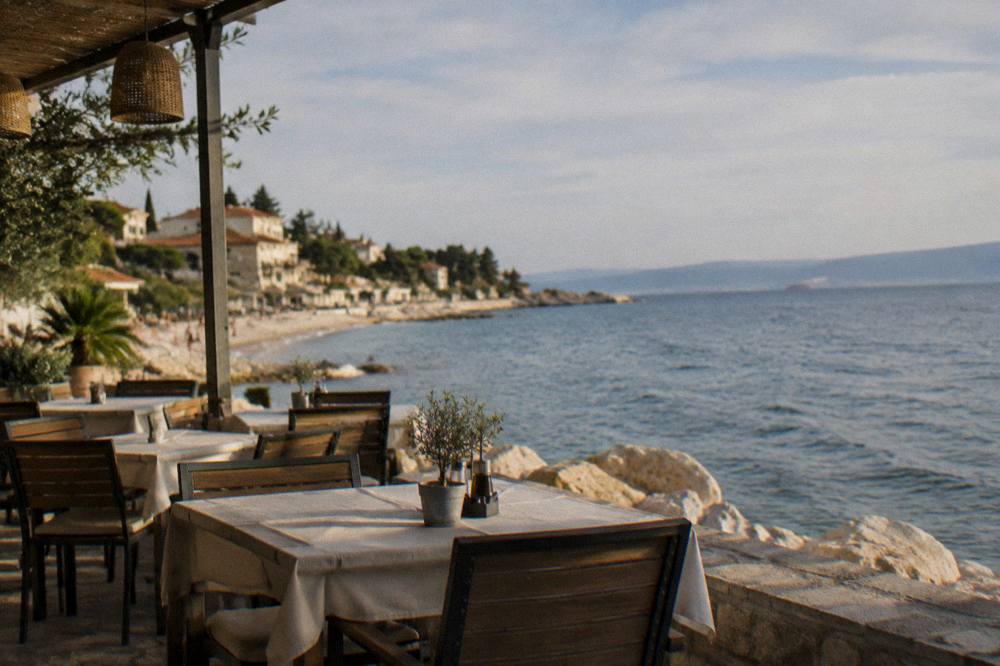
The best time to visit Stobrec is late June or September for warm sea, 23.4 C and 21.6 C monthly means respectively, with far less peak-season pressure than July and August, which bring 18 and 17 days at 30 C or more and the year's driest weather but the fullest beaches. May, at a 19.2 C mean and 57.5 mm of rain, suits walkers and cyclists more than swimmers, while October at 17.2 C remains pleasant on sheltered days before November, the wettest month at 115.5 mm, closes the season.
The event calendar also shapes the choice. Ultra Europe runs 9 to 11 July 2027 at Park Mladeži and fills the city that week, so Stobrec's quiet is relative in mid-July. Advent in Split runs 27 November 2026 to 7 January 2027 with the ice rink at Đardin, a workable winter pairing with coastal walks, and Sudamja, the city's day on 7 May, marks the start of the warm season. One change to plan around on the waterfront: the Riva's central section is scheduled for renovation from November 2026 for a little over a year, so partial closures on the Riva are expected through 2027, with the Stobrec shore untouched.
A season-by-season frame:
| Period | Split station means | Stobrec verdict |
|---|---|---|
| June | 23.4 C, 49.0 mm | Warm sea before the crowds, 7 days at 30 C or more |
| July | 26.2 C, 26.6 mm | Driest, warmest, busiest, Ultra Europe week in 2027 |
| August | 25.9 C, 41.3 mm | Peak family season, 17 days at 30 C or more |
| September | 21.6 C, 70.9 mm | Warm sea, thinner crowds, first rain returning |
| October | 17.2 C, 77.0 mm | Swimming on mild days, quiet district |
Common Questions About Stobrec
Is Stobrec Part Of Split?
Yes. Stobrec is a coastal district of the City of Split, on the south-eastern edge of the city towards Omiš, within the municipality whose population the 2021 census recorded as 160,577.
Is Stobrec Good For A Beach Holiday?
Yes, for a quiet one. The district offers pebble coves and concrete swimming platforms under pines, a sheltered shallow bay suited to families, and a residential pace, with the trade-off that the Old Town is a bus or car ride rather than a walk.
Can You Swim In Stobrec?
Yes, from pebble beaches and flat platforms along the shore. The water inside the peninsula bay is shallow and sheltered, and no official monthly sea-temperature normal exists, so check the live DHMZ Split reading on the day.
How Far Is Stobrec From Split Old Town?
Stobrec sits on the city's south-eastern edge, reached by local bus or car along the coastal road towards Omiš, itself 38 minutes free-flow from Diocletian's Palace. Confirm the bus fare and timetable with Promet Split before travelling.
What Is There To Do Near Stobrec?
The closest draws are the Omiš coast and the Cetina canyon, with zip line and rafting trips running with optional transport from Split, plus the island ferries and speedboat tours from the port 500 to 600 m from the palace. The zip line adventure and other options are bookable through Split Croatia Travel Guide.
Is Stobrec Quieter Than Bačvice?
Yes, considerably. Bačvice is the city beach a short walk from the centre and the home of picigin, while Stobrec is a residential district with pine shade, spread-out swimming spots and an evening pace built around the promenade walk.
Stobrec will never compete with the Peristyle for photographs, and it does not try to. What it offers is the version of Split where the day starts with a swim before breakfast, the pines do the shading, the canyon and the islands sit within one bus or boat ride, and the palace is a planned morning rather than a constant backdrop. For a family week or a slow second visit, that combination is the whole argument.
