Split To Zagreb
Split, the coastal city in Dalmatia, sits about 500 road kilometres from Zagreb, Croatia's capital, and the route between them is one of the country's busiest transport corridors. This guide sets out the coach, train, car and plane options with the times and prices the sources actually publish, plus what to check before booking.
Short answer
The coach from Split to Zagreb takes about 5 hours 30 minutes, the train about 7 hours 15 minutes to 8 hours 10 minutes, and both leave from the station cluster on Obala kneza Domagoja, 500 to 600 m from Diocletian's Palace. Driving gives the most freedom, and flying connects the two airports in under an hour.
Split, the coastal city in Dalmatia on the Adriatic Sea, is Croatia's second city and its busiest passenger port, with 6.05 million port passengers in 2025 according to the Port of Split's own figures. Zagreb, the capital, sits inland near the country's northern border with Slovenia, and every coach, train, car and plane travelling between the two crosses the whole length of Croatia's mountainous middle. The route is well served, but the details matter: the times differ by hours, the stations sit in different parts of each city, and a few widely repeated claims about this journey are simply wrong. This guide from the Split Croatia Travel Guide editorial desk reports what the operators and official pages publish.
How Do You Get From Split To Zagreb?
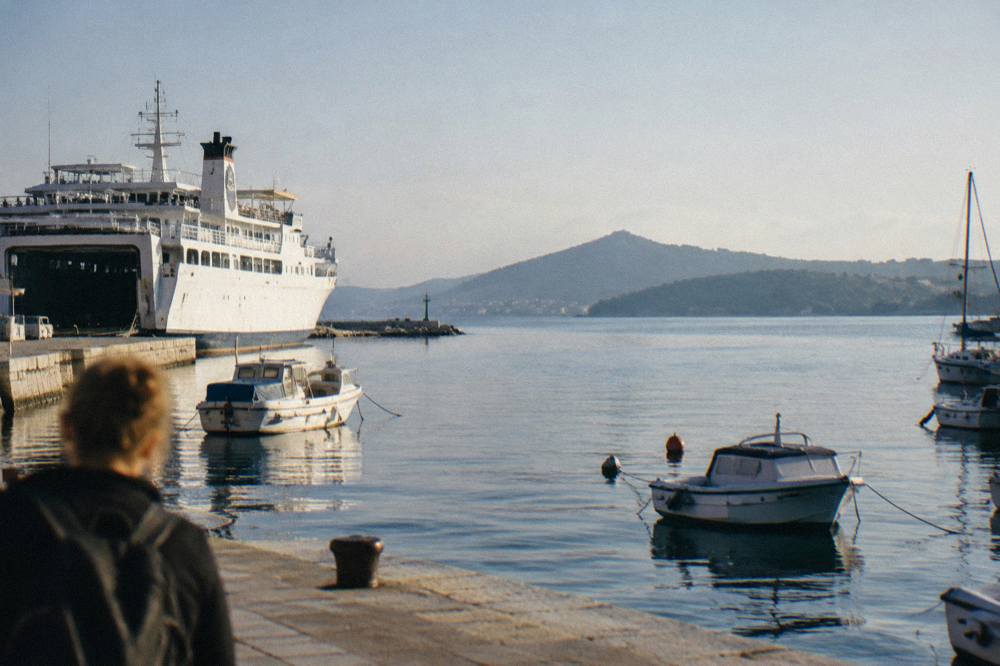
There are four practical ways from Split to Zagreb: the coach, which takes about 5 hours 30 minutes; the train, which takes about 7 hours 15 minutes to 8 hours 10 minutes; the car, on the A1 motorway; and the direct flight between the two airports. The coach and the train both depart from Obala kneza Domagoja in Split, where the ferry port, the main bus station and the railway station sit together, 500 to 600 m from Diocletian's Palace.
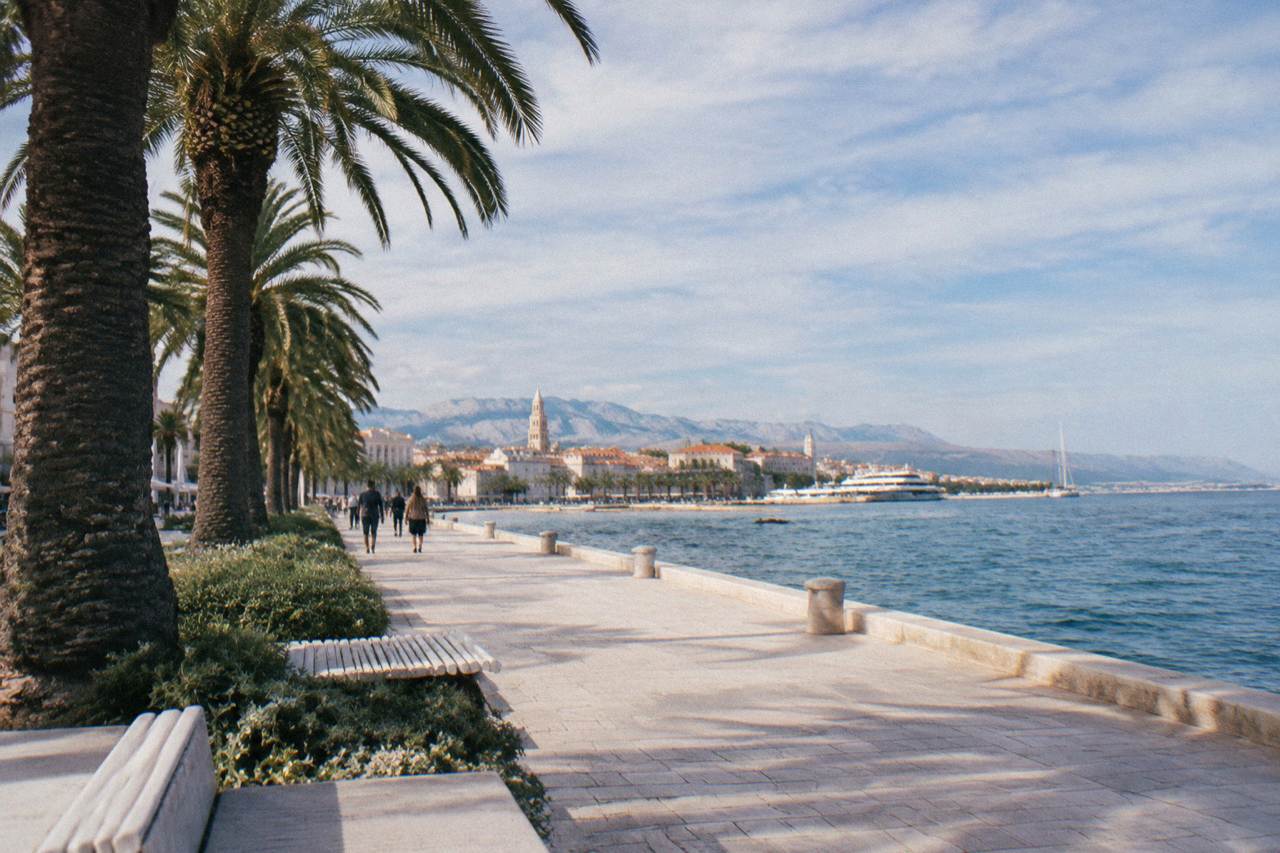
That station cluster is the single most useful fact about leaving Split overland. A traveller sleeping inside the palace walls can walk to the ferry port, the bus station and the rail terminal in under ten minutes without crossing a road of any size. The walk is flat, signposted and the same in both directions, which makes a morning departure from Split unusually painless compared with cities where the airport bus and the rail station sit at opposite ends of town.
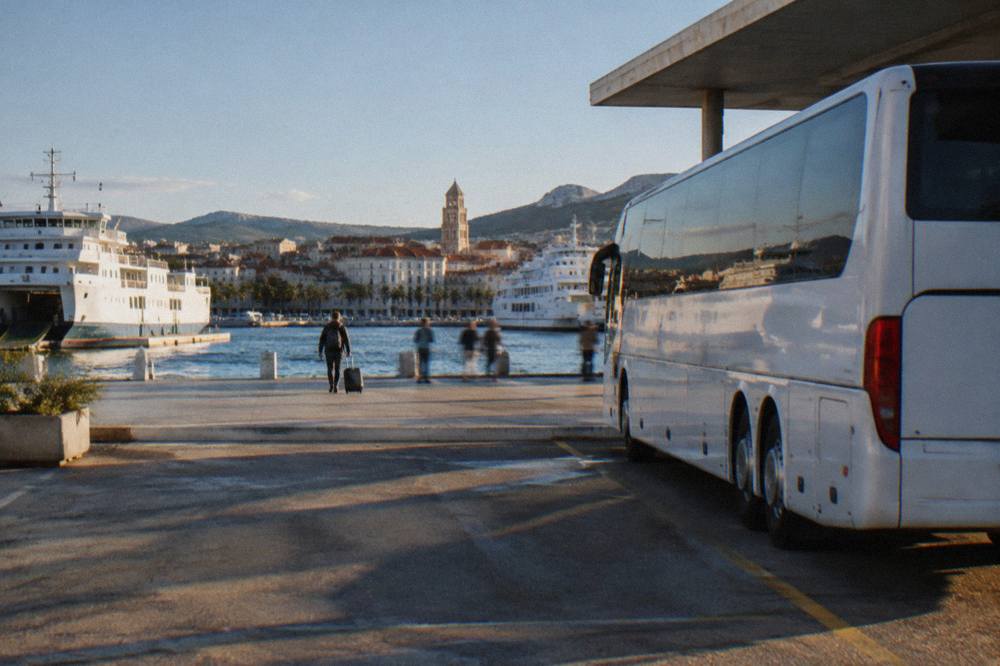
The coach is the workhorse of this route. Journey times of about 5 hours 30 minutes are reported for the Split to Zagreb run, with services spreading across the day and the season; seats are cheapest and scarcest in July and August, when the Adriatic coast fills and the corridor doubles as the country's main holiday artery. The train is slower on paper but runs a scenic line through the Dinaric Alps, and the fare structure suits travellers who prefer rail. Fares for neither service are published in a form this site can quote, so confirm the price when booking.
If the coach sounds like your way north, book a bus ticket here.
| Option | Approximate journey time | Where it starts in Split | Notes |
|---|---|---|---|
| Coach | About 5 h 30 | Main bus station, Obala kneza Domagoja | Frequent in season; book ahead in July and August |
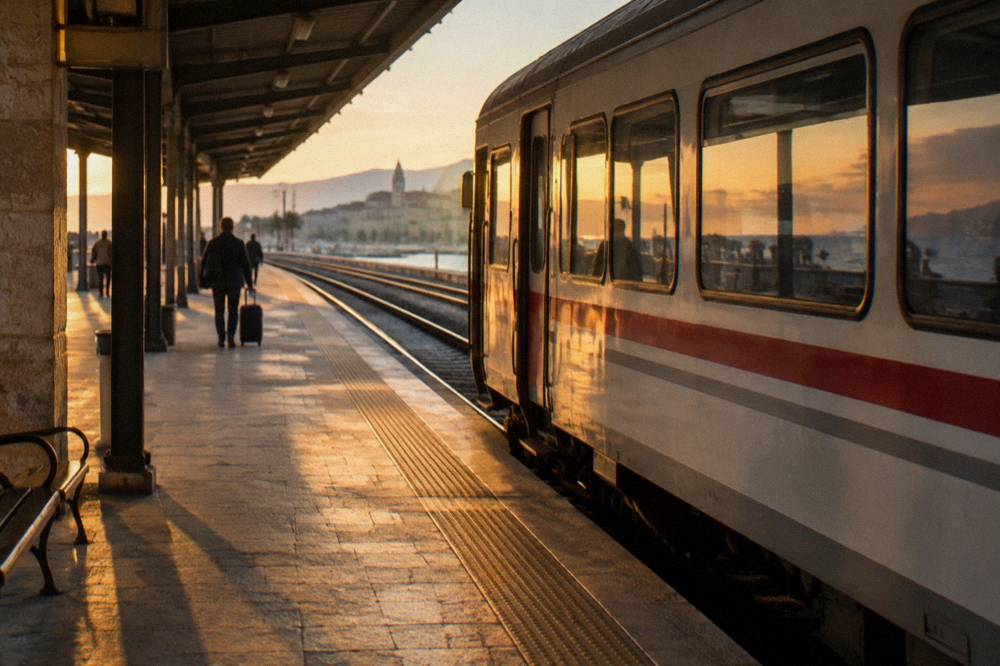
| Train | About 7 h 15 to 8 h 10 | Railway station, Obala kneza Domagoja | Mountain line; times are secondary-source figures |
| Car | A1 motorway the whole way | City centre to motorway via the A1 junction | Full freedom; toll and fuel costs confirmed en route |
| Plane | Under 1 h in the air | Split Airport (SPU), Kaštel Štafilić | Airport is 20 km from Split, 6 km from Trogir |
Before committing to a schedule, it is worth settling what the journey is for. A traveller with a flight out of Zagreb needs certainty and should build in a night in the capital. A traveller simply moving between the two cities for sightseeing can often fold the transfer into the trip itself, stopping at Plitvice Lakes or Krka on the way, and the question of which park pairs better with which end of the route is covered on Which Is Closer To Split Or Zagreb.
Is The Train Or The Coach Better From Split To Zagreb?
The coach is faster, at about 5 hours 30 minutes against about 7 hours 15 minutes to 8 hours 10 minutes for the train, and it runs from the same station cluster on Obala kneza Domagoja. The train trades speed for the mountain scenery of the line through the Dinaric range and arrives at Zagreb's main station, walkable to the city centre. Both times are secondary-source figures, so treat them as planning ranges rather than timetable guarantees.
The train journey's appeal is the landscape. The line climbs out of the Split hinterland and threads valleys for hours, and in an era when European rail travel is enjoying a revival this is one of the Balkans' more atmospheric rides. Against that stands the reality of the timing: a journey that eats a large part of a day each way. The coach covers the same distance faster on the A1 and costs, in most seasons, less, though no fare for either mode can be quoted here as a figure.
Practical differences go beyond speed. The coach station in Split shares its building with the ferry terminal's neighbourhood, meaning an arrival from Hvar or Brač can connect straight to a Zagreb service without a transfer. The railway station next door does the same for rail. In Zagreb, the coach terminal and the main railway station are separate, so the choice of mode also decides where in the capital a traveller first lands. Neither station's onward connections need a taxi; both sit on the city's tram network.
Booking is straightforward for both. Coach seats on this corridor sell out in peak summer, and the standard advice from the operators' own systems is to book a day or two ahead in July and August. Train tickets can be bought at the station on the day, though that carries the usual risk in high season. For either mode, confirm the current timetable before travelling: schedules shift between summer and winter, and no departure frequency for this route can be stated as a fixed number here.
Where Do You Catch Transport In Split, And How Do You Reach The Airport?
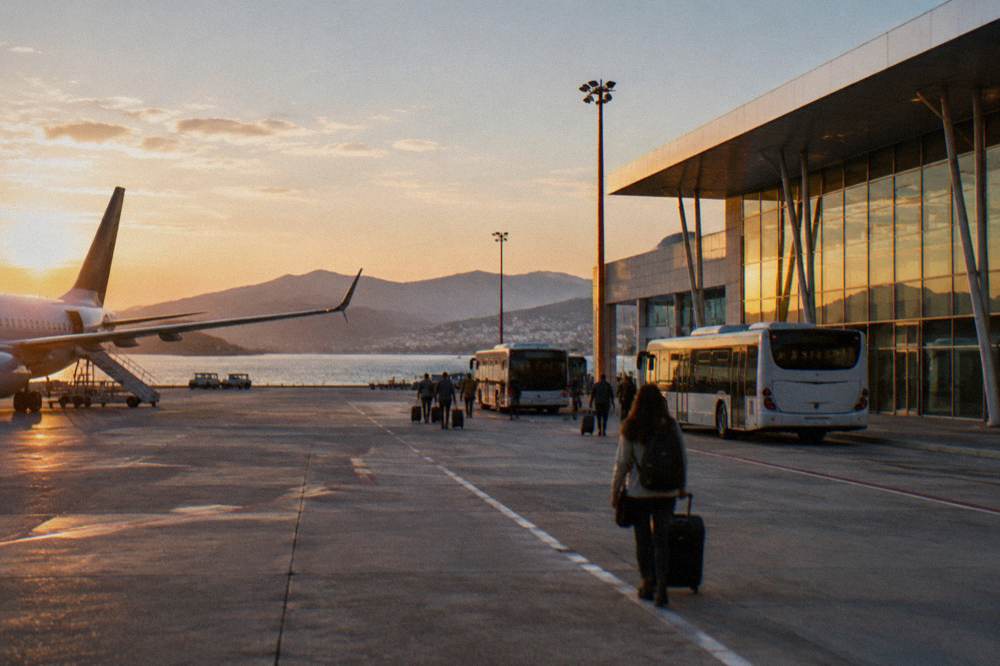
Every long-distance mode except the plane leaves from one place: the ferry port, the main bus station and the railway station all sit together on Obala kneza Domagoja, 500 to 600 m from Diocletian's Palace, so the choice of coach or train does not change where you walk.
The airport is different: Split Airport sits in Kaštel Štafilić, 20 km from Split and 6 km from Trogir by the airport's own pages, and the Platanus shuttle runs from it to the main bus station for 10 EUR one way or 15 EUR return.
The airport's location is the fact most often mangled in online guides. The airport is not a short hop from the city centre; the airport's own pages give 20 km from Split and 6 km from Trogir, and driving from the palace measures 24.9 km, about 31 minutes free-flow. A traveller with a morning flight needs to allow real time for that transfer, not the ten minutes some listings imply. The full transfer picture, including the city bus lines, is laid out in Split Airport To City Centre.
Two public bus lines, Promet Split's numbers 37 and 38, stop at the airport, and their fare runs to a few euros; confirm it on board, because the exact figure is not published in a form this site can quote. The dedicated shuttle is operated by Platanus and runs between the airport's north parking and the main bus station by the ferry port, at 10 EUR one way and 15 EUR return per the operator's own page. That shuttle terminates at exactly the cluster where the Zagreb coaches leave, which makes it a clean connection for a fly-then-ride itinerary.
For anyone weighing whether to fly between Split and Zagreb at all rather than ride the corridor overland, the airport pages are the place to start, and Flights To Split covers the route map, including the fact that Split Airport handled 3,881,186 passengers in 2025 per its own statistics page. The domestic link to Zagreb is short in the air but adds two airport transfers at the ends, and the sums rarely favour it once the ground legs are counted honestly.
Is It Worth Driving From Split To Zagreb?
Driving gives the only route with full schedule freedom, on the A1 motorway for essentially the whole distance, and it opens the stops the coach skips: Krka National Park at about 74 minutes from Split, Plitvice Lakes at about 3 hours 15, and the inland towns between. The trade-offs are tolls and fuel, whose figures are not published in a form this site can quote, and summer traffic on the coast.
The stopping argument is the strong one. A car turns the Split to Zagreb transfer into a day trip in its own right. Krka's Skradinski buk entrance lies 90.2 km and about 74 minutes' free-flow driving from Diocletian's Palaceby road. Plitvice Lakes lie 258.1 km out, about 3 hours 15, which places them a little over halfway to the capital and makes them the classic overnight split of the journey. Both parks run seasonal pricing, tabled below, and both reward an early start.
Against that, the corridor in July and August carries the full weight of Croatian holiday traffic, and the coastal approach to Split slows badly in the afternoons. Renting a car in Split for a one-way drive to Zagreb is possible with the major agencies, but one-way fees and drop-off conditions vary by operator and season and no rate can be quoted here; the practicalities are collected in Split Car Rental. Parking in Zagreb's centre is easier than in Split's but not free, and no tariff figure is published on a page this site can cite.
The motorway itself is modern, tolled and well serviced, with service areas every few dozen kilometres. Tolls are paid at gates or by electronic tag; the amounts are set by the operator and change, so check the current tariff before budgeting. For a traveller whose real goal is Zagreb and who has no appetite for park stops, the coach remains the simplest instrument, and for one building the trip around Plitvice the question of routing is answered in Plitvice From Split Or Zagreb.
| Stop from Split | Driving distance from Diocletian's Palace | Free-flow time | Entry, adult |
|---|---|---|---|
| Krka National Park (Skradinski buk) | 90.2 km | About 74 min | 7 EUR Jan to Mar and Nov to Dec, 20 EUR Apr, May, Oct, 40 EUR Jun to Sep |
| Šibenik | 84.8 km | About 71 min | Cathedral of St James, UNESCO 2000 |
| Plitvice Lakes | 258.1 km | About 3 h 15 | 10 EUR 1 Jan to 31 Mar and 1 Nov to 31 Dec, 23 EUR Apr, May, Oct, 40 EUR 1 Jun to 30 Sep, 25 EUR afternoon slot in peak |
| Zagreb | Not published in a citable form | Not published in a citable form | Capital city |
What Should You Do In Split Before Leaving For Zagreb?
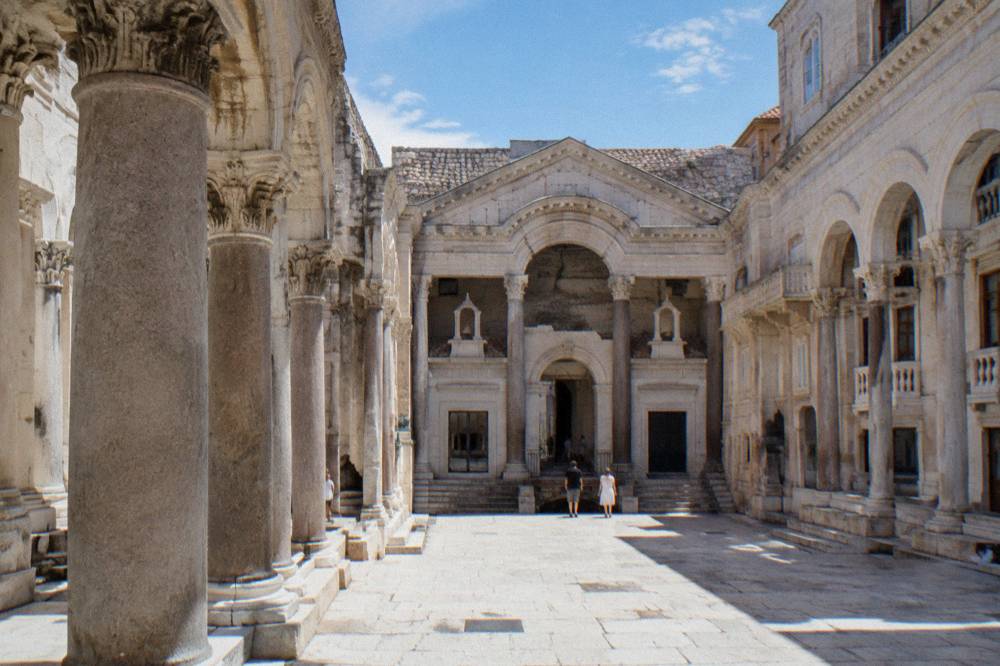
Spend at least a full day inside Diocletian's Palace, built about 295 to 305 AD for the emperor who retired here, and inscribed by UNESCO in 1979 as the Historical Complex of Split with the Palace of Diocletian, covering 20.8 hectares. The Peristyle, the Riva, the Golden Gate, the Grgur Ninski statue, the markets, Marjan hill and the city beaches are all free, so a departure day in Split need not cost a museum ticket.
The paid sights inside the palace are cheap and concentrated. The cellars, run by the Split City Museum, are open Monday to Sunday 8:30 to 20:00, with the museum's own price list showing 10.00 EUR adult, 8.00 reduced and 18.00 family at the Papalić Palace site; the central part of the cellars is under restoration to the end of 2026, with the passage staying open. The Cathedral of St Domnius complex is sold as singles and combinations at the Peristyle kiosk, at roughly 5 EUR for a single site up to about 15 EUR for all five, and shoulders and knees must be covered. The bell tower, 57 m high, is part of that scheme.
Beyond the walls, the Marjan peninsula park rises on the city's western side: 3.5 km long, 1.5 km wide, with its highest point Telegrin at 178 m and 819 steps from Trumbićeva obala to the top. The Meštrović Gallery reopened in April 2026 after a fifteen-month energy renovation, at 12.00 EUR adult including the Crikvine-Kaštilac site, and the Archaeological Museum, founded in 1820, charges 8 EUR, or 10 EUR combined with Salona within seven days. Those hours and prices come from the institutions' own published lists.
A guided walk compresses the palace's layered history into a single morning, and the city's tip-based walks run daily through the season; confirm arrangements with the guide on the day. Scheduled food walks are another way to read the city, pairing the green market with tastings across the old town, and the wider food picture, from peka to fresh Adriatic fish, is covered in Split Food. If the departure is late in the day, the Roman guard change on the Peristyle at noon, which ran 28 May to 27 September 2026 in its latest season, makes a fixed point to plan around.
| Site in Split | Adult price | Source detail |
|---|---|---|
| Diocletian's Palace cellars | Open Mon to Sun 8:30 to 20:00 | Run by Split City Museum; central part under restoration to end of 2026 |
| Split City Museum, Papalić Palace | 10.00 EUR, family 18.00 EUR | Tue to Sun, closed Mondays |
| Cathedral of St Domnius complex | From about 5 EUR, up to about 15 EUR combined | Singles and combos at the Peristyle kiosk; shoulders and knees covered |
| Meštrović Gallery | 12.00 EUR | Includes Crikvine-Kaštilac; reopened April 2026 |
| Archaeological Museum | 8 EUR, 10 EUR combined with Salona within 7 days | Founded 1820 |
| Marjan, Peristyle, Riva, Golden Gate | Free | Open public space |
Can You Stop At Plitvice Lakes Or Krka On The Way?
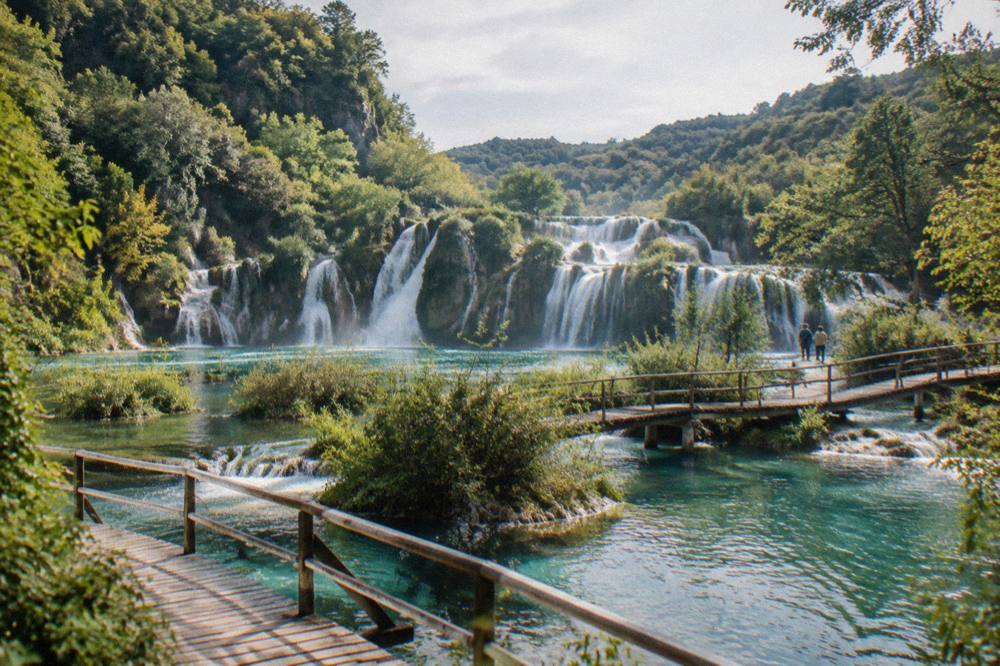
Yes, and the geography favours it: Krka's Skradinski buk entrance is about 74 minutes' drive from Split and Plitvice about 3 hours 15, so Krka works as a half-day stop on a Split departure and Plitvice as the centrepiece of a split journey with one overnight. Plitvice operates timed online entry with the visitor's name on the ticket, so the stop needs booking ahead rather than turning up.
Plitvice's ticketing is the detail that decides itineraries. Entry is sold through the park's official webshop in timed slots, the visitor's name is mandatory on the ticket, and prices run 10 EUR in the January to March and November to December windows, 23 EUR in April, May and October, and 40 EUR from 1 June to 30 September, with a 25 EUR afternoon slot in the peak window. The name rule makes spontaneous resale or transfer impossible and gives the timed slot real force. Krka prices move in parallel, at 7, 20 and 40 EUR across the same seasonal windows, and the Krka ticket includes the Skradin boat and Lozovac bus transfers from 1 April to 31 October.
One rule at Krka deserves its own sentence: swimming is allowed only in clearly marked areas, with designated spots reported at Roški slap, Stinice and Pisak between 1 June and 30 September. The postcard image of bathing beneath Skradinski buk does not match the park's rules, and the park's own regulations page says so plainly. Plan the visit around the boardwalks and viewpoints, not a swim.
For travellers without a car, both parks run as organised day trips from Split, returning to the city by evening, which suits a Zagreb departure the following morning better than trying to fold a park into transfer day itself. The full comparison of the two parks, including which pairs better with which end of the country, is in Split Day Trips and the dedicated Plitvice Lakes and Krka National Park guides.
When Is The Best Time Of Year To Make This Journey?
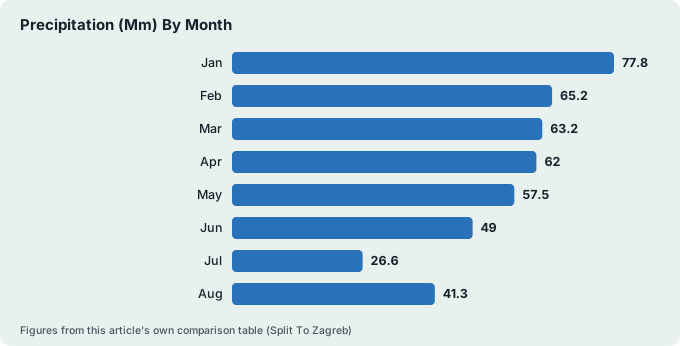
July and August are the warmest and busiest months, with DHMZ Split Marjan station means of 26.2 C and 25.9 C and 18 and 17 days at 30 C or more respectively, so shoulder months suit the journey better: May averages 19.2 C and September 21.6 C on the same 1948 to 2024 station record, with thinner crowds and cheaper seats. November is the wettest month at Split at 115.5 mm, July the driest at 26.6 mm.
The climate table below is the DHMZ Split Marjan station record for 1948 to 2024, and it frames the choice honestly. Winter travel is perfectly feasible, and the corridor runs all year, but the coast in January, at a mean of 8.0 C, is a different proposition from the summer photographs, and December sunshine on the coast runs to just 120.8 hours against July's 353.3. Anyone pairing a Zagreb trip with coastal days should tilt to late spring or early autumn.
Event calendars pull in the other direction at specific moments. Ultra Europe takes Park Mladeži in Split on 9 to 11 July 2027, and that week fills coastal transport and accommodation far beyond normal summer levels; the picture is covered in Ultra Europe. At the winter end, Advent in Split runs 27 November 2026 to 7 January 2027 with the ice rink at Đardin, and Zagreb's own Advent market makes December a deliberate destination rather than an off-season compromise, so winter is not simply to be avoided. The month-by-month detail sits in Best Time To Visit Split.
One more planning note: the Riva, Split's waterfront promenade, is scheduled for renovation of its central section from November 2026 for a little over a year, so partial closures on the Riva are expected through 2027. The works do not affect transport, but a traveller picturing the promenade from a summer visit should expect fencing and equipment in the middle stretch during that window. Weather and seasonal detail for the city as a whole is in Split Weather.
| Month | Mean temperature (C) | Precipitation (mm) |
|---|---|---|
| Jan | 8.0 | 77.8 |
| Feb | 8.5 | 65.2 |
| Mar | 10.8 | 63.2 |
| Apr | 14.4 | 62.0 |
| May | 19.2 | 57.5 |
| Jun | 23.4 | 49.0 |
| Jul | 26.2 | 26.6 |
| Aug | 25.9 | 41.3 |
| Sep | 21.6 | 70.9 |
| Oct | 17.2 | 77.0 |
| Nov | 12.7 | 115.5 |
| Dec | 9.4 | 103.7 |
What Should You Know About Croatia, Money And Entry Before Travelling?
Croatia uses the euro since 1 January 2023 and is a full Schengen member since 1 January 2023, so there are no border formalities between Split and Zagreb, and the emergency number is 112. Tourist tax runs at about 2.65 EUR per person per night in high season, 1 April to 30 September, with under-12s free and 12 to 18-year-olds at half rate, collected by the accommodation and confirmed at booking.
Two border-system changes matter for non-EU visitors in 2026. The EES, the European Union's digital entry-exit system recording biometrics at external Schengen borders, has been fully operational since 10 April 2026, replacing passport stamps for short-stay third-country nationals. ETIAS, the travel authorisation for visa-exempt visitors, is not yet live and has no fixed start date, so no ETIAS application should be paid for ahead of announcements. Neither affects the domestic Split to Zagreb journey, but both affect how a visitor arrives in the country in the first place.
Behaviour rules inside Split tightened in 2026 and are worth knowing even on a short stay. The city's public-order decision sets fines of 300 EUR for drinking alcohol in the historic centre or within 100 m of schools, for urinating in public, for climbing on monuments or bathing in fountains, and 150 EUR for sleeping in public spaces. Walking through the historic core in swimwear or shirtless is also fined, with the amount set locally. Shops in the historic core face a night-time retail alcohol sales ban in summer, while bars and restaurants serve as normal; the practical detail is laid out in What To Avoid In Split.
Should You Stay In Split Or Zagreb Longer?
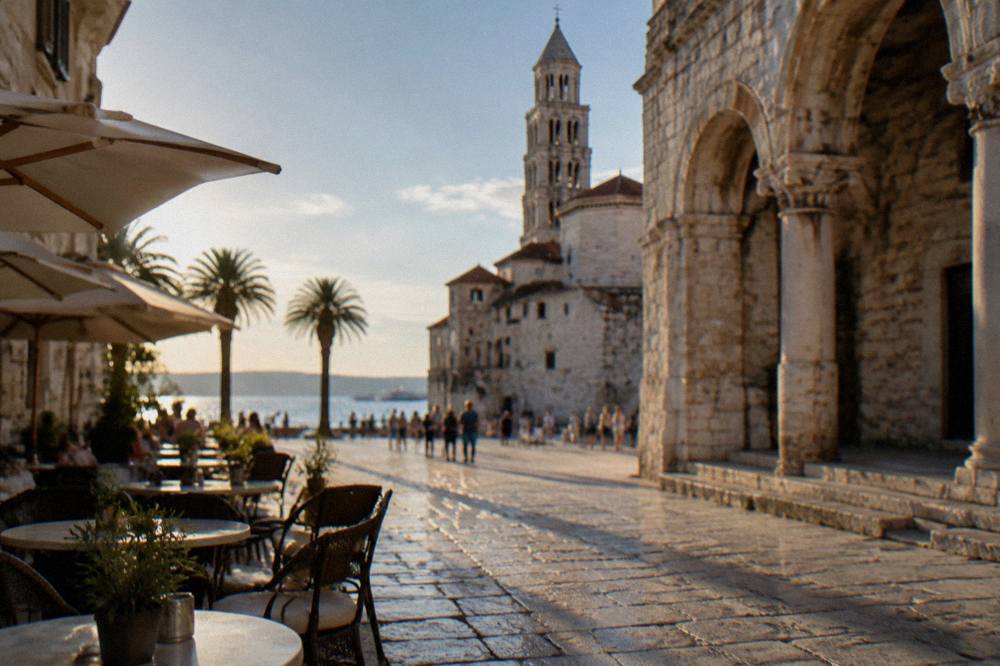
Split rewards the longer stay for anyone whose heart is on the coast and the islands: Hvar is about 120 minutes by car ferry to Stari Grad or a short catamaran hop, Brač about 50 minutes, Šolta about 60 minutes, and the Cetina canyon, Klis Fortress and Trogir all sit within 40 minutes of the palace. Zagreb rewards travellers heading onward to Slovenia, Hungary or Austria, and works best as the flight-out city at the end.
The island arithmetic is the decisive part. Jadrolinija's line 635 runs Split to Stari Grad on Hvar in about 120 minutes, with foot passengers paying 5.90 EUR off-season and 8.40 EUR in season; line 631 to Supetar on Brač takes about 50 minutes and from 2026 runs with no off-season timetable at all; line 636 to Rogač on Šolta takes about 60 minutes; Vis is about 140 minutes. Catamarans reach Hvar and Jelsa for 6.40 EUR low season and 10.00 EUR high, and Vis for 7.20 and 10.00. From Zagreb, none of that is a day trip; from Split it is a morning's sailing. The mechanics are in Ferries From Split and Split To Hvar Ferry.
The boat-day economy around Split is the reason many travellers invert the trip: fly into Zagreb, spend a day or two, ride south, and spend the real time on the coast. A full-day speedboat outing to Zlatni Rat, Hvar and the Pakleni islands covers in one seat what would otherwise take four separate ferry days, and pairing it with the green market and a food walk gives a Split base a complete shape. The comparison some travellers face between the two cities on their own merits is argued out in Which Is Nicer, Zagreb Or Split.
For a trip built the other way, with Split first and a Zagreb departure last, the same logic says: give Split the islands and the palace, give the corridor one park stop, and give Zagreb a final evening around its upper town and market hall rather than a rushed half-day. Accommodation choices for the coastal end are laid out in Where To Stay In Split, and the cost side of a Split stay, including what eating out actually runs, is in Split On A Budget and Is It Expensive To Eat In Split.
What Are The Common Mistakes On The Split To Zagreb Route?
The recurring mistakes are assuming the airport is minutes from the city centre when the airport's own pages give 20 km, underestimating the train's duration at about 7 hours 15 minutes to 8 hours 10 minutes against the coach's about 5 hours 30, and trying to swim at Krka's Skradinski buk, where swimming is allowed only in clearly marked areas. Booking Plitvice on arrival rather than online, in timed slots with the visitor's name on the ticket, is another.
The airport error is the costliest because it breaks flight connections. The Platanus shuttle at 10 EUR one way and 15 EUR return lands at the main bus station, not at the airport's doorstep in reverse; allow the full transfer time each way. The second common error is scheduling: a traveller who plans a Zagreb evening around a train departure that the timetable does not actually offer loses the evening. Timetables for both modes shift seasonally, and the times quoted here are secondary-source ranges, so check the operator's current schedule on the day of booking.
The third is the park squeeze. Plitvice's timed entry means a same-day arrival without a booked slot can end without entry at all in July and August, and Krka's boat and bus transfers inside the ticket, from 1 April to 31 October, add fixed time around the walking. The fourth is island confusion: Hvar town is reached by catamaran, while Stari Grad is the car ferry port on the same island, and a ticket to one is not a ticket to the other. The details and prices are in the ferry guides linked above, and a full first-day plan for the city is in One Day In Split.
Common Questions About Travel From Split To Zagreb
How long is the journey from Split to Zagreb?
The coach takes about 5 hours 30 minutes and the train about 7 hours 15 minutes to 8 hours 10 minutes. Driving on the A1 motorway takes roughly the same as the coach in free-flow conditions, plus stops, and flying is under an hour in the air before airport transfers at both ends are added.
Where does the coach to Zagreb leave from in Split?
From the main bus station on Obala kneza Domagoja, which sits together with the ferry port and the railway station, 500 to 600 m from Diocletian's Palace. The Platanus airport shuttle terminates at the same station, at 10 EUR one way and 15 EUR return, which makes bus-to-coach connections straightforward.
Is the train from Split to Zagreb scenic?
Yes. The line runs through the Dinaric mountain range for much of its length, and the scenery is the main argument for it despite the longer time of about 7 hours 15 minutes to 8 hours 10 minutes. The times are secondary-source figures, so confirm the current timetable before booking.
Can you stop at Plitvice Lakes between Split and Zagreb?
Yes. Plitvice lies about 3 hours 15 free-flow driving from Split, close to halfway to the capital, making it the classic overnight split of the journey. Entry is by timed online slot with the visitor's name on the ticket, at 10 EUR in winter, 23 EUR in April, May and October, and 40 EUR from 1 June to 30 September, with a 25 EUR afternoon slot in peak.
Is it cheaper to fly or take the coach from Split to Zagreb?
Fares for neither mode are published in a form this site can quote, so no comparison figure is printed here. The domestic flight is short but adds two airport transfers, including the 20 km run between Split and its airport, and in practice the coach is usually the simpler option for the corridor. Compare live prices at booking.
Do you need a passport to travel from Split to Zagreb?
No. Croatia has been a full Schengen member since 1 January 2023, so there are no border checks on a domestic journey between the two cities. Non-EU visitors should carry their passport regardless, and should know that the EES digital entry-exit system has been fully operational at external Schengen borders since 10 April 2026.
The corridor from Split to Zagreb is Croatia's spine, and the choice between coach, train, car and plane comes down to time, scenery and what sits along the way. Give the coastal end of the route its islands and its palace before riding north, book the parks and the peak-week seats ahead, and check the live timetables on the day of travel.