Gregory Of Nin Statue
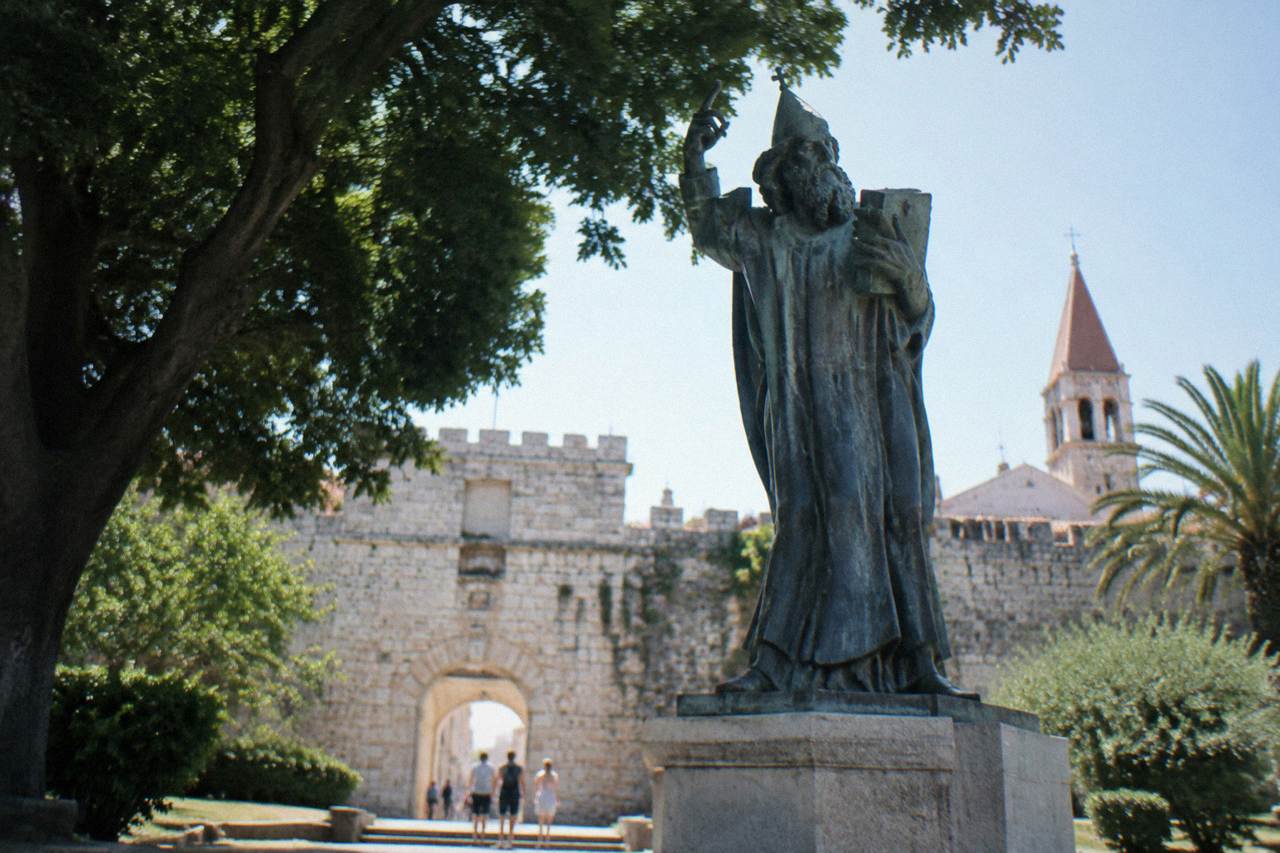
The Gregory of Nin statue stands beside the Golden Gate at the north edge of Diocletian's Palace in Split, one of the few landmarks in the city centre that costs nothing to see and sits within a five minute walk of the cathedral, the Peristyle and the cellars.
Short answer
The Gregory of Nin statue in Split stands outside the Golden Gate of Diocletian's Palace. It is an outdoor bronze, free to visit at any hour, and it marks the usual starting point for Old Town walking routes toward the Peristyle, the cathedral and the Riva.
Split keeps its biggest landmarks close together, and the Gregory of Nin statue is the one that anchors the northern edge of that cluster. The bronze figure of the medieval bishop Grgur Ninski, Gregory of Nin, stands beside the Golden Gate of Diocletian's Palace, at the point where the ancient imperial residence meets the later city streets. It is an outdoor monument with no ticket, no queue and no opening hour, which makes it the easiest landmark in the Old Town to visit and, for that reason, the one almost every walking route through the palace passes first. This page from Split Croatia Travel Guide covers what the statue is, where it sits, what it costs, what surrounds it, and how it fits into a day in Split.
What Is The Gregory Of Nin Statue In Split?
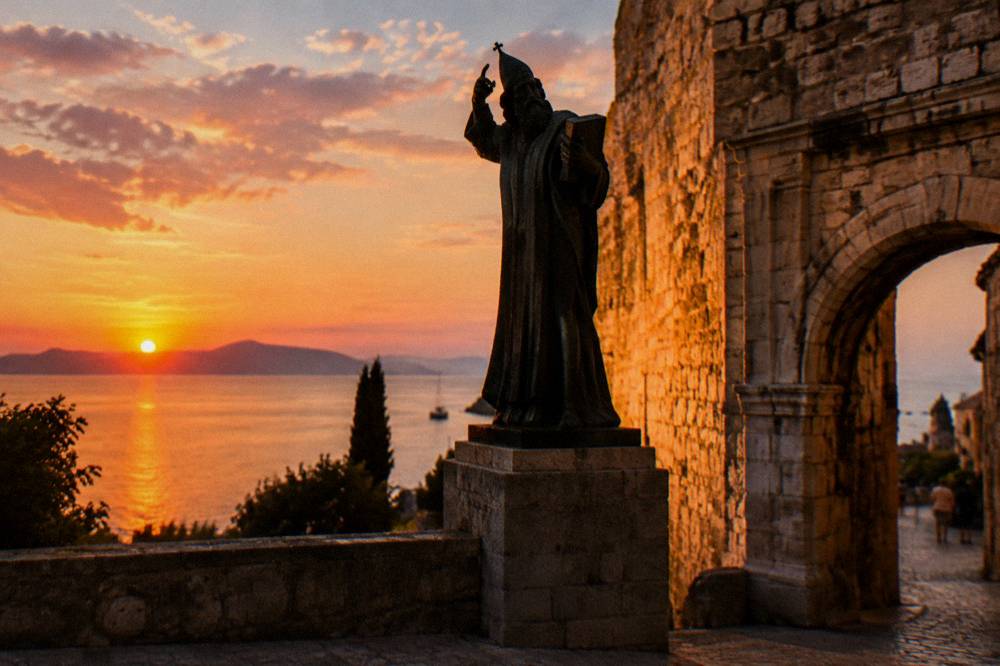
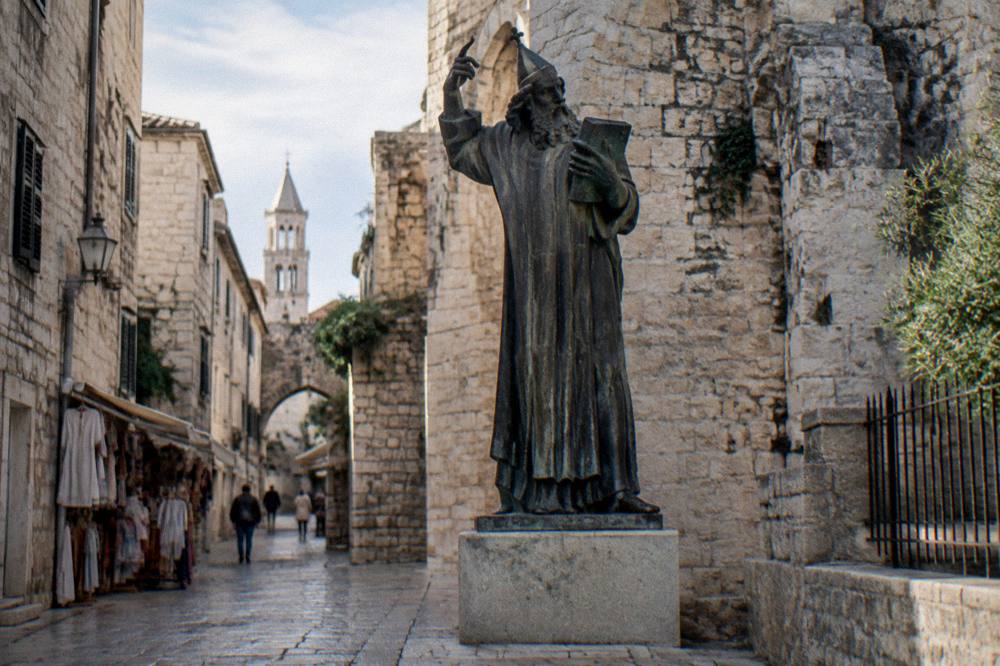
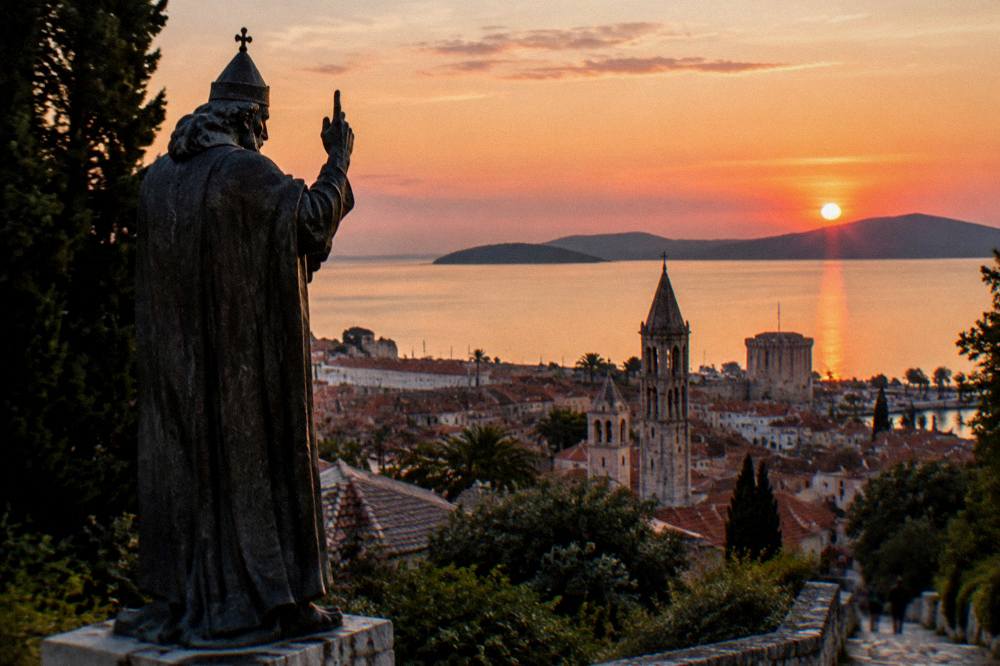
The Gregory of Nin statue is an oversized bronze figure of Bishop Grgur Ninski, Gregory of Nin, a medieval churchman shown in a sweeping robe with an outstretched arm, and it stands on a stone base beside the Golden Gate at the north edge of Diocletian's Palace in Split. It is an open air monument in public space, it belongs to the free tier of Split's sights, and it is one of the most photographed objects in the city.
The statue depicts a bishop whose name is tied to Croatian church history, and the figure communicates that role before any plaque is read: the robe, the height and the commanding gesture read as a preacher in mid address. The sculptor's own museum in the city, the Meštrović Gallery, holds the wider body of work by the artist whose name Split attaches to this bronze, and the gallery's price list shows a 12.00 EUR adult ticket that also covers the Crikvine-Kaštilac site. The gallery reopened in April 2026 after a fifteen month energy renovation, with a new exhibition on the house as a space of life and art.
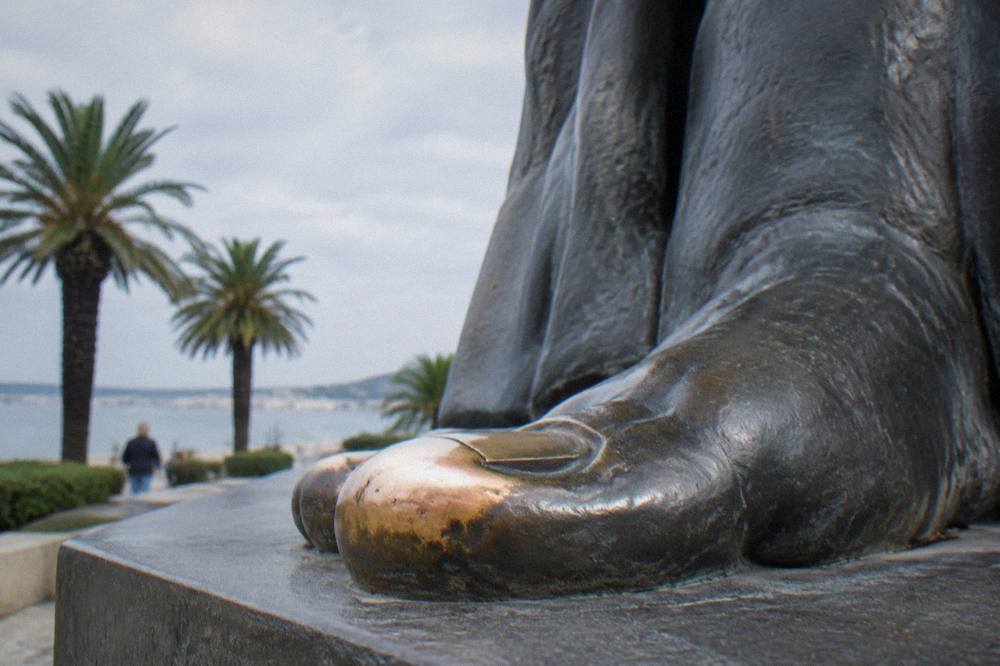
What makes the statue work as a landmark is scale and placement. The figure towers over the pedestrians who pass it on their way through the Golden Gate, and the contrast between the dark bronze and the pale Roman wall behind it makes the scene legible from a distance. The exposed toe of the figure, polished smooth by years of touching, is the detail that identifies the statue in photographs, and the polished patch is visible on the bronze itself.
The statue also functions as a piece of city wayfinding. Guides gather groups at the Golden Gate, tours of the palace begin at the north wall, and the small square around the monument is one of the few open breathing spaces at the edge of the dense palace grid. From the statue, everything in the Old Town is a short walk: the Peristyle, the cathedral, the cellars, the Riva and the Green Market are all within the radius the palace itself defines, a UNESCO property of 20.8 hectares listed as the Historical Complex of Split with the Palace of Diocletian since 1979.
For planning purposes, treat the statue as the front door of the palace rather than as a destination on its own. A visit of a few minutes for photographs is normal, and the surrounding sights, not the bronze itself, fill the hour or two around it.
Where Is The Gregory Of Nin Statue And How Do You Reach It?
The Gregory of Nin statue stands immediately outside the Golden Gate, the northern entrance of Diocletian's Palace in Split's Old Town. The ferry port, the main bus station and the railway station sit together on Obala kneza Domagoja, 500 to 600 m from the palace, so arriving passengers reach the statue on foot in under ten minutes from the transport hub.
Split's transport geography is unusually compact, and the Golden Gate benefits from it. Long distance coaches stop at the main bus station beside the ferry piers, Jadrolinija's car ferries and the catamaran quays are on the same waterfront, and the railway terminus completes the cluster. From any of them the walk to the statue crosses the Riva or passes the Prokurative and enters the Old Town from the south or west before reaching the north wall.
For cruise passengers the distance is the same story. The Port of Split handled 487,377 cruise passengers in 2025, and the port's own page records 6.05 million passengers across the year, making it Croatia's busiest passenger port. Cruise berths sit within an easy walk of the Old Town, and the Golden Gate is the standard far point of a self guided circuit from the ship, as laid out in the Split cruise port day itinerary.
| Arrival point in Split | Relation to the statue |
|---|---|
| Main bus station, Obala kneza Domagoja | 500 to 600 m, on foot |
| Ferry piers and catamaran quays | 500 to 600 m, on foot |
| Railway station | Same transport cluster, on foot |
| Cruise berths, Port of Split | Short walk to the Old Town, then the palace grid |
| Split Airport (SPU), Kaštel Štafilić | 20 km from Split, 6 km from Trogir by the airport's own pages |
From the airport the choice is the Platanus shuttle, which the operator's page prices at 10 EUR one way and 15 EUR return between the airport and the main bus station by the ferry port, or Promet Split city bus lines 37 and 38, which stop at the airport, with the fare confirmed on board. Driving from the palace to the airport is 24.9 km, about 31 minutes free flow. Once the shuttle reaches the bus station, the statue is the short walk north into the Old Town.
Inside the Old Town the approach is simple. The Golden Gate is one of the palace's principal gates, and the statue sits in the open space just outside it, at the foot of the north wall. Streets inside the palace converge on the north-south and east-west axes that meet at the Peristyle, so from the statue the route inward is the reverse: through the Golden Gate, along the cardo toward the Peristyle, with the cathedral and its 57 m bell tower ahead.
Three ways to build the visit around that geography:
A guided walk is the natural companion to the statue because the monument is dense with history that a passer by cannot read off the bronze. The walking tour with a professor of history begins in exactly this territory, the palace and its gates, and the same routes cover the Peristyle and the cathedral. Tip based walks also run locally; confirm arrangements with the guide on the day.
Curious about the centuries behind the bronze? Book a professor led walking tour here.
What Can You See Within A Short Walk Of The Gregory Of Nin Statue?
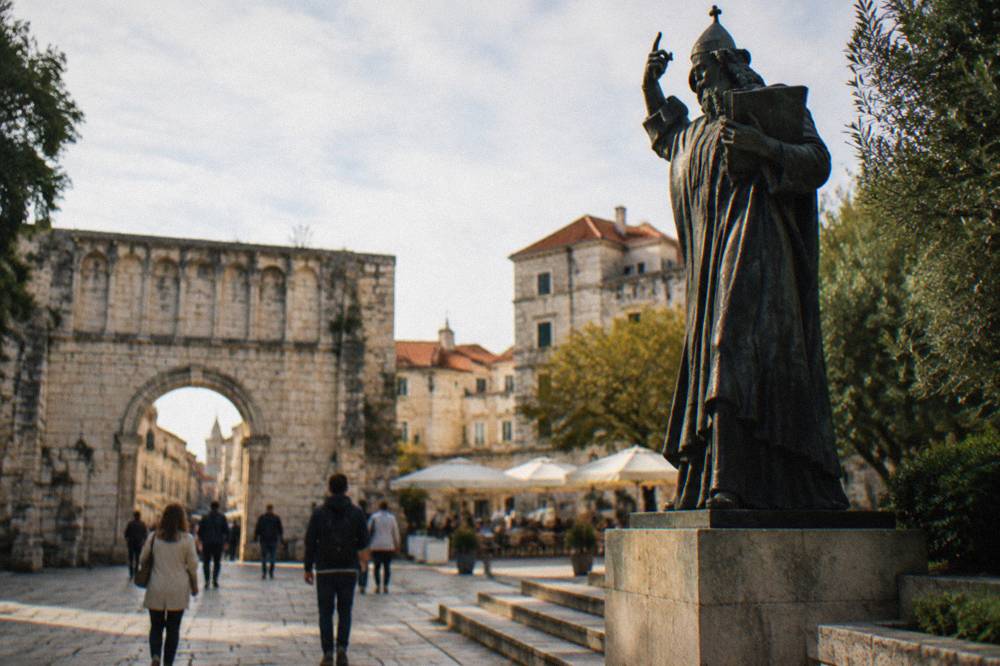
Within a few minutes of the statue you can reach the Golden Gate itself, the Peristyle, the Cathedral of St Domnius with its 57 m bell tower, the Temple of Jupiter, the palace cellars, the Split City Museum and the Riva waterfront. The cluster is the reason the statue works as a starting point: the whole of Diocletian's Palace, the core of Split's Old Town, spreads south of the pedestal.
The palace was built around 295 to 305 AD for the emperor Diocletian, and Split grew inside and around it. That layered history means the walk from the statue inward moves from Roman gate to medieval city without ever leaving the UNESCO property. The Peristyle, the palace's central courtyard, is the hinge of the route, and from there the cathedral complex, the baptistery in the former Temple of Jupiter and the entrance to the substructures are all steps away. The Golden Gate page and the Diocletian's Palace guide cover those pieces in detail.
Ticketed sites near the statue, at prices published by the institutions that run them:
| Site | Adult price | Source basis |
|---|---|---|
| Palace cellars (substructures) | Run by Split City Museum, open 8:30 to 20:00 daily | City Museum price list |
| Split City Museum, Papalić Palace | 10.00 EUR, 8.00 reduced, 18.00 family, closed Mondays | City Museum price list |
| Cathedral of St Domnius complex | From about 5 EUR, combined tickets up to about 15 EUR | Secondary guide pricing |
| Meštrović Gallery, includes Crikvine-Kaštilac | 12.00 EUR | Gallery price list |
| Ethnographic Museum | 7.00 EUR | Museum price list |
| Archaeological Museum | 8 EUR, 10 EUR combined with Salona within 7 days | Museum price list |
The free tier around the statue is just as strong. The Peristyle, the Riva, the Prokurative, the Golden Gate, the statue itself, the markets, Marjan and the city beaches all cost nothing. The Roman guard change on the Peristyle at noon ran from 28 May to 27 September 2026, a free spectacle that pairs well with a morning that starts at the Golden Gate.
One practical note for the walk south: the palace cellars' central part is under restoration and conservation to the end of 2026, with the passage staying open, so the substructures remain visitable during works. And the Riva's central section has a renovation planned from November 2026 for a little over a year, so partial closures on the waterfront should be expected through 2027. Neither affects the statue or the Golden Gate.
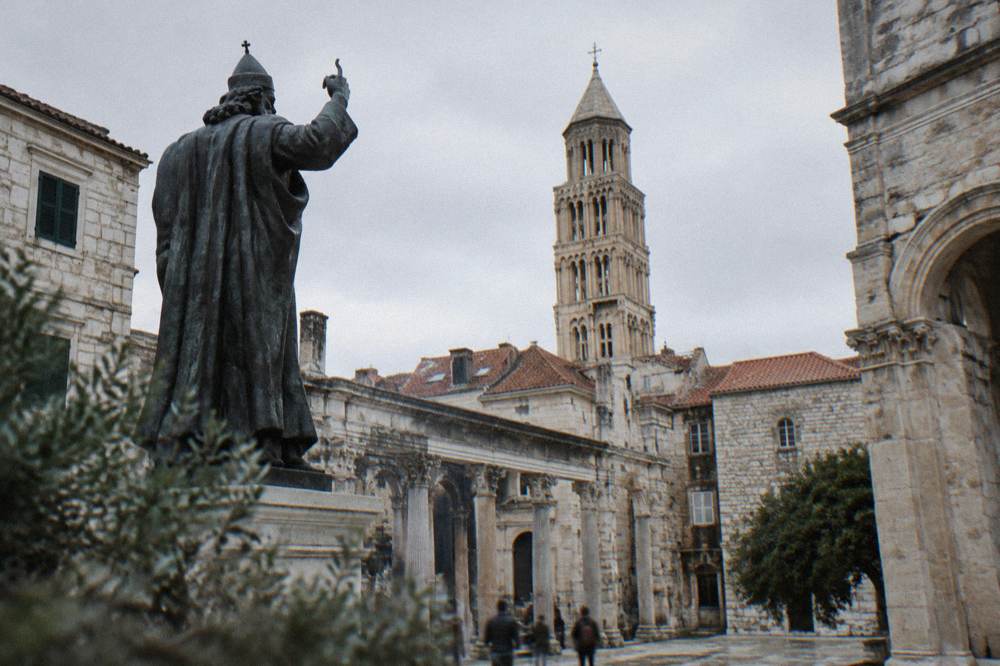
West of the Golden Gate the ground rises toward Marjan, the park forest peninsula whose highest point Telegrin stands 178 m above the sea, with 819 steps from Trumbićeva obala to the top. Marjan is 3.5 km long and 1.5 km wide, and the Marjan Hill guide covers its paths. The old fishing quarter of Veli Varos sits on the way, a quiet contrast to the palace grid. East of the statue, past the walls, the Split Green Market fills its stalls in the morning hours.
If the day has room for more than the city, the statue's position beside the transport hub makes it the natural last stop before a day trip. Klis Fortress is a 22 minute drive from the palace, Salona 14 minutes, Trogir 36, and the Krka National Park entrance at Skradinski buk 74. The sunset tour on Klis Fortress with its Game of Thrones views is one such option, and Klis served as a Meereen filming location.
Is The Gregory Of Nin Statue Free To Visit?
Yes. The statue stands in public open space outside the Golden Gate, there is no ticket, no gate and no closing time, and the official and civic sources that list Split's free sights place the Grgur Ninski statue alongside the Peristyle, the Riva, the Prokurative and Marjan in the free tier. The only costs around it are the museums and the cathedral complex, all of them optional.
That free status shapes how a budget day in Split is built. A circuit that starts at the statue, passes through the Golden Gate, follows the cardo to the Peristyle, crosses to the Riva and climbs into Marjan costs nothing at all, and it takes in the palace walls, the gate architecture, the courtyard and the sea views that define the city. The free things to do in Split guide maps that tier across the whole city.
For visitors who want depth rather than breadth, the paid additions near the statue are inexpensive and stackable. The Split City Museum at 10.00 EUR for an adult covers the Papalić Palace collection, the family ticket is 18.00 EUR, and the same institution runs the cellars. The cathedral complex runs from about 5 EUR for a single site up to about 15 EUR for a combined ticket covering all five, with shoulders and knees covered as the dress expectation. The Meštrović Gallery at 12.00 EUR adds the sculptor connection and includes the Crikvine-Kaštilac site in the same ticket.
| Split sight near the statue | Cost |
|---|---|
| Gregory of Nin statue | Free |
| Golden Gate and palace walls from outside | Free |
| Peristyle | Free |
| Riva promenade | Free |
| Prokurative square | Free |
| Palace cellars | Ticketed, Split City Museum |
| Cathedral complex | Ticketed, from about 5 EUR |
Timing costs nothing either. Early morning and the last hour of daylight are the quiet periods around the Golden Gate, and the light on the north wall is at its best late in the day. The DHMZ Split Marjan station table shows July means of 26.2 C and 18 days at 30 C or more in that month, with July sunshine of 353.3 hours, so summer afternoons at an unshaded monument are hot work and the shaded lanes inside the palace are the better midday route.
Are There Rules To Know Around The Gregory Of Nin Statue?
Yes, a small set of city rules applies to the historic core around the statue: drinking alcohol in public in the historic centre carries a 300 EUR fine, urinating, vomiting, climbing on monuments and bathing in fountains carry 300 EUR each, sleeping in public spaces carries 150 EUR, and walking in swimwear or shirtless in the centre is an offence whose amount is set locally.
The statue itself is a monument, and the climbing prohibition is the rule that touches it most directly. Children reaching for the bronze are one thing; standing or posing on the base is the conduct the rules target. The same public order decision bans open flame food preparation and unlicensed soliciting of tours and accommodation in the historic core, and the city's Enjoy Respect page carries the details.
Two further points are worth knowing for the 2026 season and beyond. Shops in the city, though not bars and restaurants, are barred from selling alcohol at night during the summer period, a seasonal restriction that repeats from 1 June 2027 unless changed, so late evening supplies come from licensed venues. And a drone flight over the old town is restricted: the palace and its surroundings, along with airport zones, are no fly areas, and national parks ban drones outright.
Dress is a practical matter only when the cathedral is on the route, since shoulders and knees must be covered inside. Around the statue and the streets, ordinary city clothing is fine, and the swimwear rule exists precisely because the beaches, Bačvice first among them, sit so close to the Old Town that the walk between them passes the Golden Gate. Change at the beach rather than walking through the centre in a swimsuit.
Which Tours And Day Trips Pair Well With The Statue?
Guided walking tours of Diocletian's Palace gather at or pass the Golden Gate and the statue, and the same transport hub 500 to 600 m away launches the Krka, Plitvice, Trogir, Klis, Omiš, Hvar and Blue Cave day trips, so the statue sits at the junction of city touring and excursion touring better than any other landmark in Split.
Within the city, the choice is between a small group palace walk, a history led walk and a themed route. The palace walking tours cover the Golden Gate, the Peristyle and the cathedral approach in one loop, and the food tours move the same streets with tastings at the Green Market and the konoba quarter. The Split walking tours guide compares them.
Beyond the city, the range of trips from Split is unusually wide, and the statue's position beside the bus station and ferry port shortens every departure. Krka National Park is a 74 minute drive to Skradinski buk, with entry at 40 EUR in the June to September peak, 20 EUR in April, May and October, and 7 EUR from January to March and in November and December, the ticket including the Skradin boat and Lozovac bus transfers from 1 April to 31 October. Swimming in the park is allowed only in clearly marked areas. Plitvice Lakes sit 3 h 15 away by road, with entry at 40 EUR in the 1 June to 30 September peak, 25 EUR for the peak afternoon slot, 23 EUR in April, May and October and 10 EUR in the winter months, timed online entry and the visitor's name on the ticket both required.
The water options leave from the piers a short walk south of the statue. Jadrolinija's line 635 car ferry to Stari Grad on Hvar takes about 120 minutes, with foot passengers paying 5.90 EUR off season and 8.40 EUR in season; line 631 to Supetar on Brač takes about 50 minutes; line 636 to Rogač on Šolta about 60; and the Vis ferry about 140. Catamarans reach Hvar town and Jelsa from 6.40 EUR low season and 10.00 EUR high, and Vis from 7.20 and 10.00. Remember the split: Stari Grad takes the car ferry, Hvar town takes the catamaran.
For an active half day rather than a full one, the zip line and canyoning options in the Cetina canyon above Omiš pair a morning at the statue with an afternoon in the gorge. Omiš itself is a 38 minute drive, its Mirabela fortress ticketed at 4 EUR and 6 EUR from 1 June to 30 September. The related tour for this page, with optional transportation from Split, is one such trip: Check availability.
| Day trip from Split | Driving time from the palace | Entry basis |
|---|---|---|
| Salona | 14 min | 10 EUR combined with Archaeological Museum within 7 days |
| Klis Fortress | 22 min | 10 EUR |
| Trogir | 36 min | Old town, UNESCO since 1997 |
| Omiš and the Cetina | 38 min | Mirabela 4 EUR, 6 EUR in summer |
| Šibenik | 71 min | St James Cathedral, UNESCO 2000 |
| Krka, Skradinski buk | 74 min | 7 / 20 / 40 EUR by month |
| Makarska | 75 min | Free town and beach |
| Zadar | 2 h | Free old town |
| Mostar | 2 h 13 | Old Bridge, UNESCO 2005 |
| Plitvice Lakes | 3 h 15 | 10 / 23 / 40 EUR by month |
| Dubrovnik | 3 h 21 | Walls 40 EUR |
How Do You Fit The Gregory Of Nin Statue Into A Day In Split?
Start at the statue and the Golden Gate early, walk the cardo to the Peristyle, buy the cathedral combination that suits you, descend into the cellars, cross to the Riva for the sea front, and then spend the afternoon on Marjan, at Bačvice or on a boat, because the statue marks the northern entrance of a palace whose far side opens onto the port and the island departures. The whole circuit is walkable, and nothing in it needs a vehicle.
The one day itinerary on this site follows that spine, and the one day in Split plan sequences the palace, the market and the waterfront with timings. Longer stays simply widen the circle: the two days in Split version adds Marjan and a museum morning, and the three days in Split version adds an island or Krka day using the departures described above.
Season matters less at the statue than at the beaches, because the monument is a year round sight. Split's station table, the DHMZ Split Marjan record for 1948 to 2024, gives a January mean of 8.0 C and a July mean of 26.2 C, with November the wettest month at 115.5 mm and July the driest at 26.6 mm. Winter visits trade swimming for Advent, which runs from 27 November 2026 to 7 January 2027 with the ice rink at Đardin, and both winter and summer deliver the statue in the same light beside the same Roman wall.
Families and short stay visitors get the most from the statue by treating it as the first and last stop of the day: the photo at arrival, the meeting point at departure, and the landmark that makes the Old Town legible. Split's Old Town is small enough that the Golden Gate reappears naturally whenever the route crosses the palace's north south axis, and the statue's height makes it visible over heads in the square outside the gate.
For the afternoon after the palace, the water options return to the foreground. The Blue Lagoon and Šolta cruise routes, the Hvar and Pakleni catamaran days and the Blue Cave speedboat trips all depart from the piers 500 to 600 m from the statue, and the Blue Cave itself charges 24 EUR in its 20 June to 10 September high season and 18 EUR in the shoulder months, paid in cash on site. The Blue Lagoon and Šolta guide and the Split boat tours guide compare those departures.
Common Questions About The Gregory Of Nin Statue
Is The Gregory Of Nin Statue In Split Free?
Yes. The statue stands in public space beside the Golden Gate of Diocletian's Palace, there is no ticket and no closing time, and it sits in the same free tier as the Peristyle, the Riva and Marjan.
Where Exactly Is The Gregory Of Nin Statue?
The statue stands immediately outside the Golden Gate, the northern gate of Diocletian's Palace in Split's Old Town. The bus station, railway station and ferry port are 500 to 600 m away on Obala kneza Domagoja.
Can You Touch The Gregory Of Nin Statue?
Touching the bronze, the polished toe in particular, is a long standing habit at the statue. Climbing on the monument is different: the city's public order rules fine climbing on monuments at 300 EUR, and the statue's base is part of the monument.
How Long Does A Visit To The Statue Take?
The statue itself needs only a few minutes. The surrounding circuit, the Golden Gate, the cardo, the Peristyle and the cathedral complex, fills a morning, and that is the visit the statue belongs to.
Is The Statue Accessible For Wheelchairs And Strollers?
The square outside the Golden Gate is level public space and reachable from the Riva side without steps. Some lanes inside the palace are cobbled and narrow, and the palace cellars are reached below ground level.
What Is Closest To The Statue, The Cathedral Or The Riva?
The cathedral. From the Golden Gate the cardo runs straight to the Peristyle and the Cathedral of St Domnius in a few minutes on foot, while the Riva lies just beyond the palace's southern wall, also within a short walk.
