Split Cruise Port
Split is a coastal city in Dalmatia, Croatia, and its cruise berth sits within a ten minute walk of a Roman palace. This plan covers docking, the walk ashore, sights, boats, food and the rules that apply in the historic centre.
Short answer
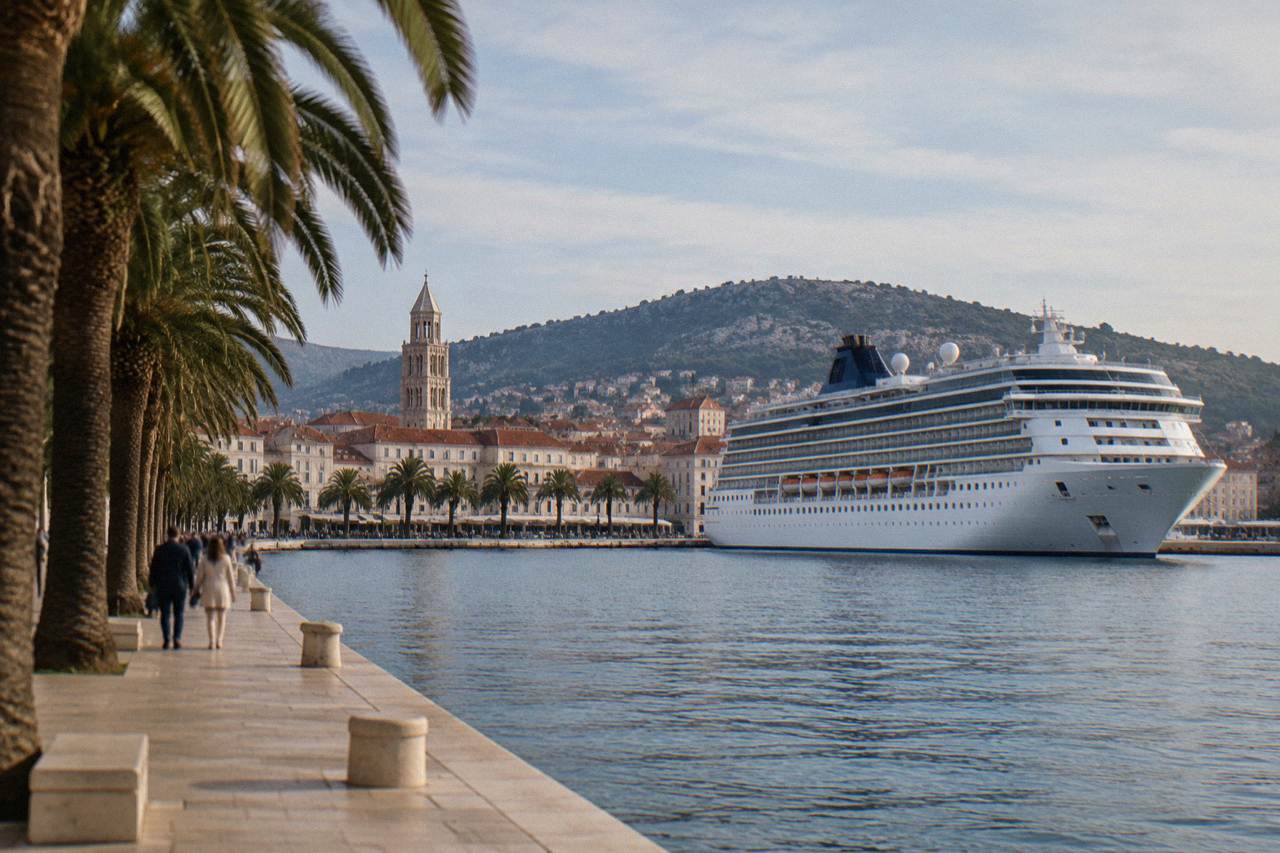
Cruise ships dock at the Port of Split on Obala kneza Domagoja, about 500 to 600 m from Diocletian's Palace, so the Old Town is walkable without transport. A few hours cover the Peristyle, the cellars, the Riva and Marjan's lower paths, with boat trips and Krka or Trogir runs for longer days.
Split is a coastal city in Dalmatia, Croatia, and it has one unusually convenient trait for cruise passengers: the ships tie up beside the working ferry port, roughly 500 to 600 m from the walls of Diocletian's Palace. There is no shuttle, no taxi queue necessity and no motorway between the gangway and a Roman monument. The Port of Split's own statistics page records 6.05 million passengers in 2025, which makes it Croatia's busiest passenger port, and 487,377 of those were cruise passengers in the same year. Cruise ships began calling here only in 2002, so the cruise operation is a late addition to a port that has served islands, Italy and the Adriatic coast for far longer. This page lays out the whole port day: where the ship actually docks, the walk ashore, what fits into a few hours, the boat trips that leave from the same quays, the day trips that work with time limits, what the sights cost and the local rules worth knowing before you step off.
Where Do Cruise Ships Dock In Split?
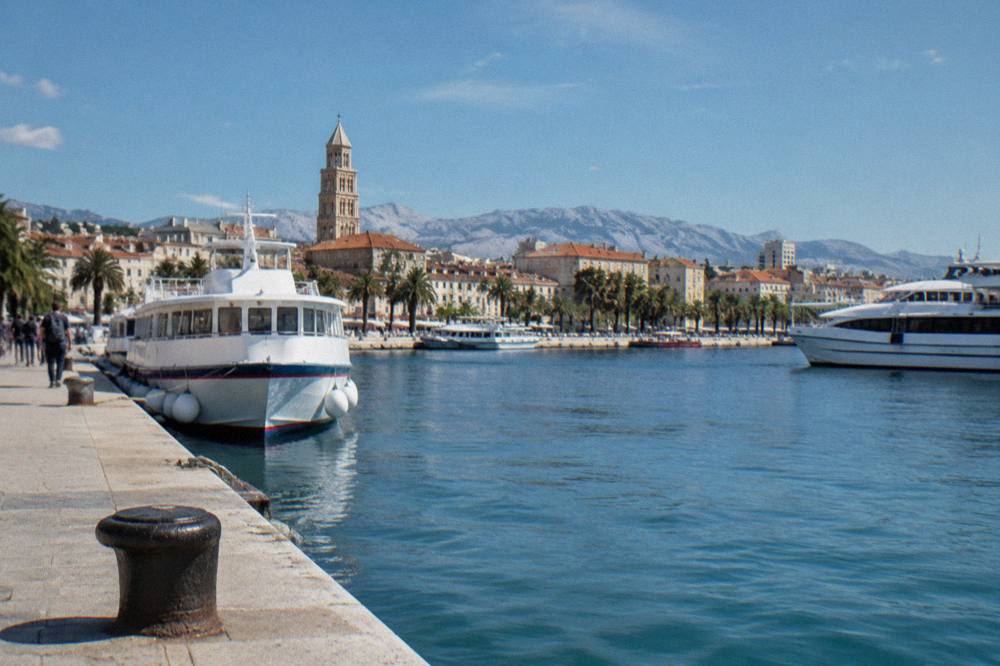
Cruise ships dock at the Port of Split on Obala kneza Domagoja, the long waterfront strip that also carries the ferry quays, the main bus station and the railway station, all within 500 to 600 m of Diocletian's Palace. There is no tendering into a remote terminal and no transfer bus needed for the Old Town: the gangway opens onto the harbour front and the palace walls are a short flat walk along the shore.
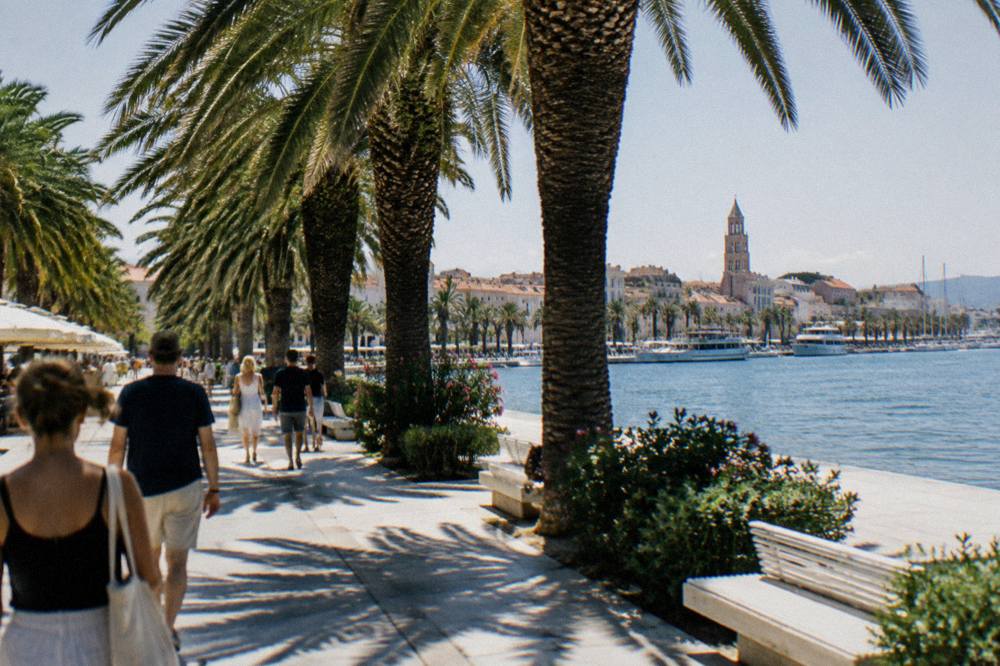
The layout matters for planning. The ferry port, the intercity bus station and the train station sit together on the same stretch of Obala kneza Domagoja, which means a passenger stepping ashore can see the palace bell tower, 57 m tall, from the quay area as an orientation point. Jadrolinija's car ferries, the island catamarans operated by Kapetan Luka (Krilo), TP Line and Bura Line, and the cruise berths all share this harbour, so the departures board on the waterfront tells you a great deal about what is leaving while you are ashore. The Riva promenade runs along the water directly in front of the Old Town, and it is the natural first stretch of any walk from the ship.
One planning note for 2026 and 2027: the central section of the Riva is scheduled for renovation works starting from November 2026 and lasting a little over a year, so partial closures along the waterfront are expected through 2027. The walk from the port to the palace remains open; expect fenced sections and rerouted footpaths on the promenade itself rather than a blocked route. If you want the detail on docking locations, the where cruise ships dock in Split page covers the berths, and whether Split is walkable from the cruise port answers the most common first question directly.
Can You Walk From The Split Cruise Port Into The Old Town?
Yes, the walk from the cruise berths into the Old Town is flat, short and needs no transport, roughly 500 to 600 m from the quays to the palace perimeter, about ten minutes at an easy pace. The route runs along the waterfront to the Riva, then enters Diocletian's Palace through the southern bronze gates, where the cellars, the Peristyle and the cathedral complex sit within a few hundred metres of each other.
The southern approach is the one the palace was built around: Emperor Diocletian's residence, constructed between about 295 and 305 AD, faced the sea, and arriving from the water repeats the original sequence. Inside, the Peristyle, the cathedral of St Domnius and the temple of Jupiter cluster around the same small square, and the palace cellars sit directly beneath your feet. The Split City Museum's price list shows the cellars open Monday to Sunday from 8:30 to 20:00, though the central part is under restoration until the end of 2026 with the passage staying open, so a partial visit is the current reality rather than the full vault run.
Above ground, the free sights need no ticket at all: the Peristyle, the Riva, Prokurative, the Golden Gate, the Grgur Ninski statue, the green market, Marjan park forest and the city beaches all cost nothing. On the Peristyle, the change of the Roman guard at noon ran daily from 28 May to 27 September 2026, a short costumed ceremony that costs nothing to watch. If your hours ashore are generous, the one day in Split itinerary stretches this walk into a full day, and two days in Split and three days in Split exist for pre- or post-cruise stays.
What Can You See In Split In Six Hours Ashore?
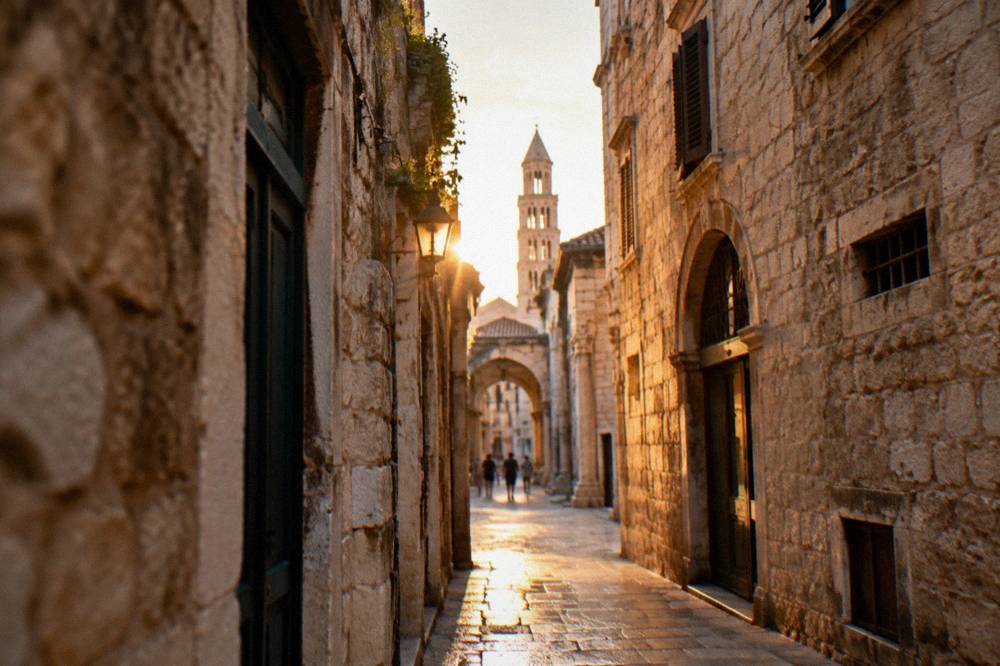
Six hours comfortably covers the palace cellars, the cathedral complex, the Peristyle, the Golden Gate, the green market, lunch in or near the Old Town and a climb or drive partway up Marjan, whose highest point Telegrin stands 178 m above the sea, reached by 819 steps from Trumbićeva obala if you take the stairs on foot. Admission for the main ticketed sights runs from a few euros to about 15 EUR per site, and several of the best sights are free.
Fancy seeing the highlights without the legwork? Book a tuk-tuk tour here.
A realistic order: leave the ship, walk the Riva, enter through the southern gates and buy the cellars ticket first while legs are fresh. Then surface to the Peristyle, where the cathedral kiosk sells the combined tickets; secondary guides put the complex at from about 5 EUR for the cathedral alone up to about 15 EUR for all five sites including the 57 m bell tower, and prices should be confirmed at the kiosk on the Peristyle. Shoulders and knees must be covered inside the cathedral. From the Peristyle, cross to the Golden Gate and the Grgur Ninski statue, rub the toe if the queue allows, then loop back through the Split green market area for fruit, cheese and the everyday version of the city.
| Sight | Adult entry | Notes |
|---|---|---|
| Diocletian's Palace cellars | 10 EUR | Split City Museum, Mon to Sun 8:30 to 20:00; central part in restoration to end of 2026 |
| Split City Museum, Papalić Palace | 10.00 EUR | 8.00 EUR reduced, family 18.00 EUR, closed Mondays |
| Cathedral of St Domnius complex | from about 5 EUR, combined up to about 15 EUR | Secondary figures, confirm at the Peristyle kiosk; shoulders and knees covered |
| Archaeological Museum | 8 EUR | Combined with Salona 10 EUR within 7 days |
| Meštrović Gallery | 12.00 EUR | Includes Crikvine-Kaštilac; reopened April 2026 after renovation |
| Ethnographic Museum | 7.00 EUR | 4.00 EUR reduced |
| Peristyle, Riva, Golden Gate, Marjan, beaches | Free | No ticket on any official source |
If the afternoon is your own, Marjan hill is the city's escape valve: the peninsula park forest is 3.5 km long and 1.5 km wide, and even the lower paths above the Kašjuni side give sea views over the islands. For a different pace, the rainy day in Split itinerary swaps the hill for museums, and the Split museums cluster covers archaeology, ethnography and the Meštrović Gallery, which reopened in April 2026 after a 15-month renovation.
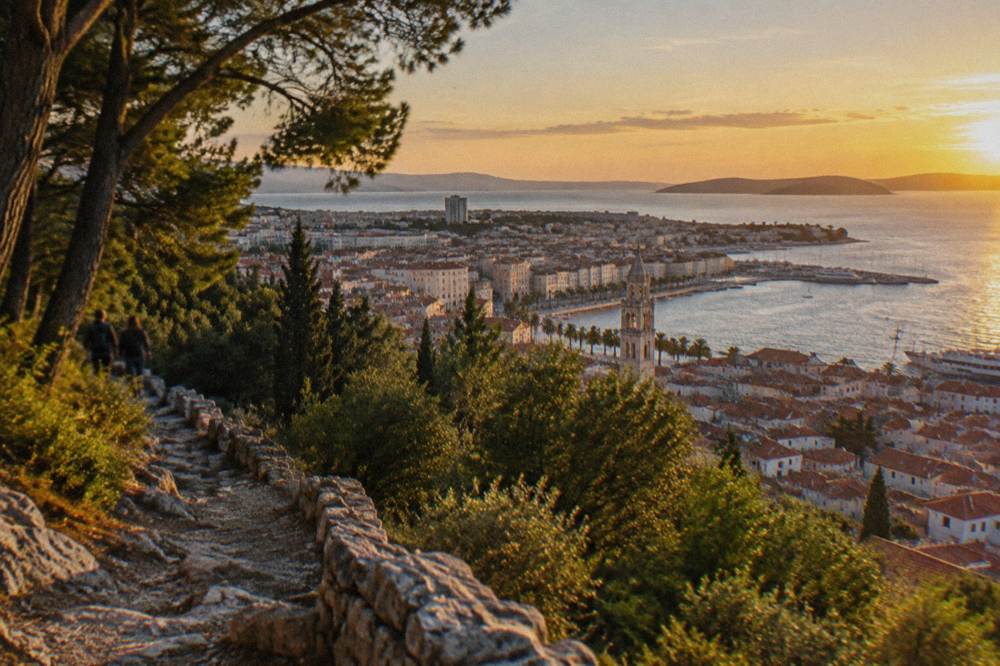
A guided walk is the efficient choice when hours are fixed, and a food walk turns lunch itself into the sightseeing. Beyond the standard history walks, Klis Fortress, a Game of Thrones Meereen location, sits 13.9 km from the palace, about 22 minutes of free-flow driving, and combines with Salona, 9.1 km and about 14 minutes, for a half-day loop that returns to port with margin. The Klis Fortress entry is 10 EUR on the current listing figures.
Is A Boat Trip From Split Worth It On A Port Day?
A boat trip from Split works on a port day only when the sailing time is comfortably shorter than your hours ashore, and the harbour gives real options: the Blue Lagoon trips around Šolta and Drvenik run half-day and full-day formats, and catamaran and cruise routes reach Hvar town and the Pakleni islands. The quays are the same ones you docked beside, so boarding is a short walk from the gangway, but late-departure ships are the realistic fit for the full-day routes.
The related tour on this page is the obvious candidate: a full-day catamaran cruise to Hvar and the Pakleni islands with food and drinks included, which suits a ship that sails in the evening rather than mid-afternoon. The operator's live listing shows the meeting point, the current price and the cancellation terms, and the full-day catamaran cruise to Hvar and the Pakleni islands page on this site describes what the day covers. Check availability before committing a port day to it, because capacity on small boats sells out in July and August.
For shorter port windows, the Blue Lagoon and three-island cruises run about eight hours on the bigger-boat formats and five and a half on the small-group speedboats, which still fits a full day alongside. Independent ferry hops are possible too, with a caveat about destinations: Hvar Town is reached by catamaran, while Stari Grad on the same island is the car-ferry port, and confusing the two is the classic planning error. Jadrolinija's price list gives the line 635 foot-passenger fare to Stari Grad as 5.90 EUR off-season and 8.40 EUR in season for a crossing of about 120 minutes, and the catamaran fares reported for Split to Hvar or Jelsa are 6.40 EUR low season and 10.00 EUR high season.
| Route | Type | Crossing | Foot passenger fare |
|---|---|---|---|
| Split to Stari Grad, Hvar (line 635) | Car ferry | about 120 minutes | 5.90 EUR off-season, 8.40 EUR in season |
| Split to Supetar, Brač (line 631) | Car ferry | about 50 minutes | fare on the operator's price list |
| Split to Rogač, Šolta (line 636) | Car ferry | about 60 minutes | fare on the operator's price list |
| Split to Vis | Ferry | about 140 minutes | fare on the operator's price list |
| Split to Hvar Town or Jelsa | Catamaran, lines 9603 / 9602 | varies by stop | 6.40 EUR low, 10.00 EUR high |
| Split to Vis | Catamaran, line 9602 | varies by stop | 7.20 EUR low, 10.00 EUR high |
The operator's own timetable decides on any given day, and from 2026 the Split to Supetar line runs high-season and low-season timetables only, with no off-season schedule, a change Jadrolinija announced for 2026. The ferries from Split detail sits elsewhere on this site; for a cruise day the summary is that Šolta and Brač are the short hops and Hvar Town needs a catamaran, not a car ferry.
Which Day Trips Work From The Split Cruise Port?
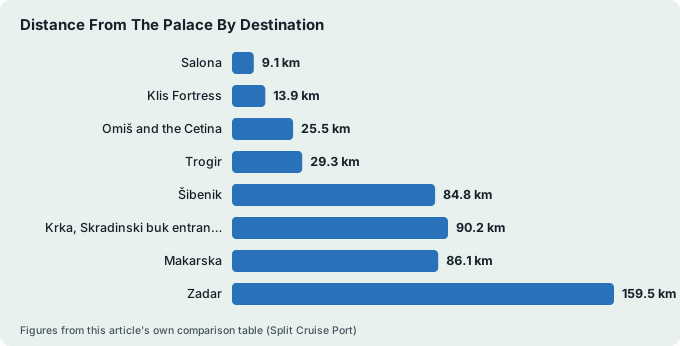
The day trips that fit a port day are the short-radius ones: Trogir at 29.3 km and about 36 minutes of free-flow driving, Salona at 9.1 km and 14 minutes, Klis Fortress at 13.9 km and 22 minutes, and Omiš at 25.5 km and 38 minutes.
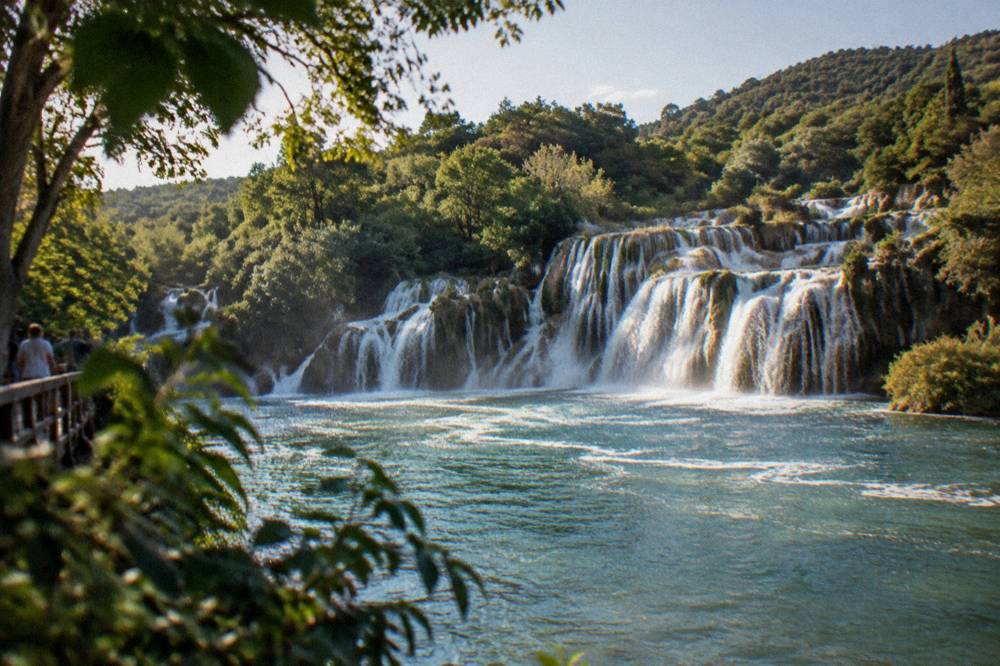
Krka National Park at about 74 minutes each way and Plitvice Lakes at about 3 h 15 each way are the boundary cases: Krka fits a long port day, Plitvice needs an early gangway and a late sailing and leaves no slack.
These are free-flow driving times computed for the palace as the origin, and summer traffic on the coastal road adds minutes, so treat them as floors rather than averages. Organised coach and minibus tours absorb the timing risk, which is exactly their value on a cruise day: the operator holds the return schedule, not you. Everything else covered here is indexed on Split Croatia Travel Guide.
| Destination | Distance from the palace | Free-flow driving time |
|---|---|---|
| Salona | 9.1 km | about 14 minutes |
| Klis Fortress | 13.9 km | about 22 minutes |
| Omiš and the Cetina | 25.5 km | about 38 minutes |
| Trogir | 29.3 km | about 36 minutes |
| Šibenik | 84.8 km | about 71 minutes |
| Krka, Skradinski buk entrance | 90.2 km | about 74 minutes |
| Makarska | 86.1 km | about 75 minutes |
| Zadar | 159.5 km | about 2 h |
| Mostar | 173.2 km | about 2 h 13 |
| Plitvice Lakes | 258.1 km | about 3 h 15 |
| Dubrovnik | 234.8 km | about 3 h 21 |
Park entry is seasonal and the official price lists say so. Krka charges 7 EUR from January to March and in November and December, 20 EUR in April, May and October, and 40 EUR from June to September, with the ticket covering the Skradin boat and Lozovac bus transfers from 1 April to 31 October. Plitvice charges 10 EUR in the winter months, 23 EUR in April, May and October, and 40 EUR from June to September, with a 25 EUR afternoon slot at peak; entry is timed online and the ticket carries the visitor's name, which is why guided tours from Split handle booking in advance. Swimming at Krka is allowed only in clearly marked areas, never at Skradinski buk itself. The full detail is on the Krka National Park, Plitvice Lakes and Trogir pages.
For stays that extend beyond the ship, the Split island hopping week and Split with kids itineraries build on the same transport network, and travelling with children changes which of these day trips earns its early start.
What Does A Cruise Port Day Cost In Split?
A budget port day in Split can run almost entirely on free sights and a market lunch, since the Peristyle, the Riva, the Golden Gate, Marjan and the beaches cost nothing, while a sight-heavy day with the cellars, the cathedral complex, a museum and lunch lands somewhere between 30 and 50 EUR per person before any tour, using the official ticket prices listed above and typical café and market food prices confirmed on posted menus.
The honest answer about food costs is that they vary by street and by dish, and the reliable check is the menu posted outside with prices, plus the itemised bill: a cover charge, where charged, must appear on the menu. The is it expensive to eat in Split question gets its own treatment elsewhere on this site, and the where locals eat in Split piece explains why the green market side streets post lower prices than the lanes immediately off the Peristyle. Two verified money facts help with the wider budget: Croatia uses the euro since 1 January 2023, so there is no exchange math for eurozone visitors, and the tourist tax, about 2.65 EUR per person per night in high season with under-12s free and 12 to 18 at half, is an accommodation matter collected by hotels and apartments, not something a cruise passenger pays ashore.
For tour prices, the blocks above and below carry the live figures from each operator's listing, and this page deliberately does not type them into the text, because they move with season and demand. What can be said in prose is what each product covers: the catamaran day reaches Hvar Town and the Pakleni islands with food and drinks on board, the walking tours cover the palace and its layered history with tickets included on the Game of Thrones format, and the food walk builds a meal across the Old Town's market, konoba and bakery stops.
Where Do You Eat Near The Split Cruise Port?
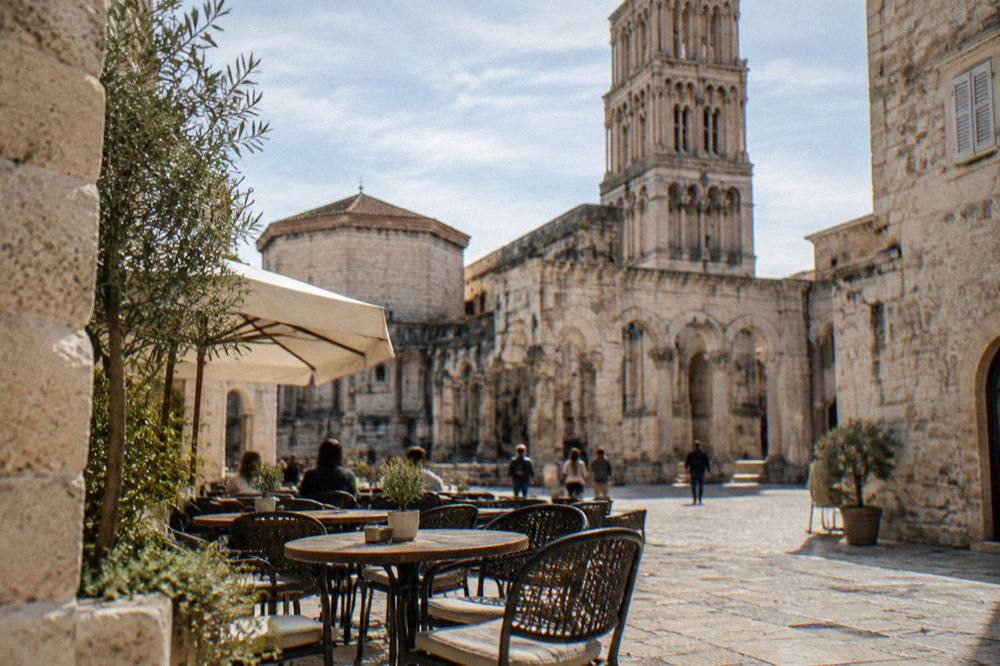
The quickest eating from the port is the Riva line of cafés and the lanes just inside the palace's southern gates, a few minutes' walk from the gangway, while the better-value cooking sits one ridge further out in Veli Varoš, the old fishermen's quarter west of the Old Town, and around the green market where ingredients, not views, set the menu. Posted price lists outside every door are the check to make before sitting down.
Veli Varoš is the neighbourhood worth naming: a dense stone quarter of narrow lanes between the Old Town and Marjan, Veli Varoš holds the konobas that locals point to, and it is ten to fifteen minutes on foot from the cruise berths. Inside the palace, expect the prices you find anywhere with a Roman wall in the photograph, and use the same rule as everywhere in Dalmatia: if the menu is posted outside with prices and the cover charge is printed on it, the bill holds no surprises. The Split restaurants and Split food pages go deeper, and the old town area guide maps the lanes.
For a fast port-day lunch, the market does the work: cheese, pršut, bread and fruit from the green market stalls make a meal that travels to the Riva or the Bačvice beach curve, fifteen minutes east of the port along the shore. Bačvice is also the home of picigin, the shallow-water ball game born on that sand in 1908 and now protected intangible heritage of Croatia; an afternoon match is free to watch.
What Rules Apply In Split's Historic Centre?
Split enforces a set of public-order fines in its historic core: 300 EUR for drinking alcohol in public in the centre or within 100 m of schools, 300 EUR for urinating, 300 EUR for climbing on monuments or bathing in fountains, 300 EUR for vomiting and 150 EUR for sleeping in public spaces. Walking in swimwear or shirtless in the historic centre is also a fined offence, with the amount set locally, and shops in the centre may not sell alcohol at night during the summer season.
The night-time retail alcohol ban applies to shops and supermarkets, not bars and restaurants, running 1 June to 15 September with automatic seasonal repeat unless changed, so a late-evening supermarket beer run in summer is off the table in the centre. Two further practical rules: drones may not fly over the old town or the airport zone and are banned in the national parks, and drone registration with EASA competency is required anywhere else in Croatia. Border formalities are handled on the ship, but note that the EES biometric system has been fully operational at external Schengen borders since 10 April 2026, and ETIAS is not live.
Emergency number is 112 anywhere in Croatia, and English is widely used in the tourist streets, though a few Croatian words go further in Veli Varoš. The Split safety page covers the rest.
Common Questions About A Split Cruise Port Day
How far is the Split cruise port from the Old Town?
The cruise berths sit on Obala kneza Domagoja, 500 to 600 m from Diocletian's Palace, roughly a ten minute flat walk along the waterfront. No shuttle or taxi is needed to reach the Old Town on foot.
Can you walk from the Split cruise port to Diocletian's Palace?
Yes, the walk is flat, short and direct, entering the palace through the southern sea gates. The Peristyle, the cellars and the cathedral complex all sit within a few hundred metres of the entrance.
What can you do in Split in one day from a cruise ship?
The palace cellars, the cathedral complex, the Peristyle, the Golden Gate, the green market, lunch and the lower Marjan paths fit one long day ashore. Boat trips to the Blue Lagoon or Hvar and the Krka or Trogir day trips work when the ship sails late.
Can you visit Hvar on a Split cruise port day?
Yes, either on an organised catamaran or boat tour from the Split quays or independently: Hvar Town is reached by catamaran, while Stari Grad on the same island is the car-ferry port about 120 minutes away. A late-sailing ship is the realistic fit.
Is the walk from the Split cruise port affected by the Riva renovation?
The central section of the Riva is scheduled for renovation works from November 2026 lasting a little over a year, so partial closures on the promenade are expected through 2027. The route from the port to the palace stays open, with fenced sections and rerouted footpaths.
What is free in Split on a port day?
The Peristyle, the Riva, Prokurative, the Golden Gate, the Grgur Ninski statue, the green market, Marjan park forest and the city beaches all cost nothing. The ticketed sights are the cellars, the cathedral complex, the museums and Klis Fortress.
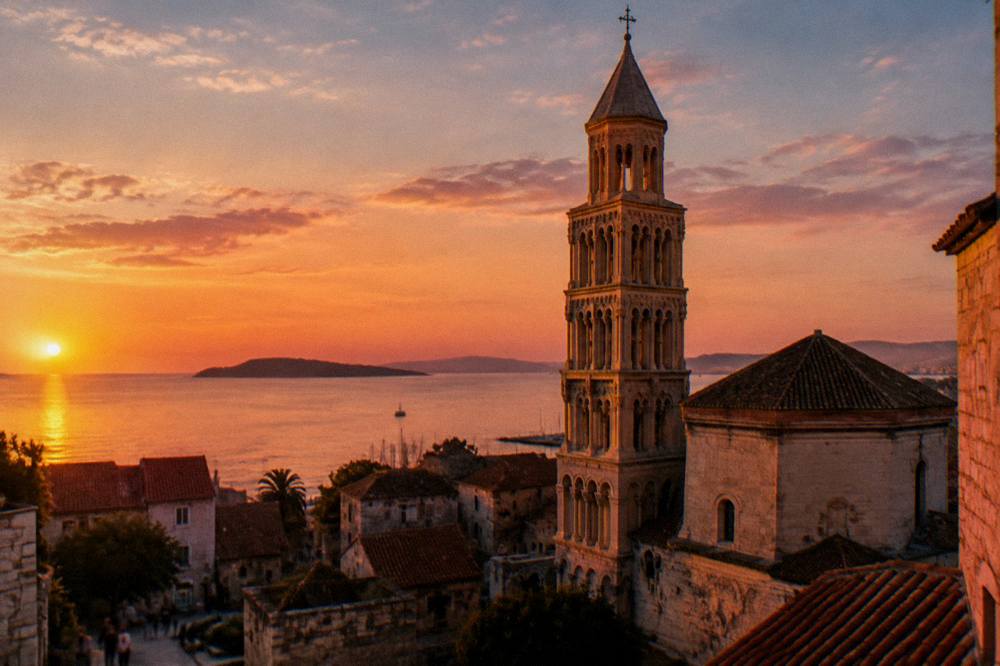
The short version of a Split port day: walk off the ship, walk ten minutes, and you are inside a Roman palace with a mountain park on one side, islands on the other and a market in between. Few cruise berths in the Mediterranean offer that ratio of gangway to spectacle, and the only real decision is whether the day belongs to the palace, the water or a bit of both. More detail for every branch of that decision sits in the things to do in Split guide and in the Split Croatia Travel Guide's day-trip and itinerary pages, and the port itself, 6.05 million passengers strong in 2025, will still be running its ferries long after the ship sails.
