Diocletian Palace Cellars
The cellars beneath Diocletian's Palace are the best-preserved Roman substructures on the Adriatic coast, run by the Split City Museum and open daily. Here is what the price lists and the city's own pages say about tickets, hours and the restoration running to the end of 2026.
Short answer
The Diocletian Palace Cellars in Split are open Monday to Sunday from 8:30 to 20:00, run by the Split City Museum, and the adult ticket is 10 EUR. The central part is under restoration to the end of 2026, but the passage through the cellars stays open.
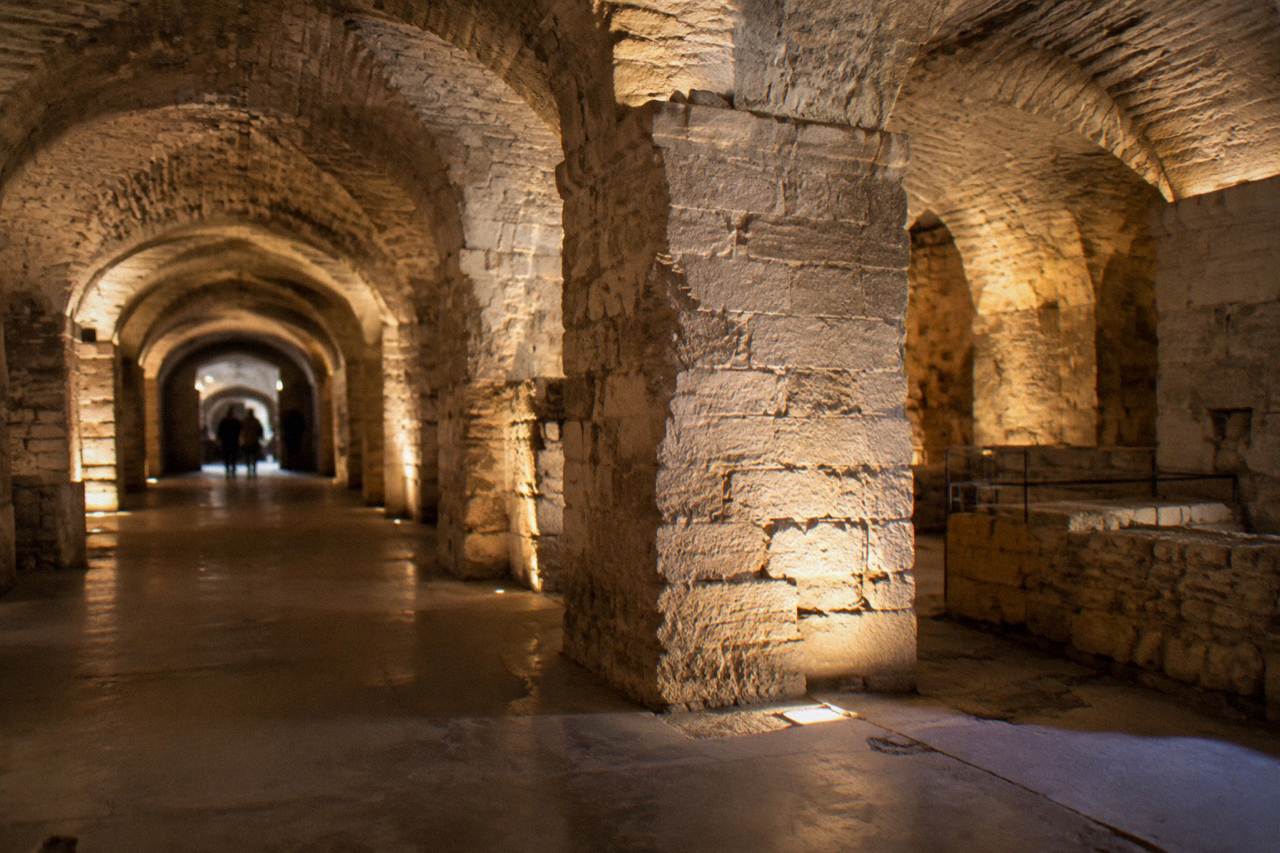
The cellars beneath Diocletian's Palace in Split, on Croatia's Adriatic coast, are the reason the palace above ground still makes sense. Built as the supporting platform for the emperor's residence around c. 295 to 305 AD, these vaulted halls were filled with rubble for centuries and then cleared in more recent times, which is why their stone fabric survives so completely. The Split City Museum runs them today, and its own price list and hours pages are the source for the figures on this page. The UNESCO listing that covers the whole "Historical Complex of Split with the Palace of Diocletian", inscribed in 1979 over a 20.8 ha property, includes these substructures.
What Are The Diocletian Palace Cellars In Split?
The cellars are the underground level of Diocletian's Palace, the retirement residence built for the Roman emperor Diocletian c. 295 to 305 AD, and they are the palace's structural foundation as well as its storage and service floor. Today they form one continuous archaeological site entered from the Riva side, run by the Split City Museum, and they are among the best preserved Roman substructures anywhere on the Adriatic. The UNESCO World Heritage listing of 1979 covers them as part of the historical complex of Split.
Above the cellars stood the southern, imperial half of the palace: the apartments, the dining halls and the ceremonial rooms that faced the sea. Below them, the same barrel-vaulted geometry was repeated in stone to carry that weight, and because the ground level on the south side sat low, the substructures rose several metres from floor to vault. When the palace became a town, houses were built on top and the cellars were used for storage, then largely filled in and forgotten. Clearing them out revealed the plan of the imperial apartments mirrored in the floor below, which is how archaeologists reconstructed rooms whose upper storeys vanished centuries ago.
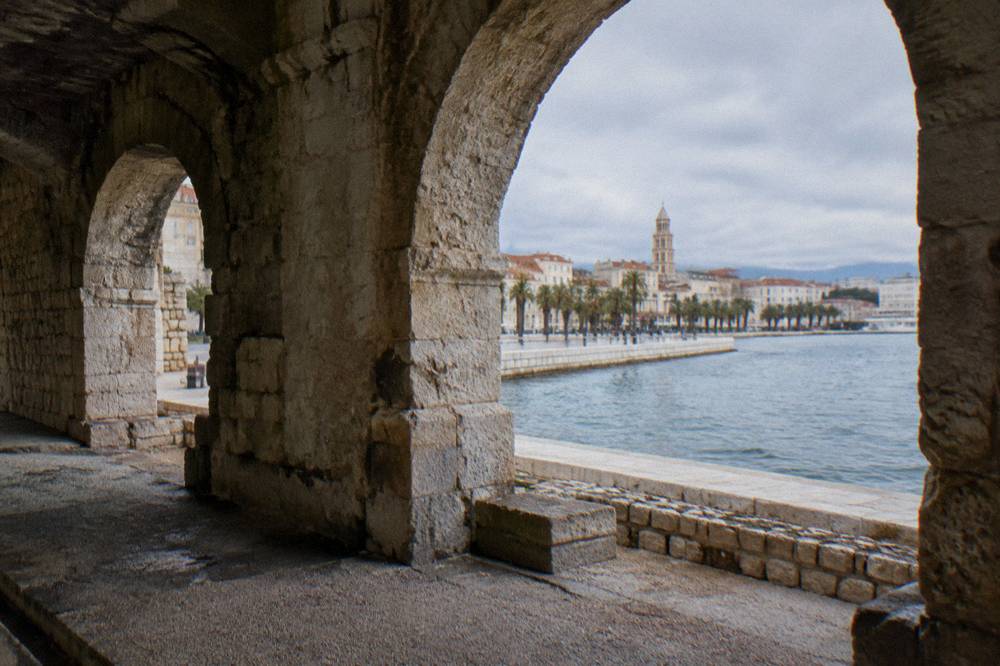
The site is entered from the southern, sea-facing edge of the old town, a few steps off the Riva promenade. Walking in from bright sunlight into the cool brick-and-limestone vaults is the sharpest contrast the old town offers, and the corridors run deep toward the Peristyle, the palace's central square. The outline of the whole page on Diocletian's Palace gives the full picture above ground, and this page stays with what lies beneath.
How Much Do Tickets To The Cellars Cost And When Are They Open?
The cellars are open Monday to Sunday from 8:30 to 20:00, according to the Split City Museum's own hours page, and the adult ticket is 10 EUR, the same figure as the museum's Papalić Palace ticket. Reduced entry is 8 EUR and a family ticket 18 EUR at the City Museum itself, which lists those prices in its published price list. The cellars closed only on 5 April in the published schedule, and tickets are bought on site.
The hours and prices come straight from the museum that operates the site, so they are the figures to plan around rather than figures from third-party guides. One practical note from the same source: the Split City Museum at Papalić Palace, a separate venue holding the museum's historical collections, is closed Mondays and public holidays, but the cellars run seven days. Visitors sometimes confuse the two venues and assume the cellars close on Mondays too, and the museum's own pages are the place to check before setting out.
| Venue | Adult ticket | Reduced / family | Hours |
|---|---|---|---|
| Palace cellars (substructures) | 10 EUR (City Museum operator) | Reduced 8 EUR, family 18 EUR at the museum's listed rates | Monday to Sunday 8:30 to 20:00, closed 5 April |
| Split City Museum, Papalić Palace | 10.00 EUR | 8.00 EUR, family 18.00 EUR | Tuesday to Sunday 9:00 to 20:00, closed Mondays and public holidays |
For visitors weighing what else to pay for inside the palace walls, the question of what is free and what is ticketed is answered in detail on Is Diocletian Palace Free?, and the short version is that the streets, squares and gates of the palace cost nothing and only the museums and the cathedral complex are ticketed.
Is The Cellars Restoration Still Running In 2026?
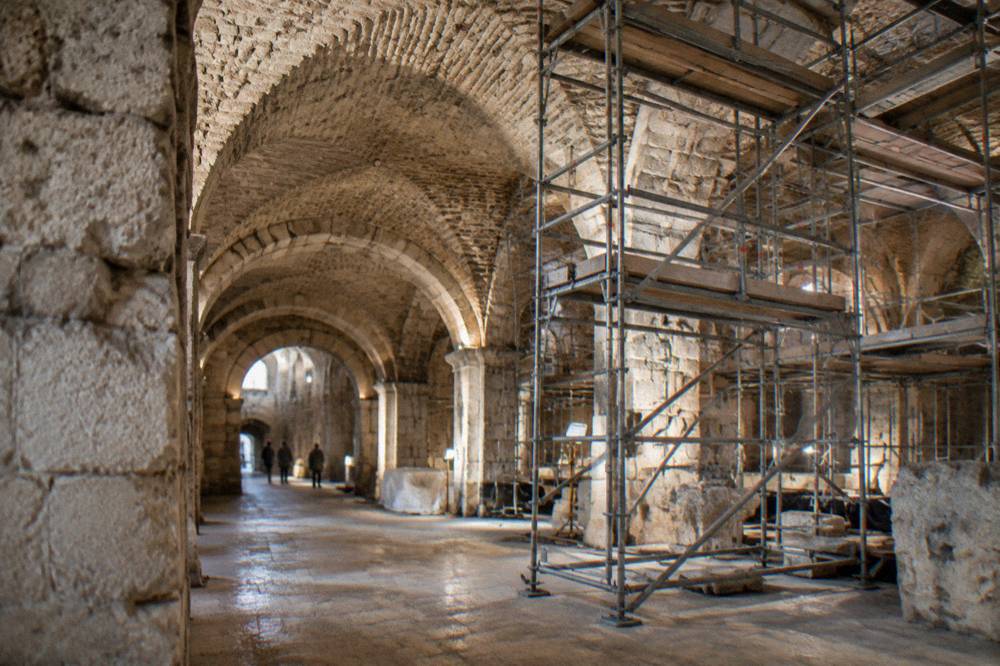
Yes. The central part of the cellars is undergoing extensive restoration and conservation until the end of 2026, but the works are not blocking public passage, so the site stays open while the scaffolding is up. Separate archaeological research near the southern walls in Hrvojeva ulica, running since April 2026, has uncovered part of the original palace base and medieval structures above it, with the dig scheduled to end in September 2026.
The restoration of the central substructures is the visible project: hoardings, conservators and scaffolding inside the vaults, with visitors routed around the active bays. The archaeological dig on Hrvojeva ulica, just outside the southern wall, made headlines in the local press because it exposed part of the original foundation step of the palace, a sight the city had not seen for well over a thousand years, together with medieval buildings that had grown against the wall.
A further project reported in 2026 concerns the palace's southeastern tower: a reconstruction worth about 1.2 million euros covering the tower, an adjacent building and the reopening of an ancient loggia, which went to public consultation in June 2026 with a tender to follow. None of this closes the cellars, and none of it closes the old town, but anyone visiting in late 2026 or 2027 should expect work zones inside and against the palace fabric. The practical takeaway is simple: buy the ticket, follow the routed path, and treat the scaffolding as part of the story rather than a reason to skip the site.
What Do You Actually See On A Cellars Visit?
A visit follows the vaulted halls of the southern substructures: long corridors of Roman brick and limestone, cross-vaulted chambers that mirror the imperial apartments above, a brick barrel vault that has stood since c. 295 to 305 AD, and exhibition displays placed along the route. The walk runs from the Riva entrance toward the central tract under the Peristyle, and the restoration of 2026 means some bays carry scaffolding and conservation equipment as part of the scenery.
The layout rewards a slow walk. The corridors are laid out on the same plan as the emperor's apartment level, so each hall below corresponds to a room above: the dining room, the bedrooms, the long gallery that once looked out to sea. The museum places interpretation panels along the route, and temporary exhibitions use the halls in summer, including events tied to the Split Summer Festival, whose 72nd edition ran 14 July to 14 August 2026 at venues including the nearby Peristyle.
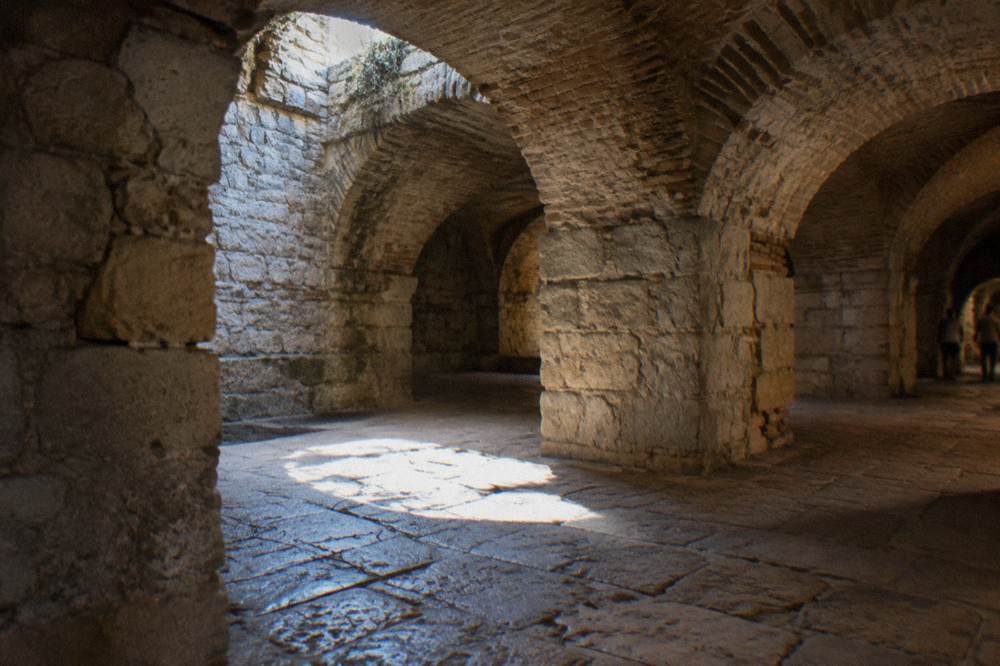
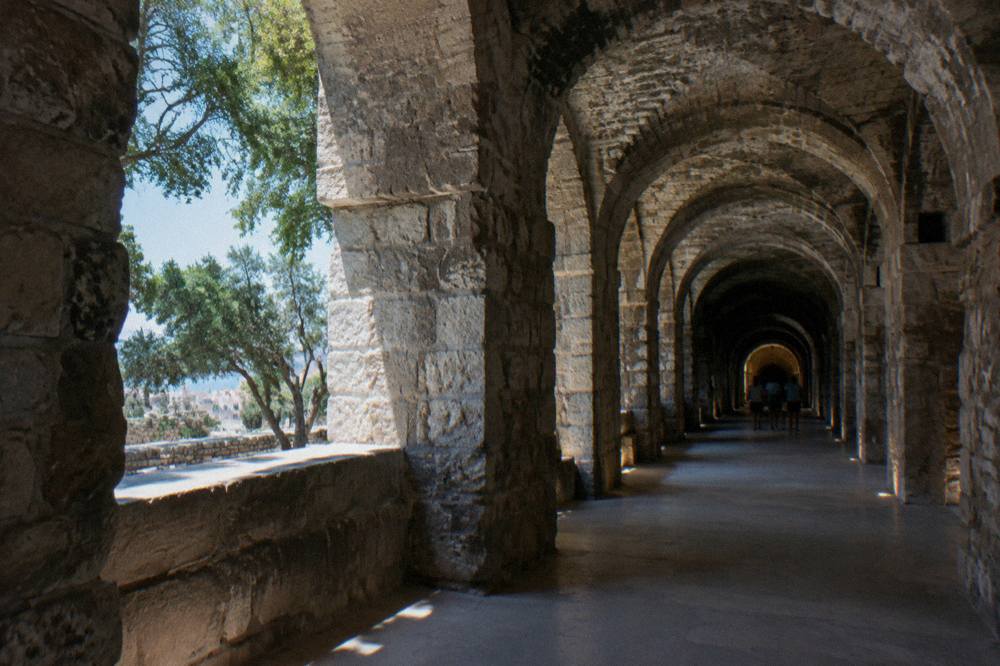
Three details are worth slowing down for. The first is the quality of the brickwork in the vaults, laid in courses that have carried the palace for seventeen centuries. The second is the contrast between the deep, cool halls and the sunlight at the Riva end of the route, where the arcade opens toward the sea. The third is the emptiness itself: unlike the busy streets above, the cellars hold their sound, and the sense of the palace as a machine of stone and mortar comes through more clearly underground than anywhere else in the old town. The Peristyle square sits directly above the central tract, so the walk ends where the palace's ceremonial heart began.
Do The Cellars Cost Extra If You Are Visiting The Cathedral Complex?
The cellars, the Cathedral of St Domnius complex and the Split City Museum are separate ticketing operations with no combined ticket between them, so each is paid for on its own. The cathedral's singles and colour-coded combinations are sold at the Peristyle kiosk, and the reported range runs from about 5 EUR for a single site up to about 15 EUR for a ticket covering all five, including the crypt, the baptistery, the treasury and the 57 m bell tower.
What this means for planning is that a full underground-and-above circuit of the palace involves three separate purchases on one morning: the cellars at the Riva entrance, the cathedral combinations at the Peristyle kiosk, and, if the collections appeal, the City Museum at Papalić Palace. Shoulders and knees must be covered inside the cathedral, a rule the dress code for Diocletian's Palace page covers in full; the cellars themselves are a secular archaeological site with no dress requirement beyond ordinary city clothing.
| Ticketed site inside or beside the palace | Operator | Reported adult price |
|---|---|---|
| Palace cellars | Split City Museum | 10 EUR |
| Cathedral of St Domnius complex, singles from cathedral and bell tower | Cathedral chapter, Peristyle kiosk | from about 5 EUR, combinations up to about 15 EUR |
| Temple of Jupiter, now the Baptistery of St John | Cathedral scheme | 3 EUR single (secondary source) |
| Split City Museum, Papalić Palace | Split City Museum | 10.00 EUR |
The Cathedral of St Domnius page gives the full breakdown of what each combination covers, and the Temple of Jupiter page explains how a Roman temple became a baptistery inside the same ticketing scheme.
Can You See The Cellars With A Guided Tour?
Yes, guided walks of the old town routinely include the cellars, and a small-group guided tour of Diocletian's Palace is the way to have the substructures explained rather than merely walked through. The listing for the Split Old Town Diocletian's Palace guided small-group tour covers the palace and its underground level with a licensed guide, and its price, rating and duration are shown on the operator's live listing. Tip-based walks also run locally, and those are confirmed directly with the guide.
To have the vaults explained rather than just walked through, book a history walking tour here.
The difference a guide makes underground is concrete: the halls are dim, the panels are brief, and the logic of the plan, how each vault maps to a room in the imperial apartment, is easy to miss alone. The small-group palace walk is the natural pairing for the cellars ticket, since the same story continues up the stairs at the Peristyle, through the Golden Gate and past the Grgur Ninski statue on the north side of the palace.
If the palace walk is booked, the cellars can also be paired with a longer day: the site opens at 8:30, an early visit leaves the late morning free, and the trio of options below covers a palace walk and two full-day alternatives for the rest of a stay.
How Do The Cellars Fit Into One Day In Split?
An early cellars visit anchors a one-day Split itinerary: enter at 8:30 from the Riva side, spend the morning underground and at the Peristyle, then give the afternoon to the cathedral complex, the Golden Gate and the green market, and finish with sunset from the Marjan hill park. The ferry port, main bus station and railway station all sit 500 to 600 m from the palace, so day-trippers can be at the entrance within minutes of stepping off.
The order matters less than the geography, because the palace is compact and everything on the list sits within a few hundred metres. Cruise passengers get the shortest walk of all: the dock lies at the eastern edge of the old town, and the route to the Riva entrance of the cellars runs along the seafront. The Riva promenade is the natural first and last stop of any such day, and the one day in Split itinerary builds the full sequence around the palace itself.
| Time of day | What to do | Cost basis |
|---|---|---|
| 8:30 to 9:30 | Cellars, entered from the Riva side | 10 EUR adult |
| 9:30 to 11:00 | Peristyle, Golden Gate, Grgur Ninski statue, palace streets | Free |
| 11:00 to 12:30 | Cathedral complex, bell tower, baptistery | From about 5 EUR, combinations up to about 15 EUR |
| Afternoon | Green market, Veli Varos lanes, Marjan hill walk to Telegrin at 178 m | Free; 819 steps from Trumbićeva obala to the top |
| Evening | Riva promenade, dinner in the old town | Pay as you go |
The old town page maps the streets between these stops, and the Veli Varos page covers the fishermen's quarter on the climb toward Marjan.
What Rules Apply In And Around The Cellars?
Split's public-order rules for the historic core set fines of 300 EUR for drinking alcohol in public in the centre or within 100 m of schools, for urinating, for vomiting, for climbing on monuments and for bathing in fountains, and 150 EUR for sleeping in public spaces, with taxi touting fined at 300 EUR. Walking in swimwear or shirtless in the historic centre is also an offence with a fine whose amount is set locally, so beachwear stays on the beach. Inside the cellars, ordinary museum conduct applies.
The city's Enjoy Respect rules, published on the official tourism site, apply across the old town the cellars sit inside, so the practical list for a palace visit is short: no open alcohol outside licensed terraces, no climbing the ancient fabric for photographs, and clothing that fits a city centre rather than the beach. The night-time retail alcohol ban, which covered shops rather than bars from 1 June to 15 September 2026, repeated automatically each summer unless changed, so late-evening drinks in the old town belong on a terrace rather than a bench.
| Offence in the historic core | Fine |
|---|---|
| Public alcohol consumption (outside licensed terraces) | 300 EUR |
| Urinating, vomiting in public | 300 EUR |
| Climbing on monuments, bathing in fountains | 300 EUR |
| Sleeping in public spaces | 150 EUR |
| Taxi touting | 300 EUR |
| Swimwear or shirtless in the centre | Fined, amount set locally, confirm locally |
Drones are a further restriction worth knowing before a visit: the old town is a no-fly zone, as are national parks and the airport zone, so aerial photographs of the palace are not a visitor activity.
What Else Sits Within A Short Walk Of The Cellars?
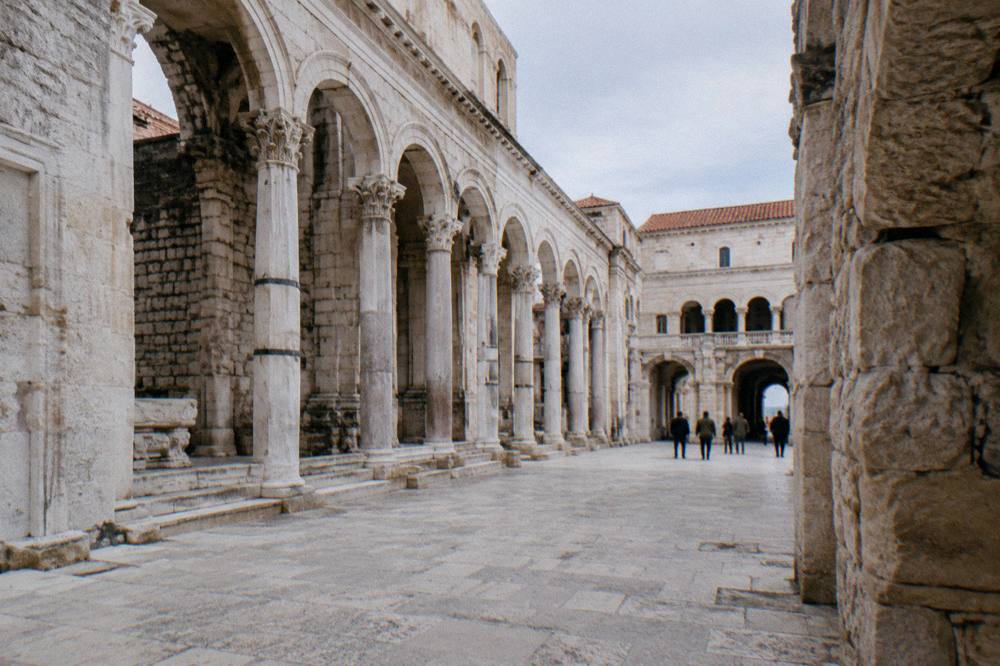
The cellars sit at the southern edge of a compact old town where the Peristyle, the Riva, the Prokurative square, the Golden Gate, the Grgur Ninski statue, the green market and the city beaches are all free to see, and the cathedral complex, the City Museum, the Ethnographic Museum at 7 EUR and the Mestrovic Gallery at 12 EUR are the ticketed additions. Marjan hill rises west of the old town with its highest point Telegrin at 178 m.
| Site | Distance from the cellars entrance | Entry |
|---|---|---|
| Peristyle | Directly above the central tract | Free |
| Riva promenade | At the entrance | Free |
| Cathedral of St Domnius and bell tower | About 150 m | Ticketed, from about 5 EUR |
| Golden Gate and Grgur Ninski statue | About 300 m north | Free |
| Green market | About 500 m | Free to browse |
| Marjan hill park, 819 steps to Telegrin | About 1 km west | Free |
| Bacvice beach | About 1 km east | Free |
Beyond the city, the day-trip geography fans out from the same spot, with driving times computed from the palace at free-flow conditions: Klis Fortress is 22 minutes, Salona 14 minutes, Trogir 36 minutes, Omiš 38 minutes, Krka's Skradinski buk 74 minutes and Plitvice Lakes 3 hours 15. The Klis Fortress and Salona pages cover the two closest, and the two days in Split itinerary splits the palace day from a day-trip day.
When Is The Best Time Of Day To Visit The Cellars?
Morning is the practical answer: the site opens at 8:30, seven days a week, and the vaults are at their quietest in the first hour, while the 8:30 to 20:00 span also allows an evening visit in summer when the old town is at its liveliest. The DHMZ Split Marjan station record, 1948 to 2024, gives a July mean of 26.2 C with 18 days at 30 C or more, so the cool underground is a real comfort factor in high summer.
The climate table for Split tells the rest of the story: July and August means of 26.2 C and 25.9 C, July the driest month at 26.6 mm of rain, November the wettest at 115.5 mm. In the cooler months, from November through March, the cellars lose none of their appeal, and the same ticket covers the same halls. This is also the season when the Mestrovic Gallery, reopened in April 2026 after a 15-month renovation, and indoor stops like the green market neighbourhood cafés carry a day.
For anyone matching a visit to a festival, the Split Summer Festival's 2026 edition has passed, and 2027 dates were not announced. Advent in Split runs 27 November 2026 to 7 January 2027 with the ice rink at Đardin, a short walk north of the palace, which makes a winter cellars visit pair naturally with the Christmas programme.
Which Split Tours Pair Well With A Cellars Visit?
A small-group palace walking tour pairs directly with the cellars ticket, since the guide covers the substructures and the imperial level in one narrative, while Krka waterfalls trips and Blue Lagoon island cruises are the two day-trip categories that fill the following days. Each option below shows its own price, rating and duration on the operator's live listing, and every one of them departs from central Split, within walking distance of the palace.
The pairing logic is straightforward. The palace walk belongs to the arrival day, when legs are fresh and the old town is new; Krka belongs to the first full day, with the park's own price list showing 40 EUR adult entry in June to September and 20 EUR in April, May and October; the Blue Lagoon cruise belongs to the swimming day, weather permitting. Booking conditions, including cancellation, are shown on each operator's live listing, and the "Check availability" link beside each tour shows the current calendar.
For the full spread of options across walking, boat and day-trip categories, the site's main things to do in Split page gathers them in one place, and the articles on this site, collected under Split Croatia Travel Guide, cover each of the palace's buildings, the beaches and the ferry routes in the same reporting style.
Common Questions About Diocletian Palace Cellars
How much are Diocletian Palace Cellars tickets?
The adult ticket is 10 EUR, matching the Split City Museum's listed rates, with a reduced rate of 8 EUR and a family ticket of 18 EUR at the museum's own venues. Confirm the current price on the museum's price list page before your visit.
What are the Diocletian Palace Cellars opening hours?
The Split City Museum's hours page gives Monday to Sunday 8:30 to 20:00 for the cellars, closed only on 5 April in the published schedule. The museum's separate Papalić Palace venue is closed Mondays.
Is the cellars restoration blocking visits?
No. The central part of the cellars is under restoration and conservation until the end of 2026, but the public passage through the site stays open, so visits continue throughout the works.
Can you visit the cellars without a tour?
Yes, the cellars are an open ticketed site with interpretation panels along the route. Guided small-group walks of the palace include the substructures and add the historical narrative, and their details are on the operator's live listing.
Are the Diocletian Palace Cellars the same as Diocletian's Palace?
The cellars are the underground level of Diocletian's Palace, the Roman residence built c. 295 to 305 AD. The palace itself is the whole old-town core, whose streets, gates and squares are free to walk, while the cellars and the museums are ticketed.
How long does a cellars visit take?
The site is a routed walk through the southern substructures, and an unhurried visit with the exhibition displays fits comfortably into the first hour of the day before the old town fills up. Pair it with the Peristyle and the cathedral complex for a full morning inside the palace.
The cellars are the one part of Diocletian's Palace where the Roman building stands close to exactly as it was left, and an hour underground explains the seventeen centuries above it better than any other stop in the old town.
