Island Hopping From Split
Split is the busiest passenger port in Croatia, with car ferries and catamarans leaving daily for Hvar, Brač, Šolta and Vis, and a one week island hopping route can be planned almost entirely from one ticket counter.
Short answer
Base yourself in Split and hop outward: Šolta or Brač first, then Hvar via the Stari Grad car ferry or the Hvar town catamaran, then Vis, returning on the Vis ferry of about 140 minutes. Foot passenger fares run from 5.90 to 8.40 EUR on the car ferries and 6.40 to 10.00 EUR by catamaran, so a week of hopping costs less in transport than a single day trip tour.
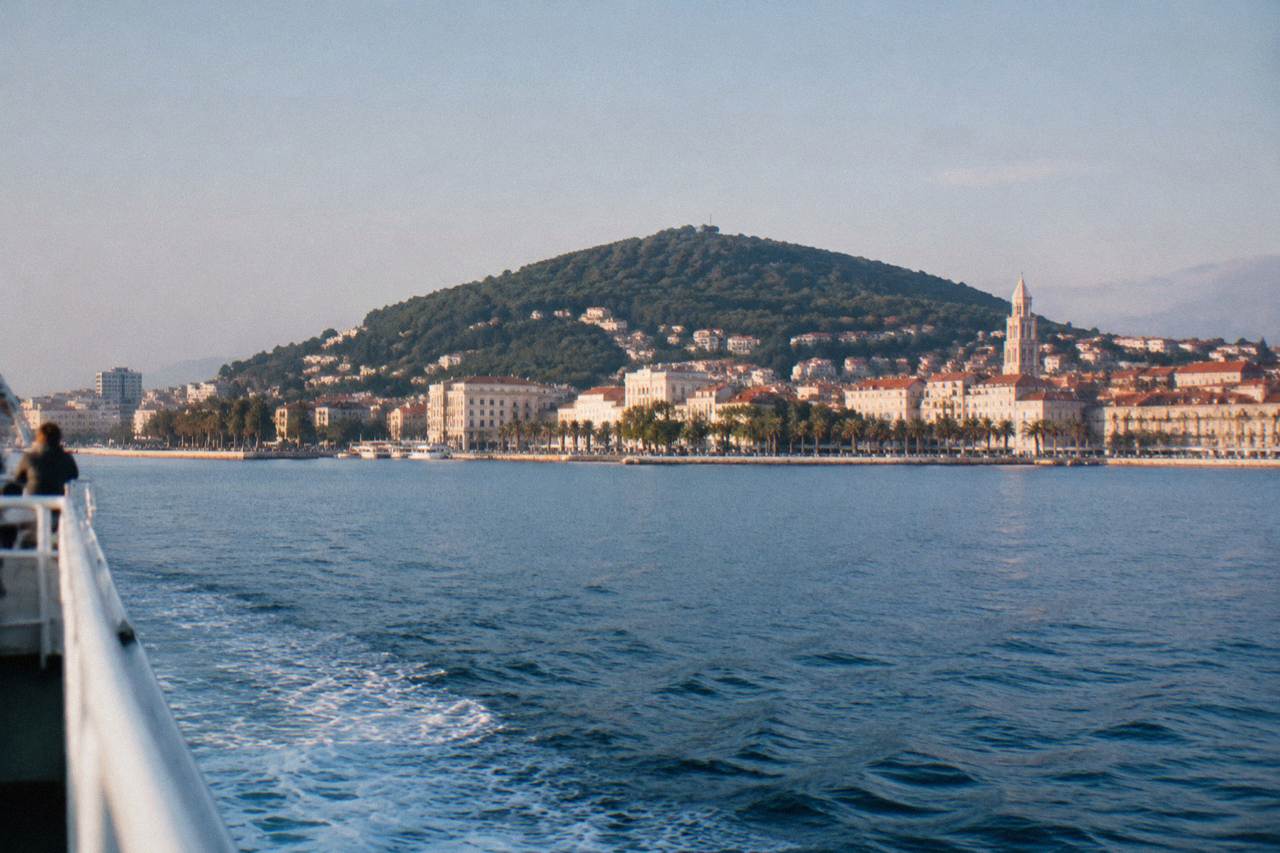
Split sits on the Adriatic with the islands of Brač, Šolta, Hvar and Vis directly offshore, and its port handled 6.05 million passengers in 2025, which the Port of Split's own page calls Croatia's busiest passenger port. That scale is the practical reason island hopping from Split works: the ferry port, the main bus station and the railway station sit together on Obala kneza Domagoja, 500 to 600 m from Diocletian's Palace, so a week of hopping out of the city needs no car and no complicated transfers. This guide lays out the routes, the fares the operators publish, a day by day plan, and the decisions that shape a seven day island week.
Why Is Split The Best Base For Island Hopping In Dalmatia?
Split works as an island hopping base because every major ferry and catamaran line for central Dalmatia leaves from one compact harbour within a ten minute walk of the Old Town, and because the city itself holds enough to fill the days between sailings. Diocletian's Palace, the Riva, Marjan hill and the city beaches are all free to wander, so a hopping week never wastes a day waiting for a boat. The Port of Split recorded 6.05 million passengers in 2025.
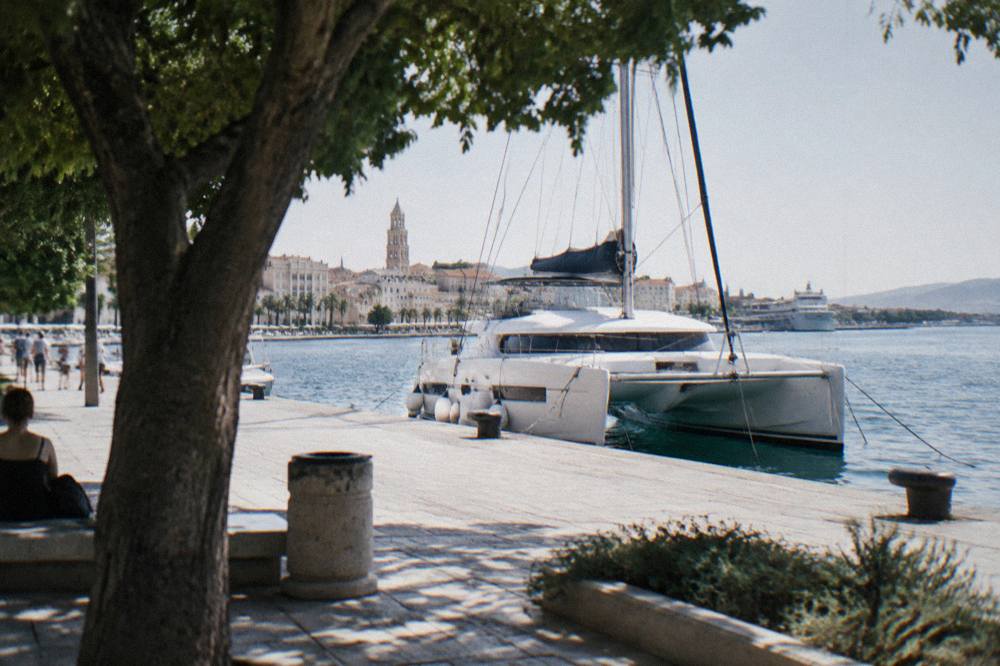
The geography does the heavy lifting. Brač, Šolta, Hvar and Vis form a loose chain southwest of the city, and each is reached by a separate scheduled line rather than a tour bus. Jadrolinija's route pages show car ferries to Supetar on Brač, Stari Grad on Hvar, Rogač on Šolta and Vis town, while Kapetan Luka (Krilo), TP Line and Bura Line all appear in the port's live departures feed as catamaran operators. A hopper can mix slow car ferries, which carry foot passengers cheaply, with fast catamarans, which reach Hvar town and Vis.
The city side of the week matters too. Before the first sailing or after the last return there is the palace complex, the cellars, the Peristyle and the climb up Marjan hill, whose highest point Telegrin stands 178 m above the sea with 819 steps from Trumbićeva obala. The Riva promenade is the walk to the port itself. Anyone with only a single day ashore should read the Split cruise port day plan instead, and the one day in Split itinerary covers the shortest stay.
Which Islands Can You Reach By Ferry From Split?
Four islands sit on direct scheduled lines from Split: Brač at about 50 minutes by car ferry to Supetar, Šolta at about 60 minutes to Rogač, Hvar at about 120 minutes by car ferry to Stari Grad, and Vis at about 140 minutes. Hvar town itself is a catamaran stop, not a car ferry port, at 6.40 to 10.00 EUR on the lines the operators publish. From 2026 the Brač line runs high and low season timetables only.
That is the whole map, and each line has a character of its own. Jadrolinija's line 635 to Stari Grad carries cars and foot passengers, with the foot passenger fare at 5.90 EUR off-season and 8.40 EUR in season on the operator's price list. Line 631 to Supetar on Brač lost its off-season timetable from 2026, which Jadrolinija announced as part of its new sailing schedule, meaning the line now runs under high-season and low-season timetables only. Line 636 to Rogač on Šolta is the short hop, about 60 minutes. The Vis ferry is the long one at about 140 minutes, and it is the only scheduled way to bring a car to that island.
Catamarans fill the gaps the car ferries leave. Line 9603 runs Split, Bol, Stari Grad and Jelsa, linking Brač and Hvar in one sailing, and line 9602 runs Split, Milna, Hvar and Vis. The published catamaran fares are 6.40 EUR low season and 10.00 EUR high season to Hvar or Jelsa, and 7.20 to 10.00 EUR to Vis. Catamarans sell out in peak weeks because seats are limited, while the car ferries rarely turn a foot passenger away.
| Line | Route | Vessel | Sailing time | Foot passenger fare |
|---|---|---|---|---|
| 631 | Split to Supetar, Brač | Car ferry | About 50 minutes | On the operator's price list |
| 636 | Split to Rogač, Šolta | Car ferry | About 60 minutes | On the operator's price list |
| 635 | Split to Stari Grad, Hvar | Car ferry | About 120 minutes | 5.90 EUR off-season, 8.40 EUR in season |
| Vis line | Split to Vis town | Car ferry | About 140 minutes | On the operator's price list |
| 9603 | Split, Bol, Stari Grad, Jelsa | Catamaran | On the timetable | 6.40 EUR low, 10.00 EUR high |
| 9602 | Split, Milna, Hvar, Vis | Catamaran | On the timetable | 7.20 EUR low, 10.00 EUR high to Vis |
The first sailing of a hopping week is a decision about pace, not just geography. Šolta is the gentle opener, Brač carries Zlatni Rat and the Bol catamaran stop, Hvar town is the catamaran headline, and Vis rewards the long crossing with the Blue Cave boat trips that leave from its west side. The Hvar guide and the Brač and Zlatni Rat guide cover the islands in depth.
A hopping week does not have to be all self-planned sailings. Guided boat days run alongside the scheduled ferries, and for some travellers one booked day on the water plus four ferry days is the right mix.
How Do You Plan A Seven Day Island Hopping Itinerary From Split?
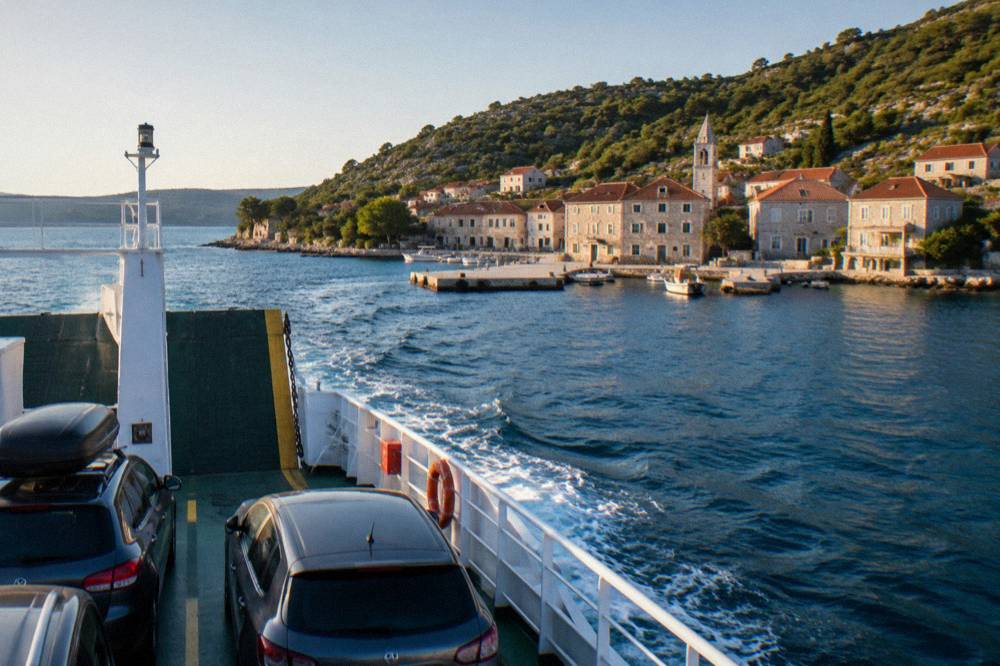
Plan the week around three overnights off the mainland and four in Split: one night on Šolta or Brač, two on Hvar or Vis, and the remaining nights in the city, so every island morning starts before the day trippers arrive and every return lands within walking distance of your bed. Book Hvar and Vis accommodation first, because those islands fill in July and August, then fit the ferries to the beds rather than the other way round.
The order matters less than the anchors. A workable skeleton is Split for two nights, Šolta or Brač for one, Hvar for two, Vis for one if the calendar allows, and a final night back in Split before departure. The catamaran network makes the Hvar to Vis leg possible without returning to Split, since line 9602 calls at both, and the Stari Grad ferry lets a hopper move between the car ferry and catamaran systems on Hvar itself. Check each sailing on the operator's own timetable before locking accommodation, because frequencies drop outside the summer months and the Brač line's timetable structure changed for 2026.
Weather is the other planner. The DHMZ Split Marjan station table, covering 1948 to 2024, puts July at a 26.2 C mean and August at 25.9 C, with 18 days at 30 C or more in July and 17 in August. November is the wettest month at 115.5 mm and July the driest at 26.6 mm. Catamarans are the sailings most exposed to wind, and the operator decides on the day; the car ferries run through conditions that stop the fast boats. Build one flexible day into the week so a cancelled catamaran does not break the chain.
There is also a food decision to make early. A hopping week lives on harbour restaurants and konoba terraces, and a guided introduction to Dalmatian eating in Split before the first sailing sets up the whole week's ordering. The Check availability link beside the food tour write-up shows the operator's live listing, and the same tour appears in the trio above if you want it beside the park day trips.
For anyone weighing the base question first, the where to stay in Split guide maps the neighbourhoods, and the two days in Split and three days in Split itineraries cover the city days at each end of the week.
What Does A Day By Day Island Hopping Week From Split Look Like?
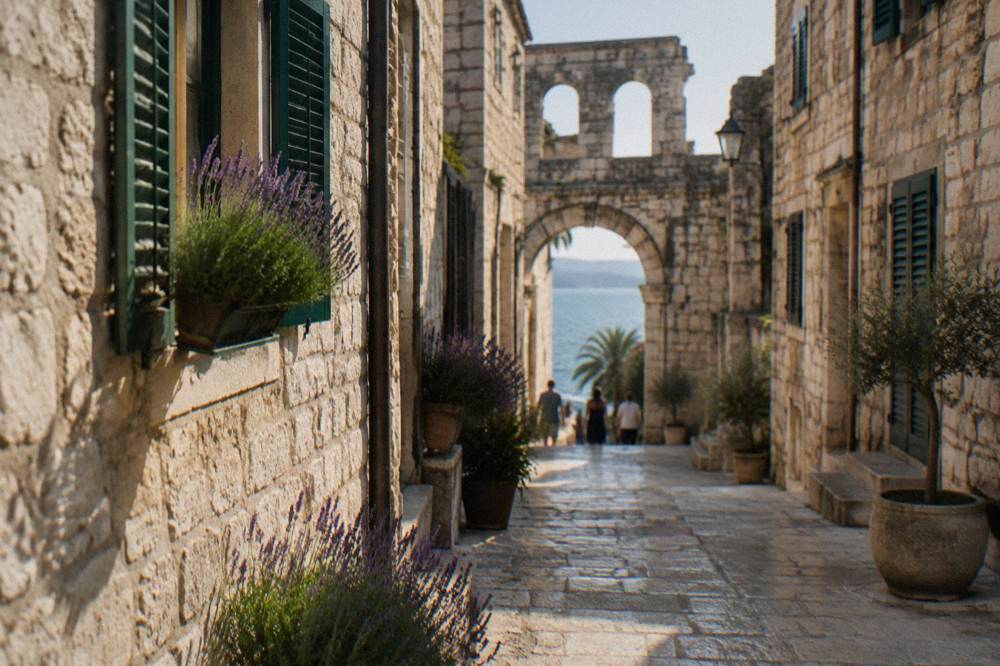
A proven shape is: days one and two in Split itself, day three on Šolta, days four and five on Hvar with the Stari Grad ferry in and the catamaran out, day six on Vis with the Blue Cave boats, and day seven back in Split with a Marjan morning before departure. The pattern keeps every crossing short, gives Hvar two full island mornings, and leaves the last night on the mainland within reach of the airport shuttle.
Here is the week in full, with the sailing that carries each leg.
| Day | Base | Morning | Afternoon | Sailing that day |
|---|---|---|---|---|
| 1 | Split | Old Town and palace | Riva and Bačvice | None |
| 2 | Split | Marjan hill, 819 steps to Telegrin | Green market and museums | None |
| 3 | Šolta | Line 636 to Rogač, about 60 minutes | Rogač and Maslinica | Car ferry out and back |
| 4 | Hvar | Line 635 to Stari Grad, about 120 minutes | Stari Grad and Hvar town transfer | Car ferry |
| 5 | Hvar | Fortica, 12 EUR on the Hvar price list | Pakleni islands by local boat | None |
| 6 | Vis | Catamaran line 9602, 7.20 to 10.00 EUR | Vis town and Komiža | Catamaran |
| 7 | Split | Vis ferry back, about 140 minutes | Final palace circuit and packing | Car ferry |
The days in Split are not dead time. Day one can follow the old town and palace circuit, with the cathedral of St Domnius and its 57 m bell tower as the centrepiece, and tickets from about 5 EUR with combined tickets up to about 15 EUR on the Peristyle kiosk scheme. Day two belongs to Marjan hill and the beaches, with Bačvice the closest swimming to the centre. The split cruise port day plan reuses well if any sailing day is cancelled.
Šolta on day three is the quietest island on the route, and a there-and-back day trip by car ferry is the simplest version of it. Hvar on days four and five is the heart of the week. The Stari Grad ferry lands at the north of the island, and local buses and taxis cover the transfer to Hvar town, or the week can stay in Stari Grad and visit Hvar town as a day move. The Fortica fortress above Hvar town charges 12 EUR on the town's published site list, with 9:00 to 20:00 opening on that same listing.
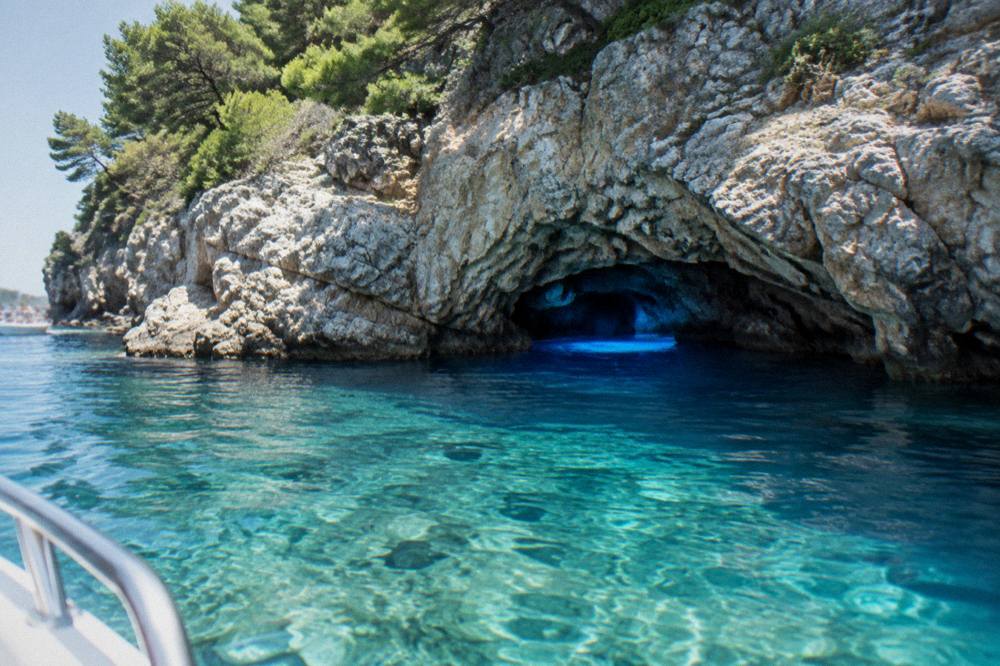
Vis on day six is the commitment. The catamaran gets there faster than the car ferry, and the Blue Cave trips leave from Komiža on the island's west side, with the cave entrance on Biševo at 24 EUR in high season, 20 June to 10 September, and 18 EUR in the shoulder months, paid in cash on site per the trip operators' published fee. The Blue Cave and Vis guide covers that side trip in full.
How Much Does A Week Of Island Hopping From Split Cost?
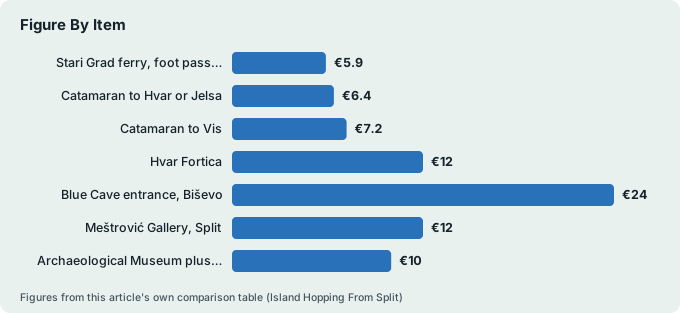
Transport for the week is cheap relative to tours: the foot passenger fares are 5.90 to 8.40 EUR each way on the Stari Grad car ferry, 6.40 to 10.00 EUR on the catamarans to Hvar or Jelsa and 7.20 to 10.00 EUR to Vis, so the full week's sailings cost roughly 30 to 50 EUR per person in foot passenger tickets alone. Island entrances and museums add 10 to 15 EUR here and there, and accommodation is the real variable, confirmed at booking.
The fixed, published pieces of a hopping budget are few and knowable in advance. Here they are with their figures.
| Item | Figure | Source basis |
|---|---|---|
| Stari Grad ferry, foot passenger | 5.90 EUR off-season, 8.40 EUR in season | Operator price list |
| Catamaran to Hvar or Jelsa | 6.40 EUR low, 10.00 EUR high | Operator price list |
| Catamaran to Vis | 7.20 EUR low, 10.00 EUR high | Operator price list |
| Hvar Fortica | 12 EUR | Hvar site listing |
| Blue Cave entrance, Biševo | 24 EUR high season, 18 EUR shoulder | Trip operators' fee page |
| Meštrović Gallery, Split | 12.00 EUR, includes Crikvine-Kaštilac | Gallery price list |
| Archaeological Museum plus Salona combined | 10 EUR within 7 days | Museum price list |
| Tourist tax | About 2.65 EUR per person per night in high season, 1 April to 30 September | Collected by the accommodation |
Two cautions keep that table honest. The tourist tax figure keeps its "about" because it is collected by the accommodation and confirmed at booking, with under 12s free and 12 to 18s at half rate. And none of the ferry fares covers a car: taking a vehicle to the islands costs more and, in peak weeks, needs booking well ahead, which is one reason a car-free hopping week out of Split is the standard advice. Travellers weighing the whole question should read the is it worth renting a car in Split discussion before deciding.
Museum and site prices on the mainland days come from the institutions' own lists. The Split City Museum charges 10.00 EUR adult at the Papalić Palace, closed Mondays, and the palace cellars run 8:30 to 20:00 daily with the central part under restoration to the end of 2026 while the passage stays open. The split on a budget guide extends this table further for cheaper weeks.
For anyone who would rather buy one guided day than five ferry days, the Blue Cave and Hvar speedboat trips compress the highlight islands into a single booked outing, and the tile above shows the operator's live listing. Other pages covering the same trip are gathered on Split Croatia Travel Guide.
When Is The Best Month For Island Hopping From Split?
July and August are the warmest and busiest months, with DHMZ Split Marjan station means of 26.2 C and 25.9 C for 1948 to 2024, 18 and 17 days at 30 C or more, and July the driest month at 26.6 mm of rain. June and September are the calmer compromise, at 23.4 C and 21.6 C means with 49 mm and 70.9 mm of rain, and the same island ferries run.
The monthly picture from the station table, period 1948 to 2024, is worth reading whole before choosing dates.
| Month | Mean C | Precipitation mm | Notes for a hopping week |
|---|---|---|---|
| May | 19.2 | 57.5 | Sea still cool, thin crowds |
| June | 23.4 | 49.0 | Full season sailings begin |
| July | 26.2 | 26.6 | Driest month, peak crowding |
| August | 25.9 | 41.3 | Warm seas, peak prices |
| September | 21.6 | 70.9 | Season fares to 27 September |
| October | 17.2 | 77.0 | Fewer catamaran sailings |
Sunshine follows the same curve: 353.3 hours in July against 120.8 in December on the same station record, about 2,600 hours across the year. The seasonal ferry fare boundary on the Stari Grad line sits at 27 September per the operator's seasonal definition, so a late September week still travels at in-season foot fares while the August queues are gone. The best time to visit Split and Split weather guides carry the full table and the month by month detail, and the can you sunbathe in Split in October adjacent question is answered there too, from the same station data.
One calendar note cuts across the seasons: the Riva central section is scheduled for renovation works from November 2026 for a little over a year, so partial closures on the Riva should be expected through 2027. The promenade stays usable, but a 2027 hopping week should not picture an uninterrupted waterfront walk on departure day.
Do You Need To Book Ferries And Island Tours Ahead?
Catamaran seats yes, car ferry foot passengers no, and the Blue Cave trips yes in July and August. The catamarans have limited seating and sell out in peak weeks, the car ferries to Stari Grad, Supetar and Rogač rarely refuse a foot passenger, and the Biševo cave entrance of 24 EUR in high season is paid in cash on site after a boat ride that also fills up. The operator's own timetable and listing decide each case.
The practical routine is simple. Book accommodation on Hvar and Vis first, book catamaran seats once the beds are fixed, and treat the car ferries as walk-on. For the guided side of the week, the listings carry their own cancellation terms, typically free cancellation up to a day before, and pay-later options on many of them; the operator's live listing states the exact condition for each product. The same rule covers the park day trips some hoppers add: Krka is 40 EUR in June to September, 20 EUR in April, May and October and 7 EUR from November to March on the park's price list, with the ticket including the Skradin boat and Lozovac bus transfers from 1 April to 31 October, and swimming only in clearly marked areas.
Once the island beds are fixed, the sailings come next, book a ferry ticket here.
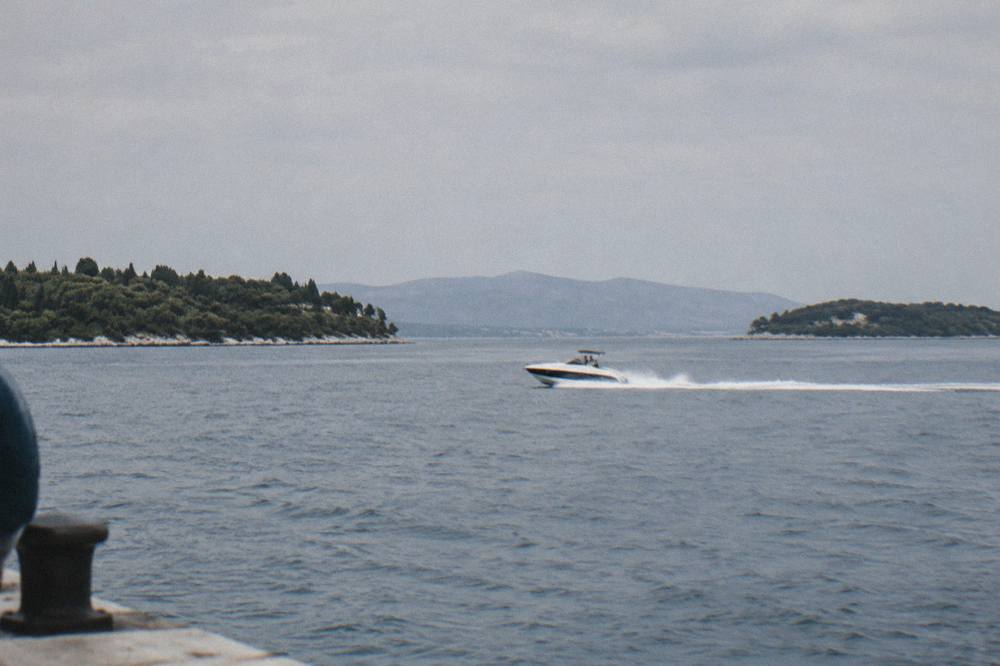
The second booked element worth locking early is any guided boat day among the islands. The tile below shows one of the Blue Lagoon cruise options, a middle path between the full speedboat Blue Cave runs and pure ferry hopping.
What Should You Pack For A Week Of Ferries And Islands?
Pack for hot days, sea crossings and stone streets: real shoes for the cobbles and the Marjan steps, a layer for the windy hour on any catamaran deck, cash for the Blue Cave entrance which is paid on site, and covered shoulders and knees for the cathedral. A small bag that can be carried up a ferry gangway matters more than any single clothing choice, since foot passengers board with everything they own.
The specific items the route itself dictates are few but easy to miss. Cash in euros covers the Biševo entrance and small island konobas. Sun protection matters on the water more than on land, and the July record of 18 days at 30 C or more in Split says the exposure is real. A refillable bottle works on Marjan, where the 819 steps to Telegrin have no shade at the top. And the dress code for the Cathedral of St Domnius is shoulders and knees covered, which is the one hard clothing rule on the whole route.
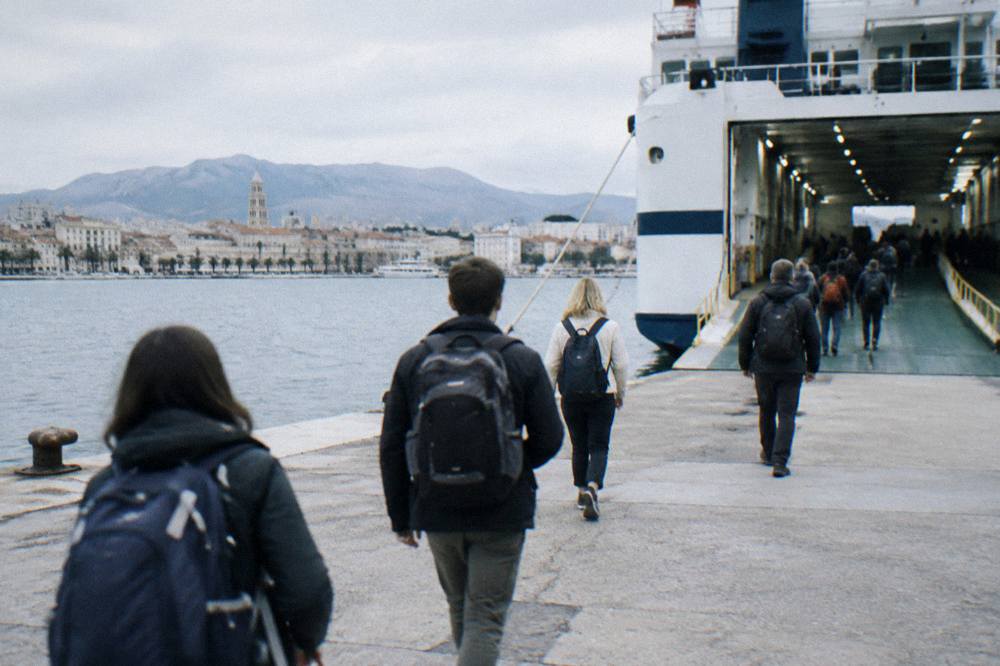
Logistics around the edges of the week are worth settling in advance. The airport is 20 km from Split and 6 km from Trogir by the airport's own page, and the Platanus shuttle runs from the airport to the main bus station by the ferry port at 10 EUR one way and 15 EUR return, which lands a hopping week exactly where it starts. The Split airport to city centre guide covers that transfer, and luggage storage in Split solves the final-day problem between checkout and a late sailing or flight.
What Are The Common Mistakes On A Split Island Hopping Week?
The three that break itineraries are confusing Hvar town with Stari Grad, planning the Vis leg without checking the catamaran days, and booking the mainland nights before the ferry days are fixed. Hvar town is reached by catamaran while Stari Grad is the car ferry port on the same island, the Vis ferry takes about 140 minutes and runs to its own calendar, and a week that locks the beds first sails second.
The Hvar confusion deserves its own sentence because it is the most common one. A traveller who books a Stari Grad bed expecting to step off a catamaran, or a Hvar town bed expecting a car ferry, adds an island transfer to arrival day that the itinerary never planned. The two ports are on the same island but not in walking distance of each other, and the where does the ferry from Split to Hvar arrive question is answered at length on its own page.
The second mistake is pace. Four islands in seven days sounds like the point of the trip, but a night in each means four check-outs and four crossings, and the islands blur. Three bases, Split plus two islands, is the version that leaves room for the mornings that make the week: an empty Rogač quay, the Stari Grad lanes before the tour boats, Komiža before the Blue Cave fleet leaves. The split day trips overview and the ferries from Split reference are the two pages to hold open while planning.
The third is treating the mainland days as filler. Split carries the week's start and end, and the palace, the markets, the museums and Marjan are a full programme in themselves. The things to do in Split page is the root list, and the rainy day in Split plan is the fallback when a November-style 115.5 mm month lives up to its station record.
A final word on the food thread of the week. Island hopping in Dalmatia is as much eating as sailing, from the green market in Split to the harbour konobas of Šolta and Vis, and the food tours in the trio above, including Split's Ultimate Walking Food Tour with Full Meal & Drinks, are the booked way into that side of the culture. The Split food and Split restaurants guides carry the mainland half.
Common Questions About Island Hopping From Split
Can You Do Island Hopping From Split Without A Car?
Yes, and it is the standard way to do it. Every line in this guide carries foot passengers, the fares for foot passengers are published on the operators' price lists, and the port sits 500 to 600 m from the palace. Cars add cost and, on peak-season car ferries, need advance booking.
How Many Islands Can You Visit From Split In A Week?
Three or four is realistic. Šolta, Brač, Hvar and Vis are all on direct lines, but a week that overnights on three bases rather than four leaves room for full island mornings. The day by day table above shows a four island shape with three overnight bases.
Is Hvar Town Or Stari Grad The Better Ferry Port?
They are different systems. Stari Grad is the car ferry port on Hvar's north side, about 120 minutes from Split, while Hvar town is a catamaran stop. A week can use both, arriving by car ferry at Stari Grad and leaving Hvar town by catamaran.
What Is The Cheapest Ferry From Split To The Islands?
The published foot passenger fares are 5.90 EUR off-season and 8.40 EUR in season on the Stari Grad car ferry, with catamarans at 6.40 to 10.00 EUR to Hvar or Jelsa. The car ferries are the cheaper system for foot passengers.
Do The Catamarans From Split Sell Out?
Yes, in July and August, because seating is limited. Book catamaran seats once accommodation is fixed, and check the operator's own timetable for the sailing days, since frequencies drop outside summer.
Can You Visit The Blue Cave On An Island Hopping Week?
Yes, most easily from Vis or Hvar on day six of the plan. The cave entrance on Biševo is 24 EUR in high season, 20 June to 10 September, and 18 EUR in the shoulder months, paid in cash on site, and the boat ride out is booked through the trip operators.