Split To Ancona Ferry
Split is Croatia's busiest passenger port, and Italy sits directly across the Adriatic. This guide separates the international crossings that are confirmed from the domestic island lines, so the sea leg of the journey is planned on real timetables rather than on old forum threads.
Short answer
There is no confirmed direct Split to Ancona ferry line in the current timetables. The international additions for summer 2026 are a Split to Bari ferry and a Zadar to Ancona catamaran, so a traveller set on Ancona crosses from Zadar, about 2 hours of driving up the coast from Split.
The sea has always been the fastest way out of Split. The city sits on a peninsula in central Dalmatia, its ferry port handling 6.05 million passengers in 2025 according to the Port of Split's own statistics, and Italy lies across the Adriatic in plain sight of a clear evening horizon. Travellers searching for a Split to Ancona ferry are really asking one practical question: can they roll or walk onto a ship in Split and step off in Italy without detouring through a third city. The honest answer, on the timetables that exist right now, is that the crossing from Split to Italy runs to Bari, while Ancona is served from Zadar by catamaran and from other Croatian ports by lines this page cannot confirm. What follows separates what is confirmed from what is not, and then covers the domestic ferry network, the port hub and the planning details that make an Italy crossing from Split work.
Is There A Direct Split To Ancona Ferry?
No direct Split to Ancona ferry appears in the confirmed 2026 sailing information. The international additions reported for summer 2026 are a Split to Bari ferry line and a Zadar to Ancona catamaran service operated by the vessel Jelena, so a traveller heading to Ancona from Split changes ports, crossing from Zadar instead. The operator's own timetable decides, and no line should be assumed to run year-round.
The distinction matters because Adriatic ferry networks change every season, and an old blog post can send a reader to a ticket office that no longer sells the crossing it describes. What the 2026 season reporting shows is a reshuffle of Croatia to Italy capacity: Bari gained the direct link from Split, while Ancona, long the classic Italian ferry gateway, is paired with Zadar by catamaran. Zadar is about 159.5 km and roughly 2 hours of free-flow driving north from Diocletian's Palace, per the route calculations used across this site, so the port change is a real but manageable detour.
The practical reading is this. If the destination is Italy and the ship itself is the point, sail from Split to Bari and continue up the Italian coast by rail or road. If Ancona specifically is the target, because it is the shortest hop to central Italy, plan on reaching Zadar first, by bus, car or a coastal drive, and crossing from there. Either way, book against the live timetable of the operator concerned, not against a printed guide, because seasonal start and end dates move every year.
Which Ferry Routes Run From Split To Italy?
The confirmed international sea route from Split for summer 2026 is the ferry line to Bari in Italy, reported alongside a new Zadar to Ancona catamaran as part of the same seasonal expansion of Croatia to Italy sailings. No other Italy-bound departure from Split is confirmed, so every other Italian port combination must be checked at the operator's live listing.
Two years of border change sit behind any Italy crossing now, and they affect the paperwork rather than the ship. Croatia has been a full Schengen member since 1 January 2023, so a sea crossing between Split or Zadar and Ancona or Bari is an internal Schengen movement, with no systematic passport stamping on the Italian side. The Entry Exit System, EES, became fully operational at external Schengen borders on 10 April 2026, but that applies to travellers entering the Schengen area, not to a crossing within it. Visitors arriving in Croatia from outside Schengen before their ferry trip will already have registered under EES at their first point of entry.
Here is what the confirmed picture looks like for the 2026 season:
| Crossing | Type | Status in the confirmed 2026 information |
|---|---|---|
| Split to Bari | International ferry | New line added for summer 2026 |
| Zadar to Ancona | International catamaran | New service, vessel Jelena, summer 2026 |
| Zadar to Ancona via other ports | Ferry | Not confirmed in the material this site reports |
| Split to Ancona | Ferry or catamaran | Not confirmed for 2026 |
A word on how to verify before committing money. Operators publish sailing calendars as PDFs and route pages that change with the season, and a line that ran in July may have no departure at all in late September. The rule this site works to is simple: the operator's own timetable decides. Anything else, including this page, is a starting point for planning, not a booking reference. Where a fare or a sailing time is not printed here, that is because it is not in the confirmed material, and the ticket page is the place to find it.
Where Do Ferries From Split Actually Depart From?
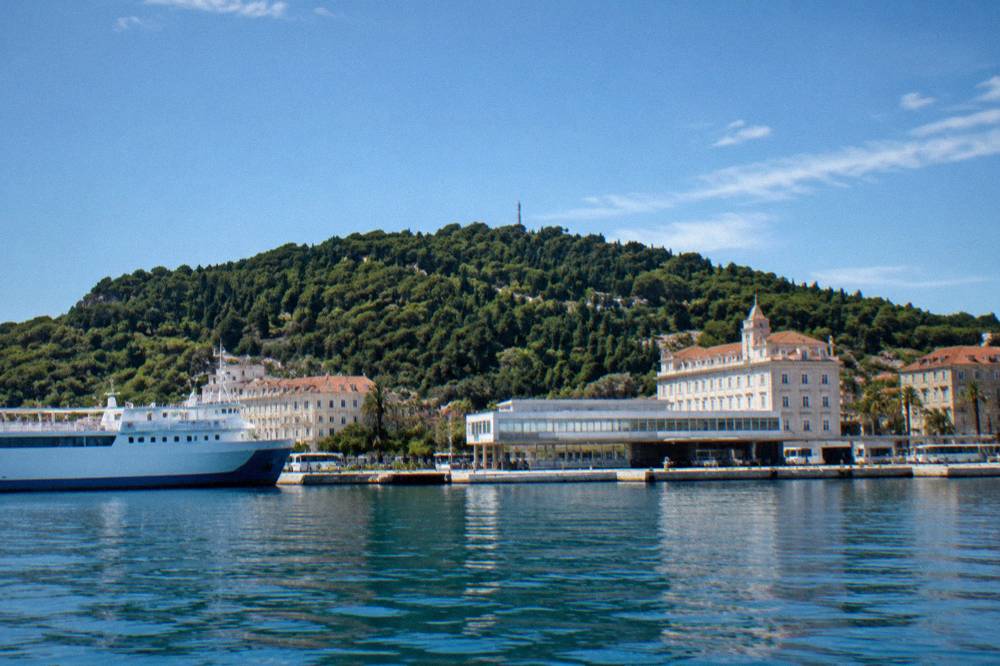
All of Split's sea connections, domestic and international, leave from the port on Obala kneza Domagoja, where the ferry terminals, the main bus station and the railway station sit together in one transport hub roughly 500 to 600 m from Diocletian's Palace. That walk takes a few minutes with luggage on the flat Riva side, and it is the single most useful fact about catching any ship out of Split.
The hub arrangement is unusual on the Adriatic and it removes the transfer risk that plagues ferry ports elsewhere. A bus arriving from Zadar, Dubrovnik or Zagreb terminates at the main bus station beside the ferry docks, so a same-day connection between a long-distance coach and a sailing is a walk of a couple of hundred metres. The railway station sits in the same cluster, with trains toward Zagreb taking roughly 7 hours 15 minutes to 8 hours 10 minutes per secondary timetabling sources. The Port of Split live departures feed carries Jadrolinija alongside the catamaran operators Kapetan Luka, known as Krilo, TP Line and Bura Line, which is a good sign of how many small fast vessels share the terminal gates with the big car ferries.
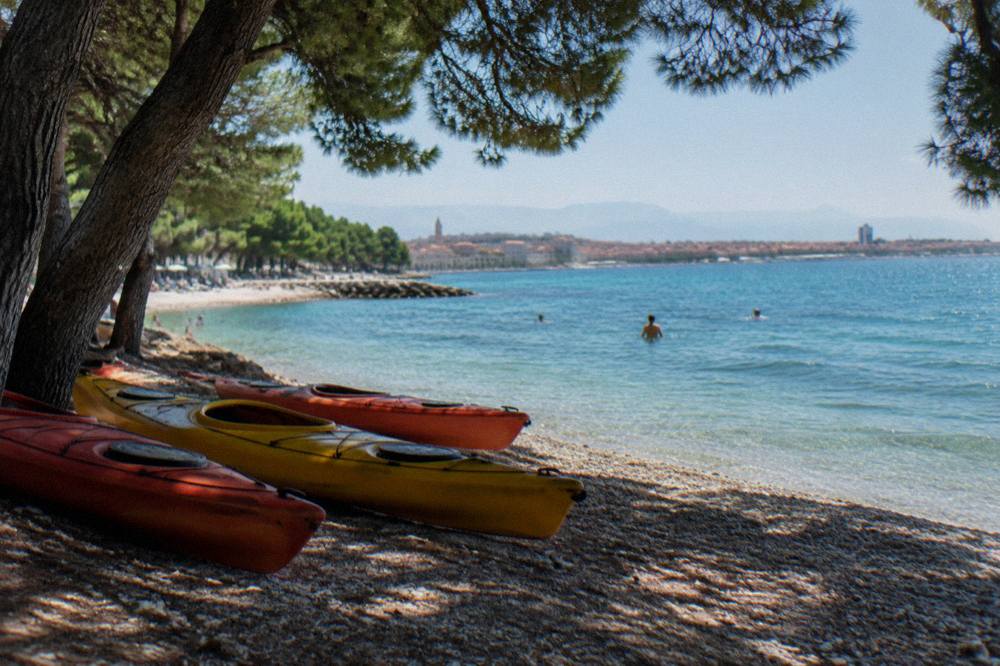
Before or after a ferry night, the sea is also the city's playground, and the port's proximity to Marjan hill means the hours around a sailing can be spent on the water rather than in a terminal. A half-day sea kayak trip along the coast west of the city, Split: Half-Day Split Sea Kayak Adventure, fits neatly into a morning before an afternoon or evening departure, and the operator's live listing carries the current price, meeting point and season. Check availability
For travellers with time to fill on either side of a crossing, the things to do in Split overview covers the palace, the beaches and Marjan, and the ferries from Split guide maps every domestic line in detail.
Crossing To Italy By Way Of Zadar
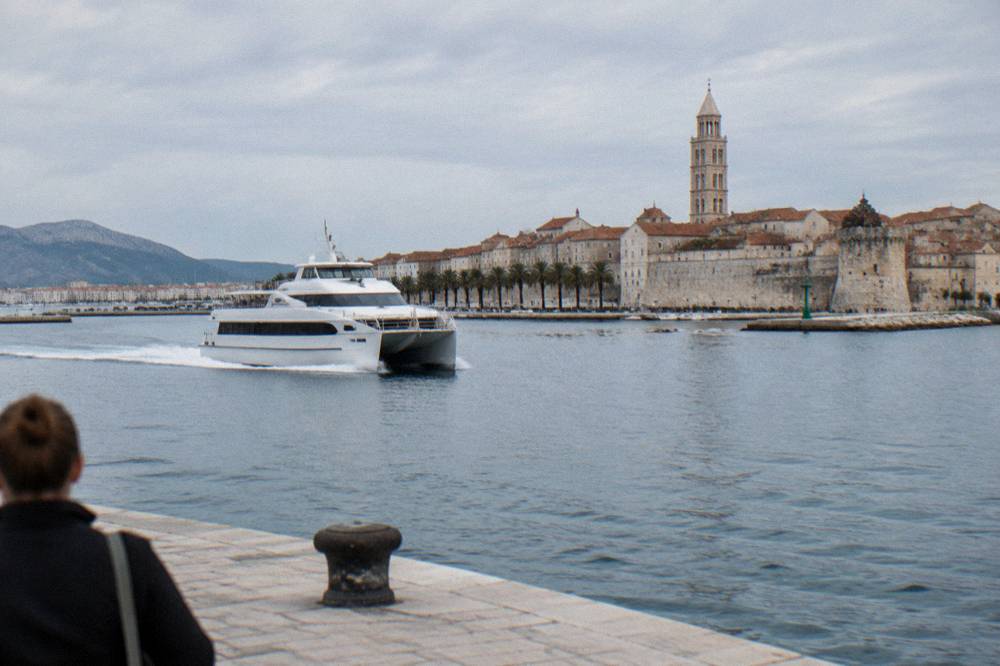
Ancona-bound travellers need Zadar, and there are two sane ways to get there. Driving north on the coastal route covers about 159.5 km from the palace in roughly 2 hours free-flow, and a bus covers the same corridor in a similar order of time, with departures from the main bus station beside the Split ferry port. The catamaran Jelena then runs Zadar to Ancona on the summer 2026 schedule. Because every element of that chain is seasonal, the safe plan is a night in Zadar before the sailing, which also opens the old town, the sea organ and the Roman forum as a bonus stop rather than a rushed connection.
What Do Domestic Ferries From Split Cost?
The confirmed domestic fares for 2026 are 5.90 EUR for a foot passenger on the Split to Stari Grad car ferry off-season and 8.40 EUR in season, while the catamarans to Hvar Town, Jelsa and Vis run at 6.40 to 10.00 EUR for Hvar or Jelsa and 7.20 to 10.00 EUR for Vis, low season against high season per the operator price lists. These are the figures the operators' own documents carry.
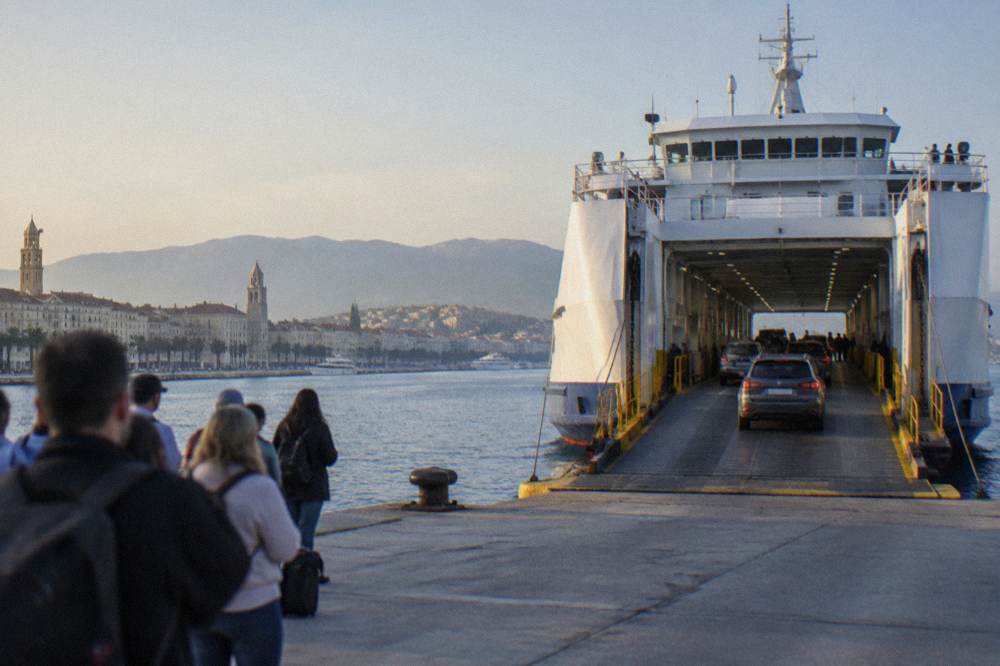
The domestic network is the backbone of Dalmatian travel, and it is worth understanding even on a page about Italy, because the same port, the same ticket logic and often the same operator carry both. Jadrolinija runs the car ferries: line 635 to Stari Grad on Hvar takes about 120 minutes, line 631 to Supetar on Brač about 50 minutes, line 636 to Rogač on Šolta about 60 minutes, and the Vis crossing about 140 minutes. From 2026 the Supetar line dropped its off-season timetable entirely and now runs only high-season and low-season schedules, the fifth Croatian line to do so, a change Jadrolinija announced with its 2026 sailing order.
| Line | Route | Sailing time | Foot passenger fare |
|---|---|---|---|
| 635 | Split to Stari Grad, Hvar | about 120 minutes | 5.90 EUR off-season, 8.40 EUR in season |
| 631 | Split to Supetar, Brač | about 50 minutes | in the operator price list |
| 636 | Split to Rogač, Šolta | about 60 minutes | in the operator price list |
| 9602 | Split, Milna, Hvar, Vis catamaran | by stop | 7.20 to 10.00 EUR to Vis |
| 9603 | Split, Bol, Stari Grad, Jelsa catamaran | by stop | 6.40 to 10.00 EUR to Hvar or Jelsa |
One distinction trips up planners every summer, and it matters for anyone combining an island stop with an Italy crossing. Hvar Town is reached by catamaran, while Stari Grad is the car-ferry port on the same island, and the two are not interchangeable. The Split to Hvar ferry guide covers the difference in full, and the answer page on where the ferry from Split to Hvar arrives settles the practical question of which quay your ticket actually delivers you to.
How Long Is The Journey From Split To Ancona By Sea And Land?
There is no single confirmed sailing time for a Split to Ancona trip, because no direct line exists in the 2026 information: the realistic chain is about 2 hours from Split to Zadar by road, roughly 159.5 km free-flow, followed by the Zadar to Ancona catamaran crossing on the summer 2026 schedule, whose duration and fare are set by the operator's own timetable and must be checked there before booking.
That answer feels unsatisfying next to a simple "ten hours overnight", which is why it is the honest one. Ferry forums are full of durations for crossings that no longer run, and overnight Adriatic sailings in particular have been reshuffled since Croatia's international lines were reorganized for 2026. What can be stated firmly are the land-side numbers, all computed on a free-flow route model: Zadar 2 hours, Šibenik 71 minutes, Trogir 36 minutes, Dubrovnik 3 hours 21, and the airport in Kaštel Štafilić 31 minutes from the palace. Each of those towns is a plausible overnight stop on the way to or from a ferry. Everything else covered here is indexed on Split Croatia Travel Guide.
| Destination from Diocletian's Palace | Driving distance | Free-flow time |
|---|---|---|
| Zadar, for the Ancona catamaran | 159.5 km | about 2 hours |
| Šibenik | 84.8 km | 71 minutes |
| Trogir | 29.3 km | 36 minutes |
| Dubrovnik | 234.8 km | 3 hours 21 |
| Split Airport, Kaštel Štafilić | 24.9 km | 31 minutes |
For the airport leg, the Split airport guide and the page on getting from Split airport to the city centre cover the Platanus shuttle, which the operator's own page prices at 10 EUR one way and 15 EUR return between the airport and the main bus station beside the ferry port. City bus lines 37 and 38 also stop at the airport, with the fare to be confirmed on board. Anyone chaining a flight, a domestic ferry and an international sailing through Split should read both pages before booking tight connections.
When Is The Best Time Of Year To Cross The Adriatic?
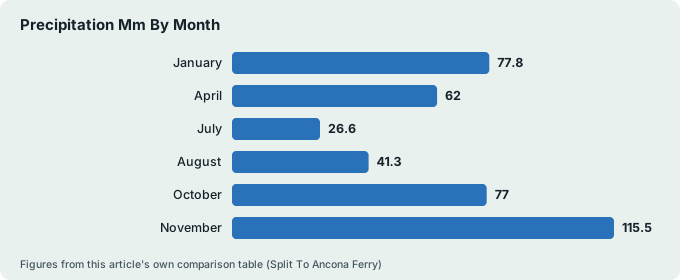
The warmest and calmest sea months on the Split coast are July and August, with DHMZ Split Marjan station means of 26.2 C and 25.9 C for the period 1948 to 2024, while November is the wettest month at 115.5 mm and July the driest at 26.6 mm, so international sailings, which concentrate in summer, match the steadiest weather window even though they carry the season's crowds.
The station record gives the full picture. July averages 353.3 hours of sunshine against 120.8 in December, and the station table shows 18 days at 30 C or more in July and 17 in August, against 7 in June. For a ferry traveller this is not trivia: the Adriatic in the November to March window produces the cancellations and rough crossings that fill travel forums, and the operators respond by thinning their schedules to a skeleton, where they run at all. The summer concentration of international routes is as much a weather decision as a demand one.
| Month | Mean temperature, DHMZ Split Marjan 1948 to 2024 | Precipitation mm |
|---|---|---|
| January | 8.0 C | 77.8 |
| April | 14.4 C | 62.0 |
| July | 26.2 C | 26.6 |
| August | 25.9 C | 41.3 |
| October | 17.2 C | 77.0 |
| November | 12.7 C | 115.5 |
Shoulder-season crossings, late May, June and September, trade slightly cooler air for thinner crowds on ships and in ports, and the best time to visit Split guide works through the same trade-off for the city itself, with the full Split weather breakdown if the sailing date is flexible. One planning note for autumn travellers: the Split to Bari and Zadar to Ancona additions are reported as summer 2026 services, so assume nothing about their October or winter operation without checking the operator's calendar directly.
Do You Need A Car To Combine Split With An Italy Ferry?
No car is needed for the Split to Bari option, because the ferry port, the main bus station and the railway station sit together 500 to 600 m from the palace, and the islands of Hvar, Brač, Šolta and Vis are all reachable on foot-passenger ferries and catamarans from the same quays, though a car earns its keep for the Zadar to Ancona route, where the 2-hour coastal drive to the catamaran is the simplest link.
The foot-passenger case for Split is unusually strong. The catamaran network was built for people without vehicles, and the domestic fares quoted above are foot-passenger fares. A traveller can land at Split airport, take the Platanus shuttle to the main bus station, walk to a catamaran, and be on Hvar Town without ever needing a wheel. Car travellers face a different calculation: car space on Adriatic ferries is capacity-limited and books out first in July and August, and the Split car rental guide explains when renting makes sense and when the ferry-and-foot combination wins.
For the Ancona plan specifically, the car question answers itself in favour of driving to Zadar, unless a bus timing from the main bus station lines up cleanly with the catamaran's departure. Either way, build in slack. A missed seasonal catamaran in a thin-schedule month can mean waiting days, not hours, and the Split day trips guide suggests how to spend an unplanned extra day, from Trogir at 36 minutes to Klis Fortress at 22, productively.
How Do You Plan A Ferry Night In Split Itself?
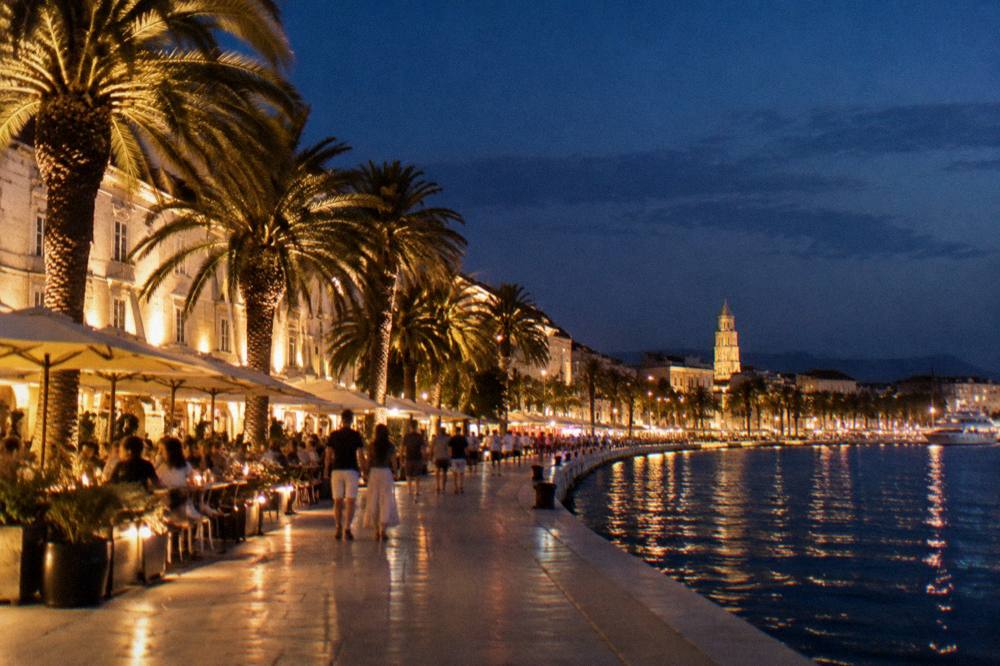
A ferry night in Split is best planned around the port hub's geography: the quays, the bus station and the rail station sit on Obala kneza Domagoja a few minutes' walk from the palace, the Riva promenade runs along the water beside them, and the city's restaurants and bars stay reachable on foot, so an evening before an overnight or early sailing needs no transport at all beyond walking shoes.
Split rewards the hours before a departure better than any ferry city on this coast, because the Old Town is inside the palace walls rather than a ride away. The Riva's central section is scheduled for renovation works from November 2026, expected to last a little over a year, so partial closures on the promenade are likely through 2027, though the walkway itself and the port functions continue. The green market operates beside the walls, the Peristyle is free to enter at any hour, and the Split restaurants and Split food guides cover where to eat within walking distance of the quays, while Split nightlife handles the late hours for anyone on a midnight sailing.
For a fuller treatment of where to sleep near the port, the where to stay in Split guide maps the neighbourhoods, and the budget page at Split on a budget lists what is free in the city, from the Golden Gate to Marjan hill's 819 steps up from Trumbićeva obala to the Telegrin viewpoint at 178 m. A sunset on Marjan before an evening ferry is the closest thing Split has to a tradition, and it costs nothing.
What Should You Book Ahead For An Adriatic Crossing?
Book the international sailing first, then the car space if you have one, then accommodation around the ports, because seasonal Adriatic lines sell their limited vehicle decks and cabins before they sell foot-passenger decks, and the international services reported for 2026, Split to Bari and Zadar to Ancona, are summer-only additions whose capacity vanishes the moment the season ends.
The order matters. A foot passenger with a flexible date can often buy on the day even in August, though July weekends on the Hvar catamarans prove the exception. A car, a cabin on an overnight leg, or a group of four or more should be booked the week the operator opens sales, because those inventories are physically capped by the ship. Domestic fares are cheap enough, 5.90 EUR off-season for Stari Grad on foot, that overthinking them wastes more time than the money at stake, but domestic car decks in August are a different animal entirely.
| Booking item | Book ahead or on the day | Why |
|---|---|---|
| International ferry, foot passenger | Ahead | Seasonal capacity, few sailings a week |
| International ferry, car deck | Well ahead | Vehicle space is capped by ship size |
| Domestic car ferry, foot | On the day is usually fine | Frequent sailings on the main lines |
| Domestic catamaran, July and August | Ahead | Peak-week sailings fill with foot passengers |
| Zadar accommodation before Ancona sailing | Ahead | Small port city, seasonal demand |
While the ferry is the headline, the coast around Split is worth a day of the itinerary on its own, and several small-group options cover it without any planning burden. The gastro walk at Split: Historical & Gastro Treasures Tour with Green Market pairs the market with tastings near the palace, and the shorter Split: Guided Kayak Adventure Tour puts the city walls and the sea in one frame. Check availability
Common Questions About The Split To Ancona Ferry
Is there a direct Split To Ancona ferry?
No direct Split to Ancona ferry is confirmed in the 2026 sailing information. The reported international additions for summer 2026 are a Split to Bari ferry line and a Zadar to Ancona catamaran, so Ancona is reached from Zadar, about 2 hours of driving north of Split.
How do I get from Split to Zadar for the Ancona catamaran?
Zadar is 159.5 km and about 2 hours of free-flow driving from Diocletian's Palace, and buses run the same corridor from Split's main bus station, which sits beside the ferry port. The catamaran to Ancona, the vessel Jelena, runs on the summer 2026 schedule, and its times must be checked with the operator.
Can I sail from Split to Italy at all?
Yes, on the Split to Bari ferry line reported as a new addition for summer 2026. Seasonal start and end dates are set by the operator, and the crossing should be booked against the live timetable rather than assumed for any given month.
What does a domestic ferry from Split cost on foot?
The operator's price list gives 5.90 EUR off-season and 8.40 EUR in season for a foot passenger on the Split to Stari Grad car ferry, while catamarans run at 6.40 to 10.00 EUR to Hvar Town or Jelsa and 7.20 to 10.00 EUR to Vis depending on season.
Where do ferries from Split leave from?
From the port on Obala kneza Domagoja, where the ferry terminals, the main bus station and the railway station share one hub roughly 500 to 600 m from Diocletian's Palace. Every domestic and international sailing leaves from this single cluster.
Do I need my passport for a Croatia to Italy ferry?
Croatia and Italy are both in the Schengen area, which Croatia joined on 1 January 2023, so the crossing is internal to Schengen. Carrying a passport or ID card is still required by the operator and by ordinary travel rules, and checks can occur.
The Short Version For Planners
The Split to Ancona ferry, as a single ship on a single route, does not exist in the confirmed 2026 picture: what exists is a direct seasonal line from Split to Bari, a catamaran from Zadar to Ancona about 2 hours up the coast, and a domestic network of car ferries and catamarans out of one walkable port hub that handled 6.05 million passengers in 2025.
Choose the port by the Italian destination, book the seasonal sailing before anything else, and let the city itself fill the hours around it.
What makes the plan straightforward is that Split's port cluster puts everything within a walk: the quays beside the bus station, the palace 500 to 600 m away, the Riva alongside. The Split boat tours that fill a spare morning, the Marjan steps that close the day, the beaches a tram ride or a short walk from the terminals, all of it sits on top of the same departure point.