Getting Around Split
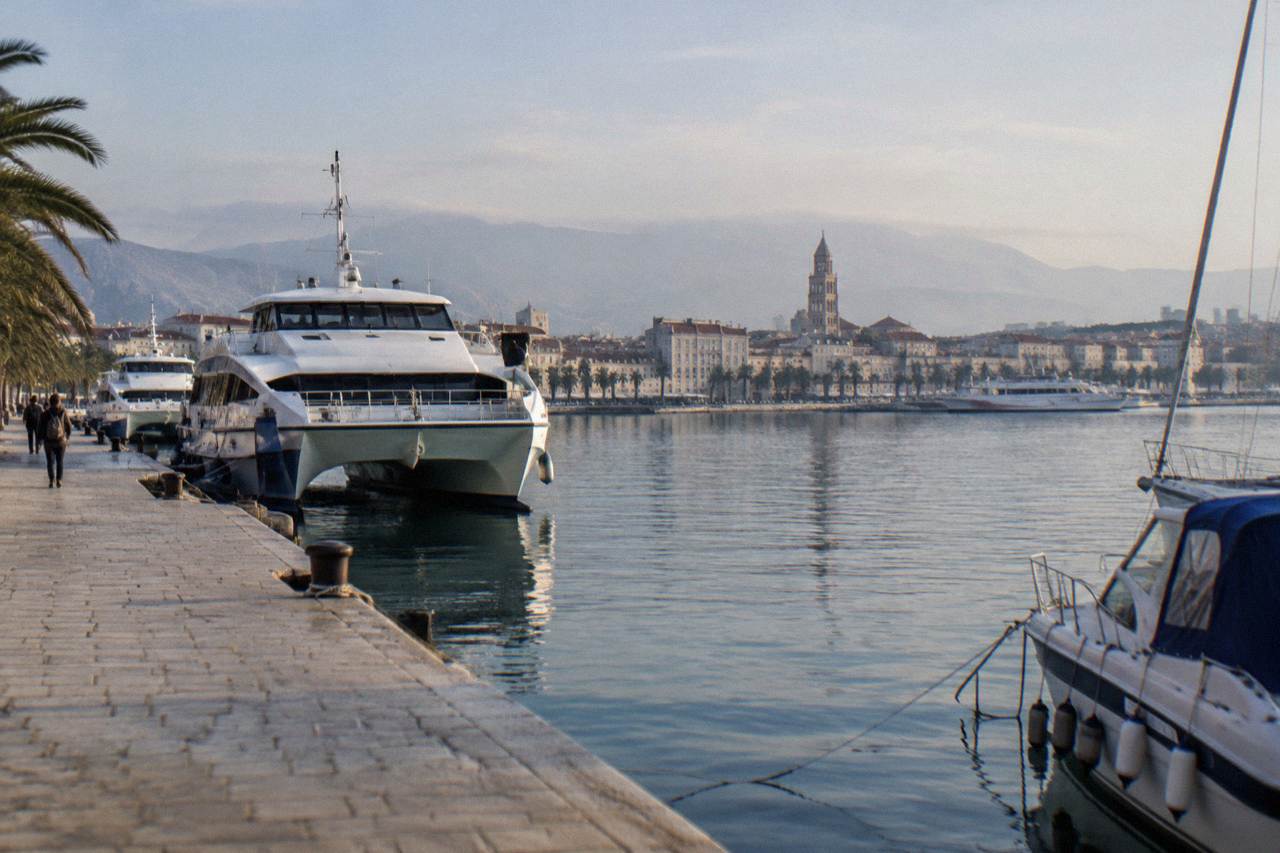
Split is a compact coastal city in Dalmatia, Croatia, where the ferry port, the main bus station and the railway station sit side by side 500 to 600 m from Diocletian's Palace, and where nearly everything a visitor needs is reachable on foot.
Short answer
Split is largely a walking city: the Old Town, the Riva, Bačvice beach and Marjan are all within easy reach on foot, the airport is 20 km away with a 10 EUR Platanus shuttle to the main bus station, and ferries and catamarans to Brač, Hvar, Šolta and Vis leave from the harbour 500 to 600 m from the palace. A car only helps for inland day trips.
Split is a compact coastal city in Dalmatia, Croatia, built in and around Diocletian's Palace on the Adriatic, and its transport geography rewards anyone who plans around one simple fact: the ferry port, the main bus station and the railway station sit together on Obala kneza Domagoja, 500 to 600 m from the palace. The historic centre is pedestrian, the beaches ring the shoreline on footpaths, and the islands of Brač, Šolta, Hvar and Vis are reached by boat from the harbour at the end of the Riva. This guide sets out what the operators themselves publish: the Platanus airport shuttle prices, the Jadrolinija sailing times, the OSRM driving times to the day-trip destinations, and the rules that changed for the 2026 season.
How Walkable Is Split Without A Car?
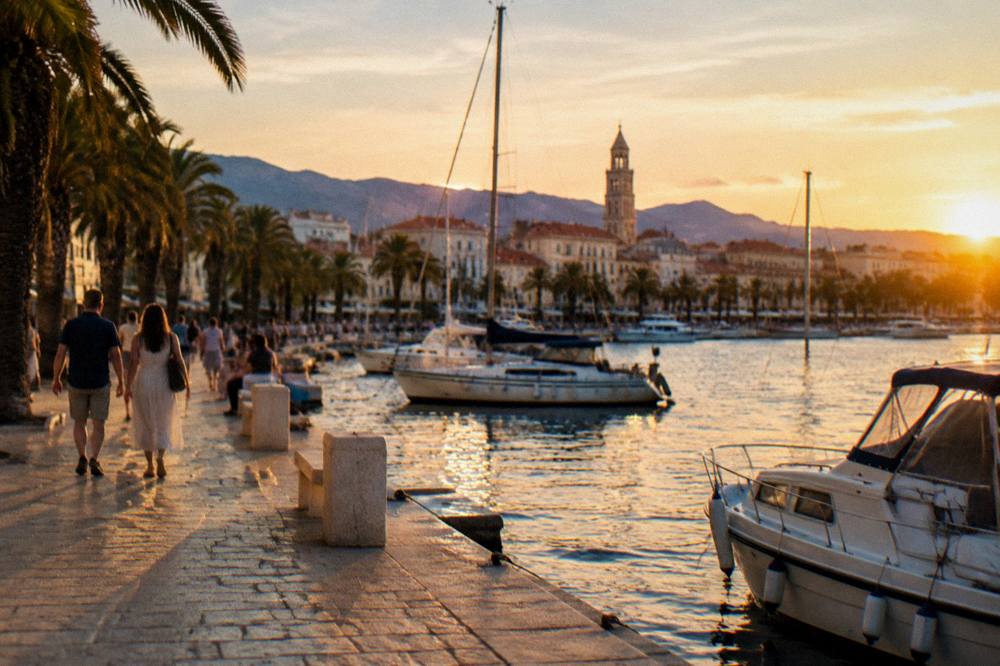
Split is a walking city at its core, and a car is a hindrance in the historic centre: the Old Town inside and around Diocletian's Palace is pedestrian stone lanes, the Riva promenade, the Peristyle, the Golden Gate, the Grgur Ninski statue, the green market, the city beaches and the Marjan park forest are all free to enter and all reachable on foot, and the transport hub on Obala kneza Domagoja sits 500 to 600 m from the palace itself.
That 500 to 600 m figure is the one to remember, because it covers the arrival moment. Step off a ferry, a long-distance coach or the train from Zagreb and the palace gates are a short walk along the waterfront. Bačvice beach, the home of picigin, sits east of the port, and the Marjan peninsula rises to the west, its highest point Telegrin at 178 m reached by 819 steps from Trumbićeva obala, as the Marjan park society's own figures state. A first visit can reasonably be done without any vehicle at all: see things to do in Split for what fills the days on foot.
Distances inside the centre are short, but the terrain is not always flat. Marjan's steps and the slopes of Veli Varos ask for reasonable shoes. The stone lanes of the palace substructures area, where the Split City Museum runs the cellars Monday to Sunday 8:30 to 20:00, are cobbled and uneven in places. If a day of walking sounds like enough, an itinerary such as one day in Split maps the palace, the Riva and Marjan into a single loop without transport of any kind.
For anything beyond the city, boats and buses take over. The Split Croatia Travel Guide covers each day trip in depth, and the sections below give the transport mechanics.
How Do You Get From Split Airport To The City?
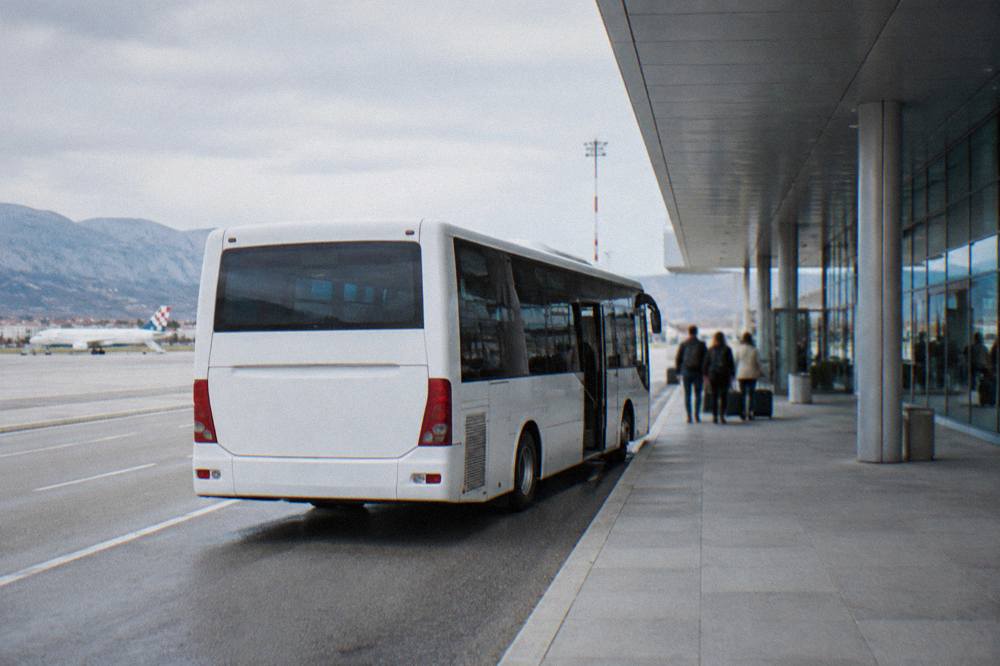
Split Airport (SPU) sits in Kaštel Štafilić in the Kaštela belt, 20 km from Split and 6 km from Trogir by the airport's own pages, and the Platanus shuttle runs from the airport's north parking to the main bus station by the ferry port for 10 EUR one way or 15 EUR return; driving from the palace is 24.9 km, about 31 minutes free-flow.
Ignore any source that calls the airport 6 km or 10 minutes from the city: the airport's own information pages give 20 km to Split and 6 km to Trogir. The Platanus shuttle is the fixed-price link, and its own page states the 10 EUR single and 15 EUR return fares with the main bus station as the city terminus, which places arriving passengers 500 to 600 m from the palace. Promet Split's city lines 37 and 38 also stop at the airport; the fare is a few euros, confirm on board, because the exact figure does not appear on the operator's readable price page.
| Option From The Airport | Operator Or Line | Route And Price | Where It Lands You |
|---|---|---|---|
| Shuttle bus | Platanus | Airport north parking to main bus station, 10 EUR one way, 15 EUR return | Obala kneza Domagoja, 500 to 600 m from the palace |
| City bus | Promet Split lines 37 and 38 | Stops at the airport; fare a few euros, confirm on board | City bus stops in Split centre |
| Car or transfer | Motorway and Kaštela road | 24.9 km from the palace, about 31 minutes free-flow (OSRM) | Door to door |
Taxis and transfer prices are not published on any official page, so no fare is quoted here: agree the price before getting in, or book a transfer in advance. The full airport picture, including the 2026 route openings and seasonal timings, sits in the dedicated Split Airport guide, and the transfer options are compared in Split Airport To City Centre.
How Do City Buses Work In Split?
Promet Split runs the city bus network, and the lines visitors actually use are the airport lines 37 and 38 and the coastal lines serving the beaches and the approaches to Marjan, with tickets bought before boarding or from the driver at a higher fare; the exact fare is not printed on the operator's readable price page, so confirm the current amount when buying.
The honest position on city buses is that they matter mainly for the airport, for Žnjan and Stobreč to the east, and for reaching trailheads on the far side of Marjan. The centre itself, from Meje to Bačvice, is a walk. Promet's price list page does not expose a readable figure for the airport lines, and this site prints no fare it cannot attach to an official source, so the working advice is a few euros, confirm on board.
One rule change matters for anyone using buses late in the evening: a night-time retail alcohol sales ban ran from 1 June to 15 September 2026, with an automatic seasonal repeat from 1 June 2027 unless changed, and public drinking in the historic centre carries a 300 EUR fine under the city's Enjoy Respect rules. None of this affects buses directly, but evening behaviour around the stops in Zone A does. The other 2026 items are behavioural: urinating, vomiting and climbing on monuments are each fined 300 EUR, and sleeping in public spaces 150 EUR.
Do You Need To Rent A Car In Split?
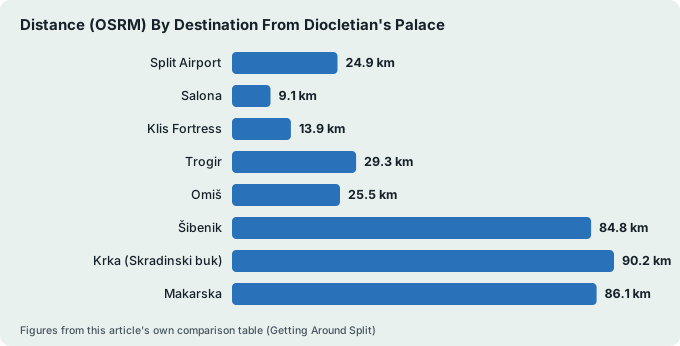
A car is unnecessary for Split itself and for the island trips, because the Old Town is pedestrian and the ferries and catamarans sail from the harbour, but it earns its keep for multi-stop inland routes such as Klis, Salona and Trogir in one loop, or for pushing on to Krka, Mostar or Dubrovnik, with free-flow driving times from the palace of 22 minutes to Klis, 14 to Salona and 36 to Trogir by OSRM calculations.
What the calculations do give is reliable free-flow driving time from Diocletian's Palace to every headline destination, and these figures, not guesswork, are what should shape the decision. A single visit to Trogir justifies a car far less than a combined Klis, Salona and Trogir loop.
| Destination From Diocletian's Palace | Distance (OSRM) | Free-Flow Driving Time |
|---|---|---|
| Split Airport | 24.9 km | 31 min |
| Salona | 9.1 km | 14 min |
| Klis Fortress | 13.9 km | 22 min |
| Trogir | 29.3 km | 36 min |
| Omiš | 25.5 km | 38 min |
| Šibenik | 84.8 km | 71 min |
| Krka (Skradinski buk) | 90.2 km | 74 min |
| Makarska | 86.1 km | 75 min |
| Zadar | 159.5 km | 2 h |
| Mostar | 173.2 km | 2 h 13 |
| Plitvice Lakes | 258.1 km | 3 h 15 |
| Dubrovnik | 234.8 km | 3 h 21 |
Two cautions from the park rules. Krka's own regulations state that swimming is not allowed outside clearly marked swimming areas, with designated spots reported at Roški slap, Stinice and Pisak from 1 June to 30 September. And drone rules tightened for 2026: the old town and airport zones are no-fly areas, and national parks ban drones outright, so aerial footage plans should stop at the park boundary. The full rental decision, including when the math favours a tour over a hire car, is worked through in Split Car Rental.
How Do The Ferries And Catamarans From Split Work?
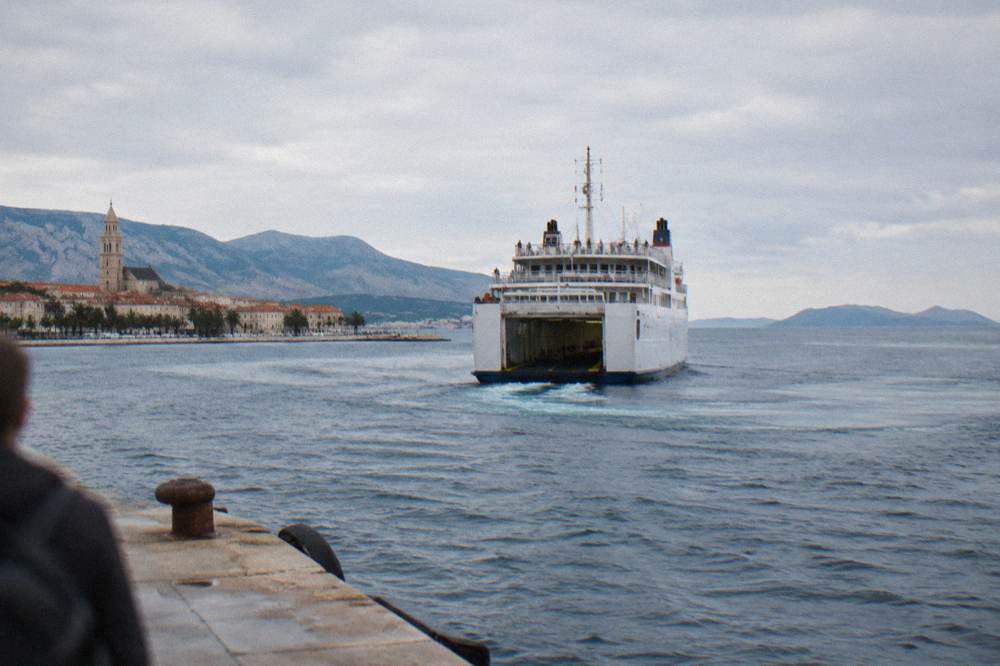
Jadrolinija's car ferries run from Split to Stari Grad on Hvar in about 120 minutes, to Supetar on Brač in about 50, to Rogač on Šolta in about 60 and to Vis in about 140, with foot passenger fares on line 635 of 5.90 EUR off-season and 8.40 EUR in season, while catamarans reach Hvar town and Jelsa for 6.40 EUR low season and 10.00 EUR high season, and Vis for 7.20 and 10.00 EUR.
The distinction that trips people up is Hvar: the car ferry lands at Stari Grad at the north of the island, while Hvar town itself is reached by catamaran. Jadrolinija's route pages give the sailing times, and its price PDF gives the 5.90 and 8.40 EUR foot passenger fares for line 635. Catamaran figures, from the same operator's documents, are 6.40 EUR low and 10.00 EUR high season to Hvar or Jelsa on line 9603, and 7.20 EUR low and 10.00 EUR high to Vis on line 9602. Kapetan Luka (Krilo), TP Line and Bura Line also run Split catamarans, and all three appear in the Port of Split's live departures feed.
| Route From Split | Vessel Type | Sailing Time | Foot Passenger Fare |
|---|---|---|---|
| Stari Grad, Hvar (line 635) | Car ferry | about 120 min | 5.90 EUR off-season, 8.40 EUR in season |
| Supetar, Brač (line 631) | Car ferry | about 50 min | on the operator's price list |
| Rogač, Šolta (line 636) | Car ferry | about 60 min | on the operator's price list |
| Vis | Car ferry | about 140 min | on the operator's price list |
| Hvar town / Jelsa (line 9603) | Catamaran | on the sailing schedule | 6.40 EUR low, 10.00 EUR high |
| Vis (line 9602) | Catamaran | on the sailing schedule | 7.20 EUR low, 10.00 EUR high |
From 2026, the Split to Supetar line has no off-season timetable at all: Jadrolinija's own announcement says only high-season and low-season schedules remain, the fifth Croatian line organised this way, with departures aligned to bus schedules. A new international Split to Bari ferry was added for summer 2026. The mechanics of the Hvar crossing, including where each vessel docks, are covered in Split To Hvar Ferry, and all island routes are listed in Ferries From Split.
For a day on the water without timetables, the Blue Lagoon and 3 Island Cruise with food and drinks leaves the ferry logistics to the operator: Check availability.
How Do You Travel From Split To Dubrovnik, Zagreb And Beyond?
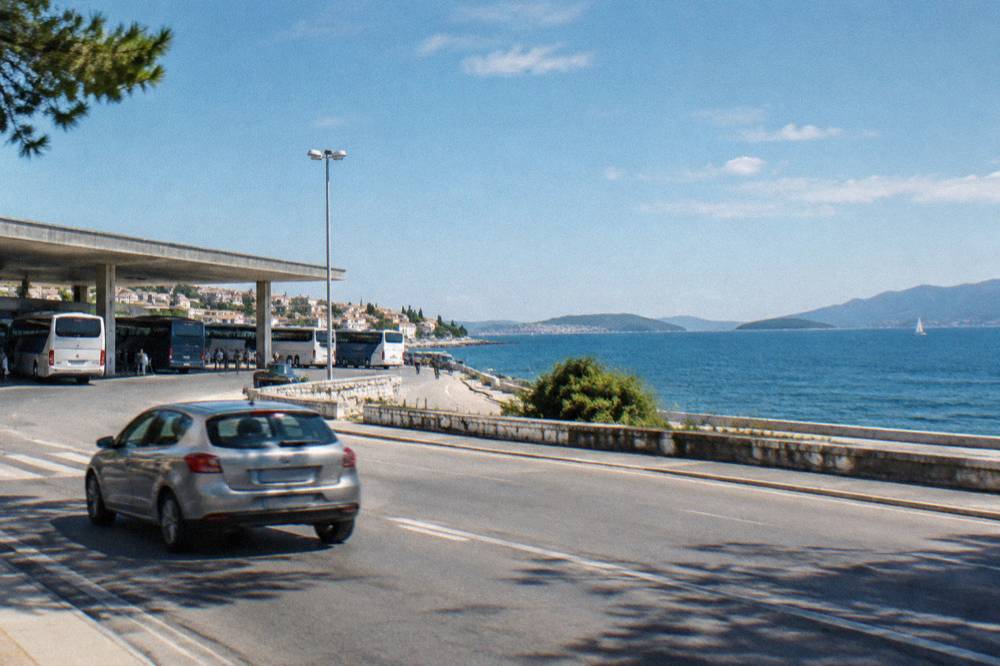
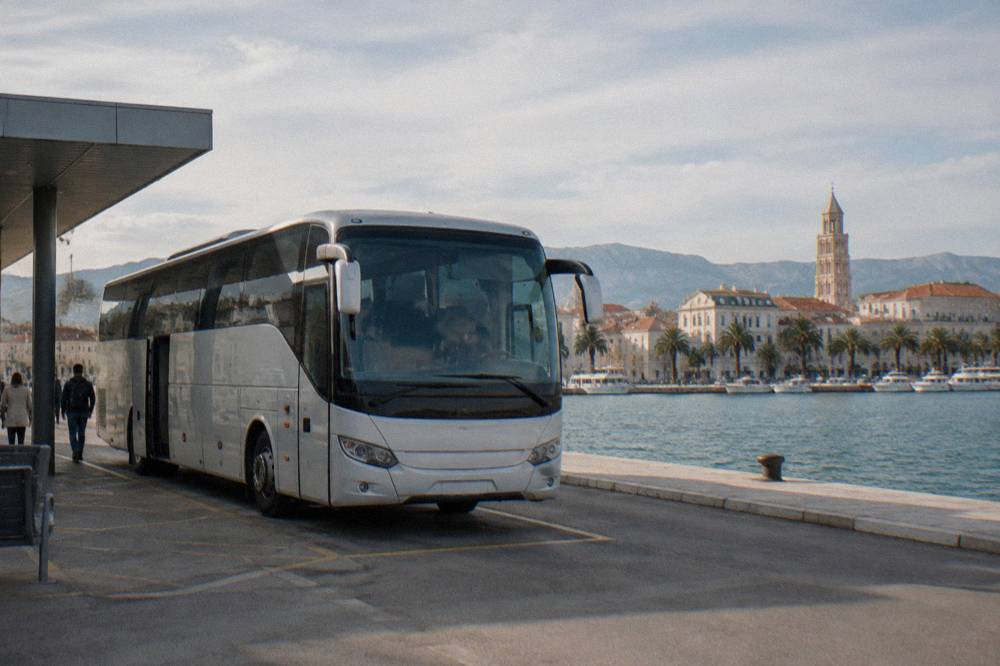
The coach is the backbone of long-distance land travel from Split: about 4 hours to Dubrovnik and about 5 hours 30 to Zagreb, with the train offering a slower alternative to Zagreb in about 7 hours 15 to 8 hours 10, and all long-distance coaches departing from the main bus station on Obala kneza Domagoja next to the ferry port.
Coach and train times are secondary-sourced figures, so they carry "about". There is no rail line down the coast to Dubrovnik at all, which makes the coach, a transfer, or a rental car the options for that route, at 3 h 21 free-flow by road. For Zagreb the train is the scenic choice and the coach the faster one. Seasonal international sailings, including the Split to Bari ferry added for summer 2026, extend the reach by sea.
| Long-Distance Route | Mode | Journey Time |
|---|---|---|
| Split to Dubrovnik | Coach | about 4 h |
| Split to Dubrovnik | Car (OSRM free-flow) | 3 h 21 |
| Split to Zagreb | Coach | about 5 h 30 |
| Split to Zagreb | Train | about 7 h 15 to 8 h 10 |
| Split to Bari | Ferry | seasonal summer 2026 sailing, times on the operator's schedule |
The pairing of the bus station with the ferry port means an island hop followed by a long-distance coach, or the reverse, involves no cross-city transfer at all. The Dubrovnik route in full, including whether the day trip or the overnight stop makes more sense, is compared in Split To Dubrovnik, and every coach-and-ferry combination for the wider region is laid out in Split Day Trips.
What About Taxis, E-Scooters And Bikes In Split?
No Split taxi fare appears on any official page, so agree a price before the ride or use a transfer booked in advance, e-scooters are limited nationally to 0.6 kW and 25 km/h with helmets mandatory for all ages and under-14s prohibited, with registration and insurance proposals under discussion in October 2026, and bikes are a practical option on Marjan's forest paths and the coastal promenades.
The scooter rules tightened visibly in 2026. Croatian press reported police crackdowns on non-compliant models in September 2026 and government proposals for mandatory registration, insurance and technical inspections in October 2026, so the machines available to rent are capped at the national limits. For taxis, the honest answer is structural: the airport is 20 km out, the shuttle is 10 EUR fixed, and any private-hire or taxi quote should be compared against that anchor before accepting.
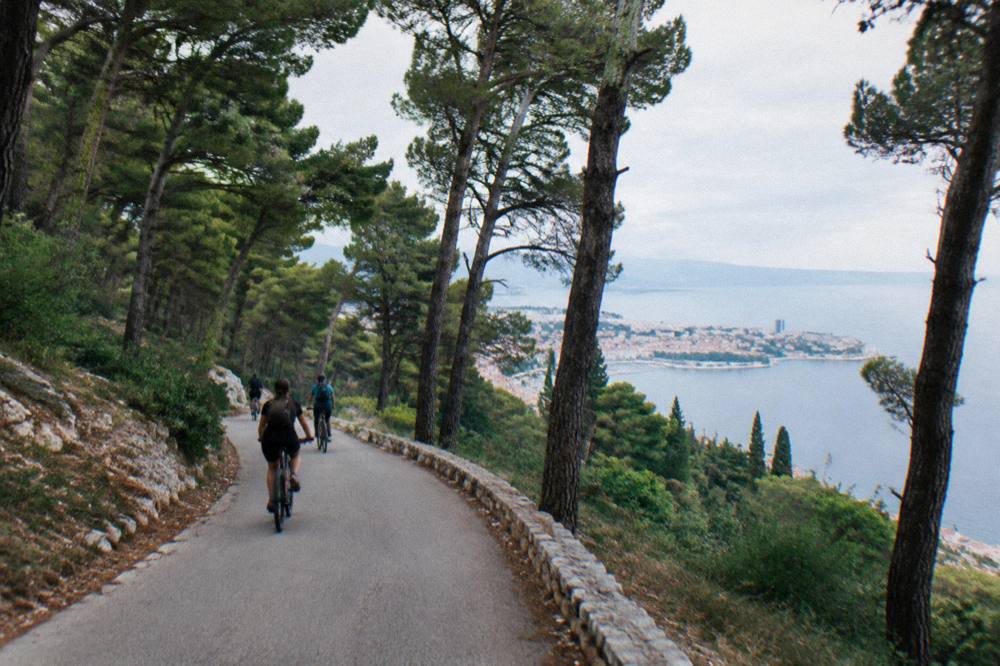
Cycling fits Split better than it first appears. Marjan's car-light forest roads are the natural riding ground, and the shoreline from the ferry port east towards Bačvice, Firule and Žnjan is flat promenade. Only the 2026 dress rules need remembering back in the centre: the city's public-order decision formalised fines for walking in swimwear or underwear on public surfaces in the historic core, with the amount set locally, alongside the printed 300 EUR fines for public drinking, urinating and climbing monuments.
Is Split Easy To Get Around For Cruise Passengers?
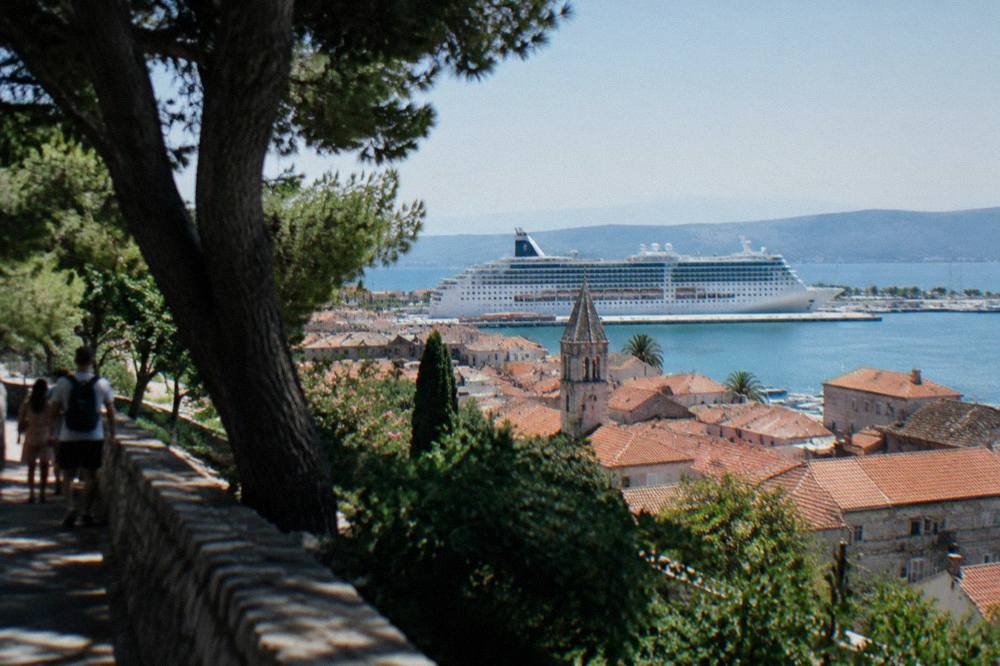
Cruise ships dock within walking distance of the centre, the Old Town's lanes begin roughly 500 to 600 m from the passenger terminals across the Riva, and everything inside Diocletian's Palace, the Peristyle, the Golden Gate, the markets and the beaches is reachable on foot, so a cruise day in Split needs no transport unless a day trip is booked.
The Port of Split's own figures show 487,377 cruise passengers in 2025 and 6.05 million total port passengers, and its own page calls it Croatia's busiest passenger port. For shore time, the palace, the substructures run by the Split City Museum, the Riva and Bačvice are all inside a comfortable walk. The main planning wrinkle for 2027 is the Riva renovation scheduled from November 2026: partial closures of the central waterfront are expected through 2027, so the walking route from a berth to the palace may shift along the promenade while works run.
Guided options remove even the walking decisions. A small-group walking tour of Diocletian's Palace covers the palace core with a guide, and boat excursions listed in Split Boat Tours leave from berths a short walk from the terminals.
Want the city highlights without walking every lane? Book an electric tuk-tuk city tour here.
When Is Each Way Of Getting Around Split The Right One?
On foot covers the palace, the Riva, Bačvice and Marjan; the Platanus shuttle at 10 EUR covers the airport run; Jadrolinija ferries and the private catamarans cover the islands with sailing times from about 50 to about 140 minutes; a rental car earns its cost on inland loops to Klis, Salona and Trogir or on the long drives to Krka, Mostar and Dubrovnik; and organized tours cover everything else, transport included, for travellers who would rather not run the timetable themselves.
Weather should shape the choice as much as distance. The DHMZ Split-Marjan station table, for the 1948 to 2024 period, gives a July mean of 26.2 C with 353.3 sunshine hours in the month and 18 days at 30 C or more, so midsummer walking days deserve early starts and shade, and the sea becomes the sensible place to spend the afternoon. November, the wettest month at 115.5 mm, and December, at 103.7 mm, push plans indoors and toward museum and coach time. The full monthly picture is in Split Weather and the seasonal arguments in Best Time To Visit Split.
The one-sentence summary of the whole system: arrive at the airport, take the fixed-price shuttle to the bus station by the port, walk everywhere inside the city, and choose between a ferry deck, a coach seat, a steering wheel or a guided tour only when the destination leaves the city. Everything else in Split is a walk along the sea.
Common Questions About Getting Around Split
How Far Is Split Airport From The City Centre?
The airport's own pages give 20 km from Split and 6 km from Trogir. Driving from Diocletian's Palace is 24.9 km, about 31 minutes free-flow. The Platanus shuttle runs from the airport's north parking to the main bus station by the ferry port for 10 EUR one way or 15 EUR return.
Can You Walk Everywhere In Split?
The Old Town, the Riva, the Peristyle, the Golden Gate, the markets, the city beaches and the Marjan park forest are all walkable and free to enter, and the transport hub on Obala kneza Domagoja is 500 to 600 m from the palace. City buses matter mainly for the airport, Žnjan and Stobreč.
How Much Is The Ferry From Split To Hvar?
The Jadrolinija car ferry to Stari Grad costs a foot passenger 5.90 EUR off-season and 8.40 EUR in season and takes about 120 minutes. Hvar town itself is reached by catamaran, at 6.40 EUR low season and 10.00 EUR high season. Do not confuse the two destinations.
Do You Need A Car In Split?
Not for the city itself or the islands. A car earns its cost on inland loops combining Klis (22 minutes from the palace), Salona (14 minutes) and Trogir (36 minutes), or on the long drives to Krka, Mostar and Dubrovnik. No parking tariff is published, so budget for parking is confirmed locally.
Is There A Train From Split To Dubrovnik?
No rail line runs down the coast to Dubrovnik. The coach takes about 4 hours, and driving is 3 h 21 free-flow. The train from Split serves Zagreb, in about 7 hours 15 to 8 hours 10.
Can You Drink Alcohol While Walking Around Split?
No. Public alcohol consumption in the historic centre, except on licensed terraces, carries a 300 EUR fine under the city's public-order rules, and a night-time retail alcohol sales ban in shops ran 1 June to 15 September 2026 with an automatic repeat from 1 June 2027 unless changed.