Luxury Hotels Split
Split's five-star scene sits between Diocletian's Palace and the Marjan hillside, with the ferry port, the beaches and the island day trips within a short radius. Here is what the sources say about where the upscale stays cluster and what a luxury base in Split gives you access to.
Short answer
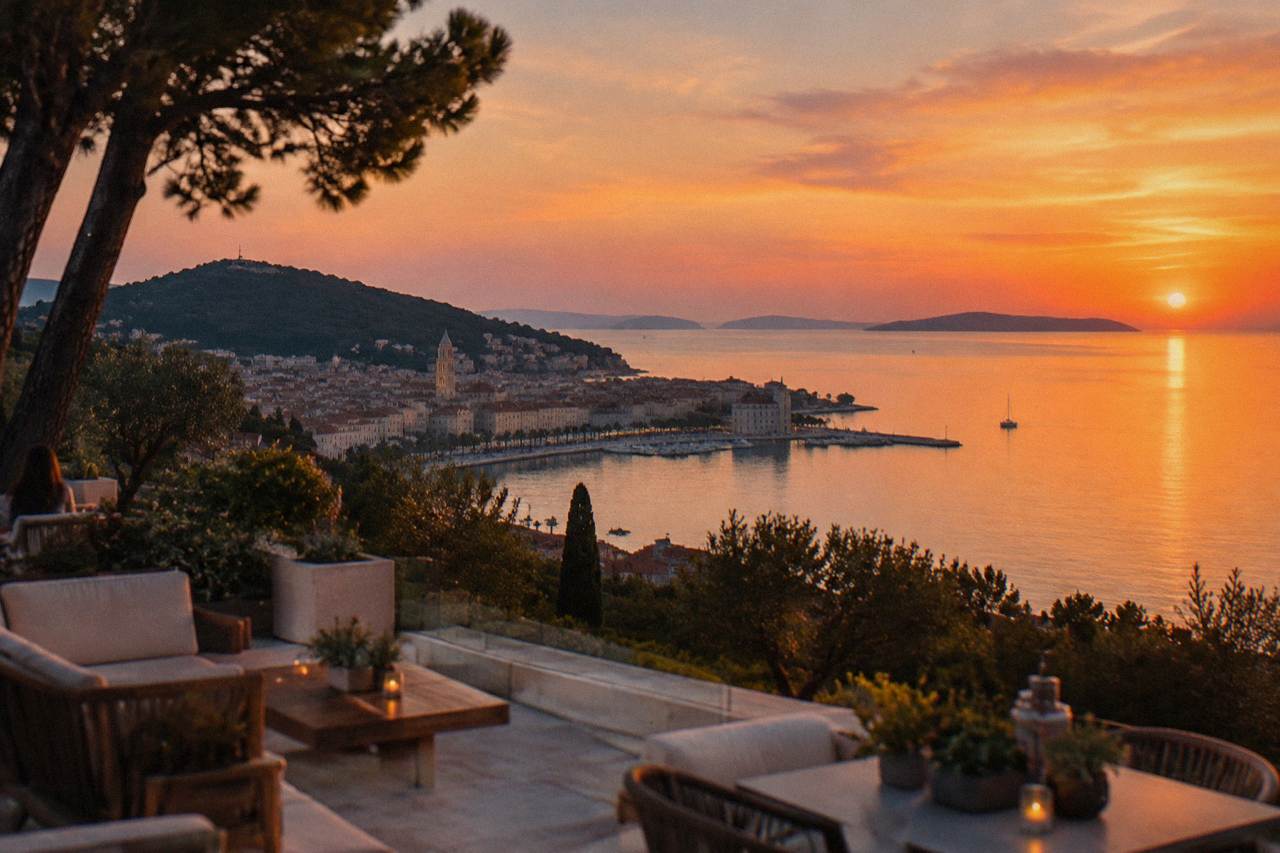
Upscale lodging in Split clusters in three places: the Meje district and the Marjan foothills above Kašjuni and Bačvice, the seafront stretch west of the Riva, and converted stone properties inside the Old Town. A new five-star Hotel Marjan with 285 units is planned to open for the 2027 season, and every island and park day trip starts from the harbour 500 to 600 m from the palace.
Split, the coastal city in central Dalmatia on the Adriatic, is a compact place to be luxurious in. The Old Town sits inside and around Diocletian's Palace, a Roman residence built c. 295 to 305 AD and inscribed by UNESCO in 1979 as the Historical Complex of Split, and the whole city held 160,577 residents at the 2021 census. The ferry port, the main bus station and the railway station share one strip on Obala kneza Domagoja, 500 to 600 m from the palace, which means a five-star base anywhere in the central districts puts the entire day-trip network, from Krka to Hvar, within a short walk of departure. This guide from the Split Croatia Travel Guide desk sets out where the upscale stays cluster, what the museums and beaches around them cost, and how the calendar and the climate shape a high-end visit.
What Defines A Luxury Stay In Split?
A luxury stay in Split means a small footprint rather than a resort sprawl: the city's upscale inventory is a handful of five-star properties and converted stone buildings concentrated between the Marjan hillside and the Old Town, with the biggest single addition, the 285-unit Hotel Marjan on the Marjan side, planned to open for the 2027 season. There is no strip of resort towers.
The palace, the Riva, the beaches and the ferry port all sit within roughly a kilometre of each other, so the luxury on offer is position and access.
The defining fact about Split for an upscale visitor is density. The city's marquee sights, the Peristyle, the Golden Gate, the Grgur Ninski statue, the Riva promenade and the Prokurative square, are all free to walk through, and the Marjan park forest, 3.5 km long and 1.5 km wide with its high point Telegrin at 178 m, rises directly to the west of the centre. A guest in a suite near Meje can be at a palace gate, a beach and a forest trail inside twenty minutes on foot, without a car.
The other defining fact is the port. Split is Croatia's busiest passenger port, with 6.05 million passengers in 2025 and 487,377 cruise passengers in the same year, and the Port Authority obtained a location permit in September 2026 for a new passenger and hospitality complex on the eastern coast, part of a redevelopment with an estimated concession value around 600 million EUR. St Peter's pier is being extended by 53 m at a cost of 21.2 million EUR. The waterfront around a luxury stay is actively being upgraded, which is worth knowing when choosing a room orientation.
One caveat belongs in every luxury planning note: a tourist tax is collected by the accommodation, reported at about 2.65 EUR per person per night in high season, 1 April to 30 September, with under 12s free and 12 to 18s at half rate; the amount is confirmed at booking. Croatia has used the euro since 1 January 2023 and has been in the Schengen area since 1 January 2023, and the emergency number is 112.
Which Areas Of Split Hold The Upscale Hotels?
The upscale stays cluster in three zones: Meje and the Marjan foothills above the Kašjuni and Bačvice side, the seafront running west from the Riva where the new Hotel Marjan is rising, and the Old Town itself, where stone houses inside and around Diocletian's Palace are converted into small luxury properties. Žnjan, east of the centre, holds the newer hotel construction of a different scale and character. Each zone trades off views, quiet and walkability differently.
Meje is the quiet residential hillside between the city centre and Marjan, the address closest to Kašjuni beach on the sheltered south side of the peninsula. Marjan itself, reachable from the centre and served by 819 steps from Trumbićeva obala up to Telegrin, gives the hillside addresses forest and sea views. The old town conversions put guests inside the UNESCO property, steps from the Peristyle, at the price of the historic core's summer noise and the 2026 public-order rules, which fine public drinking in the historic centre 300 EUR and formalised dress and behaviour rules.
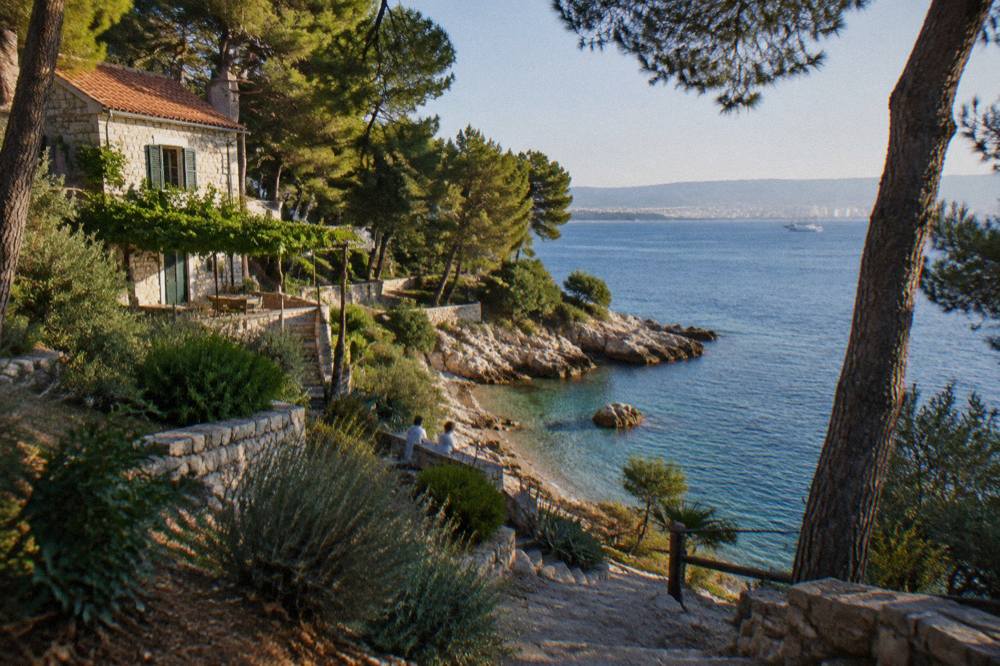
The headline change for this market is Hotel Marjan, an Adris Group five-star project designed by the 3LHD studio: the top floor was completed by mid-2026, interior works continued with about 300 workers on site daily, and the opening is planned for the start of the 2027 season. Until it opens, the practical five-star inventory is the existing seafront and Meje properties, and the Old Town's boutique conversions.
Area choice also decides the beach. Bačvice, the sandy city beach and the home of picigin, the ball game born there in 1908 and now protected intangible heritage, sits east of the port; Kašjuni lies under Marjan on the south side; Žnjan stretches east along the newer riviera. None of them charges entry, and the full rundown sits in the Split beaches guide. For a fuller comparison of neighbourhoods for every budget bracket, see where to stay in Split.
| Area | Character | Nearest beach | Walk to palace | Best for |
|---|---|---|---|---|
| Meje | Quiet hillside villas and small upscale hotels | Kašjuni | 15 to 25 min | Sea views, calm, pools |
| Marjan foothills | Forested slope, the new Hotel Marjan rising here | Kašjuni, Bene | 20 to 30 min | Views and trail access |
| Old Town / palace | Stone conversions inside the UNESCO core | Bačvice, 10 to 15 min | On the doorstep | Atmosphere, walkability |
| Riva west | Seafront addresses near the promenade | Bačvice | 5 to 10 min | Promenade position |
| Žnjan | Newer eastern riviera, contemporary build | Žnjan | 30 min or a short drive | Modern blocks, space |
For day-trip planning from any of these bases, the harbour where every boat and coach leaves is 500 to 600 m from the palace, and the network is wide enough that the hotel address barely matters for reachability.
The trio above covers the three luxury-day-out archetypes from a Split base: a national-park waterfall day, a small-group speedboat day on the islands, and a guided walk of the palace the hotel sits beside. Between them they use the coach and the harbour, which is the whole transport story of a Split stay.
Which Day Trips Work Best From A Luxury Split Base?
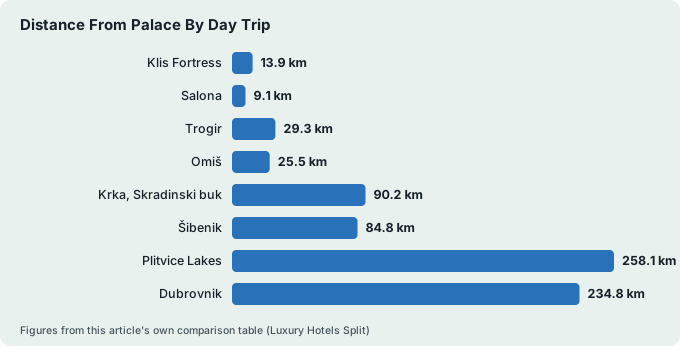
The flagship trips from Split are Krka National Park, 90.2 km and about 74 minutes' free-flow drive from the palace, Plitvice Lakes at 258.1 km and about 3 hours 15 minutes, Trogir at 36 minutes, Hvar by catamaran in roughly an hour, and the Blue Cave and Vis circuit by speedboat; every one departs from the harbour or the bus station within 600 m of the palace, so an upscale base anywhere central removes the transfer problem entirely.
Krka is the classic first trip. The park's 2026 price list charges adults 7 EUR from January to March and November to December, 20 EUR in April, May and October, and 40 EUR from June to September, and the ticket includes the Skradin boat and the Lozovac bus transfers between 1 April and 31 October. The park's own rules state swimming is allowed only in clearly marked areas, with designated spots at Roški slap, Stinice and Pisak from 1 June to 30 September. A guided option such as the Krka tour from Split with boat ride and swimming bundles the transfer from the hotel's doorstep, and Check availability before the season locks in, because summer dates are the constrained ones.
The islands are the second pillar. Jadrolinija's route page gives the Split to Stari Grad car ferry on line 635 at about 120 minutes, with foot passengers at 5.90 EUR off-season and 8.40 EUR in season; line 631 to Supetar on Brač runs about 50 minutes and from 2026 has no off-season timetable at all, the fifth Croatian line to drop it; line 636 to Rogač on Šolta takes about 60 minutes; the Vis ferry runs about 140 minutes. Catamarans reach Hvar town and Jelsa for 6.40 EUR low season and 10.00 EUR high, and Vis for 7.20 and 10.00 EUR. Note the distinction that trips up itineraries: Hvar town itself is a catamaran destination, while the car ferry lands at Stari Grad. The full detail sits in the ferries from Split guide and the Split to Hvar ferry guide.
| Day trip | Distance from palace | Free-flow drive | Ferry alternative | 2026 adult entry |
|---|---|---|---|---|
| Klis Fortress | 13.9 km | 22 min | None | 10 EUR |
| Salona | 9.1 km | 14 min | None | 10 EUR combined with museum |
| Trogir | 29.3 km | 36 min | None | UNESCO town, free to walk |
| Omiš | 25.5 km | 38 min | None | Mirabela 4 EUR, 6 EUR in summer |
| Krka, Skradinski buk | 90.2 km | 74 min | Skradin boat in ticket | 7 / 20 / 40 EUR by month |
| Šibenik | 84.8 km | 71 min | None | St James Cathedral, UNESCO 2000 |
| Hvar town | By sea | None | Catamaran about 1 h | Fortica 12 EUR |
| Plitvice Lakes | 258.1 km | 3 h 15 | None | 10 / 23 / 40 EUR, 25 EUR peak afternoon |
| Dubrovnik | 234.8 km | 3 h 21 | Coach about 4 h | City walls 40 EUR |
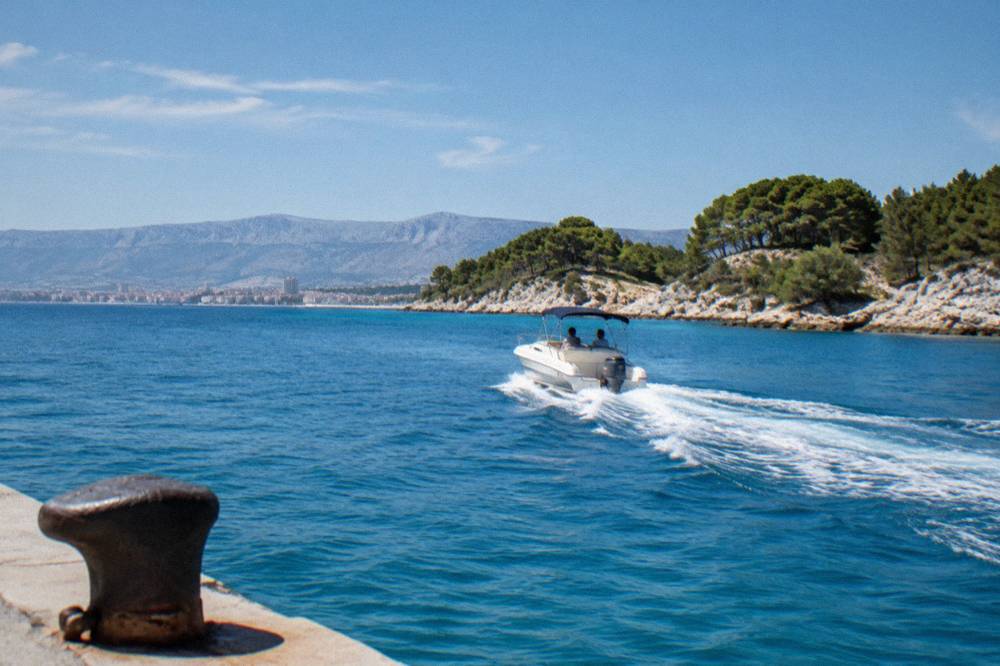
For a slower island day, a small-group boat has the advantage of reaching the shallow swimming stops the big cruisers cannot. The Blue Lagoon and three islands small-group speedboat tour covers exactly that profile, and Check availability once hotel dates are fixed, since small-group boats cap their own numbers.
Which Sights And Museums Pair With An Upscale Split Itinerary?
The premium cultural stops in Split are the Cathedral of St Domnius complex, from about 5 EUR with combined tickets up to about 15 EUR per a secondary guide, the Meštrović Gallery at 12.00 EUR for adults including the Crikvine-Kaštilac site, the Split City Museum at 10.00 EUR and the Diocletian's Palace cellars it runs, the Archaeological Museum at 8 EUR or 10 EUR combined with Salona within 7 days, and the Ethnographic Museum at 7.00 EUR.
The Peristyle, the Riva, the Golden Gate and Marjan cost nothing.
The Meštrović Gallery is the standout for a luxury itinerary because it is newly so: it reopened on 20 April 2026 after a fifteen-month energy renovation that replaced windows, roof, heating and cooling and added solar, and its 2026 exhibition on the house as a space of life and art ran until 9 October 2026. The 12.00 EUR adult ticket includes the Crikvine-Kaštilac site across the hill, which makes it a half-day pairing with a Marjan walk.
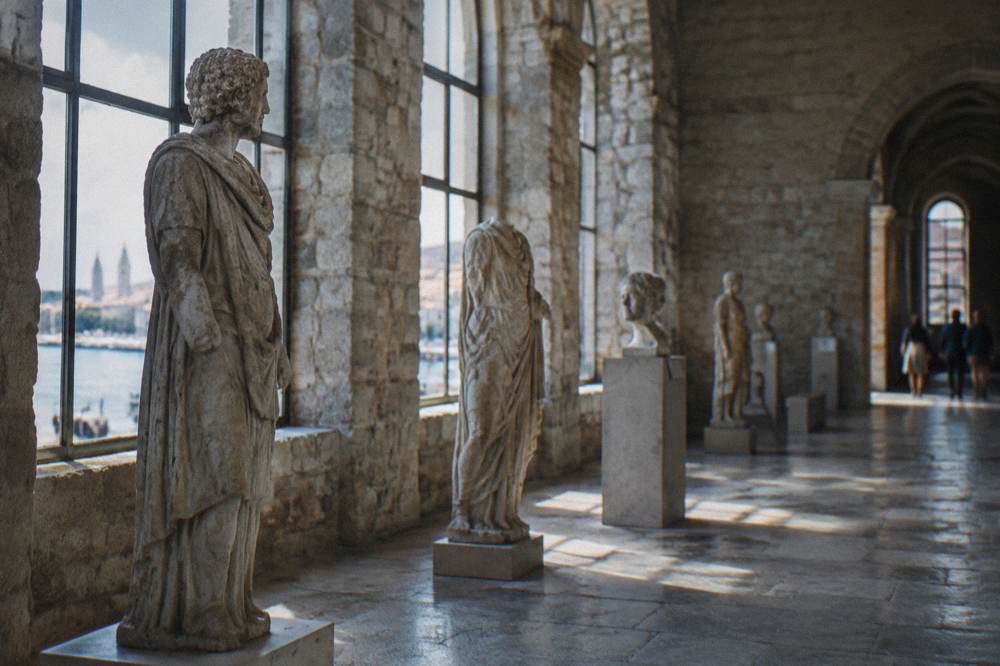
The cathedral complex is the other big ticket. The bell tower, 57 m high, the crypt, the baptistery in the former Temple of Jupiter, the treasury and the cathedral itself are sold as singles and colour-coded combinations from a kiosk on the Peristyle; the figures come from a secondary guide, so read them as "from about 5 EUR, combined tickets up to about 15 EUR" and confirm at the kiosk. Shoulders and knees must be covered. The Split City Museum's own price list, meanwhile, is firmer: 10.00 EUR adult, 8.00 reduced, 18.00 family, closed Mondays, and its cellars site under the palace runs Monday to Sunday 8:30 to 20:00, with the central part under restoration to the end of 2026 but passage open.
| Sight | 2026 adult price | Notes from the price lists |
|---|---|---|
| Meštrović Gallery | 12.00 EUR | Includes Crikvine-Kaštilac; reopened April 2026 |
| Split City Museum | 10.00 EUR | 8.00 reduced, 18.00 family, closed Mondays |
| Palace cellars | 10 EUR | Mon to Sun 8:30 to 20:00; central restoration to end 2026 |
| Archaeological Museum | 8 EUR | 10 EUR combined with Salona within 7 days |
| Ethnographic Museum | 7.00 EUR | 4.00 reduced, Vestibule 2.00 |
| Cathedral complex | From about 5 EUR | Combos up to about 15 EUR, secondary figure |
| Klis Fortress | 10 EUR | Daily 9:00 to 17:00; Meereen filming location |
| Peristyle, Riva, Marjan | Free | No ticket on any official source |
A guided walk knits these together, and the palace-focused small-group option is the one that pairs with a first evening in town: the walking tour of Split and Diocletian's Palace covers the core in a compact loop.
For the palace explained rather than just walked through, book a guided palace walk here.
What Is The Best Time Of Year For A Luxury Stay In Split?
July is the warmest month in Split at a 26.2 C mean on the DHMZ Split-Marjan station record for 1948 to 2024, with 353.3 hours of sunshine and 18 days at 30 C or more; August is close behind at 25.9 C with 17 days at 30 C or more, and the trade-off is that the July and August calendar carries the highest prices, the fullest ferries and Ultra Europe falling on 9 to 11 July 2027.
May at 19.2 C and September at 21.6 C, with 57.5 mm and 70.9 mm of rain respectively, are the calmer premium windows.
The station table shapes the decision more than any brochure does. July is both the driest month, 26.6 mm, and the busiest; November is the wettest at 115.5 mm and December the darkest at 120.8 sunshine hours, which is exactly why Advent in Split, running 27 November 2026 to 7 January 2027 with the ice rink at Đardin, was built for that window. A winter luxury stay is a different product: museums, the HNK Split theatre season from 25 September 2026 to 14 June 2027, and the Christmas programme rather than beaches.
| Month | Mean C | Rain mm | Luxury-season note |
|---|---|---|---|
| May | 19.2 | 57.5 | Shoulder premium window |
| June | 23.4 | 49.0 | 7 days at 30 C or more |
| July | 26.2 | 26.6 | Warmest, driest, Ultra Europe 9 to 11 July 2027 |
| August | 25.9 | 41.3 | 17 days at 30 C or more |
| September | 21.6 | 70.9 | Sea still warm, crowds down |
| October | 17.2 | 77.0 | Park prices drop: Krka 20 EUR, Plitvice 23 EUR |
| November | 12.7 | 115.5 | Wettest month; Advent opens late November |
October has a quiet financial argument: from 1 October 2026 Krka drops to 20 EUR and Plitvice to 23 EUR, before both fall again in November. There is no official monthly sea-temperature normal to quote, so treat sea warmth as something to check as a live reading near travel dates. The month-by-month detail is in the best time to visit Split.
Which Events Should A Luxury Trip To Split Be Built Around?
The fixed anchors are Ultra Europe on 9 to 11 July 2027 at Park Mladeži, Sudamja, the city's St Domnius day, every 7 May, Advent in Split from 27 November 2026 to 7 January 2027, and the Croatian National Theatre season running 25 September 2026 to 14 June 2027; the 72nd Split Summer Festival ran 14 July to 14 August 2026, and its 2027 dates have not been announced, so a summer-festival trip should wait for the official calendar before dates are set.
Ultra Europe is the event that reshapes the whole hotel market for three days, and the festival dates are published well in advance, which makes it either the reason to come or the reason to shift a week. The Split Summer Festival is the opposite case: its 2027 edition is simply not announced yet, and the Roman guard change on the Peristyle at noon, which ran 28 May to 27 September 2026, is the standing daily ceremony a central hotel puts guests next to. Stories of Diocletian ran 27 to 30 August 2026 and its 2027 dates are likewise unannounced.
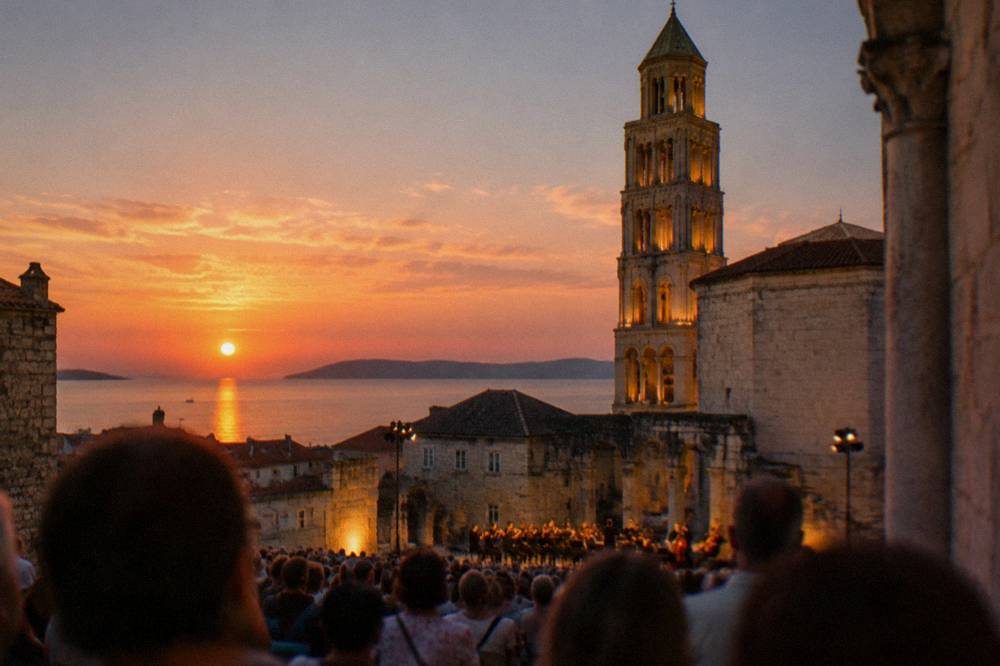
Sudamja on 7 May opens the high season a month early and is the city's own feast, with the programme typically published in late April. Advent turns Đardin into the ice-rink centre of a winter market, which suits the spa-and-museum version of a luxury stay. The events calendar is collected in the Split events guide entry for the festival and the wider listings.
How Do You Arrive At A Split Luxury Hotel From The Airport?
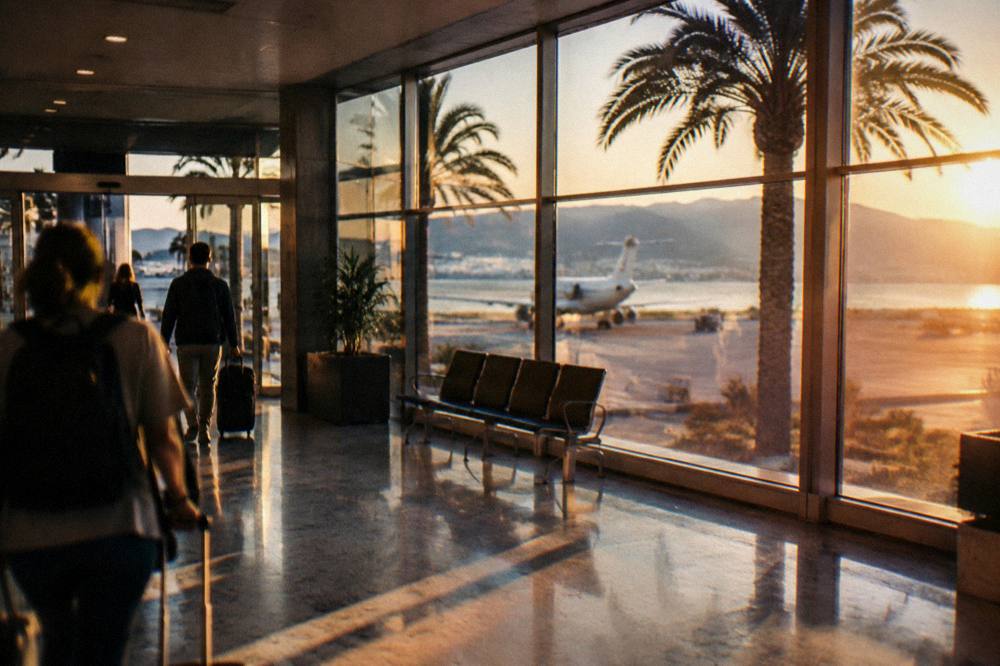
Split Airport sits in Kaštel Štafilić, 20 km from Split and 6 km from Trogir, and the Platanus shuttle runs from the airport's north parking to the main bus station on the harbour, 500 to 600 m from the palace, at 10 EUR one way and 15 EUR return; driving from the palace to the airport is 24.9 km, about 31 minutes free-flow, and Promet Split's city lines 37 and 38 also stop at the airport.
The airport handled 3,881,186 passengers in 2025, and 2026 brought its first transatlantic route: United Airlines flew Newark to Split seasonally from 30 April 2026 to early September, three times weekly. Summer 2026 also added a Split to Bari ferry line, which opens Italy-and-Dalmatia combinations without backtracking. None of this changes the ground transfer: shuttle, city bus or a pre-booked car into the harbour-side bus station, then a short walk or hotel pickup. The full transfer rundown, including what to check about private options, is in Split airport to city centre, and the wider arrival picture in the Split airport guide.
The same applies to parking tariffs for anyone arriving with a car; the practical summary lives in the Split car rental guide and the parking discussion there.
| Arrival route | Figure from the sources | What to confirm |
|---|---|---|
| Airport to Split distance | 20 km, airport's own page | Nothing, it is stated |
| Palace to airport drive | 24.9 km, about 31 min free-flow | Actual traffic on the day |
| Platanus shuttle | 10 EUR one way, 15 EUR return | Timetable for your flight |
| Promet lines 37 / 38 | Stop at the airport | Fare on board, a few euros |
| Coach to Dubrovnik | About 4 h | Operator and stop |
| Coach to Zagreb | About 5 h 30 | Operator and stop |
| Train to Zagreb | About 7 h 15 to 8 h 10 | Schedule, secondary figure |
What Should You Know About Rules And Behaviour Around An Upscale Stay?
Split's 2026 public-order decision fines drinking alcohol in the historic centre 300 EUR, urinating 300 EUR, climbing monuments or bathing in fountains 300 EUR, vomiting 300 EUR, sleeping in public spaces 150 EUR and taxi touting 300 EUR; shops rather than bars face a night-time retail alcohol sales ban from 21:00 to 06:00 between 1 June and 15 September, and drones are barred over the old town and the airport zones.
For a luxury guest these rules mostly land as atmosphere: the historic core is being actively kept orderly, the licensed terraces are unaffected, and the swimwear rule simply means changing at the beach rather than walking home through the palace in a wet costume. The alcohol retail ban applies to shops and supermarkets, not to bars and restaurants, and the short-term rental moratorium inside the historic centre, extended through 2026, is one reason the Old Town's upscale inventory leans toward hotels and stone conversions rather than apartments.
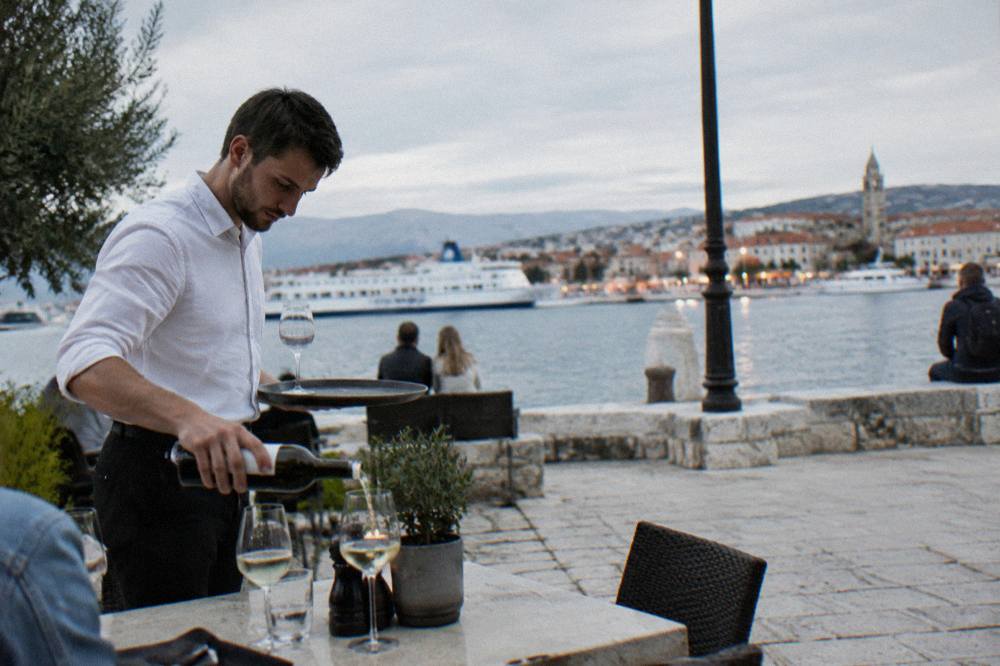
Dining around an upscale stay is the other half of the picture, and the checks worth making are simple ones: posted prices, an itemised bill and the cover charge printed on the menu. The food and restaurant guides carry the neighbourhood rundown in Split restaurants and Split food, and the evening options in Split nightlife.
One more planning item: the Riva's central section is set for a renovation worth about 3.5 to 4 million EUR, planned from November 2026 and running a little over a year, so partial closures on the promenade should be expected through 2027. Anyone booking a seafront room for that period should ask the property directly which stretch of the Riva sits outside the works.
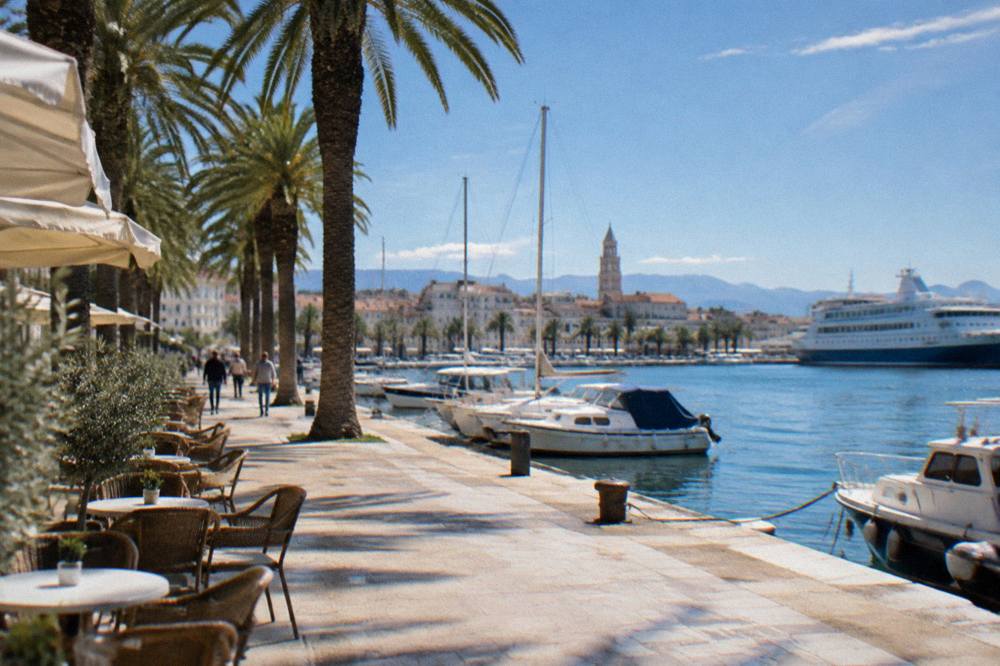
Between the falls, the islands and the palace walk, those three picks are the excursions that sit closest to the harbour a central Split hotel serves, and each leaves room for a late breakfast and an evening on the Riva.
Common Questions About Luxury Hotels In Split
Where are the five-star hotels in Split located?
The upscale properties cluster in Meje and the Marjan foothills above the Kašjuni side, along the seafront west of the Riva, and in stone conversions inside the Old Town. A new five-star Hotel Marjan with 285 units is planned to open for the 2027 season on the Marjan side.
Is a luxury stay in Split walkable?
Yes. The palace, the Riva, the beaches and the ferry and bus hub on Obala kneza Domagoja all sit within roughly a kilometre of each other, and the port itself is 500 to 600 m from the palace.
How much is the tourist tax in Split?
About 2.65 EUR per person per night in high season, 1 April to 30 September, with under 12s free and 12 to 18s at half rate, collected by the accommodation and confirmed at booking.
Which month is warmest in Split?
July, at a 26.2 C mean on the DHMZ Split-Marjan station record for 1948 to 2024, with 353.3 sunshine hours and 18 days at 30 C or more. August follows at 25.9 C.
Can you do day trips from a Split hotel without a car?
Yes. Coaches and boats to Krka, Trogir, Hvar, Brač, Šolta and Vis all leave from the harbour-side hub within 600 m of the palace, and ferries run year-round, with the Split to Supetar line dropping its off-season timetable from 2026.
What should luxury travellers know about the Riva in 2027?
The Riva's central section is scheduled for renovation from November 2026 lasting a little over a year, so partial closures should be expected through 2027; ask a seafront property directly how the works sit relative to its rooms.
The short version: book the area that matches the holiday, Meje for calm and views, the Old Town for the palace at the door, the seafront for the promenade, fix the season against the DHMZ table and the event calendar, and let the harbour 600 m from the palace handle everything beyond the city.