Split Parking
Split was built as a palace, not as a car park, and the way the city handles vehicles reflects that. This guide sets out what is published about parking in Split, where the car-free zones begin, and how to plan a visit with or without a car.
Short answer
The Old Town of Split inside and around Diocletian's Palace is essentially car-free, and the transport hub (ferry port, main bus station and railway station) sits 500 to 600 m from the palace. Drivers park at garages and lots on the edge of the centre and walk in, or skip the car entirely, since Krka, Trogir, the islands and the airport are all reachable by ferry, coach, shuttle and organized day trips.
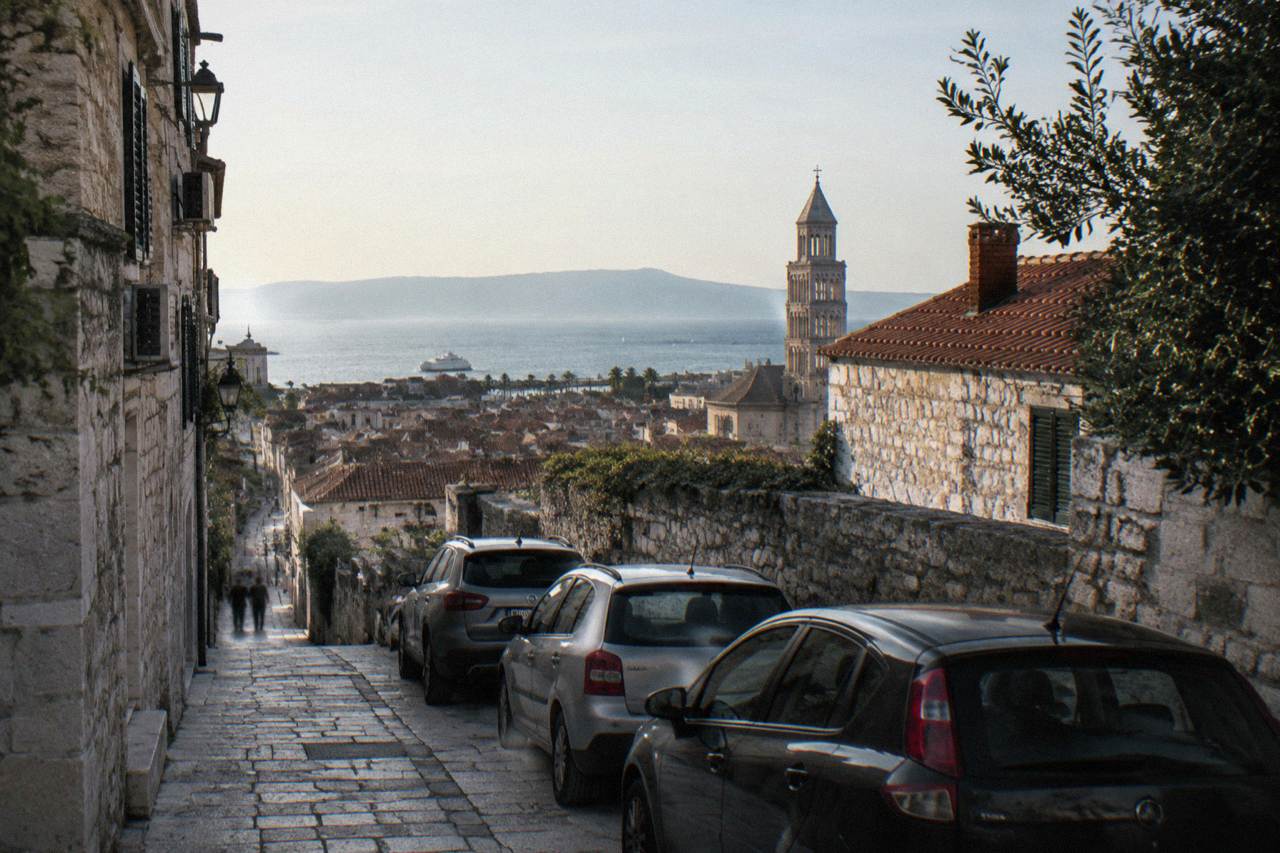
Split, the coastal city in central Dalmatia where the Adriatic meets a Roman palace, handles cars differently from almost any other city of its size in Croatia. The historical core grew inside and around Diocletian's Palace, a residence built for Emperor Diocletian around 295 to 305 AD, and its lanes were never designed for vehicles. The modern city spreads out around that core, and the ferry port, the main bus station and the railway station sit together on Obala kneza Domagoja, 500 to 600 m from the palace itself. That single fact shapes every parking decision in Split: the places you want to see are close together, flat enough to walk, and largely closed to traffic.
This guide reports what official and primary sources say about parking in Split, the car-free rules that apply, and the alternatives that make a car optional rather than essential. Tariffs are set by the city and by private garage operators and change seasonally, so the figures to confirm are the ones posted at the entrance or on the machine, never a number from a guide. What the sources do give, in verified detail, is distance, structure and timing: how far the airport is, how long the ferries take, and which parts of the city a car simply cannot reach.
Where Can You Park In Split?
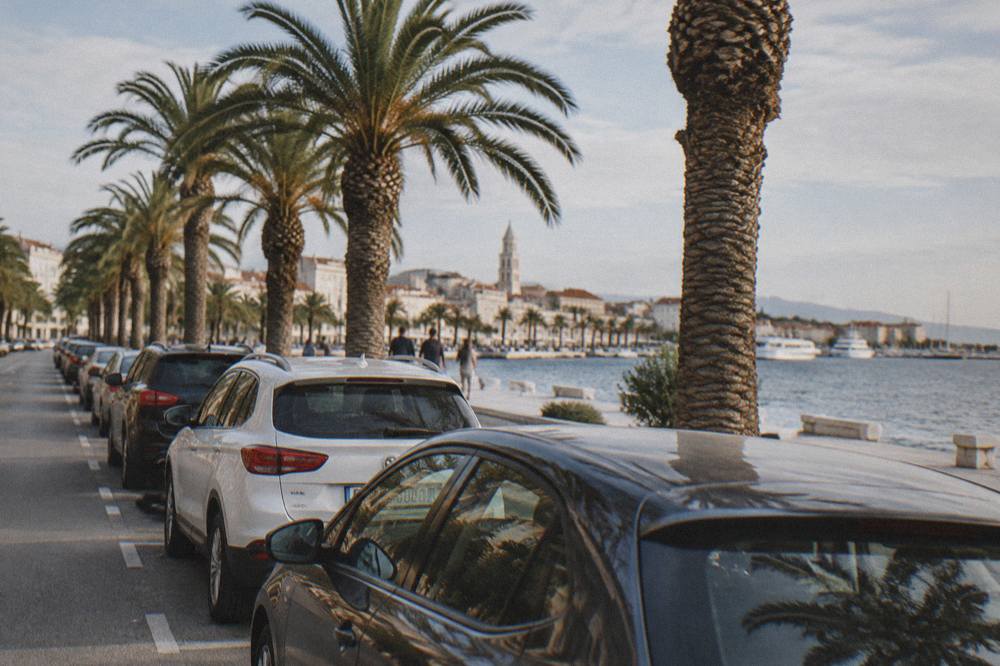
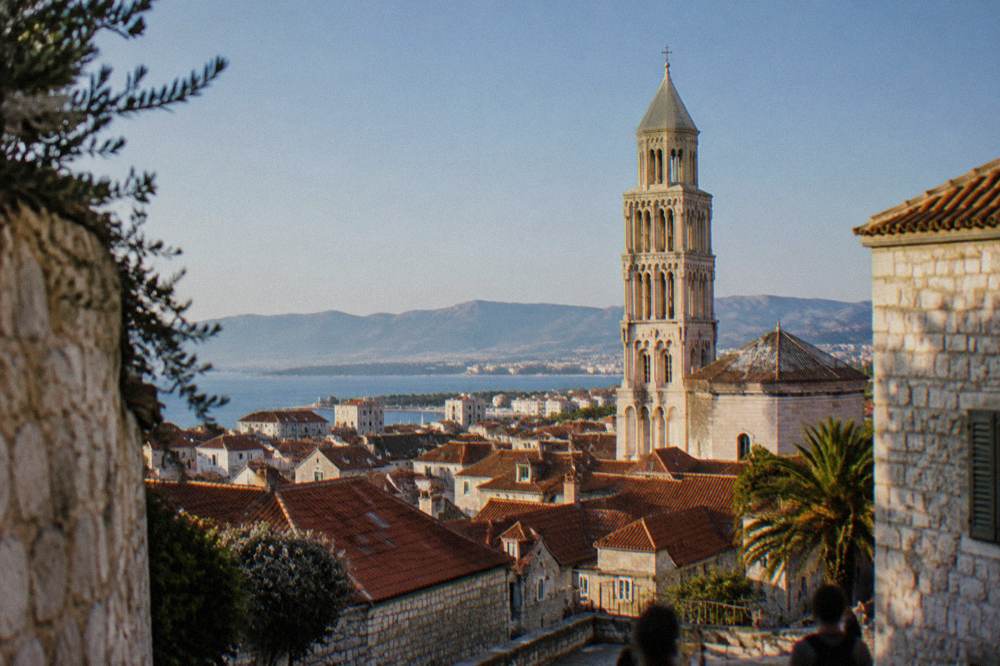
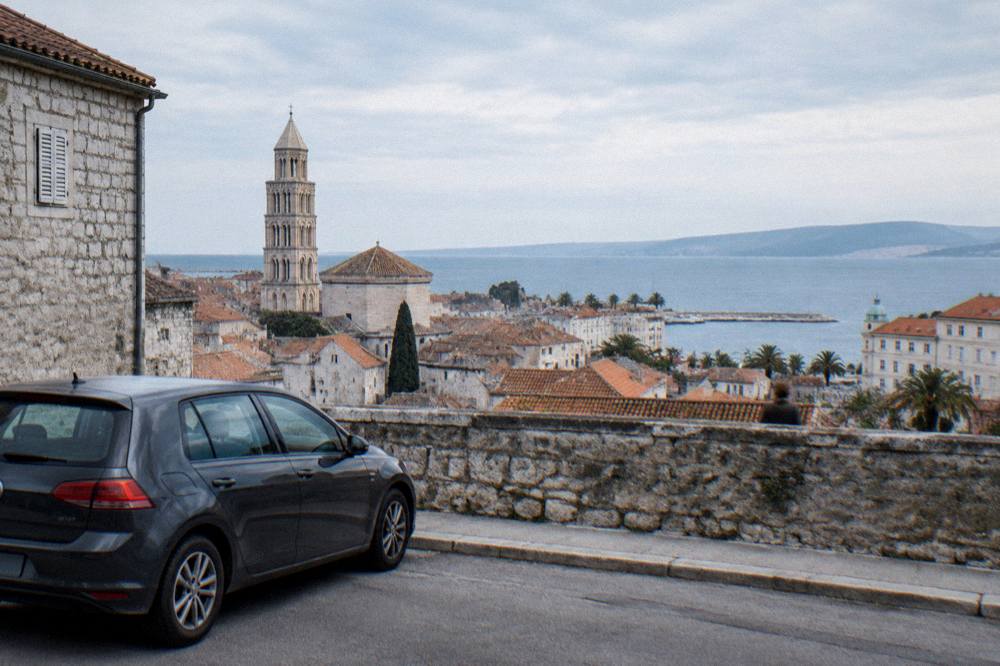
Parking in Split falls into three rings: the pedestrianised historical core where cars do not go at all, the surrounding streets and garage buildings where paid parking applies with rates posted on site, and the outer residential and park areas of Marjan, Meje and Žnjan where a mix of zoned street parking and lots serves locals and visitors. The city's tourism and transport pages describe the centre as walkable, and the physical layout confirms it: the palace quarter, the Riva promenade, the Prokurative square and the Green Market all sit within a few hundred metres of one another. Drivers therefore park on the edge of this zone and continue on foot.
The practical rule the sources support is simple: read the sign at the entrance or at the meter before leaving the car. Garage and lot operators display their rates, the hours of enforcement, and the payment methods accepted, and the posted figure at that moment is the only one that counts. Anything a website or printed guide claims about Split parking prices can be out of date by a season.
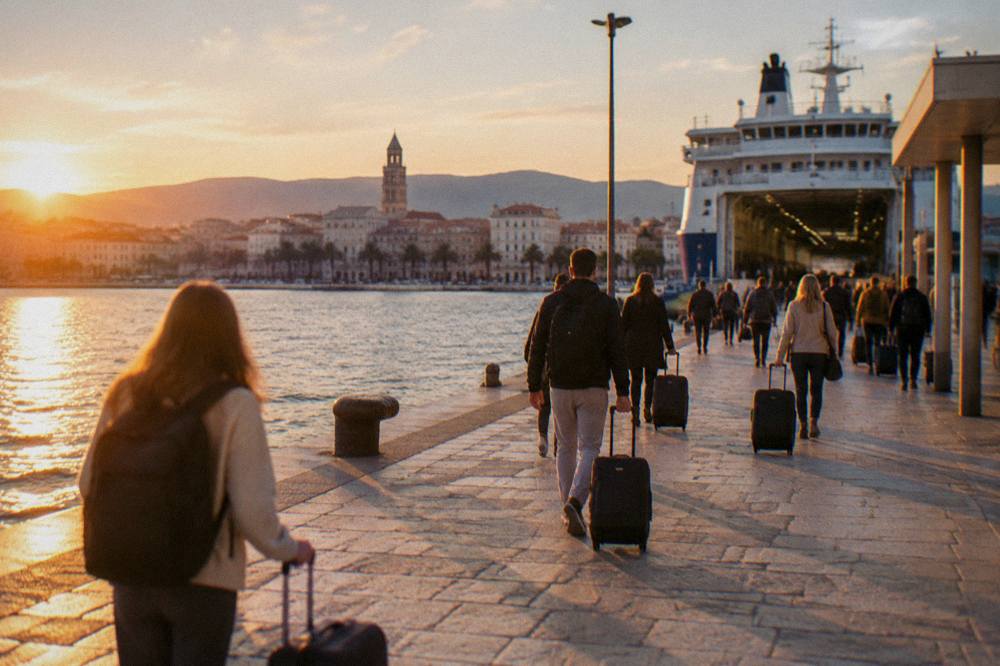
The layout helps. Because the ferry port, bus station and railway station share one strip 500 to 600 m from the palace, a visitor arriving by any of those modes never needs a car for the centre. Drivers arriving on the coastal road or from the A1 motorway funnel toward the same edge-of-centre parking belt, then walk in. The table below shows how the key points of the city relate to the palace.
| Point In Split | Relation To Diocletian's Palace |
|---|---|
| Ferry port, main bus station, railway station | Together on Obala kneza Domagoja, 500 to 600 m away |
| Riva waterfront promenade | Directly south of the palace, car-free |
| Marjan park forest peninsula | West of the centre; highest point Telegrin at 178 m |
| Bačvice beach | East of the port area, a short walk from the hub |
| Split Airport (SPU) | In Kaštel Štafilić, 20 km from Split and 6 km from Trogir |
The airport deserves its own note, because one claim circulates widely and the airport's own pages contradict it. Split Airport gives its distance as 20 km from Split and 6 km from Trogir, and the computed driving distance from the palace is 24.9 km, about 31 minutes in free-flowing traffic. Guides that describe the airport as a few minutes from the city are describing Trogir, not Split. The Split airport transfer guide covers that route in detail.
Is The Old Town Of Split Car-Free?
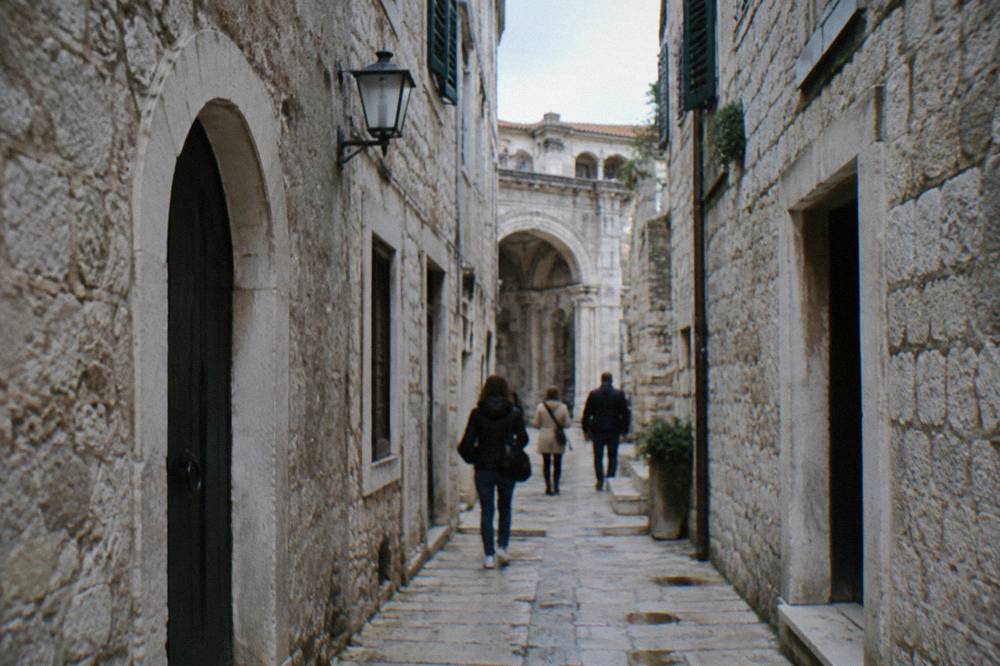
Yes, in practical terms: the historical core of Split, the area inside and immediately around Diocletian's Palace, is a pedestrian zone where general traffic does not enter, and the city's 2026 public-order rules for the historic core add behaviour restrictions on top of the traffic ones, including a ban on public alcohol consumption outside licensed terraces with fines of 300 EUR. The lanes of the palace were laid out as a Roman residence's internal streets, roughly 20.8 ha of UNESCO-inscribed property since 1979, and they remain a place people walk. Delivery vehicles work limited windows; everything else stays outside.
The public-order decision matters to drivers and their passengers for another reason: the fines are named and published. Alcohol in the historic centre or within 100 m of schools carries 300 EUR, urinating 300 EUR, climbing on monuments or bathing in fountains 300 EUR, vomiting 300 EUR, sleeping in public spaces 150 EUR, and touting taxi services 300 EUR. Walking in swimwear or shirtless in the historic centre is also fined, with the amount set locally. None of this concerns parking directly, but it defines the tone of the zone a car drops you at the edge of.
For parking specifically, the consequence is that there is no "park at the cathedral" option. The Cathedral of St Domnius, whose bell tower rises 57 m, stands a few minutes' walk from any edge-of-core parking. The Split City Museum at Papalić Palace charges 10.00 EUR adult entry and closes on Mondays; the palace cellars it runs open Monday to Sunday 8:30 to 20:00, with their central part under restoration to the end of 2026 while the passage stays open. All of it is reached on foot.
Do You Need A Car In Split At All?
For the city itself, no: Split's sights, beaches and transport hub sit within walking distance of one another, and for the classic day trips a car is one option among several, since Krka lies 74 minutes' drive away, Trogir 36, Omiš 38 and Klis just 22 minutes from the palace by road, while the islands of Hvar, Brač, Šolta and Vis are reached by ferry or catamaran from the port 500 to 600 m from the palace. A car earns its keep for multi-stop rural routes; for everything else, the hub does the work.
For many travellers the cleanest answer is to remove the parking question entirely for the biggest excursions. A Krka National Park trip from the city runs with transport arranged from Split, including a boat ride on the Krka, swimming time and a wine tasting, and the park's own price list shows what entry costs by season: 7 EUR in January to March and November to December, 20 EUR in April, May and October, and 40 EUR from June to September, with the ticket covering the Skradin boat and Lozovac bus transfers from 1 April to 31 October. Krka's park rules state that swimming is allowed only in clearly marked areas, with designated spots reported at Roški slap, Stinice and Pisak from 1 June to 30 September.
Equally walkable is the palace itself. A small-group walking tour of Split and Diocletian's Palace covers the Old Town's lanes, gates and squares with a guide, no vehicle involved, which is the natural way to see a quarter built before cars existed. Between the two, the car-free case covers city sightseeing, boat days and the biggest park.
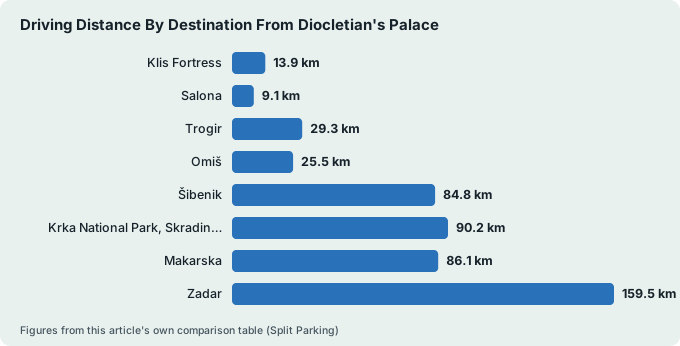
The driving times below are computed free-flow figures from the palace, useful for judging what a car actually buys you. The car rental in Split guide weighs the hire question itself.
| Destination From Diocletian's Palace | Driving Distance | Free-Flow Time |
|---|---|---|
| Klis Fortress | 13.9 km | 22 min |
| Salona | 9.1 km | 14 min |
| Trogir | 29.3 km | 36 min |
| Omiš | 25.5 km | 38 min |
| Šibenik | 84.8 km | 71 min |
| Krka National Park, Skradinski buk | 90.2 km | 74 min |
| Makarska | 86.1 km | 75 min |
| Zadar | 159.5 km | 2 h |
| Mostar | 173.2 km | 2 h 13 |
| Plitvice Lakes | 258.1 km | 3 h 15 |
| Dubrovnik | 234.8 km | 3 h 21 |
| Split Airport | 24.9 km | 31 min |
Klis Fortress, a 10 EUR entry per the visitsplit listing and a Game of Thrones Meereen location, and Salona, whose Roman ruins share a 10 EUR combined ticket with the Archaeological Museum in Split valid for 7 days, are the two trips where a short drive genuinely helps. Both are under a quarter of an hour from the centre.
Where Do You Park For The Ferry Port And Islands In Split?
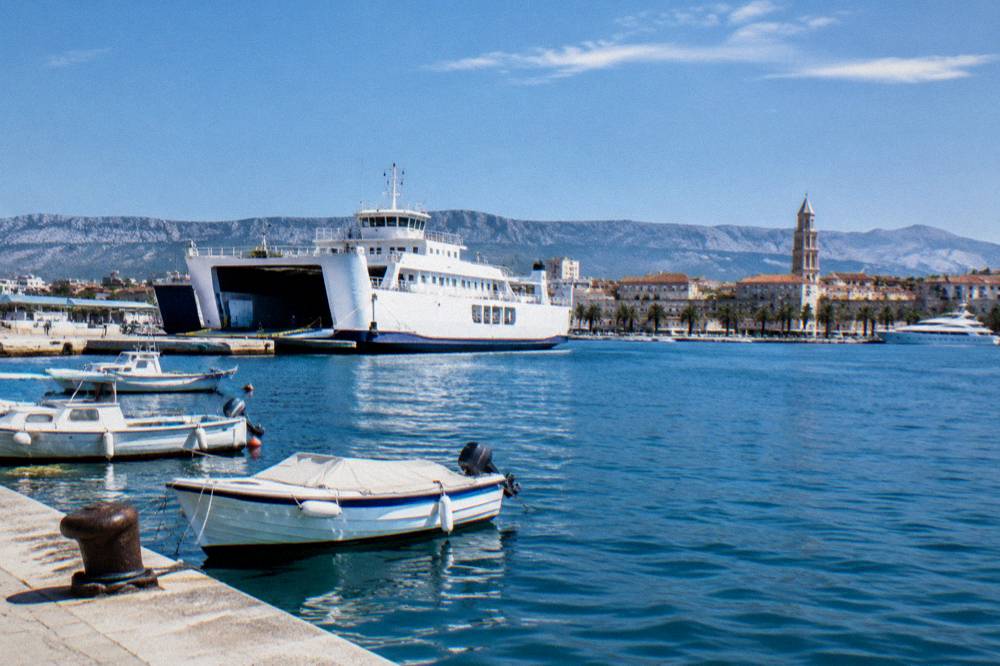
Drivers heading to the islands park near the port on Obala kneza Domagoja and walk aboard, because the car ferries themselves carry vehicles: Jadrolinija's line 635 runs Split to Stari Grad on Hvar in about 120 minutes with foot passengers paying 5.90 EUR off-season and 8.40 EUR in season, and its line 631 runs Split to Supetar on Brač in about 50 minutes. From 2026 the Supetar line operates with no off-season timetable at all, only high-season and low-season schedules, the fifth Croatian line to reach that year-round intensity.
The port is Croatia's busiest passenger port, 6.05 million passengers in 2025 on the port authority's own figures, and the practical point for drivers is that the terminal, the bus station and the railway station occupy one strip. Parking around that strip is paid and posted, and the islands decide your mode for you. Stari Grad on Hvar takes the car ferry; Hvar town itself is reached by catamaran, with foot-passenger catamaran fares of 6.40 EUR low season and 10.00 EUR high season to Hvar or Jelsa, and 7.20 EUR low and 10.00 EUR high to Vis. Confusing the two Hvar arrivals is the single most common planning error on this coast.
| Route From Split | Vessel | Journey Time | Foot Passenger Fare |
|---|---|---|---|
| Stari Grad, Hvar (line 635) | Car ferry | About 120 min | 5.90 EUR off-season, 8.40 EUR in season |
| Supetar, Brač (line 631) | Car ferry | About 50 min | Posted at the port |
| Rogač, Šolta (line 636) | Car ferry | About 60 min | Posted at the port |
| Vis | Ferry | About 140 min | Posted at the port |
| Hvar or Jelsa | Catamaran | Posted per sailing | 6.40 EUR low, 10.00 EUR high |
| Vis | Catamaran | Posted per sailing | 7.20 EUR low, 10.00 EUR high |
Where the car ferry does not fit the plan, boat tours from Split remove parking from the day altogether. A small-group speedboat trip to the Blue Lagoon and three islands runs straight from the Split waterfront, as does the Blue Cave and Hvar route toward Biševo, where the cave's entrance fee is 24 EUR in high season from 20 June to 10 September and 18 EUR in the shoulder season, paid in cash on site. The ferries from Split guide and the Split to Hvar ferry guide carry the full route detail.
How Does Parking At Split Airport Work?
Split Airport in Kaštel Štafilić sits 20 km from Split and 6 km from Trogir, and the Platanus shuttle runs from the airport's north parking to Split's main bus station by the ferry port at 10 EUR one way and 15 EUR return, while Promet Split city bus lines 37 and 38 also stop at the airport, with the fare a few euros and confirmable on board. The airport handled 3,881,186 passengers in 2025 and 3,376,272 in the first nine months of 2026, and its own pages give the distances that matter.
Airport parking itself is operated at the terminal with rates displayed at the entrance; no verified tariff figure belongs on this page, and the posted board at the barrier is the authority. Anyone parking at the airport and heading into Split is 24.9 km and about 31 minutes of free-flow driving from the palace, or one shuttle ride to the transport hub 500 to 600 m from it. The Split airport guide covers terminals, airlines and the seasonal routes, including the United Airlines Newark service that began on 30 April 2026 as the airport's first transatlantic route.
The shuttle deserves its note because an older operator name and price circulate in outdated guides. The operator's own page gives Platanus and the 10 EUR one-way, 15 EUR return fares, airport to main bus station. For the bus, lines 37 and 38 are confirmed as stopping at the airport; the exact fare is not on the readable official page, so confirm on board. Everything else covered here is indexed on Split Croatia Travel Guide.
What Are The Parking Rules And Fines A Driver Should Know In Split?
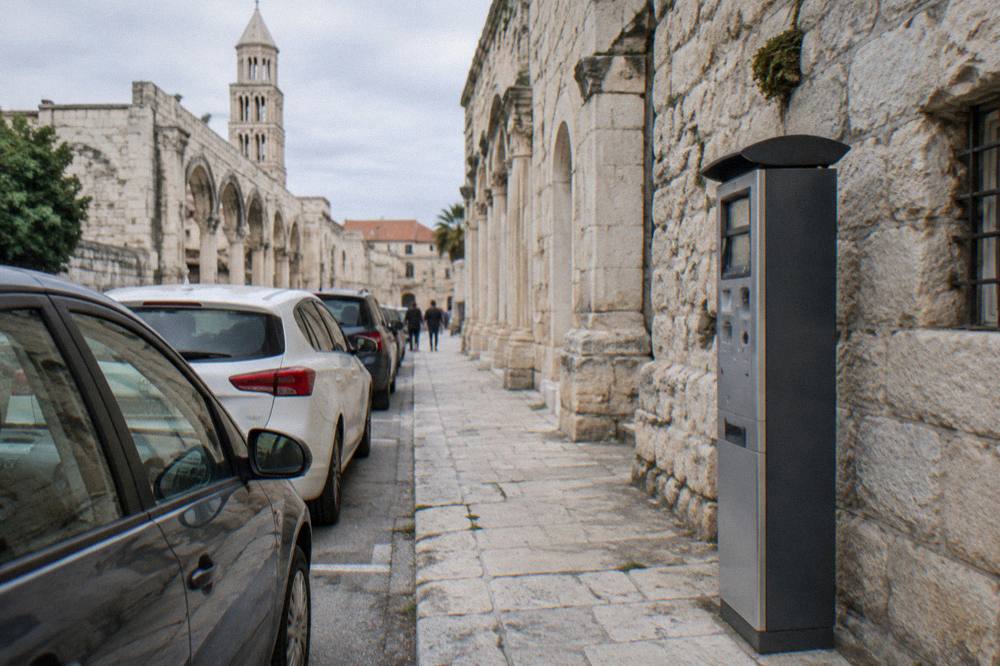
The public-order fines in Split's historic core are 300 EUR for drinking alcohol in public, 300 EUR for urinating, 300 EUR for climbing monuments or bathing in fountains, 150 EUR for sleeping in public spaces and 300 EUR for taxi touting, and the same 2026 rule set bans soliciting tours and accommodation on public surfaces, all published by the city's tourism office. For parking itself, the enforcement mechanism is ordinary: paid zones, posted hours, and wardens, with tariffs and hours displayed at each location rather than published as a single city-wide figure the sources carry.
Two further 2026 rules touch visitors beyond parking. Shops and supermarkets in the city may not sell alcohol at night during the summer season, 1 June to 15 September, a rule that repeats automatically from 1 June 2027 unless changed, though bars and restaurants are unaffected. And drones may not fly over the old town or the airport zone, with national parks also banning them, which matters to anyone filming their road trip from a scenic stop.
One more dated item affects the waterfront specifically. The Riva's central section is planned for renovation works from November 2026 lasting a little over a year, so partial closures along the promenade should be expected through 2027. Parking and drop-off arrangements along that stretch will shift with the works; the current signposting on site is the guide to follow during that period.
Is It Better To Visit Split Without A Car?
For a stay focused on Split itself, on the islands and on the major day trips, going car-free is the lower-friction choice: the centre is walkable, the port 500 to 600 m from the palace runs ferries and catamarans to Hvar, Brač, Šolta and Vis, coaches reach Dubrovnik in about 4 hours and Zagreb in about 5 hours 30, and organized tours cover Krka, Plitvice, the Blue Cave and Mostar with transport from the city included. A car serves the short rural hops, Klis at 22 minutes and Salona at 14, and multi-stop coastal drives.
The rail option is real but slow: the train to Zagreb takes about 7 h 15 to 8 h 10. The car-free day-trip case is strongest for the two national parks, since Krka and Plitvice Lakes both involve parking logistics at busy entrances that organized transport handles for you. Plitvice, about 3 h 15 from Split by road, uses timed online entry with the visitor's name mandatory on the ticket, at 10 EUR in the January to March and November to December windows, 23 EUR in April, May and October, and 40 EUR from June to September, with a 25 EUR afternoon slot in peak season. A guided Plitvice day trip from Split builds that entry into the day.
For a fuller weighing of the seasons, the best time to visit Split guide and the Split weather guide carry the DHMZ Split-Marjan station figures, including the July mean of 26.2 C against 8.0 C in January, and November's 115.5 mm of rain against July's 26.6 mm.
What Should You Know About Parking For Day Trips Around Split?
Day-trip parking around Split means planning around small historic centres: Trogir, 36 minutes from the palace, has a UNESCO-listed old town walked rather than driven; Omiš, 38 minutes away, runs its Mirabela fortress entry at 4 EUR and 6 EUR from 1 June to 30 September; and Krka's Skradinski buk entrance, 74 minutes out, includes boat and bus transfers in the ticket from 1 April to 31 October. Each destination handles vehicles at its edge.
The pattern repeats across the region. Šibenik, 71 minutes out, Makarska at 75, and Zadar at about 2 hours all pair modern outskirts with walkable cores. Mostar, about 2 h 13 across the border in Bosnia and Herzegovina, adds border-crossing time to the drive; the bridge area inscription there dates from 2005, with the bridge rebuilt in 2004. Dubrovnik, about 3 h 21 by road and around 4 hours by coach, restricts its old town to pedestrians entirely, so a Split-planned parking strategy applies there too.
| Day Trip From Split | Drive From Palace | Entry Figure | Parking Reality |
|---|---|---|---|
| Klis Fortress | 22 min | 10 EUR adult | Fortress car park at the site |
| Salona | 14 min | 10 EUR combined with Archaeological Museum, 7 days | Site edges, open-air ruins |
| Trogir | 36 min | Cathedral price not published in the facts | Park on the mainland side, walk onto the island core |
| Omiš and the Cetina | 38 min | Mirabela 4 EUR, 6 EUR from 1 June to 30 September | Town lots, river activities run from the banks |
| Krka National Park | 74 min | 7 / 20 / 40 EUR by season, transfers included | Entrance car parks at Lozovac and Skradin |
| Plitvice Lakes | 3 h 15 | 10 / 23 / 40 EUR by season, 25 EUR peak afternoon slot | Entrance car parks, timed online entry |
| Mostar | 2 h 13 | Old Bridge area, bridge rebuilt 2004 | Town lots outside the old core |
| Dubrovnik | 3 h 21 | City walls 40 EUR, includes Lovrijenac | Park outside the walls, walk in |
For travellers who base themselves in Split and hire a car only for a day or two, the arithmetic works well: park once at the accommodation's edge, use the hub for everything boat-shaped, and reserve the wheel for Klis, Salona or the long coastal drives. The where to stay in Split guide notes which areas sit within walking distance of the centre, which is the single biggest determinant of how little parking will matter on a given trip.
Common Questions About Parking In Split
Is there parking inside Diocletian's Palace in Split?
No. The historical core in and around the palace is a pedestrian zone, and the lanes of the UNESCO-inscribed property, 20.8 ha since 1979, are walked rather than driven. Drivers park in garages and lots at the edge of the centre and continue on foot.
How far is the parking from the Old Town of Split?
The transport hub on Obala kneza Domagoja, with the ferry port, main bus station and railway station together, sits 500 to 600 m from the palace, and the paid parking belt around the centre sits at a comparable walking distance. Read the posted tariff and hours at each location, as no single verified city-wide price list exists.
Can I park at Split Airport?
Yes, the airport operates parking at the terminal with rates displayed at the entrance, and its own pages place it 20 km from Split and 6 km from Trogir. The Platanus shuttle runs from the airport's north parking to Split's main bus station at 10 EUR one way and 15 EUR return, and Promet Split bus lines 37 and 38 also stop at the airport.
Do I need a car for day trips from Split?
Not for the major ones. Krka, Plitvice, the Blue Cave, Hvar and Mostar are all covered by organized tours with transport from Split, and the port runs ferries and catamarans to the islands. A car helps for Klis, 22 minutes from the palace, and Salona, 14 minutes, or multi-stop coastal drives.
Are there fines for parking or behaviour in Split's historic centre?
The public-order fines are 300 EUR for public alcohol consumption in the historic centre, 300 EUR for urinating, 300 EUR for climbing monuments or bathing in fountains, 150 EUR for sleeping in public spaces and 300 EUR for taxi touting. Walking in swimwear or shirtless in the centre is also fined, with the amount set locally.
Will parking on the Riva change in 2027?
Partial closures on the Riva are expected through 2027, because renovation of the promenade's central section is planned from November 2026 for a little over a year. Follow the signposting on site during the works period.
The short version of everything above: Split rewards arrivals without a car, tolerates cars parked at its edges, and posts its own prices at the place where they apply. Plan around the hub on Obala kneza Domagoja, confirm each tariff where it is displayed, and the parking question in Split answers itself.