Split In Winter
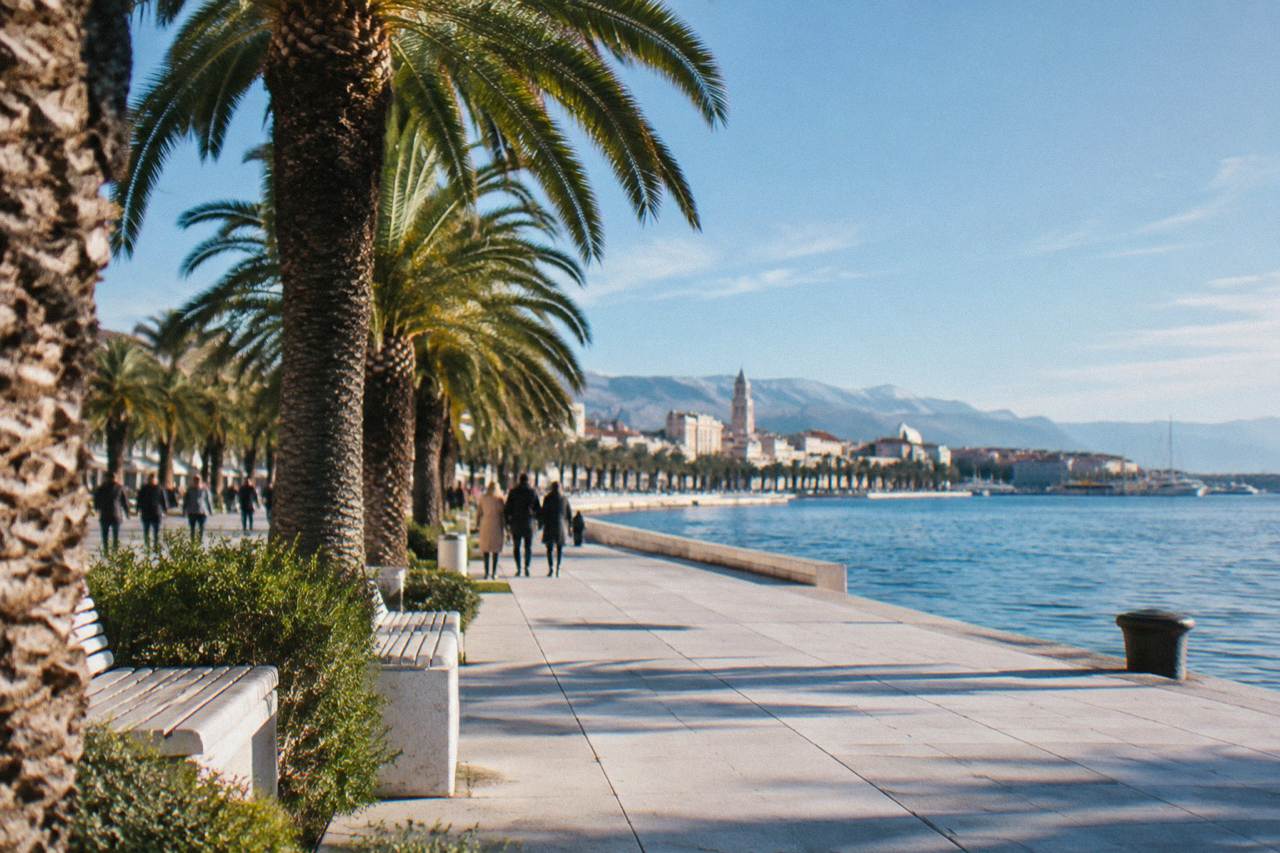
Split in winter is a city of about 160,577 people going about daily life inside and around Diocletian's Palace, with mild station-record temperatures, Advent on the Riva, museums, cellars and island ferries all open.
Short answer
Split in winter is mild rather than warm: the DHMZ Split-Marjan station table gives a January mean of 8.0 C and a December mean of 9.4 C, with Advent running 27 November 2026 to 7 January 2027 and museums, cellars and island ferries all open.
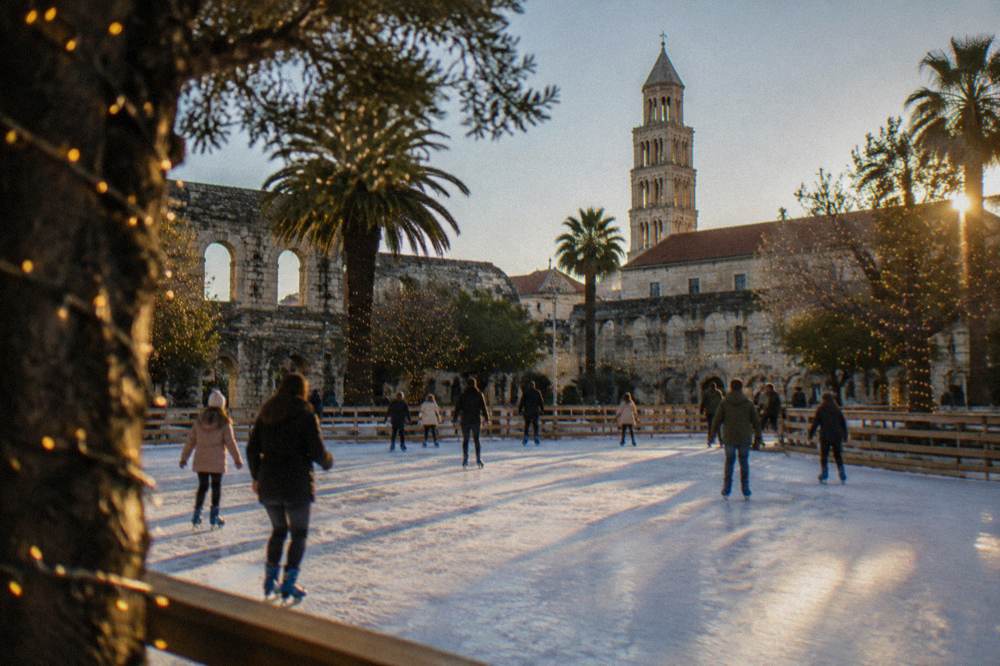
Split in winter, the off-season on this Dalmatian coast, is a different proposition from the July city: the DHMZ Split-Marjan station table puts the January mean at 8.0 C, cruise traffic thins after a 2025 total of 487,377 passengers, and the Old Town belongs to the roughly 160,577 residents counted at the 2021 census. Ferries keep running to Brač, Šolta and Hvar's Stari Grad, the Diocletian's Palace cellars open daily at 8:30, and from 27 November 2026 the Advent programme puts an ice rink at Đardin. This guide covers the weather station by station, what stays open, what closes, and which day trips still work from the Adriatic coast between November and March.
How Cold Does Split Get In Winter?
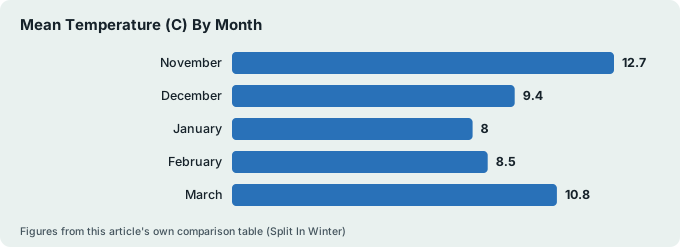
Split's winter is mild for continental Europe but not beach weather: the DHMZ Split-Marjan station table, covering 1948 to 2024, gives a January mean of 8.0 C, February 8.5 C and December 9.4 C, with November the wettest month of the whole year at 115.5 mm. The same record shows 120.8 sunshine hours in December against 353.3 in July, so winter days are short but far from grey week after week.
Those figures come from the weather station on Marjan hill, the standard reference for the city, and they describe a Mediterranean coastal climate rather than an Alpine one. Rain arrives in concentrated spells: autumn as a whole (September to November) totals 263.4 mm and winter 246.7 mm, and November alone carries 115.5 mm. Snow is rare enough on the coast that the station record treats it as an event, not a season. For comparison with the rest of the year, and for planning a warmer visit, the Split Weather guide carries the full twelve-month table.
| Month | Mean temperature (C) | Precipitation (mm) | Sunshine (hours) |
|---|---|---|---|
| November | 12.7 | 115.5 | not tabled |
| December | 9.4 | 103.7 | 120.8 |
| January | 8.0 | 77.8 | not tabled |
| February | 8.5 | 65.2 | not tabled |
| March | 10.8 | 63.2 | not tabled |
Sunshine outside the two tabled months is best summarised as about 2,600 hours a year at the station. The sea cools through the winter and no official monthly sea-temperature normal exists; the live reading published by DHMZ is a single number for the day it is taken, not a seasonal guide to swimming. Anyone hoping to swim should treat winter sea temperatures as a live lookup rather than a published normal, and the Best Time To Visit Split guide compares the seasons month by month.
What Is There To Do In Split In Winter?
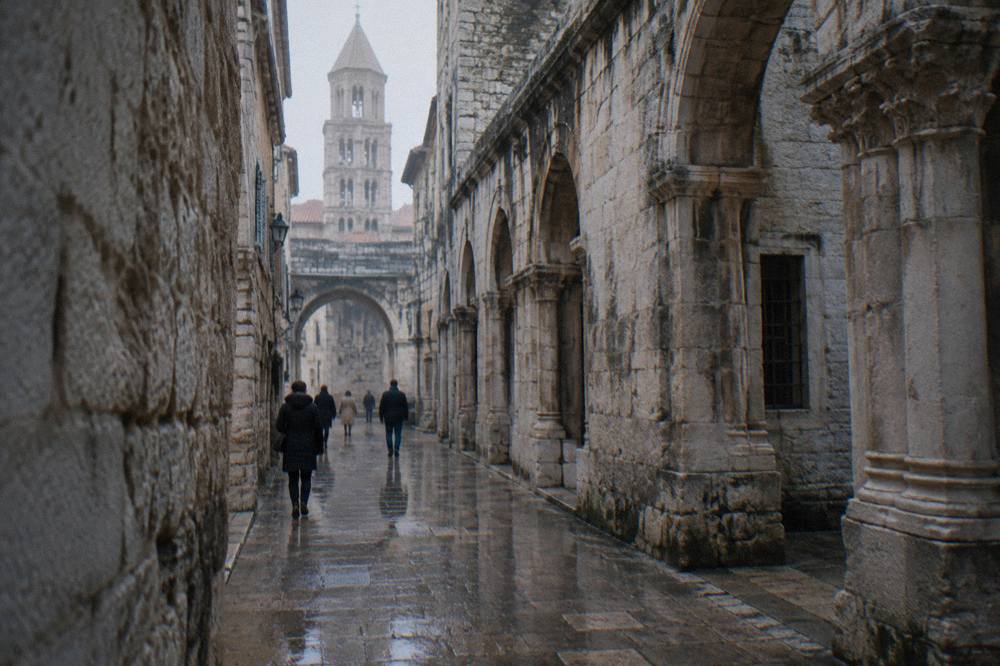
Winter in Split shifts the emphasis indoors and onto walking: the Diocletian's Palace cellars stay open Monday to Sunday 8:30 to 20:00, the Split City Museum, Archaeological Museum, Ethnographic Museum and the reopened Meštrović Gallery all run their full winter schedules, and the Peristyle, Riva, Golden Gate and Marjan hill remain free to wander at any hour. The Roman guard change on the Peristyle has run at noon daily from late May to late September, so it is a summer programme, not a winter one.
The palace itself is the anchor. The substructures, run by the Split City Museum, keep the same hours year-round, though the central part is under restoration to the end of 2026 with the passage staying open, so a winter visit sees scaffolding alongside the vaults. The Split City Museum at Papalić Palace charges 10.00 EUR adult, 8.00 reduced, family 18.00, and is closed Mondays. The Archaeological Museum, founded in 1820, is 8 EUR, and its combined ticket with ancient Salona, valid within 7 days, is 10 EUR. The Meštrović Gallery reopened in April 2026 after a fifteen-month energy renovation; the 12.00 EUR adult ticket includes the Crikvine-Kaštilac site. The Ethnographic Museum is 7.00 EUR.
A guided walk makes sense in winter precisely because the crowds are thinner. The Game of Thrones and history walking tour covers the palace locations with entry tickets included, which removes the queueing variable on a short December day; it pairs well with the Split Game of Thrones guide for the Klis Fortress connection.
Beyond the walls, Marjan hill is free and its 819 steps from Trumbićeva obala to the Telegrin viewpoint at 178 m make a clear winter morning worthwhile. The green market keeps trading, and the Split Green Market context in the main guide covers it. For rainy spells, the Rainy Day In Split page collects the indoor options, and the free list on Free Things To Do In Split holds up in winter too.
Is December In Split Worth It For Advent?
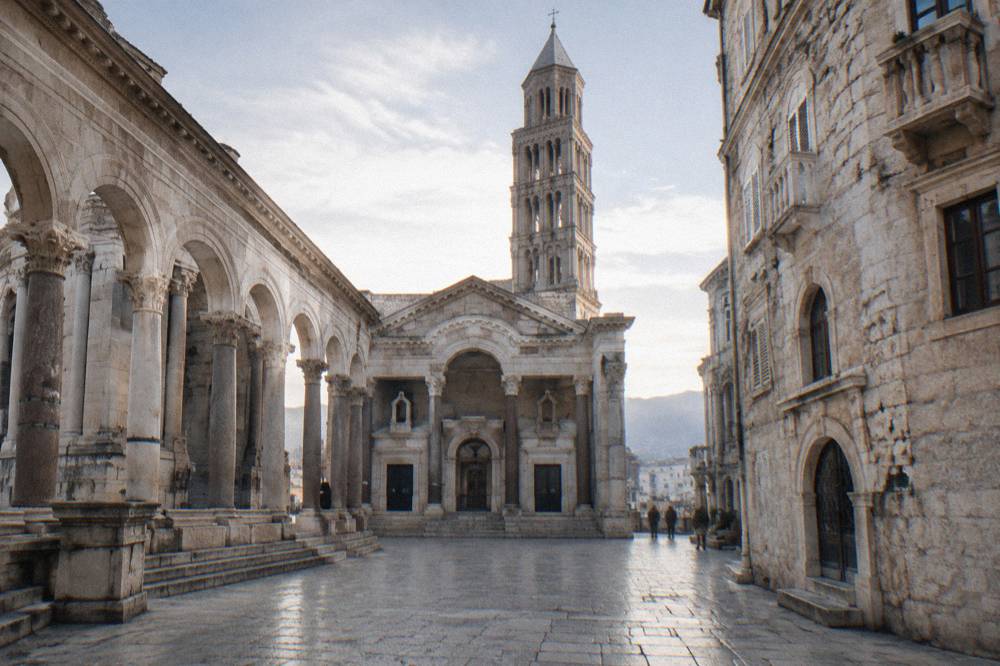
Advent in Split runs from 27 November 2026 to 7 January 2027, with the ice rink at Đardin and programme points across the city, and the Croatian National Theatre season runs 25 September 2026 to 14 June 2027, so December brings a real local festival rather than a tourist shell. New Year events on the Riva are a local tradition, though specific 2027 programme announcements were not published.
The Advent dates come from the city's own tender document for the Đardin ice rink, which is the practical confirmation that the rink happens and where. Around it, the visitsplit calendar carries the standard run of concerts, exhibitions and children's programmes through December, including the Split International Music Competition season running to 31 January 2027. The theatre at Trg Gaje Bulata sits a short walk west of the Riva, and its season schedule is on the visitsplit calendar.
Two practical notes for December planning. First, the Riva's central section is scheduled for renovation works from November 2026 lasting a little over a year, so partial closures along the waterfront promenade should be expected through 2027; the promenade will not be closed as a whole, but stretches will be hoarded. Second, the night-time retail alcohol ban applies to shops in the historic core from 1 June to 15 September, so it does not run in December, but the standing public-order rules do: drinking alcohol in the historic centre outside licensed terraces carries a 300 EUR fine year-round.
| Split winter event | Dates | Note |
|---|---|---|
| Advent in Split | 27 Nov 2026 to 7 Jan 2027 | Ice rink at Đardin |
| HNK Split season | 25 Sep 2026 to 14 Jun 2027 | Opera, ballet, drama |
| Sudamja, City Day | 7 May | Outside winter, marks the season's end |
| Split Summer Festival | 14 Jul to 14 Aug 2026 was the 72nd edition | 2027 dates not announced |
Do The Island Ferries Run From Split In Winter?
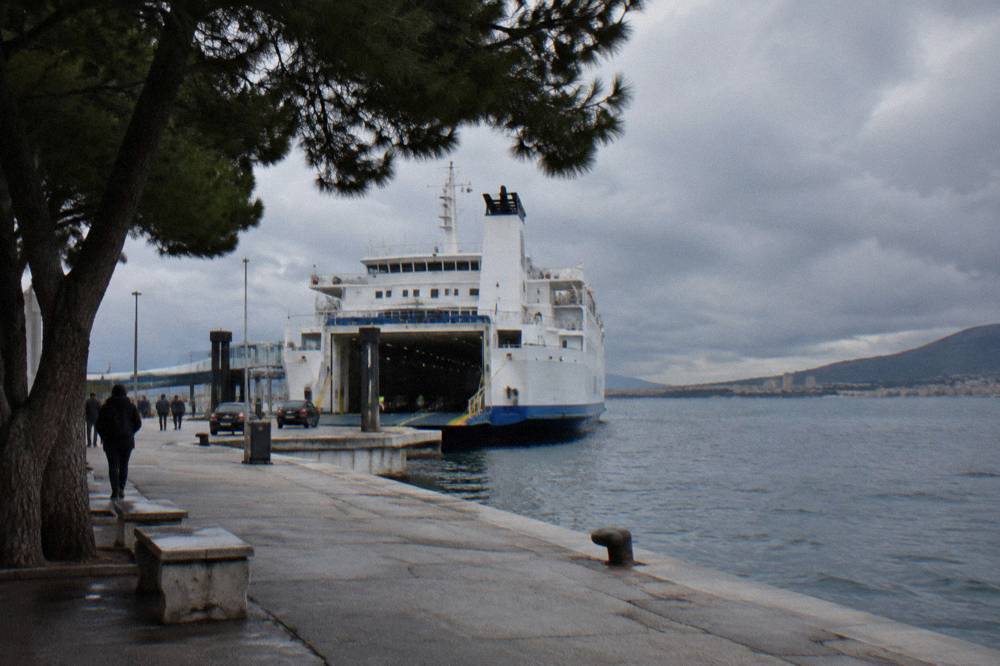
Yes, and on a reduced but daily pattern: Jadrolinija's car ferry to Stari Grad on Hvar takes about 120 minutes and carries foot passengers for 5.90 EUR off-season, the Supetar line to Brač runs about 50 minutes and from 2026 has no off-season timetable at all, only high and low season schedules, and the Šolta line to Rogač takes about 60 minutes. Catamarans continue to Hvar town and Vis in winter, with fewer daily sailings.
The fare difference matters: the 5.90 EUR Stari Grad foot-passenger fare is the off-season price against 8.40 EUR in season, so winter travel is also the cheaper fare. The Brač change is the structural one. Jadrolinija's 2026 announcement made Split to Supetar the fifth Croatian line with no off-season period, meaning the island keeps a year-round service aligned with bus arrivals, which is a genuine convenience for a February day trip to Supetar. Note the geography that trips up first-time visitors: the car ferry reaches Stari Grad, not Hvar town; Hvar town itself is a catamaran sailing, at 6.40 EUR low season against 10.00 EUR high season, and Vis is 7.20 EUR low season over about 140 minutes. The full route and operator picture is in the Ferries From Split guide.
| Winter route from Split | Type | Sailing time | Winter foot fare |
|---|---|---|---|
| Stari Grad, Hvar | Car ferry (line 635) | about 120 min | 5.90 EUR |
| Supetar, Brač | Car ferry (line 631) | about 50 min | low-season tariff, no off-season timetable |
| Rogač, Šolta | Car ferry (line 636) | about 60 min | low-season tariff |
| Hvar town | Catamaran | scheduled service | 6.40 EUR |
| Vis | Catamaran and ferry | about 140 min | 7.20 EUR |
Timetables thin out on Sundays and public holidays, and winter storm systems in the Adriatic occasionally suspend fast catamaran sailings while the big car ferries keep running, so a same-day island plan should always be checked against the operator's live departures the evening before. The Split To Hvar Ferry guide covers the Hvar routes in detail.
Is Split Cheaper In Winter Than In Summer?
On the things with published prices, yes measurably: Krka National Park drops to 20 EUR in October and 7 EUR from November to March, Plitvice Lakes falls to 23 EUR in October and 10 EUR from November, the Stari Grad ferry foot fare is 5.90 EUR off-season against 8.40 EUR in season, and the catamaran to Hvar is 6.40 EUR against 10.00 EUR.
The tourist tax also sits at its low-season rate outside the 1 April to 30 September window, collected by the accommodation and confirmed at booking.
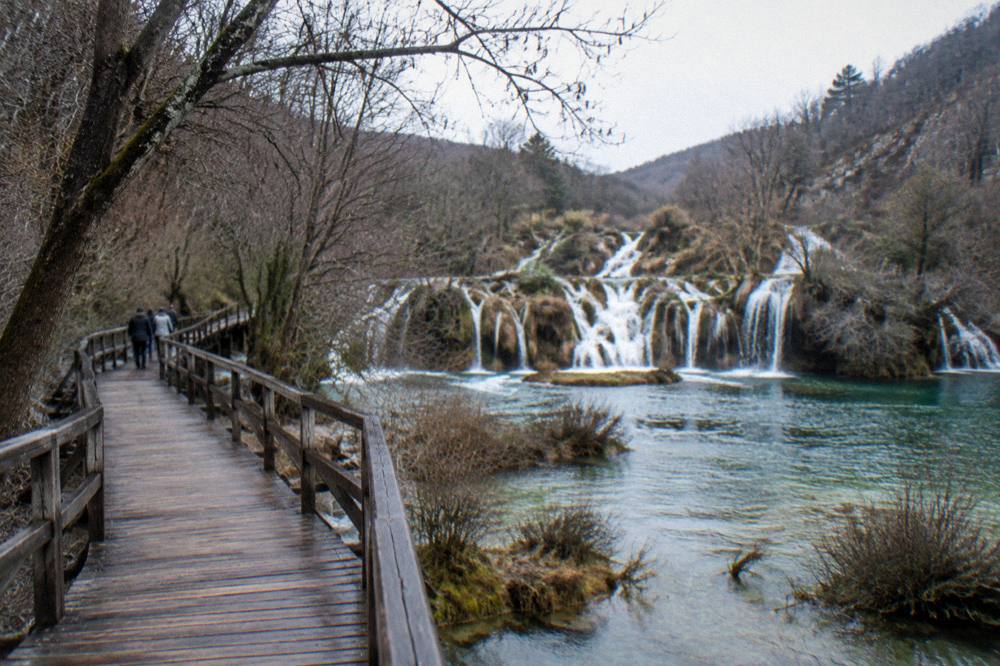
The park reductions are the clearest winter dividend. The Krka price list charges 40 EUR in June to September, 20 EUR in April, May and October, and 7 EUR from January to March plus November and December, with the ticket still including the Skradin boat and Lozovac bus transfers through the 1 April to 31 October window. Plitvice charges 10 EUR from 1 January to 31 March and from 1 November, against 40 EUR in the June to September peak, and requires the visitor's name on the ticket with timed online entry through the official webshop. The Which One Is Better Plitvice Or Krka comparison holds in winter, with the same caveat applying to both: Krka's clearly marked swimming areas operate 1 June to 30 September, so a winter visit is a walking visit.
Museum prices do not change with the season, but winter brings them with empty rooms. City-priced basics are stable: the palace cellars, City Museum and Archaeological Museum charges are the same in January as in July, and the cathedral complex is quoted from about 5 EUR for a single site up to about 15 EUR for a combined ticket, with shoulders and knees covered expected. Eating out pricing by season is covered separately in Is It Expensive To Eat In Split, and the Split On A Budget guide pulls the whole low-cost picture together.
| Item | Summer price | Winter price |
|---|---|---|
| Krka, all land sites | 40 EUR (Jun to Sep) | 7 EUR (Jan to Mar, Nov, Dec) |
| Plitvice Lakes | 40 EUR (Jun to Sep) | 10 EUR (Jan to Mar, Nov, Dec) |
| Stari Grad ferry, foot passenger | 8.40 EUR in season | 5.90 EUR off-season |
| Catamaran to Hvar or Jelsa | 10.00 EUR high season | 6.40 EUR low season |
| Catamaran to Vis | 10.00 EUR high season | 7.20 EUR low season |
Which Day Trips From Split Work Best In Winter?
The inland and city day trips work best: Klis Fortress is 13.9 km and about 22 minutes' drive, Salona 9.1 km and 14 minutes, Trogir 29.3 km and 36 minutes, and Omiš 25.5 km and 38 minutes, all close enough that a short winter daylight window still holds a half day. Krka at 74 minutes and Šibenik at 71 minutes are comfortable; Plitvice at about 3 hours 15 minutes each way and Dubrovnik at 3 hours 21 minutes are long days when the sun sets early.
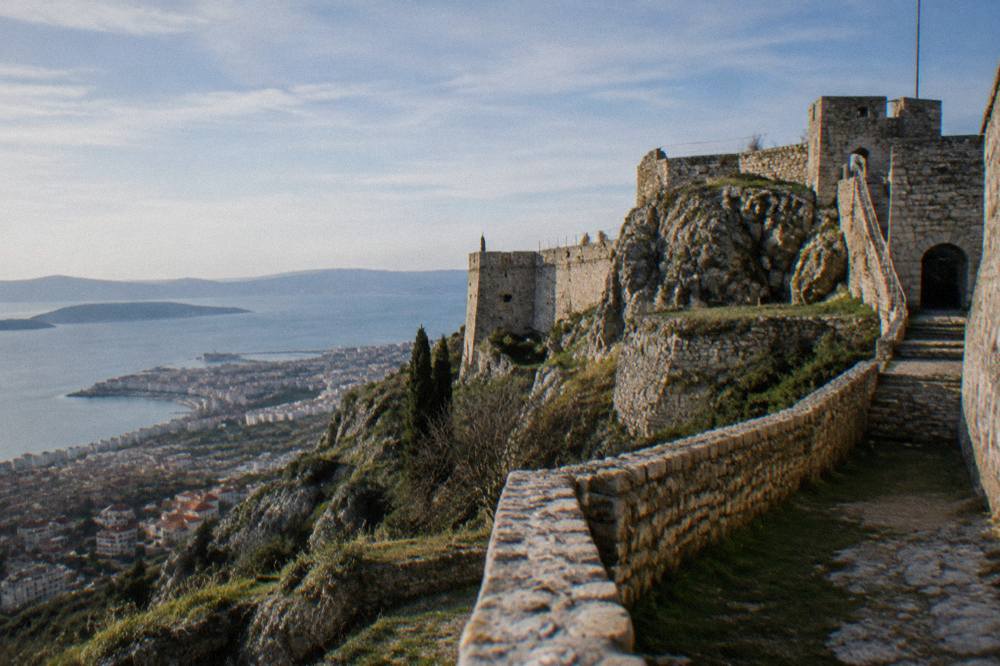
The driving times are free-flow estimates from the palace, and winter traffic on the coastal road is lighter than in July, so the shorter trips are reliable. Klis Fortress charges 10 EUR and its Game of Thrones Meereen connection makes it a natural pair with the palace walk in cold weather; the Klis Fortress guide covers the defensive history. Salona's Roman ruins are an open-air site, best on a dry winter day, and the 10 EUR combined ticket with the Archaeological Museum spreads the visit over two stops. Trogir, a UNESCO listing since 1997, is compact enough that two hours of daylight is enough for its old town; the cathedral's ticket price is not in the published sources here, so confirm it on site.
For something more physical, the Cetina canyon around Omiš keeps running through winter. The extreme canyoning tour operates from Split or Zadvarje and the canyon's water levels are at their most active after November rain, though operators judge conditions day by day and winter departures depend on the weather window. The Omiš And Cetina River guide covers the river corridor.
Two trips to re-think in winter are the Blue Cave, whose 24 EUR high-season fee drops to 18 EUR in shoulder season but whose boat access depends entirely on sea conditions, and the swimming-focused island days, since Krka's marked swimming areas and the beach season both close on 30 September. Boat trips generally reduce to a skeleton winter schedule; what runs is in the Split Boat Tours guide.
What Should You Pack For Split In Winter?
Pack for 8 to 13 C days with rain, not for snow: layers, a proper waterproof for November's 115.5 mm and December's 103.7 mm station rainfall, and shoes that hold wet stone, because the palace alleys and the 819 Marjan steps are polished limestone that gets slick in rain. Evening temperatures drop well below the daily mean, so a warm layer for the Riva and the Advent stalls is the difference between one drink outside and retreating indoors.
The station record makes the case numerically: November, December, January and February average 77.8 to 115.5 mm of rain each, so a compact umbrella lives in the daypack all season. Sunlight is a real factor too; 120.8 sunshine hours in December means roughly four hours a day, so plan the outdoor sightseeing, the Marjan walk or Trogir, for the middle of the day and keep museums and the cellars for late afternoon. Sea swimming is not a winter activity on any published normal: no official monthly sea-temperature normal exists, and the only DHMZ figure is a live reading on the day, so the question of a winter dip is answered by the day's posted number, not by a guide's claim. Season-by-season comparisons, including the autumn and spring shoulders, sit in the Things To Do In Split overview.
Common Questions About Split In Winter
Is Split worth visiting in winter?
Yes, for a different reason than summer: the DHMZ Split-Marjan station table gives an 8.0 C January mean, museums run full hours, the cellars open at 8:30 daily, Advent runs 27 November 2026 to 7 January 2027, and winter prices at Krka and Plitvice fall to 7 EUR and 10 EUR respectively.
Is it too cold to swim in Split in winter?
Swimming is not a normal winter activity, and no official monthly sea-temperature normal exists for Split. DHMZ publishes only a live reading for the day; check the current number before deciding, and expect the sea to be cold from December through March.
Do the Hvar ferries run in winter from Split?
Yes. The car ferry runs to Stari Grad on Hvar in about 120 minutes with a 5.90 EUR off-season foot fare, while Hvar town is reached by catamaran at 6.40 EUR in the low season. Sailings are fewer than in summer and catamarans can be suspended in bad weather.
What is the wettest month in Split?
November, at 115.5 mm in the DHMZ Split-Marjan station table for 1948 to 2024, followed by December at 103.7 mm. July is the driest month at 26.6 mm.
Does Split have a Christmas market?
Yes. Advent in Split runs 27 November 2026 to 7 January 2027 with an ice rink at Đardin and a programme of concerts and events across the city, alongside the Croatian National Theatre season that runs to 14 June 2027.
Is everything in Split open in January and February?
The core sights are: the palace cellars open daily 8:30 to 20:00, the City Museum is open Tuesdays to Sundays, the Archaeological Museum and Meštrović Gallery run winter hours, and beach clubs and some seasonal boat trips close. The Riva may see partial closures through 2027 due to renovation works planned from November 2026.
Winter in Split trades the beach for the palace, the theatre and an ice rink at Đardin, and it does so at the cheapest entry prices of the year, from 7 EUR at Krka to 5.90 EUR on the Stari Grad ferry. A food-focused walk through the Old Town, sampled below, works in any weather the station can produce.
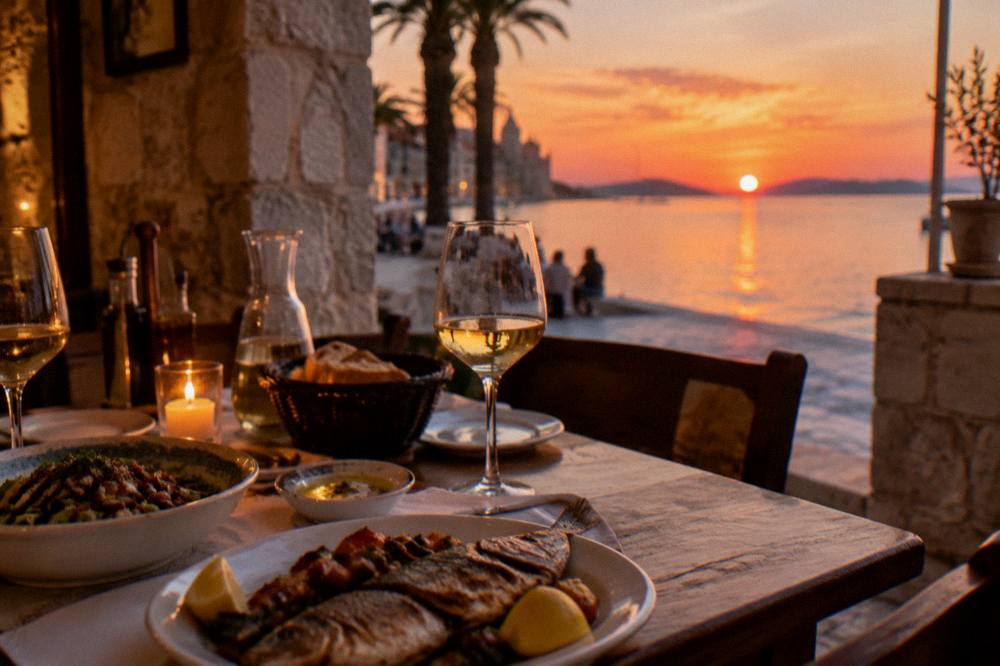
Whatever the month, the compact geography does the winter visitor a favour: the ferry port, bus station and railway station share one location 500 to 600 m from the palace, so even a wet arrival is a short walk from everything. Layer up, keep the umbrella in the bag, and the low season on this stretch of the Adriatic coast repays the trip, and the Split Croatia Travel Guide covers the rest of the year when the days lengthen again.
