Froggyland Split
Froggyland is Split's museum of taxidermied frogs, a compact, odd, family-friendly stop in the historic city built in and around Diocletian's Palace. This guide covers what it is, how to fit it into a day, and what to see around it.
Short answer
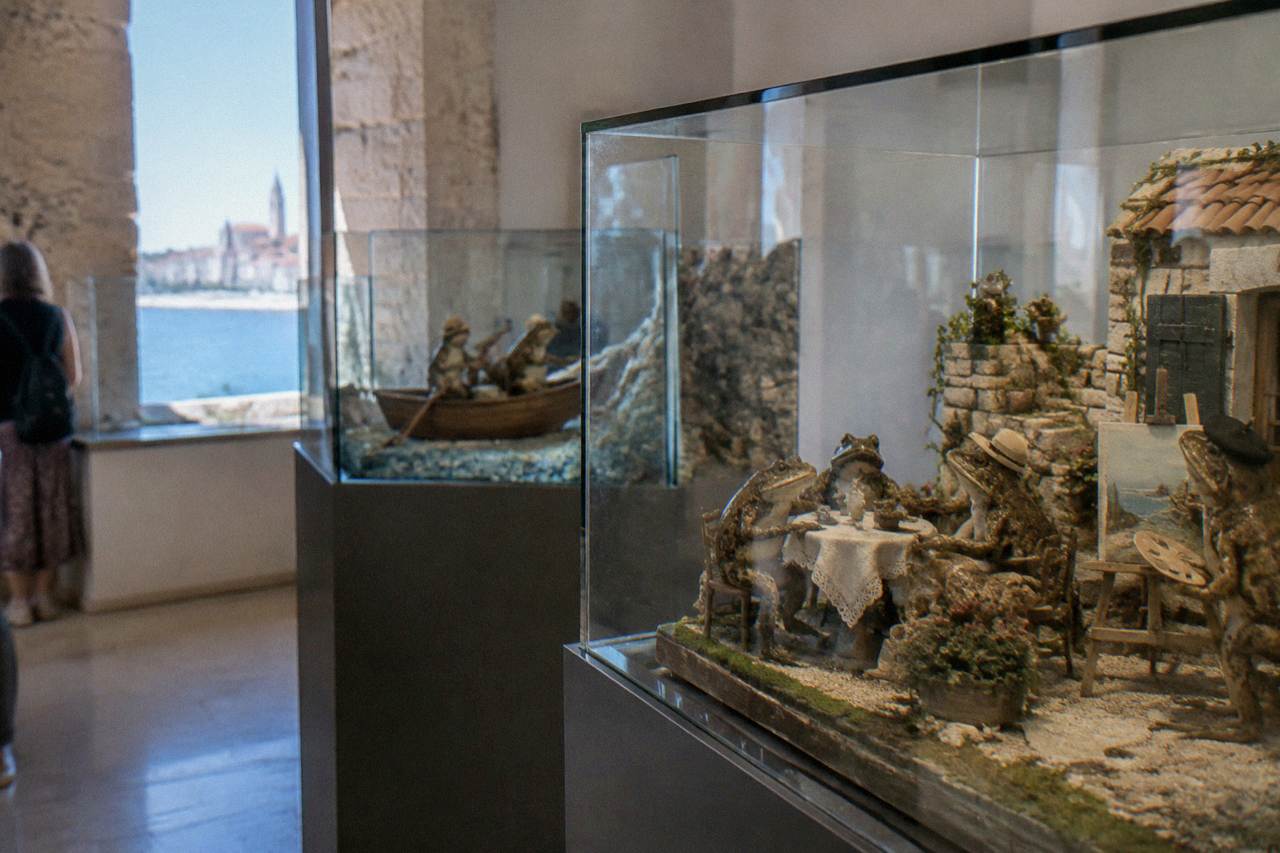
Froggyland is a small private museum in Split's historic core displaying taxidermied frogs posed in miniature human scenes. It is a short stop, best paired with the free sights of Diocletian's Palace, and current entry prices and hours should be confirmed at the door.
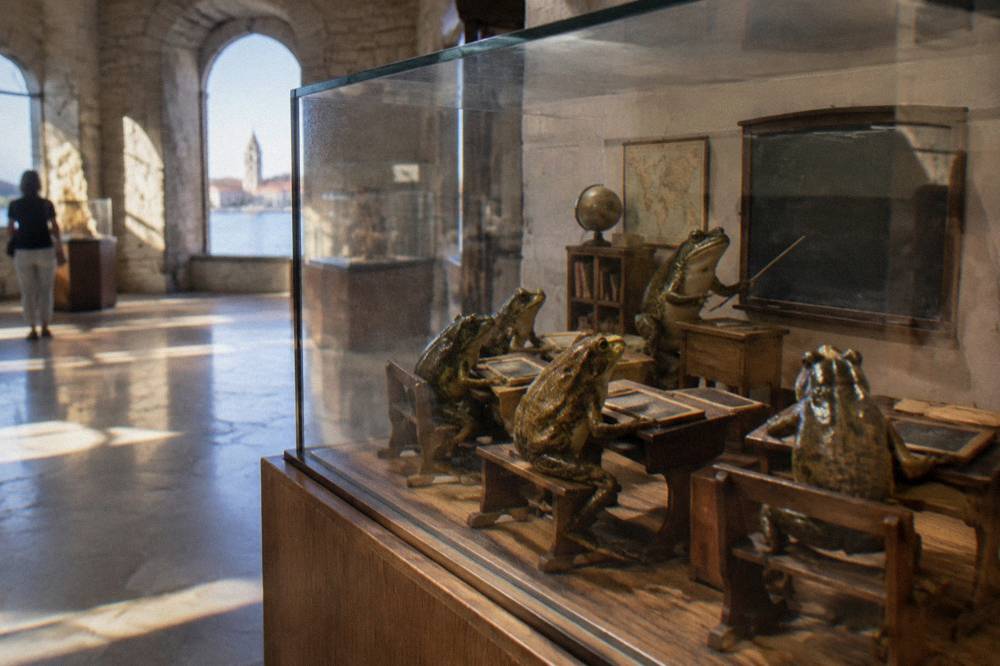
Froggyland is Split's museum of taxidermied frogs, a compact private collection in which frogs preserved by a taxidermist are arranged in miniature scenes of everyday human life, from school classrooms to billiard halls. It sits in the historic core of Split, the coastal city in Dalmatia on the Adriatic Sea whose Old Town lives inside and around Diocletian's Palace, a Roman retirement residence built for the emperor Diocletian around 295 to 305 AD and inscribed by UNESCO in 1979. The museum is small, strange and genuinely popular with families, and it slots neatly into a morning or afternoon between the palace's free squares and the Riva waterfront. This guide lays out what the collection is, how to reach it, what the surrounding museums charge, and how to build a full day around it.
What Is Froggyland In Split?
Froggyland is a small museum of taxidermied frogs, a private collection in which preserved frogs are posed in miniature tableaux of human life, mounted in glass cases and displayed in a single historic-core venue in Split. It is one of the city's more unusual indoor attractions and works especially well for children and for anyone wanting a short, sheltered stop between the larger Roman sights.
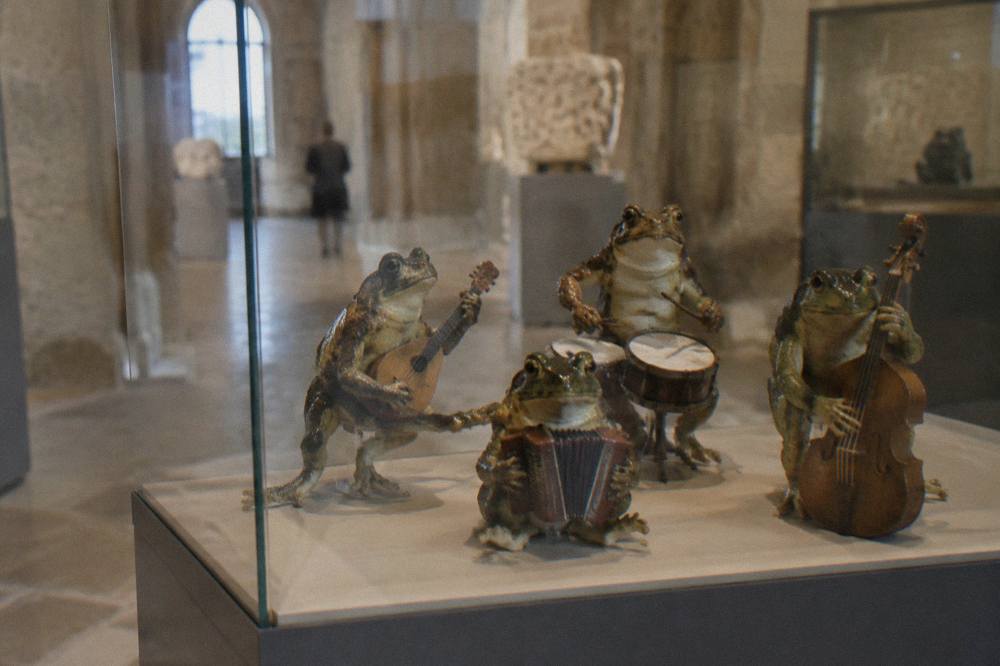
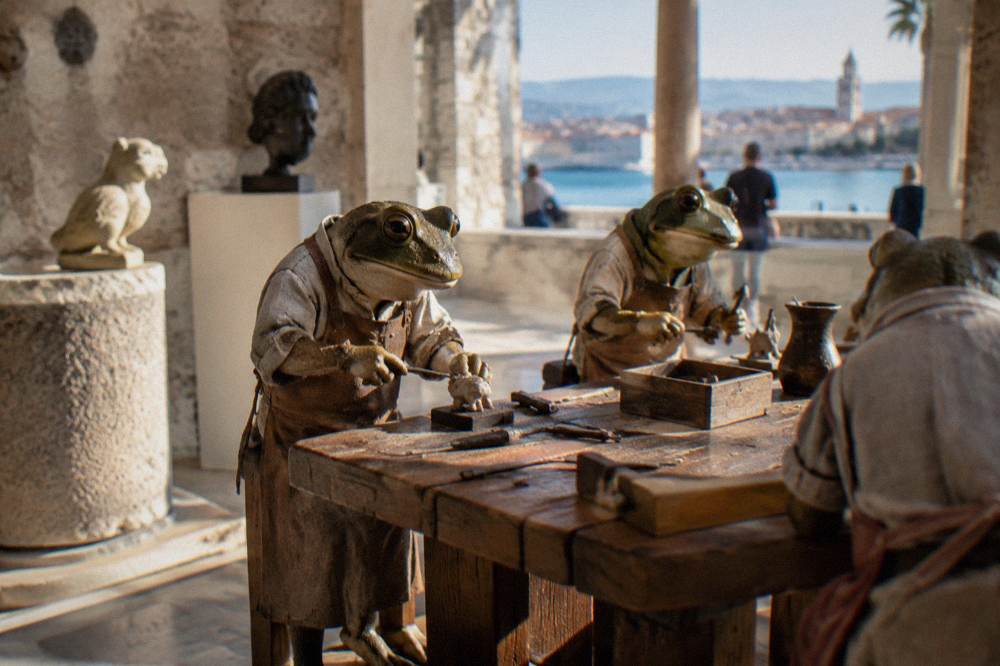
The collection belongs to the tradition of anthropomorphic taxidermy, in which taxidermists mounted animals in human poses. In Split's case the frogs are arranged as musicians, sportsmen, schoolteachers and craftsmen, each scene built with miniature props and set behind glass. The effect is part natural history, part folk art, and it is exactly the kind of exhibit that divides opinion sharply: some visitors stay twenty minutes and leave smiling, others pass straight by. The displays are indoors, which matters in a city where the headline sights, the Peristyle, the Riva, the Golden Gate and the Grgur Ninski statue, are all open-air and free.
Because Froggyland is a private museum rather than a state institution, its printed facts belong to the operator. The exact number of frogs, the current ticket price and the daily opening hours are set by the venue itself, and the desk at the entrance posts them. Confirm all three at the door before planning a visit around them, particularly in the shoulder season when small private museums in Dalmatia sometimes shorten their hours. What can be stated firmly is the character of the place: a single-floor, walkable, weather-proof stop that children tend to enjoy and that asks for well under an hour of your time.
Where Is Froggyland And How Do You Fit It Into A Walk Of Split?
Froggyland sits in Split's historic core, the dense web of streets in and around Diocletian's Palace, within level walking distance of the Peristyle, the Riva waterfront and the Green Market. No public transport is needed: the ferry port, the main bus station and the railway station sit together on Obala kneza Domagoja, 500 to 600 m from the palace, so the walk from any arrival point to the museum area takes only minutes.
Split's Old Town is compact enough that a visit to Froggyland naturally becomes part of a wider circuit. A sensible order, and one that costs nothing until you choose to enter a ticketed site, runs like this: enter the palace area at the Golden Gate on the north side, pass the Grgur Ninski statue, thread south through the cardo to the Peristyle, and from there work east toward the Green Market before dropping down to the Riva. Froggyland slots into the middle of that loop as an indoor break. If you are working from a fixed plan, the site's one day in Split itinerary sequences these stops, and the Diocletian's Palace guide covers the Roman core in detail.
Two practical notes shape any Old Town walk. First, the streets inside the palace are narrow stone lanes, so a stroller is workable but slow, and the pavement is uneven in places. Second, the whole core is pedestrian in character, and the city's public-order rules now fine public drinking in the historic centre at 300 EUR, one of a set of posted fines covering urinating, climbing on monuments and sleeping in public spaces, so the lanes stay orderly. The old town area guide maps the quarters if you want the layout before arriving.
How Long Does A Visit To Froggyland Take, And Who Is It For?
A visit to Froggyland takes well under an hour for a family moving at a normal pace, because the collection occupies a single compact exhibition space rather than a multi-floor museum. It suits children best, appeals to adults with a taste for the eccentric, and works as a rainy-day or midday-heat stop when the free outdoor sights of Split lose their charm.
That brevity is the museum's greatest planning strength. Split's heavyweight indoor sights each ask more time: the Diocletian's Palace substructures run by the Split City Museum are open Monday to Sunday 8:30 to 20:00, and the cathedral complex with its 57 m bell tower needs a slower circuit. Froggyland is the opposite: a stop you can insert between the Peristyle and lunch without reorganising the day. Families with small children often use it as the one indoor attraction whose subject matter needs no explaining, since a frog playing a violin speaks for itself.
Weather shapes the decision too. Under the DHMZ Split Marjan station record for 1948 to 2024, July averages 26.2 C and August 25.9 C, with 18 days at 30 C or more in July and 17 in August. On those afternoons an air-conditioned single-room museum is a genuinely useful tool, and in November, the wettest month at 115.5 mm, it is just as useful. Build the day so the outdoor Roman circuit fills the cooler morning and Froggyland covers the hot or wet middle hour.
When the forecast is kind and the sea is calling instead, the boat trips that leave from the waterfront a short walk from the Old Town are the standard counterweight to a museum morning.
The Blue Cave and Hvar speedboat trips, the small-group island tours and the Blue Lagoon cruises all depart from Split's harbor area, which keeps the logistics simple: the museum in the morning, the sea in the afternoon or on a following day. The things to do in Split page collects the full range.
What Does Froggyland Cost Compared With Split's Other Museums?
Froggyland's entry price is set by the private operator and is posted at the door, so confirm it on arrival; the city's public museums, by contrast, publish fixed price lists, with the Split City Museum at 10.00 EUR adult, the Archaeological Museum at 8 EUR and the Meštrović Gallery at 12.00 EUR. Planning around the public prices is straightforward, and Froggyland slots into the budget as a single small extra.
The public institutions give a clear picture of what indoor Split costs. The Split City Museum's own price list shows 10.00 EUR for an adult ticket at the Papalić Palace, 8.00 EUR reduced, and an 18.00 EUR family ticket, with the museum closed Mondays. The Archaeological Museum charges 8 EUR for adults, and its combined ticket with the Roman site of Salona, valid within 7 days, is 10 EUR. The Ethnographic Museum lists 7.00 EUR adults. The Meštrović Gallery, which reopened in April 2026 after a fifteen-month energy renovation, charges 12.00 EUR for a ticket that also includes Crikvine-Kaštilac. The cathedral complex is priced by its kiosk on the Peristyle; secondary guides put single sites from about 5 EUR and combined tickets up to about 15 EUR, figures to confirm at the kiosk.
| Museum or site | Adult price | Notes |
|---|---|---|
| Split City Museum, Papalić Palace | 10.00 EUR | 8.00 EUR reduced, family 18.00 EUR, closed Mondays |
| Diocletian's Palace cellars | posted by Split City Museum | Open Monday to Sunday 8:30 to 20:00 |
| Archaeological Museum | 8 EUR | Combined with Salona 10 EUR within 7 days |
| Ethnographic Museum | 7.00 EUR | Vestibule separate at 2.00 EUR |
| Meštrović Gallery | 12.00 EUR | Includes Crikvine-Kaštilac, reopened April 2026 |
| Cathedral of St Domnius complex | from about 5 EUR, combined up to about 15 EUR | Secondary figures, confirm at the Peristyle kiosk |
| Froggyland | posted at the door | Private museum, confirm price and hours on arrival |
Against that ladder, Froggyland behaves like a small private attraction rather than a civic museum: one ticket, one room, no combined schemes. Two money-saving facts help the wider day. First, the headline sights of the palace area cost nothing: the Peristyle, the Riva, the Prokurative, the Golden Gate, the Grgur Ninski statue, the markets, Marjan and the city beaches are all free. Second, the tourist tax of about 2.65 EUR per person per night in high season, 1 April to 30 September, is collected by your accommodation, with under 12s free and 12 to 18s at half rate, so it never appears at a museum desk. Croatia has used the euro since 1 January 2023, so every price above is in the currency you will actually hand over.
Is Froggyland Good For Children?
Froggyland is one of the more reliable child-friendly indoor stops in Split's historic core, because the subject is visual, comic and immediately readable, the space is small enough to supervise easily, and the visit length matches a child's attention span rather than exceeding it. Split as a whole backs this up with car-free lanes, free beaches and a compact palace area that children can walk without exhaustion.
The comparison with the bigger museums matters here. The cathedral complex asks for quiet voices and covered shoulders and knees, and the Archaeological Museum's stone inscriptions need a patient audience. Froggyland asks nothing of the kind. A frog dressed as a barber giving another frog a shave needs no commentary in any language, which is why the museum earns its place on family itineraries. The taxidermy itself follows old craft techniques, and parents of sensitive children can frame it as historical craft rather than anything grim; the scenes are comic, not naturalistic.
Around the museum, the rest of a family day in Split falls into place quickly. Bačvice beach, the shallow city beach where the ball game picigin was born in 1908 and is now protected intangible heritage of Croatia, is a short walk east of the core. Marjan, the park-forest peninsula on the city's western side, rises to Telegrin at 178 m and is 3.5 km long and 1.5 km wide, with 819 steps from Trumbićeva obala to the top, a climb suited to older children. The Split with kids guide and the Bačvice beach page cover both in detail.
What Can You See Within Walking Distance Of Froggyland?
Within a short walk of Froggyland you can reach the Peristyle, the Golden Gate and the Grgur Ninski statue, the Diocletian's Palace cellars, the Green Market, the Riva waterfront and the Marjan park-forest steps, a set of sights that covers a full day without transport. Every one of the outdoor squares and gates is free, and the paid options along the way are the cellars, the cathedral complex and the city's museums.
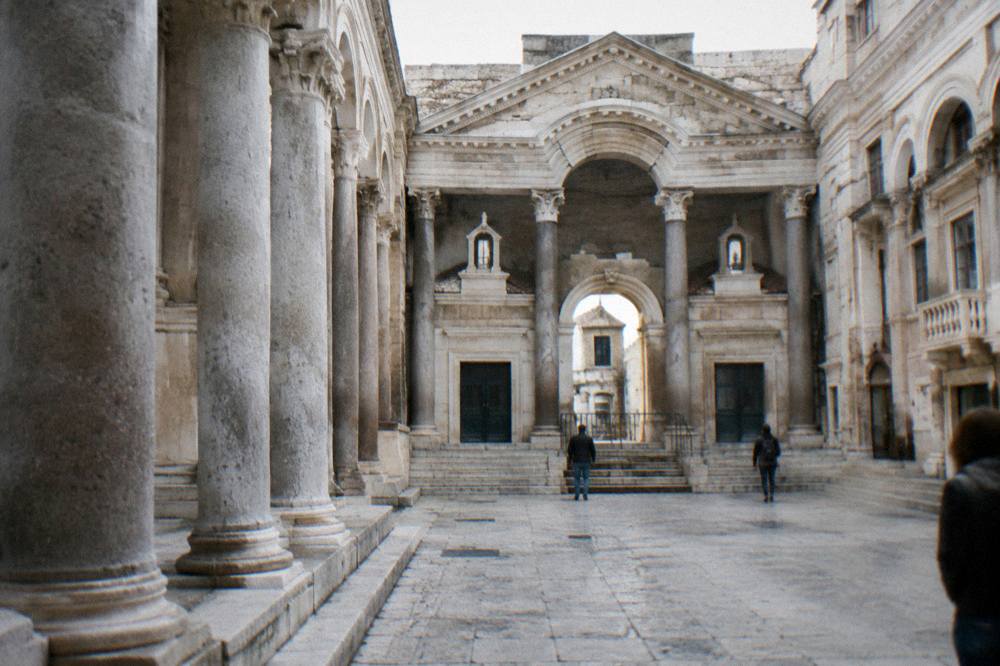
The density is the point. Split's historic core packs a Roman palace, a medieval city and a working market town into a space you cross in minutes, so a Froggyland visit is never an isolated errand. Walking out from the museum area, the natural sequence runs through the Peristyle, the palace's colonnaded courtyard where a costumed Roman guard change played at noon from 28 May to 27 September 2026, then to the cathedral of St Domnius and the Temple of Jupiter, now the Baptistery of St John. The cellars beneath the palace, whose central part is under restoration to the end of 2026 with the passage staying open, show the vaulted lower half of the Roman building.
Beyond the palace walls the Green Market keeps the city's daily fruit, vegetable and flower trade, and the Riva gives the palm-lined waterfront. One planning caveat: the Riva's central section is scheduled for renovation works from November 2026 lasting a little over a year, so partial closures are expected through 2027. For views, the Marjan hill climbs start at the western edge; for a quieter stone-quarter wander, Veli Varoš sits below Marjan's slopes.
| Sight near Froggyland | Entry | Notes |
|---|---|---|
| Peristyle | Free | Roman guard change at noon, 28 May to 27 Sept 2026 |
| Golden Gate and Grgur Ninski statue | Free | Rubbing the statue's toe is a local custom |
| Diocletian's Palace cellars | Ticketed | Mon to Sun 8:30 to 20:00, central part under restoration to end of 2026 |
| Cathedral of St Domnius complex | Ticketed | From about 5 EUR, shoulders and knees covered |
| Green Market | Free | Daily produce and flower market |
| Riva waterfront | Free | Central-section works planned from November 2026 |
| Marjan park-forest | Free | Telegrin 178 m, 819 steps from Trumbićeva obala |
Can You Combine Froggyland With A Boat Trip From Split?
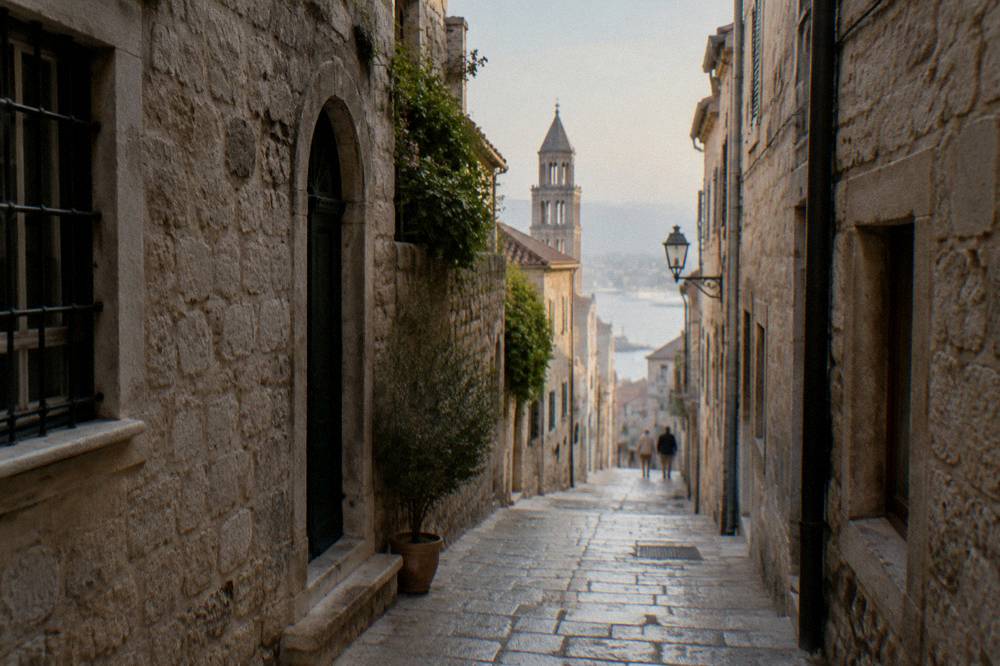
Yes, easily: Froggyland occupies a corner of a morning, and Split's ferry port sits 500 to 600 m from the palace, so the speedboats and ferries to Hvar, Brač, Šolta, Vis and the Blue Lagoon are all within a ten-minute walk of the museum. The standard pattern is a museum-and-palace morning followed by an afternoon or full-day boat trip, or the reverse on a two-day plan.
The sea options split into three broad families. The Blue Cave and Hvar speedboat trips run to Biševo's cave and the islands, with the Blue Cave entry itself, 24 EUR in high season from 20 June to 10 September and 18 EUR in the shoulder months, paid in cash on site, per the reports on its fees. The Blue Lagoon cruises make for slower days built around swimming stops between Šolta's bays. The regular Jadrolinija services run on fixed lines: the car ferry to Stari Grad on Hvar takes about 120 minutes, the line to Supetar on Brač about 50 minutes, Rogač on Šolta about 60 minutes and Vis about 140 minutes, with foot passengers paying 5.90 EUR off-season and 8.40 EUR in season on the Stari Grad line. Catamarans reach Hvar town and Jelsa at 6.40 EUR low and 10.00 EUR high, and Vis at 7.20 and 10.00 EUR.
One distinction saves a common mistake: Hvar town itself is reached by catamaran, while the car ferry lands at Stari Grad on the same island. The ferries from Split guide untangles the lines, and the Split to Hvar ferry guide covers that route specifically.
The Blue Cave, Mamma Mia and Hvar speedboat trip is the strongest single pairing with a museum morning, since it packs the cave, island stops and Hvar town into one departure from the waterfront. Check availability on the operator's live listing, and read more on the tour's own page.
Can You Combine Froggyland With A Land Day Trip From Split?
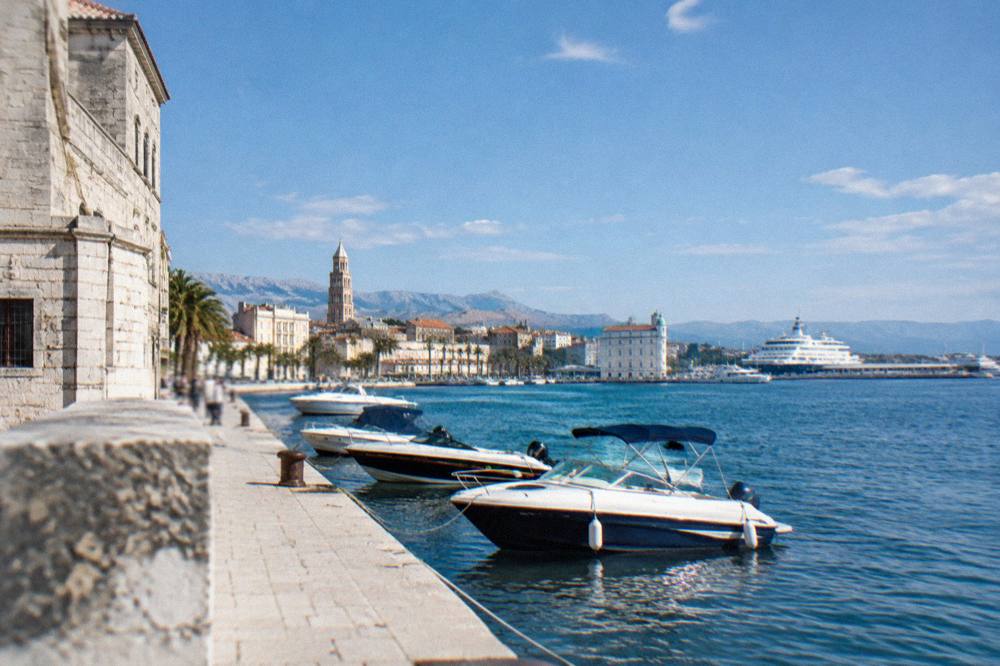
Yes: Split's land day trips all start from the same compact core, with Klis Fortress 13.9 km and about 22 minutes away by car, Salona 9.1 km and 14 minutes, Trogir 29.3 km and 36 minutes, and Omiš 25.5 km and 38 minutes, all free-flow driving times measured from Diocletian's Palace, so a Froggyland morning leaves the whole afternoon for a fortress, ruins or a river canyon.
Each direction offers something different. Klis Fortress, a 10 EUR entry per the reports on its pricing and a filming location for the Meereen scenes of Game of Thrones, guards the pass above the city. Salona, the Roman site reached on the Archaeological Museum's 10 EUR combined ticket, was the metropolis of the region before the palace existed. Trogir, a UNESCO-listed town on its own small island since 1997, is close enough for an evening. Omiš sits at the mouth of the Cetina river canyon, where rafting, canyoning and zipline trips run, and where the Mirabela fortress charges 4 EUR, rising to 6 EUR from 1 June to 30 September. Farther out, the driving times stretch to Šibenik at 71 minutes, Krka National Park's Skradinski buk at 74 minutes, Makarska at 75 minutes, Zadar at 2 hours, Plitvice Lakes at 3 h 15, Mostar at 2 h 13 and Dubrovnik at 3 h 21.
| Day trip from Diocletian's Palace | Distance | Free-flow driving time |
|---|---|---|
| Salona | 9.1 km | 14 min |
| Klis Fortress | 13.9 km | 22 min |
| Trogir | 29.3 km | 36 min |
| Omiš | 25.5 km | 38 min |
| Šibenik | 84.8 km | 71 min |
| Krka, Skradinski buk | 90.2 km | 74 min |
| Makarska | 86.1 km | 75 min |
| Zadar | 159.5 km | 2 h |
| Mostar | 173.2 km | 2 h 13 |
| Plitvice Lakes | 258.1 km | 3 h 15 |
| Dubrovnik | 234.8 km | 3 h 21 |
The national parks price by season, which changes the maths of a long drive. Krka's 2026 price list shows 7 EUR from January to March and in November and December, 20 EUR in April, May and October, and 40 EUR from June to September. Plitvice charges 10, 23 and 40 EUR across the same seasonal bands, with a 25 EUR afternoon slot in peak season and the visitor's name required on the ticket, bought as timed online entry through the park's official webshop. Both parks ban drones, as does Split's old town. The Krka guide and the Plitvice guide carry the detail, and the Split day trips page ranks the options.
When Is The Best Time To Visit Froggyland?
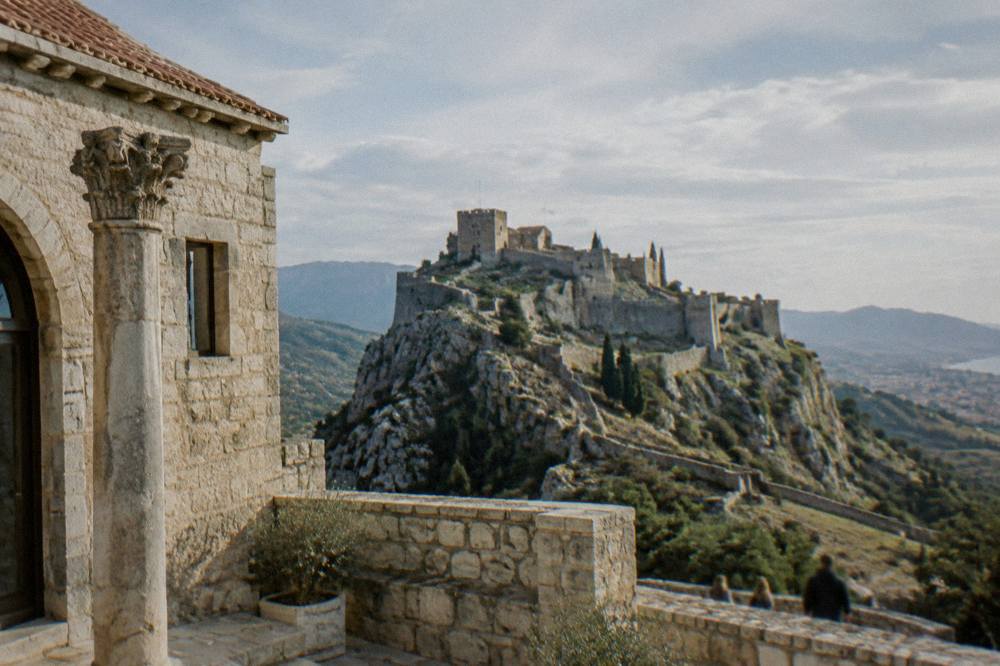
The best time to visit Froggyland is whatever hour of your Split day is warmest or wettest, because the museum's value is as an indoor stop in a city whose headline attractions are outdoors; by season, the shoulder months of April, May, June and September balance pleasant DHMZ Split Marjan means of 14.4, 19.2, 23.4 and 21.6 C against thinner crowds, while November, the wettest month at 115.5 mm, is the month that most rewards an indoor list.
The station record for 1948 to 2024 frames the year. July is the warmest month at a 26.2 C mean and the driest at 26.6 mm of rain, with 353.3 hours of sunshine; December drops to a 9.4 C mean and 120.8 hours of sunshine. August holds a 25.9 C mean with 41.3 mm of rain, and autumn as a whole, September to November, brings 263.4 mm against winter's 246.7 mm. None of this makes Froggyland a winter-only stop; it makes it a flexible one. In July and August, book it for the early afternoon. In November and December, pair it with the palace cellars and the Split City Museum for a rain plan, and with Advent in Split, which runs 27 November 2026 to 7 January 2027 with the ice rink at Đardin, for the evenings.
| Month | Mean temperature, DHMZ Split Marjan 1948 to 2024 | Precipitation mm |
|---|---|---|
| Jan | 8.0 | 77.8 |
| Feb | 8.5 | 65.2 |
| Mar | 10.8 | 63.2 |
| Apr | 14.4 | 62.0 |
| May | 19.2 | 57.5 |
| Jun | 23.4 | 49.0 |
| Jul | 26.2 | 26.6 |
| Aug | 25.9 | 41.3 |
| Sep | 21.6 | 70.9 |
| Oct | 17.2 | 77.0 |
| Nov | 12.7 | 115.5 |
| Dec | 9.4 | 103.7 |
Sunshine across the year runs at about 2,600 hours. The city's peak-season events also shape timing: Ultra Europe runs 9 to 11 July 2027 at Park Mladeži, and Sudamja, the city day of St Domnius, falls on 7 May each year, both of which fill the core with visitors. The best time to visit Split guide and the Split weather page go deeper than a museum stop needs.
On a settled summer day the calculus flips: the Blue Lagoon cruise with lunch, wine and swim stops becomes the better use of a daylight hour, and Froggyland shifts to the arrival or departure morning.
What Should You Know Before Arriving In Split For A Froggyland Visit?
Before arriving, know that Split uses the euro since 1 January 2023 and sits in the Schengen area, that the airport is 20 km from the city in Kaštel Štafilić with the Platanus shuttle running 10 EUR one way and 15 EUR return to the main bus station, and that the emergency number is 112. The airport handled 3,881,186 passengers in 2025, and the port 6.05 million, so arrival times for the shuttle and ferries deserve a margin in high season.
Border mechanics are worth one sentence of planning. The European Entry Exit System is fully operational at external Schengen borders since 10 April 2026, recording biometrics for non-EU short-stay visitors, while ETIAS, the travel authorisation for visa-exempt visitors, is not yet live and has no fixed start date. Within the city, the historic core's public-order rules now fine alcohol consumption in the historic centre at 300 EUR, and walking in swimwear or shirtless in the centre is likewise fined, with the amount set locally; change at the beach rather than testing it. The Split airport to city centre guide and the getting around Split page carry the transport detail.
For trip length, a Froggyland visit works on any plan from a cruise-port day upward. Cruise passengers dock right beside the Old Town, a walk of well under a kilometre, so the museum is one of the few indoor stops genuinely reachable on a port call. The Split cruise port day itinerary and the two days in Split and three days in Split plans show how the pieces fit at each length. The Split Croatia Travel Guide homepage holds the full index, including the rainy day in Split guide, Froggyland's natural home in the planning sense.
A small-group walking tour of the palace pairs well with a Froggyland stop, since the tour covers the Roman core's story and the museum covers its strangest modern corner. Check availability if a guided frame appeals.
Common Questions About Froggyland Split
What is Froggyland in Split?
A small private museum of taxidermied frogs arranged in miniature human scenes, from classrooms to craft workshops, displayed in glass cases in Split's historic core. The collection reflects the tradition of anthropomorphic taxidermy, and the museum is best treated as a short, family-friendly indoor stop.
How long does a visit to Froggyland take?
Well under an hour at a normal family pace, since the collection occupies a single compact exhibition space. That brevity makes it easy to slot between the Peristyle, the Green Market and the Riva without reshaping the day.
What does Froggyland cost?
The entry price is set by the private operator and posted at the door, so confirm it on arrival rather than planning around a third-hand figure. Split's public museums, by comparison, run from 7.00 EUR at the Ethnographic Museum to 12.00 EUR at the Meštrović Gallery on their published 2026 price lists.
Is Froggyland good for kids?
Yes, it is one of the more reliable child-friendly indoor stops in the Old Town, because the scenes are comic and instantly readable, the space is small and easy to supervise, and the visit length matches a child's attention span.
Can you walk to Froggyland from the Split cruise port?
Yes. The ferry port, the main bus station and the railway station sit together on Obala kneza Domagoja, 500 to 600 m from the palace, and the whole historic core is on foot from there, so no transport is needed from a cruise call.
What else is near Froggyland in Split?
The Peristyle, the Golden Gate and the Grgur Ninski statue, the Diocletian's Palace cellars, the cathedral complex, the Green Market, the Riva and the Marjan steps all sit within a short walk, and the outdoor squares and gates among them are free.
Froggyland will never be the reason you travel to Split, but it earns its place on the list: a strange, quick, sheltered hour in a city whose grandest sights cost nothing and whose boats leave minutes from the door. Confirm the price and hours at the entrance, give it the hot or wet hour of your day, and let the palace, the market and the sea fill the rest.
