Split Hostels
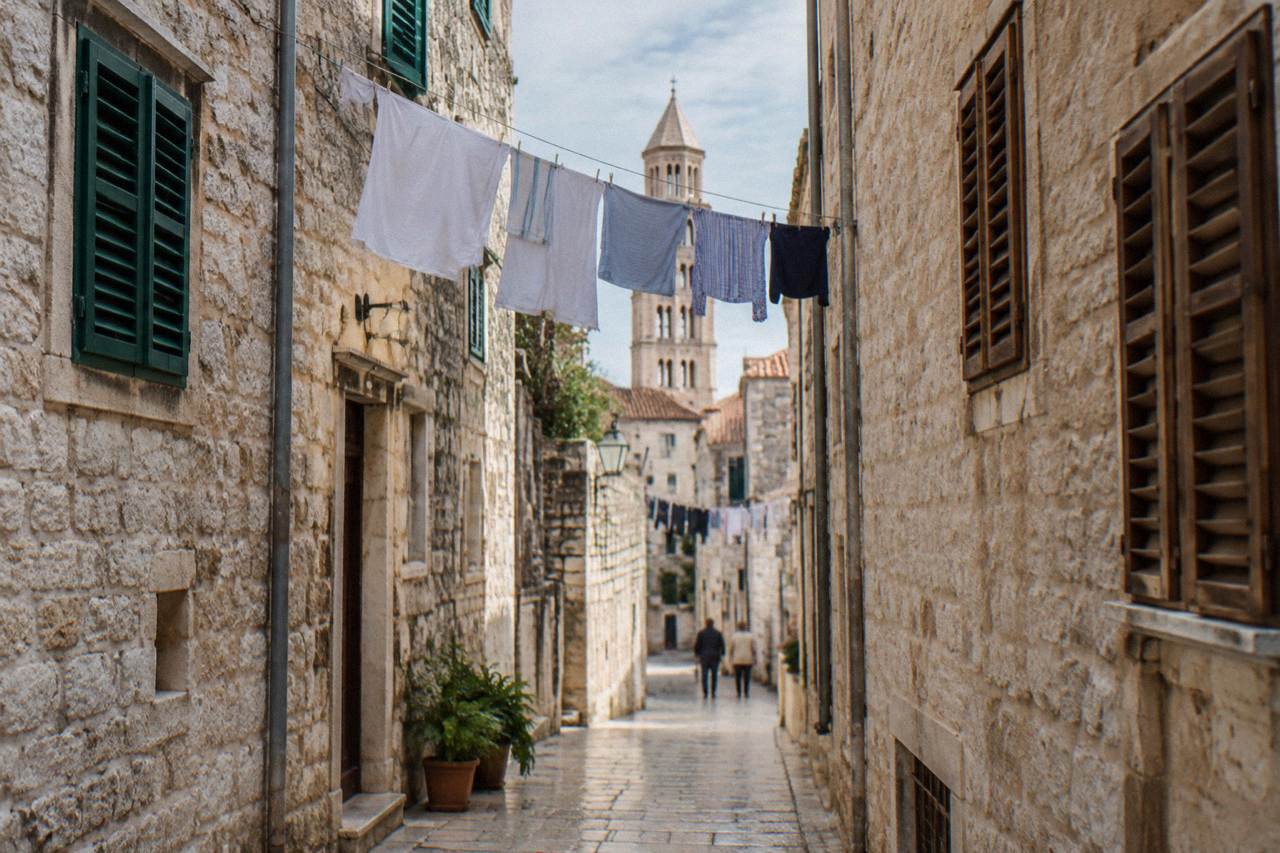
Split is a coastal city in central Dalmatia, Croatia, built in and around Diocletian's Palace, and its hostel beds sit closer to that palace than in nearly any other Adriatic city. This guide covers where to sleep, what the tax adds, and how the seasons move prices.
Short answer
Hostel beds in Split cluster around the Old Town, Bačvice and the ferry-port strip. Tourist tax adds about 2.65 EUR per night in high season, the Platanus airport shuttle costs 10 EUR, and shoulder months from the DHMZ record are warm and far cheaper.
Split is a coastal city in central Dalmatia, Croatia, built in and around Diocletian's Palace, with the Marjan peninsula forest on its western side and the islands of Brač, Šolta, Hvar and Vis offshore. For hostel travellers that geography is the whole story: beds sit inside or beside a UNESCO-listed Roman palace, the ferry port, the main bus station and the railway station share one strip 500 to 600 m from the palace, and the day trips to Krka, Plitvice, Trogir, Hvar and Vis all leave from that same strip. This guide from the Split Croatia Travel Guide editorial desk covers which neighbourhoods hostels cluster in, what the tourist tax adds to a bed price, how to reach a hostel from the airport, and how the seasons change both the price and the feel of the city.
Where Are The Best Areas For Split Hostels?
The three hostel areas of Split are the Old Town inside and around Diocletian's Palace, the Bačvice beach quarter east of the centre, and the ferry-port strip on Obala kneza Domagoja. Each puts a bed within a short walk of the palace, the Riva seafront and the port, and the choice between them is really a choice between atmosphere and price, not between convenience and distance.
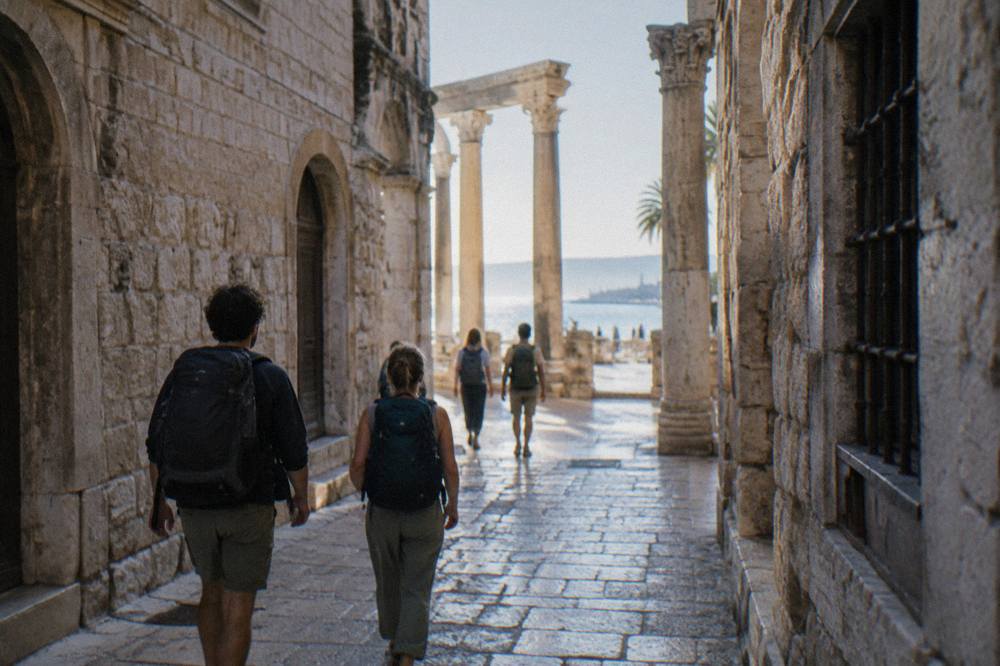
The Old Town is the atmospheric option. Beds inside the palace walls put the Peristyle, the Golden Gate and the Grgur Ninski statue steps from the door, and the Split City Museum price list shows the papalić palace and the palace cellars both inside the same walkable radius. The trade is noise: the historic core hosts the Split Summer Festival and evening life well past midnight in July and August, and a 2026 city decision bans public alcohol consumption in Zone A, the historic core, outside licensed terraces, with fines of 300 EUR. A dorm inside the walls is best booked with earplugs factored in.
Bačvice, east of the centre, is the beach-and-social option. Bačvice beach is free and sandy-bottomed, picigin, the protected ball game born on that sand around 1908 per the local heritage record, is played in the shallows, and the quarter's cafe terraces run late. Hostels here trade palace views for sea air and a slightly lower price, and the walk to the palace is flat the whole way. The ferry-port strip is the practical option: the port, the main bus station and the railway station sit together on Obala kneza Domagoja, 500 to 600 m from the palace, so a bed here means an early catamaran to Hvar or a Krka coach departure is a five-minute roll out of bed. For a wider look at all the quarters, see where to stay in Split.
| Area | Position relative to the palace | Character | Best for |
|---|---|---|---|
| Old Town / Diocletian's Palace | Inside and immediately around it | Roman stone, festival venues, nightlife | Atmosphere, short stay |
| Bačvice | East of the centre, on the sea | Sandy beach, picigin, cafe terraces | Beach days, social hostels |
| Ferry-port strip (Obala kneza Domagoja) | 500 to 600 m west of the palace | Port, bus station, railway station together | Early ferries and coach tours |
| Meje / Marjan edge | West of the centre below Marjan | Quieter, green, above Kašjuni | Sleep, hiking, swimming |
How Much Does A Hostel Bed In Split Cost?
No nightly hostel or hotel rate can be quoted for Split, because rates vary by season and booking date, and every tour price on these pages renders live from the operator's listing. What is fixed and printable is the tourist tax: about 2.65 EUR per person per night in high season, 1 April to 30 September, with under-12s free and 12 to 18 year olds paying half, collected by the accommodation and confirmed at booking.
That tax sits on top of whatever the bed costs, and it is the one number a hostel guest can plan for in advance. Always write "about" mentally around it: the figure comes from the Split-Dalmatia County decision and the exact amount is confirmed by the hostel at booking, never assumed. Beyond the tax, the honest planning method is comparison: check the operator's live listing or the accommodation's own page for the dates in question, and treat any number printed in a forum or a social post as stale the moment the season turns.
Two structural facts do move prices and are printable. First, Croatia uses the euro since 1 January 2023, so there is no currency maths to do. Second, the short-term rental picture in the historic core tightened: the UNESCO buffer area around Diocletian's Palace has a moratorium on new short-term rental registrations extended through 2026, with existing registrations grandfathered, which supports bed prices inside the walls. Budget planning beyond the bed is covered in Split on a budget, and the cheaper shoulder months are set out with the climate record further down this page.
What Do Hostels In Split Usually Include?
Hostels in Split operate under Croatian accommodation law, which means the listed bed price carries the tourist tax separately, registration with local authorities is required for every guest, and standard inclusions are a bed, linen, wifi and kitchen or breakfast access depending on the property category. Nothing fixes what any
The rules worth knowing are national. A new Hospitality Act is planned for 1 January 2027, and EU regulation from May 2026 requires a unique registration number per rental unit on booking platforms, which squeezes unregistered beds out of the market and makes the listing itself a rough quality signal. Properties are recategorised every 10 years under the reform, so a category on a listing reflects a current assessment rather than a decade-old one.
Practical inclusions vary. What the record does fix is what surrounds the bed: the Peristyle, the Riva, the Prokurative, the Golden Gate, the markets, Marjan and the city beaches are all free, so a bed anywhere central comes with a large zero-cost itinerary attached, listed in detail in free things to do in Split on this site. The Split Croatia Travel Guide day-trip pages assume no car, and hostels make that assumption work.
Is Split Safe For Hostel Travellers?
Split is a mid-sized city of 160,577 residents at the 2021 census, the emergency number throughout Croatia is 112, and the public-order fines in the historic centre, 300 EUR for public drinking, urinating or climbing monuments, signal a city actively policing its core rather than a dangerous one.
The 2026 rules are the freshest safety-relevant facts. The city formalised behaviour rules for Zone A, the historic core: no open-alcohol consumption outside licensed terraces, no open-flame food preparation, no tour or accommodation soliciting on the street, and no walking in swimwear or shirtless on public surfaces. The alcohol fine is 300 EUR and is printed on the city's own Enjoy Respect page. Shops, not bars, face a night-time retail alcohol sales ban in summer, 1 June to 15 September, so late beer runs to a supermarket end early in season. Walking in swimwear in the centre is fined, but the amount is set locally and no official figure exists: confirm locally rather than trust a number in a forum.
For solo hostel travellers the practical points are these. The port, bus and rail strip is lit and busy into the night in season. Croatia is in the Schengen area since 1 January 2023, so border formalities for most European visitors are minimal, and the EES biometric entry system has been fully operational since 10 April 2026 for non-EU short-stay arrivals. ETIAS is not live and has no fixed start date. General orientation is in the things to do in Split overview.
When Is The Cheapest Time To Book A Hostel In Split?
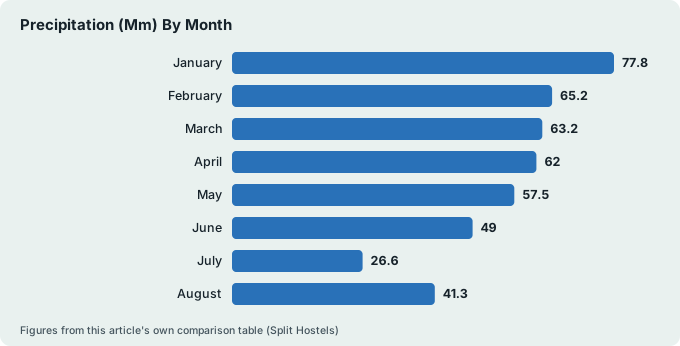
The cheapest hostel months in Split are the shoulder and winter months, November to March, when Krka entry drops to 7 EUR and Plitvice to 10 EUR, park demand collapses and accommodation prices follow. The DHMZ Split Marjan station record, 1948 to 2024, shows the trade: January averages 8.0 C and November is the wettest month at 115.5 mm, while July, the warmest month at 26.2 C mean, is the driest at 26.6 mm.
The monthly picture from the DHMZ Split Marjan station, means for 1948 to 2024, lets a hostel traveller pick a price-weather balance with real numbers instead of guesswork. July has 353.3 hours of sunshine and December 120.8. July has 18 days at 30 C or more and August 17, which is exactly the window where beds cost the most and the Old Town is loudest. September cools to a 21.6 C mean with 70.9 mm of rain, October to 17.2 C, and both sit in the cheaper park-ticket season too.
| Month | Mean temperature (C) | Precipitation (mm) |
|---|---|---|
| January | 8.0 | 77.8 |
| February | 8.5 | 65.2 |
| March | 10.8 | 63.2 |
| April | 14.4 | 62.0 |
| May | 19.2 | 57.5 |
| June | 23.4 | 49.0 |
| July | 26.2 | 26.6 |
| August | 25.9 | 41.3 |
| September | 21.6 | 70.9 |
| October | 17.2 | 77.0 |
| November | 12.7 | 115.5 |
| December | 9.4 | 103.7 |
Read the table before booking. November is the wettest month and July the driest, but July is also when 18 days reach 30 C or more, the Split Summer Festival stages performances, and the port handles peak island traffic. Advent in Split runs 27 November 2026 to 7 January 2027 with the ice rink at Đardin, which makes early December a cheap month with a genuine event attached. The month-by-month detail is in the best time to visit Split and the broader climate record in Split weather.
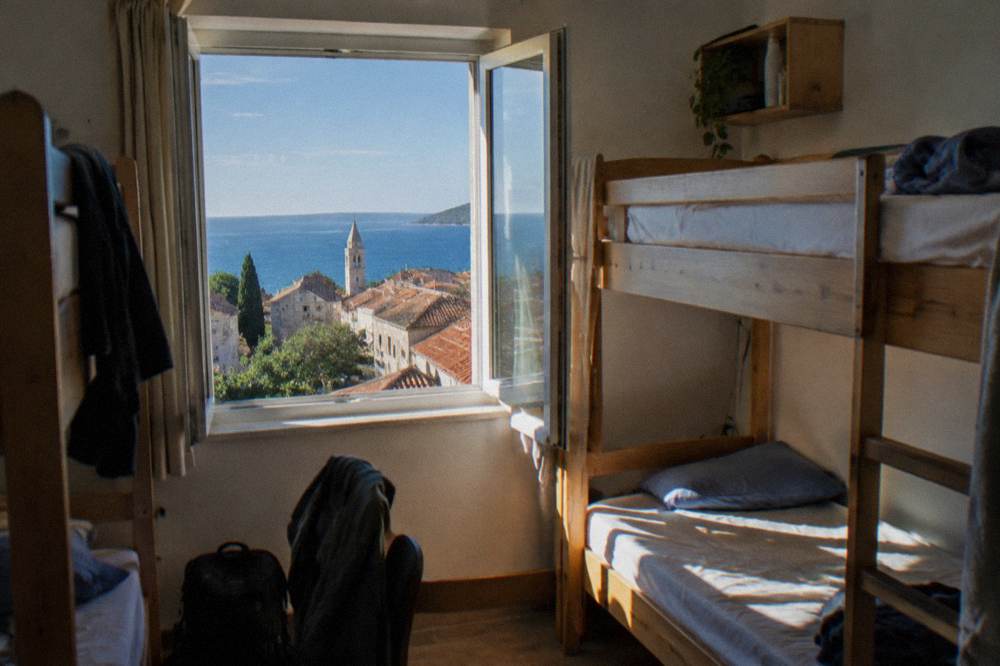
How Do You Get From Split Airport To A Hostel?
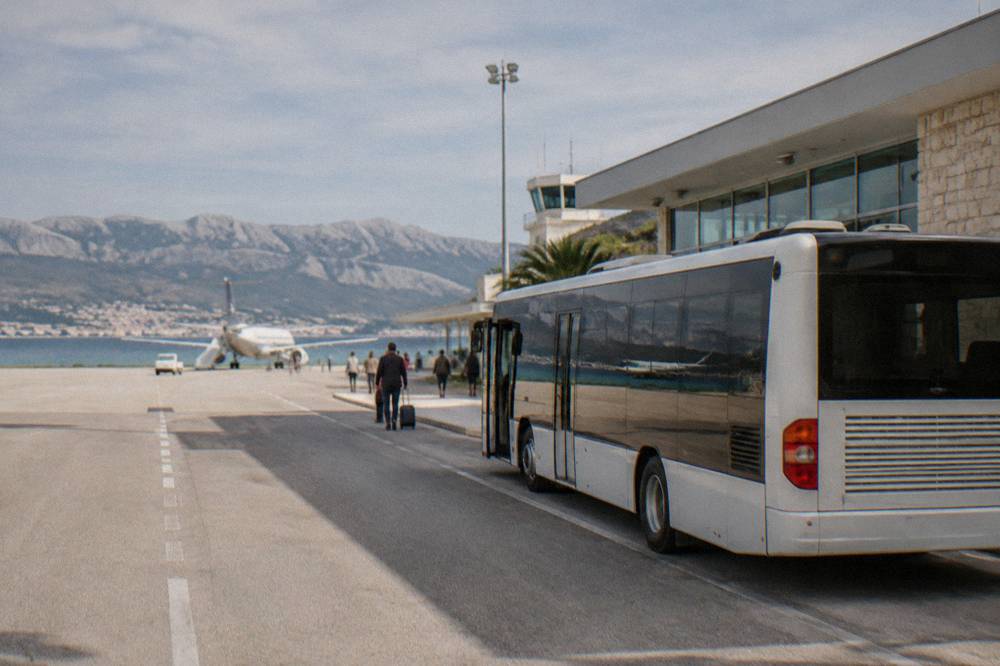
Split Airport, SPU, sits in Kaštel Štafilić, 20 km from Split and 6 km from Trogir by the airport's own pages, and the Platanus shuttle runs from the airport to the main bus station by the ferry port for 10 EUR one way or 15 EUR return, which lands a hostel guest 500 to 600 m from the palace. Promet Split city bus lines 37 and 38 also stop at the airport.
The shuttle is the simplest option for a dorm arrival because its terminus is the transport hub itself. From the main bus station on Obala kneza Domagoja, any Old Town or Bačvice hostel bed is a flat walk, and the port departures board for the next morning's catamarans sits in the same sightline. Driving from the palace to the airport measures 24.9 km, about 31 minutes free-flow, so allow more in summer traffic. The city bus fare is a few euros: confirm on board, because no verified official figure exists. Taxi and ride-hail fares likewise call for care: agree on the price or check the meter rather than trust a quoted number.
| Option | Route | Figure |
|---|---|---|
| Platanus shuttle | Airport to Split main bus station | 10 EUR one way, 15 EUR return |
| Promet Split bus, lines 37 and 38 | Airport stops, city network | Fare confirmed on board |
| Taxi or ride-hail | Airport to the city centre | No verified fare: confirm before boarding |
Arrival logistics end to end, including what the terminal itself offers, are covered in Split airport and Split airport to city centre. If the hostel stay is the first leg of a Dalmatian road trip rather than a base, the hire-car considerations are in Split car rental.
Which Day Trips Work Best From A Split Hostel?
The day trips that work from a Split hostel are the ones leaving from the port and bus strip 500 to 600 m from the palace: Krka at 74 minutes' drive and Trogir at 36, the car ferry to Stari Grad on Hvar at about 120 minutes and the catamarans to Hvar town, and Plitvice Lakes at 3 hours 15. Every one of these starts from the same hub a port-side hostel bed overlooks.
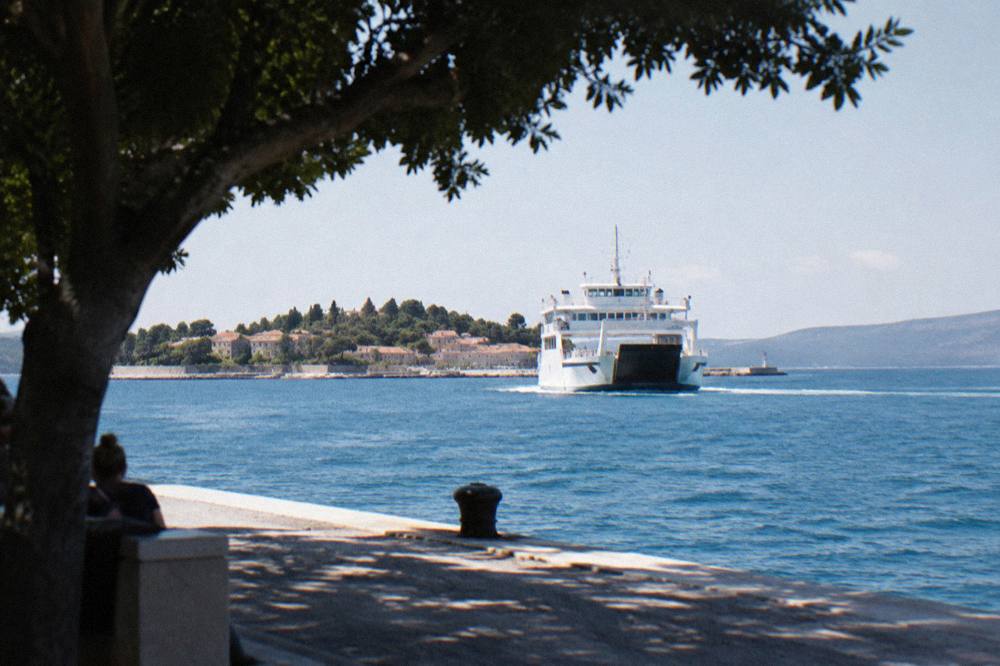
That hub is the quiet superpower of a hostel in Split. Jadrolinija's route pages give line 635 to Stari Grad at about 120 minutes with foot passengers at 5.90 EUR off-season and 8.40 EUR in season, line 631 to Supetar on Brač at about 50 minutes, line 636 to Rogač on Šolta at about 60 minutes, and the Vis ferry at about 140 minutes. Catamarans reach Hvar or Jelsa from 6.40 EUR low season and 10.00 EUR high, and Vis from 7.20 EUR to 10.00 EUR. Note the distinction: Hvar town is a catamaran ride, Stari Grad is the car ferry port, and confusing the two strands day-trippers every summer. The full routes are in ferries from Split and the Split to Hvar ferry.
| Day trip | Drive from the palace (free-flow) | Park or ferry figure |
|---|---|---|
| Trogir | 36 min | UNESCO listed since 1997 |
| Klis Fortress | 22 min | 10 EUR adult |
| Salona | 14 min | Combined ticket with the Archaeological Museum 10 EUR |
| Krka, Skradinski buk | 74 min | 7 / 20 / 40 EUR by season |
| Hvar, Stari Grad ferry | about 120 min sailing | Foot passenger 5.90 to 8.40 EUR |
| Vis ferry | about 140 min sailing | Catamaran 7.20 to 10.00 EUR |
| Plitvice Lakes | 3 h 15 | 10 / 23 / 40 EUR by season |
Two park notes carry real money. Krka's price list is seasonal, 7 EUR January to March and November to December, 20 EUR in April, May and October, 40 EUR June to September, and swimming is allowed only in clearly marked areas, never at Skradinski buk. Plitvice is likewise 10 / 23 / 40 EUR with a 25 EUR afternoon slot in peak, timed online entry and the visitor's name required on the ticket. Both parks are compared head to head in the Plitvice or Krka comparison and planned in Split day trips. For a fuller itinerary built around island hopping, see the boat options in Split boat tours.
What Should Hostel Travellers Do In Split Itself?
The free list inside Split is long: the Peristyle, the Riva, the Prokurative, the Golden Gate, the Grgur Ninski statue, the green markets, Marjan park and the city beaches all cost nothing. The paid anchors are the palace cellars at 10 EUR via the Split City Museum scheme, the Cathedral of St Domnius complex from about 5 EUR with combined tickets up to about 15 EUR, and the Meštrović Gallery at 12.00 EUR including Crikvine-Kaštilac.
The palace anchors deserve their half-day. The substructures, run by the Split City Museum, open Monday to Sunday 8:30 to 20:00, though the central part is under restoration to the end of 2026 with passage staying open. The Cathedral of St Domnius complex sells singles and colour-coded combos from a kiosk on the Peristyle, shoulders and knees covered, and the bell tower, 57 m, is the climb with the payoff. The Roman guard change on the Peristyle at noon ran 28 May to 27 September 2026. Deep background is in the Diocletian's Palace and cathedral pages.
Want someone to thread those layers into a story? Book a guided palace walk here.
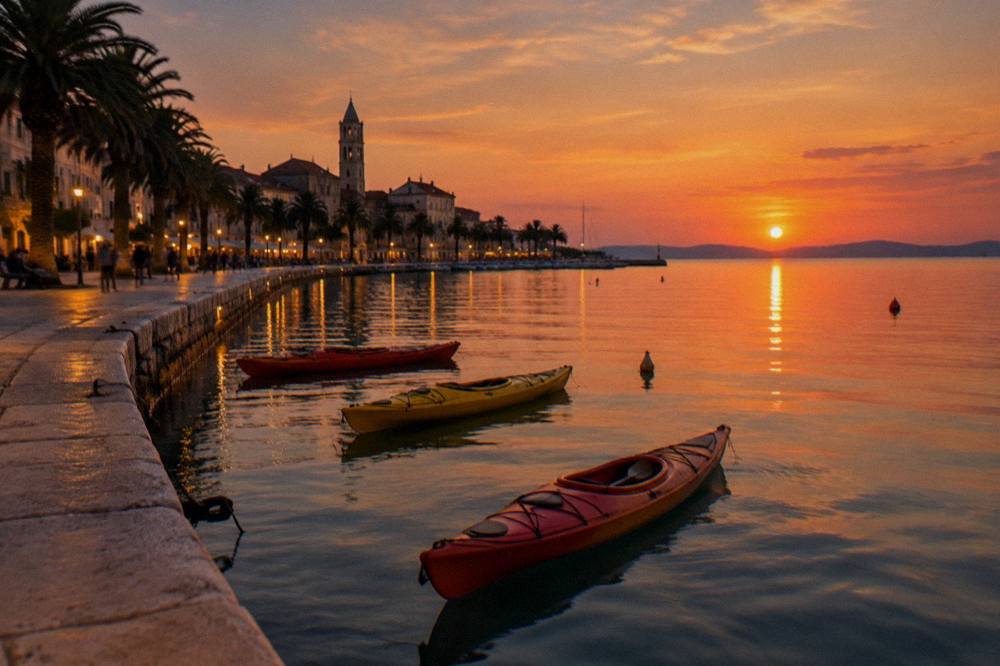
Marjan is the hostel guest's free afternoon. The park forest peninsula runs 3.5 km long and 1.5 km wide, its highest point Telegrin at 178 m, and 819 steps climb from Trumbićeva obala to the top. Below it, the Meštrović Gallery reopened in April 2026 after a 15-month energy renovation with a 12.00 EUR adult ticket that includes Crikvine-Kaštilac. Evenings on the water are the other signature: the illuminated evening guided kayak tour paddles the city seafront after dark, and it needs no prior experience, Check availability alongside the fuller write-up in Split walking tours and the things to do in Split index.
How Do Split Hostels Handle Festival Weeks?
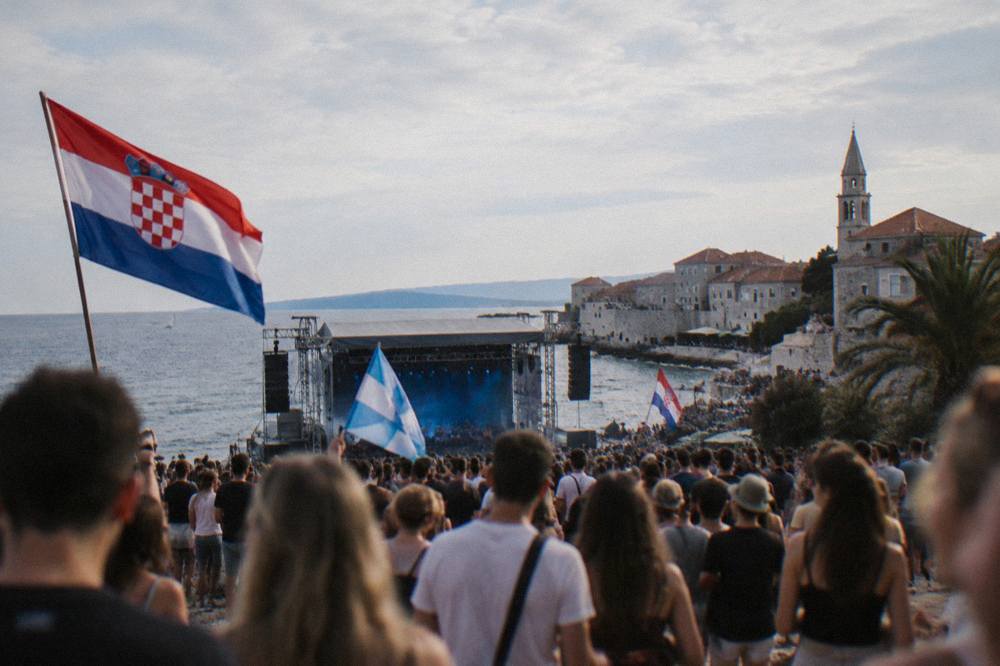
Festival weeks compress Split's hostel beds and lift prices, and the fixed dates are printable: Ultra Europe 2027 runs 9 to 11 July 2027 at Park Mladeži, Advent in Split runs 27 November 2026 to 7 January 2027 with the Đardin ice rink, and Sudamja, the city's day on 7 May, fills the centre every spring. Book a bed for these windows early or pay for waiting.
Ultra Europe is the pressure point. Three July days of festival at Park Mladeži draw an international crowd that lands in Split hostels, and the dates for 2027 are already fixed, so a July dorm bed is best locked in months ahead rather than weeks. The cultural calendar runs the other seasons: the Croatian National Theatre season runs 25 September 2026 to 14 June 2027, the 72nd Split Summer Festival ran 14 July to 14 August 2026 with its 2027 edition not yet announced, and Advent's ice rink at Đardin makes December a cheap-month-with-a-festival combination. The full rundown is in Split events and the festival-specific Ultra Europe page.
One construction note matters for 2027 bookings on the seafront. The Riva's central section is scheduled for renovation works from November 2026 lasting a little over a year, so partial closures along the seafront promenade should be expected through 2027. A hostel bed marketed on its Riva view may face works during that window, which is a fair question to ask the property before paying. Winter-season planning overall is in Split in winter.
What Should You Check Before Booking A Split Hostel?
The registration number is the newest check. Since May 2026 every short-term rental unit listed on a booking platform needs a unique registration number, and in the historic core no new registrations are being issued through 2026, so a listing inside Diocletian's Palace without one deserves a question. The tax check is older but routinely mishandled: the accommodation collects it, under-12s are free, 12 to 18 year olds pay half, and the exact amount is confirmed at booking.
Position is the practical check. A bed 500 to 600 m from the palace near Obala kneza Domagoja makes a 7 a.m. catamaran painless; a bed inside the walls makes it a groggy sprint with luggage over Roman stone. And cancellation is the money check, because island itineraries depend on sea conditions and the port's live departures feed shows catamaran changes happen. Food budgets for the nights in town are planned in Split restaurants and Split food, and the after-dark options around Bačvice in Split nightlife.
Common Questions About Split Hostels
Are there hostels inside Diocletian's Palace in Split?
Yes, accommodation including hostel beds exists inside and immediately around the palace walls, within the UNESCO property inscribed in 1979. Expect festival noise in summer and note the short-term rental registration moratorium in the historic core, extended through 2026, which limits new listings there.
How much is the tourist tax in Split hostels?
About 2.65 EUR per person per night in high season, 1 April to 30 September, with under-12s free and 12 to 18 year olds paying half. The accommodation collects it and the exact amount is confirmed at booking.
Which Split hostel area is best for early ferries?
The ferry-port strip on Obala kneza Domagoja, where the port, the main bus station and the railway station sit together 500 to 600 m from the palace. Catamarans to Hvar town and ferries to Stari Grad, Supetar, Rogač and Vis all leave from there.
Is Split walkable from a hostel?
Yes. The Old Town, Bačvice, Marjan's lower paths and the port strip all sit within a flat couple of kilometres, and the paid anchors such as the palace cellars and the Meštrović Gallery are reachable on foot or a short bus ride. Marjan's Telegrin at 178 m adds 819 steps for the ambitious.
When are Split hostels cheapest?
November to March, outside the 1 April to 30 September high-season tax window and outside the July and August heat. The DHMZ Split Marjan record shows January at a mean of 8.0 C and November as the wettest month at 115.5 mm, so the saving trades against weather, and Advent from 27 November 2026 adds a festival to the cheap months.
Can you drink alcohol outside Split hostels?
Not in the historic core. A 2026 city decision bans public alcohol consumption in Zone A outside licensed terraces, with fines of 300 EUR, and shops face a night-time retail alcohol sales ban in summer from 1 June to 15 September. Drink on a licensed terrace or inside the hostel instead.
A hostel bed in Split is less a place to sleep than a position on the board: inside the walls for atmosphere, Bačvice for the beach, the port strip for the 7 a.m. catamaran, each within a flat walk of a Roman palace, a free park-forest peninsula and the busiest passenger port in Croatia, with the tourist tax of about 2.65 EUR a night the only fixed number to add on top.